
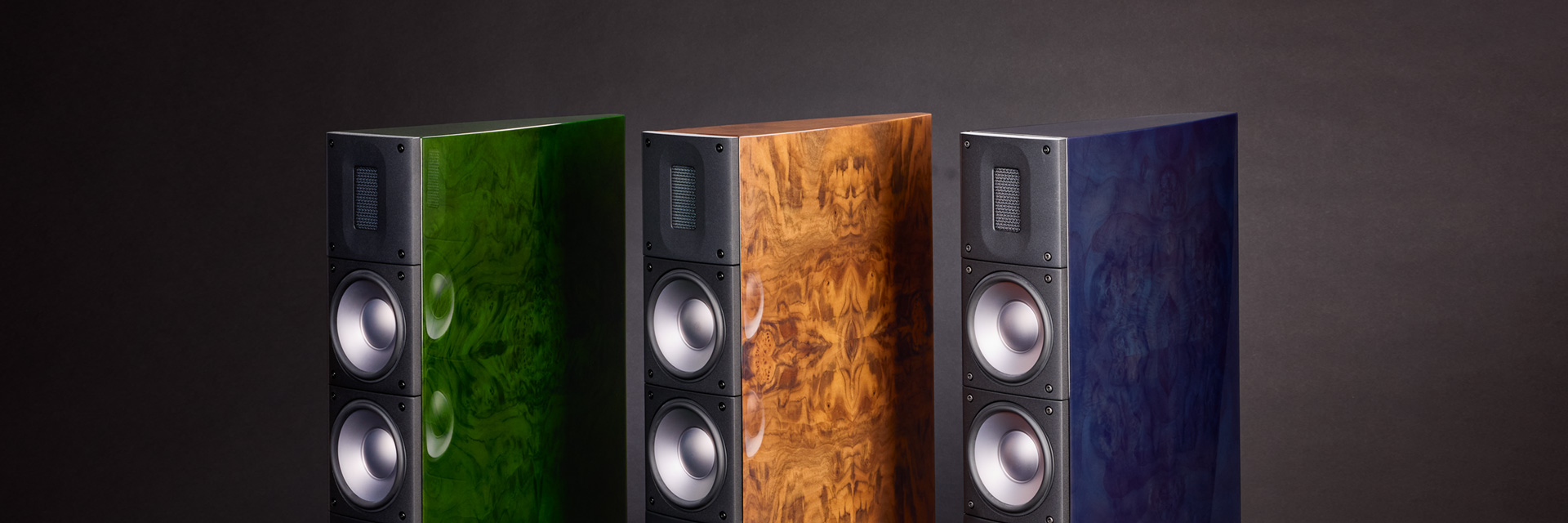
Raidhos shapely X2t shows how controlled precision goes hand in hand with musical depth layering.
At the end of a long first day at the show, just before closing time at the second-to-last Munich HIGH END, I found myself wandering into a listening room. Already saturated with musical impressions and a bit weary of what I had heard so far, I entered the large exhibition space, which was surprisingly well attended given the late hour. I hadn’t even found a free chair yet when my end-of-day mindset was blown away in an instant. I felt almost overwhelmed: the music filled the room in a way that was both deeply involving and at the same time expansive and transparent. Well, with loudspeakers nearly two meters tall, that would not have been entirely unexpected. As I moved closer, however, I noticed that the gigantic sound columns were not producing any sound at all. The sonic abundance was coming from the slim loudspeakers next to them, just a little more than waist-high. And so I spent the final minutes of the show day listening in awe to these slender and exceptionally elegant loudspeakers from a brand that up to this point was something of a footnote to me – even though I’m an avid fan of Danish high end. I am, of course, talking about Raidho.
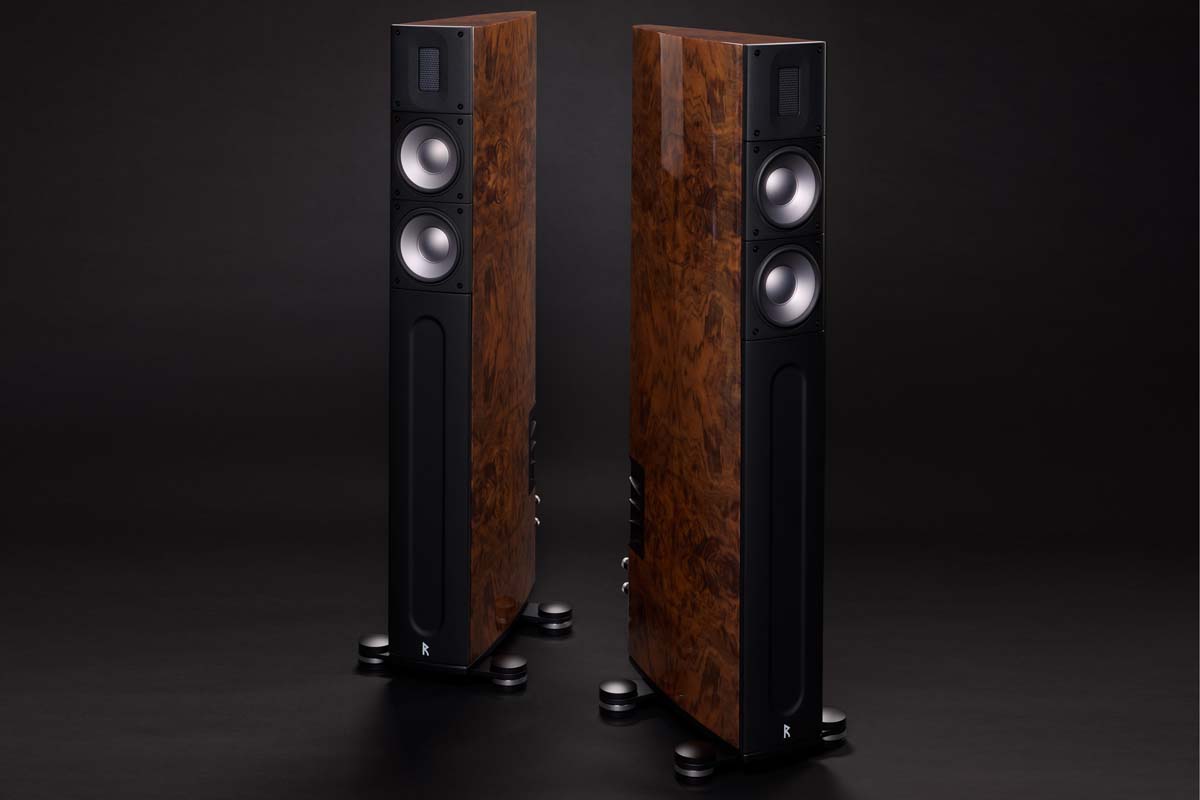
With the X2t, the manufacturer presented a revised version of its floorstanding loudspeaker that clearly sets itself apart from its predecessor, the X2. The Danish boutique manufacturer didn’t merely want to transfer technical advances, but deliberately integrate optimized materials and reworked concepts into the new loudspeaker. De facto, we are therefore looking at more of a new design than a facelift. The result is a two-and-a-half-way loudspeaker that conceals a complex technical system behind its slim, understated appearance – one that Raidho explained to us in great detail during a conversation.
No off-the-shelf technology
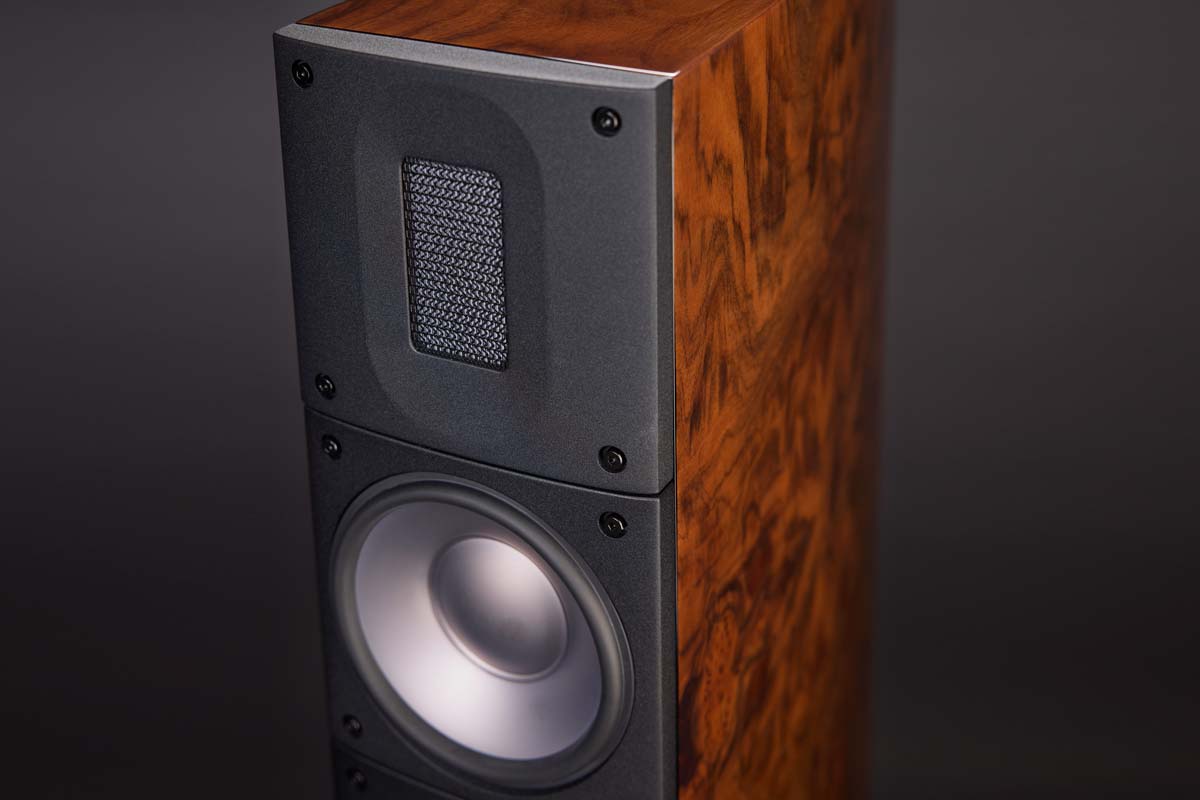
At the heart of the loudspeaker is the company’s proprietary planar ribbon tweeter, fitted with an ultra-lightweight foil diaphragm that weighs as little as 0.02 grams and – according to Morten Kim Nielsen, Sales Manager at Raidho, about one-fifth the thickness of a human hair. The result, he says, is exceptionally low-distortion, fast high-frequency reproduction extending far beyond the audible frequency range. To keep up with the speed and precision of the ribbon, Raidho developed an in-house proprietary driver design made from aluminum and ceramic. In the bass and midrange, two 5.25-inch woofers (approx. 13 cm diameter) are used, whose diaphragms are made of ceramic and additionally coated with tantalum. Tantalum – an extremely hard, heat-resistant refractory metal – increases the structural stiffness of the diaphragm without significantly adding mass. Nielsen explained that this shifts unwanted resonances far upward – up to around 15 kilohertz – and thus outside the relevant transmission range. The underlying magnet system is also crucial, according to Nielsen: extremely powerful neodymium magnets with targeted field guidance allow precise control of the drivers even at high excursion – decisive for a controlled, punchy bass from compact enclosures.
The two-and-a-half-way principle is, of course, a deliberate choice. The lower of the two identical woofers acts purely as a bass specialist, extending the lower cutoff frequency without coloring the midrange. Nielsen emphasizes: “We conducted many listening tests – our goal was a sonic balance of bass authority, midrange clarity, and temporal coherence.” The transitions between the ways are tuned so that typical interference in the crossover region is largely avoided. For Nielsen, the system combines the best of two worlds: “A two-way system disappears very well into the room, a three-way loudspeaker can often handle more power. The X2t achieves both – homogeneous and powerful.”
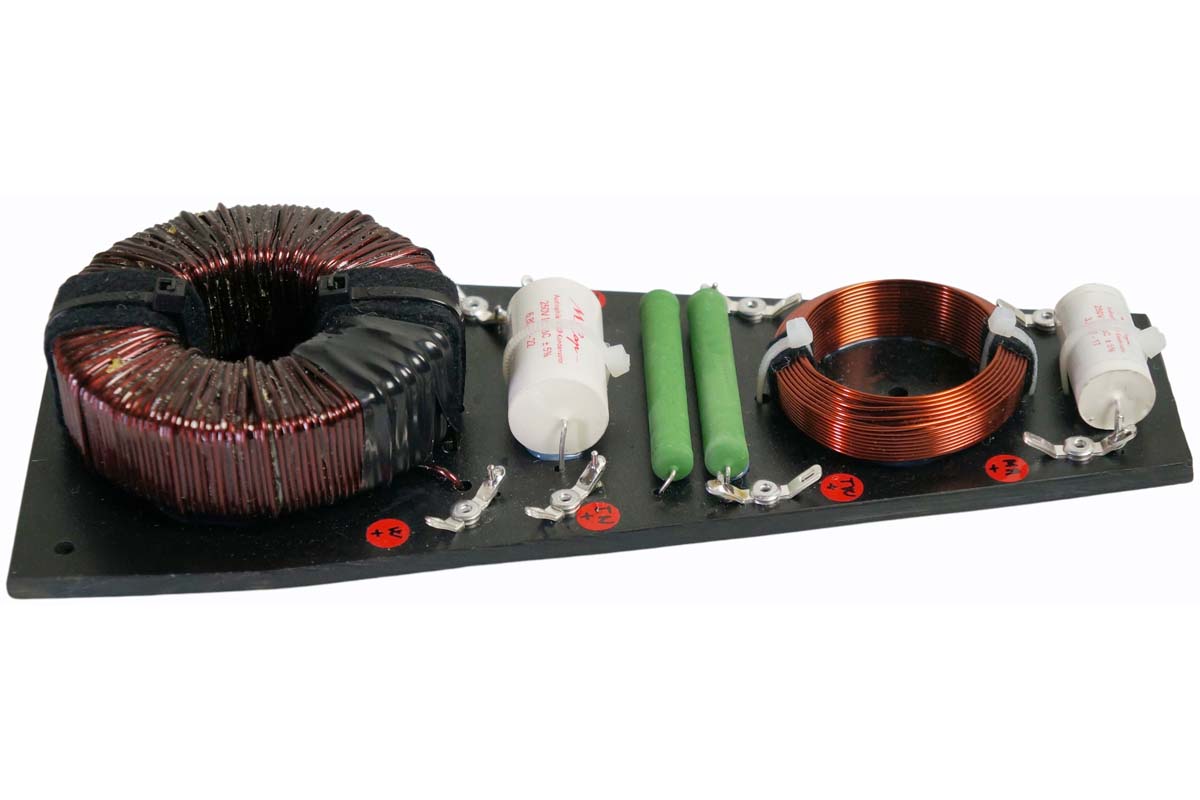
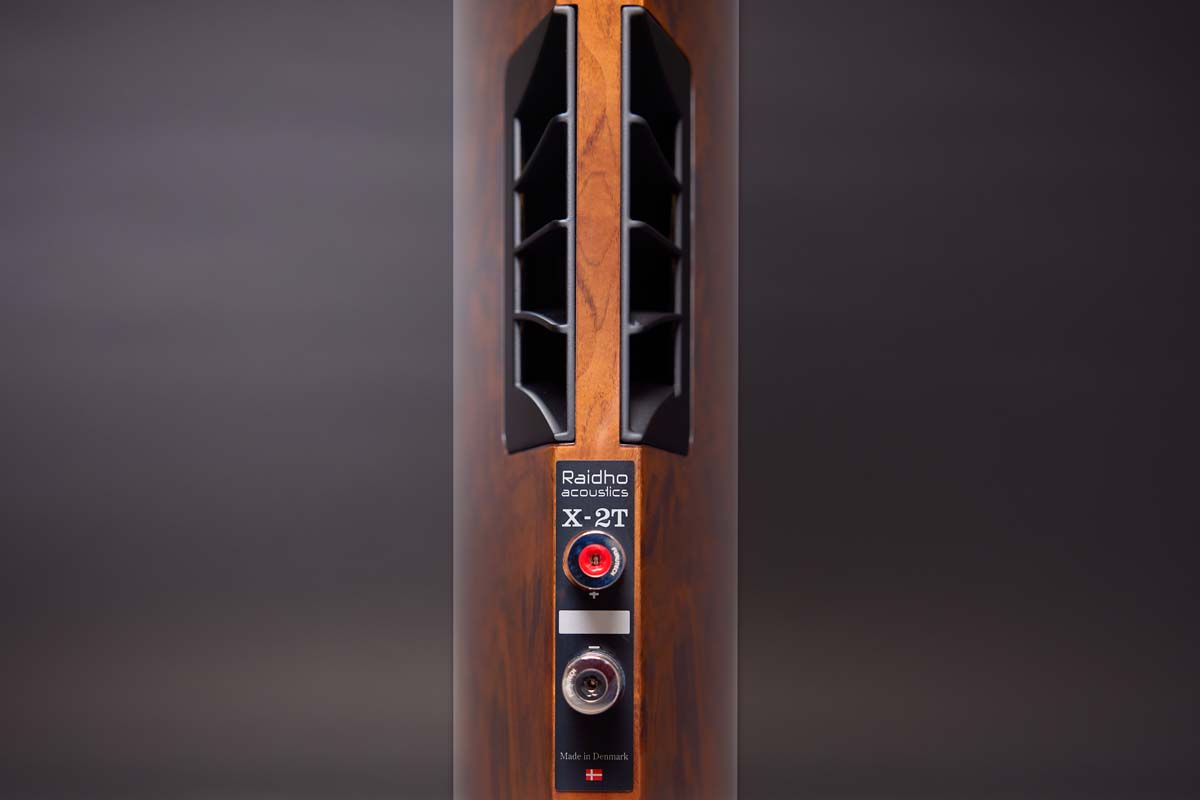
The crossover of the X2t was completely redeveloped. It is based on selected components and is hand-built using point-to-point wiring. Particularly noteworthy is the internal wiring with Nordost cables – both within the crossover and to the drivers.
Elegant design with brains
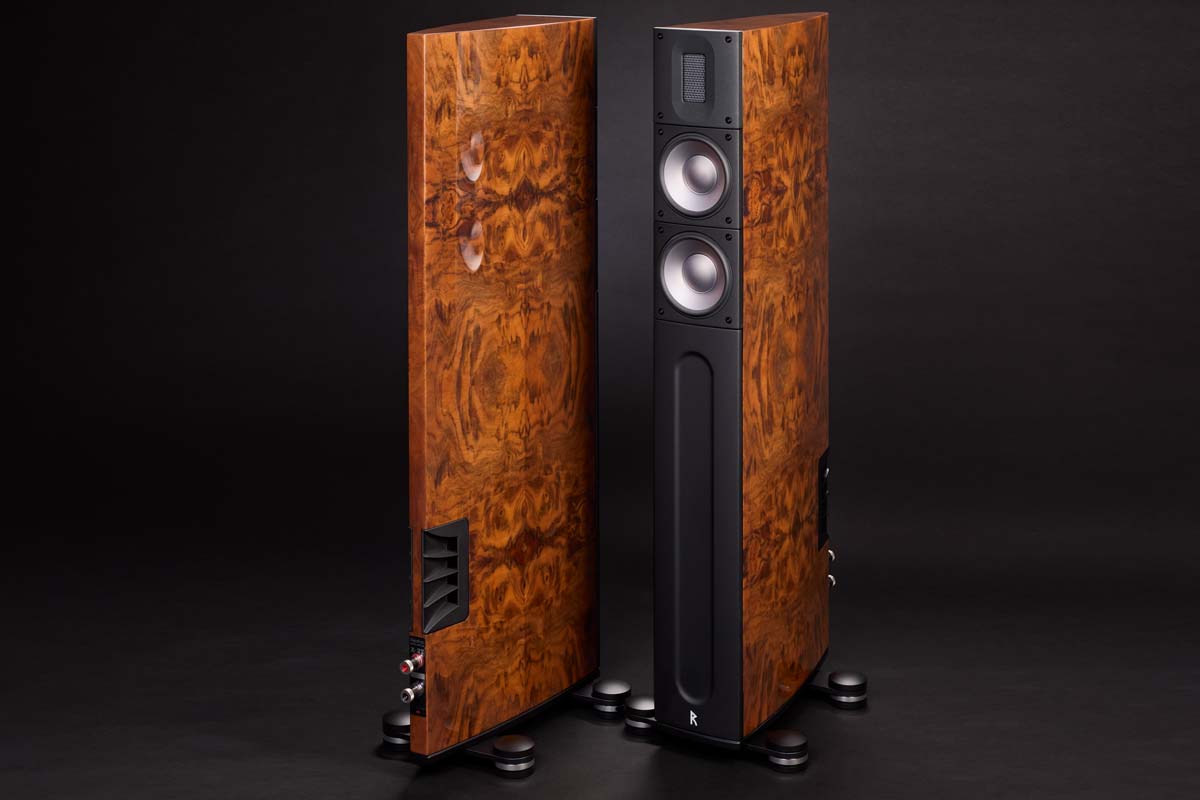
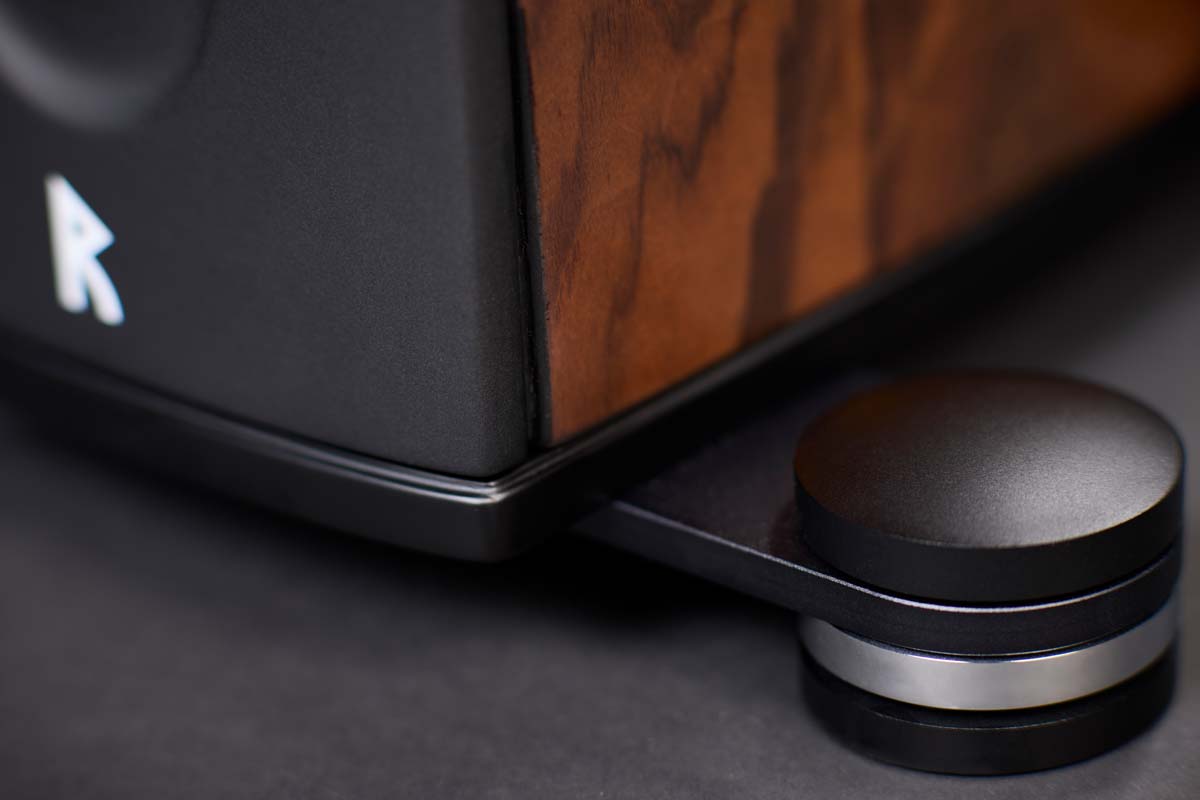
The cabinet itself has also been rethought: carefully designed internal bracing and tuned damping ensure stability and impulse accuracy without making the enclosure unnecessarily heavy. At just under 23 kilograms, the X2t is one of the lighter speakers in its class – a point Nielsen interprets not only as transport-friendly, but also as a sign of efficient material selection. What’s striking is the elegant, narrow baffle – not a design gimmick, but acoustically motivated. According to Nielsen, it reduces edge diffraction, improves imaging, and, together with the close driver arrangement, creates a particularly focused, point-source-like sound image. Instead of classic spikes, the speakers rest on metal balls integrated into the base plate – a solution that not only effectively implements mechanical decoupling, but also makes setup easier. And indeed, I have rarely encountered positioning that was both so uncomplicated and so coherent.
What had already been hinted at at the show became sonic certainty in the listening room. From the very first bars, the speakers reveal a soundstage with remarkable depth layering – almost quadraphonic. Particularly impressive with Kendrick Lamar’s Damn: the multitude of vocal samples, atmospheres, and sound fragments are precisely located, remain transparent, and form an acoustic 3D model that unfolds to fill the room. Despite the compact drivers, the bass range is not an issue – and that is meant as a compliment. Fast, deep, and controlled – even synthetic basses have physical presence without sounding artificially bloated. The X2t also convinces with large-scale orchestral works. Shostakovich’s Ninth Symphony under Eliahu Inbal, in one of Denon’s famous one-point recordings, is impressive right from the start: dynamics, body, transparency – everything meshes perfectly, especially in fast passages. The beginning of the fourth movement with its chorale-like brass fanfares isn’t just mighty, but also saturated with wonderful tonal colors is. When the recording is good, the Raidho rises above itself.
In chamber music, too, the X2t remains true to its line. New Sounds from Manchester with the Quatuor Danel demonstrates precise imaging, fine tonal resolution, and structure – whether pizzicati, extreme playing techniques, or deep viola lines: nothing blurs, everything remains tangible. It should not be concealed that poor recordings are not bent into sonic beauty. In fact, the X2t becomes a bit of a diva in such moments: “If you don’t make an effort, why should I?” Abbado’s Stravinsky recordings with the London Symphony Orchestra remain a thin soup in the 1976 release; but put the Original Source reissue produced at the Emil Berliner Studios from Deutsche Grammophon on the turntable, and the Danish diva responds exuberantly with audiophile joy: “Now we’re talking!”
The matter of listening volume
The X2t does react to its environment, without being overly demanding. Even in my 30-square-meter room, I found that the speaker should be given room to breathe – at least 1.5 meters from the rear wall felt reasonable, especially to allow the bass and lower midrange to operate freely. The choice of amplifier is also not trivial: while the sensitivity is a practical 87 decibels, the impedance curve calls for powerful amplifiers with high current delivery. “Ideally more than 20 amperes, stable even below 4 ohms, with a high damping factor,” says Nielsen. As transparent and precise as the X2t plays, it does not fully unfold its sonic potential at very low, late-night listening levels. In such quiet situations, it becomes apparent that it appreciates a certain amount of energy input. Only at normal room volume – or even a notch above everyday levels – does the soundstage fully open up, with all the depth, layering, and dynamics that make this loudspeaker so captivating. This applies especially to electronic music, which isn’t something you’d necessarily expect given the aesthetic subtlety of its appearance. Yet a stack of vinyl from the early days of the Cologne-based Kompakt label, which I recently managed to acquire, could be savored in a magnificent blend of punch and elegance. This is how electronic music should sound when listened to outside the club.
The Raidho X2t is a loudspeaker for listeners with clear expectations: control, resolution, structure – without analytical dryness. It doesn’t impose itself, but lets the music speak: with depth, color, and dynamics. Anyone looking for a sonic tool that neither sugarcoats nor bores, but conveys content with confidence, will find here one of the most elegant and honest solutions.
Accompanying equipment
Turntables: Thorens TD 126 MK III, Technics SL-1210 MK2 | Tonearm: Koshin GST 801 | Cartridges: Sumiko Blackbird, Ortofon Concorde Century and 2M Black, Dynavector 20X2 | Phono preamps: Innovative Audio Ultimate 2b, Thel Phono M | CD player: Naim CD5i | Streamer: Naim CD5XS | Integrated amplifier: Naim SuperNait | Loudspeakers: Gamut Phi 7, Lyngdorf Cue-100 | Headphones: Beyerdynamic DT 1770 Pro | Accessories: Wireworld, Sommer, Creaktiv
Loudspeakers Raidho X2t
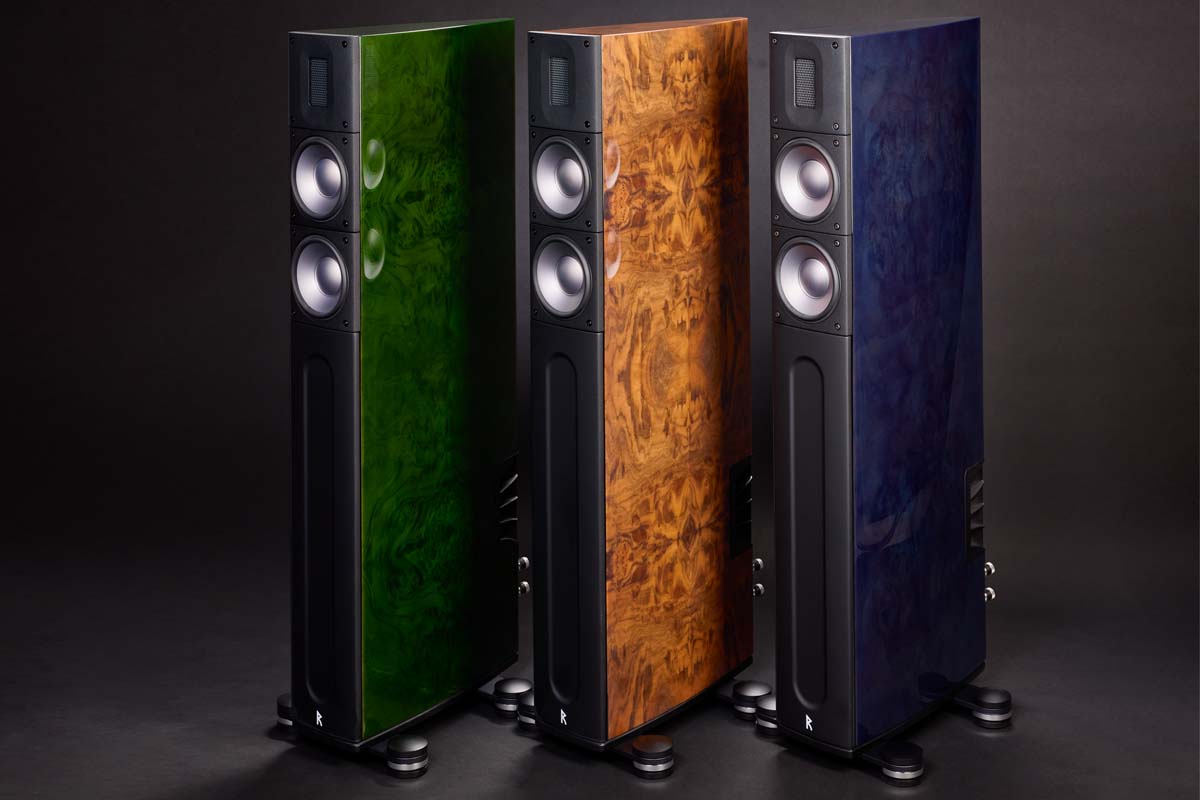
Design: 2.5-way floorstanding loudspeaker, bass-reflex system | Drivers: 1 x Raidho ribbon tweeter, 2 x 5.25″ Raidho Ceramix drivers with tantalum coating | Sensitivity: 87 dB @ 2.83 V/m | Nominal impedance: 6 Ω | Finish: Piano black, bird’s-eye maple, or other colors by special order | Dimensions (W/H/D): 30/107/49 cm (incl. feet) | Weight: 23 kg | Warranty period: 5 years | Price per pair: around €16,000, limited wood version €21,000
Dantax Radio A/S
Bransagervej 15
9490 Pandrup
Denmark
Phone +45 9824 7677
sales@raidho.dk