
As the heading already makes clear, we are in the world of Japanese terminology. There, “monozukuri” simply means “making things” – “mono” stands for “things,” and “tsukuri” for “making” or “manufacturing.” Inherent in this concept is a constant striving for improvement.
Up to now, I have mostly steered clear of amplifiers/power amps using 300B tubes. Of course, tube amplifiers with 300B output tubes have nevertheless occasionally been guests in my system. Most recently – and vividly remembered – the MA-2000 mono amps from Phasemation, which, equipped with two 300B tubes each, delivered a crystal-clean 25 watts per channel into my large horn speakers. Sonically, that was already very, very grown up, and I admit: the temptation was great!
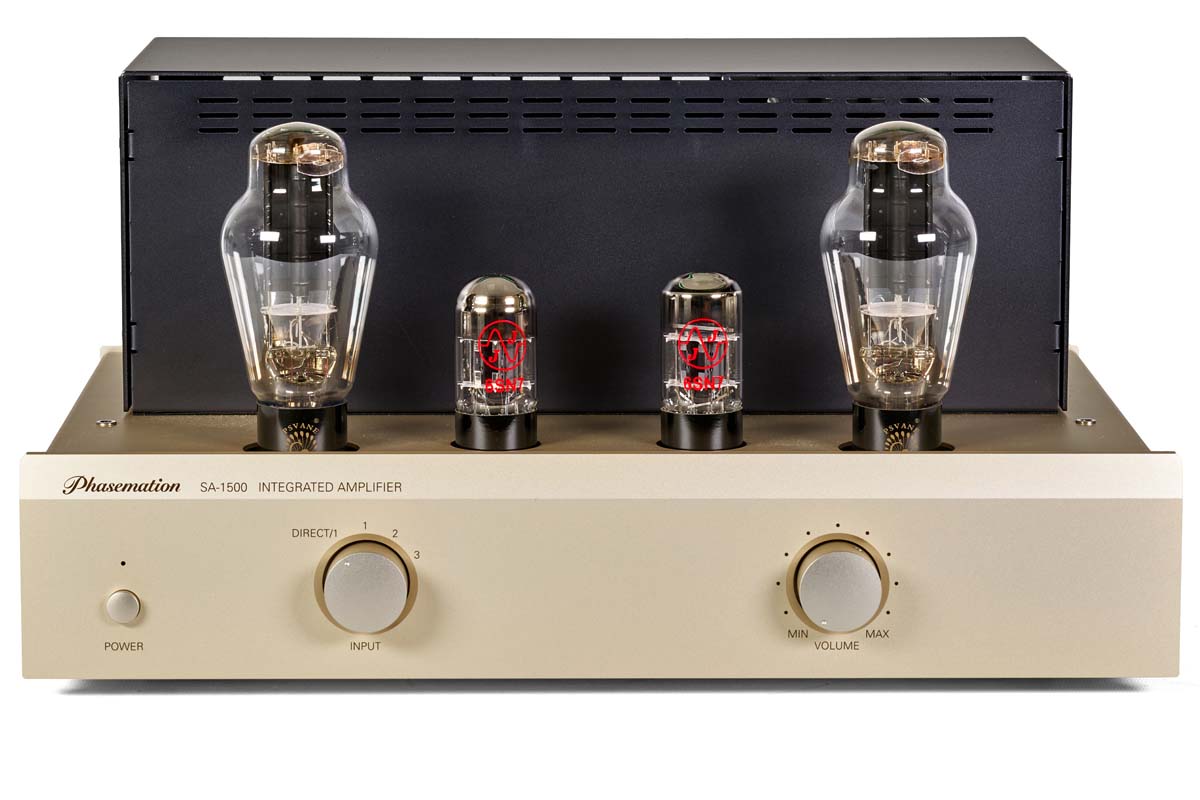
And now, then, my (by now not-so-)secret love in amplifiers appears in the form of an integrated amplifier (or, more precisely in this specific case: a power amplifier with source selection and volume control), here in the guise of the Phasemation SA-1500, with the usual “merciless” seven to nine watts per channel of a 300B single-ended triode. The manufacturer speaks of nine watts in pure Class A operation and the ability to drive even less efficient loudspeakers. I cannot judge that, however, as my speakers have sensitivities of 96 and 99 decibels, respectively. At this point, allow a brief digression on the topic of “tube amplifier power in relation to the sensitivity of the loudspeaker used in conjunction.” The formula is short and sweet: “The fewer watts the amp delivers, the higher the sensitivity of the transducer should be in order to listen to music without stress!”
Example: With a loudspeaker rated at 96 dB/2.83 volts, only 2.5 watts of power are required to reach a sound pressure level of over 100 dB. Those few watts that are truly needed are always available with the SA-1500. It now becomes clear why Phasemation says that this 300B is capable of driving transducers with lower (?) sensitivity. Clearly a matter of definition! Personally, I would recommend at least 93 dB (at 2.83 V/1 m) sensitivity for a loudspeaker when paired with a 300B amplifier. This statement is, of course, immediately a generalization, since room size, room acoustics, and listening distance also have a significant influence on what we hear. Nevertheless, the well-known old maxim applies without restriction: “An amplifier should never have to struggle with the loudspeaker load!”
Back to the SA-1500. Already when unpacking the 18-kilogram amplifier, I can literally feel the manufacturer’s claim to perfection – what a tactile experience! Once it is positioned on the rack, my eyes roam over the chassis: excellently finished, no frills, simply typical Phasemation. A look inside reveals Lundahl output transformers from Sweden. The developers at Phasemation consider these the best in terms of sound quality. That is no coincidence, as the Swedes are world-famous for their custom-made transformers. They consistently shield their transformers with mu-metal housings against interference from any form of permanent or electrically induced magnetic fields. The two-stage amplification circuit in a dual-mono layout was completely redeveloped – eliminating the interstage transformers used in previous amps in favor of a “simpler” circuit.
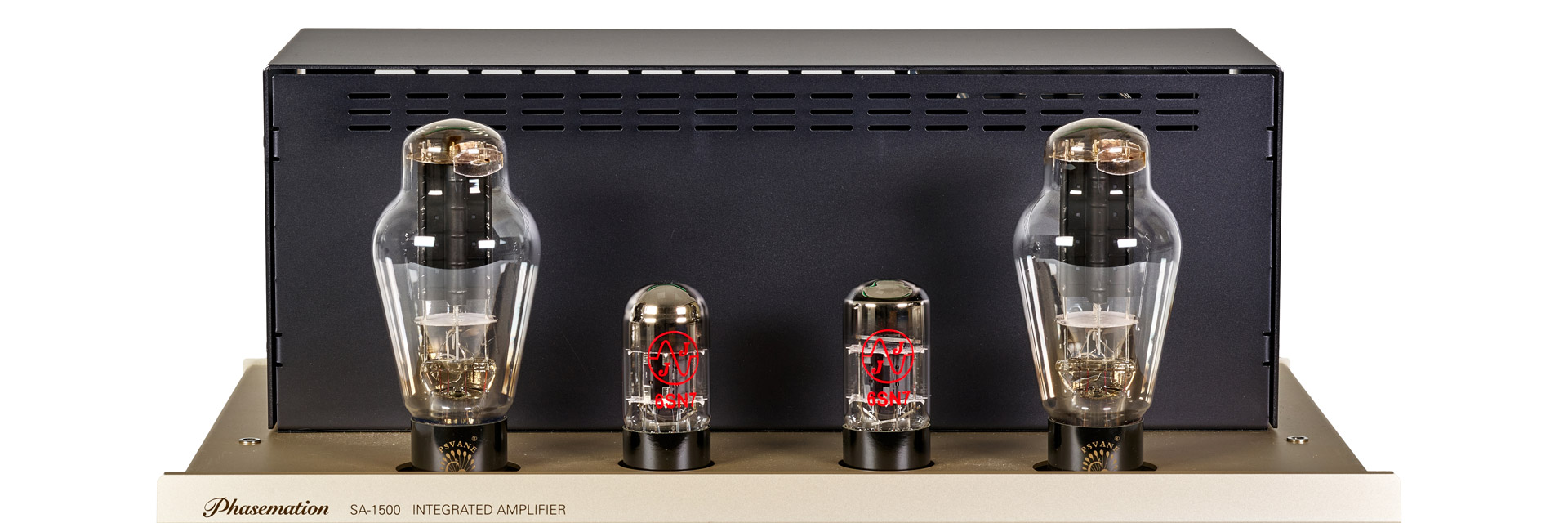
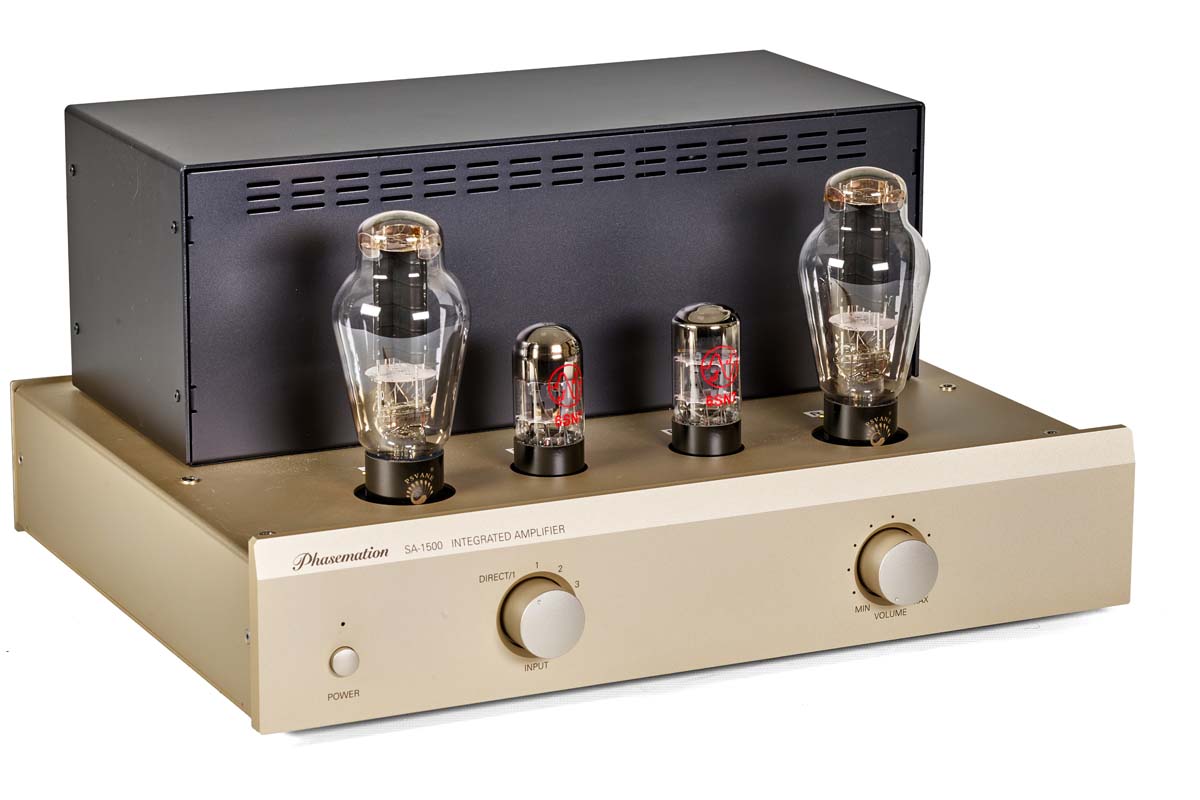
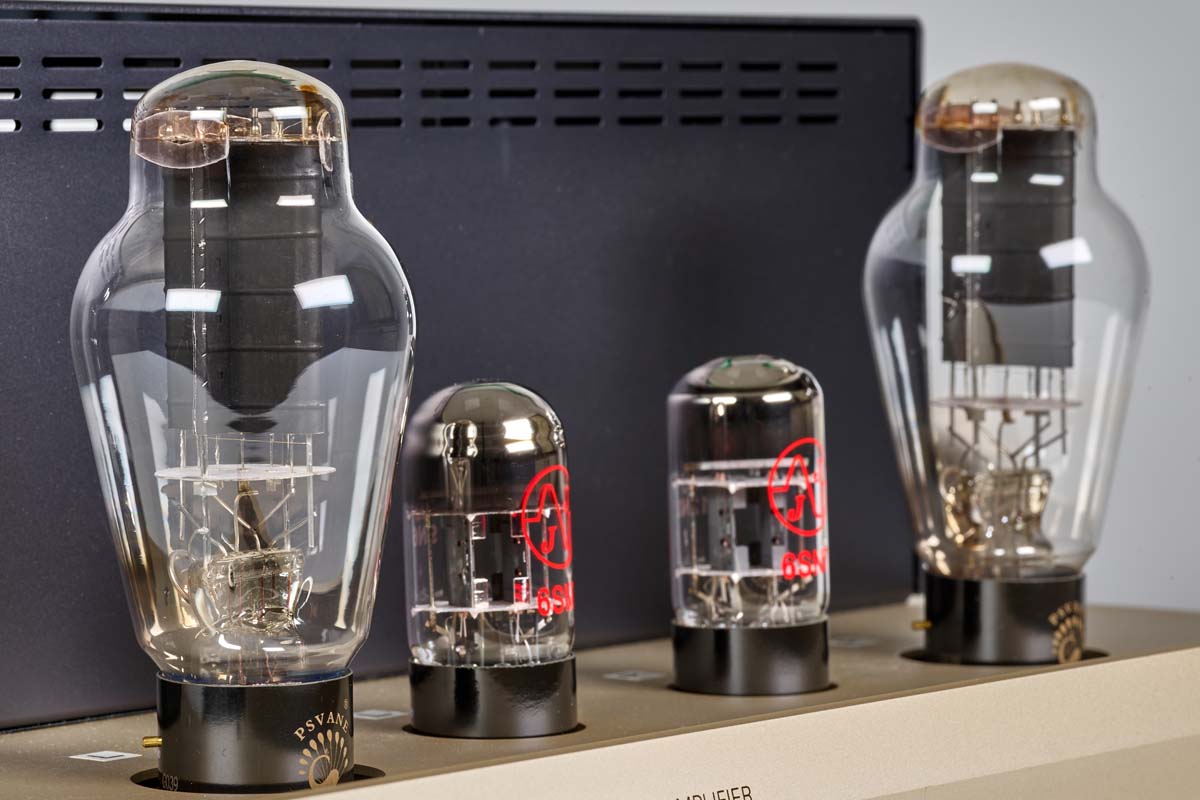
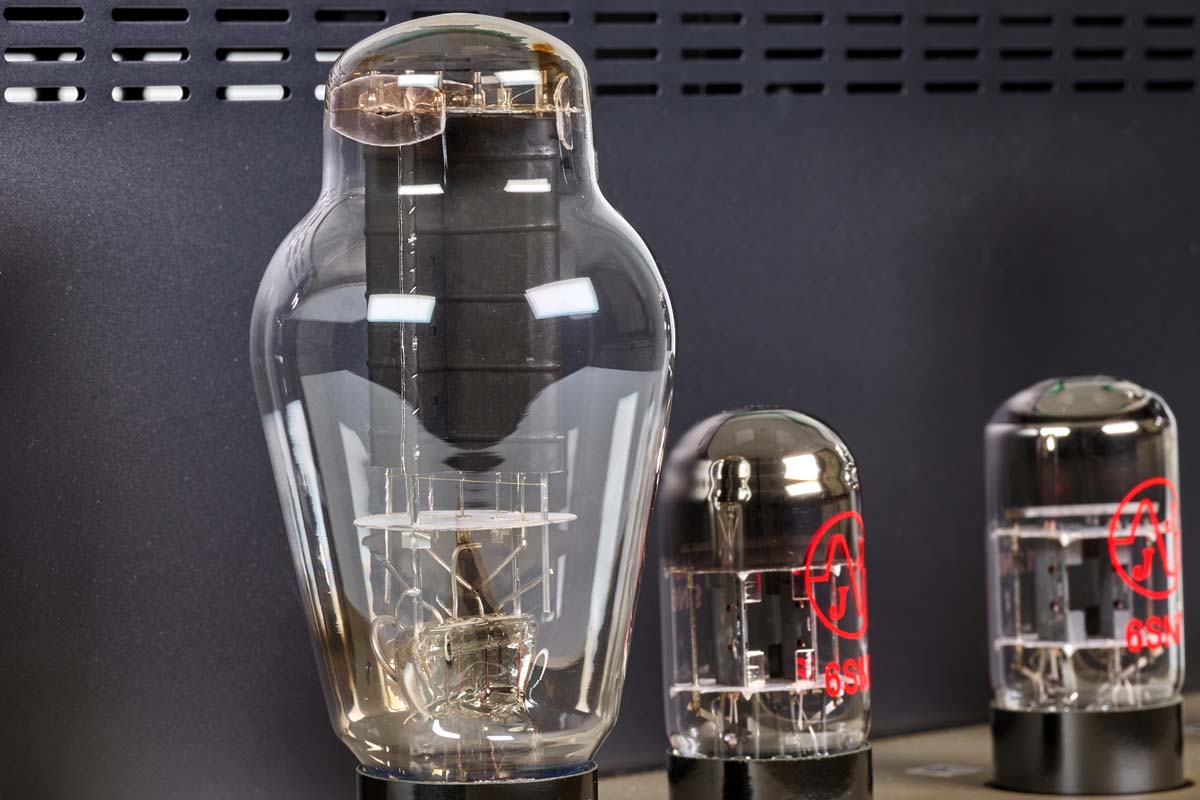
The tube connoisseur may be surprised at first glance, through the removable cover, by the two 6SN7 driver tubes. But, as usual with Phasemation, there is a well-thought-out reason for their presence: they drive the 300B tubes. The 6SN7 is a linear and very powerful dual triode that, thanks to its low internal resistance, allows a high plate current and is therefore a perfect choice for driving a triode output stage. Typically, various ECC dual triodes are found in this position with other manufacturers, which would certainly work, but Phasemation makes no compromises here either and accordingly uses powerful tubes in the driver section. Specifically, the robust JJ 6SN7 was selected for the two-stage amplification circuit. Its product consistency and tonal balance earned it a place in this concept. Instead of a rectifier tube, low-noise Schottky diodes are used in the power supply – each measure on its own, and especially in combination, allows for a simpler, and thus at the same time more elegant and more effective design.
That this is a non-feedback circuit hardly needs pointing out. The potentiometer comes from the proven Japanese supplier ALPS. In the standard configuration of the SA-1500, the two 300B output tubes come from Psvane’s WE300B series (the matched pair alone would cost around 1,000 euros). In terms of geometry, materials, and sound, the Psvane WE300B currently comes closest to the original. Naturally, all tubes are precisely measured at the factory and marked “R” and “L.” Those who want even more undoubtedly still have an option through “tube rolling.” The mercilessly good Takatsuki 300B immediately come to mind here; in addition, as a replacement option for the drivers, there are the exceedingly excellent-sounding (and also beautifully designed) E-6SN7 from Linlai. Our in-house supplier BTB Elektronik kindly provided us with a matched pair of these E-6SN7. The Linlai products once again impressed me with their perfect workmanship down to the smallest detail, and I can already attest in advance that such a setup is audibly appreciated by the SA-1500.
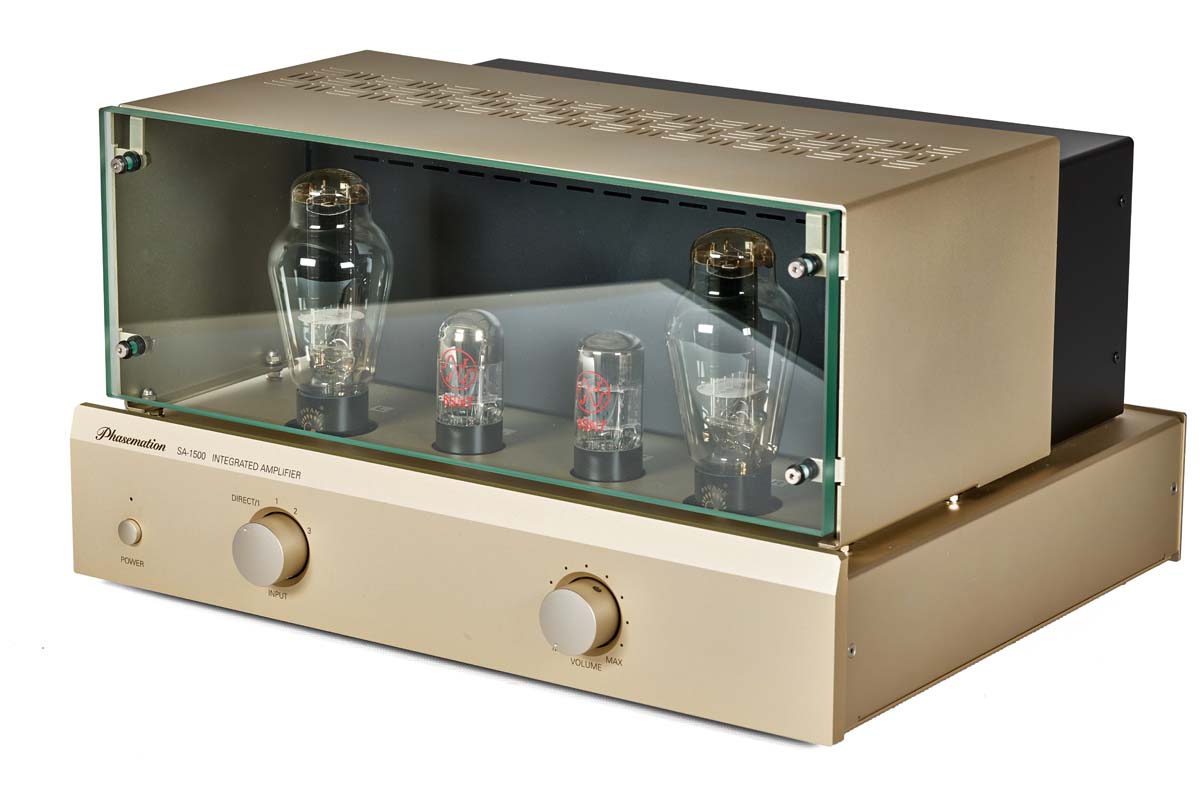
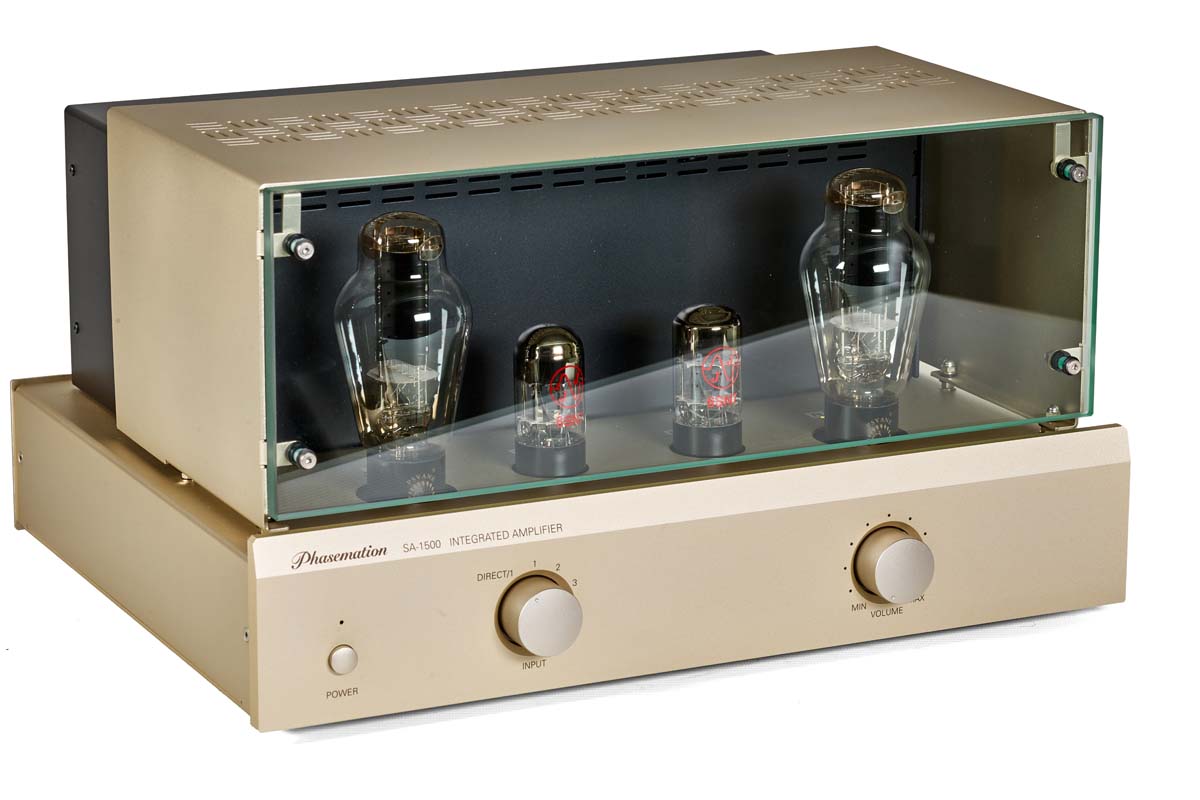
Phasemation also recommends leaving the (nicely designed) cover on the unit, as this is said to be sonically beneficial – a statement I can well understand due to sound propagation and its influence on free-standing tubes. The elegant hood also helps contain stray signals emitted by the tubes; moreover, the 10-millimeter-thick glass panel in the form used is beautiful to look at. And last but not least, the device was sonically tuned at the factory in exactly this configuration – so the cover stays on. In the case of the SA-1500, the stock JJ tubes were first “listened through,” before switching to the aforementioned Linlai E-6SN7 after around 100 hours (note: always handle such tubes with cloth gloves and only by their bases, never by the glass envelope!). The difference was immediately audible and became thoroughly mature after about 50 hours: the Linlai offer more space, more depth, more separation between tones, and thus a much more clearly defined sound image. The JJs, on the other hand, are straighter, less “elegant,” but incredibly direct and clear. My verdict: the Linlai fun costs around 170 euros for a matched pair and, in combination with the Psvane WE300B, results in an extremely coherent setup.
Too often, people focus solely on swapping the output tubes, even though they ultimately only perform as well as they are driven. So the trick is actually no trick at all; because, as a well-known Scottish audio engineer once said many years ago, what is lost at the front cannot be recovered at the back. Period! Consequently, this is the path that should reasonably be taken. Anyone still looking for an “ultimate” top solution at this point can invest additional money and plug Takatsuki 300B tubes into the designated sockets. But then let no one say I didn’t warn about the risk of addiction. Equally important is the use of a high-quality power cord: doesn’t it ultimately also have something to do with consistent action on the owner’s part when one equips an amplifier in this price class accordingly?
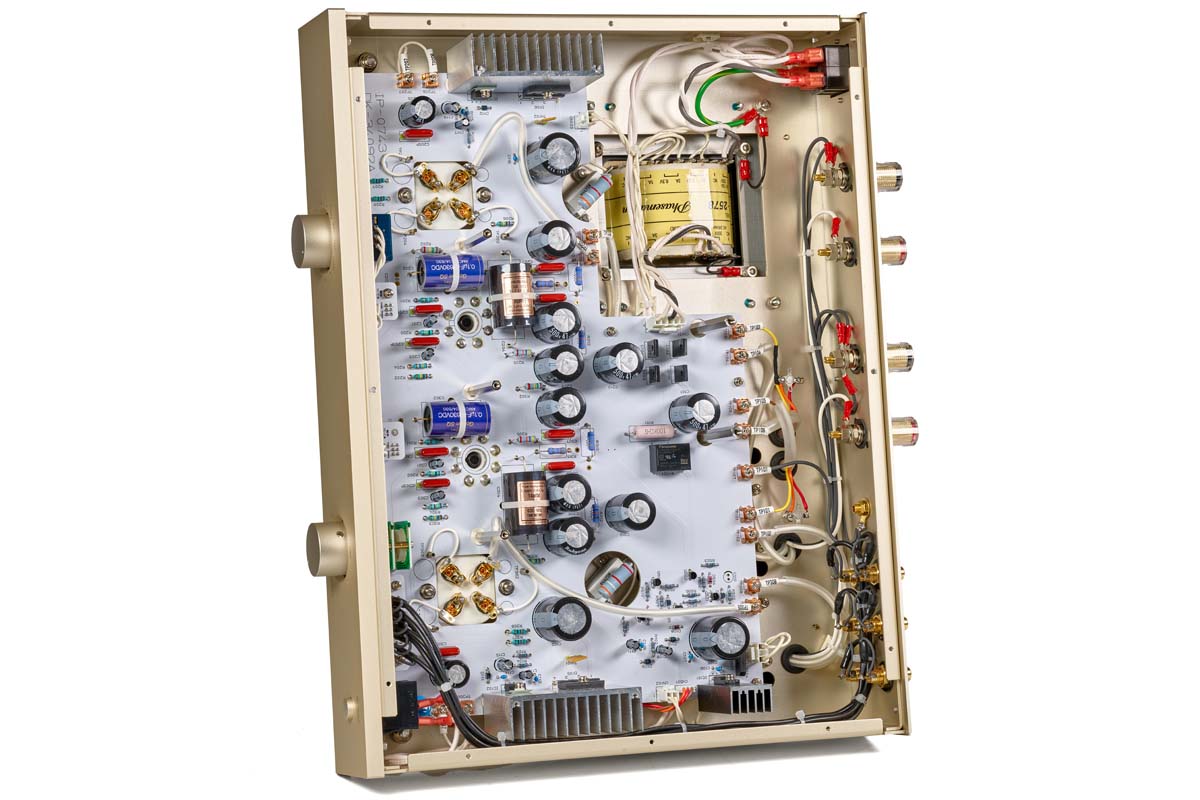
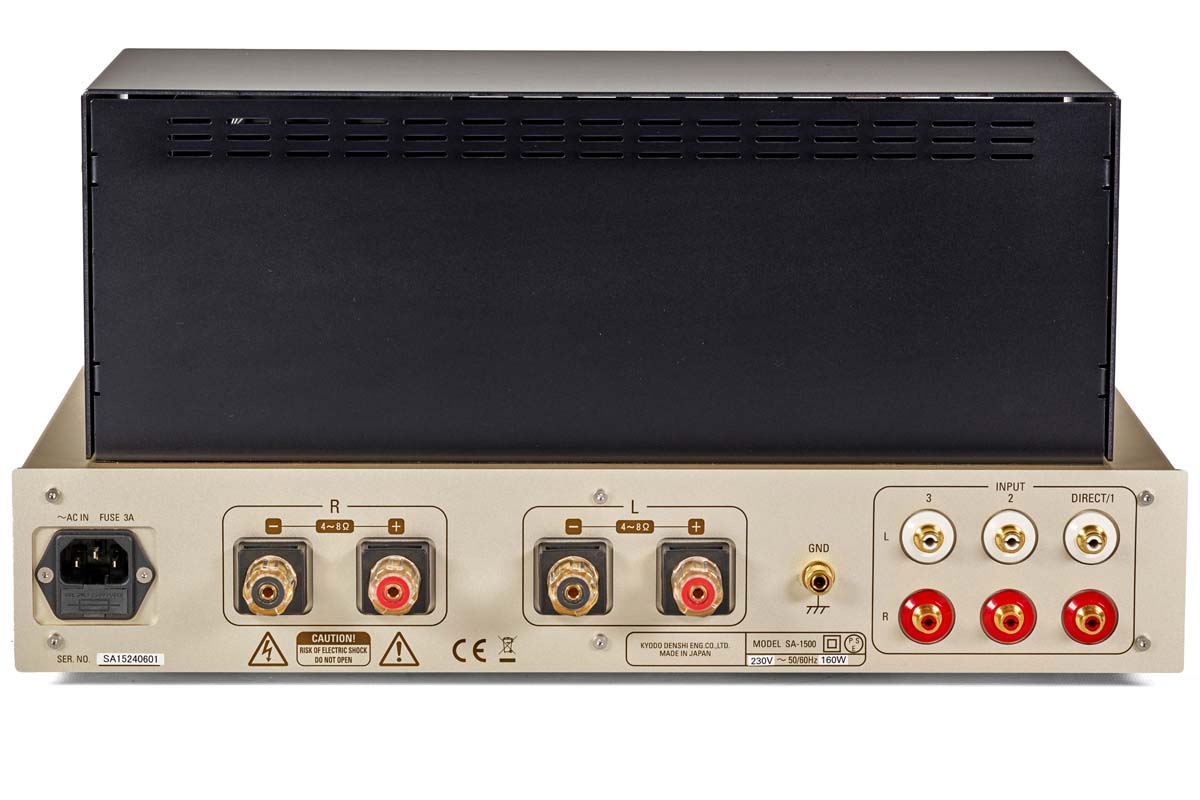
Alternatively, the SA-1500 is available in a version with a black front panel (the transformer covers are always black). That the power switch on the Phasemation is located on the front panel (simply in the right place) is by no means typical of all tube amplifiers – so a big bravo for that alone! Let’s stay right here and turn our attention to the three line inputs plus the additional “Direct/1” input, which allows the connection of a separate preamplifier (Phasemation offers the CM-1500). With this input, the music signal goes directly to the power amp, not through the volume control as with Line 1 to 3, achieving even higher playback quality. Needless to say, in the context of this review I first connected the phono chain of my system (entirely Phasemation). Even with high-efficiency speakers rated at 99 dB, not even the slightest background noise from the amplifier can be heard. Clearly, the built-in choke transformer in the high-voltage supply works perfectly; incidentally, it is mounted using the same anti-vibration rubber mounts that have already been successfully used in Phasemation’s own large MA-5000 mono power amps. This effectively suppresses unwanted vibrations and their negative effects on the chassis. In such and many other details, one recognizes Phasemation’s striving for perfection. The workmanship alone is already perfect – and as with some adjectives, it simply cannot be taken any further.
The specified power consumption of 160 watts is rather low for a tube amplifier; that the power supply is strictly divided into a left and a right section, each with its own independent choke coils, is mentioned here merely for the sake of completeness. This absolutely logical approach by the manufacturer is based on circuit considerations, as it eliminates mutual interference between the left and right channels. Finally, the automatic bias regulation contributes to complete peace of mind when it comes to operating this tube amplifier. Volume is adjusted manually via a potentiometer – a remote control is simply not an option. Phasemation’s view is that one should concentrate on listening to music and not constantly switch or adjust things. The outputs of the SA-1500 support four- or eight-ohm loudspeakers.
The domain of all 300B amplifiers is unquestionably vocals, and as representatives of many singers I chose Karen Souza with Hotel Souza and Cassandra Wilson with her album Blue Night Till Dawn, produced in 1993. The outstanding playback quality of this 300B integrated amplifier becomes especially evident with such music – time and again I experienced goosebumps. He just as unreservedly showcases his tonal merits with classical music. Listen to Sergei Rachmaninoff’s Cello Sonata Op. 19 (released on harmonia mundi). The sonic opulence required is displayed so perfectly by the two musicians involved (Alexander Melnikov on Steinway and Jean-Guihen Queyras on cello) that listeners are left at the end simply fascinated by this enormous fullness of sound. One of the best jazz recordings, in my opinion, comes from Moon Haewon and Tsuyoshi Yamamoto: Midnight Sun. The Japanese amplifier conveys the symbiosis of voice, music, and space both convincingly and compellingly. A live recording follows next with Eric Clapton’s Unplugged on the turntable – I don’t really need to explain any further, do I? Conclusion: exceptionally believable, good body portrayal and control over the entire musical event definitely count among the merits of this Japanese 300B.
One of the analog classics par excellence has been with me for years: Kiss My Axe by The Al Di Meola Project. It is a very complex, style-spanning double LP that demands a great deal from a stereo system, especially in terms of transient accuracy … Slowly, the SA-1500 is starting to seem a bit uncanny to me, because I have indeed very rarely experienced such a competent and at the same time powerful 300B integrated amplifier. I am currently listening to “Purple Orchids” and, at just around 85 dB sound pressure in the room, practically sink into the expansive sounds of this piece. From the 2023 album Birds by the Tingvall Trio, “Woodpecker” is playing right now, and I lean back deeply satisfied in my listening chair over these wonderful playback abilities of the tube integrated amplifier … The piano hammers its sounds into my listening room, and the double bass rejoices across all its frequencies. As so often with this review, the entire recording plays through. The SA-1500 reveals itself here as an ideal mediator – a musical all-rounder. The same immediately applies to the following LP: ZZ Top – Live in Germany 1980. What does the Phasemation SA-1500 do with this decidedly earthy, even rather rough music? Well, it rocks my room in a relaxed yet elegant way – just listen to “Jesus Just Left Chicago”! It kicks so hard – so, in terms of macrodynamics, this double LP is enough for me for now. The SA-1500 can do it, no question, but I personally prefer more refined and superbly recorded material with it. Very lightly, very effortlessly, it presents even the smallest frequency and swings its way up effortlessly into the highest reaches of what is still tonally audible. Many recordings later, one fact is completely clear: again and again, the musical flow in the playback is striking; on the one hand, this amp can play along in a relaxed, laid-back manner, and on the other, it can strike lightning-fast out of nowhere when the dynamic jumps on the respective recording demand it. The SA-1500 mastered the entire musical program described here in a virtually perfect performance that left a lasting impression on me.
Accompanying equipment
CD transport: Esoteric/Teac P-70 | DAC: Soulnote D-1N | Turntable: Clearaudio Innovation with Silver Wire XLR and Smart Power 24V power supply | Tonearm: Clearaudio Universal | Cartridges: Clearaudio Charisma V2, Phasemation PP-500 | Phono preamp: Phasemation EA-320 with T-550 step-up transformer | Tube hybrid integrated amplifier: KR Audio VA350i | Loudspeakers: Blumenhofer Acoustics Genuin FS 1 MK 3 | Cables: AudioQuest Thunderbird and Angel, power cords AudioQuest Firebird, Hurricane, and Thunder | Accessories: GigaWatt circuit breaker G-C20A, in-akustik AC-4500 power conditioner, acoustically treated room (40 m²) with 0.4 s reverberation time
Tube integrated amplifier Phasemation SA-1500
Concept: single-ended tube integrated amplifier, Class A | Inputs: 3 x line-in (RCA), 1 x direct-in | Tube complement: triode tubes 6SN7, Psvane 300B | Output power (5% THD @ 4 Ω): 9 W | Input impedance: 47 kΩ or higher | Gain: 30 dB | Frequency response (+0/−3 dB): 10 Hz/40 kHz | Output impedance: 4 Ω to 8 Ω | Power consumption (100 VAC 50–60 Hz): 140 W | Special features: optimized Lundahl transformers for interstage and output transformers, elaborate separate choke coils for each circuit | Finish: champagne, black | Dimensions (W/H/D): 43/24/38 cm | Weight: 18 kg | Warranty: 2 years | Price: approx. €14,900
AXISS Europe
Haneckstraße 32
65719 Hofheim
Phone +49 61922 966434
info@axiss-europe.de