
Progressive rock entails tempo changes, classical and jazz reminiscences, extensive instrumental parts and surprising instruments. And since all of this is hard to fit into a three-minute song, we have the long track.
When Manfred Mann arrived in England in 1961, it was Mike Hugg with whom he started his first band – the Mann Hugg Blues Brothers. However, they released their records under the simpler name Manfred Mann and scored major pop hits such as “Do Wah Diddy Diddy” and “Mighty Quinn”. Although Mike Hugg was “only” the drummer in that band, over the years he became its leading songwriter. In 1969 he even took over as lead singer – and with that, the band changed not only its style but also its name. It was now called Manfred Mann Chapter Three. In keeping with the spirit of the time, the group now moved toward psychedelia, jazz rock, and improvisation. The driving force behind this was Mike Hugg: he wrote almost all the pieces, including a 16-minute song in 1970 titled “Happy Being Me”.
A year later, Chapter Three’s third album was already completed, but it was never released. Manfred Mann had pulled the plug. He wanted to go in a different direction and founded a new band – without Mike Hugg.
The new formation was called Manfred Mann’s Earth Band. The band name responded to the emerging environmental movement – in 1972, the first report of the Club of Rome was published. The ecological theme also suited a song that Mike Hugg had written for the (unreleased) final Chapter Three album: “Messin’.” It deals with environmental destruction and the pollution of the planet. Its chorus goes:
“We’re messin’ up the land / We’re messin’ up the sea / We’re messin’ up the air / Messin’ up on you and me.”
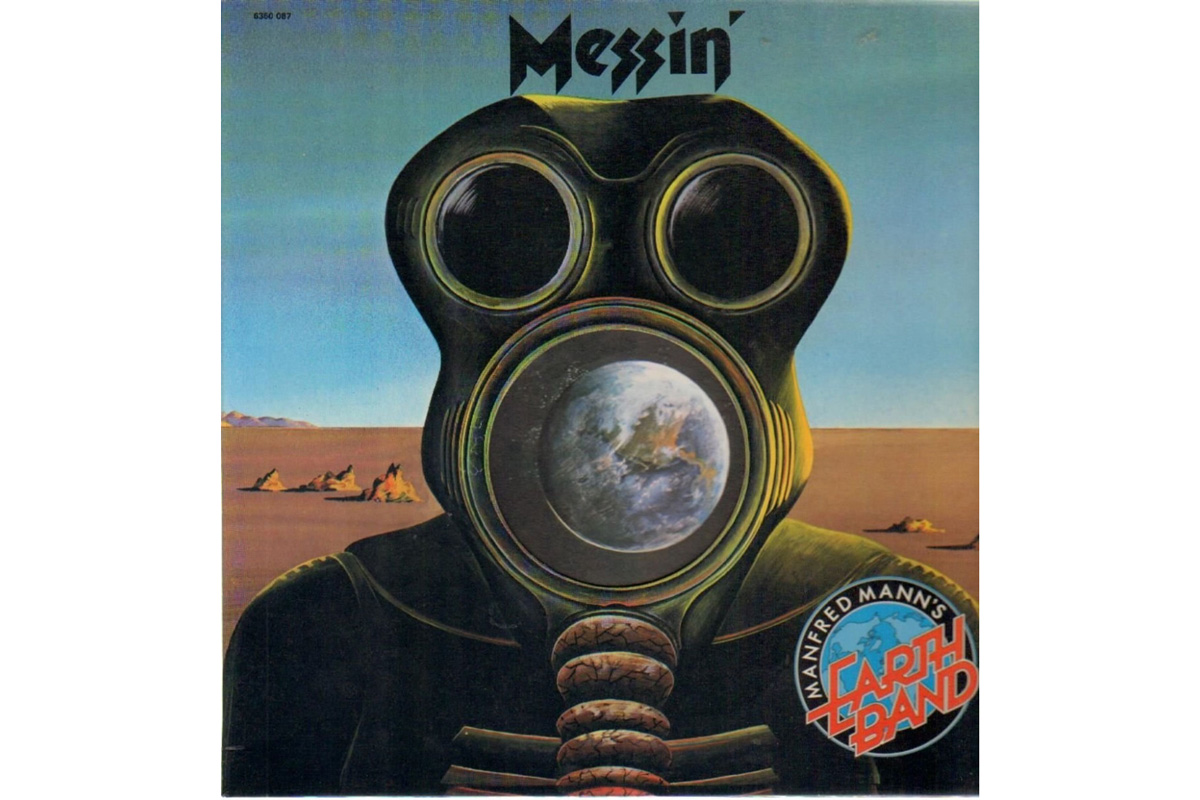
Someone suggested adding the song to the Earth Band’s live set – Manfred Mann agreed. He even went a step further and made “Messin’” the opening and title track of the band’s third album, Messin’. The arrangement also came from Mike Hugg, the song’s author.
The vocal parts are straightforward. Mick Rogers sings two verses at the beginning (0:35 to 1:28), followed by the chorus three times (1:28 to 2:10), the first two times performed by a female choir with initially sparse accompaniment. Then come the third and fourth verses and the chorus again three times (2:31 to 4:06).
In the instrumental middle section, a compelling, fully composed theme appears, played jointly by guitar and keyboard (4:35 to 5:44). After that comes the magnificently conceived guitar solo (6:00, again Mick Rogers), which intensifies and becomes more virtuosic as the tempo doubles and – while the keyboard briefly takes over – continues until the return of the chorus (8:51). It is first heard effectively without a beat and then with drum breaks, which toward the end turn into a short drum solo.
In “Messin’,” the band also uses associative “sound design” layered beneath the entire piece. This includes machine noises (environmental destruction?) and “laughing” monkey calls (nature?). The band received these samples at the time from Laurie Scott Baker (1943–2022), a composer specializing in electronics who also worked with Robert Wyatt and Allan Holdsworth.
Incidentally, the structure of the 10-minute “Messin’” became the blueprint for the opening tracks of the Earth Band’s next two albums. The song Give Me The Good Earth (1974) would once again return to the ecological theme.