
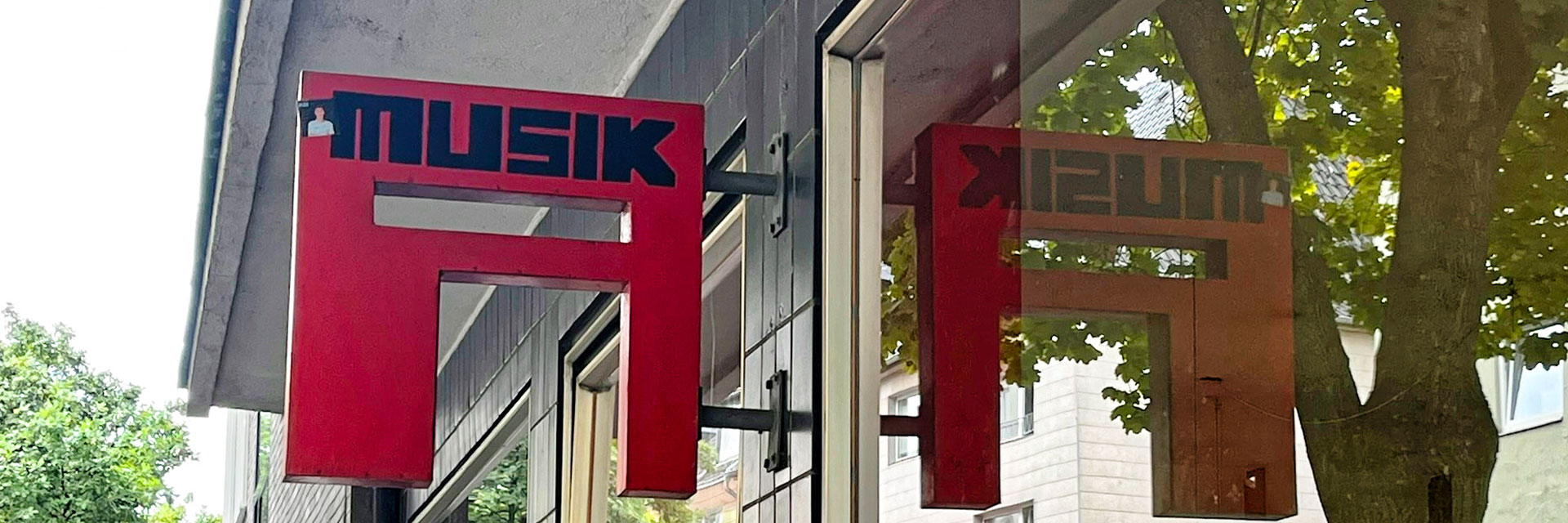
For 30 years, Georg Odijk and his collaborators have run a record store known far beyond Cologne – one that celebrates music in its distinctive, unconventional forms, independent of genre or medium: A-Musik.
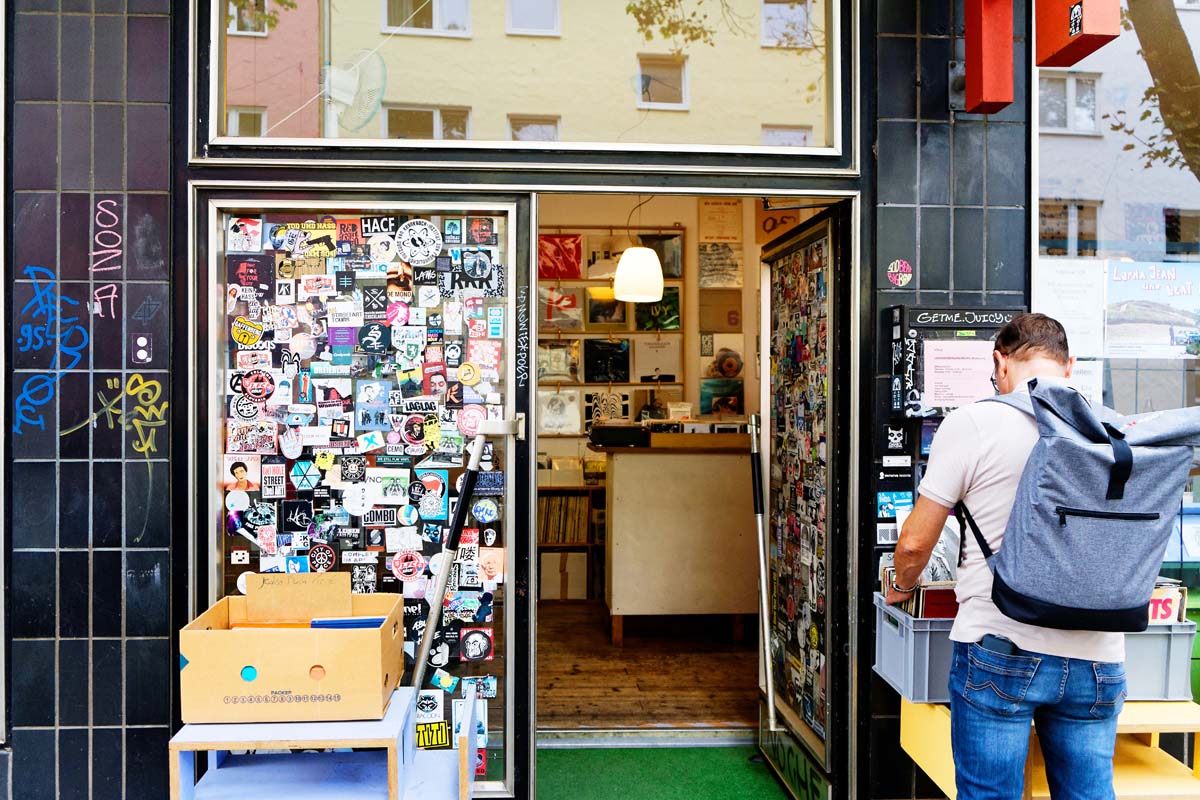
There are street names that burn themselves into your memory – you can still find them years later, even if you haven’t been there in a long time. One of them is Kleiner Griechenmarkt in Cologne. Despite its name, the street hardly looks like a marketplace; instead, it still radiates a certain 1950s suburban charm, even though it’s located in the city center. There’s a reason for that: the historic old-town buildings – including the residence of Jacques Offenbach – were completely destroyed during World War II. Today, a postwar neighborhood shapes the area, modest compared to the large squares surrounding it. Yet right here, between kiosks and cafés, sits a record store that has long been legendary for a particular music scene: A-Musik.
A Store with Biographical Entanglements
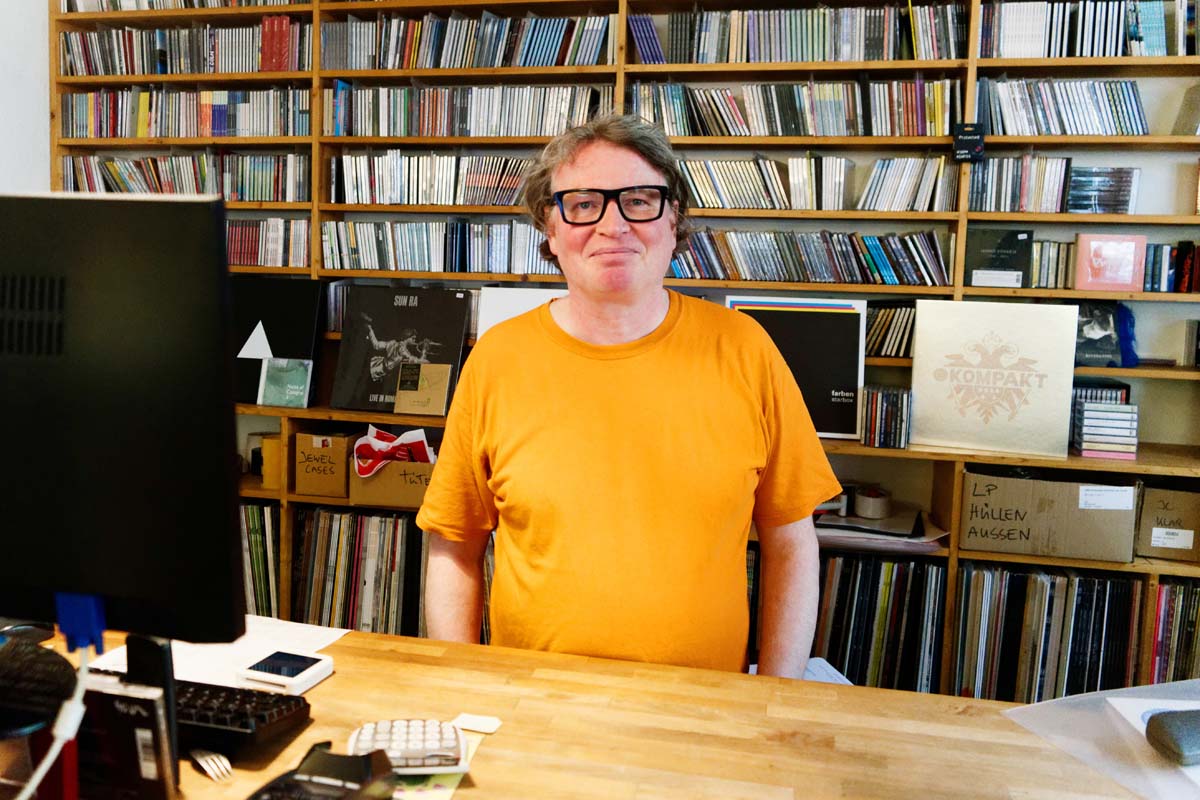
The beginnings of A-Musik sound like a scene from a nerdy 1990s coming-of-age movie. A group of high-school music obsessives realized that you could get better deals on records if you ordered not three but at least five copies of the same LP. Out of this simple economic insight grew a business model that officially led to the founding of the store in 1995. Last year would actually have marked A-Musik’s 30th anniversary – but because the pandemic overshadowed the 25th celebration, Georg Odijk and his collaborators Frank Dommert and Wolfgang Brauneis decided instead to celebrate big in 2028. Appropriately enough, it will be for the 33rd anniversary: a tongue-in-cheek homage to 33 rpm, the standard speed of the vinyl LP.
The early years also saw cooperation with the Sonig label, which played a major role in shaping the legendary “Sound of Cologne,” those early, distinctive electro beats made in Germany by artists like Mouse on Mars or Schlammpeitziger. A few period posters on the store’s walls still give customers a sense of the exciting spirit of departure from those years.
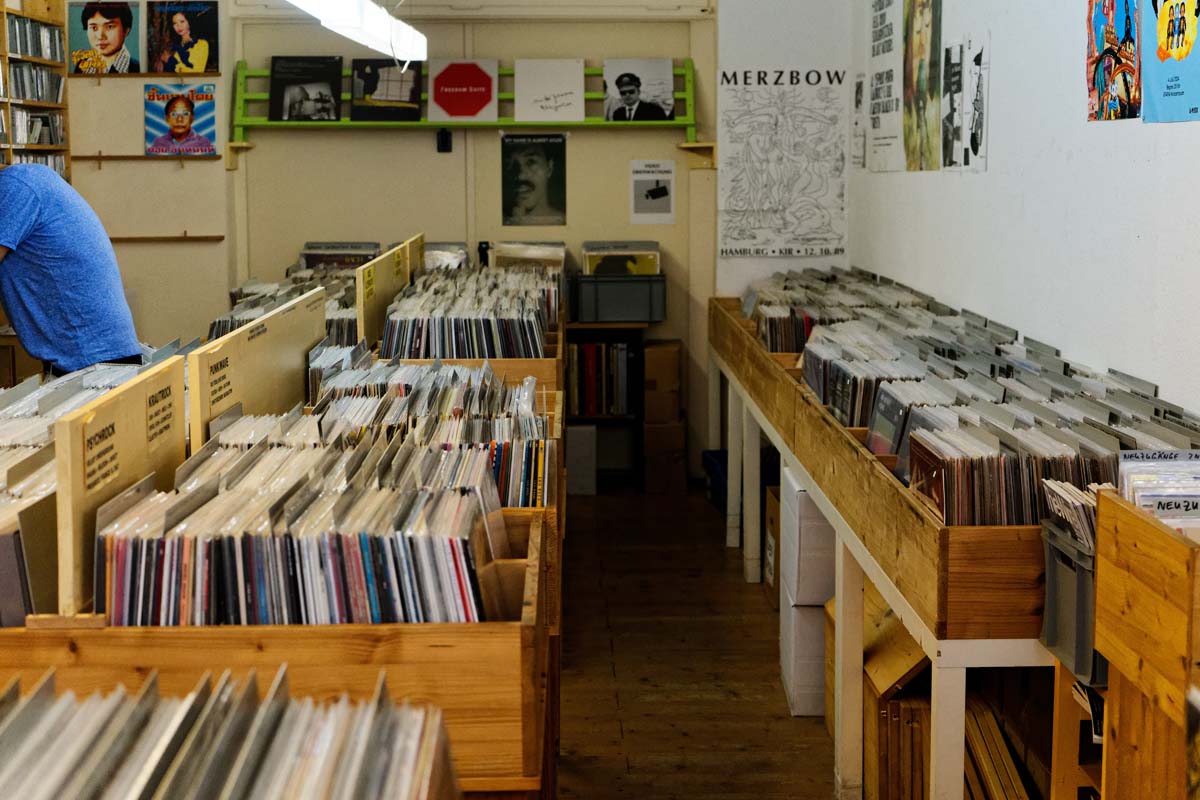
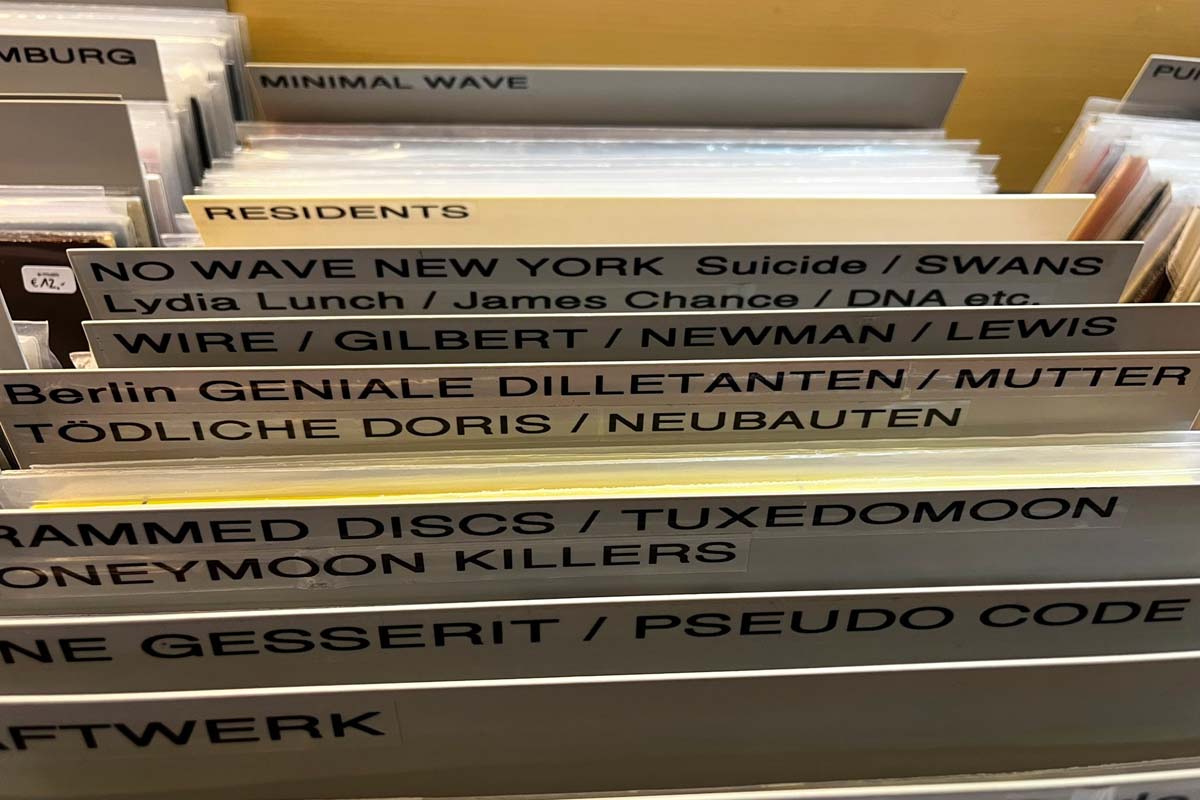
Browsing the shelves, you quickly realize that exciting music is not a question of age or era, but solely of artistic attitude. This isn’t about mass-produced goods – it’s about the “off-kilter” beyond the mainstream. The shelves are packed with experimental music: classical avant-garde, free jazz, drone, improvised electronics, and artfully twisted pop concepts. There are also many productions from East Asia. Yet as specialized as the selection may be, the atmosphere is anything but elitist. Ask about Bryan Adams or Madonna and you won’t get a mocking smile – staff will politely point you to crates where mainstream titles can also be found. Even requests from Swifties looking for exclusive Record Store Day editions are gladly accepted.
Nothing Is Impossible – Navigating the Pitfalls of Catalog Ordering
In our conversation, we quickly turn to the challenges of ordering and sourcing repertoire, which naturally works differently for small labels than for releases from companies like Universal Music Group. That ordering from niche genres has become more difficult today is less about demand than about changing economic conditions. Rising shipping costs, new tariffs, and skyrocketing vinyl prices make life harder for customers and store owners alike. More and more often, budgets determine whether someone buys vinyl or a CD.
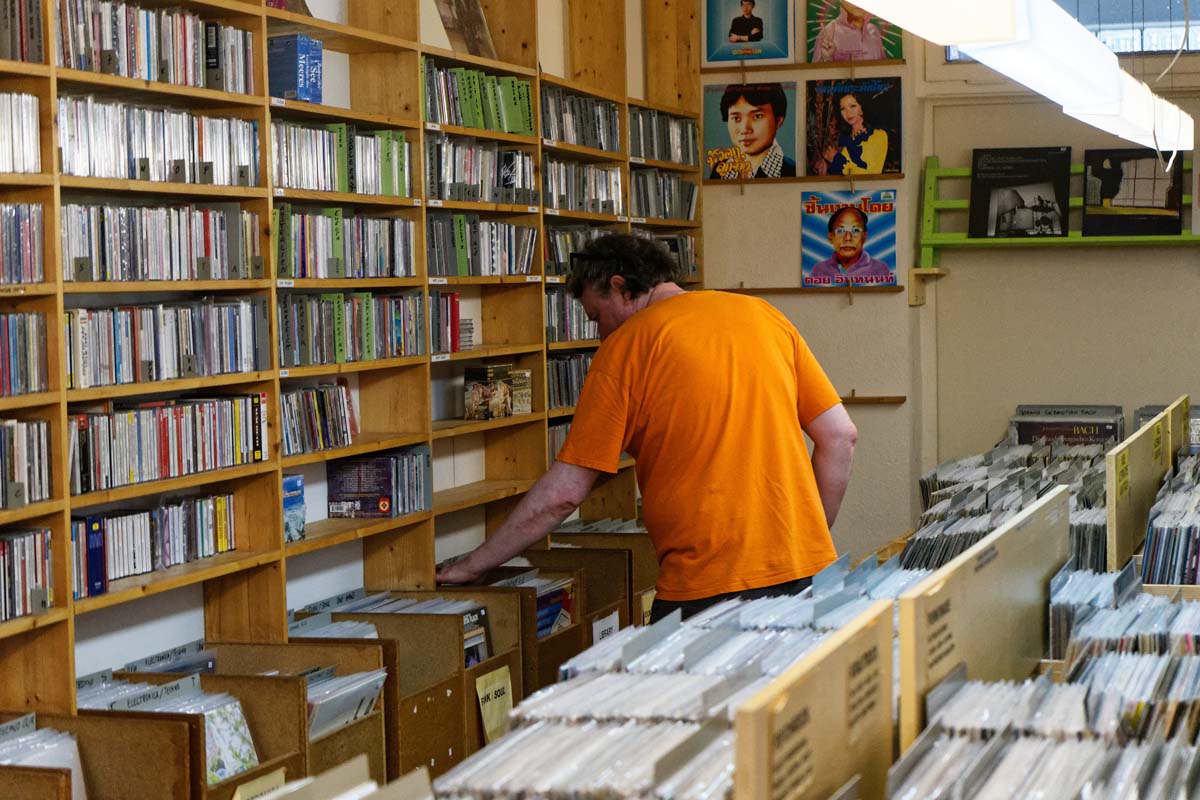
At first glance, the long rows of records dominate the shop. But on closer inspection, it’s clear that A-Musik is no dogmatist of the “black gold.” CDs still play an important role here – for example, the enormous back catalog of the U.S. label Mode Records, whose releases devoted to John Cage or Morton Feldman are considered benchmarks of American avant-garde music. Such rarities are almost impossible to obtain through conventional distributors.
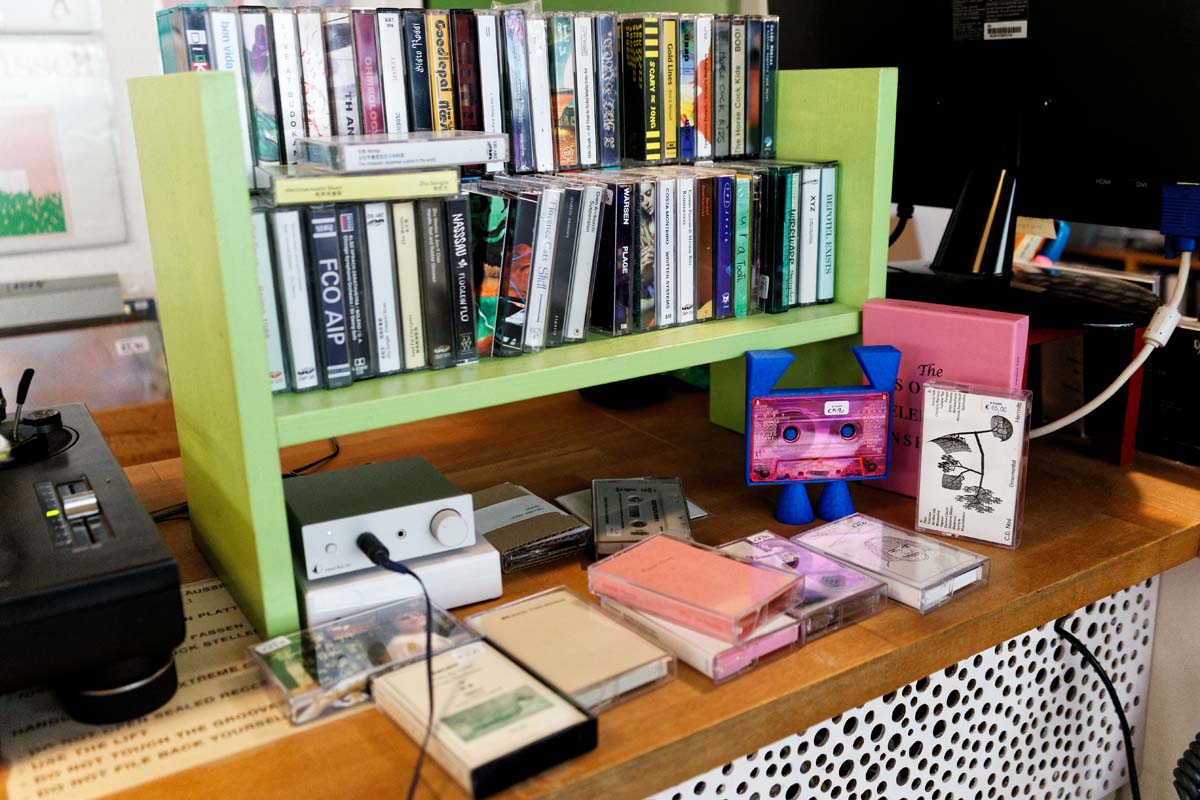
At the same time, globalization seems to be partly retreating here as well. Labels like the legendary New York underground company Tzadik no longer export large CD box sets – such as John Zorn’s Bagatelles – to Europe at all, and issue regular CDs only in very small runs. Despite all the import difficulties, Georg Odijk doesn’t have to worry about running dry. Reliable suppliers, international contacts, and mailing lists ensure a steady flow of stock. Add to that frequent releases from the local Cologne scene, some of which are available here exclusively. And the secondhand business is thriving anyway.
Just before closing time, Georg Odijk takes me into the storeroom – a true archive of classical avant-garde and experimental underground, from Paul Hindemith to John Zorn, from Frank Zappa to Die Tödliche Doris. Anyone who dives in here can easily lose track of time. It’s a paradise of vinyl and CDs, so dense and tempting you could almost imagine wanting to be locked in there for weeks.

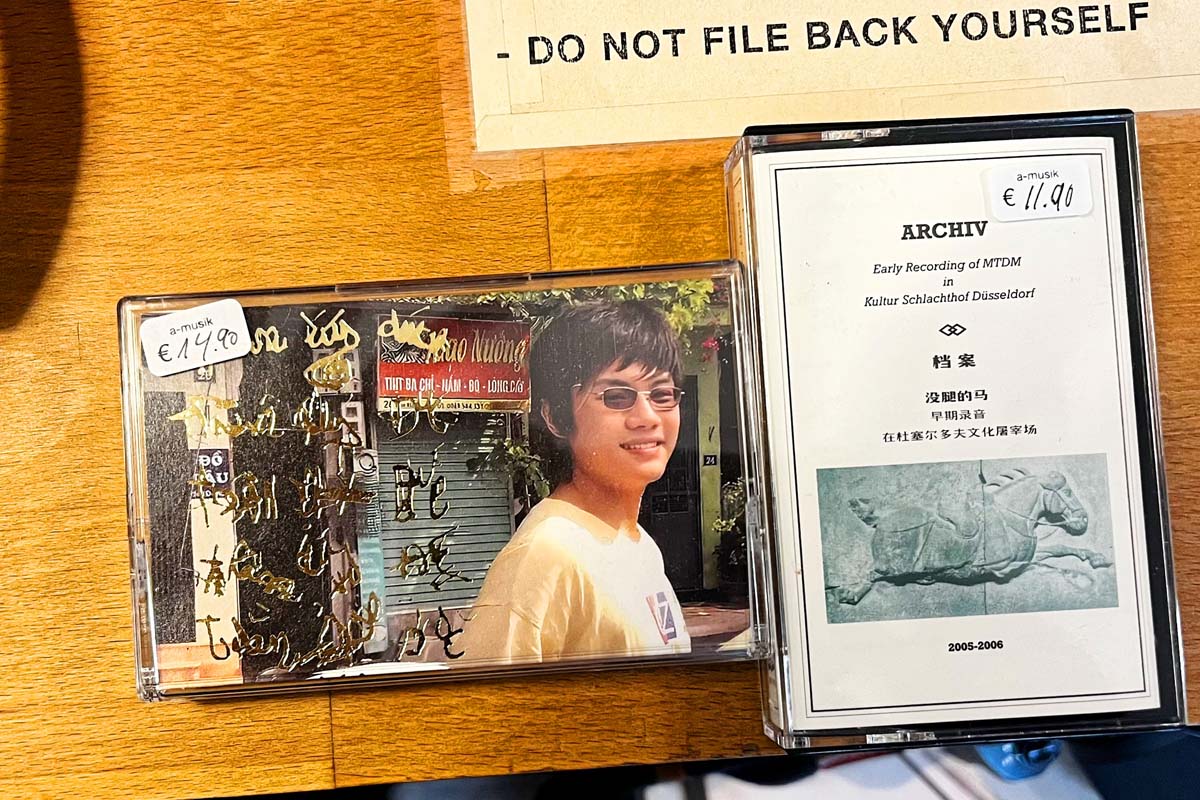
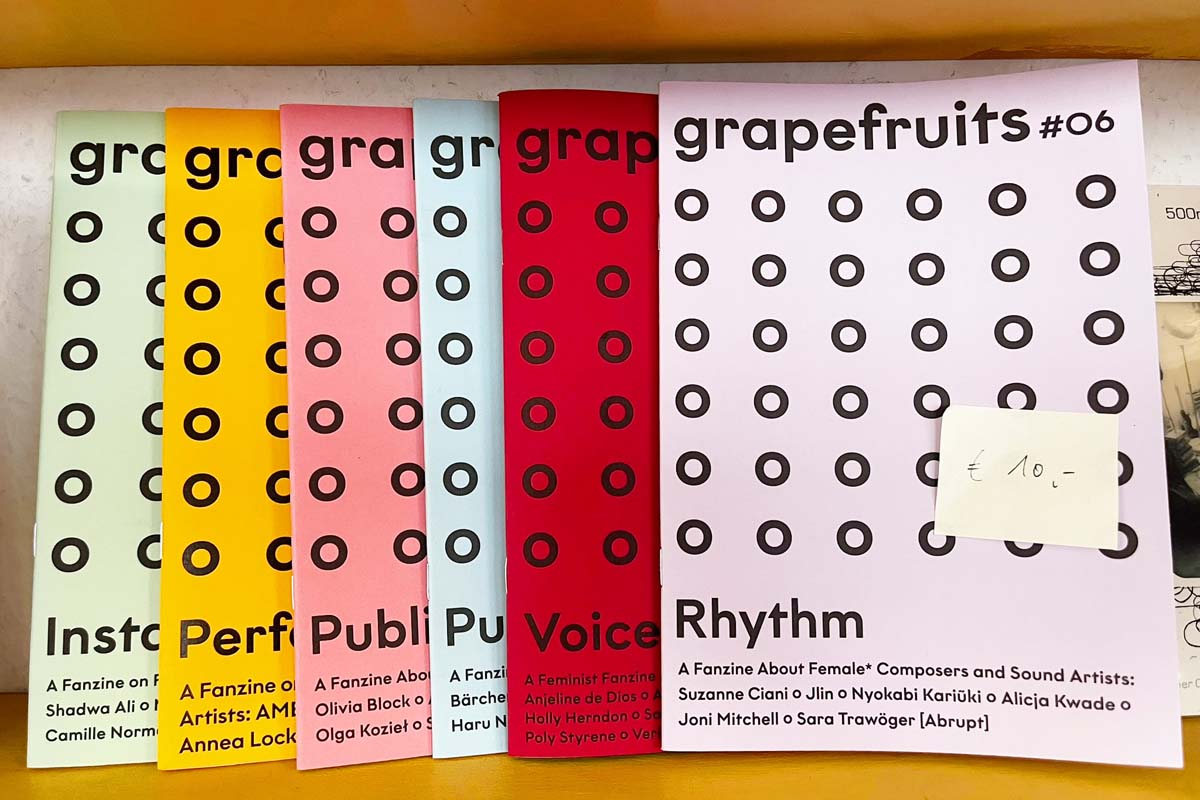
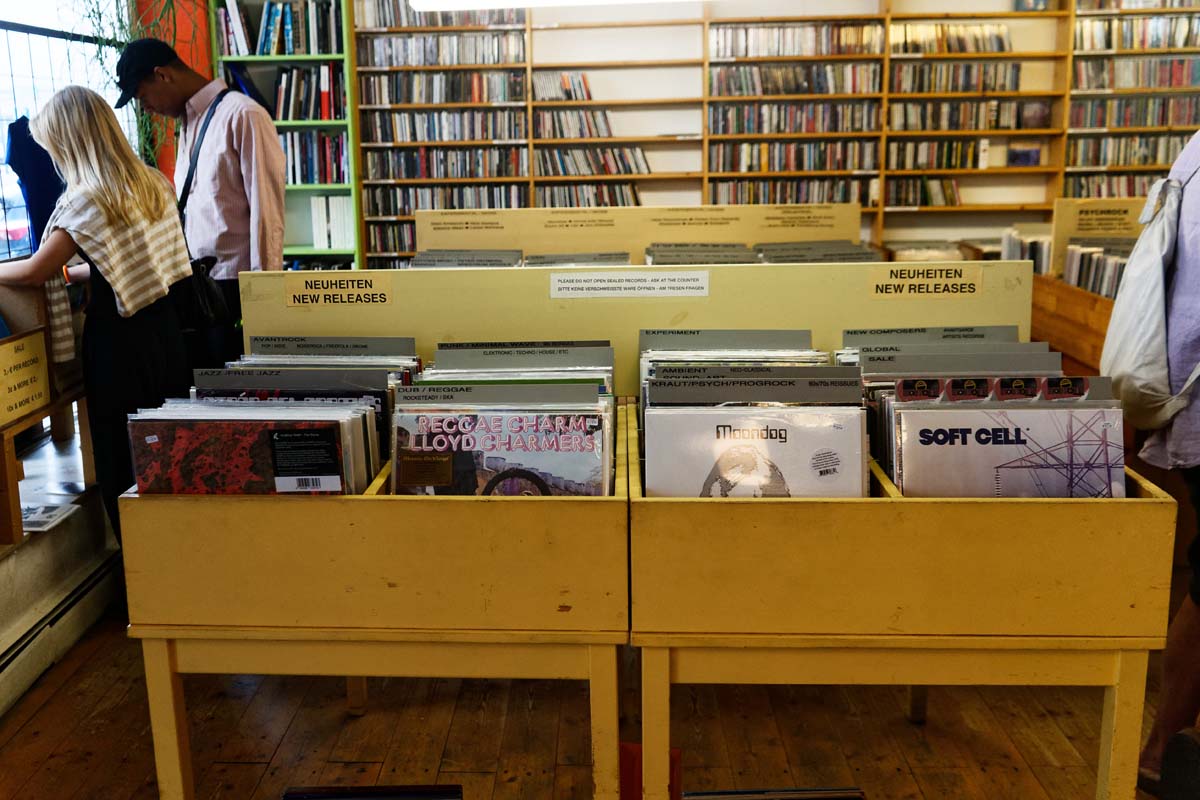
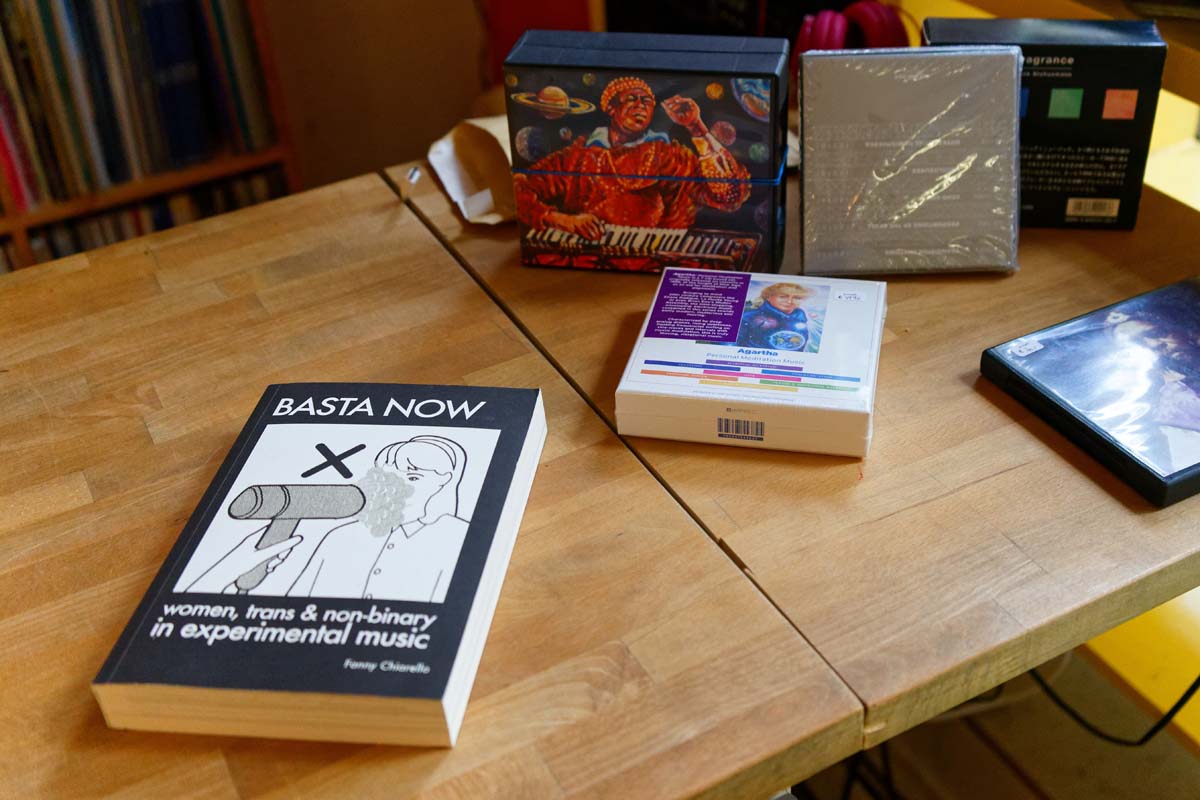
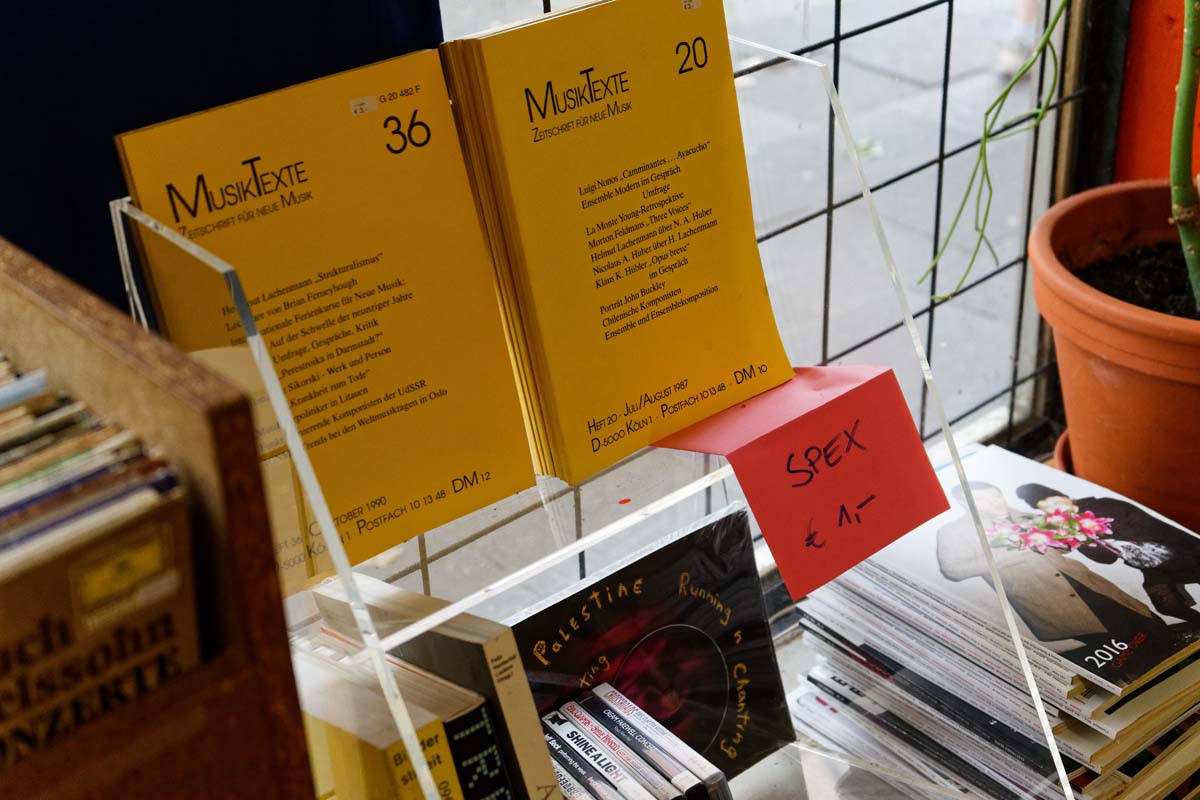
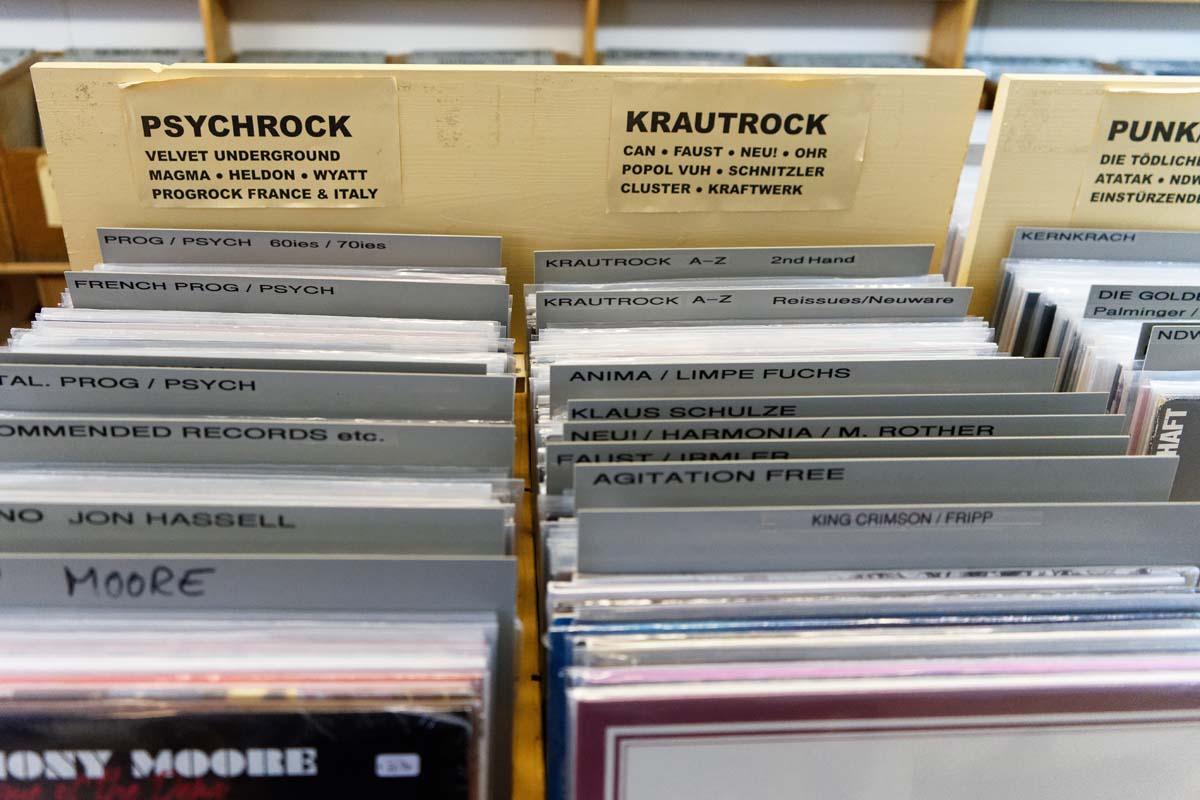
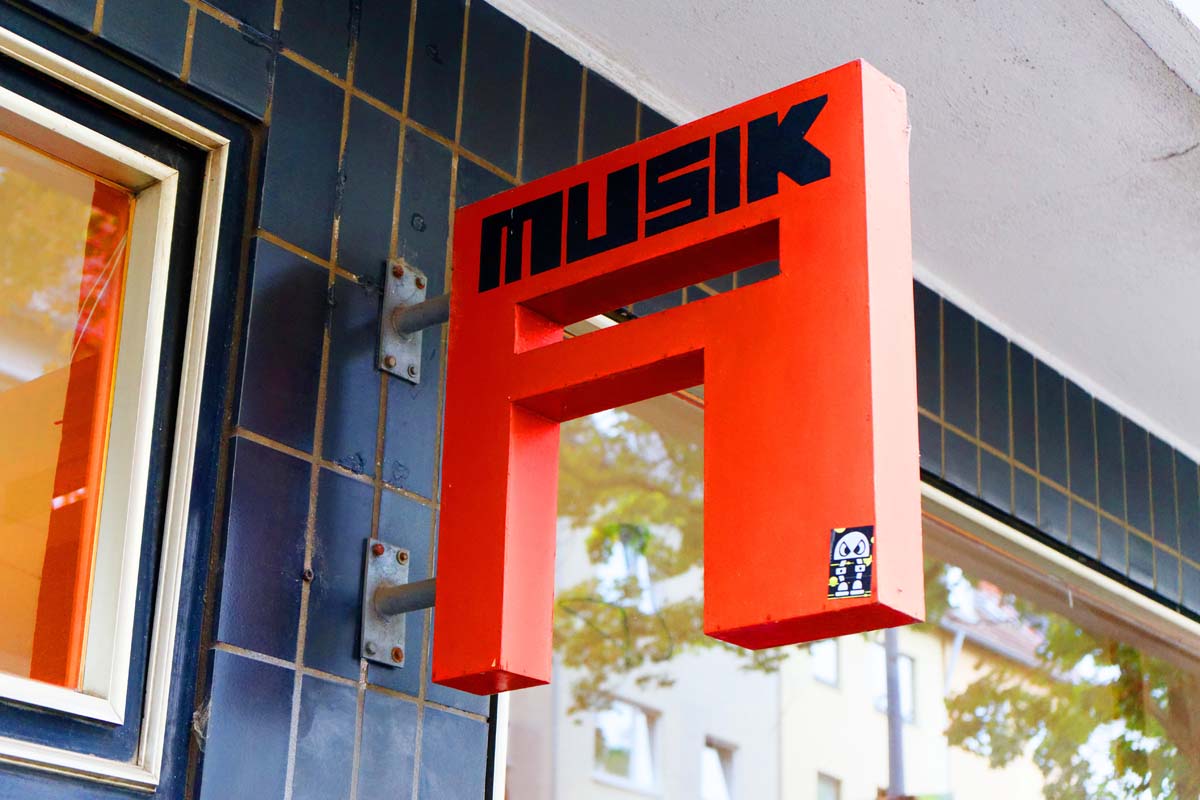
What’s truly endearing about A-Musik is precisely this openness. The medium is not what matters most – it’s the music, in all its forms. Alongside records and CDs, you’ll also find music books and a dazzling selection of magazines, whose lovingly nerdy layouts and formats cover even the most obscure subgenres. Where else, if not here, should such niche products have their place? Accordingly, the clientele is curious, open-minded, and anything but afraid of the unusual.
Today, A-Musik is far more than just a record store: it’s a hub of the international avant-garde, a refuge for music lovers, and a piece of living subculture in the heart of Cologne. Unassuming from the outside, inside it unfolds a sonic universe that radiates far beyond the city. And if you can’t make it to Cologne, you should at least visit the excellent website with its ordering options, label information, and current releases. But beware: parts of the catalog might unsettle you – or permanently change your taste in music. And that’s a good thing.
A-Musik
Kleiner Griechenmarkt 28–30
50676 Cologne, Germany
Phone +49 221 5107591
Hours: Tuesday–Friday 2–6 p.m., Saturday 12–4 p.m.