

Staying true to itself while pushing progress to the very limit: Devialet pulls off this impressive feat with its iconic integrated amplifiers.
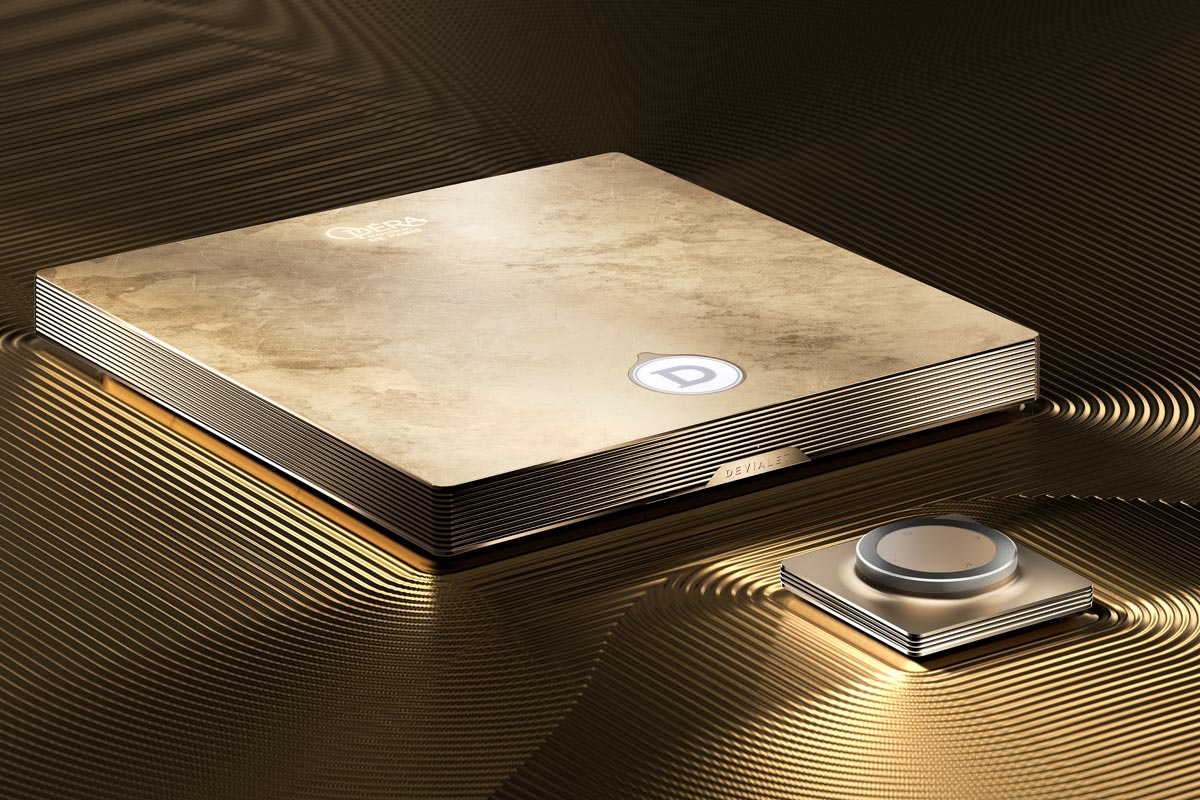
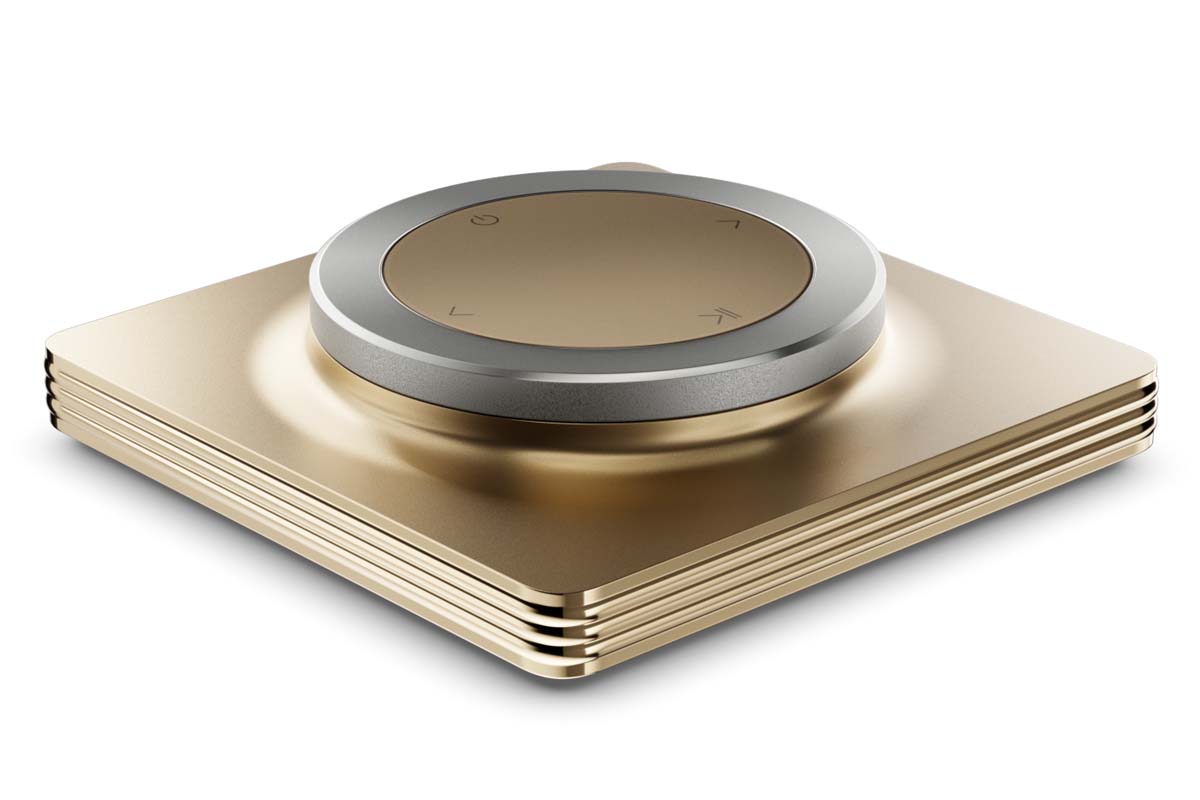
Coup de Cœur: That’s French, an expression for falling in love on the spur of the moment. Not so much with a person as with a thing, a place – say, a crispy butter croissant or the sunrise over Montmartre. Whatever floats your boat. Hi-fi works too. As it did in the summer of 2010, when the debut product of the French technology startup Devialet unexpectedly landed in my listening room. The Devialet D-Premier stayed only two days, but that was enough to wrap me around its finger. An integrated amplifier so flat, so immaculate, technically leagues ahead of its time. And then that remote control: wirelessly connected, with a satisfyingly weighted rotary dial, lag-free and precise like a micrometer. Coup de Cœur!
The D-Premier was also convincing sonically. The secret was the patented ADH circuit developed by Devialet founder Pierre-Emmanuel Calmel. ADH stands for “Analog Digital Hybrid.” Calmel explained it in an interview like this: “You combine an analog and a digital amplifier, connect their outputs together, and control the digital amplifier so that it supports the analog amplifier. It works similarly to a current-booster topology, but when you add the analog amplifier that’s directly connected to the loudspeaker, you also get its sonic fidelity – what the digital amplifier can’t deliver in terms of transients, the analog amplifier provides.”
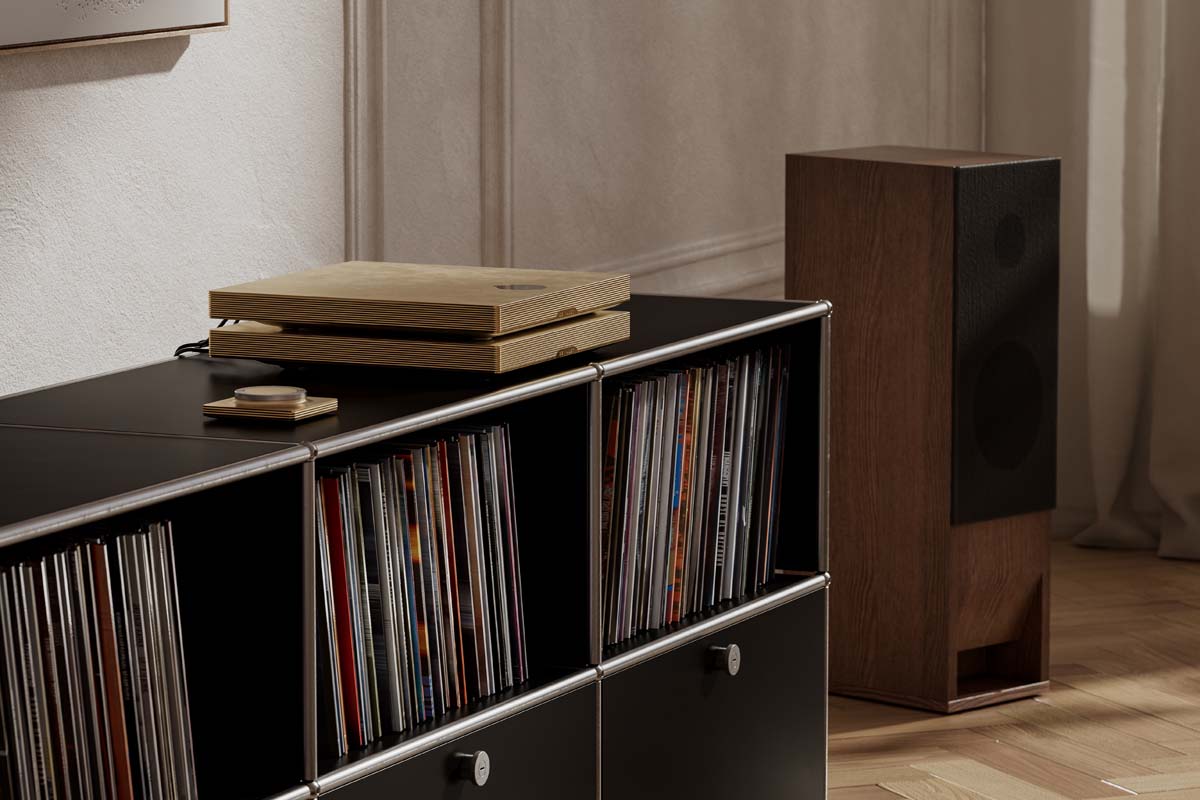
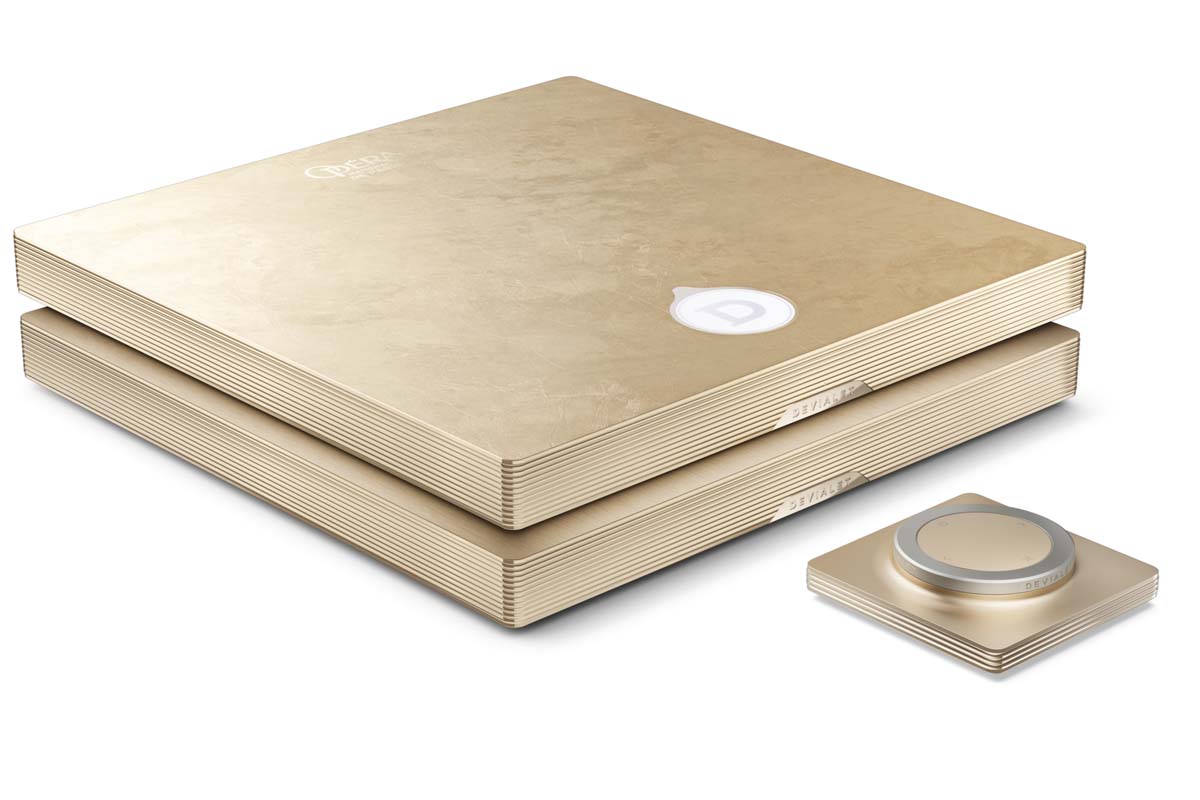
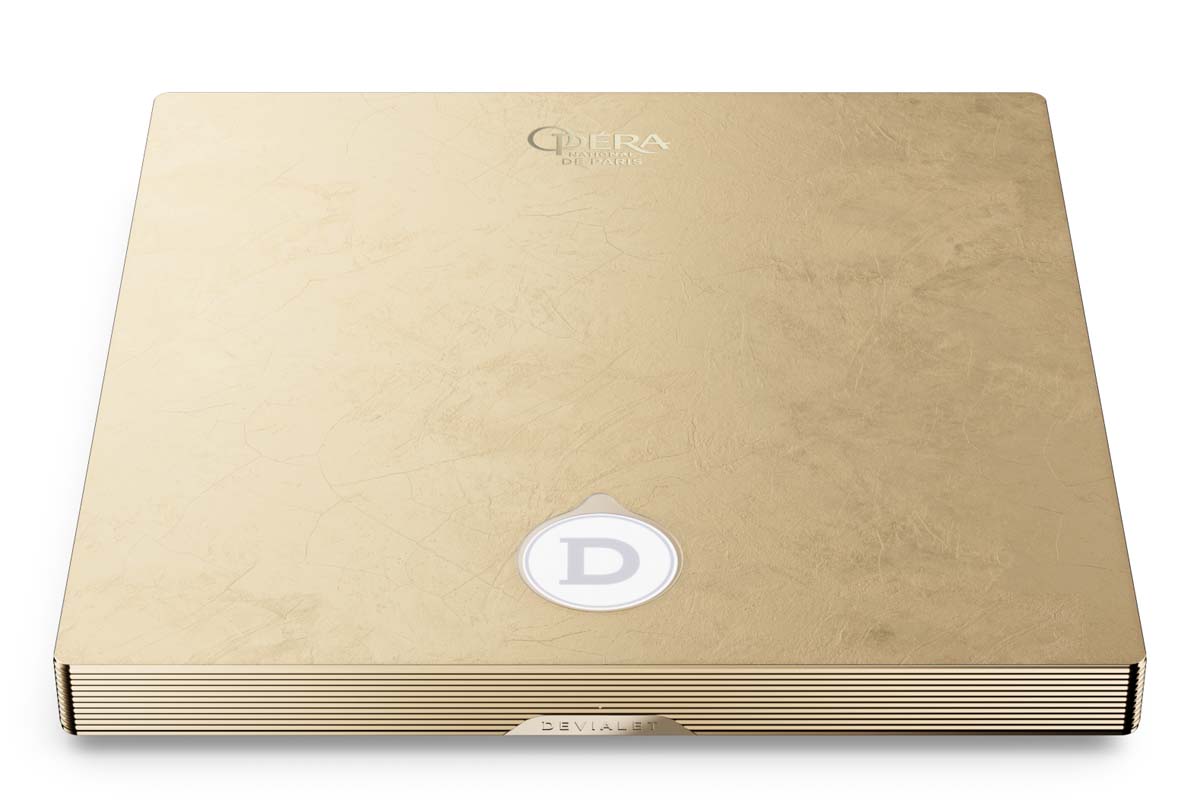
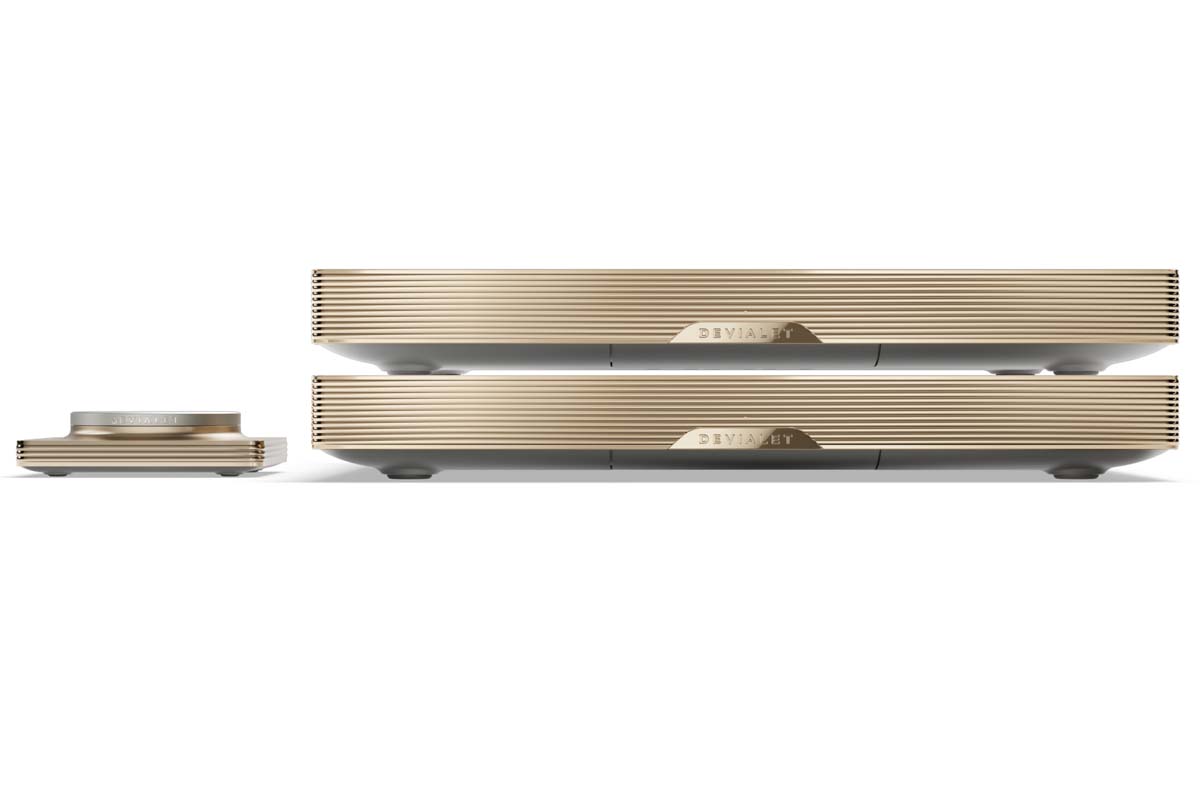
The trick from 2010 still works. A drop-dead gorgeous, flat metal cuboid with no visible controls; inside, avant-garde amplifier technology with awe-inspiring performance figures; a contemporary streaming and digital section; and on top of that the best remote control in the world. Allow me to introduce: the Devialet Astra. Familiar in form factor, but newly reimagined in design – the manufacturer speaks of inspiration from Art Deco, referring to the fine circumferential ribs that indeed lend the unit a classically architectural air.
The beating, amplifying heart of the Astra pulses in an evolved ADH rhythm: 1.6 megahertz, to be precise – at least as far as the Class D section is concerned. For its analog Class A counterpart, Devialet claims a bandwidth of 5 megahertz. Together, the two generate up to 300 watts of continuous power into 4 ohms. Source signals are handled by a D/A converter module that Devialet has given the elegant name “Magic Wire.” The key component here is the delta-sigma converter PCM 1792a from Texas Instruments, formerly Burr-Brown. The DAC accepts digital signals in all common formats as well as analog signals that are first digitized in HD quality. These can be line-level signals, but also the whisper-fine voltages from MM and MC cartridges. Yes, plural, because the Astra can be configured in no time so that tonearm cables can be connected to two of the three pairs of RCA jacks. In that case, RAM comes into play. The acronym stands for “Record Active Matching.” Inside the Astra is a software-based phono equalization stage that can access a database of cartridges along with the manufacturers’ recommended loading values. The user doesn’t have to, but can choose his cartridge model(s) from extensive lists and leave the Astra to set input sensitivity, impedance, and – if required – capacitance. And even the equalization curve appropriate to the record being played.
The next prominent acronym is SAM. Spelled out, it means “Speaker Active Matching.” Once again, a database comes into play – this time one of loudspeakers. Devialet’s amplifiers have for some time allowed adaptation to the electrical parameters of speakers for the purpose of performance optimization. At the time of writing, the SAM database comprises an impressive 1,177 models. Among them is one from Ayon, but unfortunately not my small floorstanding Seagull/c, which is why I cannot report on the effect of SAM.
When it comes to digital sources, the Astra leaves nothing to be desired. All major streaming services are accessible via their respective Connect integrations. Only Qobuz has not yet been implemented at the time of testing, but it is promised for the end of 2025. A core competence of the Devialet is operation using the excellent RAAT protocol of the Roon app. That’s how I used it, fed from my Roon Core, an Innuos Zenith Mk III. Those without a Roon subscription need not fear any limitations, however – UPnP is, of course, also on board.
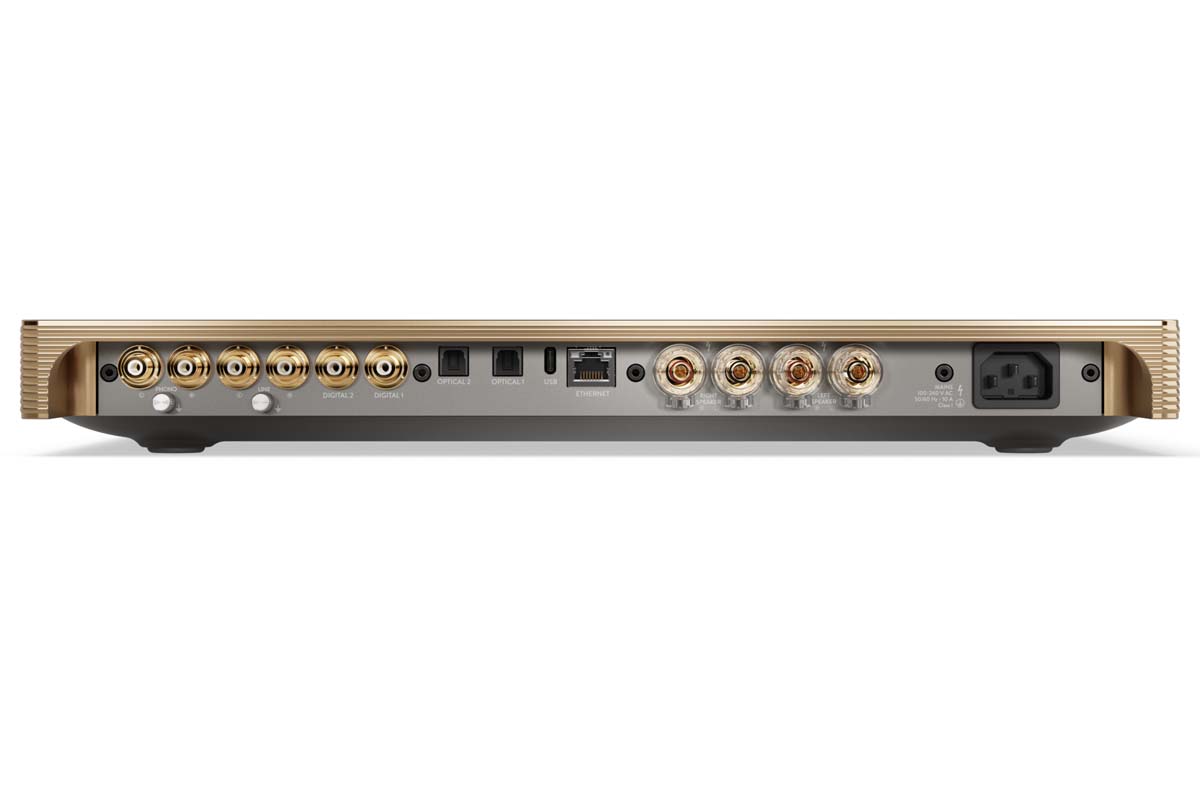
I hook up the following: the Electrocompaniet EMC 1 UP CD player analog via RCA; the dps 3 turntable with the Lyra Kleos mounted in a Bauer tonearm, also via RCA; the Japanese MC cartridge is listed in Devialet’s online configurator, so I select it (which requires a Devialet user account) and transfer my choice via the app to the Astra’s phono section. Finally, I switch my Innuos server to Roon mode and select the Devialet – also connected to the network by cable – as the target device. Then, at last: hands on the rotary knob of the bidirectionally connected Bluetooth remote control (which therefore shows the selected level on its display – Coup de Cœur!) and now to immerse myself in the music. Immersion really is the key word. The Astra’s outstanding quality is its construction of three-dimensional spaces, achieved with an almost Buddhist calm against a pitch-black background. In phono mode I press my ear to the speakers and hear: a hint of noise, otherwise: nothing. Incredible.
The Astra reminds me of an amplifier that could hardly be more different: the Gryphon Diablo 333. A kilowatt monster, in every sense the personification of imperturbability. The Devialet, too, possesses this phenomenal sense of calm; even at the most punishing live levels it remains composed, but never disengaged! Like the Danish amp, it completely detaches sonic events from the loudspeakers and gives the listener an immensely satisfying sense of having arrived in high-end heaven.
When streaming in Roon mode, I recognize the subtle touch of warmth and smoothing characteristic of this software, which in itself doesn’t matter, as it’s only audible in direct comparison with UPnP streaming. I take this as evidence of the neutrality and transparency of the DAC and amplifier sections. My venerable Norwegian CD-player performs reliably at a top-class level, convincing with punch and presence, while the Magic Wire DAC celebrates detail with a fine brush and never loses control. From the turntable comes a soundstage of immense calm and impeccable tonality. Balance across all sources is the Frenchman’s hallmark. Nothing too much, nothing too little – everything sparkling clean, fluid, simply right.
That may sound like a refined killjoy, but nothing could be further from the truth. The superbly produced track “Turn Back” from Jun Miyake’s Stolen From Strangers fans out behind the plane of the speakers as a room-shattering Qobuz stream, taking the listener on a fantastic ride through synthetic spatial illusions and myriads of delicately dabbed instrument samples. On CD, one of my oldest reference recordings impresses me: the symphonic poem Scheherazade by Nikolai Rimsky-Korsakov, in a recording with the Orchestre de l’Opéra Bastille under Myung-Whun Chung, with an almost frighteningly close-up rendering of every instrument in the vast sound apparatus. And then the highlight on vinyl: I have never experienced such a rock-solid presentation of the stereo center from any phono stage. The perfect record for it: Rachael & Vilray, with singer Rachael Price and guitarist Vilray. The stereo LP begins with several tracks in pure mono, fitting the music presented – jazz songs in the style of the 1920s. The way this gradually opens up from track to track, with an instrument added now on the right, now on the left, and Rachael standing precisely in front of me, singing like an incarnation of Anita O’Day: world class.
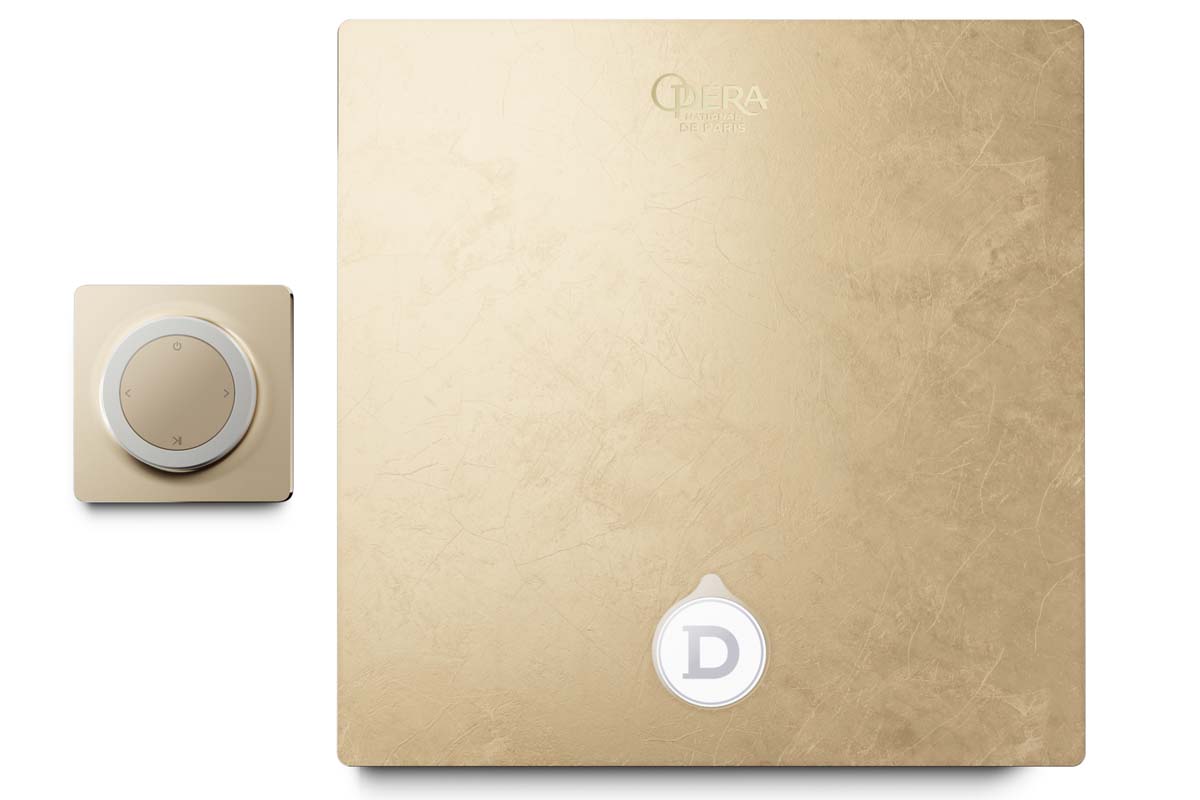
Devialet still has it. The 15 years since the D-Premier shock have brought progress on every level, and yet the Astra is once again – and still – an impressive piece of audio engineering. A luxury device at a luxury price – and I haven’t even mentioned the dual-mono version (two Astras!) or the 23-carat gold-plated Opéra de Paris edition. But be that as it may: the package convinces even the jaded high-ender, and in its targeted segment it need fear no competition anyway. I’m once again a little bit spontaneously in love. With an amplifier.
Accompanying Equipment
Turntable: bauer audio dps 3 | Tonearm: bauer audio tonearm | Cartridge: Lyra Kleos | Phono preamp: Hagerman Trumpet Wood | MC step-up transformer: Consolidated Audio Silver/Nano | CD player: Electrocompaniet EMC 1 UP | Music server: Innuos Zenith Mk III | D/A converter: Aqua La Voce S3 | Switch: LHY SW-8 | Preamplifier: Silvercore linestage two | Power amplifier: Rowland Model 12 | Loudspeakers: Ayon Seagull/c | Power conditioning: AudioQuest Niagara 3000 | Cables: Fadel Art, Phonosophie, AudioQuest, Solidcore | Accessories: Creaktiv racks, granite bases, Andante Largo Silent Mounts
Streaming Amplifier Devialet Astra
Concept: fully software-configurable integrated amplifier for analog and digital sources of all formats | Inputs: 3 x RCA, freely configurable for line, phono MM or MC, digital (S/PDIF); USB-C; 2 x digital optical (Toslink); Ethernet (RJ45) | Output: 2 x speaker | Additional interfaces: WiFi 6, Bluetooth | Streaming: AirPlay, Google Cast, Spotify Connect, Tidal Connect, UPnP, Roon Ready (RAAT), Qobuz Connect announced | Output power (4 Ω): 300 W | Special features: Bluetooth remote control; RAM (Record Active Matching); SAM (Speaker Active Matching); web-based configurator; app control | Finish: brushed aluminum, bronze anodized | Dimensions (W/H/D): 39/5/39 cm | Weight: 7 kg | Warranty: 2 years, 5 years upon registration | Price: around €16,000