
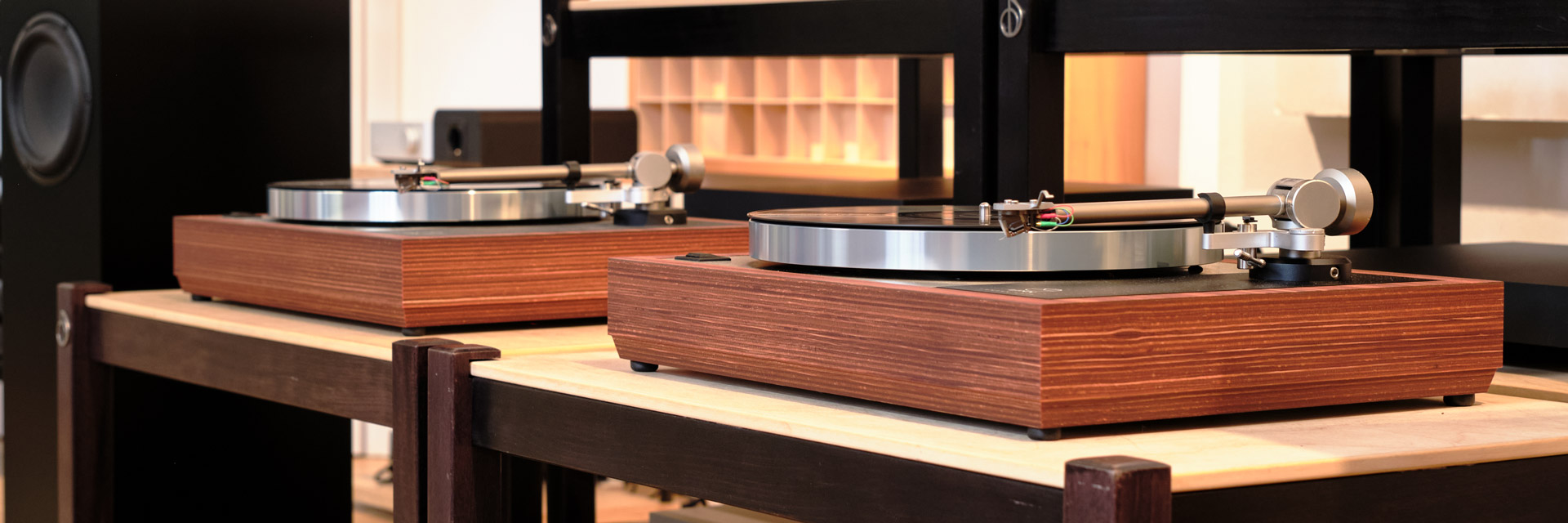
Hi-fi is an interesting hobby: If I were to explain to someone outside the audiophile bubble that my colleague Carsten Barnbeck and I traveled from Munich to Nuremberg for an A/B listening test between two solid aluminum parts, that person would almost certainly declare us both nutjobs.
Ironically, the fact that the listening session indeed made us question our sanity is exactly what proves our hypothetical audio skeptic wrong. The seasoned hi-fi enthusiast will probably already suspect that those aluminum parts have something to do with vibration and resonance control – and when I now drop the name “Linn LP12,” many readers will be able to connect the dots: we’re talking about the Linn Keel SE and its predecessor Keel, two generations of subchassis available as equipment options for what is arguably the most famous high-end turntable of all time.
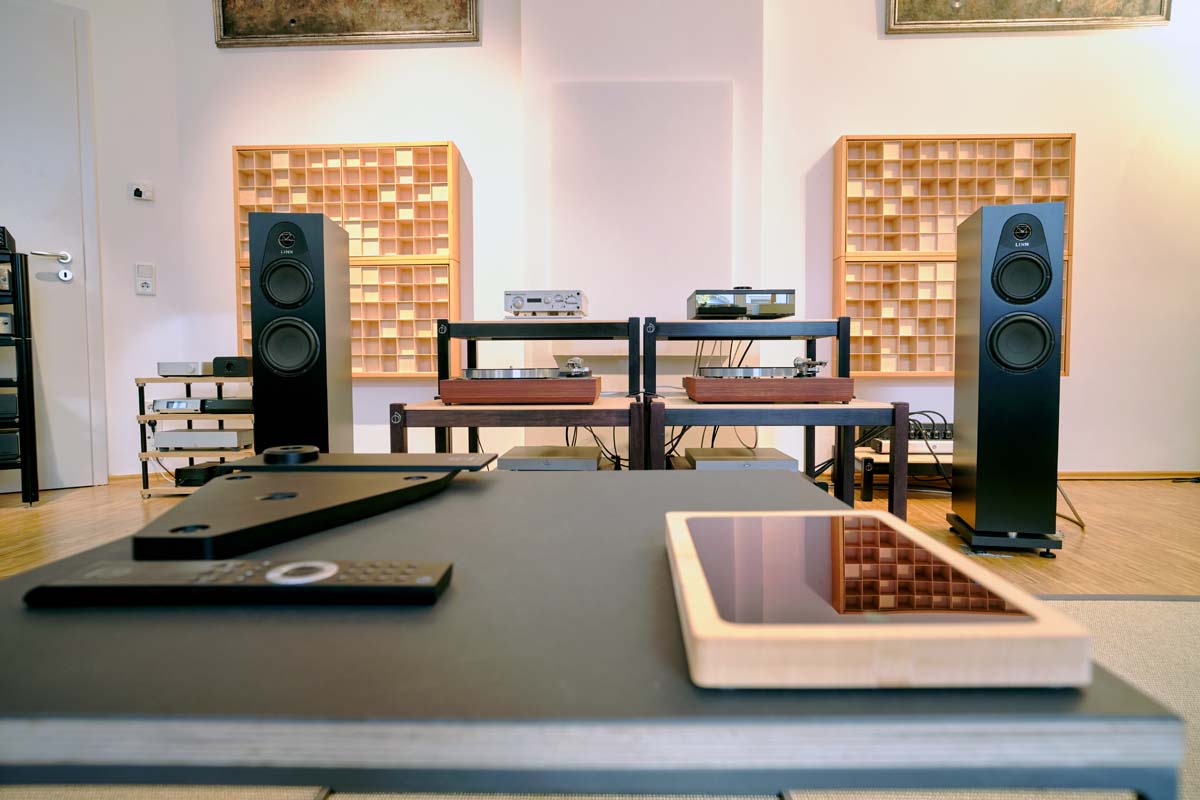
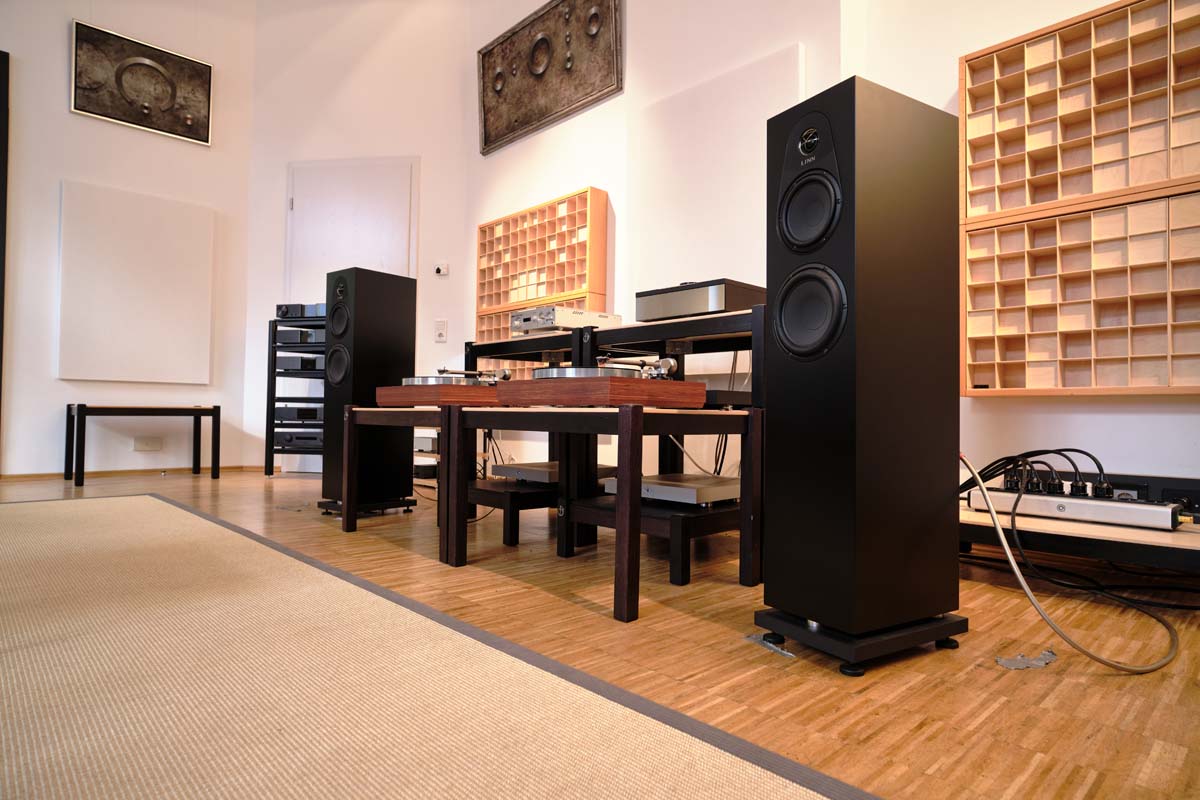
To create a controlled working environment in which even subtle sonic differences can be clearly identified, Stefan Stumbeck, managing director of HiFi Studio Nürnberg, prepared a setup for us with two turntables that are identical except for the subchassis, hooked up to a complete Linn system. Both LP12s are configured to maximum specification with the already familiar and impressive Bedrok plinth, the Ekos SE tonearm, and the Ekstatik MC cartridge, feeding a pair of Linn model 150 loudspeakers via two Klimax Solo 500 power amplifiers.
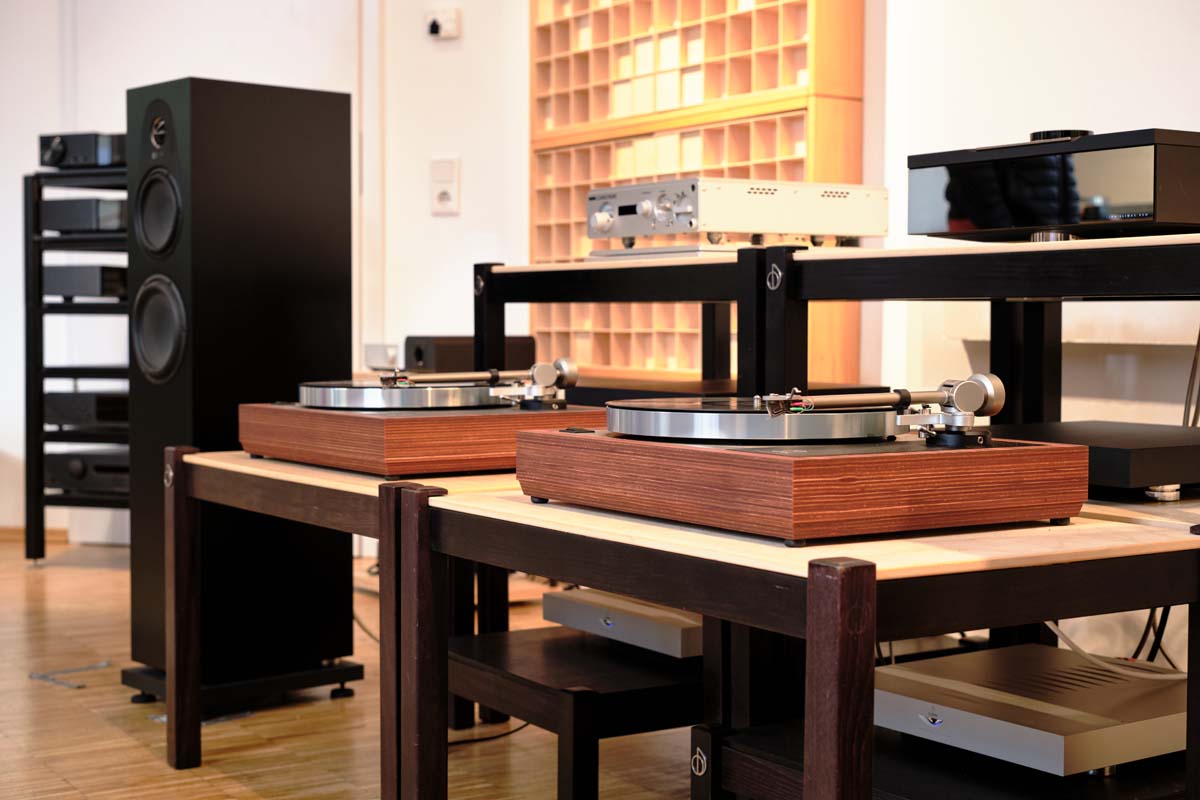
If, despite such a promising setup, you remain unconvinced that the assignment justifies four hours’ worth of driving for the round trip, I can see where you’re coming from – but let me assure you: what we experienced in Nuremberg was a fascinating journey through the admittedly idiosyncratic yet internally perfectly coherent lineup structure of the Scottish high-end manufacturer – and at the same time a demonstration of the professionalism with which a dealer who’s truly serious about vinyl playback conducts a listening comparison.
Perfectly Aligned in Five Dimensions
One uncomfortable yet rarely talked about truth is, for example, that even high-quality pressings are rarely perfectly centered. Simply putting the record on and letting it play is therefore not something that happens at HiFi Studio Nürnberg. The undeniably critical fine adjustment of tracking force, tracking angle error, VTA, and cartridge azimuth only truly makes sense if the perfected geometry isn’t immediately ruined again by uncontrolled record eccentricity.
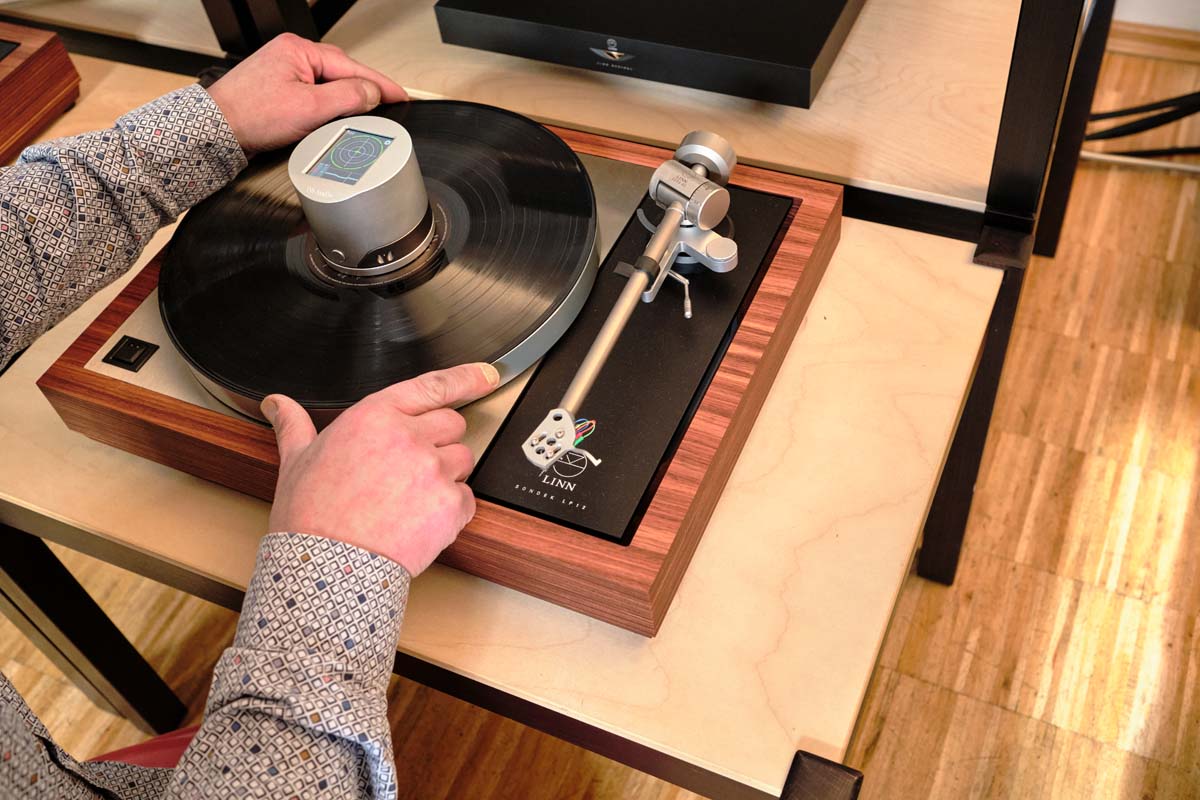
Stumbeck’s solution of choice is the DS Audio Stabilizer ES-001, which uses laser technology to measure the record’s eccentricity and whose top display will only stop complaining once the grooves run perfectly true.
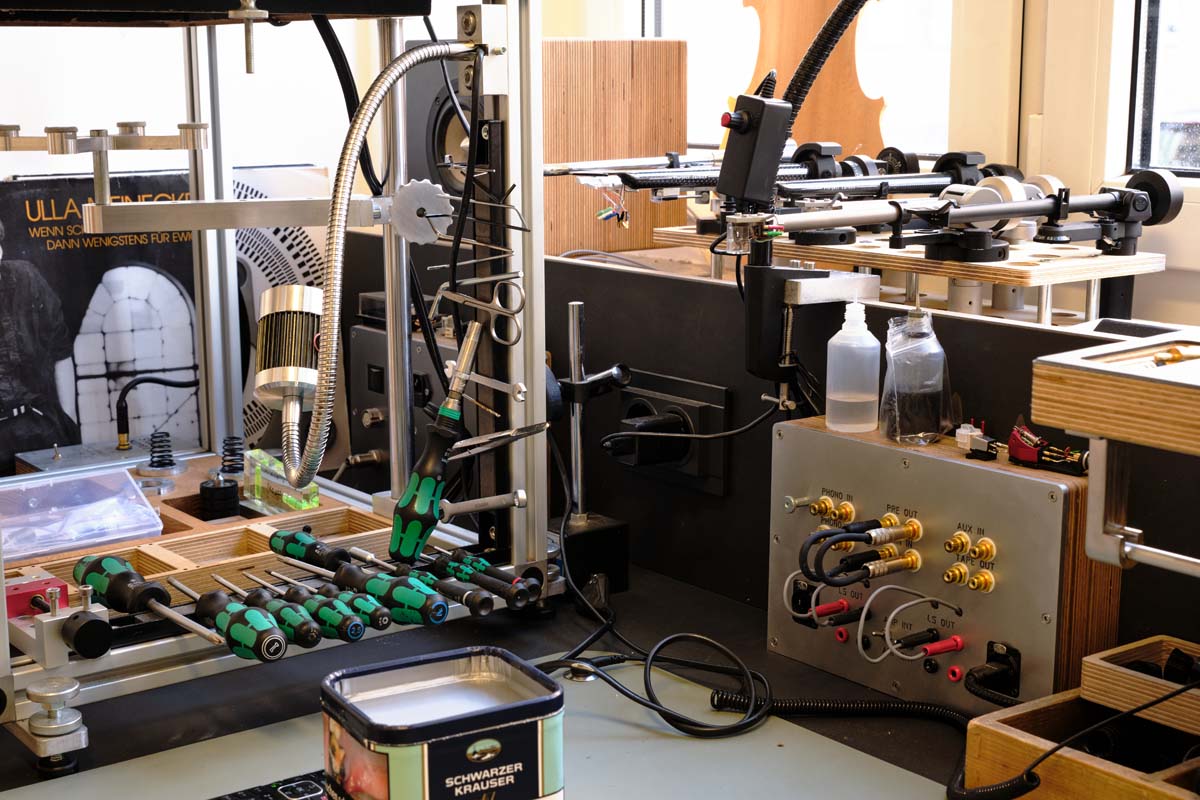
Anyone who considers that obsessive either doesn’t know Stefan Stumbeck – or hasn’t seen the rebuttal he has waiting in the workshop. Stumbeck is someone for whom everything has to be exactly the way he wants it – and if the solution he wants doesn’t exist, he simply builds it himself. From the company sign outside to a speaker dolly with an electric lift function to a record-cleaning machine of his own design, large parts of the store’s equipment are his own creations. One of these is a defective tonearm into whose headshell he has integrated a laser pointer. Put on a poorly centered record and watch the projected light dot tumble across the nearest wall and your skepticism about the purpose of Stumbeck’s meticulousness will go right out the window.
First A/B, Then B/C
As a kind of acoustic appetizer, we first get another A/B comparison, because Stumbeck absolutely wants us to hear the difference between the “ordinary” Radikal and the Klimax Radikal motor control units. In the slightly more modest configuration with Radikal and Keel, the geometrically verifiably perfectly aligned Harmonia Mundi recording of Handel’s Water Music conducted by Nicholas McGegan spins up – and try as we might, we cannot find anything to complain about.
On the contrary, we are more than impressed with Linn’s 150 floor-standing loudspeakers. The setup makes no attempt to disguise the ascetically cool character of the recording, but in return it unravels the baroque orchestra – captured in fantastic resolution – down to the finest string vibrations and lets the first and second violins communicate with relaxed rhythmic precision. Admittedly, the speakers – priced at about €6,600 per pair and therefore still relatively down-to-earth by Linn standards – are connected to exorbitantly expensive electronics. Yet the extent to which a loudspeaker can rise above its weight class in such a setup says a great deal about its quality.
And we haven’t even reached the end of the road: switching to the Klimax Radikal control unit gives resolution another small push. At the same time, the musical flow noticeably improves; everything becomes rhythmically more coherent and smoother as well.
Next up is “Rollin’” by Erik Truffaz, so that we can form an impression of the lower frequency range using the reinterpreted Morricone piece “Le Casse.” The double bass pushes its voice through the room with juicy, sonorous authority, yet with remarkable control, while the percussive elements and strings abused as effect machines in the background are positioned with effortless clarity and traced naturally right down to the last remnants of their decay trails. Here the Klimax Radikal creates noticeably more order in the already pleasantly clean lower registers – without the bass presence diminishing by even the slightest degree. And again, the same improvement in the flow of the music.
Enter the Keel SE
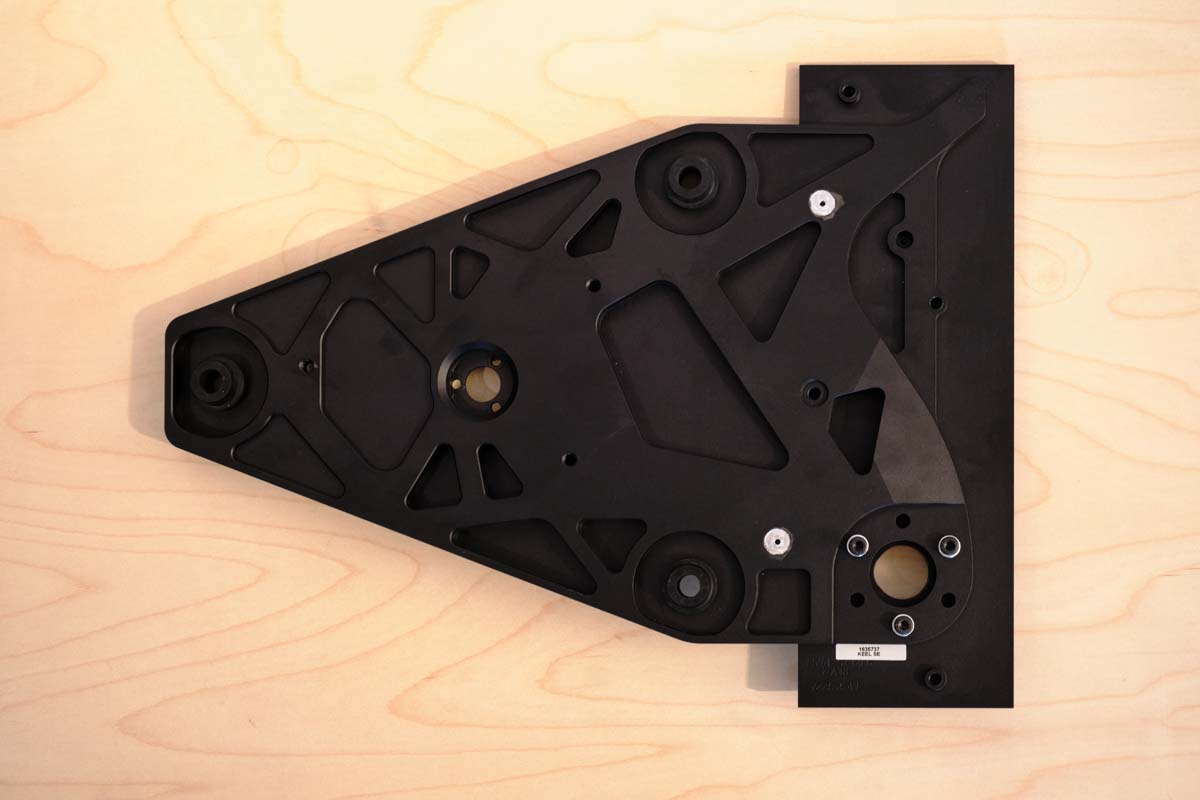
I must admit that we distracted ourselves a bit during the listening sessions. Our host forgave us – after all, he himself was the one who handed us a removed Keel SE to play with. As with almost all components, Linn here too moves – apparently contradicting the subchassis principle – toward greater mass. The chassis, like its predecessor, is milled from a single piece including the tonearm mount, but the structural network of braces now appears significantly more massive than before. The increase in mass becomes more than obvious the moment you lift it. In every respect, the Scots are striving as much as possible toward the ideal of a monolithic apparatus – from the stylus tip to the body of the subchassis.
With the Ekos SE tonearm, for example, Linn even had 3M develop a special adhesive specifically for attaching the tonearm tube to the bearing housing – one that cures in such a way that the tonearm tube adheres directly to its mount without any compliance and with virtually no gap.
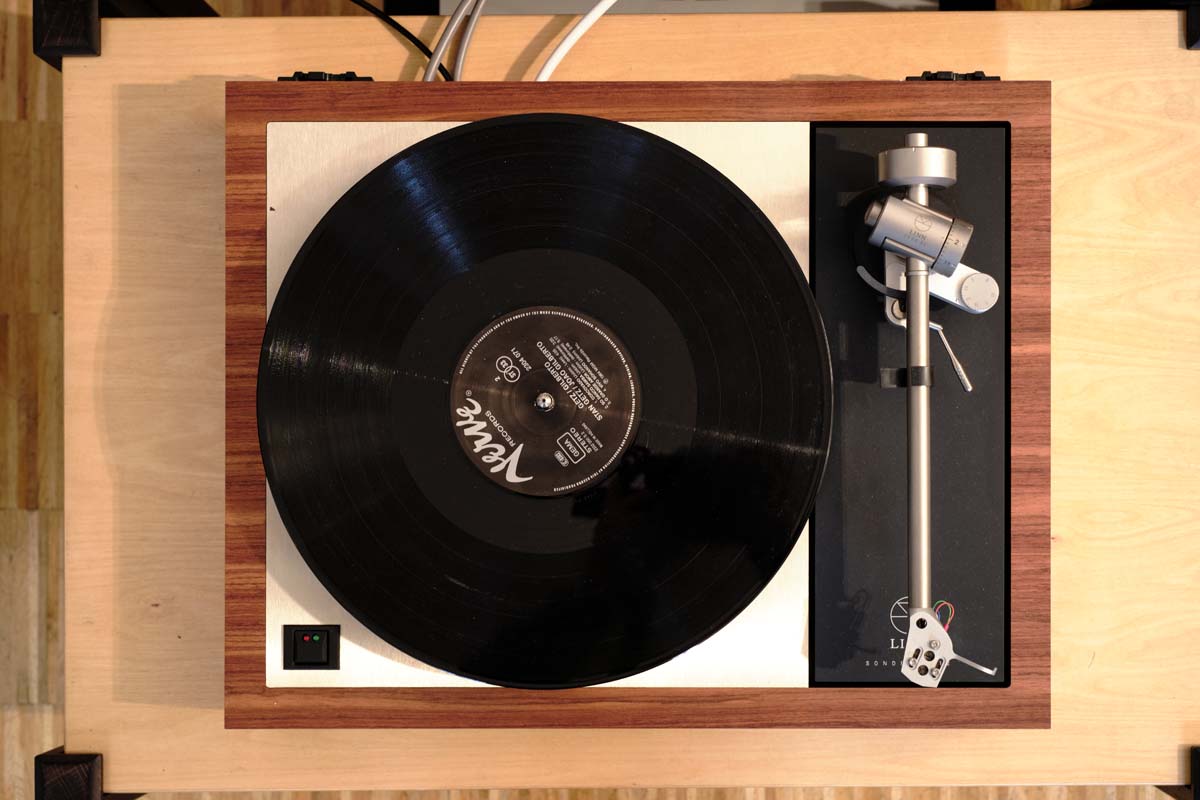
One might assume that the whole concept serves to absorb vibrations through mass – but that is not the case. With almost mischievous glee, Stumbeck taps the newly developed subchassis with his fingernail between listening sessions; it rings no less than the previous one, only – as expected – at a lower pitch. The guiding principle remains control rather than damping things to death – certainly not a bad idea in the context of a subchassis turntable as these are sometimes conceptually accused of a certain sluggishness. Rhythmically, the LP12 certainly leaves nothing to be desired, as is well known and was once again demonstrated during our session.
Speaking of rhythm: by now the stroking and admiring of the corpus delicti had finally made us impatient to hear what this transmission monolith could do. At this point I would normally follow up with a lengthy sound description – but what can I say? We heard three bars and the matter was settled. The bass foundation suddenly became so much more powerful that this alone elevated the level of playback to a higher plane.
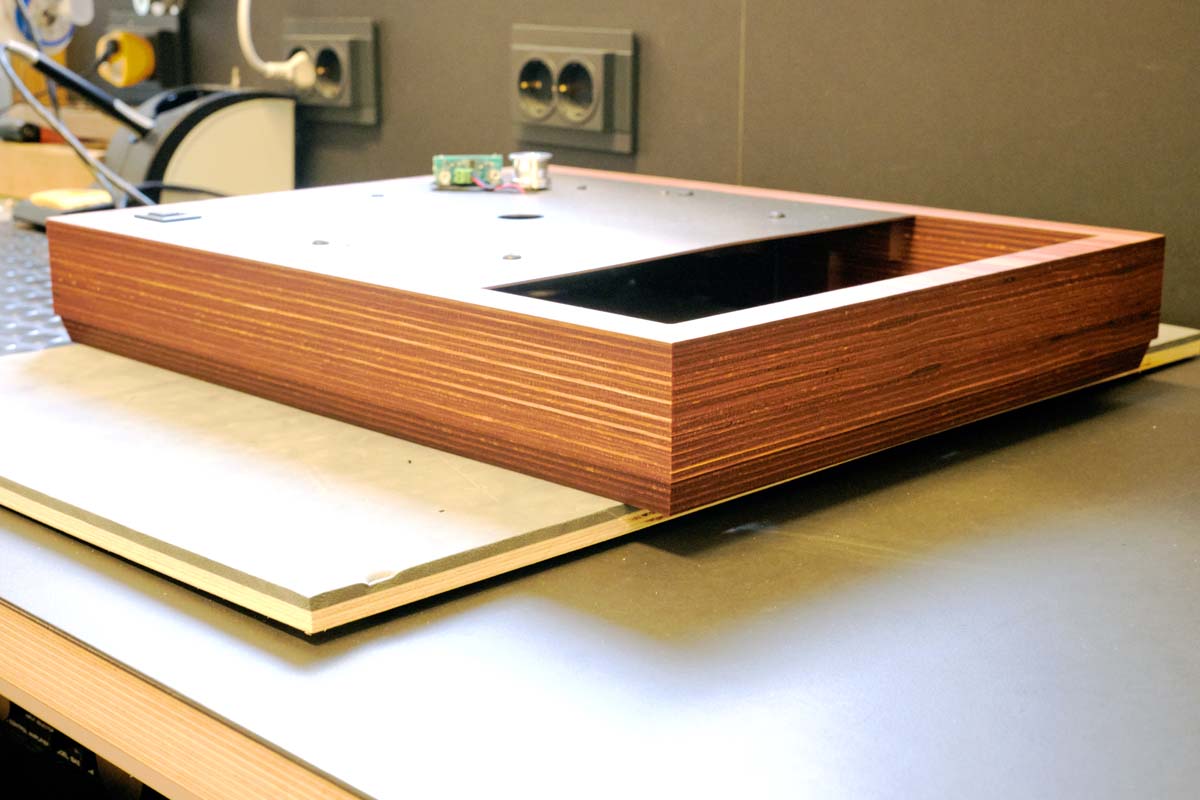
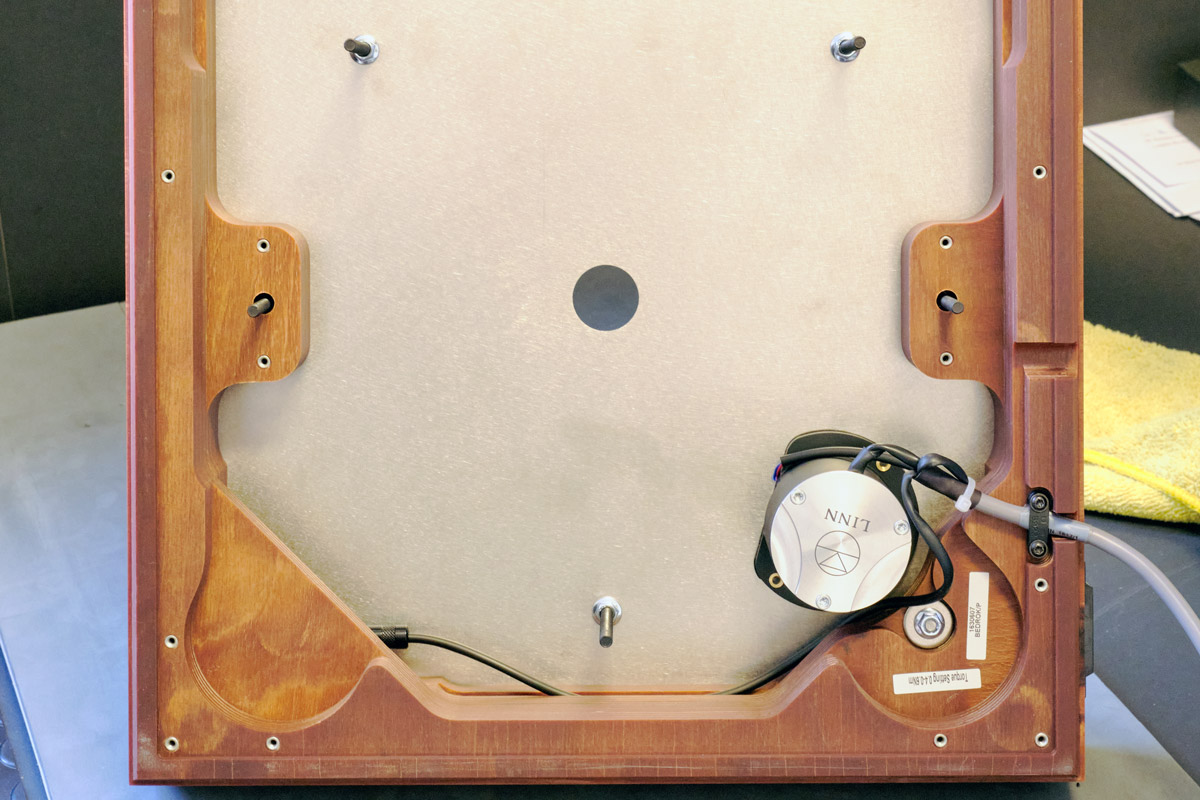
Okay, we did listen to many, many more bars after that. What impressed us most was how the newly gained lung capacity in no way interfered with the midrange and treble. Quite the opposite: if anything, everything seemed positioned a touch more clearly and easier to follow. After the initial disbelief and amazement, we therefore had no trouble getting used to this new musical reality and simply enjoyed more music until the position of the sun reminded us it was time to head home.
Oh, and I haven’t forgotten that at the beginning I whetted your appetite for a journey through Linn’s model universe and then haven’t said another word about it. There is simply so much to tell that I would like to postpone it to a separate article in the near future. With this in mind: stay tuned.
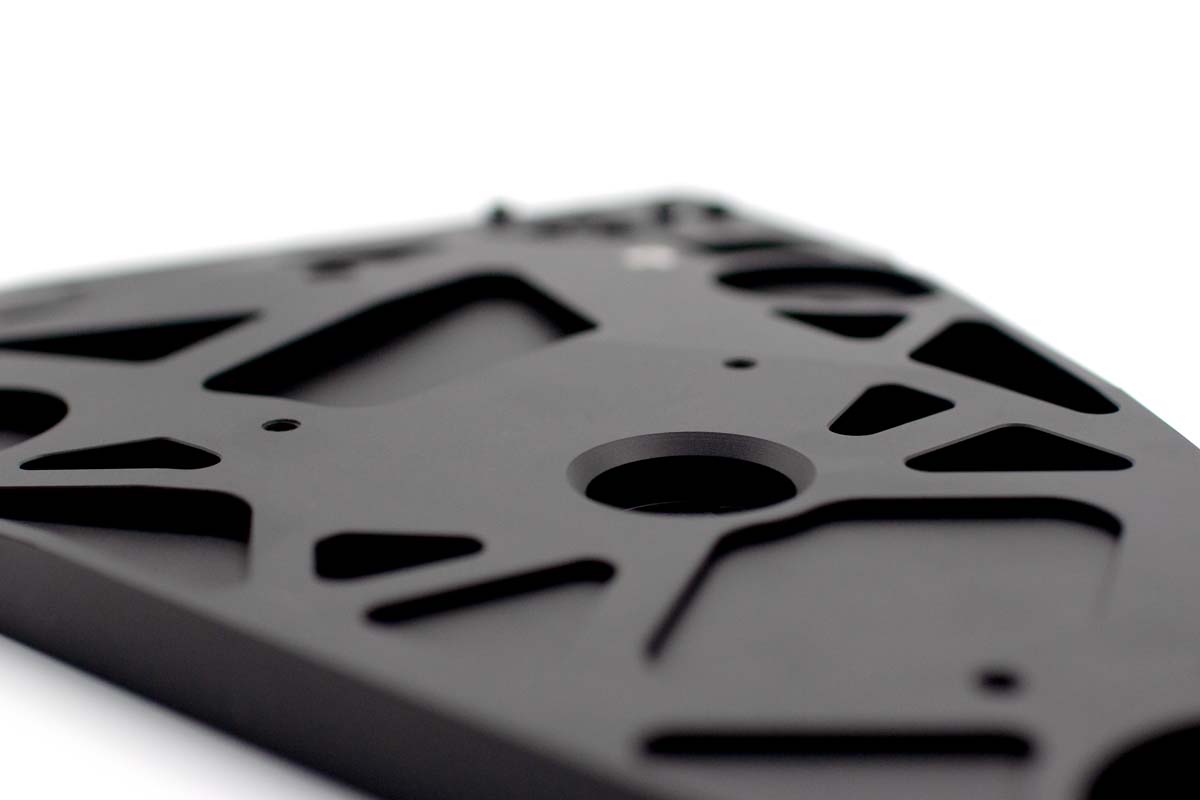
Subchassis Linn Keel SE
Concept: monolithic aluminum subchassis for Linn LP12 | Warranty: 5 years | Price: approx. €5,060
HiFi Studio Nürnberg 2.0
Krelingstraße 53 (entrance Schweppermannstraße)
90408 Nuremberg
Phone +49 911 36771900
info@hifistudionuernberg.de
Opening hours
Monday closed
Tuesday to Friday 2–7 PM
Saturday 10 AM–2 PM