
Before Banksy came along, there was Ernest Pignon-Ernest. This painter from Nice also placed his artworks illegally in public spaces – charcoal drawings or silkscreen prints of human figures, life-sized, realistic, but in black and white, often with a political, accusatory message. One of his favorite cities was Naples, where between 1987 and 1995 he left several hundred images on building walls.
Louis Sclavis, then the flagship figure of European jazz, was so impressed by these images that they inspired an entire album. Film, visual art, theater, literature, travel, and musical works have always been Sclavis’s sources of inspiration. His own music arises from what these inspirations stir up in his imagination. And that music draws from many wells – from Renaissance to rock, from folk song to contemporary classical – woven together through improvisation and jazz.
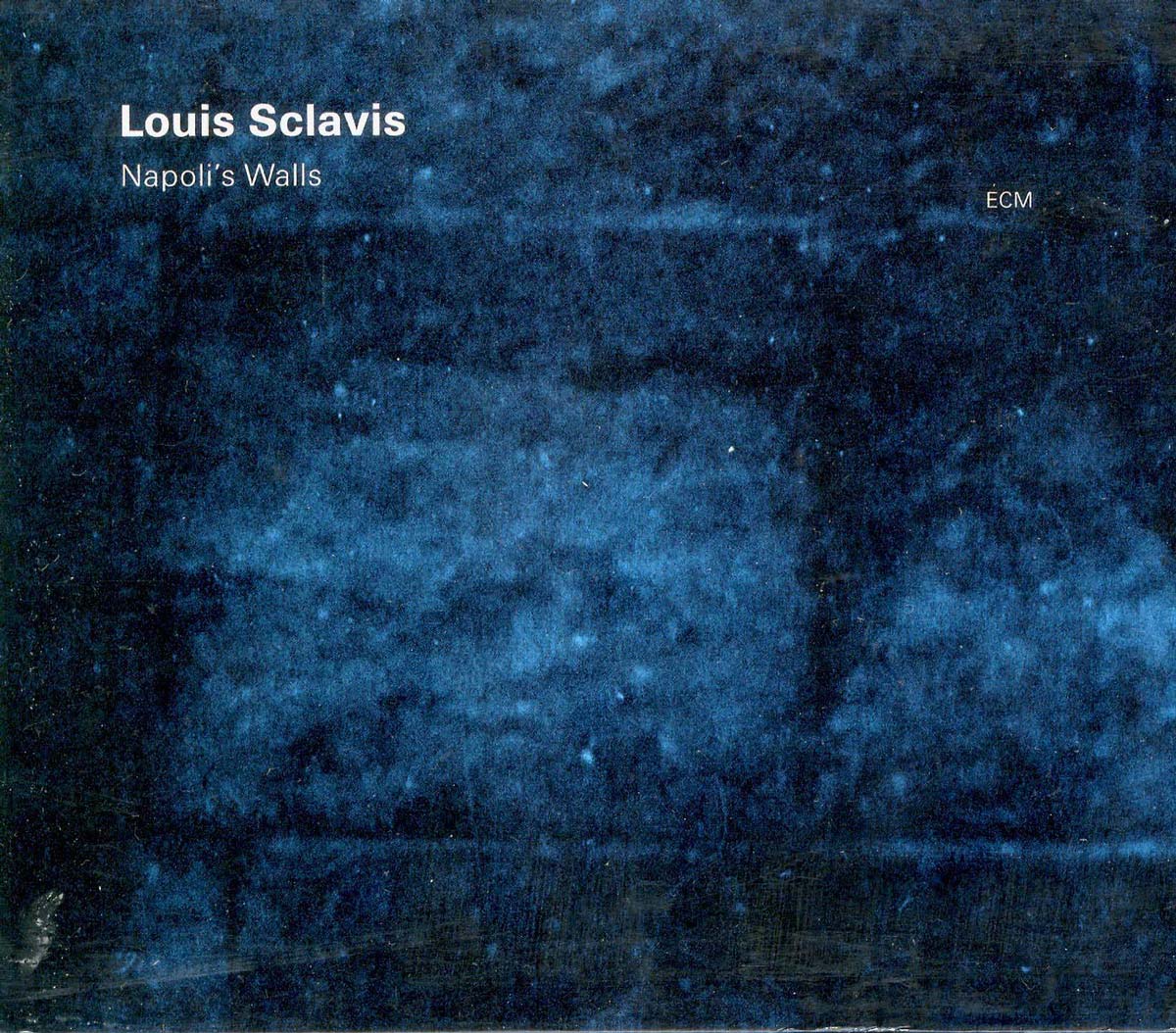
Napoli’s Walls portrays a Naples of the imagination, a “fictional city,” as Sclavis puts it, both “present and past” at once. To achieve this, he assembled a band, a sonic concept, a multi-stylistic vision unlike anything heard before. Alongside the bandleader on clarinet, bass clarinet, soprano saxophone, and baritone saxophone are Vincent Courtois on cello and Hasse Poulsen on guitar.
The fourth member, however, Médéric Collignon, is the joker, the enfant terrible, the quartet’s multi-talent. He not only plays his pocket trumpet but also sings, whistles, drums, creates noises, and, not least, incorporates contemporary electronic sounds and beats. Thanks especially to Collignon, echoes of Carlo Gesualdo, techno, Neapolitan folk opera, and heavy-metal riffs merge into a magnificent urban jazz amalgam. Critics spoke of a “new musical language” (AllMusic), “completely new terrain” (Jazz thing), and a “bold, uncompromising piece of contemporary music” (The Guardian).
The simultaneity of eras, styles, and sounds is the album’s theme – “the disparate diversity of traditions and cultures” (Christian Rentsch). In several of the ten tracks, this band (without piano, bass, or drums) paints fantastic, sometimes early-music-inspired sonic landscapes that leave a deep impression. It also delivers fiery, expressive jazz solos – especially Sclavis on bass clarinet and baritone saxophone. At the same time, it launches fierce grooves fueled by Collignon’s electronic arsenal. And again and again, it surprises with sudden, powerful themes that linger in the memory.
The soprano sax melody of the title track, for example – dedicated to the street children of Naples – conjures up an irrepressible alleyway dance tune. “Kennedy In Napoli,” whose title already recalls Charles Mingus’s “Rockefeller In Attica,” is a bop-infused, bizarre jazz piece with a fast, electronically supported middle section. “Guetteur d’Inaperçu,” in turn, offers jagged, wild motifs that evoke both horror films and contemporary classical music. The album’s final two tracks also captivate with complex, grotesque horn themes, fierce riffs, and driving grooves.
At the time, The Times wrote that Napoli’s Walls reminds us that jazz is the “music of innovation.” The record label described the album as Sclavis’s “provisional masterpiece.” For several years, this quartet was one of the most exciting live acts on the festival circuit – the music sounded new again and again.
“If a band is good,” says Louis Sclavis, “more emerges from improvisation than you could ever invent at your desk at home. The best things are always those you can’t control.”