
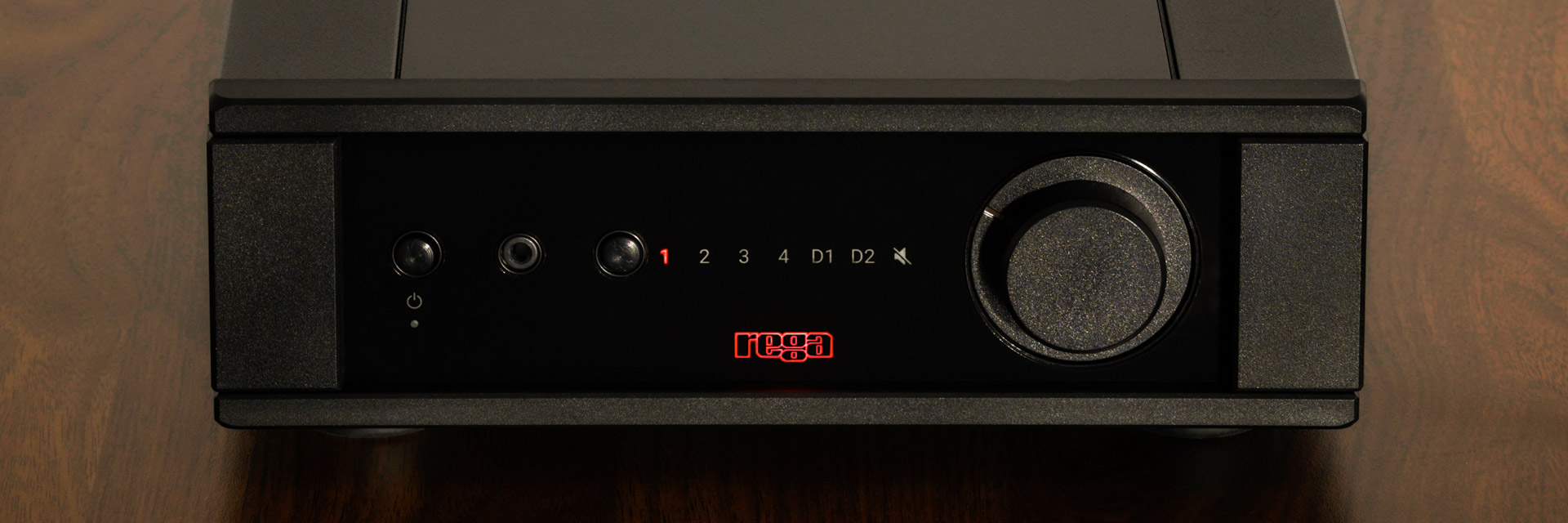
The Brio enters its seventh generation, finally uniting the analog world with the digital one: Rega’s classic integrated amplifier now has a DAC.
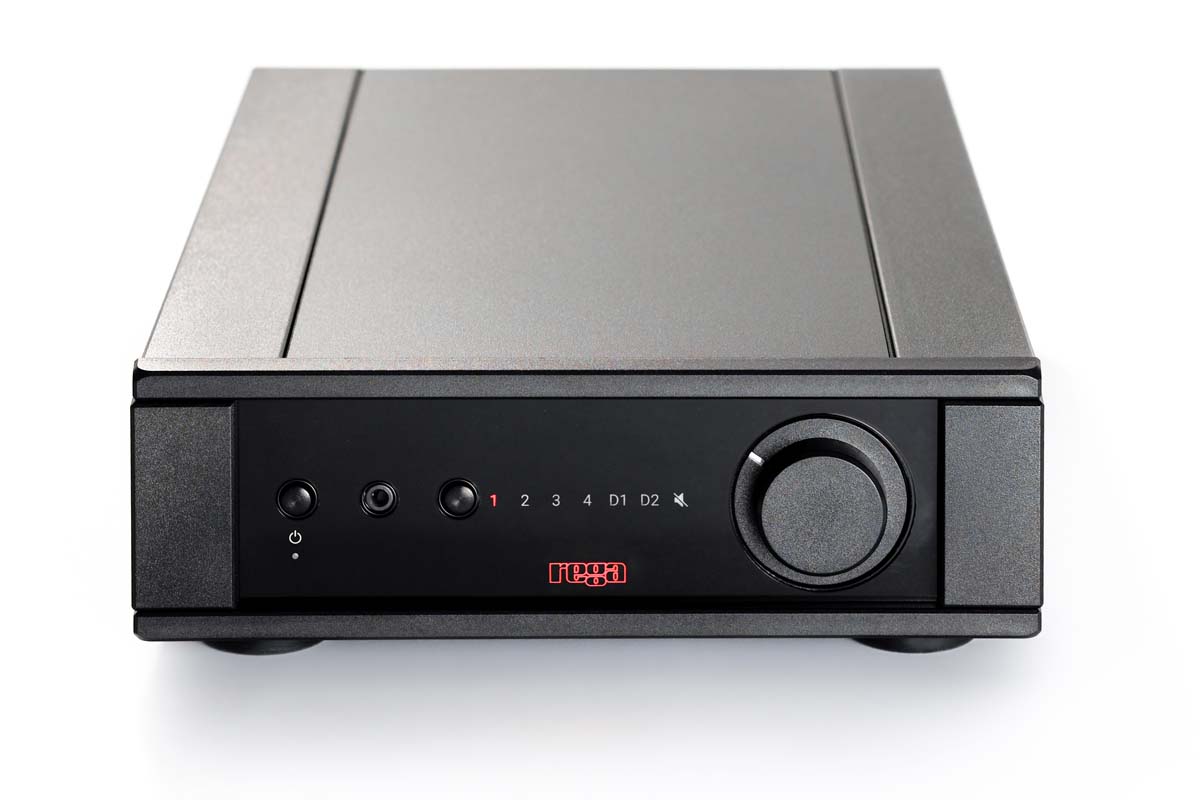
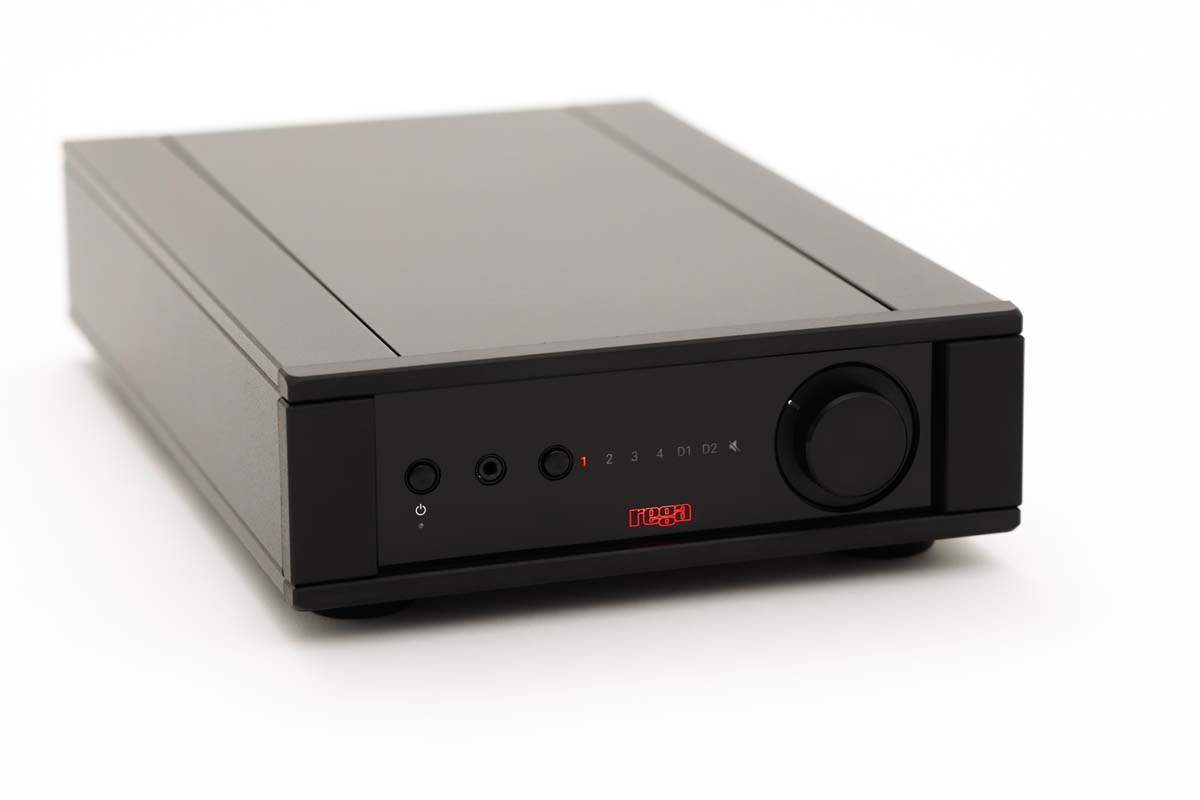
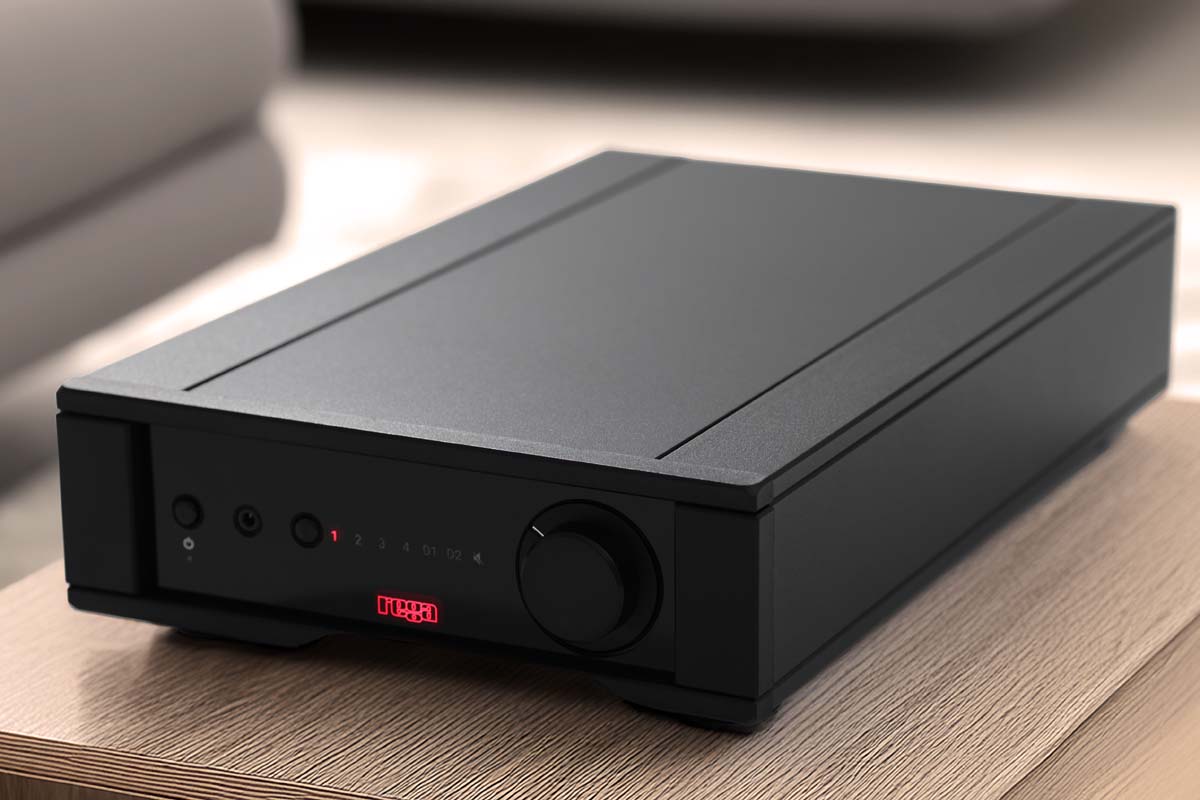
Yes: Hi-Fi is about peak performance. But no: it doesn’t necessarily have anything to do with sports like weightlifting. After all, beautiful sound belongs to the realm of the refined and aesthetic. The weightlifter sweats; the listener sits. Thanks to technological progress, that has become increasingly easy. Modern amplifiers no longer need to weigh a ton to be taken seriously. Excellent sound can be achieved in a compact, lightweight package. A typical example is the Rega Brio, an integrated amplifier that – through various updated incarnations since the early 1990s – has spared both the backs and the wallets of its audience. It weighs about as much as five very good bottles of Barolo and doesn’t cost that much more. In its seventh iteration, much remains the same, and much is a bit different, as we’ll see. The first impression is what you’d expect: the Rega Brio MK7 appears clean and stripped down to the essentials, yet still stands out. It’s a bit longer than a standard component but quite narrow at around 22 centimeters. Surprisingly, it doesn’t look slimmed-down or dainty – if anything, it resembles a professional piece of equipment that could fit into half a rack space.
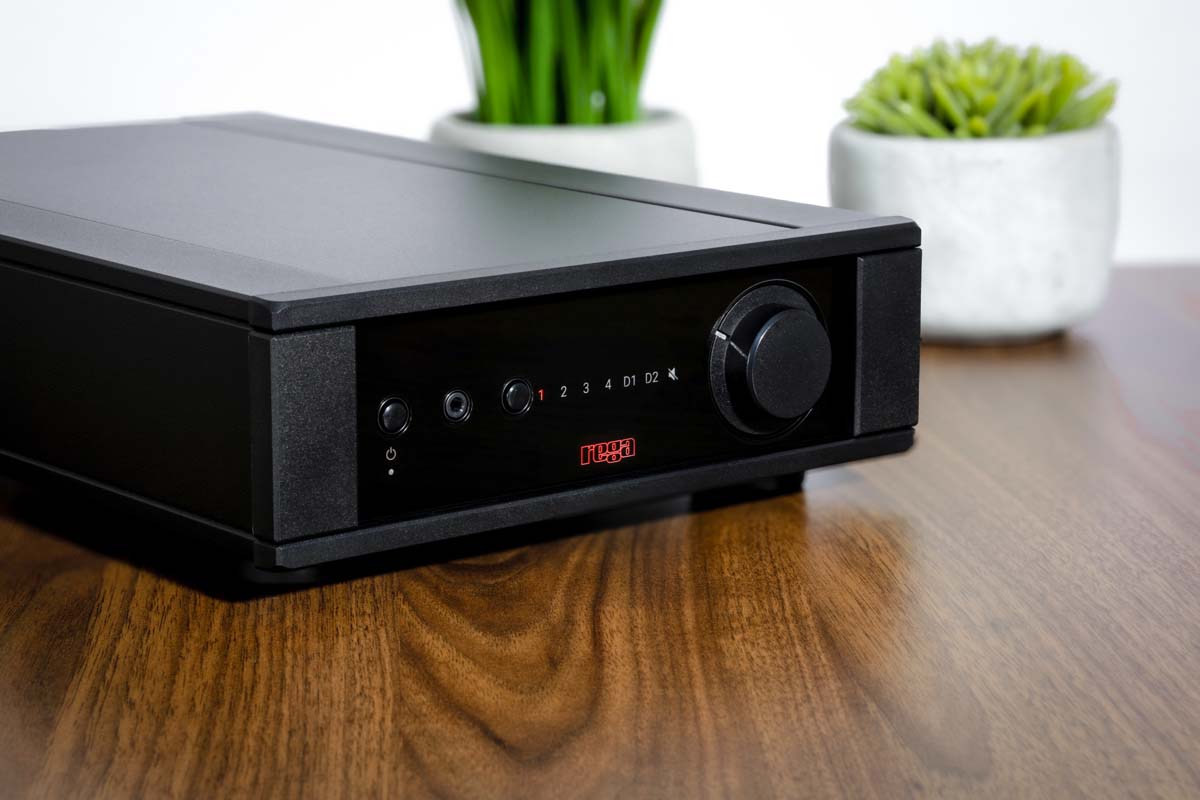
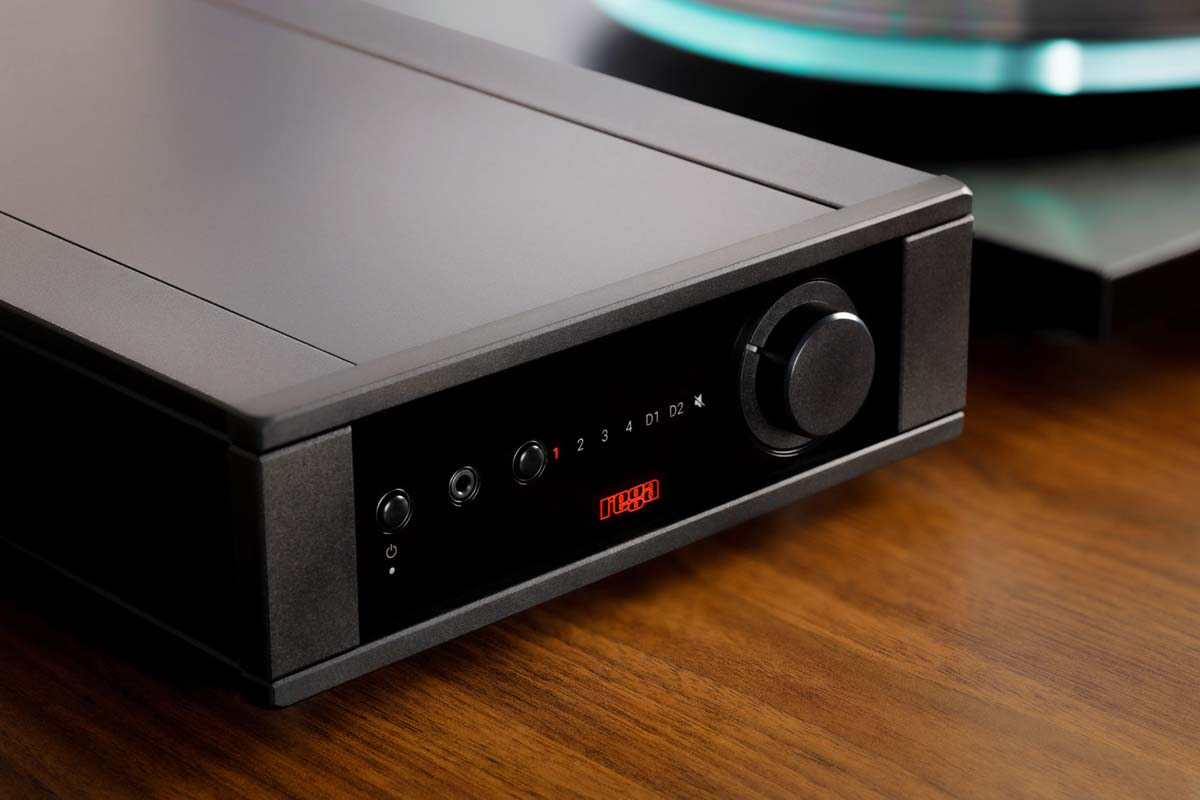
The chassis is aluminum, held together by two screws on the rear panel. The MK7 is hand-built in the UK, and nothing rattles or vibrates. Naturally, at this price point you can expect some compromises. The front and rear panels are plastic, and when setting it up, you’ll notice a very cheap-feeling protective plastic film over the monochrome source display. Clearly, the MK7 focuses on features that actually matter for sound quality. You don’t need beautifully crafted rubber feet – just ones that isolate well. And anyone insisting on silky-smooth metal pushbuttons without any lateral play will be shopping in a different price class anyway. What you do get is a motorized volume control that responds to commands from the simple remote.
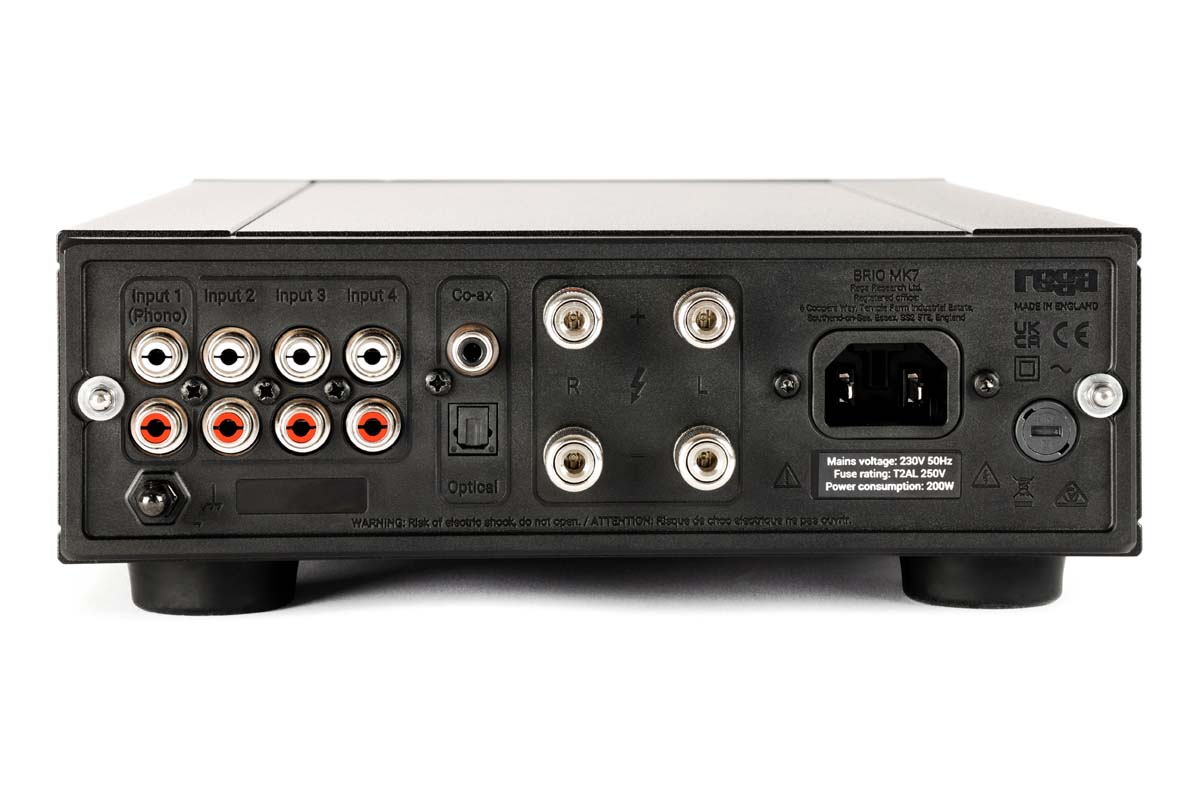
On the connection side, the Rega is well-equipped: three line-level inputs, plus a coax and optical digital input, since this seventh version now includes its own DAC. And because Rega is known for its turntables, there’s also an MM phono input.
Technically, Rega has given the long-running Brio a substantial update. “From transistor layout to circuitry – everything has been reworked a bit,” says Stephan Bauer from TAD Audio Distribution. Proven components and an optimized, largely discrete design: Bauer considers this the major developmental leap. The Brio MK7 is still a classic Class A/B integrated amplifier, with very few internal cable runs. Components sit directly on the board to keep signal paths short. A toroidal transformer dominates the interior. A dual power supply separates the power amp from the preamp and the line/phono stages, reducing interference and contributing to a clean sonic presentation. Line, DAC, and phono sections all use MUSES op-amps. The headphone output has its own dedicated amplifier circuit rather than just being tapped from the speaker output.

The key new feature is the integrated DAC, which elevates the previously all-analog Brio into the digital era. Rega describes it as an in-house development. It supports PCM signals at up to 24-bit/192 kHz. Signal processing is handled by a dedicated section on the main board, with careful separation from the analog path. As in the line and phono stages, high-quality MUSES op-amps are used here as well, contributing low noise, minimal distortion, and very clean sound. The DAC power supply is isolated from the power amplifier’s supply to minimize interference between digital and analog domains.
In terms of power, the MK7 is – unsurprisingly – not a brute. It delivers 50 watts per channel into 8 ohms, which should be more than sufficient in normal living rooms with either floorstanding or bookshelf speakers. Into lower impedances it delivers more current, but there are limits: the specs only list power at 6 ohms (73 watts per channel) and say nothing about lower impedances. So if you plan to drive real current hogs, you may need a different amplifier. During testing, the amp never ran hot. Heat is dissipated downward, and for safety it includes thermal shutdown and short-circuit protection. By default, it switches to standby after an hour – something that can be turned off in the manual.
Now, let’s power up the Rega Brio MK7. And remarkably: right out of the gate, the MK7 sounds excellent. No hum, no noise, nothing. It controls floorstanders such as the not-particularly-efficient Neat Momentum 4i and the more forgiving Heco Direkt Premium just as confidently as the more compact Bryston Mini A. There was no emotional need for a long break-in period. Why not just dive in?
Let’s try Rosalía’s “De Aquí No Sales” (from El mal querer, via Tidal). Not an easy track: overlapping vocals with delicate vibrato and not-so-delicate autotune artifacts in the upper registers, motor-scooter samples, and hard percussive hits – all in a production that isn’t particularly big-budget. None of this bothers the MK7: flamenco handclaps snap surprisingly fast, bass transients with short, full-bodied tones are clearly articulated, vocals have plenty of air, reverb tails are clean. It’s genuinely impressive.
Now let’s head toward the Basque region with Martha Argerich and Ravel’s Piano Concerto in G. Even in the opening Allegramente section of this Warner live release (Martha Argerich Plays Ravel), there’s a lot happening: whip crack, snare drum, triangle, flute, and of course the piano. Here the MK7 shows that it can handle abrupt dynamic swings and impulse attacks, while clearly tracing the piano accents down into the decay of the strings. The DAC sounds tidy and more refined in the treble than the converter in the accompanying Cambridge Audio CNX, though the difference in this setup is marginal.
The MK7 is well suited for more ambitious explorations too. You could try detecting the sonic fingerprint of Berlin’s legendary Hansa Studio by comparing Bowie’s “Heroes,” Iggy Pop’s “Lust for Life,” and U2’s “Love Is Blindness” (Achtung Baby). The latter is tricky, since only a few tracks were recorded at Hansa. If you can’t solve that puzzle, it certainly won’t be the phono stage’s fault. It images well, plays lively and transparent, and is not dependent on using a Rega turntable as the source.
Simply put: many integrated amps with similar features and pricing exist. But they’re often cobbled-together consumer-electronics boxes. The Rega Brio MK7 plays in a different league altogether: it delivers serious hi-fi with exquisite sound quality. It may not have completely outclassed the accompanying Creek Evo, but it definitely made it look rather old (which it is). The seventh Brio not only continues the line with dignity – it’s likely to become a benchmark for many competitors in the coming years.
Accompanying Equipment
Integrated amplifier: Creek Evo IA | CD player: Creek Evo 2 | DAC/network players: Cambridge Audio CXN, TEAC UD-701N | Loudspeakers: Neat Momentum 4i, Bryston Mini A, Focal Alpha 80
Integrated amplifier Rega Brio MK7
Design: Class A/B amplifier with integrated DAC | Inputs: 3× RCA line, 1× MM phono, 2× digital (coaxial and optical) | Output: 3.5 mm headphone jack | Digital input sampling rates: up to 24-bit/192 kHz | Output power (8/6 Ω): 50/73 W | Power consumption: max. 200 W | Special features: dedicated headphone amp, motorized volume control | Finish: black | Dimensions (W/H/D): 22/8/37 cm | Weight: 5 kg | Warranty: 2 years | Price: approx. €1,000
TAD
Hallwanger Straße 14
83209 Prien am Chiemsee
Tel. +49 8052 9573273
hifi@tad-audiovertrieb.de