
With Qobuz, a third provider has jumped on the “Connect” bandwagon after Spotify and Tidal, making it even more appealing – not just for sound purists. But let’s be honest: do you actually know how exactly proprietary service integration differs from a Connect service? We’ll explain it – as concisely as possible.
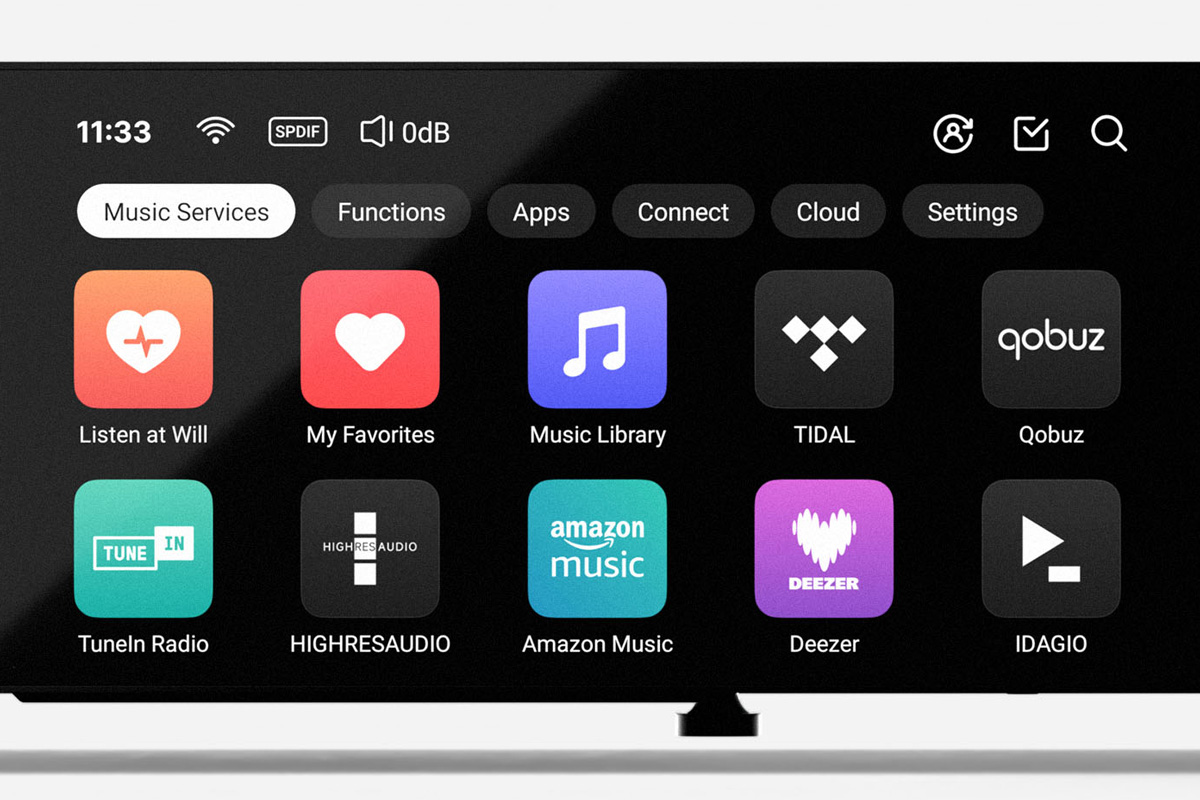
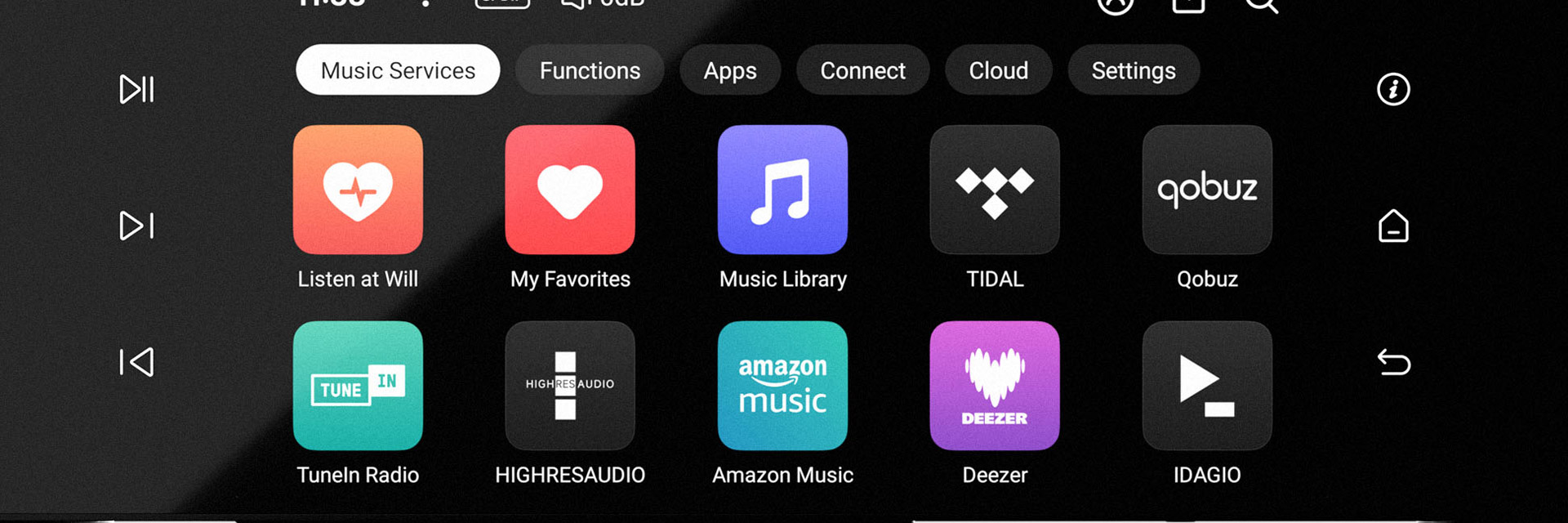
Things were rather cumbersome in the early days of streaming: if you wanted to stream music through your system in the late 2000s, you had to fire up your PC and run an annoying cable across the living room. The more adventurous could toy around with workaround solutions, but taken together these mostly just burned money. It’s hardly surprising that Sonos’s meteoric rise happened around the same time. Its affordable components came with built-in access to all music providers via their operating system. You’d start up your new Sonos, open the smartphone app, enter your Spotify or Deezer login, and you were good to go – and had a solid user interface to boot. Clearly inspired by Apple, it in turn became the blueprint for brands like Bluesound, Teufel/Raumfeld, and Cambridge Audio.
With directly integrated applications, the optimal path for sound quality had also been found. Manufacturers could tap into the streaming services’ APIs (application programming interfaces) and optimize them for their network players: whether it was checksum verification (detecting transmission errors) or aspects like upsampling and oversampling (adapting raw audio data to the built-in DAC), everything was designed to run smoothly.
But cracks soon began to show. Constant changes on the streaming providers’ side (increasing bandwidths, new data structures) started to strain the nerves – and budgets – of many hi-fi manufacturers. Practically every week, they had to update their apps and operating systems just to keep features like hi-res audio, dynamic playlists, or podcasts running. That leads to enormous support costs. The result: manufacturers retire perfectly good streamers early and release new models instead. Another key issue: virtually no API supports multiple users. Once Dad has entered his password, his account is accessible to everyone in the household, and the carefully curated music library quickly turns into chaos. Meanwhile, the streaming providers are bothered by something entirely different: the remote apps follow the manufacturers’ corporate identity. Cambridge Audio sticks to blue and white, Lumin prefers an easy-on-the-eyes gray. A few years ago, Spotify seriously tried to force its bright green look onto manufacturers – something that already failed due to the limited capabilities of many network players, since audio components simply don’t have enough memory for fancy visuals.
So Spotify was also the company that came up with the Connect approach: instead of a full application, only a tiny interface is installed on the streamer, identifying its “Spotify Connect” capability on the network. When you launch the app on a computer or smart device, the streamer is detected and displayed as a playback device. Once you select the hi-fi component as the audio output, the app sends authentication to the service provider’s servers, and the streamer is then fed directly with the desired music.
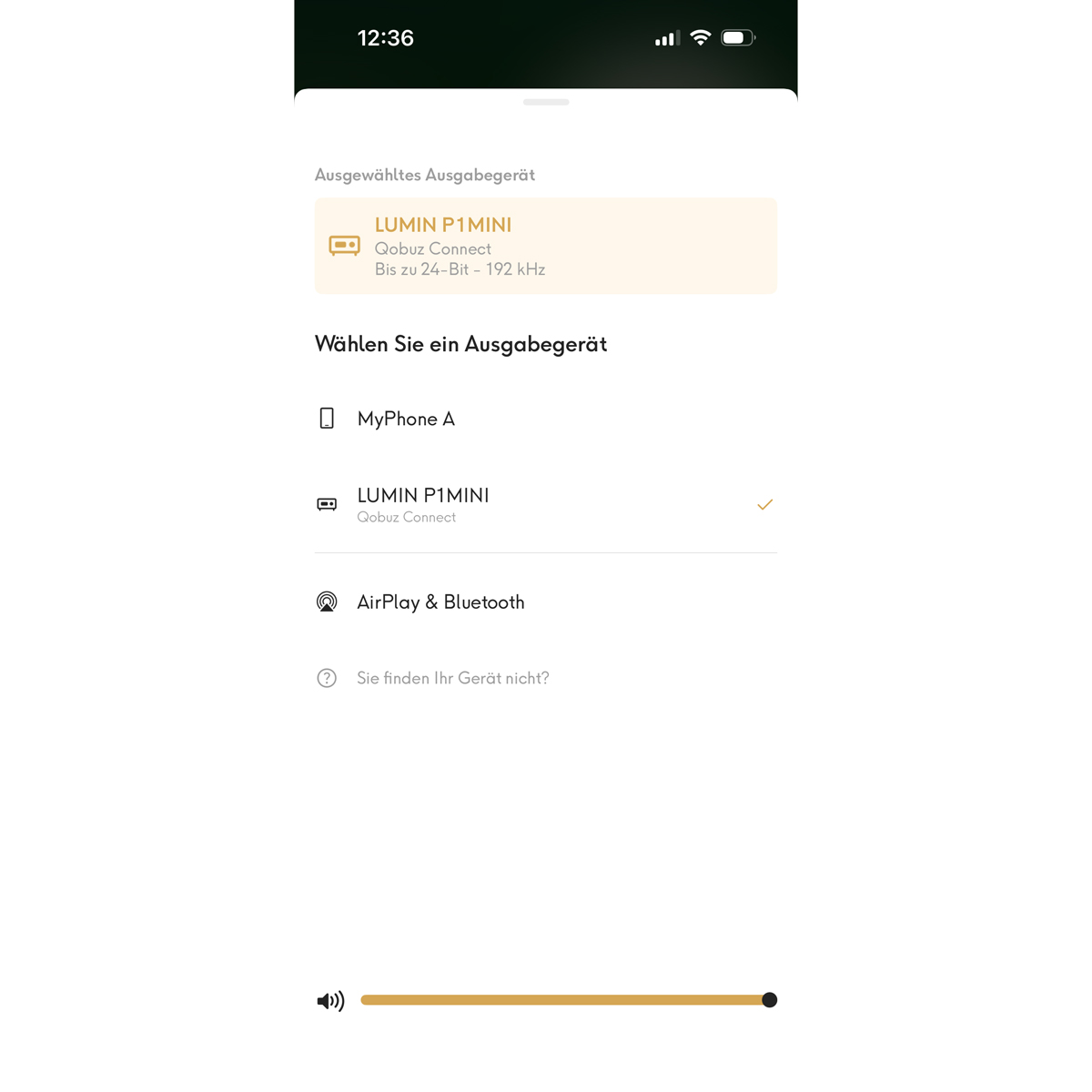
This brings several advantages, including future-proofing: while smart devices using Apple AirPlay or Google Play-Fi constantly need to shift data around – draining their limited battery capacity – with Connect the smartphone acts purely as a remote control and can go into standby while music is playing. Data exchange happens solely between the streamer and the provider’s servers. In addition, the app interface can be much better tailored to the service’s needs and catalog, and updates are barely noticeable. Finally, multiple accounts can stream through the same network player – one after another, of course.
Are there any downsides? At most, you could say you’re at the mercy of the providers. If they decide to introduce ads into their apps, you’ll have to live with it or switch services. In terms of sound quality, however, Connect works excellently, as all proprietary enhancement features and sound controls of the playback devices remain available through their own software.