
Listening to Ellington: Intimacy and Opulence Side by Side.
The music of Duke Ellington exists on every scale – from intimate chamber settings to large-ensemble orchestral suites. Two high-quality new reissues from Analogue Productions now make this contrast especially tangible. Both albums originally appeared on Pablo Records, the label jazz producer Norman Granz founded in 1973 shortly after selling his legendary Verve Records imprint. The name Pablo, incidentally, refers to Pablo Picasso – some of whose artworks Granz had to sell off from his collection to finance the new label. Under the Pablo banner, recordings later appeared by greats such as Ella Fitzgerald, Oscar Peterson, and Joe Pass. In addition to new sessions, the catalog was shaped above all by live recordings (for example from the Montreux Jazz Festival) and reissues.
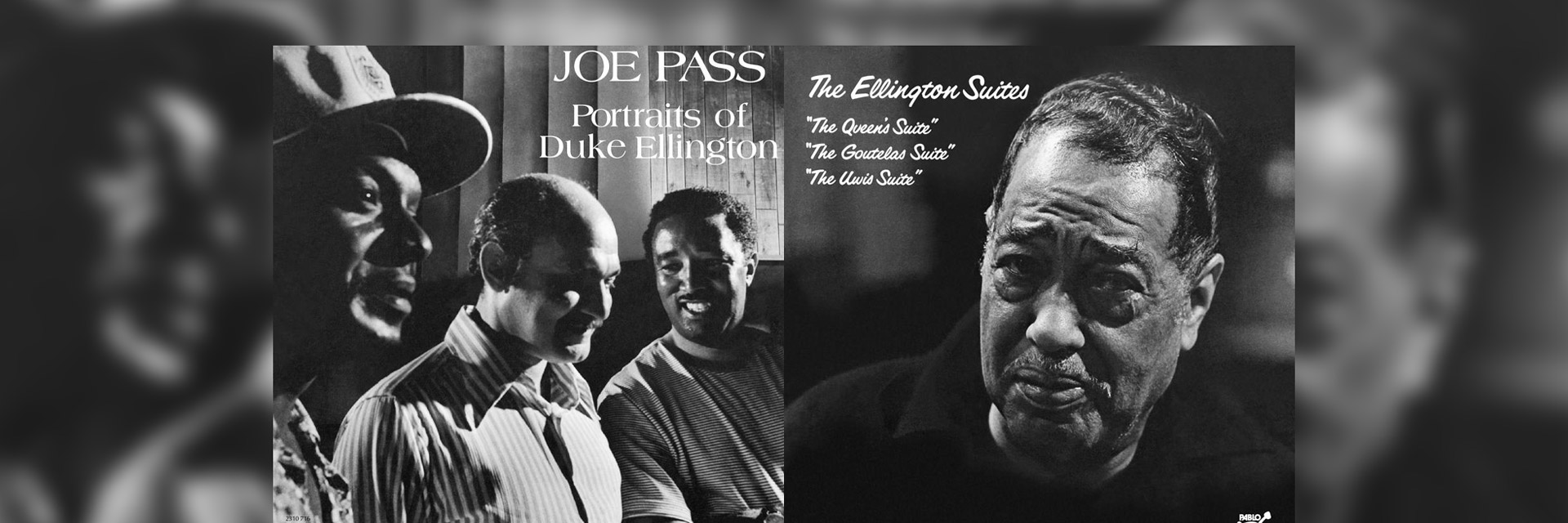
The two current reissues present Ellington from two very different perspectives: Portraits Of Duke Ellington with Joe Pass is a transparent, almost chamber-like trio album. The Ellington Suites, on the other hand, places the master’s late work on the turntable in orchestral form. Both reissues are sonically impressive; musically, however, they strike very different chords.
Joe Pass – Portraits Of Duke Ellington
A trio album with structural clarity
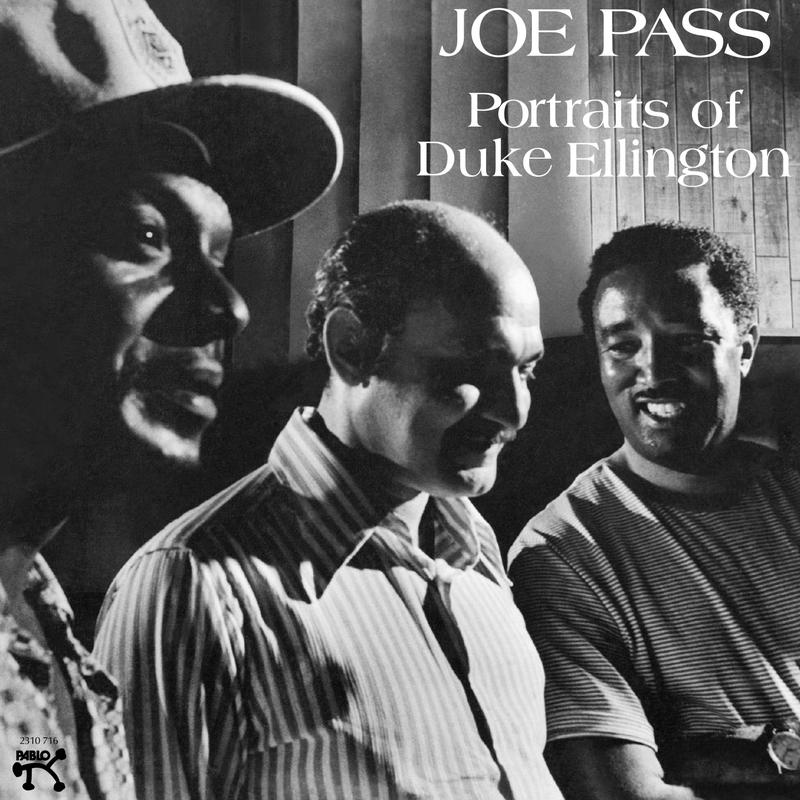
Joe Pass was never the type for grand gestures. His playing – always technically brilliant but never showy – thrives on harmonic sensitivity and the art of omission. For Portraits Of Duke Ellington, he teamed up with Ray Brown (bass) and Bobby Durham (drums). The recording was made under live studio conditions – no overdubs, no fixing in post. Three musicians, one room, done. And you can hear that: the music sounds immediate, unvarnished, and clear.
The track list reads like a stroll through Ellington classics: “Satin Doll,” “Sophisticated Lady,” “In a Mellow Tone,” “I Got It Bad (And That Ain’t Good).” The arrangements deliberately stay close to the originals. This isn’t about reinvention, but about intelligent reduction. Joe Pass plays with melodic focus, often from the inner voice, using sparse chord voicings and clear linear phrasing. Ray Brown provides the rhythmically and harmonically stable backbone, while Bobby Durham accents with pinpoint precision without ever crowding the space.
The reissue is sonically convincing, too: the analog mastering maintains tonal balance. The instruments are clearly placed in the room without sounding artificially separated. The guitar benefits from a balanced midrange – present but not exaggerated. The bass sounds well-defined, the drums restrained but structurally important. The pressing itself is quiet and clean, with barely noticeable surface noise. Overall, a coherent soundstage for a restrained yet musically thoughtful production.
The Ellington Suites
Orchestral works from the late period
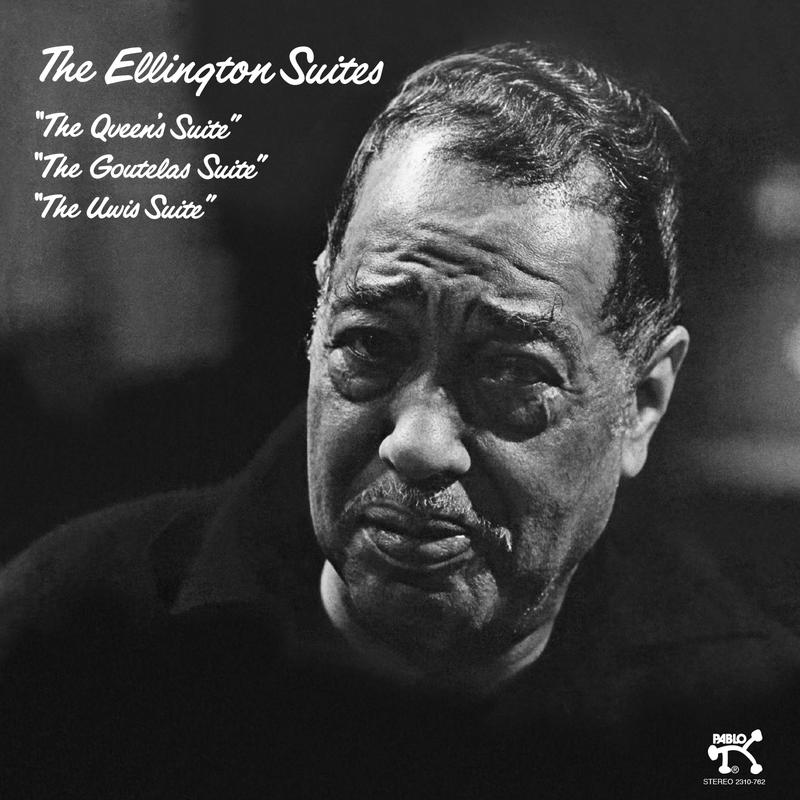
The second LP is entirely different: The Ellington Suites shows Ellington in his late creative phase as a composer for large forms. It contains three suites: The Queen’s Suite (1959), The Goutelas Suite (1971), and The Uwis Suite (1972). Parts of these recordings had originally not been released at all, or only in fragments. It was Norman Granz who finally issued them together on Pablo Records. The current reissue adds the previously unreleased piece “The Kiss.”
The Queen’s Suite is the earliest work in this collection – and arguably the most unusual. Ellington composed it as a personal dedication to Queen Elizabeth II – a gift not intended for the public. And yes, it sounds accordingly regal. The opener “Sunset and the Mockingbird” begins with a simple piano figure that slowly spreads into the orchestra. What follows are impressionistically shimmering, blues-infused movements, loosely connected, more associative than symmetrically structured. The dramatic arc holds across nearly twenty minutes, even if individual passages feel more like sonic sketches than fully resolved movements.
The Goutelas Suite and The Uwis Suite date from the early-1970s period. Both suites feel shorter and denser, but also less fully composed than The Queen’s Suite. Goutelas unfolds atmospherically, almost dreamlike – especially in the movement “Something,” a blend of woodwind colors, restrained brass, and Ellington’s relaxed piano playing. Yet as beautiful as the mood is, a clear dramaturgical development is missing; the piece ends rather abruptly.
Things become more interesting again in The Uwis Suite, which sets a quirky accent with “Klop” – a polka of the kind rarely heard in the Ellington universe. It feels somewhat isolated within the overall picture, but functions as a contrast point before “Loco Madi” delivers a rhythmically complex, gripping finale – perhaps the album’s strongest moment.
The sonic realization of this reissue is just as convincing as on the trio album: the orchestra sounds vivid and present without losing warmth. The stereo stage is credibly layered, the instruments sound natural and never exaggerated. A successful transfer of the original into the analog present.
Two records, two completely different Ellington worlds: here the sonic clarity and intimate atmosphere of a guitar trio, there the opulent, richly colored orchestral landscape of his late period. Each release shows in its own way why Ellington’s music remains so compelling today. The Analogue Productions reissues extract the maximum from the original tapes – musically and technically a real gain for any collection.