
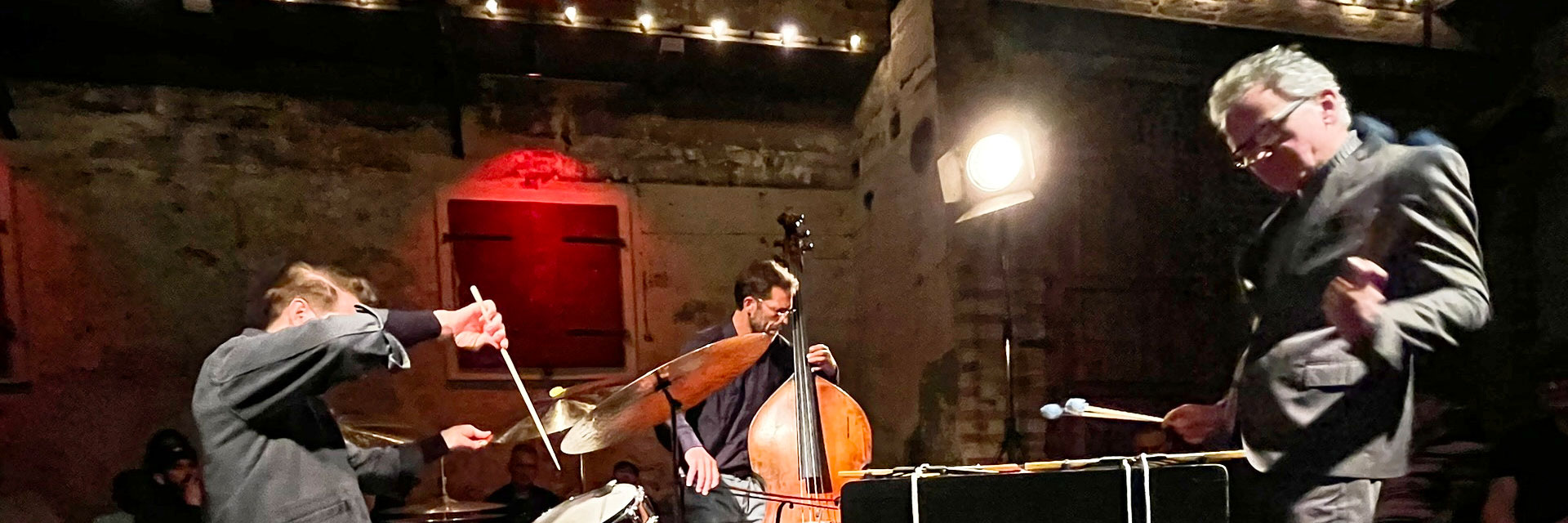
The DLW Ensemble has been exploring sounds between structure and freedom for 15 years.
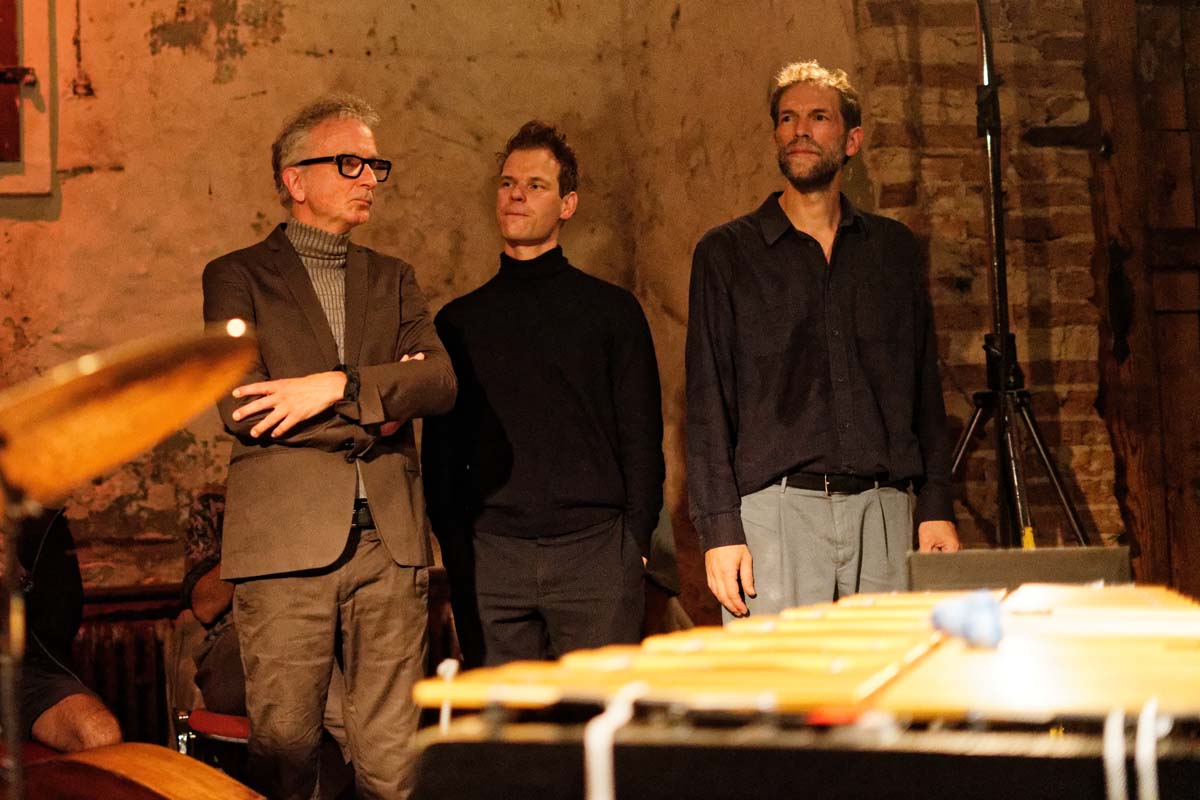
For 15 years and counting, the Dell–Lillinger–Westergaard (DLW) Ensemble stands for an uncompromising sonic language that moves between contemporary composition and improvised music. On the occasion of its anniversary, the trio does not look back in a nostalgic sense, but instead opens up new spaces – structurally, sonically, and institutionally. The anniversary concert on September 19, 2025, at Berlin’s Musikbrauerei demonstrated what this formation is capable of: joy in playing, analytical depth, and a commitment to thinking of music as an open process. Also involved: the current label Bastille Musique, which has received the German Record Critics’ Award multiple times in recent years.
Founded around 2010, DLW consists of vibraphonist Christopher Dell, drummer Christian Lillinger, and double bassist Jonas Westergaard. The classic trio format, however, serves only as a framework. Conceptually, the ensemble aligns more with models of thought from New Music in the spirit of Pierre Boulez than with the jazz canon. Improvisation and composition are not opposites, but form a mutually enriching system. From the outset, the trio aimed for more than simply stringing together free passages.
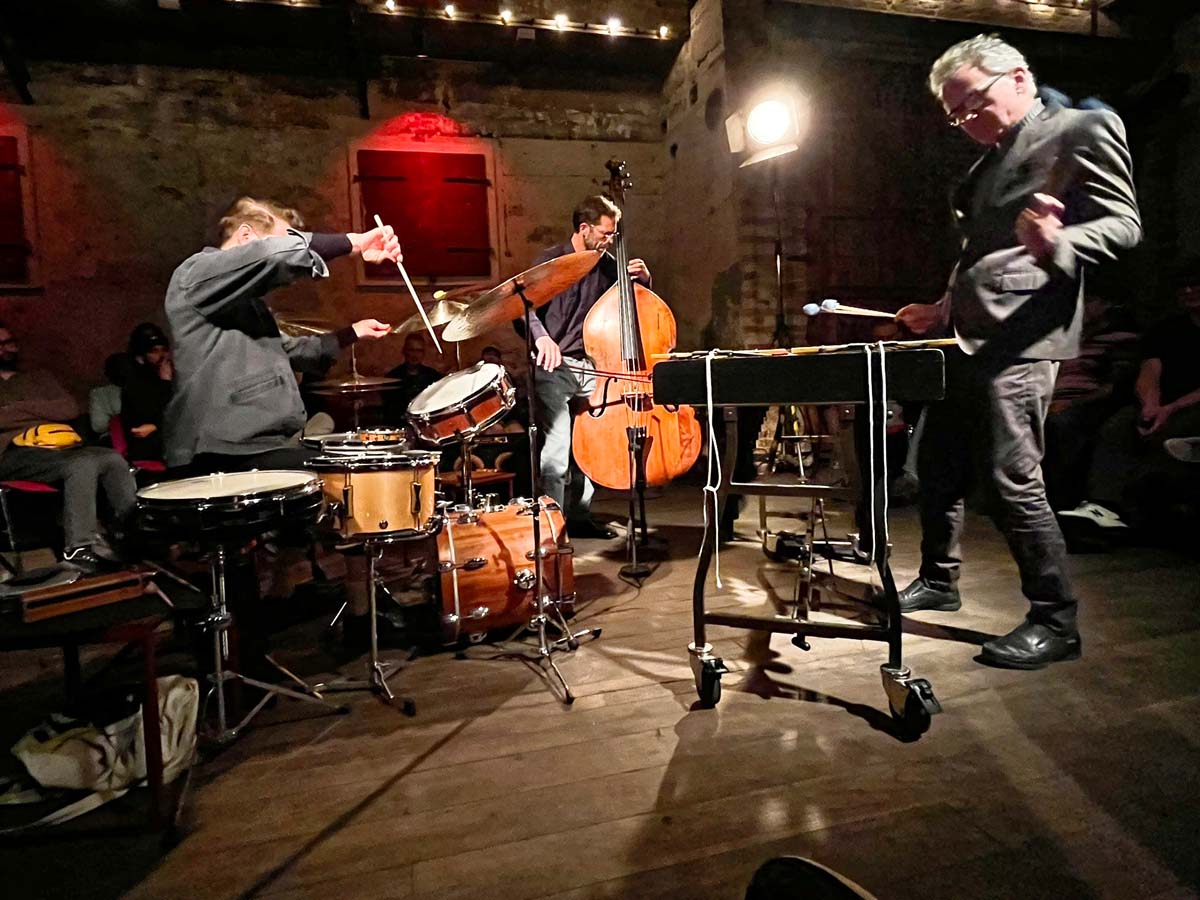
Their debut album Grammar already articulated a stance: music as a system nourished by rules, yet not confined by them. Subsequent works such as Beats, Grammar II, and Boulez Materialism expanded this principle – sometimes more rhythmic, sometimes harmonically denser, always with a refined sensitivity to musical micro-processes. Their discography – until recently released primarily on the label Plaist, founded by Christian Lillinger – is thoughtfully conceived and sonically distinctive. That this never results in academic dryness is due to the way the trio operates. Each member brings an individual approach, yet together they develop a dynamic that resists simple categorization. Their music is both physical and abstract, rhythmically pointed and harmonically permeable, always searching for new intersections between idea and sound. Anyone who listens to DLW quickly realizes: this is not about reproduction, but about thinking – through sound, in the moment, in action.
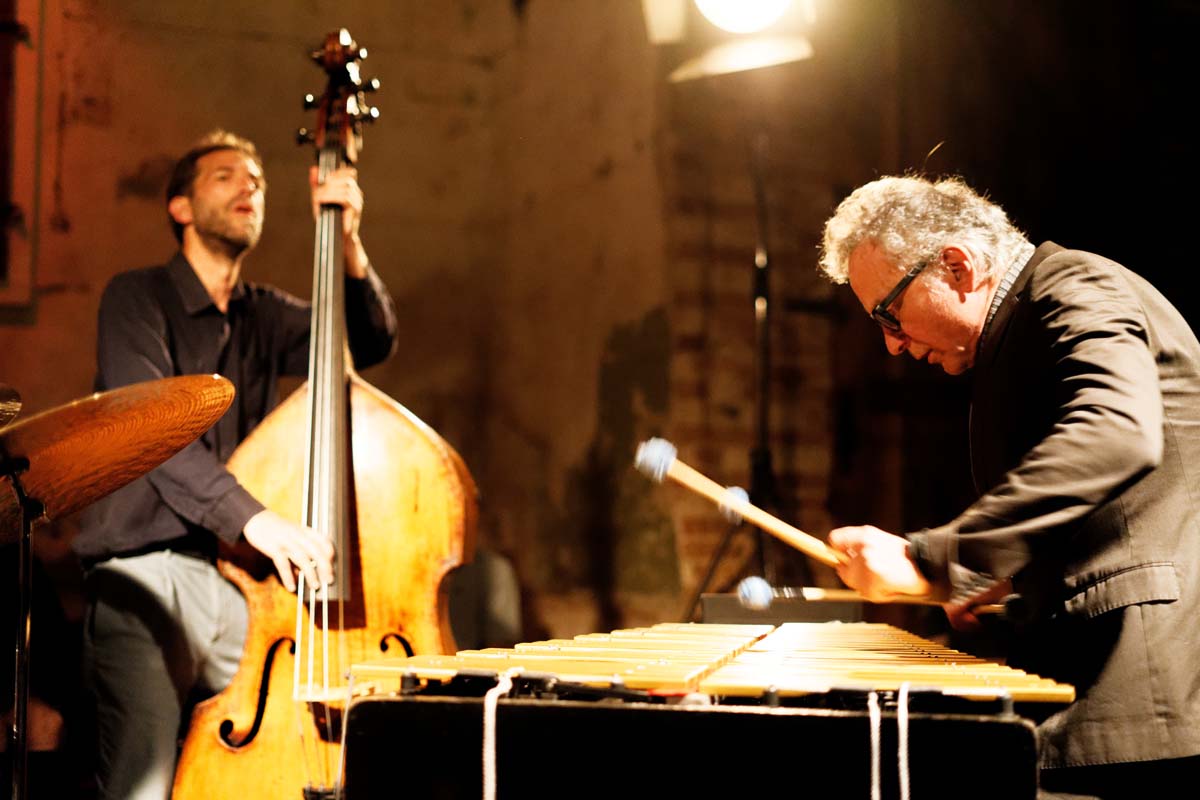
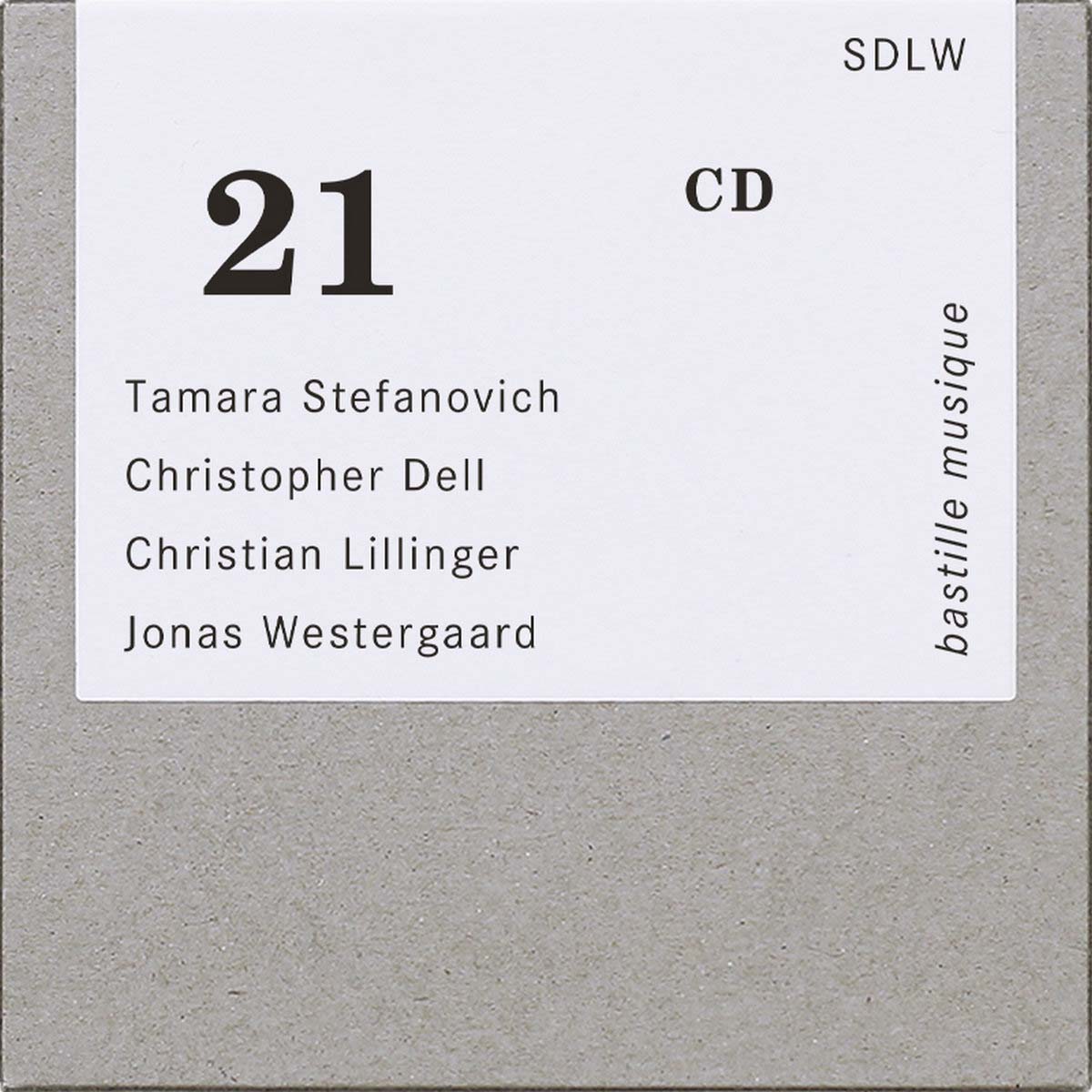
A significant step in their development came through their collaboration with pianist Tamara Stefanovich. Known for her work in the fields of classical avant-garde and late Romantic repertoire, she adds another color to the ensemble’s palette. Her playing is precise and analytical, yet open in its engagement with the trio’s structures, while remaining deeply rooted in the canon of New Music between Bartók, Messiaen, and Boulez. The joint album SDLW is an example of successful expansion without dilution. Stefanovich is not positioned as a guest, but moves on equal footing within the network of composed and improvised elements.
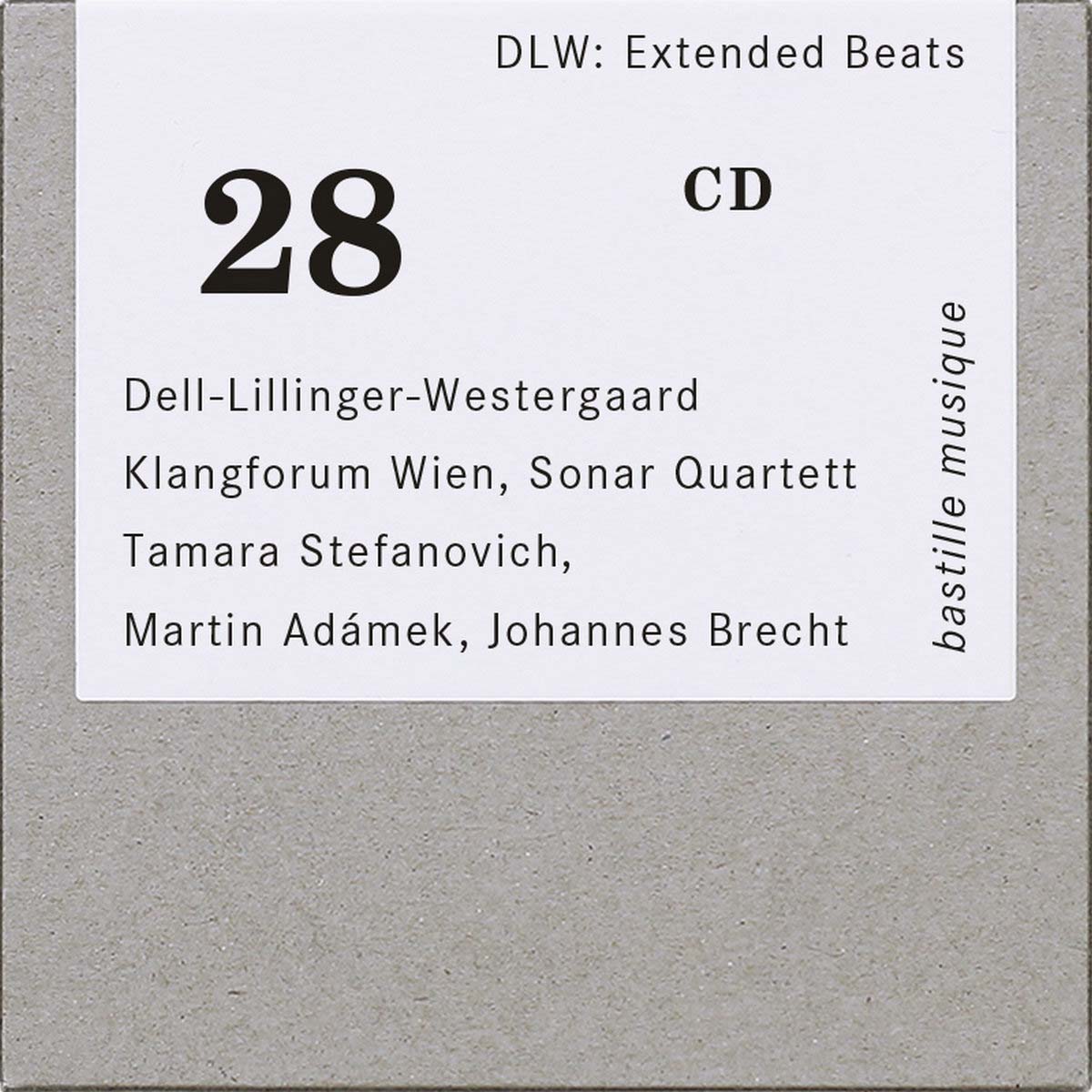
The move to Bastille Musique marks another chapter in DLW’s history. The release of Extended Beats in 2024 underscores this step. With guests such as Klangforum Wien, the Sonar Quartet, Martin Adámek, and Johannes Brecht, the ensemble expands its horizons toward the concert hall and the philharmonic stage. Sonically, this creates a new benchmark – more orchestral and multi-layered, yet without sacrificing structural clarity. The album was not only well received by critics, but also awarded the German Record Critics’ Award.
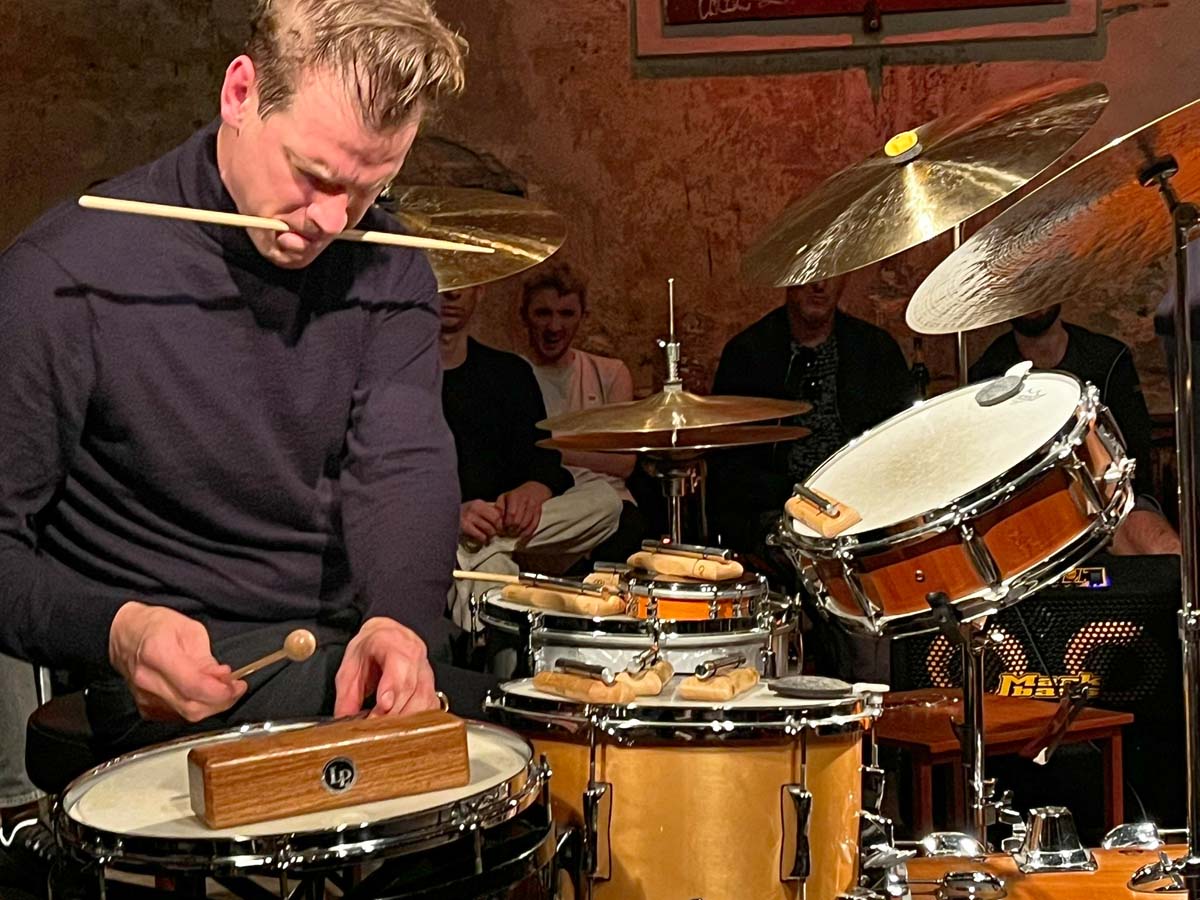
The 15th anniversary concert at Berlin’s Musikbrauerei was more than just a retrospective. It showed how deeply the ensemble has internalized its principles – and how vividly they come to life in performance. Located in the Prenzlauer Berg district, the Musikbrauerei provided an ideal setting: a building with winding corridors, a dark atmosphere, and excellent acoustics. The venue seemed like a physical counterpart to the sonic spaces DLW creates – mysterious, focused, rich in detail. Across two sets, the trio presented a cross-section of its work: excerpts from Grammar, Beats, and Extended Beats – precise and carefully structured, yet never sterile. At times rhythmically explosive, at others marked by an almost chamber-like delicacy of sound. The subtle transitions in timbre, the fragmentation of material, the constant shifts in direction – all demonstrate how masterfully DLW balances form and freedom. That three distinct voices merge into a unified ensemble sound without losing their individuality is no coincidence, but the result of years of shared development. What began as an experimental trio has evolved into an ensemble that reaches far beyond genre boundaries. Anyone curious about how contemporary music can sound today will find a precise and vibrant answer here.
DLW Ensemble – Discography (Selection)
Grammar – Plaist, 2013
The debut: modular compositional structures meet spontaneous sonic development
Grammar II – Plaist, 2016
A continuation of the “grammar” approach – denser, more complex, more analytical
Beats – Plaist, 2017
Rhythm as compositional material: precise, energetic, fragmented
Boulez Materialism – Plaist, 2021
A structural critique engaging with serial thinking
SDLW (with Tamara Stefanovich) – Bastille Musique, 2022
A dialogue between classical avant-garde and improvised structural work
Extended Beats – Bastille Musique, 2024
An orchestral expansion of the DLW concept – featuring, among others, Klangforum Wien and the Sonar Quartet. Awarded the German Record Critics’ Award