
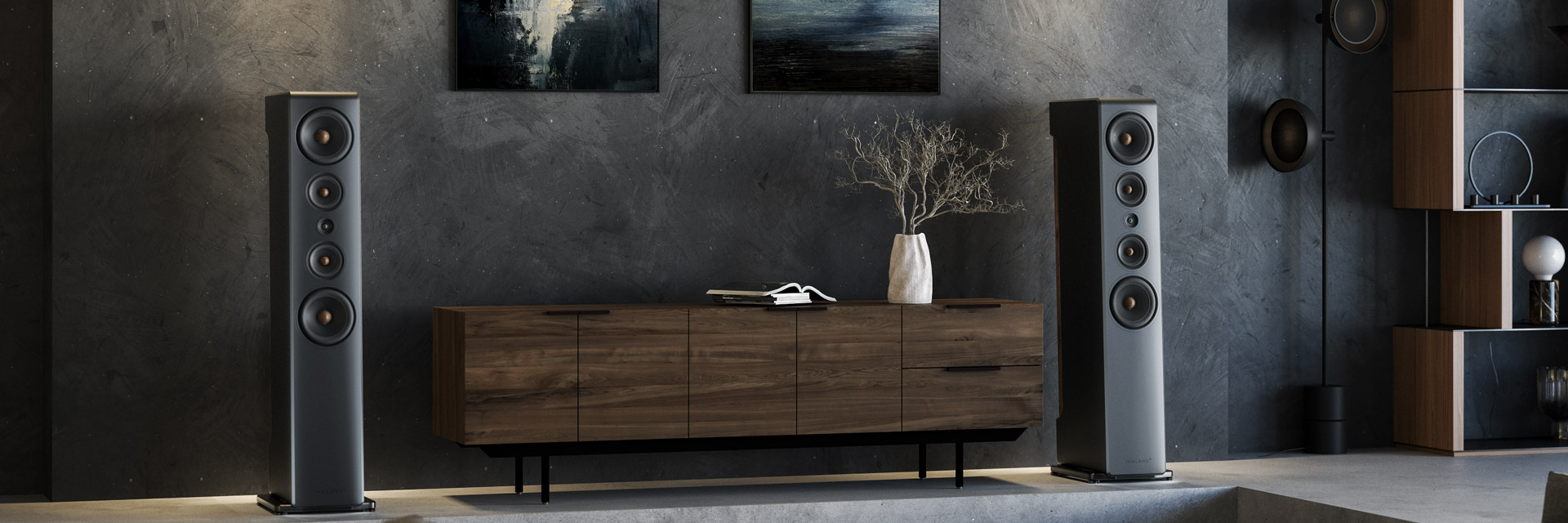
How many of those who appreciate good sound actually listen to music as intently as they would watch a movie or read a book? Surely fewer than 50 percent, I’d argue. That seems to be Inklang’s view as well. The Ceterra (derived from “Centrum” and “Terra”) 70R Black Edition makes critical listening sessions entirely possible – but optional. Relax and enjoy the music.
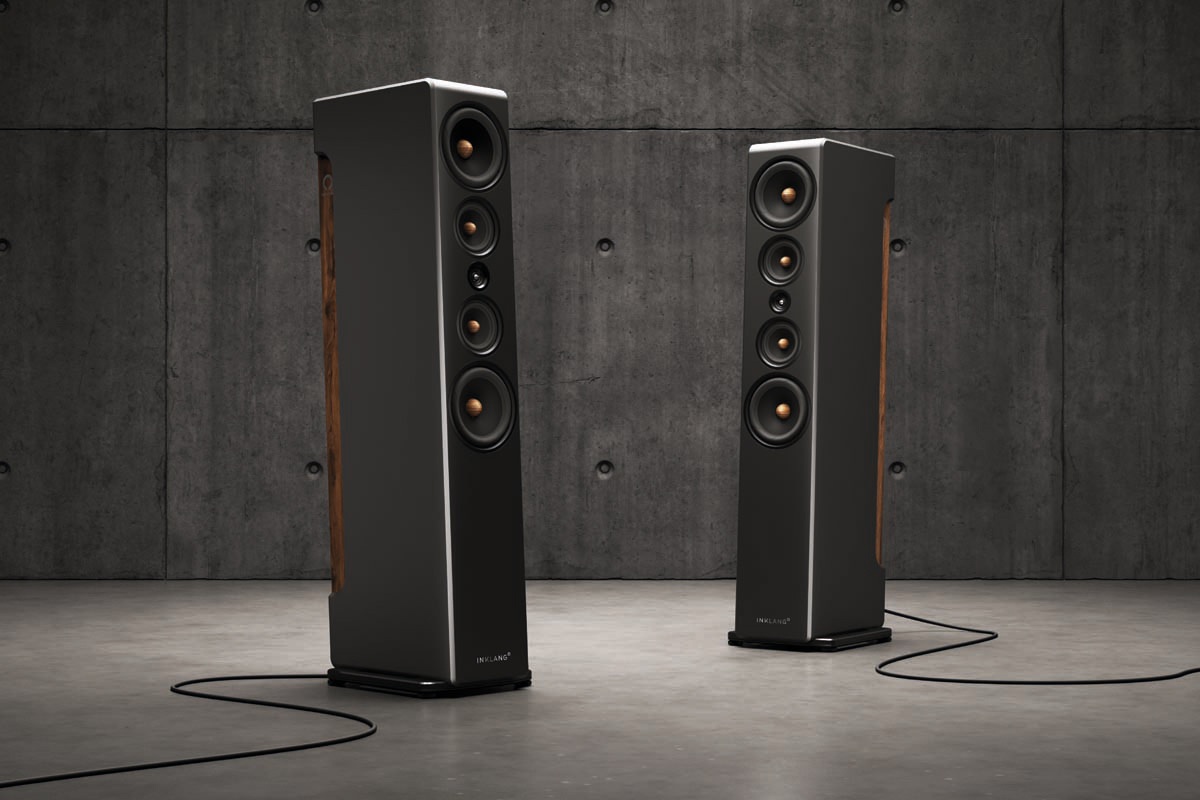
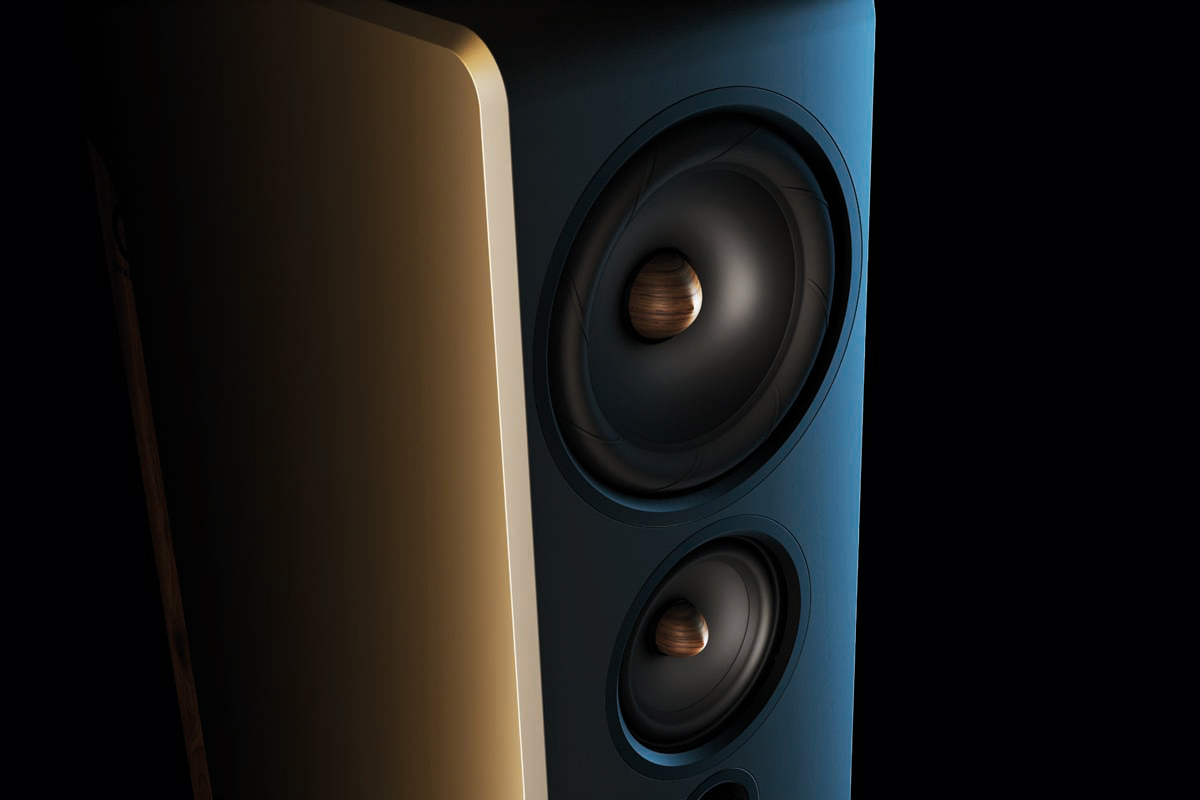
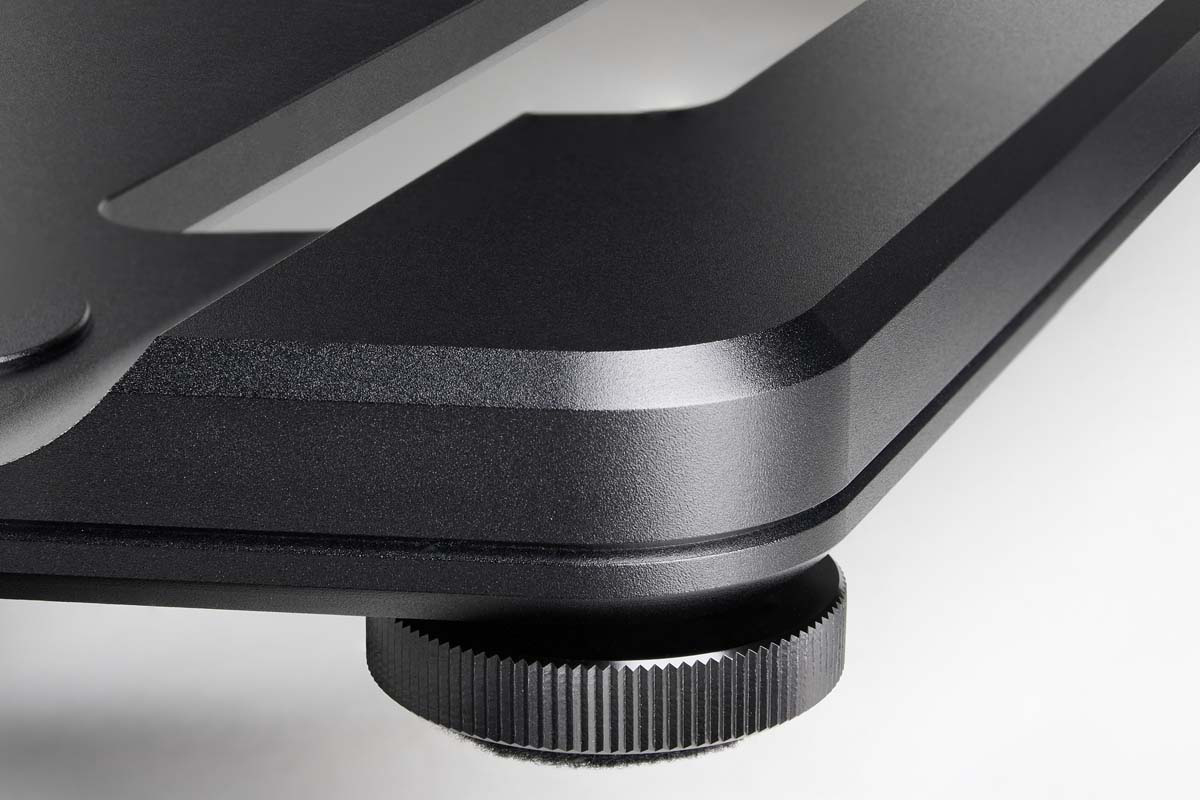
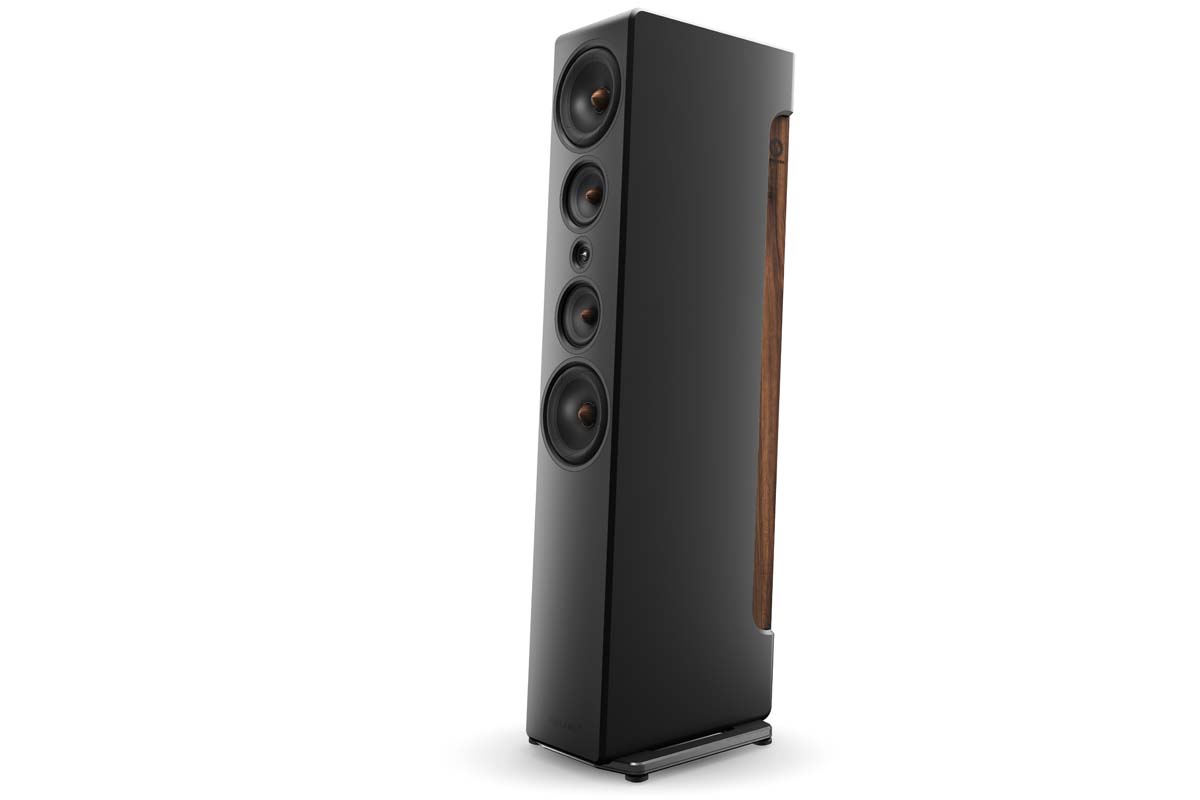
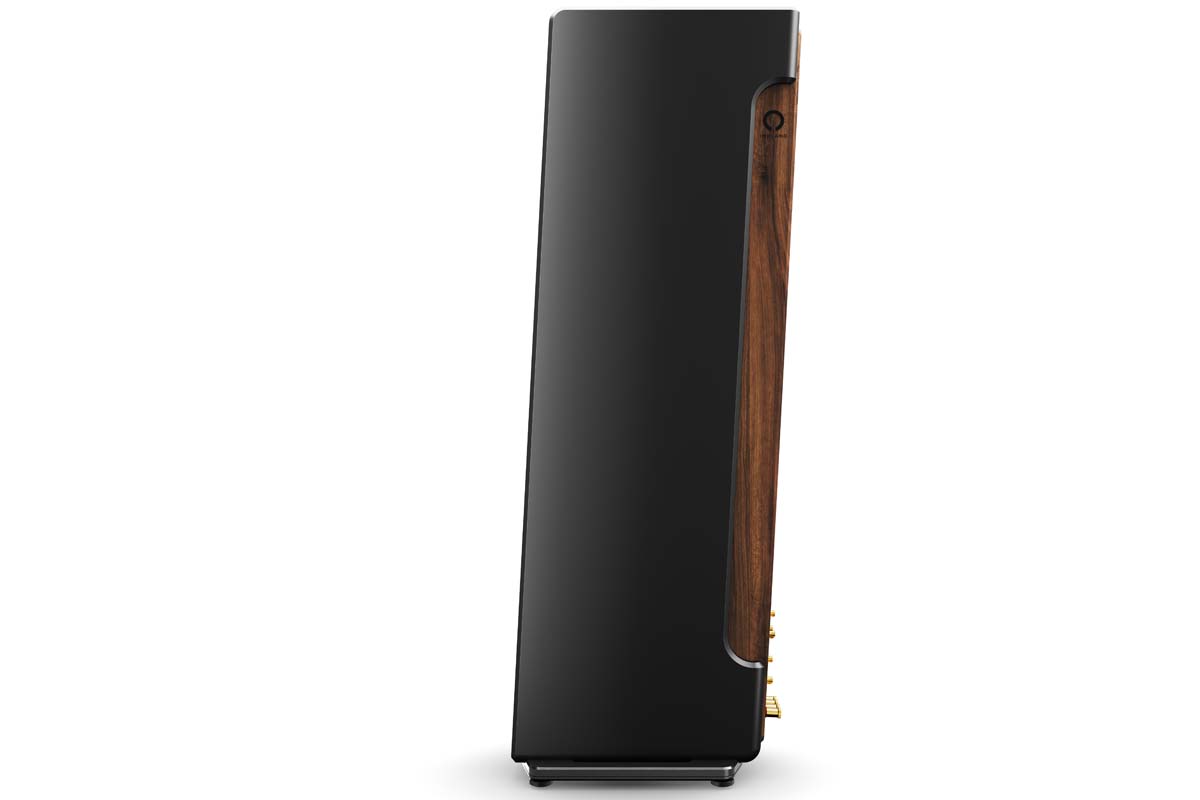
I could kick things off with a rant on how speaker manufacturers supposedly fail to grasp that a loudspeaker is always also a piece of furniture, and therefore show no sense for living-room compatibility or “wife acceptance factor.” This adage is often invoked, but rarely true in my experience. It’s been quite a while since I last encountered a speaker that had to compensate for questionable looks with angelic sound. We currently have four pairs in our listening room, all elegantly proportioned with excellent finishes – none of them would be even remotely embarrassing in front of guests. The Inklang Ceterra 70R Black Edition, however, plays in a different league altogether. Even though, for acoustic reasons, it’s essentially a tall rectangular box just like any other speaker, the Hamburg-based designers have somehow managed to make it look anything but: the slanted baffle may not be unique, but it adds a certain visual lightness; the radius with which it transitions into the top, along with the wood inlay on the back that makes the cabinet appear like two interlocking half-shells, further contributes to giving the Ceterra an almost organic shape. It may be finished in anthracite, but it’s anything but understated – with its wooden phase plugs and futuristic base, it practically shouts: “Look at me – I’m a designer piece down to the last detail!”
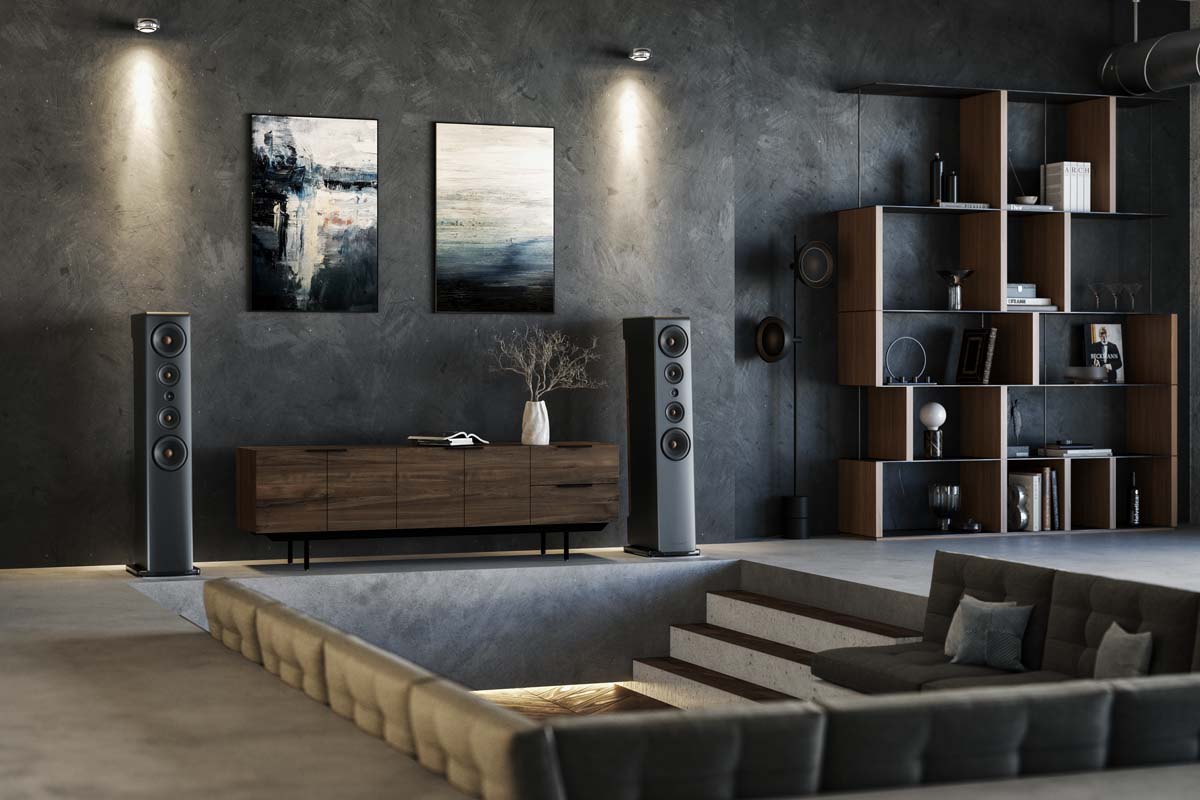
Design has always played a central role at Inklang – often bold, but above all tailored to individual customer taste. The high degree of customization is a defining feature the company proudly promotes and consistently maintains. The Ceterra 70R Black Edition currently gracing our listening room, however, is available only in this particular color combination – it’s a special edition after all. Just 15 pairs will be built, and at the time of testing, about half of them reportedly already had a home. If you miss out, take comfort: a regular version is expected in the not-too-distant future, customizable in the brand’s usual fashion.
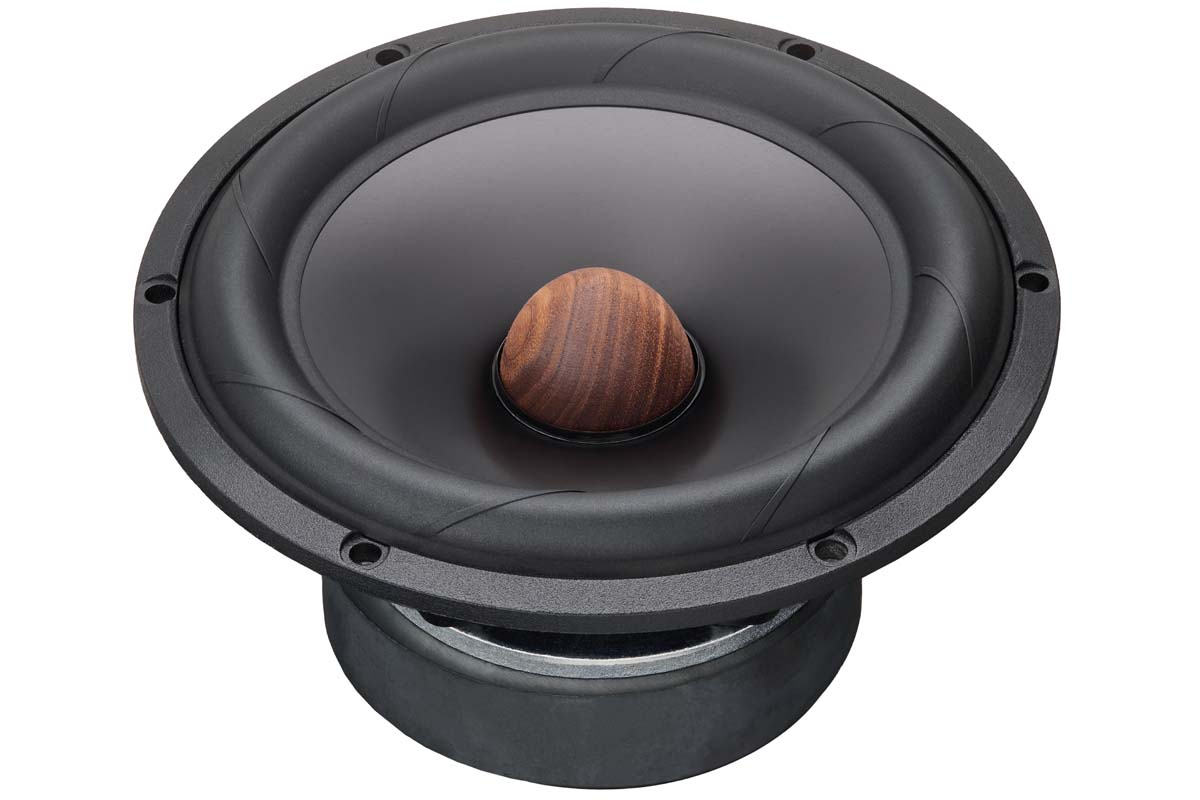
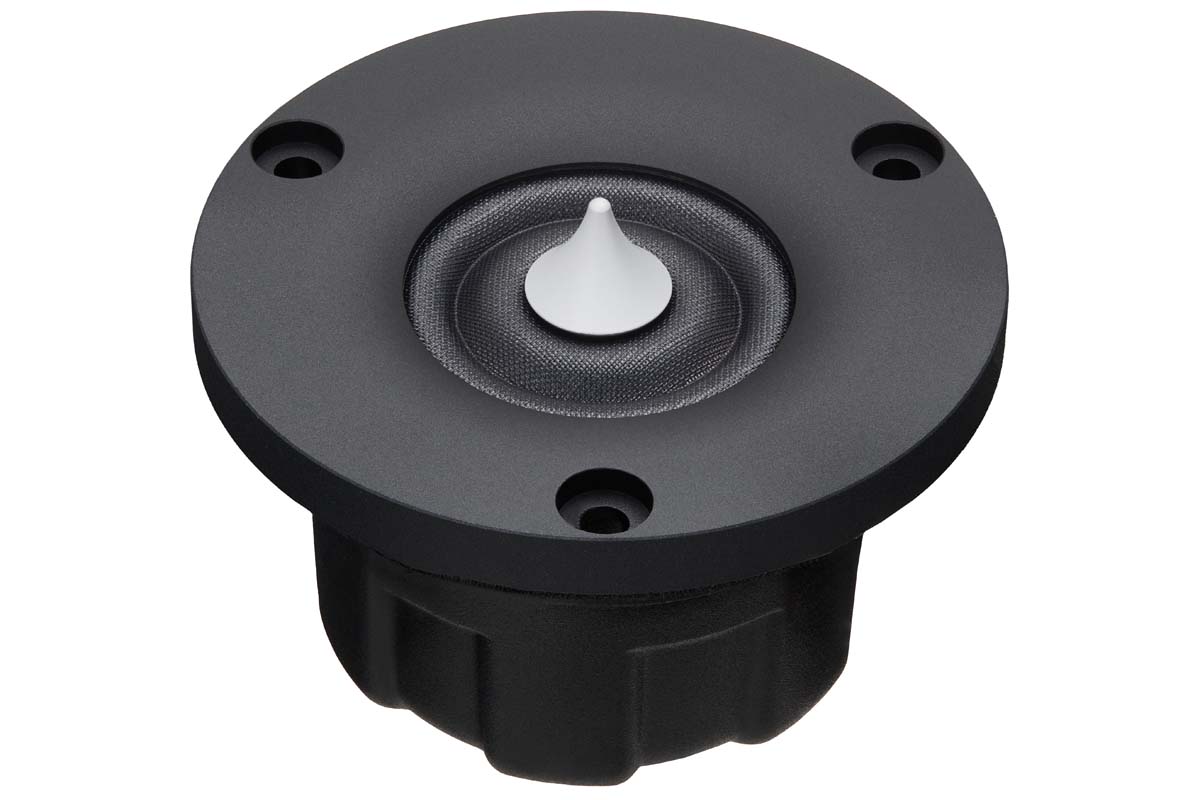
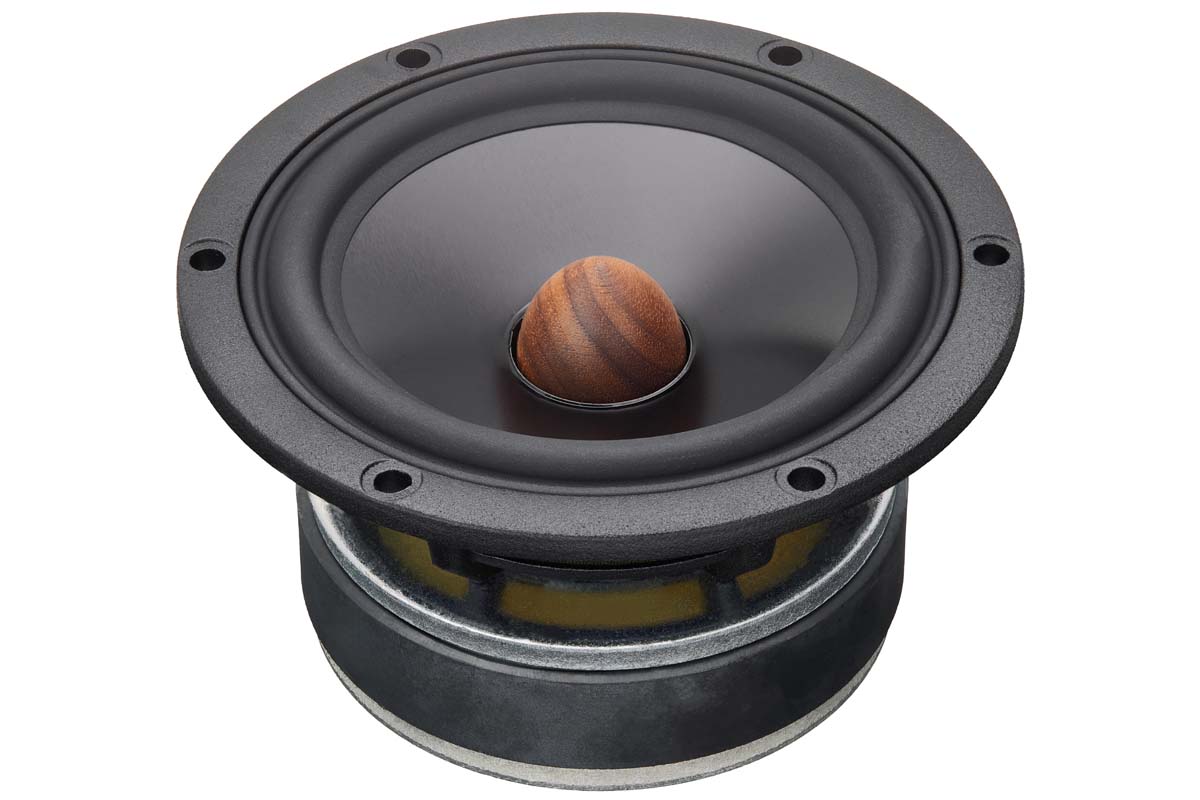
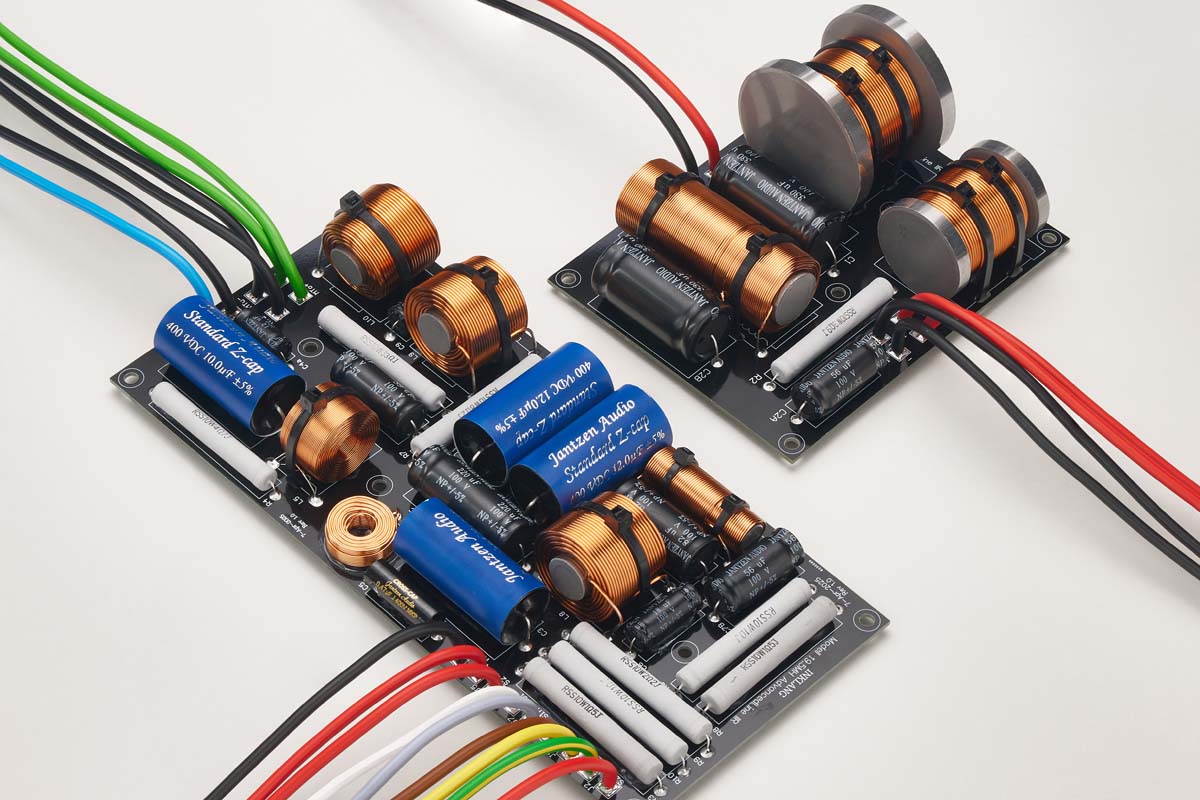
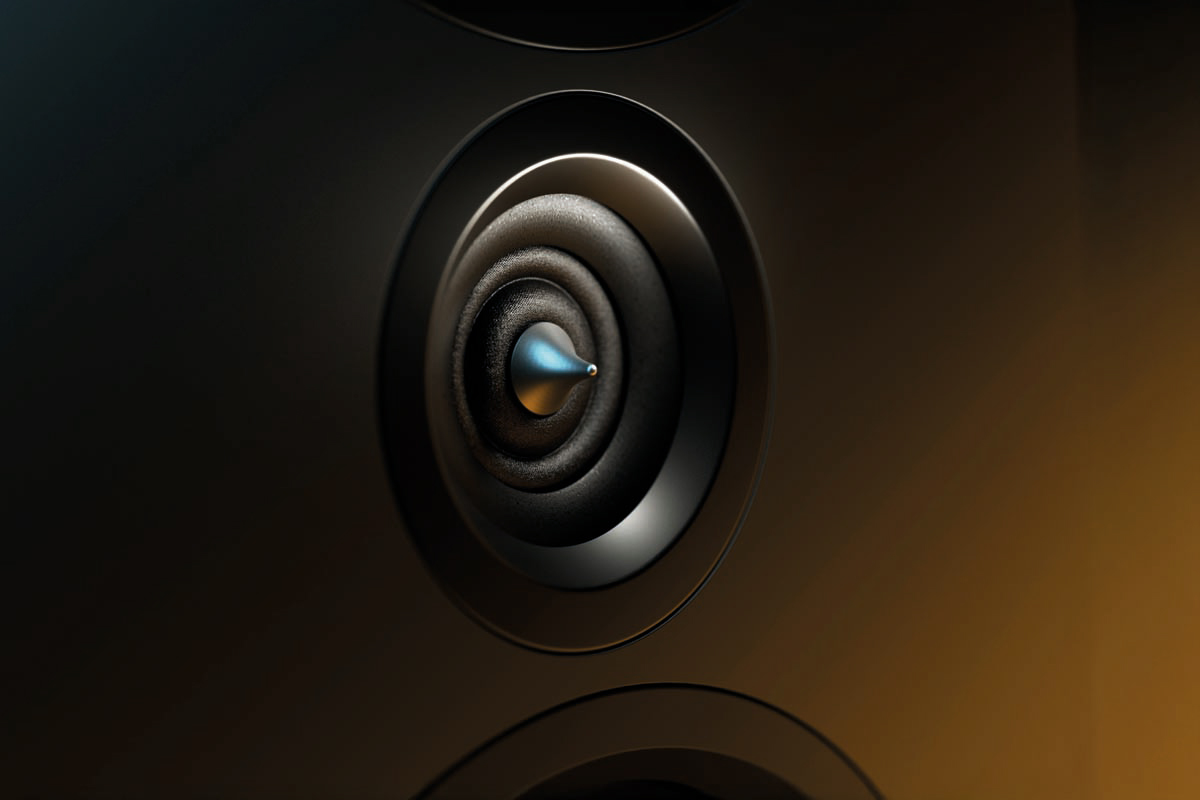
Of course, the outrageously good looks shouldn’t fool us into mistaking the Ceterra for a pretty poser – the driver lineup alone makes its true high-end ambitions clear: the aluminum cone drivers for midrange and bass are based on the Seas Excel series and were significantly modified for the Hamburg company, while the dual-ring radiator tweeter comes from Scan-Speak’s top-tier Illuminator line. The crossover also uses only premium components such as lacquered inductors and Jantzen Z-Cap film capacitors.
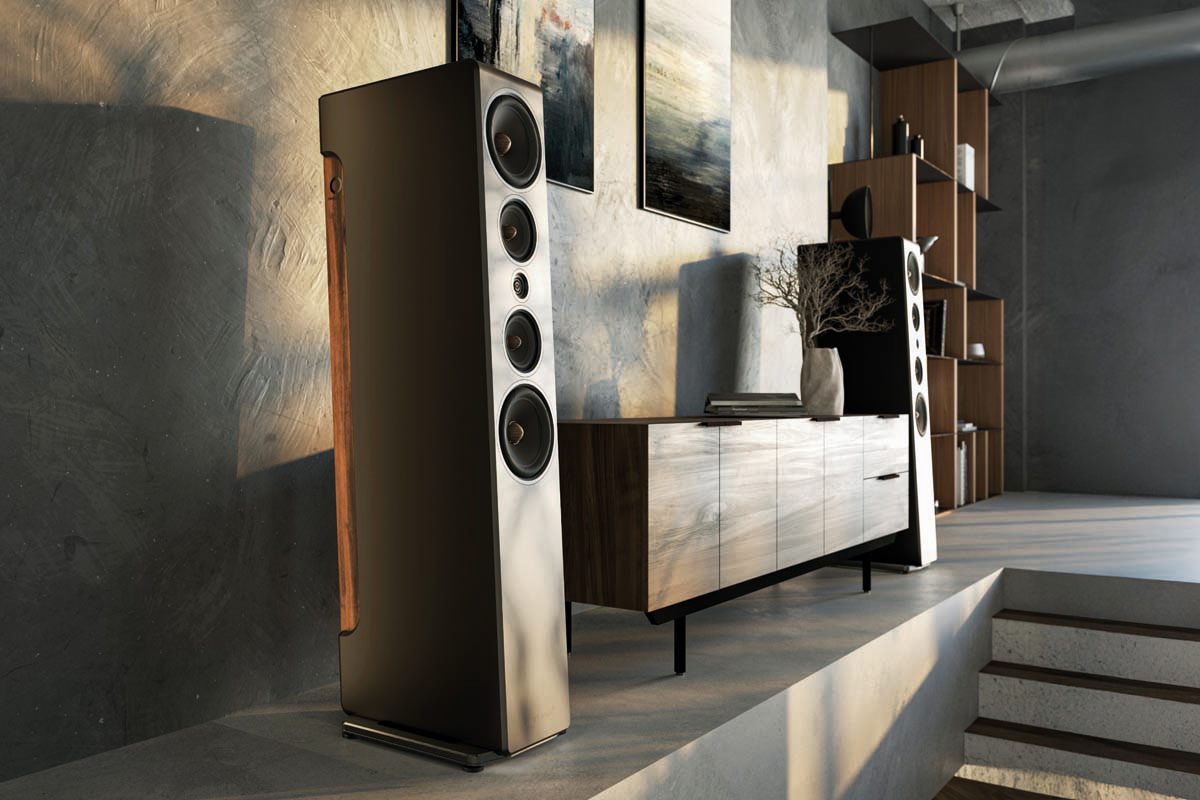
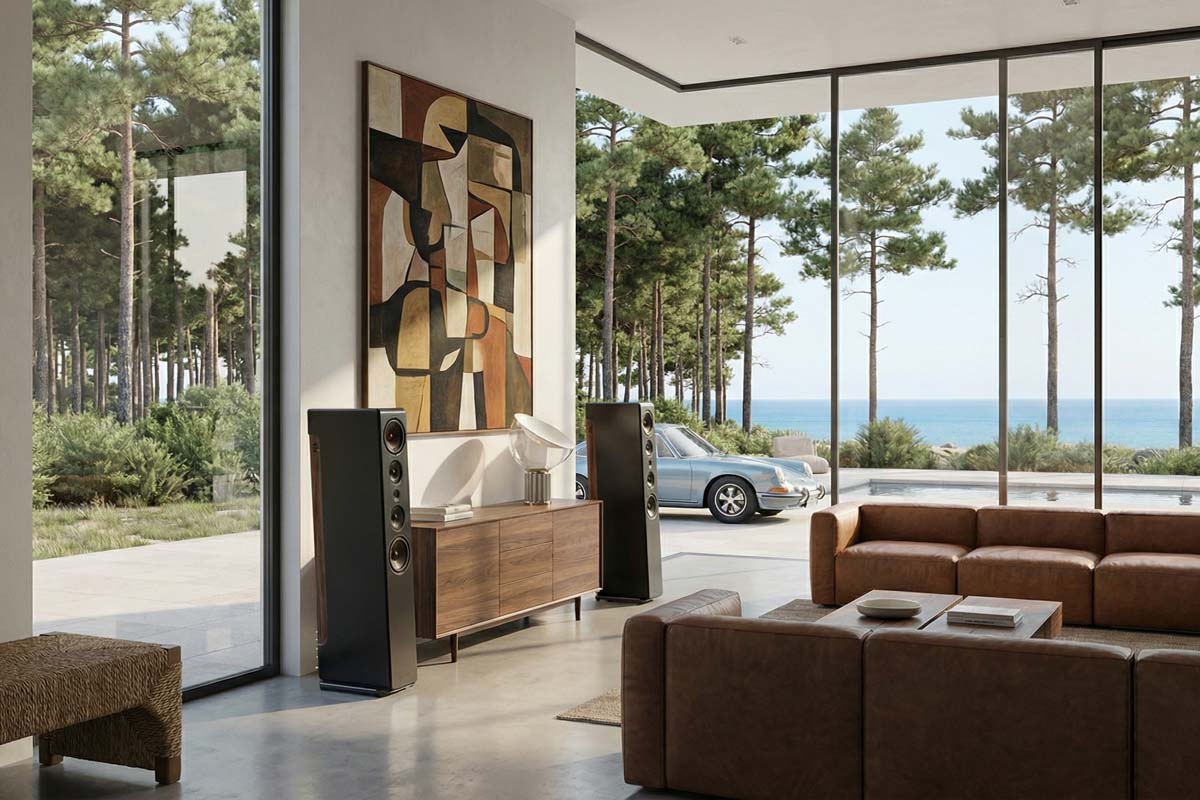
As technically ambitious as they are, Inklang speakers are always meant to be beautifully sounding everyday companions for real living spaces – not precision monitoring tools that only work when you put your head in a vise. Inklang customers typically have little interest in letting speakers dictate their interior design or in installing large absorbers, diffusers, and bass traps. The brand’s clientele tends to favor hardwood floors, glass fronts, and exposed concrete – plenty of reflective surfaces – and in such environments, the speaker is expected to just work. That’s exactly why so much effort has gone into smoothing the dispersion characteristics not only horizontally but vertically as well.
Symmetrical – with a twist
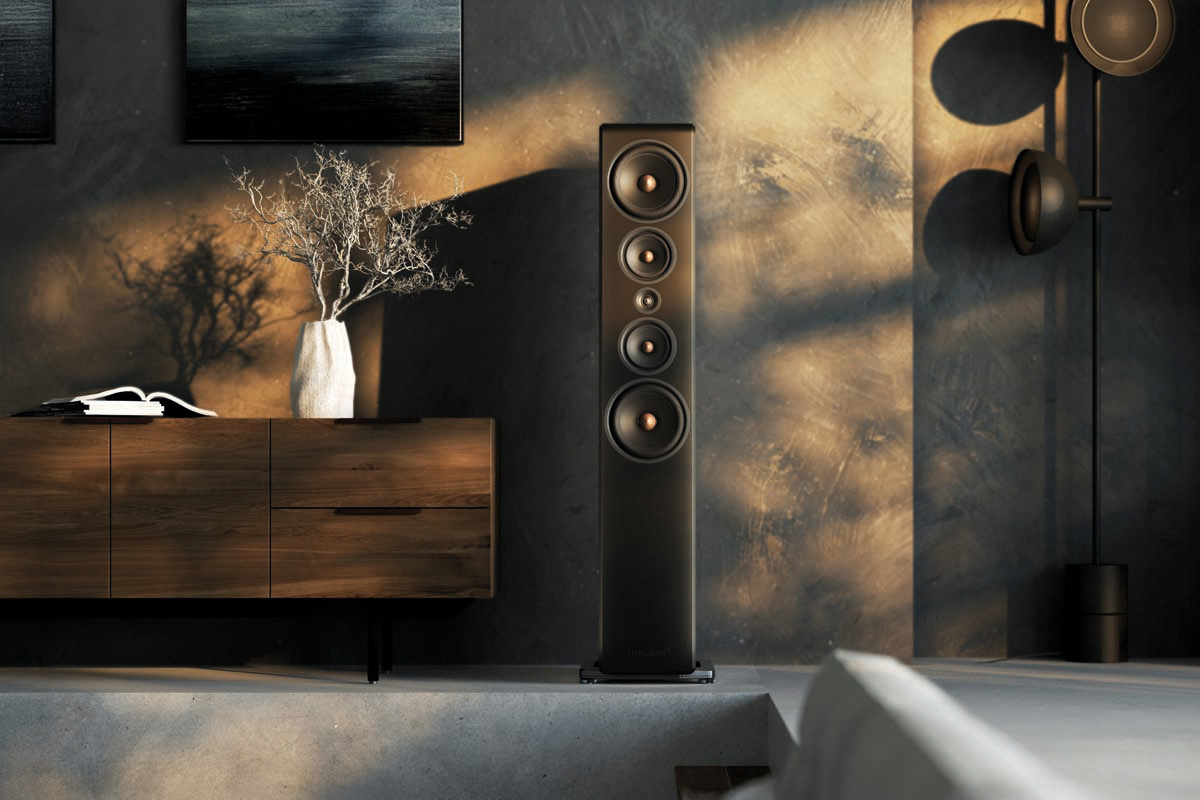
Since symmetry and uniformity go hand in hand, the Ceterra’s drivers are arranged in a D’Appolito configuration – well, to be precise: an MTM (midrange-tweeter-midrange) layout. “D’Appolito” is something of a colloquial misnomer, because what the engineer of that name actually devised is a special variation of such a symmetrical setup, in which the three drivers behave almost like a single unit. A true D’Appolito array requires that the center-to-center distance between the midrange drivers be no more than two-thirds of the wavelength at the crossover frequency – at 2 kHz, that’s only about 12 centimeters, which is usually physically impractical. In principle, a greater distance between the midrange drivers is desirable because phase differences cause their output to progressively cancel with increasing vertical distance from the main axis, reducing floor and ceiling reflections. As you move even further off-axis, however, the phases begin to align again to form so-called side lobes, which are reflected quite directionally from the floor and ceiling – ultimately causing the sound to vary significantly depending on where exactly the listener sits or stands.
Because the Ceterra, like all Inklang speakers, is designed to perform well even for the audiophile walking around in the living room, Inklang’s engineers set out to combat these side lobes with a clever trick: at its core, the 70R is a three-way speaker – but electrically it adds half a way. The two midrange drivers couple to the tweeter at slightly offset crossover points – 2.2 and 2.4 kHz – effectively smearing the interference patterns described above and resulting in a much more balanced dispersion characteristic.
As you like it
The Hamburg speakers pass the “walk-around test” with flying colors, but they also excel at seated critical listening. One initial surprise: the Inklang Ceterra achieves its sweet spot independence not through artificially inflated soundstage dimensions. The projection extends almost exactly to the speaker base width, and within that self-defined space it renders width, depth, and height with excellent organization. Those who crave an extra dose of atmosphere can simply choose the a recording that does that. With Morricone’s main theme from The Good, the Bad and the Ugly, nothing feels constrained; whistling and harmonica seem to come from an infinite distance. The speakers expose the charmingly artificial reverb as manufactured clearly, but without any ill will as the Scandinavian high-end drivers unravel the slightly fluttering decay tails with relish. Interestingly, over the Ceterra I actually prefer the original over the 2004 remaster, contrary to my usual habits. Even though on the latter, the somewhat biting treble has arguably been dialed back rather more than necessary, I still usually prefer it, especially at the end of a long day. Through the Ceterras, however, the original mix retains its sharp bite – but it’s more that of a playful Labrador puppy than of a rabid Rottweiler.
Sticking with great but perhaps slightly overplayed film music, I next probe the dynamic capabilities with John Williams’ own recording of his “Imperial March” (Star Wars: The Empire Strikes Back). The piece always surprises with how forcefully the 4/4 rhythm drives forward despite the overall open and airy production (here with the Vienna Philharmonic). And it comes across exactly as it should: dark and propulsive at once. The timpani hit as bone-dry pressure waves, while the brass section’s goose-stepping attack practically forces your feet to march along.
The two 7.5-inch woofers showcase their precision and control in “Equus 3” by The Mars Volta (The Mars Volta): the electric bass is satisfyingly gritty and textured, never gets in the way of the drums, and both stay clear of Cedric Bixler-Zavala’s vocals. Everything remains impeccably separated and easy to follow at all times.
And if you’re not in the mood for dissecting music, you can simply get up mid-song, make yourself an espresso in the open kitchen (caution: background noise!) while merrily singing along. After all, the Inklang Ceterra 70R isn’t just for focused sessions – it’s a sonic piece of furniture you can let play all day, only to occasionally find yourself, almost by accident, rooted in the listening chair placed perfectly within the stereo triangle.
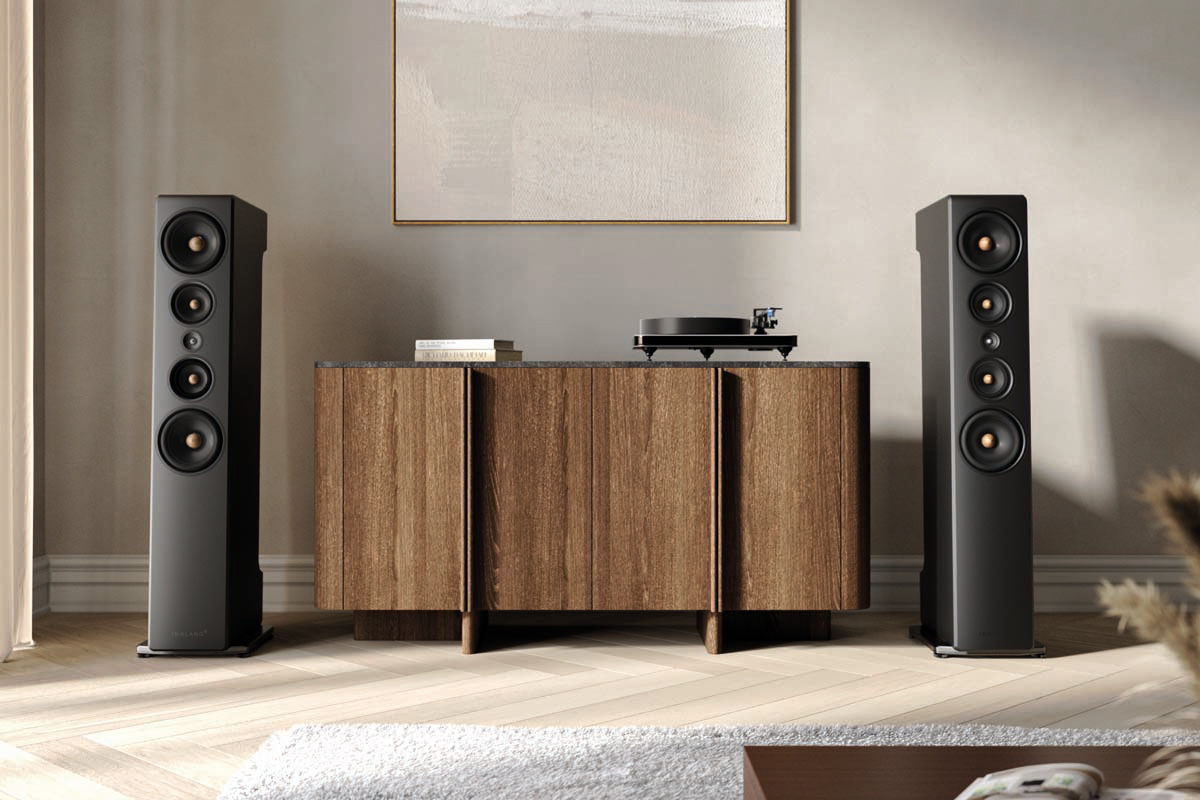
Loudspeaker Inklang Ceterra 70R Black Edition
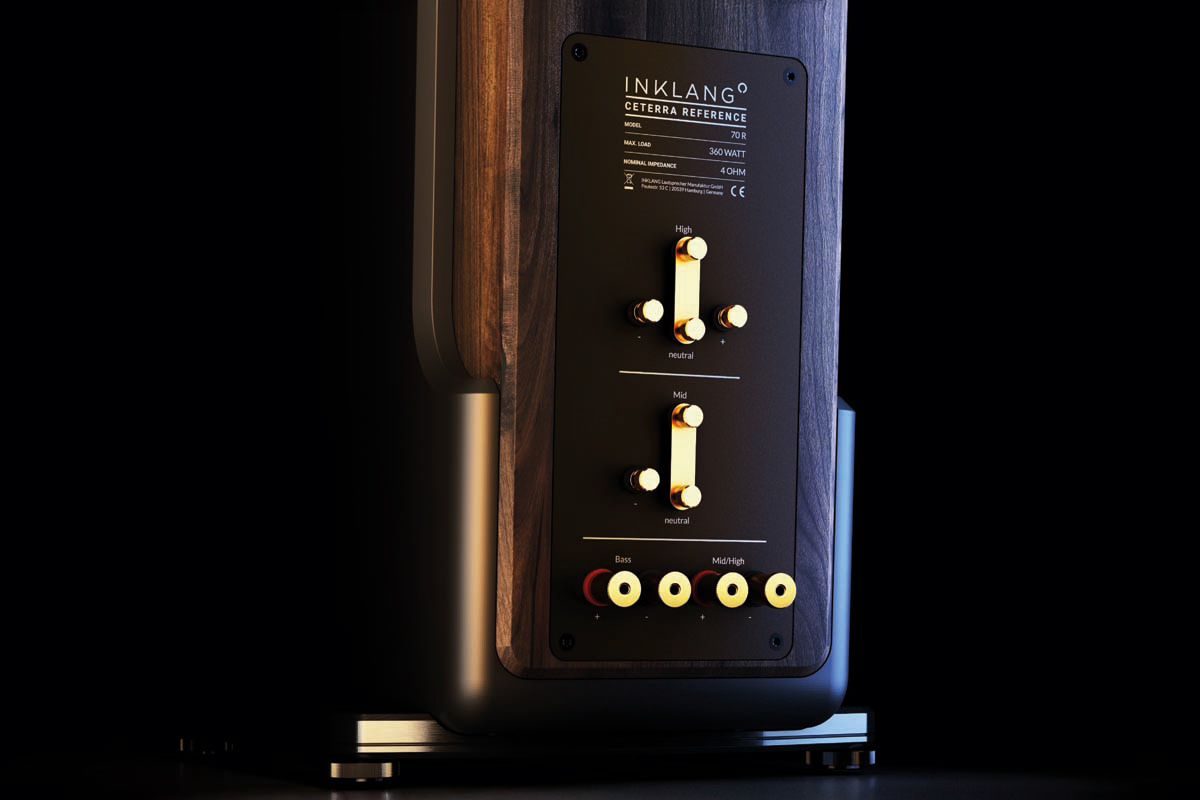
Design: passive 3.5-way floorstanding speaker | Drivers: 2 × 7.5″ woofers (Seas Excel), 2 × 4.7″ midrange drivers (SEAS Excel), 19 mm dual-ring radiator (Scan-Speak Illuminator) | Frequency response (±10 dB): 30 Hz to 40 kHz | Crossover frequencies: 200 Hz, 2200 Hz, 2400 Hz | Nominal impedance: 4 Ω (minimum: 3.6 Ω) | Sensitivity (1 W/1 m): 86 dB | Recommended amplifier power: from 100 W | Features: bi-wiring terminal, rear jumpers for sound tuning, limited to 15 pairs | Finish: satin black with oiled walnut accents | Weight: 36.5 kg | Dimensions (W/H/D): 20/117/45 cm (29 cm width with base) | Warranty: 5 years | Price per pair: around €13,000
Inklang Lautsprecher Manufaktur
Stilwerk Hamburg
Große Elbstraße 68
22767 Hamburg
Phone +49 40 180241100
info@inklang.de