
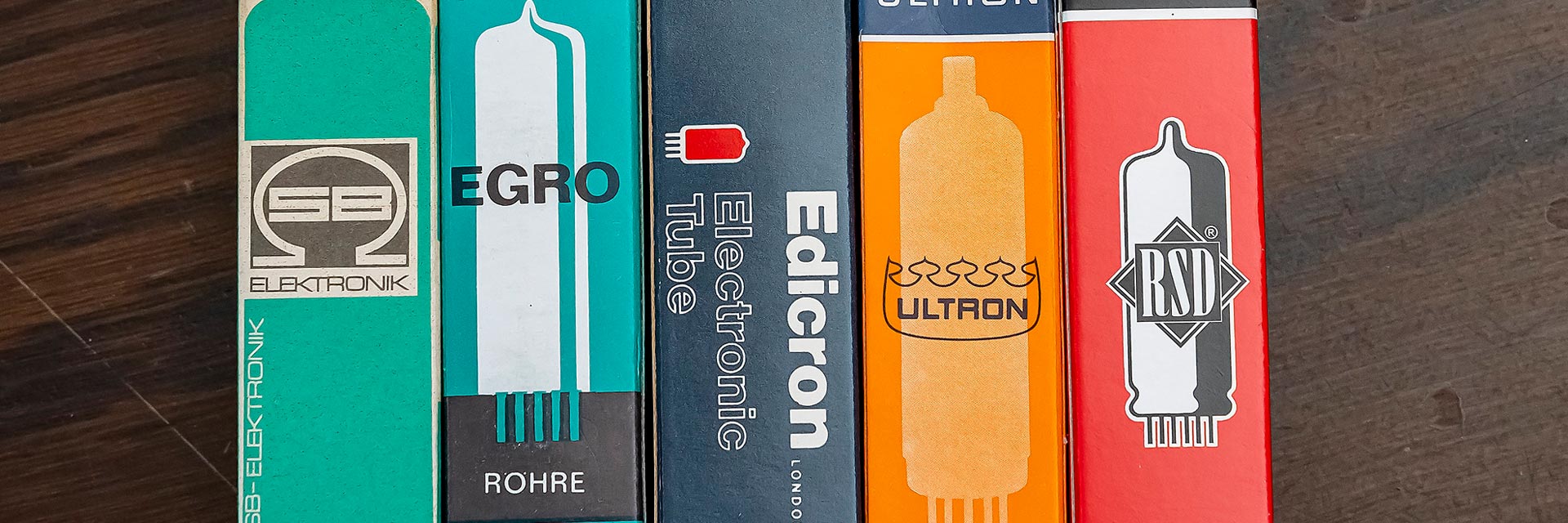
The company BTB in Fürth is one of the leading specialists in vacuum tube trading in Germany. Accordingly, owner Michael Kaim and his team have extensive expertise when it comes to those glowing glass bulbs that, for no small part of the high-end audio community, represent the nirvana of great sound.
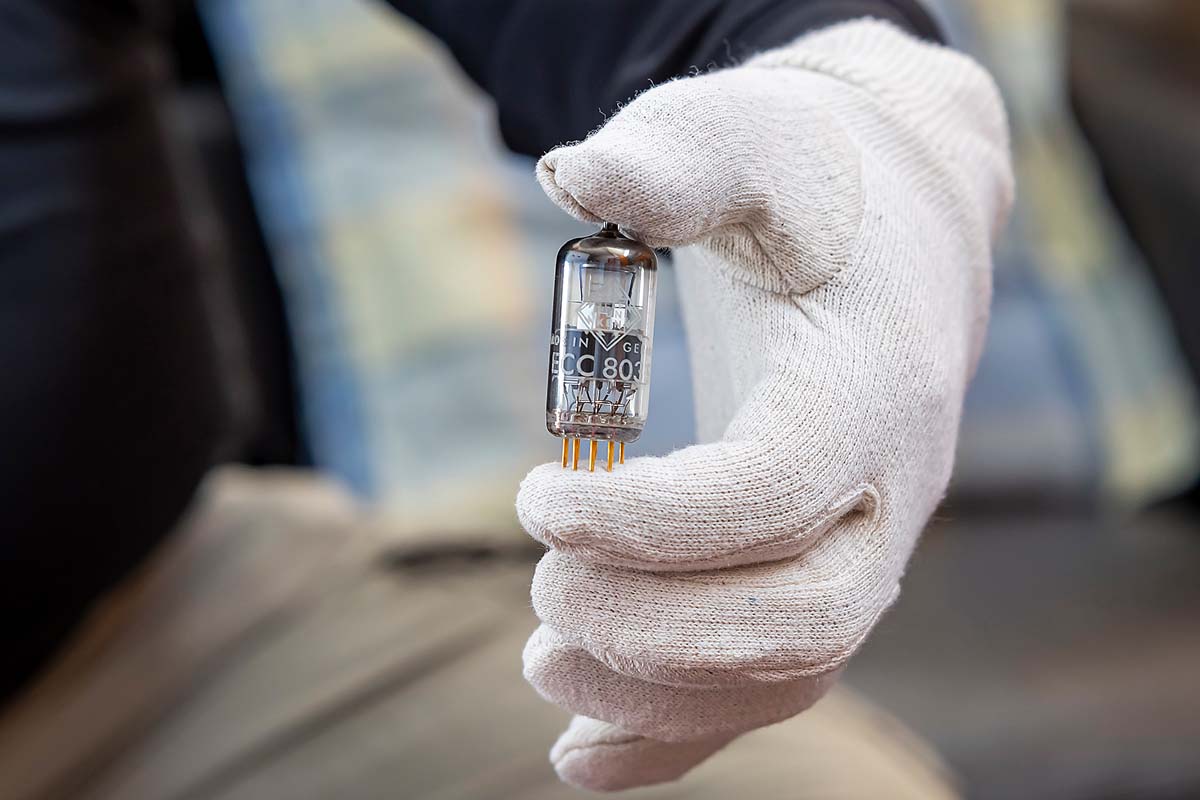
Tube amplifiers awaken a sense of playfulness; they appeal to the inner child of otherwise exceedingly serious audiophiles. It doesn’t take much skill to “tweak” such a device by swapping out the components primarily responsible for the sound – preamp and power tubes – for purposedly “better” ones. Unlike their transistor counterparts, tubes can be rolled relatively easily. A firm grip on the base, a confident pull – though never on the glass body – and just like that, you’re holding the tube in your hand. You can then insert another electrically compatible one into the multi-pin socket.
But this is often where the problems begin. Replacement parts must be electrically compatible with the amplifier’s circuit. If they aren’t, the journey toward sonic paradise may not end immediately – but end it will, likely sooner rather than later, with a damaged or even destroyed circuit. Not to mention that such amplifiers carry several hundred volts, which can be quite dangerous to health and life. Electrical and mechanical compatibility are therefore essential prerequisites for tube rolling. Even beyond these basic rules, dealing with tubes and their sound remains a complex subject.

When BTB’s owner explains the seemingly simple question of how to tell original tubes from more or less convincing reproductions (which may have inferior sonic characteristics), he goes into great detail, diving deep into the history of tube amplification. “You have to distinguish between the consumer market and what happened between manufacturers,” Kaim explains. For example, the ECC83 tubes commonly used in preamp stages were produced by various companies – and when production capacities were reduced due to declining demand, major manufacturers often took advantage of having them made by former competitors. An ECC83 labeled “Siemens” may well have been produced in what was then Yugoslavia – and still not be a fake. “An EL34 labeled Valvo could well have been made by Mullard,” Kaim explains.
So apparent counterfeits don’t necessarily have to be fakes. A tube might bear the “Telefunken” label, yet lack the diamond mark of the German manufacturer in the base of the contact plate. That doesn’t automatically make it an illegal reproduction – it could also be a licensed product manufactured according to original specifications.
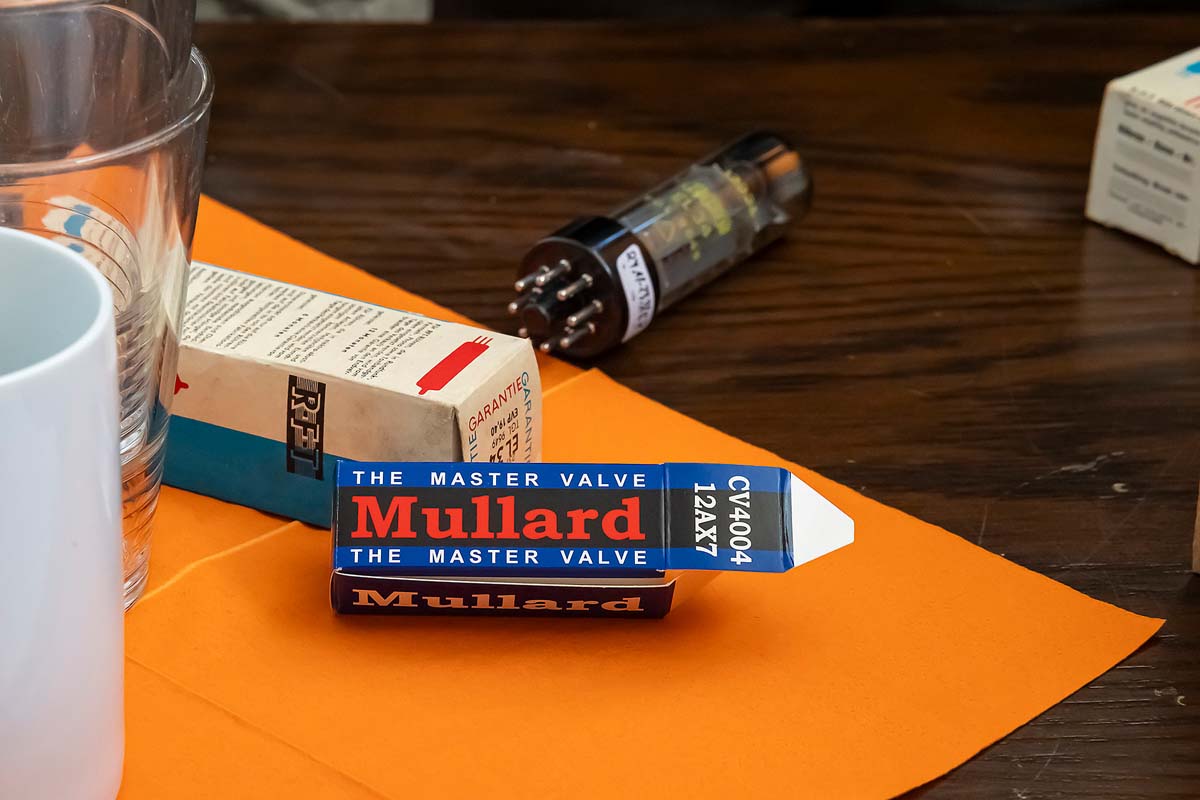
“Back in the 1960s, Philips was a large umbrella corporation under which many manufacturers operated,” Kaim notes. A Valvo tube with a Philips manufacturing code from that era is nothing unusual. There was a lively exchange between companies, and the benchmark was the specification sheet that defined the requirements the finished tubes had to meet. These included not only electrical specifications but also mechanical tolerances, ensuring the tube would sit neither too loose nor too tight in its socket.
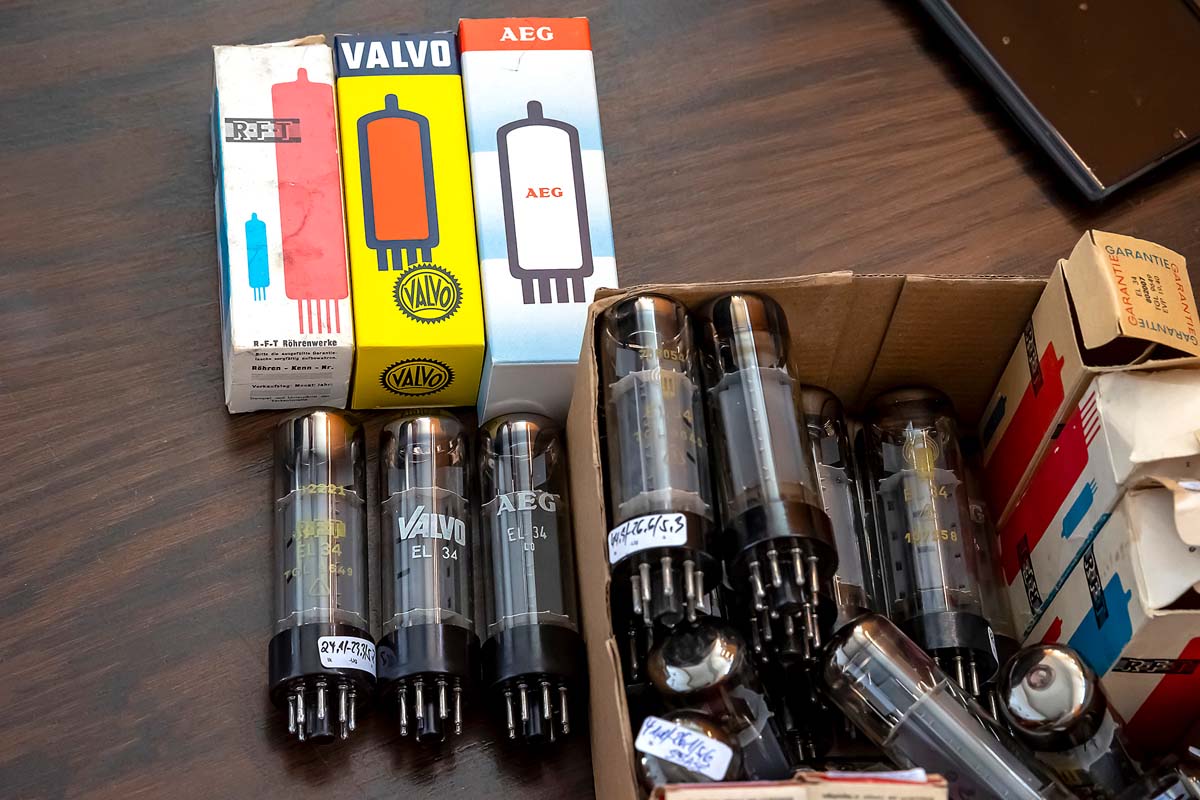
As transistor technology became widespread, the number of factories producing tubes steadily declined, concentrating in Eastern Europe, where demand remained higher than in the West. To illustrate, Kaim shows three different EL34 tubes labeled AEG, Valvo, and RFT – all produced by the East German trademark association for “radio-related products.” This umbrella organization included companies from the radio and television technology sector as well as the communications and measurement technology sector in the German Democratic Republic, where it was still possible to mass-produce those obsolescent electronic components known as “tubes” as late as in the 1980s. “That was quite common at the time,” Kaim emphasizes. And since the situation became increasingly confusing after the collapse of the Soviet Union and German reunification, there are now tubes that Kaim refers to as “legal counterfeits,” since naming or trademark rights in some countries remain with the former production facilities.
Things become even more complicated in what Kaim, with a wry smile, calls the “Russia business.” Due to high import costs – most recently as a result of the war against Ukraine – tubes “made in Russia” have had to take convoluted routes to reach the West. “In the darkest times, they came via Kazakhstan,” Kaim reports. Payments of up to 30 percent often had to be made through intermediaries, which always carried the risk of falling victim to fraudsters who would take large sums of money and run. All these structures drove up prices – by as much as 30 percent, according to Kaim.
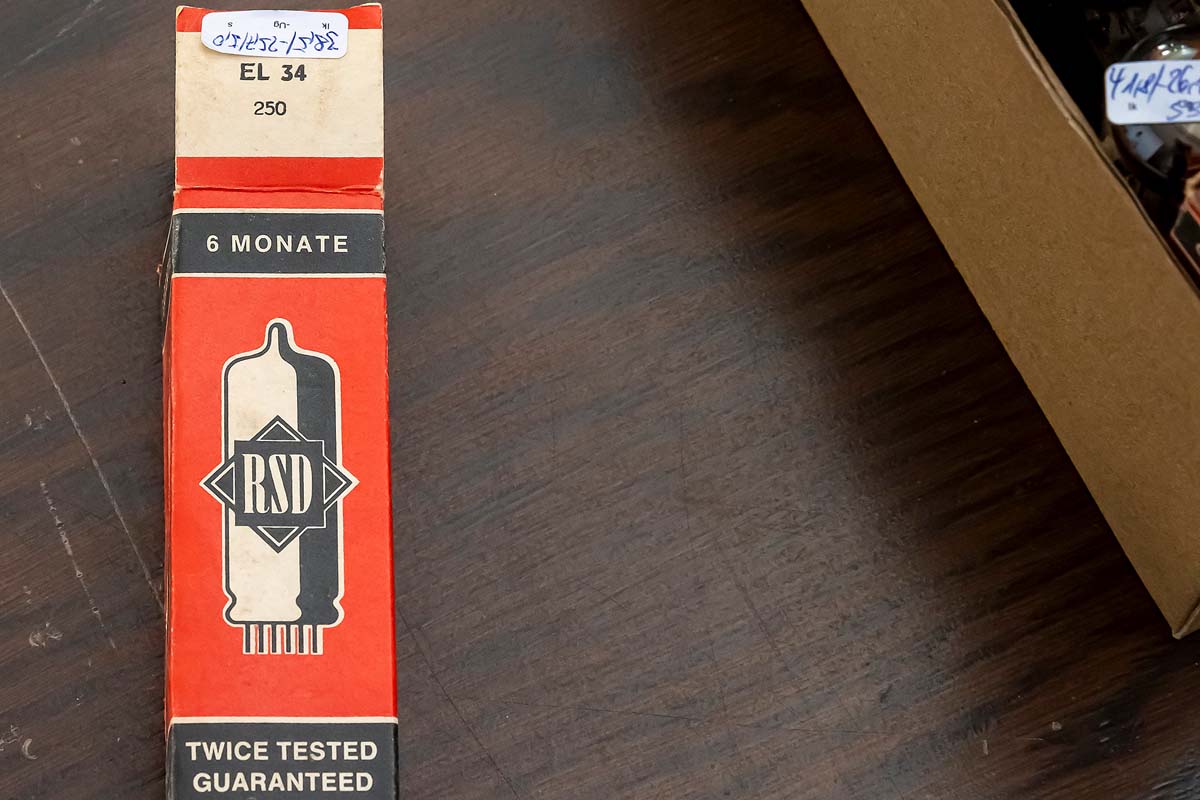
With the manufacturing situation being hard to trace at times, distributors gained influence in the 1990s. The “Röhren-Schnelldienst” (RSD), for example, provided warranties for the tubes it sold, which came in distinctive red-and-white boxes marked with the magic words “6 months.” For that period, the distributor assumed responsibility. Importantly, “dealers at the time never produced tubes themselves,” Kaim stresses. Even tubes from the former Eastern Bloc were generally quality products, with only a few “black sheep.”
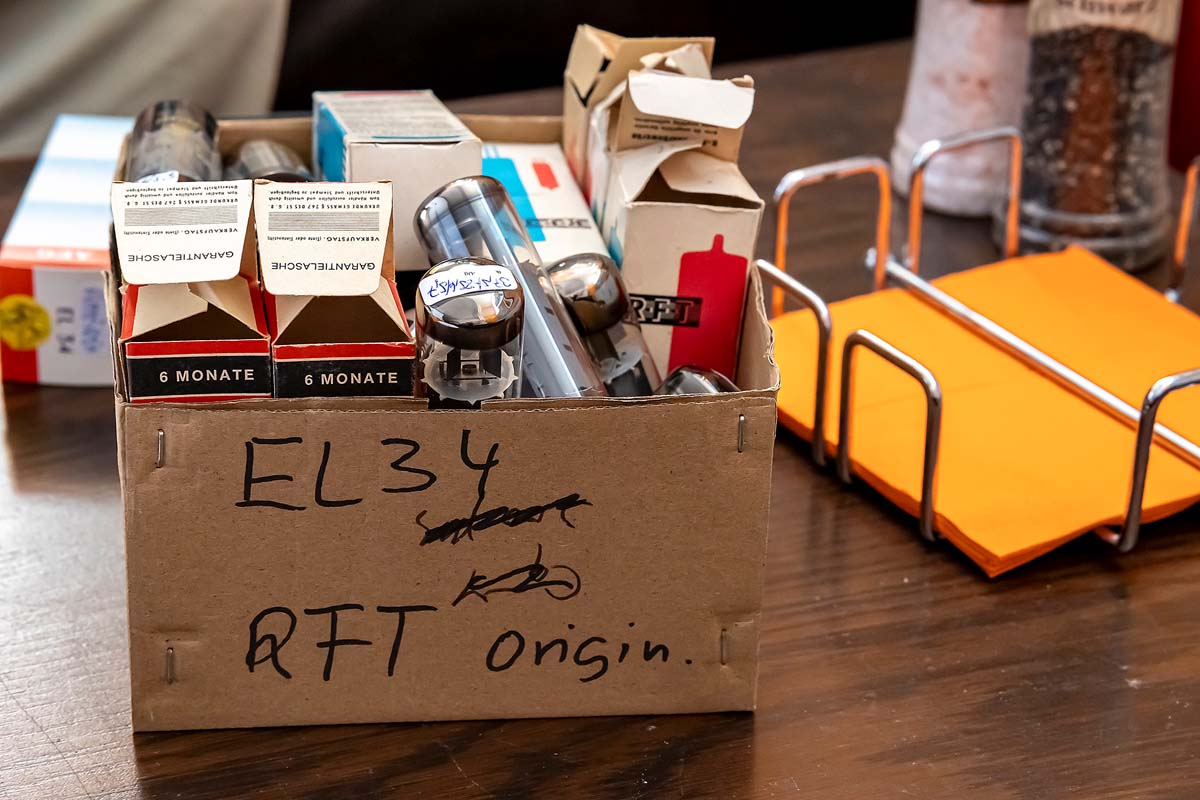
Also on the market is “good NOS stock – that is, inventory that was produced but never used and is now being sold as part of the tube renaissance.” However, this is where Kaim sees questionable business practices: “Telefunken or Mullard labels are printed on tubes that have nothing to do with those manufacturers – simply because those names are in high demand,” he says. By contrast, Telefunken tubes offered in and for the U.S. market are, paradoxically, “originals,” because an American company holds the naming rights.
What indicators can help distinguish originals from reproductions? “With Telefunken, you should look inside the glass envelope to see whether the three-dimensional diamond is present,” Kaim explains. The serial number – traceable in various tube reference books – “can also be revealing.” Most important is looking inside the tube itself, because “companies have a fingerprint,” as Kaim puts it. There are, for instance, specific etched codes used by Mullard, Valvo, or Philips. That’s why tubes shouldn’t be bought on eBay or similar platforms – nothing replaces a personal inspection. The risk of counterfeits is particularly high on Chinese trading platforms.
Some cult tubes are relatively safe from counterfeiting due to their complex manufacturing processes. For example, you can find high-quality Chinese replicas of the 300B that are made according to original specifications and are indistinguishable from the original Western Electric version.
Today, tubes are produced in only a few countries: in China, for example, by companies such as Linlai, Psvane, and, more recently, Shuguang. If in doubt, Kaim recommends consulting an expert. A cheaply made copy of a tube sold at a high price can sound significantly worse – “the sun’s not going to rise for you,” as Kaim puts it. And what gets lost is the very essence of the fascination with tubes: the joy of great sound.