
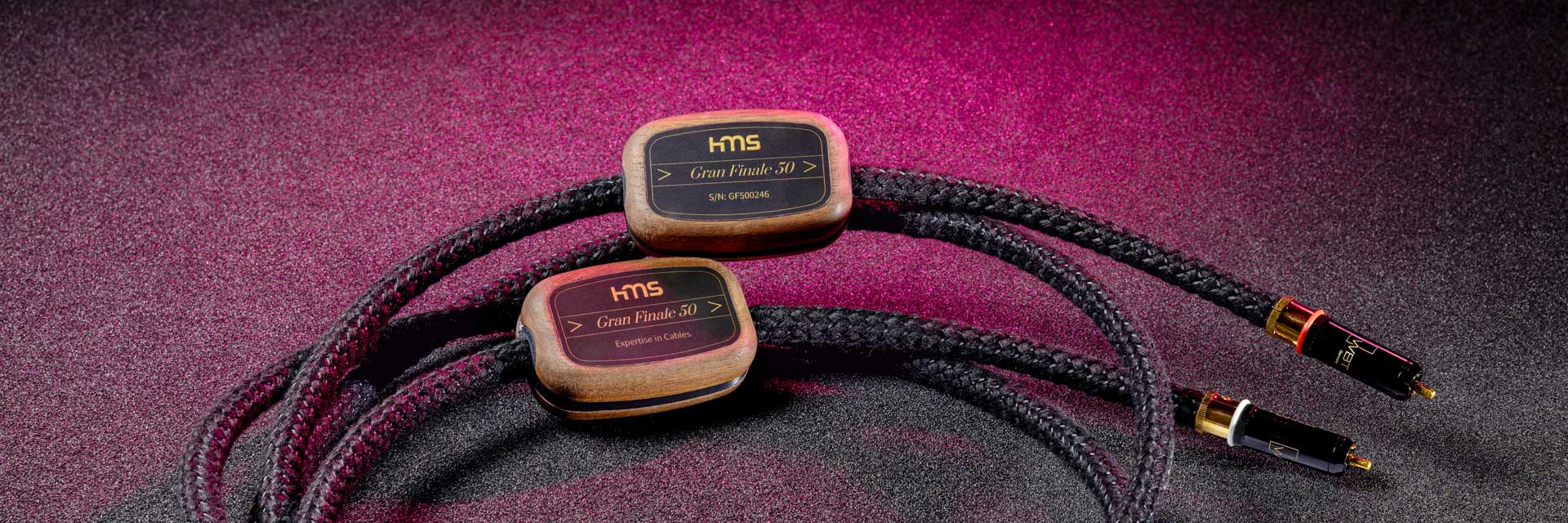
For its 50th anniversary, HMS is treating itself to a new edition of the Gran Finale series and returns to the big stage fully revamped. I had the chance to try out the cable family in my listening room.
As odd as it sounds, it’s true: you need a bit of patience. Anyone who has ever tried to explain to an interested – or uninterested – audience that high-quality music reproduction doesn’t depend solely on the quality of the power cable, but that it does matter, knows that handling objections takes time. The idea that there are setups in which it can be necessary, for example, to spend four figures on a network cable will be incomprehensible to large parts of the population. But time and patience are also required to fully enjoy the advantages of such premium cabling. With transducers, it may be enough to break them in for a few hours overnight. In the case of the Gran Finale 50 from HMS, that’s far from sufficient: the manufacturer recommends a burn-in time of 100, or better yet, 150 hours.
And yet, I can’t wait: after all, the Gran Finale 50 is a revival of the Gran Finale series from the 1990s, last updated more than 20 years ago with the Jubilee Edition. And the world has changed in many ways since then: household power supply systems have become more complex, and what comes out of the wall socket today is different due to increasingly decentralized generation. And the hi-fi world? It has become significantly digitized; even in the most high-end setups, switching power supplies and even Bluetooth links have been spotted. This creates new demands for cables, for example in terms of shielding.
Of course, that wasn’t always the case – neither in 1975, when founder Hans M. Strassner began with measuring amplifiers and test equipment, nor in the 1990s, when HMS entered the audiophile market. And since last year, everything at HMS has been turned upside down: the Leverkusen-based company is now under the umbrella of International Audio Holding, with manufacturing operations and production located in Elst, Netherlands. And this wasn’t just about expanding a product or brand portfolio, as Werner Kempf of IAH emphasizes: “Hans Strassner is not only an engineer and developer, but also a physicist. And Edwin Rynveld, the mastermind behind IAH, is a specialist in metallurgy. Both are visionaries in their fields, and with our combined expertise we wanted to create something great.” Unlike the former workshop-style manufacturing, highly specialized simulation software is now available for development, along with a partly self-developed machinery setup for production.
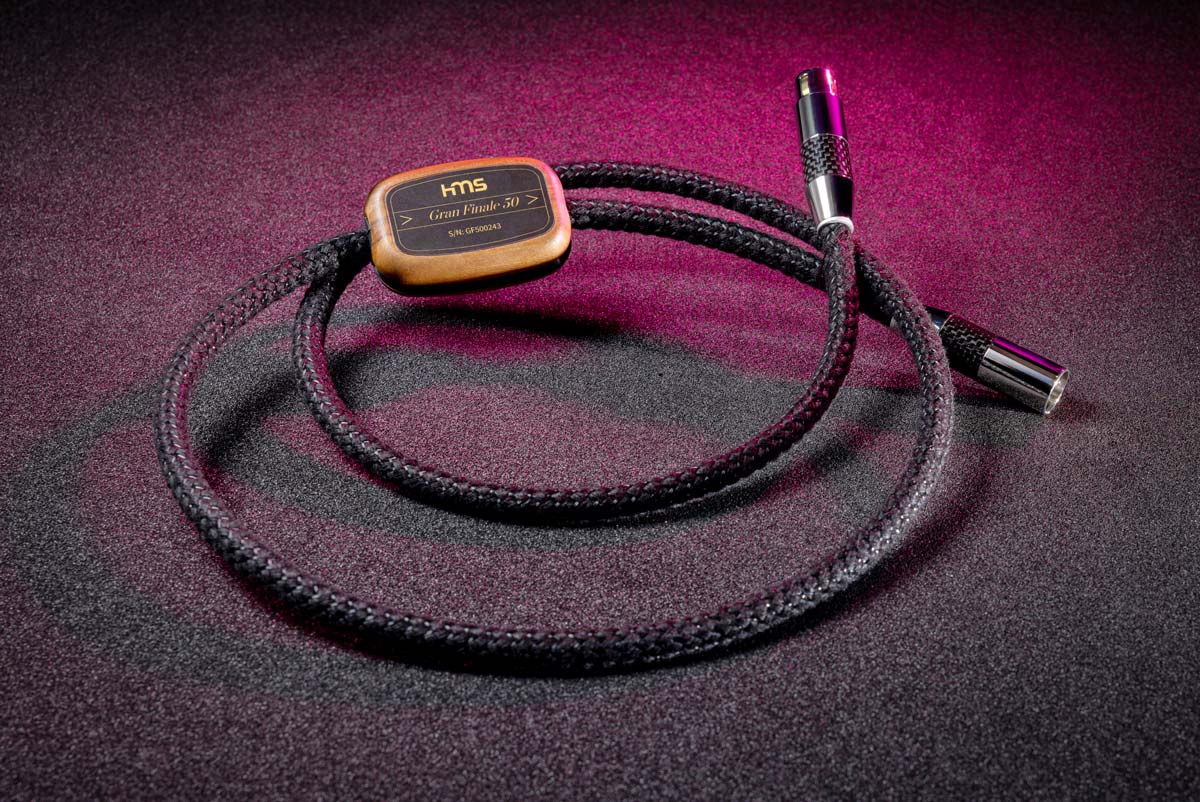
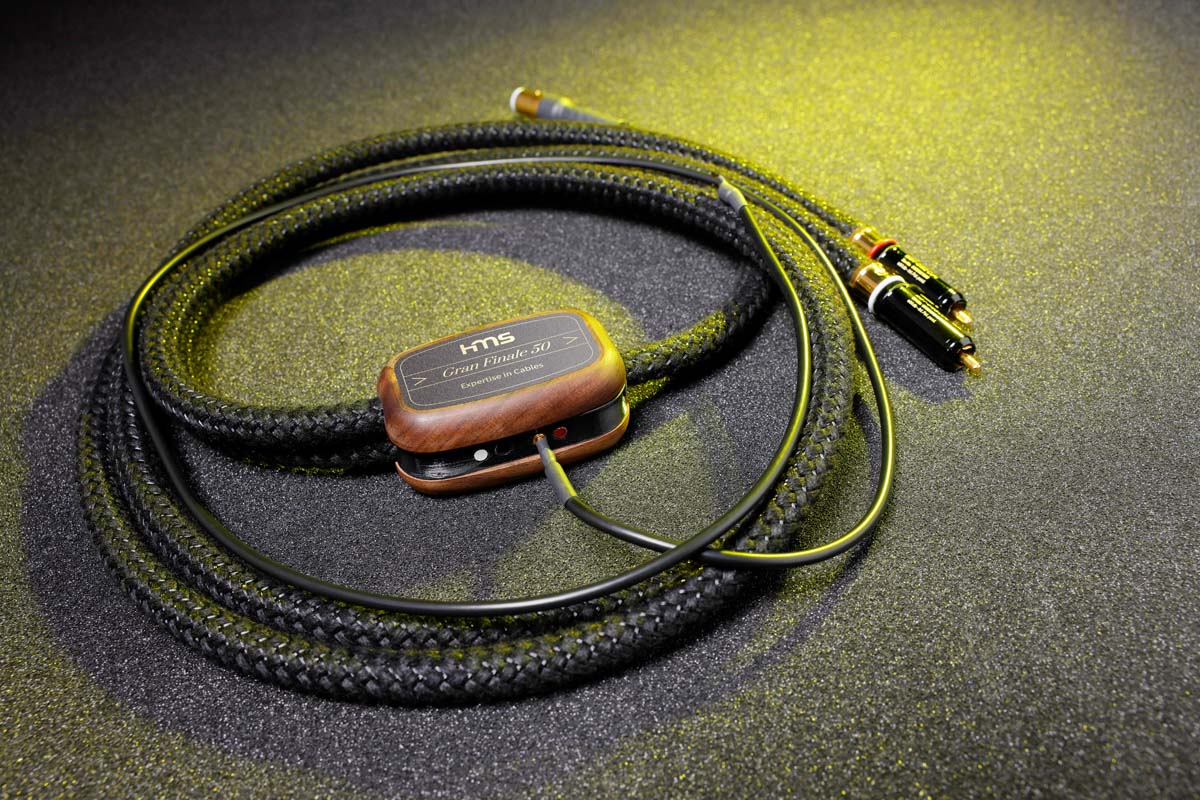
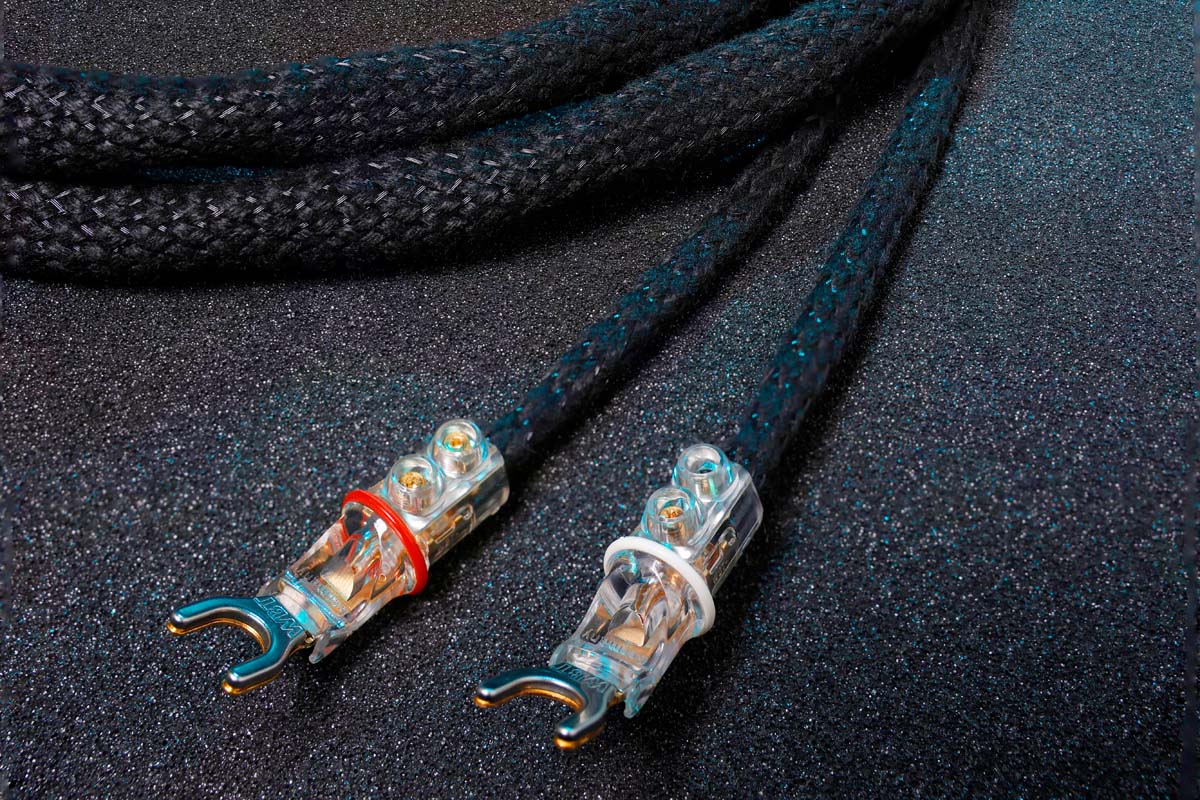
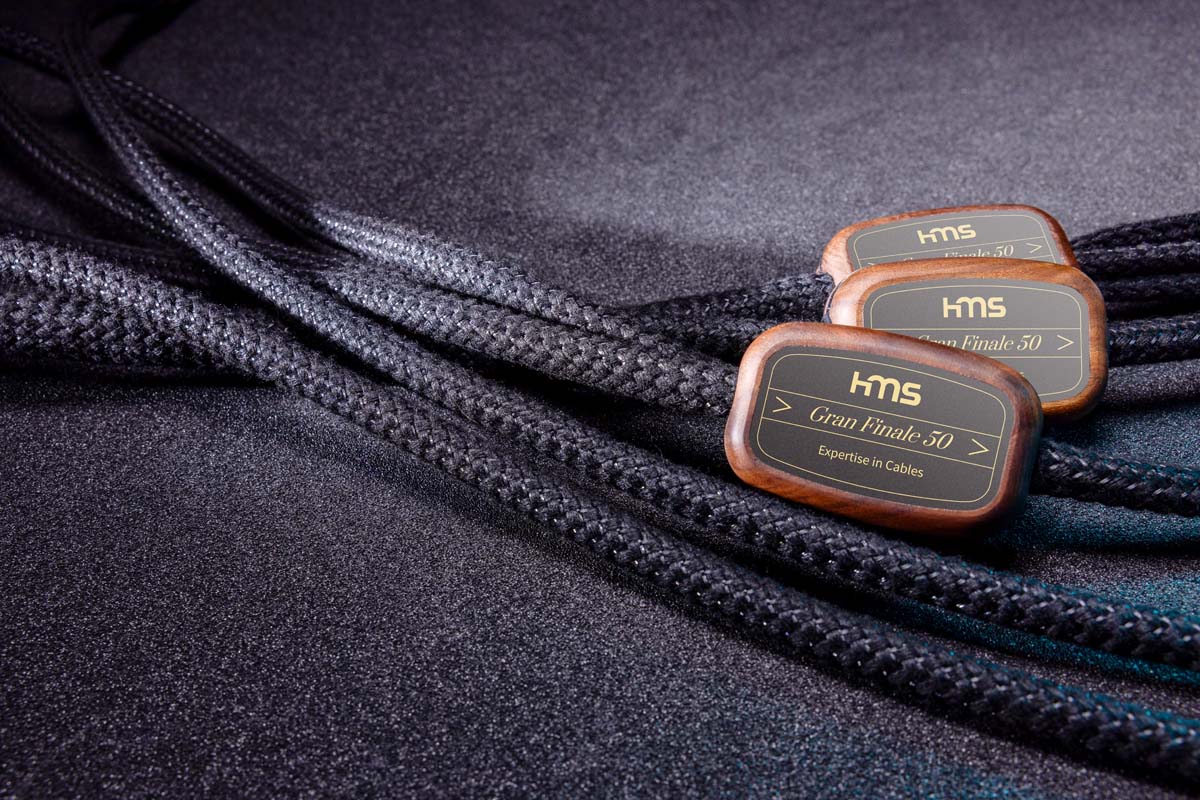
For testing, not just individual samples were provided, but almost the entire cable series: eight padded cases with handwritten serial numbers. First impression: naturally impressive – heavy, thick, and extremely high-quality. The cables stand out, not least due to the HMS-typical wooden boxes, the “barrels.” The speaker cables run through the living room like pipelines, and plugging them in becomes a hands-on task that makes you appreciate generously laid-out equipment back panels: the HMS cables need some space and require a fairly large bending radius. The Furutech connectors on the power cables are also quite bulky. Fully outfitting the entire power delivery chain – from power cables to Ethernet, phono cables, and interconnects to speaker cables – results in a rather monumental installation.
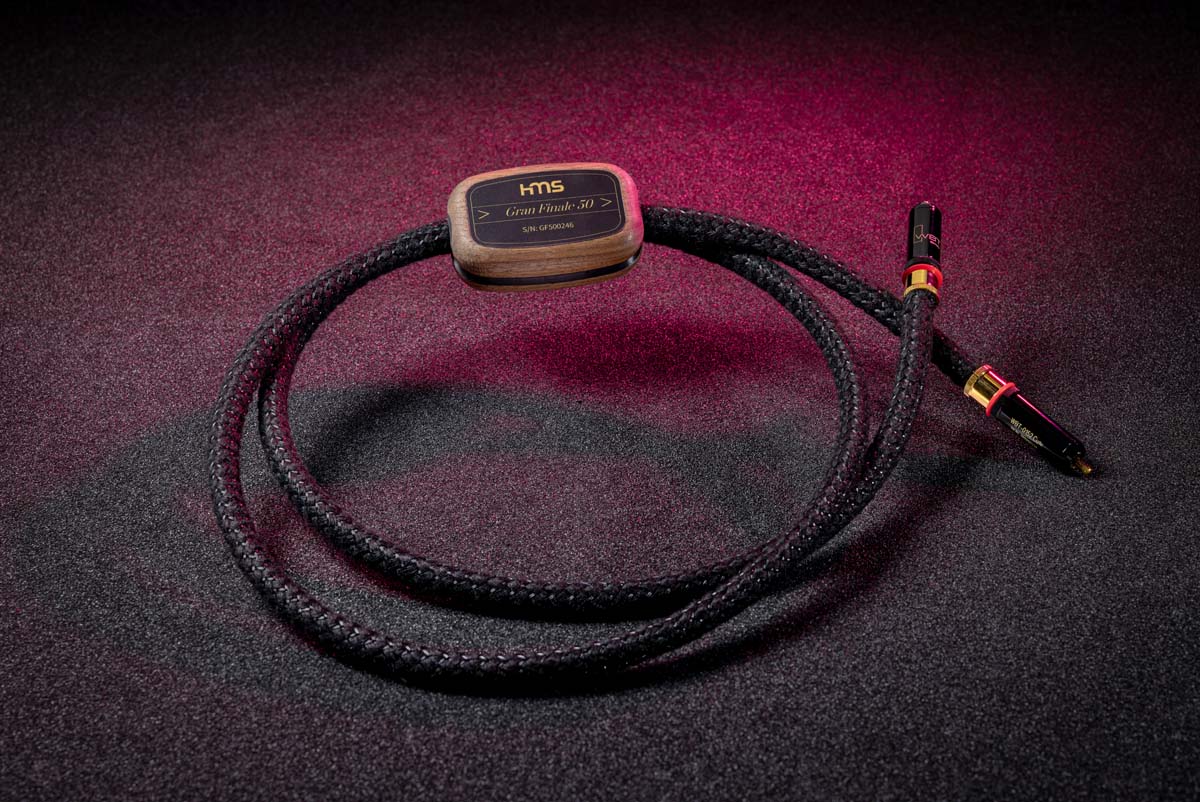
Typical HMS features immediately catch the eye, such as the aforementioned “barrels,” which – depending on the cable type – contain a switchable 1-kilohm impedance matching circuit or a Zobel network. However, their internal design has been simplified – because the partial use of monocrystalline copper reduces the need for filtering. New materials are also used, similar to those found in the affiliated IAH brand Siltech. These include PTFE and olefin thermoplastics used for insulation.
When it comes to shielding, HMS now relies on carbon: interconnects, phono, network, and USB cables use carbon foils, while digital cables feature double-braided SPC shields. Carbon replaces the ferrite cores previously used, which, while damping interference, can also act like a Faraday cage and potentially constrict the soundstage. Carbon is said to eliminate EMI and RFI interference just as effectively, dissipate static charges more efficiently, and at the same time allow for a noticeably more open sound.
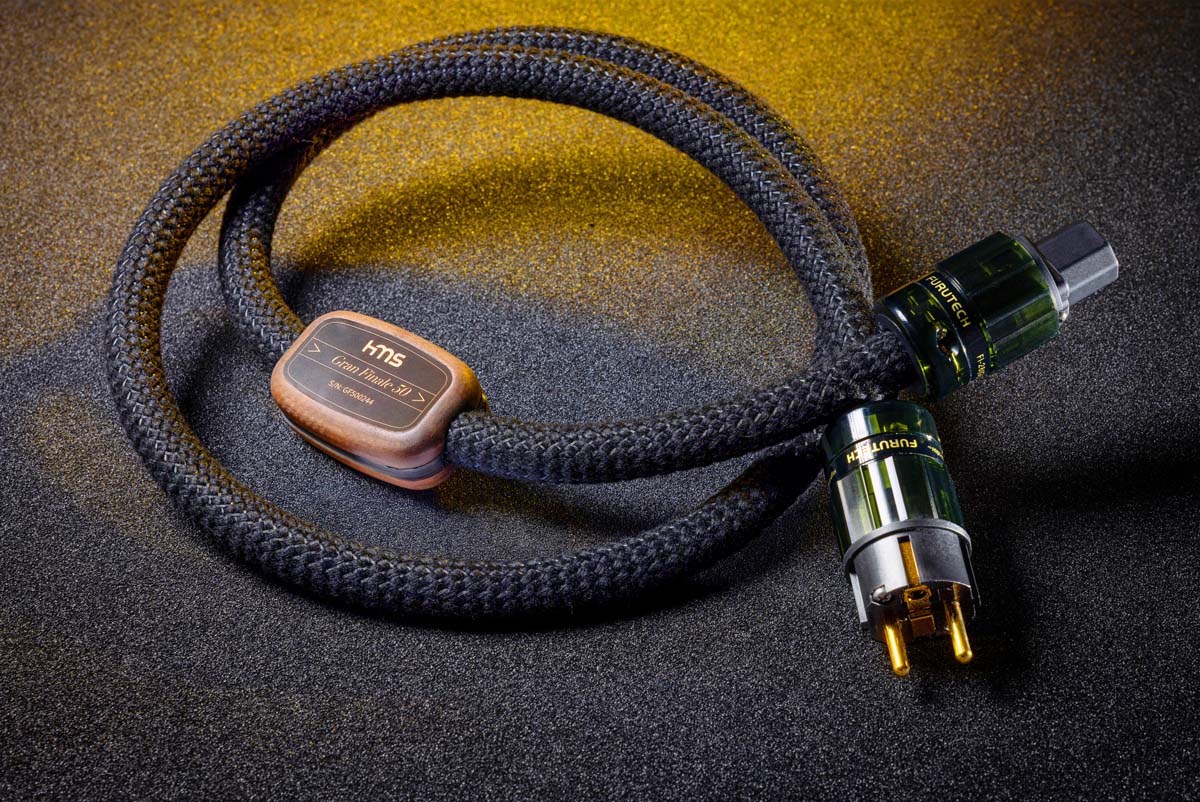
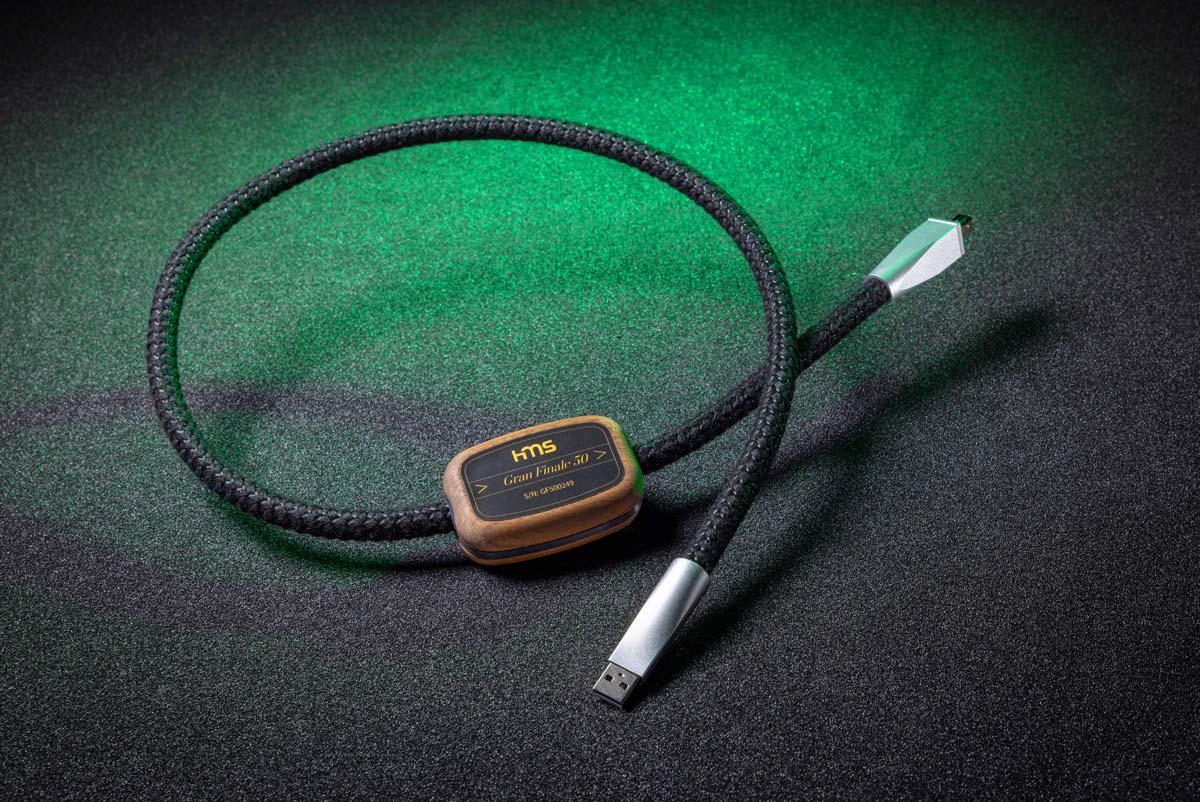
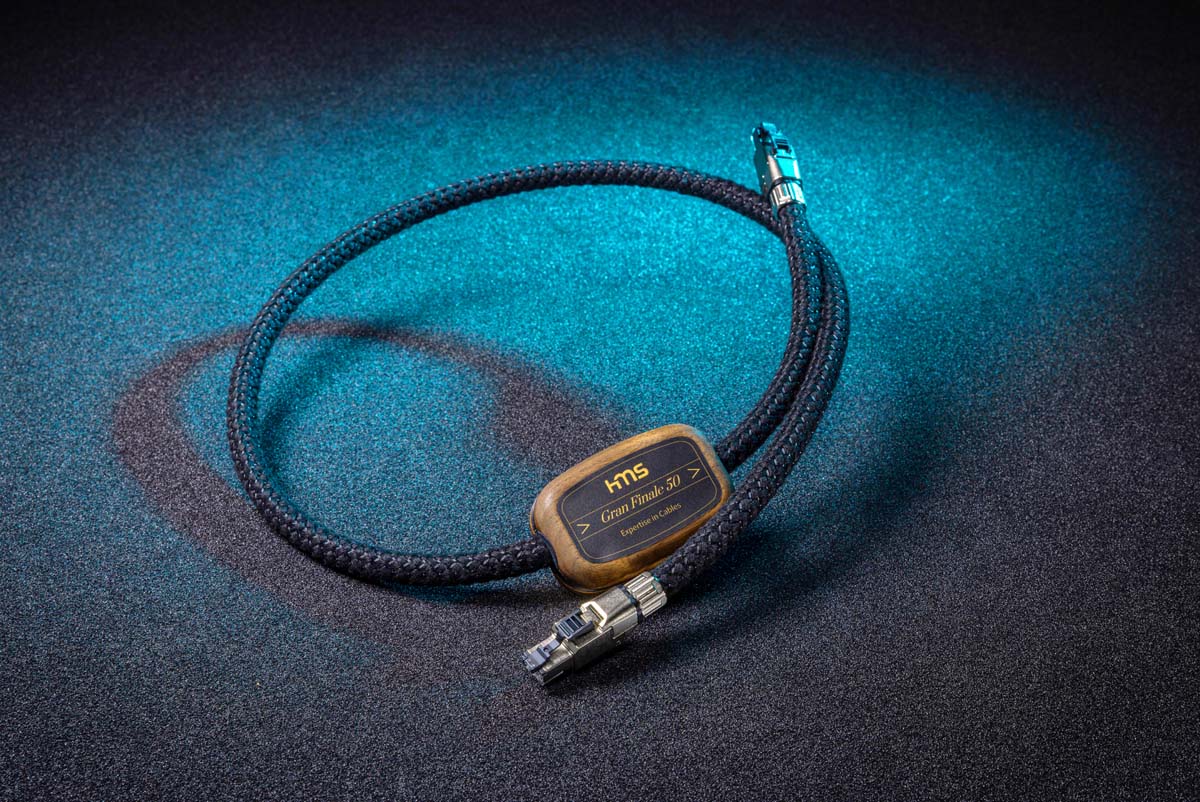
Two types of copper are used as conductors. The interconnects (RCA/XLR), phono, and speaker cables use monocrystalline copper conductors: three solid-core wires for RCA and XLR, four for the phono cable, and eight per conductor for the speaker cable. Power, digital, network, and USB cables, on the other hand, are made from oxygen-free copper: 26 individual strands in the power cable, six braided conductors in each digital cable, and two sets of four twisted conductors in network and USB versions. Their insulation ranges from polyolefin and TPU to Teflon, foamed PTFE, and polyolefins up to highly compressed polymers – depending on the signal type. The speaker cables do not use any shielding at all – the combination of monocrystalline copper, insulation, and twisting already provides sufficient stability against magnetic interference and is intended to ensure an unrestrained sound.
So what do the Gran Finale 50 actually do? Clearly, they conduct power and signals. How this affects the sound depends heavily on the setup. Naturally, cables are infrastructure, not sources or transducers. As expected, the speaker cables, interconnects, and power cables made the most noticeable difference: they provide a black background against which the sound unfolds brilliantly – whether in bass reproduction, midrange resolution, treble clarity, or microdynamics. Anyone interested in the sound of saxophone keys and how nine musicians can emulate a full-blown swing orchestra can check out “Junior’s Tune” by Cannonball Adderley: with the Gran Finale 50, you don’t just hear the initial breath, but also the airflow beneath the note. You can also explore some complex questions in rock music. What on earth is Billy Wyman playing on “Emotional Rescue” with those strange glissandi?
Cables are, after all, neutral in taste and independent of musical style – the Gran Finale lays everything bare, from Karajan’s bombast to Furtwängler’s finer lines, as well as the smartphone-only mix (really only palatable on one of those)of Zahide’s new track “Rede”. Of course, such transparency comes at a price – copper isn’t getting any cheaper – so you may want to consider cable costs as part of the overall investment when assembling the setup … the HMS Gran Finale 50 is all about the last mile towards excellence.
Cable Family HMS Gran Finale 50
Concept: cable series with oxygen-free or monocrystalline copper | Warranty: 2 years (extendable to 5 years) | Prices: 1 pair RCA (1 m) approx. €2400, 1 pair XLR (1 m) approx. €2400, 1 pair speaker cable (3 m, banana plugs) approx. €5820, power cable (1.5 m) approx. €1800, digital cable (XLR, BNC, or RCA, each 1 m) approx. €1500, network cable (1 m) approx. €1680
International Audio Holding
Edisonweg 8
6662 NW Elst
Netherlands
Phone +31 481 374783
mail@hmselektronik.com