
With a powerful tenor saxophone in hand, you can growl aggressively, purr sensually, or simply let intuition take over. The alto saxophone is a bit different.
It tends to encourage – and demand – a more conceptual, strategic approach. Greg Osby originally wanted to become an architect, but instead he transferred his concepts, sketches, and designs into music.
“Composing is a process of construction,” he says. “There’s a lot of symmetry, graphics, form, and shape in what I do. Even in college, I spent a lot of time thinking about how to organize my saxophone playing and my composing.” Many of his favorite musicians – the pianists Thelonious Monk, Lennie Tristano, and Andrew Hill, for example – also approached their music with “strong intellectual concepts,” he says. “They were my role models. But for a long time I wasn’t satisfied with my own efforts. The results were often a matter of luck – until I turned 35.”
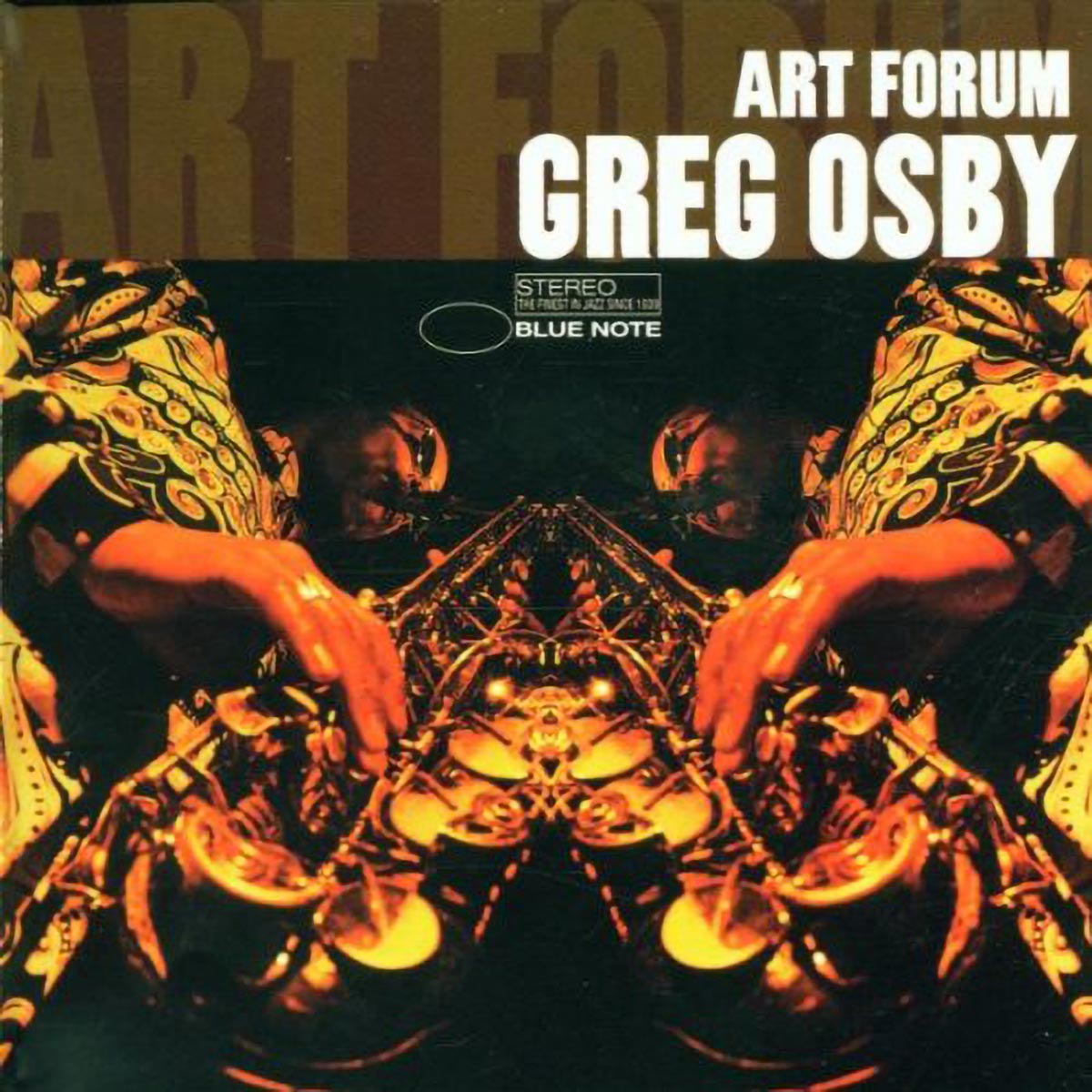
At 35, the alto saxophonist made his album Art Forum. Before that, he had spent about ten years trying to realize his “sound architecture” through hip-hop and funk rhythms and synthesizers. But with Art Forum, he shifted toward acoustic jazz, backed by a magnificent, swinging trio (James Williams, Lonnie Plaxico, Jeff “Tain” Watts).
“I felt it was time to present my compositions and my style in a more stripped-down setting.”
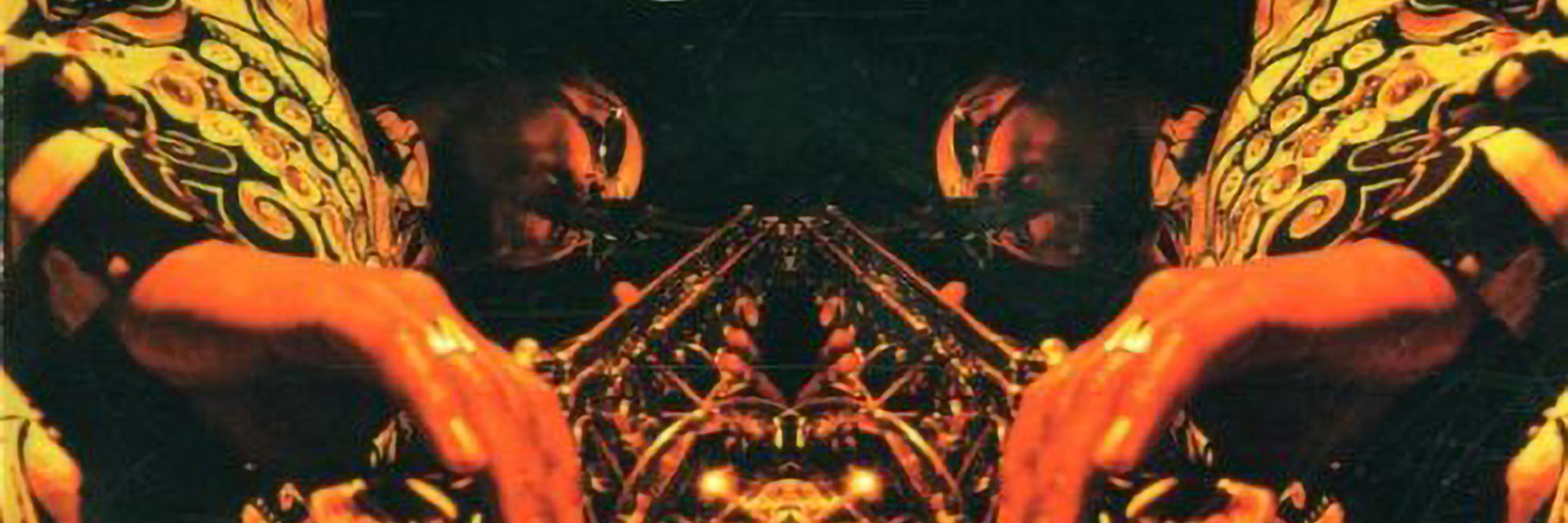
At the time (1996), it felt as though a lost son had returned to the warm hearth of jazz. But naturally, Osby brought his cool, constructivist musical concept back with him from the outside world – and that is what gives Art Forum its particular fascination. Even the album title and the symmetry of the cover image point toward an architectural way of thinking.
“Some people find my pieces a little abstract,” says Osby. Indeed, the melodies are often idiosyncratically constructed, fascinatingly sophisticated in their intervallic movement, harmonically elusive at first hearing.
“A lot of it doesn’t follow convention and sabotages Western harmonic theory,” the saxophonist admits. “But to me, it all has a very clear logic.”
On some tracks from Art Forum, additional instruments become part of the architecture. “Mood For Thought,” a mysterious ballad, uses scattered dark phrases from trombone, bass clarinet, and alto flute. Elsewhere, guitar and vibraphone also come into play. The closing track, “Perpetuity,” on which Osby plays soprano saxophone, even requires a touch of electronics – a rather visionary architectural design.
Osby’s “abstract” concept extends directly into his saxophone playing, into what critic Scott Yanow called a “highly original improvisational style.” This Greg Osby favors wide intervallic leaps, then rapid connecting phrases drifting through tonal nowhere-land, and sudden unexpected turns.
One of his role models is saxophonist Bunky Green, who once said: “You can play almost any note against a chord, as long as a resolution follows. If you know enough about harmony, you can find completely different pathways through the chords. The most important thing is that I create a continuity that has its own logic.”
With Greg Osby, that can sound logical, natural, and often deeply moving. He may possess the most beautiful tone of any alto saxophonist. And here he embraces rhythmic swing – at fast tempos (“Miss D’Meena”), at a medium pace in the bluesy “Half Moon Step,” or slowly in ballads by Duke Ellington and Billie Holiday. And because his phrasing is so strikingly original, driven by its own improvisational logic, Osby’s swing sounds completely fresh.