
Or: The Reassuring Realization That We Are More or Less Defenseless
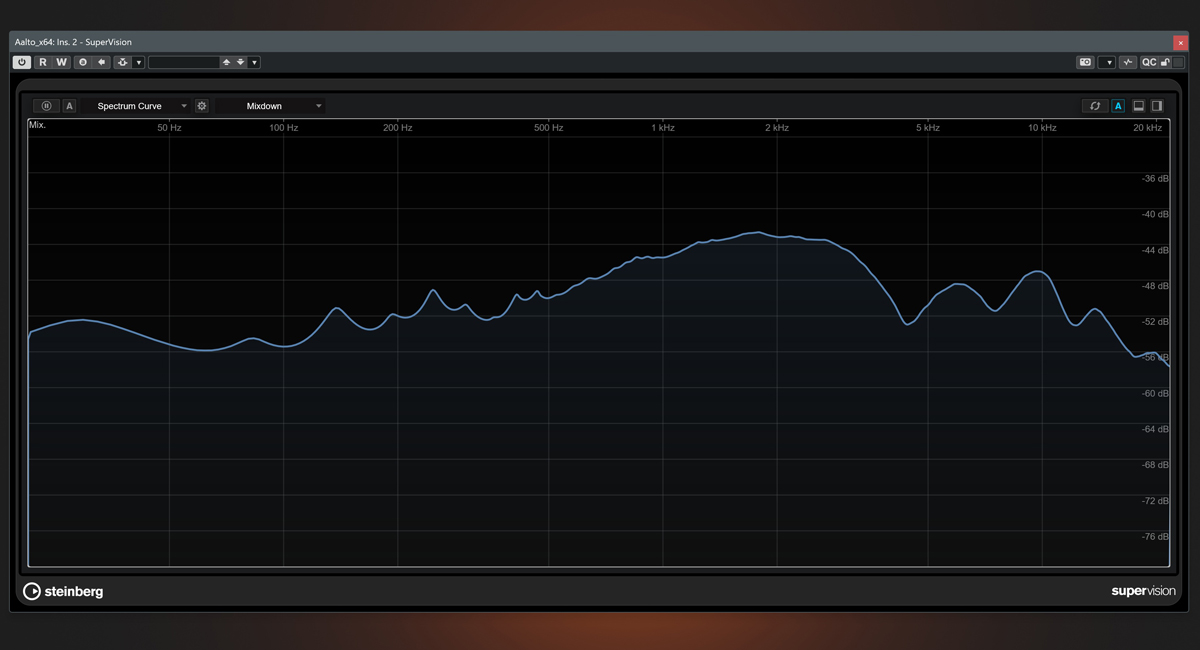
Ultimately, almost all room-acoustics phenomena can be boiled down to a simple mechanism: the direct sound from a loudspeaker (or another source) combines with a more or less complex pattern of reflections (diffuse sound), depending on the room. Because sound consists of rapid fluctuations in air pressure, overlapping pressure waves interact with one another. If two in-phase signals of identical amplitude meet, their pressures add up to twice the level – an acoustics expert would describe this as a gain of +6 decibels. If the waves are exactly out of phase, they cancel each other out, resulting in a silent 0 decibels. Of course, this is purely theoretical. In practice, it is extremely rare for two completely identical sound waves to cross paths: surfaces not only reflect sound, they also absorb part of its energy. That is why echoes always sound somewhat quieter than their source.
Even within the seemingly chaotic pattern of direct sound and reflections, certain constants remain. Since neither the loudspeakers nor the room spontaneously change their positions or dimensions, sound propagation patterns are largely static. This is especially true for bass frequencies, which are reflected only by large, heavy objects such as solid masonry walls, or for those metallic sounding flutter echoes, which tend to occur in room corners. Occasionally moving a plant, a book, or even yourself also has an effect, but compared to these factors it is negligible.
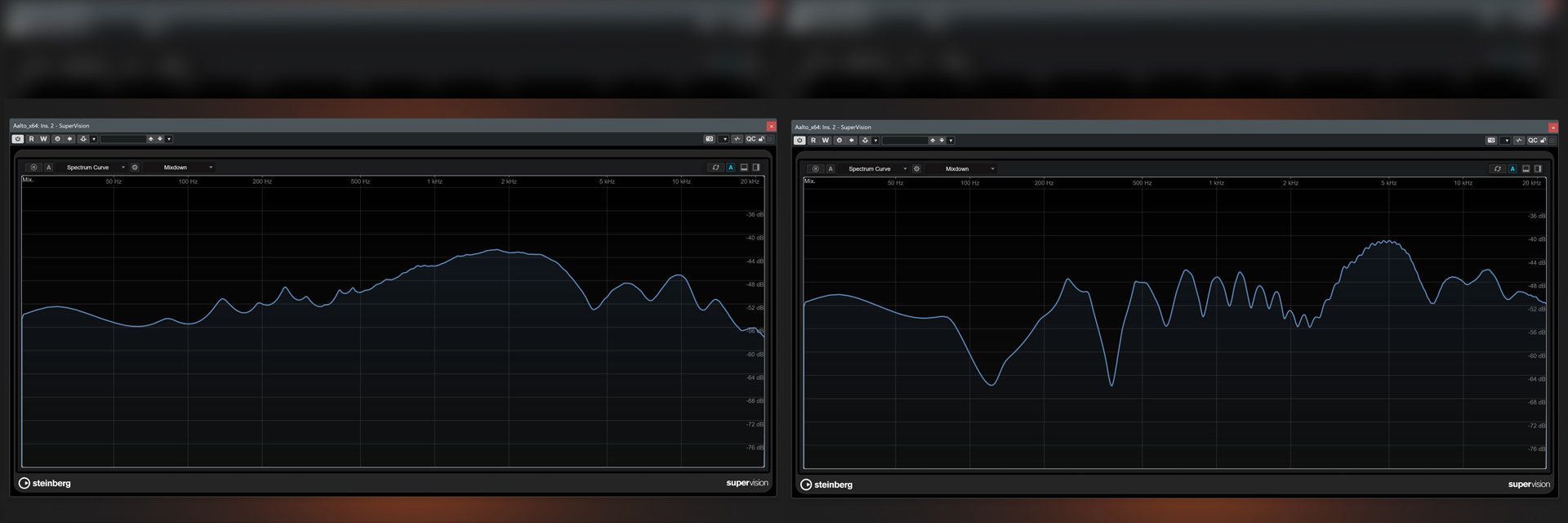
Now we come to the actual problem: because direct and diffuse sound originate from the same source, their frequency content is identical. These matching signal components overlap with delays of only a few milliseconds, creating colorful interference patterns and mutual interactions that are nearly impossible to predict. To make matters worse, a single frequency (let’s take a 110 Hz tone as an example) does not interact only with itself. Since waveforms are geometric constructs, it also affects its “multiples,” that is, frequencies of 220 Hz, 440 Hz, 880 Hz, and so on. This periodic relationship creates a clearly recognizable pattern in a spectrum analyzer (see Fig. 2), known as a comb filter because of its visual resemblance to the teeth of a comb. Don’t be fooled by the characteristic notches: the comb-filter effect doesn’t only cancel frequencies – it also boosts the peaks between the notches.
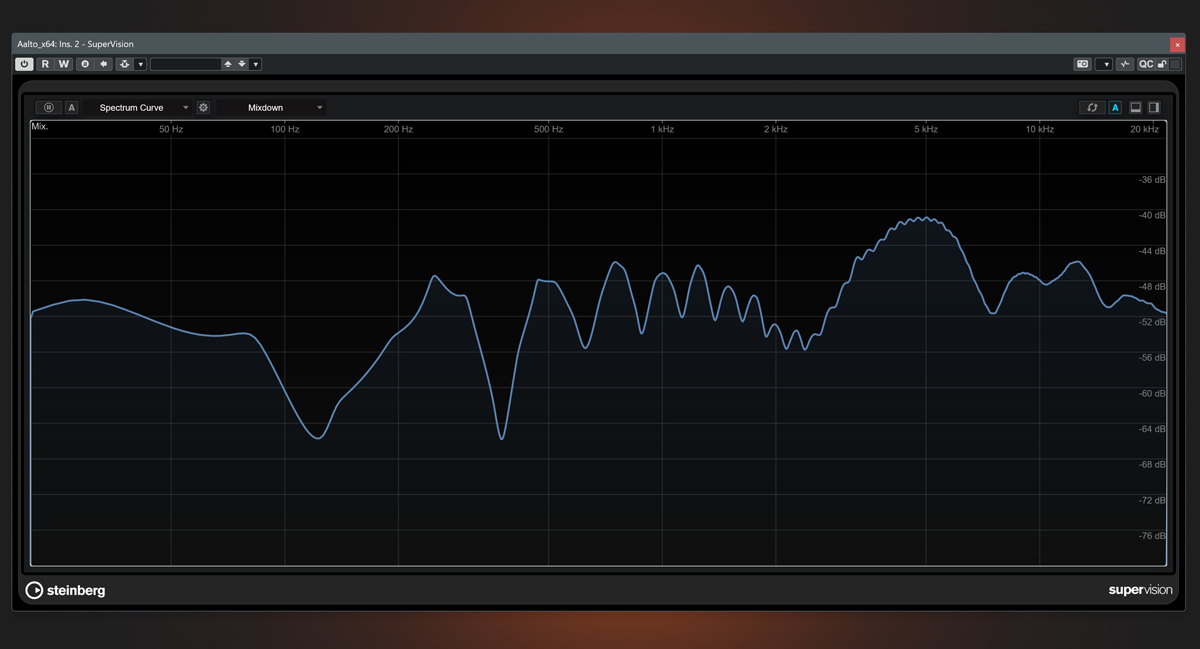
In graphs such as those shown in this article, it may appear as though the comb-filter effect affects only a handful of frequencies. This is because low-frequency signals contain most of the energy. The 110 Hz tone mentioned above and its harmonics therefore carve particularly noticeable notches into the frequency response. If you take a closer look at the ridge around 5 kHz in Figure 2, however, you will notice that it also contains fine, periodic patterns that may originate from our 110 Hz tone – or perhaps from another fundamental frequency altogether. Zooming deeply into the frequency response reveals that, much like a Mandelbrot fractal, ever finer comb-filter patterns continue to emerge. It should be obvious that the countless large and small distortions of the frequency response ultimately result in audible coloration and, in the worst case, frequency nulls.
This brings us to the central question: can anything be done about this diffuse and almost unmanageable number of comb-filter effects? The complexity of the overlapping patterns already suggests the answer: no. A perfectly linear, completely reflection-free room can never be achieved. Nor would it be desirable, since our hearing relies on a certain amount of reflected sound for orientation –anechoic chambers are equipped with panic buttons for a reason. The instinctive response is often to install large absorbers to reduce diffuse sound. However, this presents another problem: because low frequencies require a great deal of absorbing mass – which is difficult to integrate into a living space – room-treatment enthusiasts tend to focus on midrange and high-frequency absorbers instead. The result is often another undesirable tonal shift toward the bass range. On the positive side, small absorbers placed in room corners can eliminate flutter echoes. As for cancellations, however, there is no cure.
Professional room acoustics aims to make the frequency response more uniform, with diffusion taking center stage. Diffusers scatter reflections evenly throughout the listening area. In doing so, they transform a few large, clearly audible problems into many small ones that no longer carry significant acoustic weight. And before you throw up your hands thinking of the large, bulky diffuser panels found in recording studios: effective sound diffusion – especially in the midrange and treble – can often be achieved with everyday household items such as a variety of plants, bookshelves, record collections, and other forms of “acoustic clutter.”