
500 what? Apples? Oranges? What does the number behind the term “damping factor” actually mean? Or the term itself for that matter? And why is it important? Lots of questions – we have the answers.
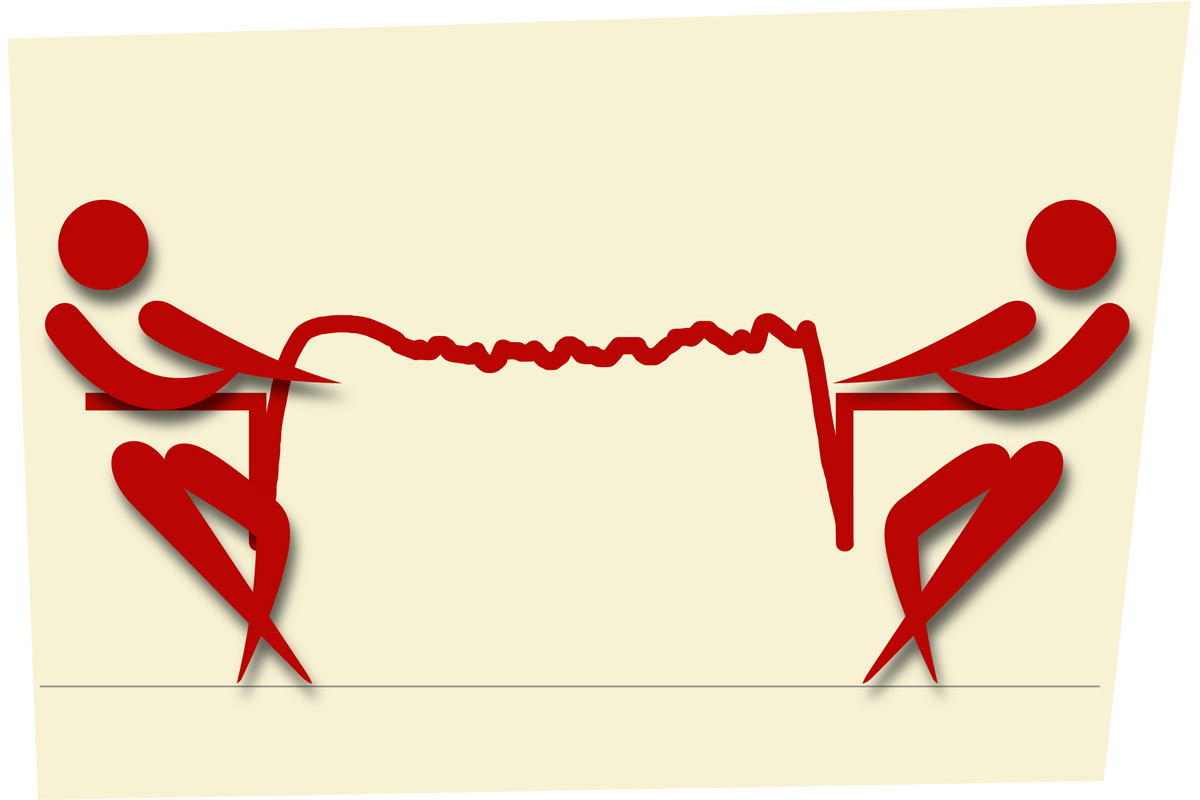
It may sound counterintuitive: The higher the input impedance (impedance is resistance to alternating current), the easier it is to drive a loudspeaker. A high input impedance does not mean the speaker is reluctant to accept a signal in the form of a voltage amplitude; rather, it means it requires less current to achieve the requested amplitude. A low output impedance on the amplifier, meanwhile, means it is capable of delivering the required current. In this sense, signal transmission from amplifier to loudspeaker can be thought of as a game of tug of war: The amp wants to push the music signal through the speaker’s voice coil, while the speaker would rather remain silent and pushes back accordingly. Both sides become more effective at asserting themselves as their impedance decreases. The ratio of these impedances is called the damping factor and is calculated as follows:
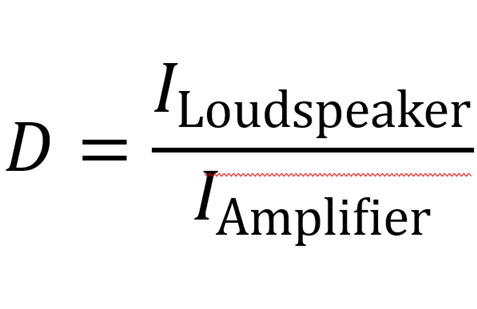
If the amplifier’s output impedance is equal to the speaker’s input impedance, the damping factor is 1. In that case, both sides split the middle, and only half of the signal amplitude is delivered. For higher damping factors, I’ll burden you with the second – and last – formula for today:
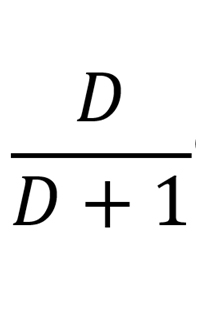
In plain English: a fraction whose numerator is the damping factor and whose denominator is always one greater than the numerator. This has two important implications. First, the result is always less than 1, meaning the full voltage amplitude can never actually be reached. Second, the additional 1 becomes less and less significant as the damping factor increases. Once the damping factor is high enough, it becomes effectively negligible, and the music signal is transferred virtually completely. For example, with a damping factor of 4, four-fifths of the amplitude is delivered; with a damping factor of 500, the fraction becomes 500/501. Since we want to lose as little amplitude as possible, we ideally want to see damping factors of 40 or higher. That ensures the speaker load is damped to near-zero, allowing the voltage waveform to pass through the voice coils essentially unimpeded.
At this point, you might wonder whether this tug of war is really a problem. Halving the signal amplitude reduces the level by 6 decibels. Assuming that sufficient gain is available, that could simply be compensated for by turning the volume up another 6 dB. Mathematically, that is true. However, a low damping factor also means the amplifier cannot maintain tight control over the speaker cone, typically resulting in a soft, poorly defined sound – particularly in the bass.
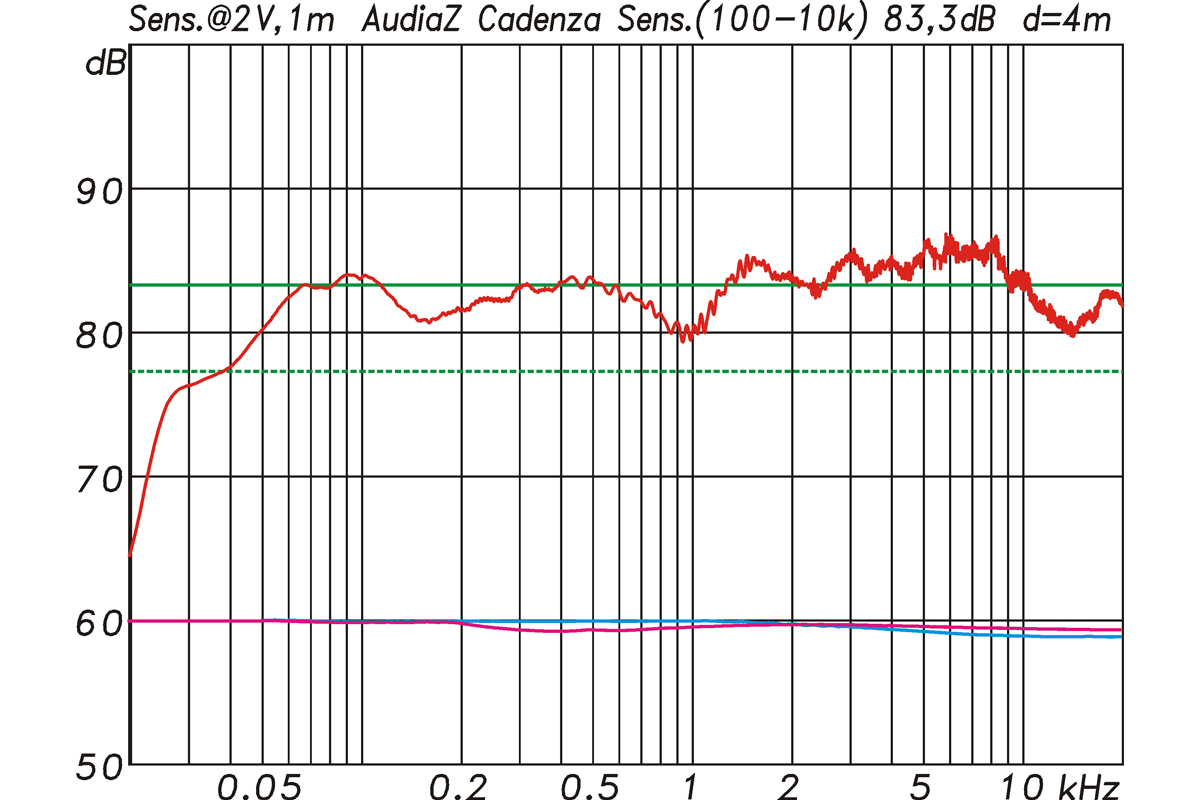
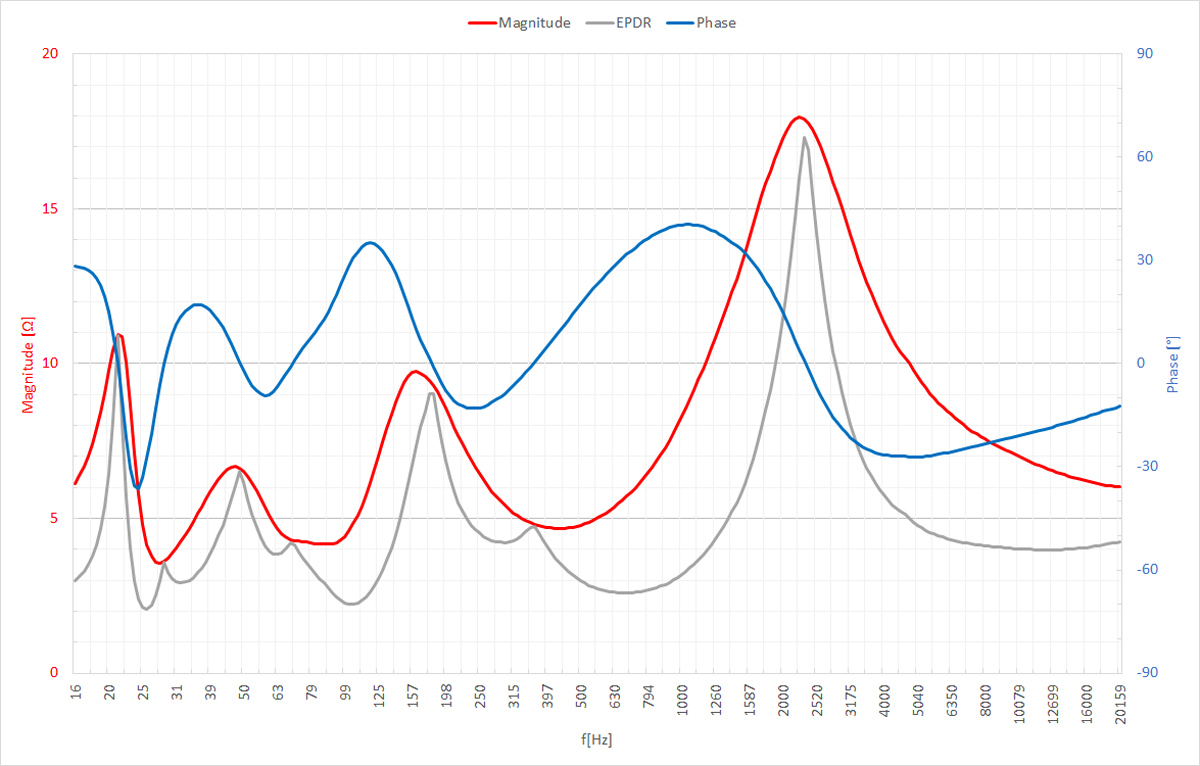
A much bigger issue, however, is that such compensation with the volume control only works if the loudspeaker has the same input impedance across its entire frequency range – which is never the case. So if we don’t want the speaker’s impedance curve to leave its fingerprint on the frequency response, the amplifier’s output impedance must be many times lower than the speaker’s input impedance – ideally by orders of magnitude.
Incidentally, this brings us directly to the major controversy surrounding the subject. Many people criticize the damping factor as a value without context because, as we’ve seen, it only exists in combination with a specific loudspeaker. And they’re right: Viewed in isolation, an amplifier does not have a damping factor. It is always specified relative to a hypothetical load (typically 8 Ω) and should therefore be regarded as a rough indicator rather than an absolute value. A few decades ago, this specification was reasonably representative of real-world use because amplifiers were comparatively less powerful and 8-ohm speakers dominated the market. Today, when brick-sized amplifiers can deliver hundreds of watts of Class D power, many manufacturers take a more wasteful approach to crossover design, accepting lower impedances in exchange for smoother frequency response. As a result, most loudspeakers on today’s market are rated as 4-ohm loads. Naturally, a damping factor of 100 measured into an 8-ohm load drops to 50 when connected to a 4-ohm load. As mentioned earlier, impedance also varies – sometimes substantially – across the frequency range. There is, in fact, a convention (IEC 60268-5, if you’re curious) stating that the minimum impedance must be at least 80 percent of the nominal impedance. In practice, however, very few manufacturers adhere to this guideline. Unfortunately, 8-ohm speakers with minimum impedances below 3 ohms are far from uncommon. Consequently, the actual damping factor can easily fall to less than one-third of its nominal value – and if it drops too low, the impedance swings can end up showing quite distinctly in the frequency response.