
After more than 100 years of loudspeaker development, you don’t expect big technological leaps anymore. We were all the more surprised when we encountered an apparent newcomer with a rather peculiar midrange/tweeter at several hi-fi shows. As it turns out, our assessment as “newcomer” was dead wrong.
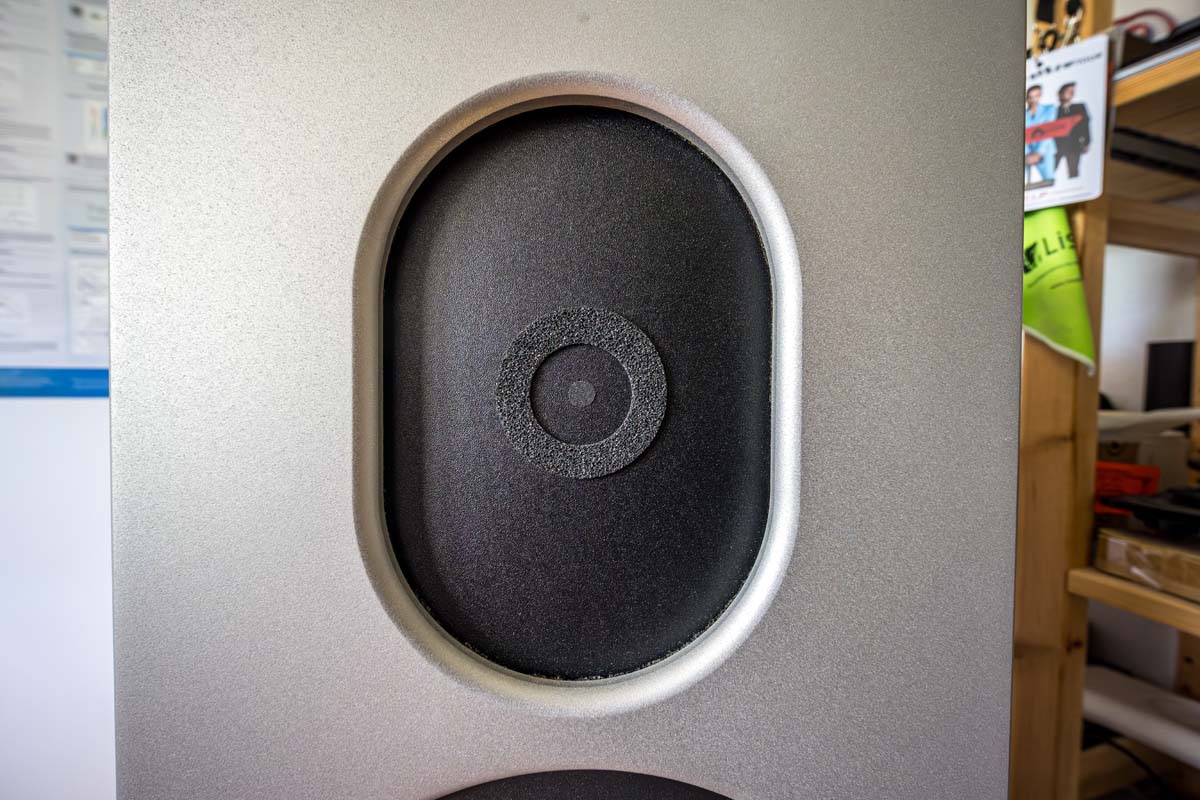
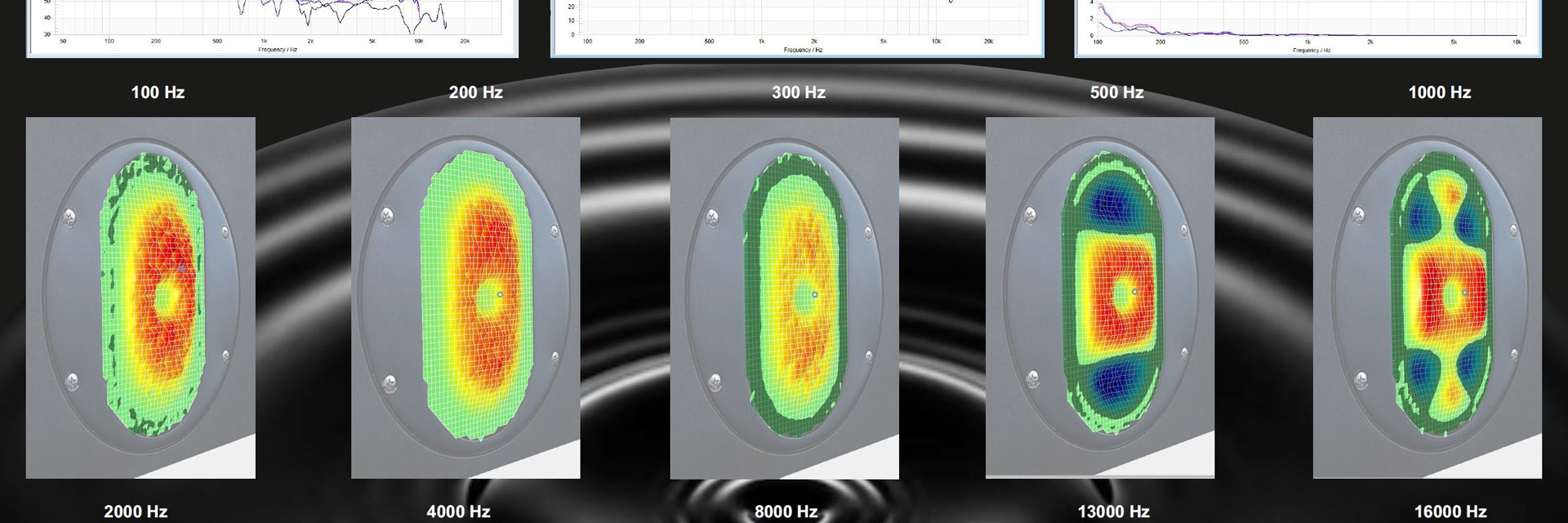
“Ring Mode Drive” is the name of the driver that adorns the speakers from ATE and whose sound made us prick up our ears at both the NDHT and the MHT. The walls of the demonstration rooms were covered with diagrams visualizing the transducer’s behavior across different frequencies, accompanied by some very ambitious claims: The driver is supposed to cover a full eight octaves – from 180 Hertz to 30 kilohertz – while maintaining an exemplary wide dispersion pattern all the way into the treble. Being the seasoned listening veterans that we are, we are naturally always somewhat skeptical of such claims, but in the demonstrations we could find absolutely nothing to complain about. Quite the contrary: we were very impressed by the effortless transparency of the presentation. Our curiosity was piqued, so we went to Norman Gerkinsmeyer, the mastermind behind the driver, exchanged the usual pleasantries, and began bombarding him with questions. He was not short on answers, but there were so many of them that he promptly suggested we visit his “sacred halls” so that he could not only explain everything to us, but also demonstrate it physically.
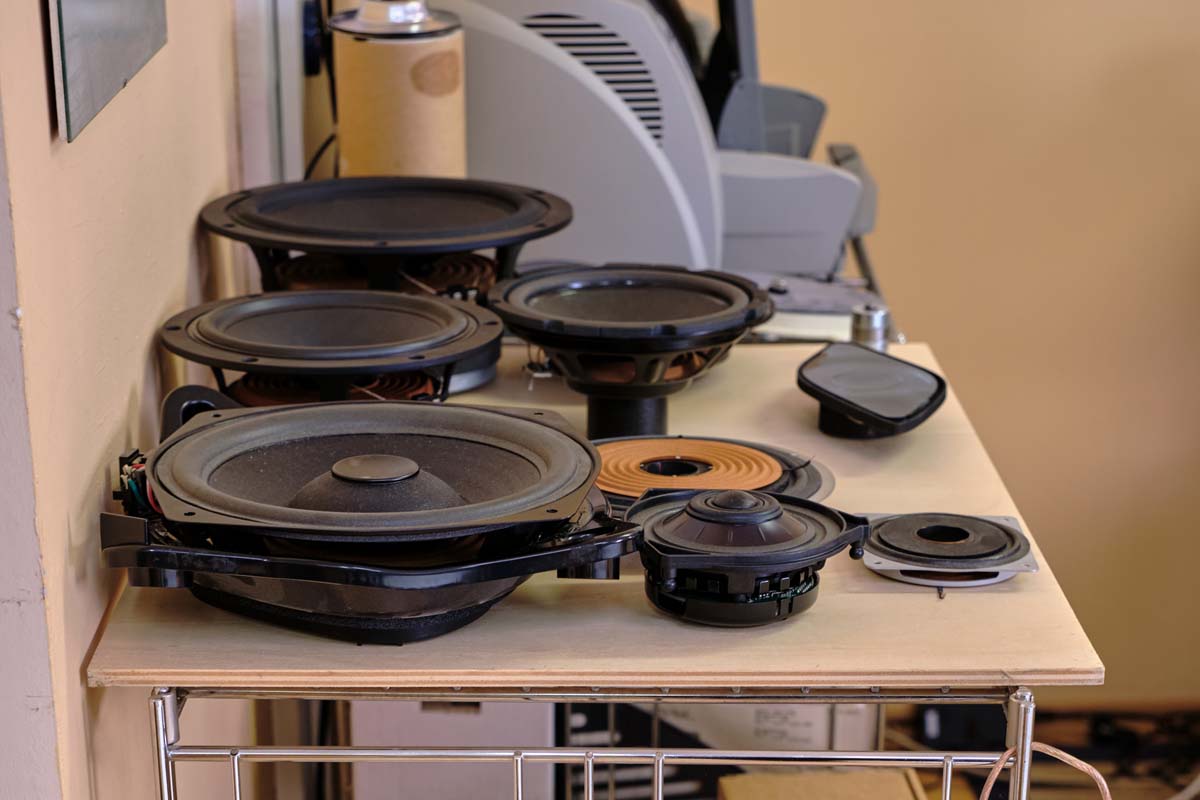
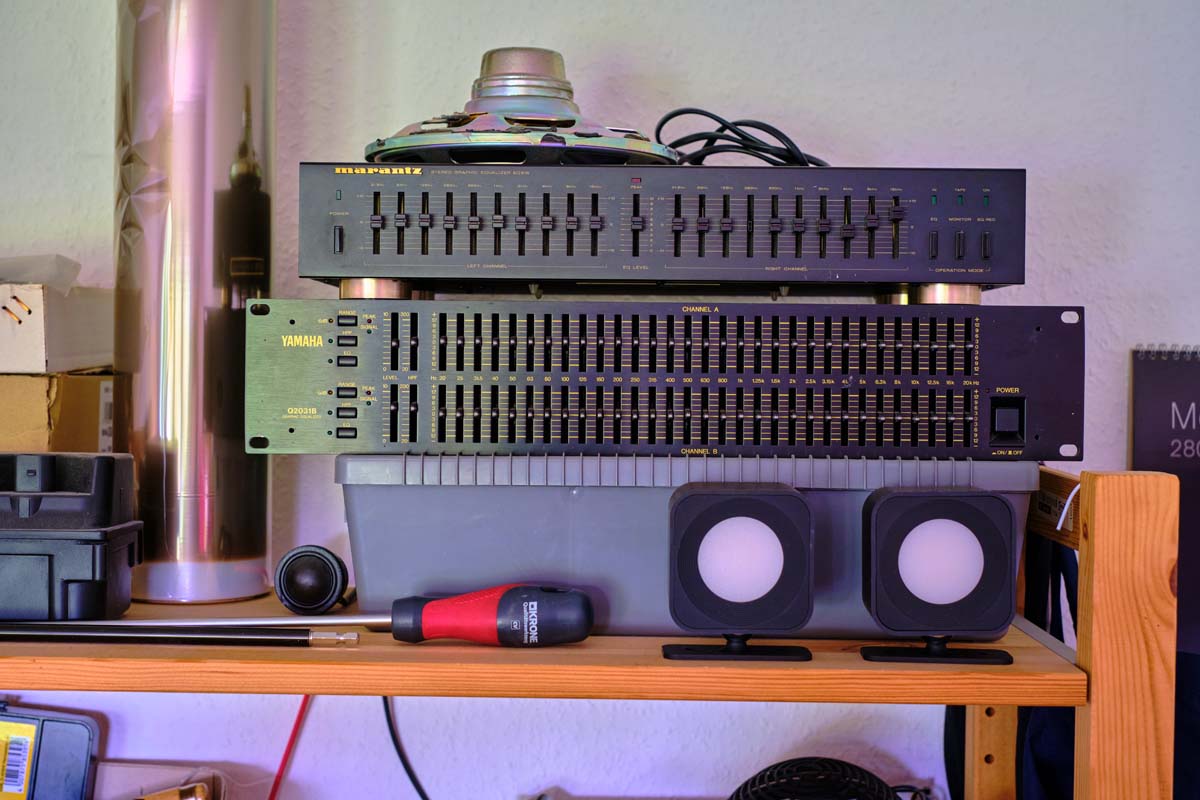
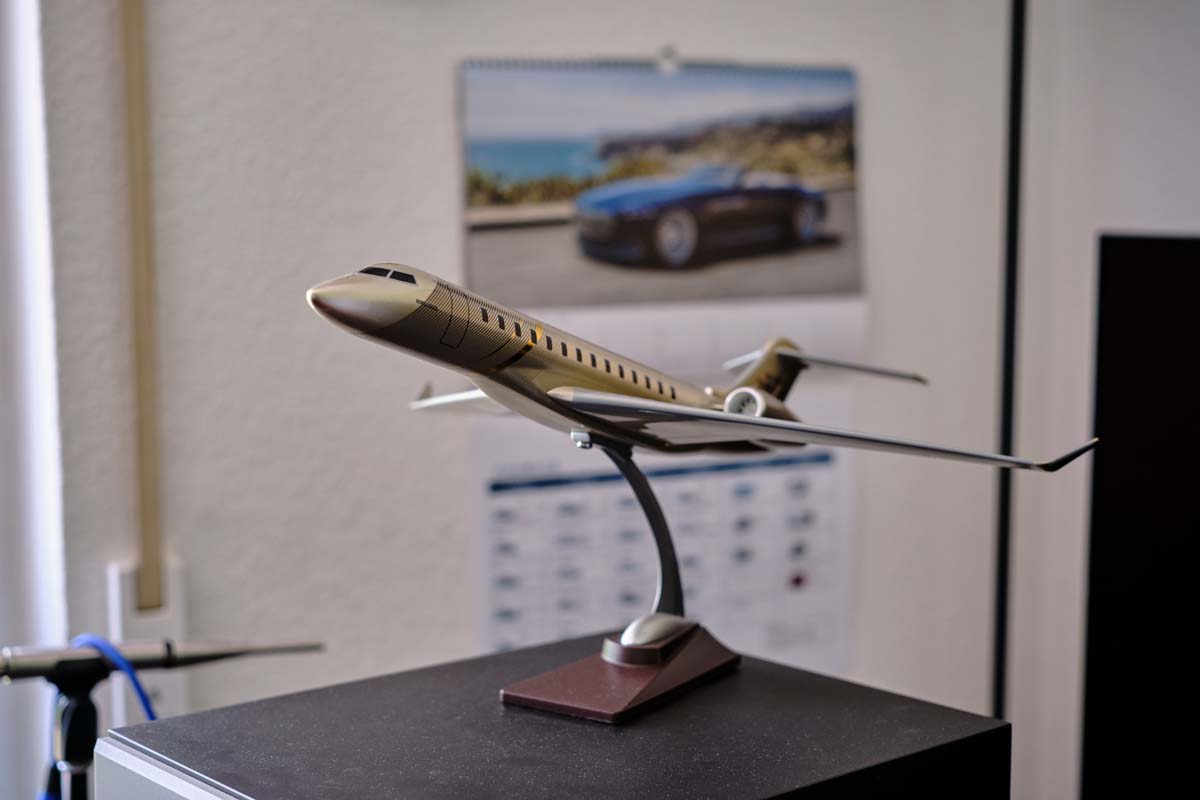
Although ATE has only been active in home Hi-Fi in its current, RMD-proven form for about a year, Gerkinsmeyer has already been working in loudspeaker development for more than 40 years – and he’s not exactly small fry either … When we arrived in Neu-Ulm a few weeks later, the first thing he did was take us into his personal developer’s man cave in his private home, whose shelves are filled to the ceiling with countless drivers that he has developed over the decades for clients, including those in the automotive and aerospace industries. His references (which you can sift through on the ATE website) include a whole host of major industry names. We got to inspect countless inverted-cone and coaxial drivers, all optimized for particularly shallow installation depths, as well as conventional domes and cones for Hi-Fi and pro-audio applications. The fact that ATE is not yet widely known as a Hi-Fi manufacturer is simply because Gerkinsmeyer primarily operates as an OEM supplier: Sound systems of his design can be found in touring motorcycles, passenger cars ranging from family vehicles to hypercars, and business jets – and numerous Hi-Fi manufacturers whose names you know also source driver technology from him.
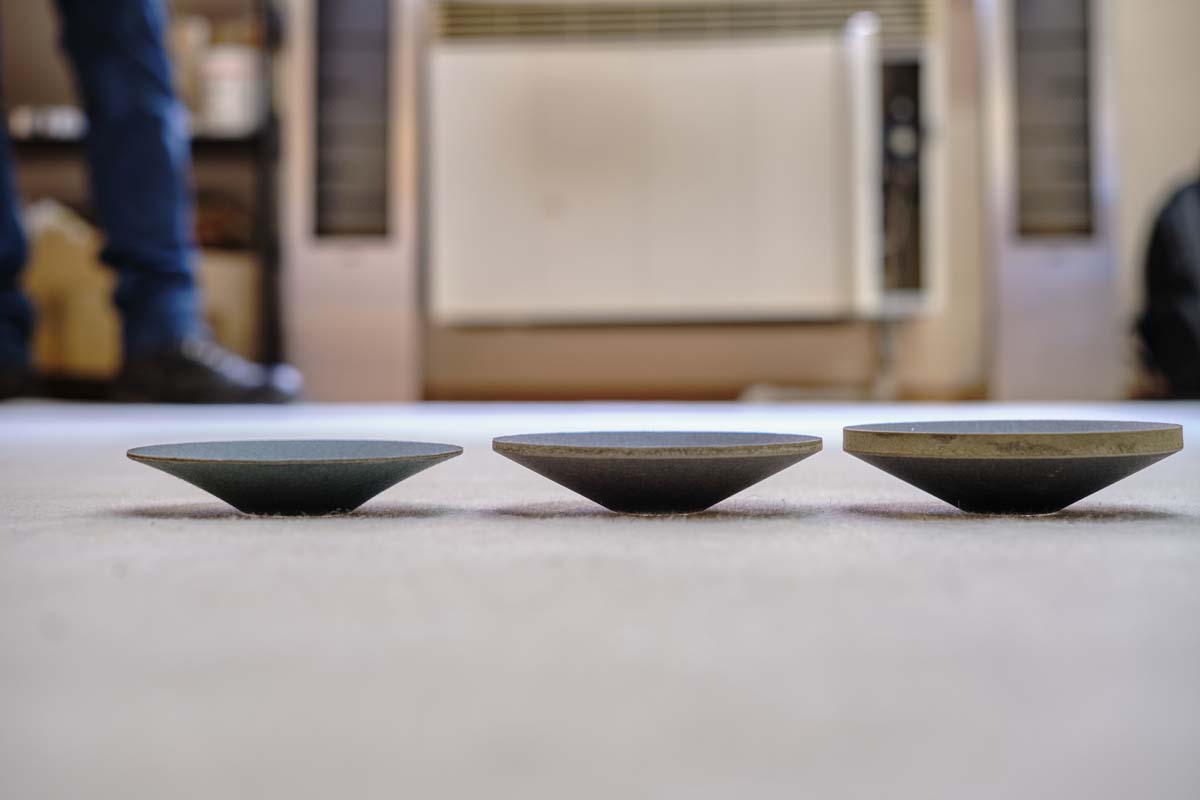
After this first taste, we move on to his actual development office, which is likewise well filled with artifacts of his work. Gerkinsmeyer tells us a whole series of stories from his collaboration with automakers, driver suppliers, and Hi-Fi companies, which repeatedly draw on his experience as a developer. It is no surprise, then, that the cone drivers from the Imagine series also originate from his designs. Gerkinsmeyer has very clear ideas about how, for example, a loudspeaker diaphragm should behave – although his view is, of course, based on the data from his extensive and impartial arsenal of measurement equipment. For the cone drivers, he developed a sandwich diaphragm consisting of a foam core surrounded on both sides by a layer of paper, which, according to his measurements, provides the best possible combination of stiffness and internal damping.
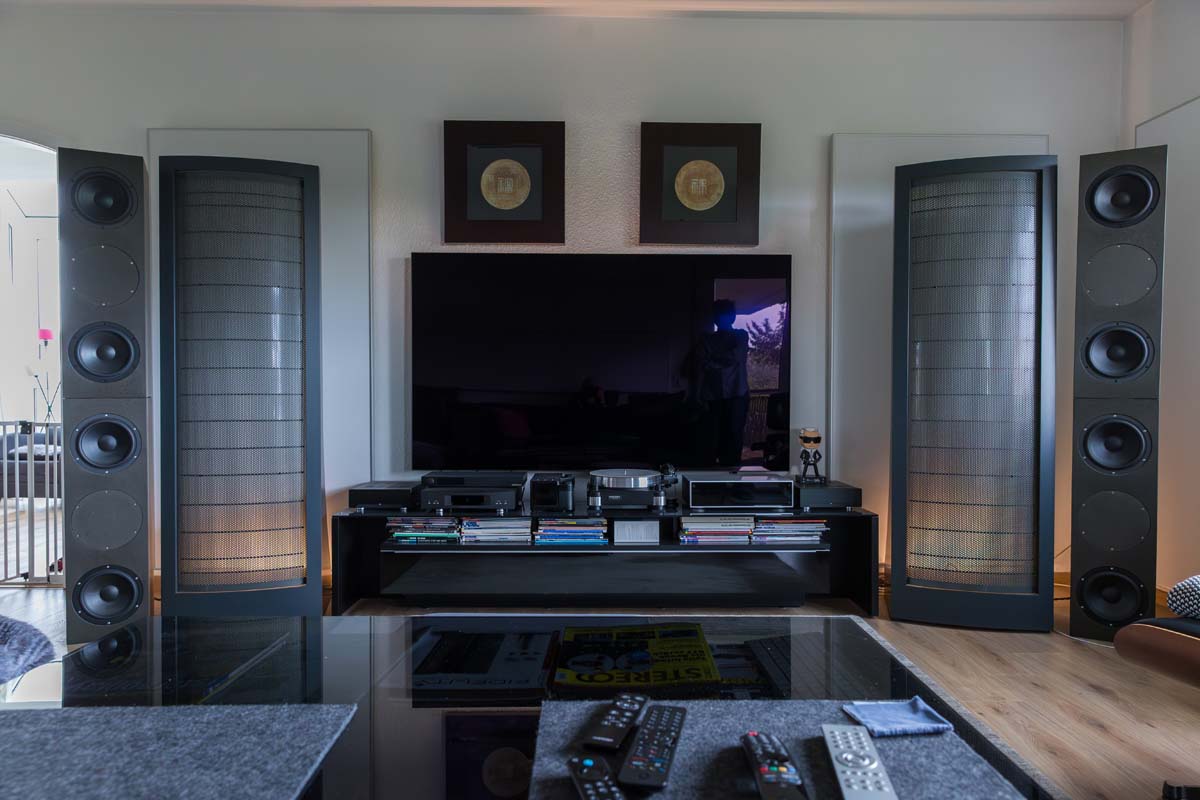
Back at his private home, we were then able to experience another part of Gerkinsmeyer’s development history that could well be repeated in the foreseeable future – ATE isn’t entering the Hi-Fi field for the first time. Up until the 2000s, the Neu-Ulm-based developer worked on electrostatic speakers, which were enthusiastically received by the press. During the first listening session of the day, we were immediately treated to an impressive high-end system with dynamic tower subwoofers. We weren’t one bit surprised by the electrostatic speakers being extremely airy and transparent – what pressed us back into the sofa cushions, however, was the sheer, absolutely effortless dynamics and sound pressure capability of the system. In fact, electrostatic speakers developed by Gerkinsmeyer, combined with dynamic subwoofers, were already used for sound reinforcement at indoor and outdoor concerts and, in the latter setting, were not only capable of producing completely undistorted sound pressure levels of up to 125 decibels, but also ensured an especially even distribution of sound pressure across the entire audience area thanks to their dispersion characteristics.
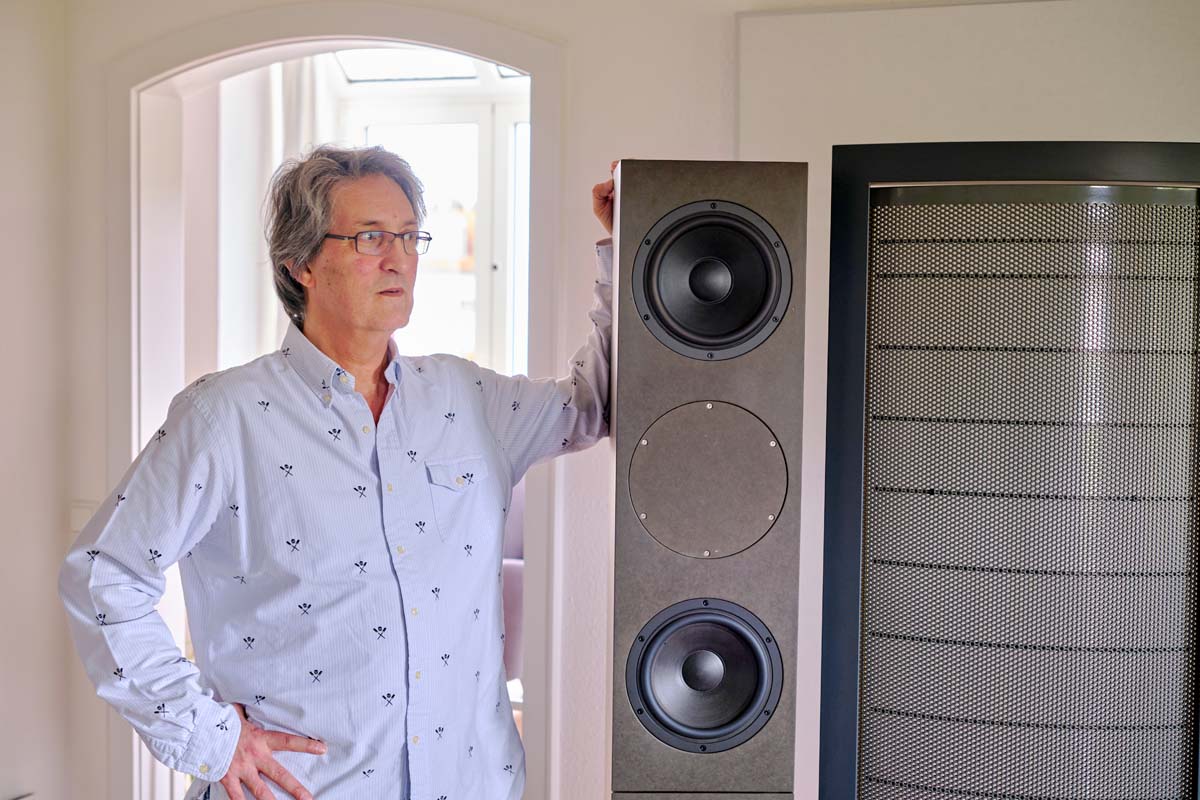
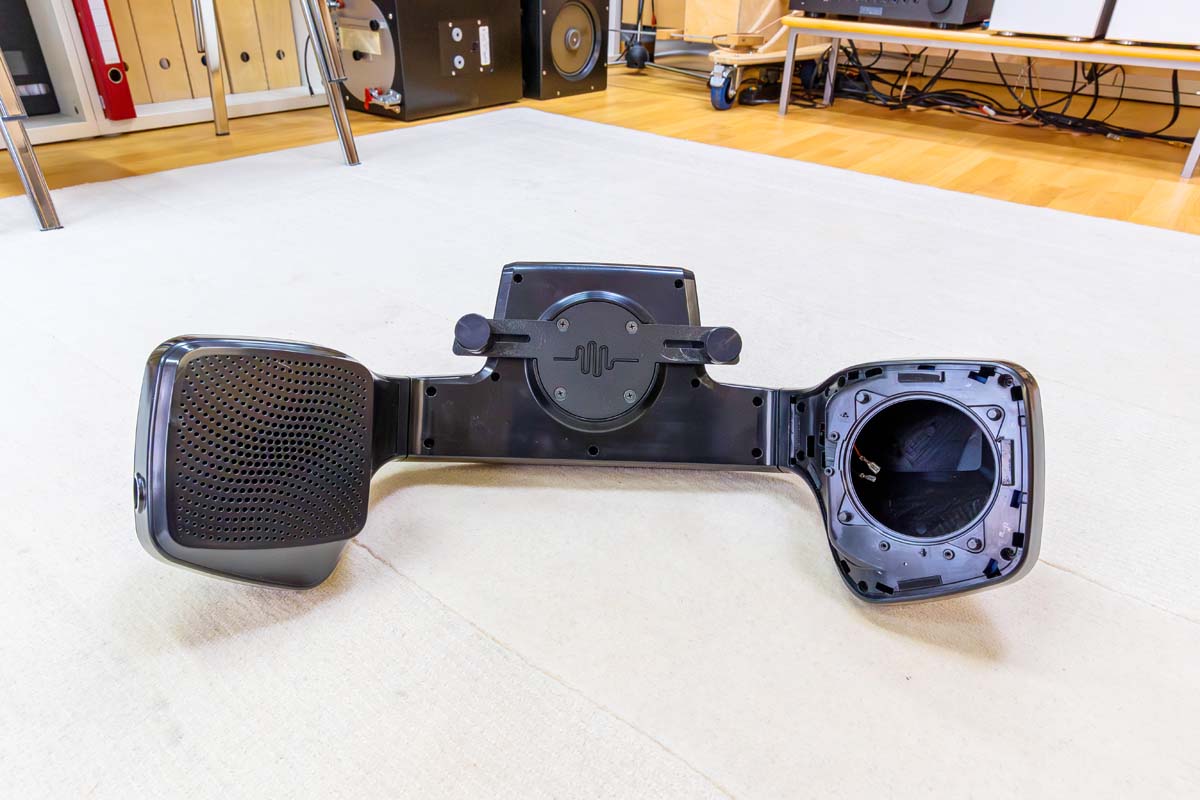
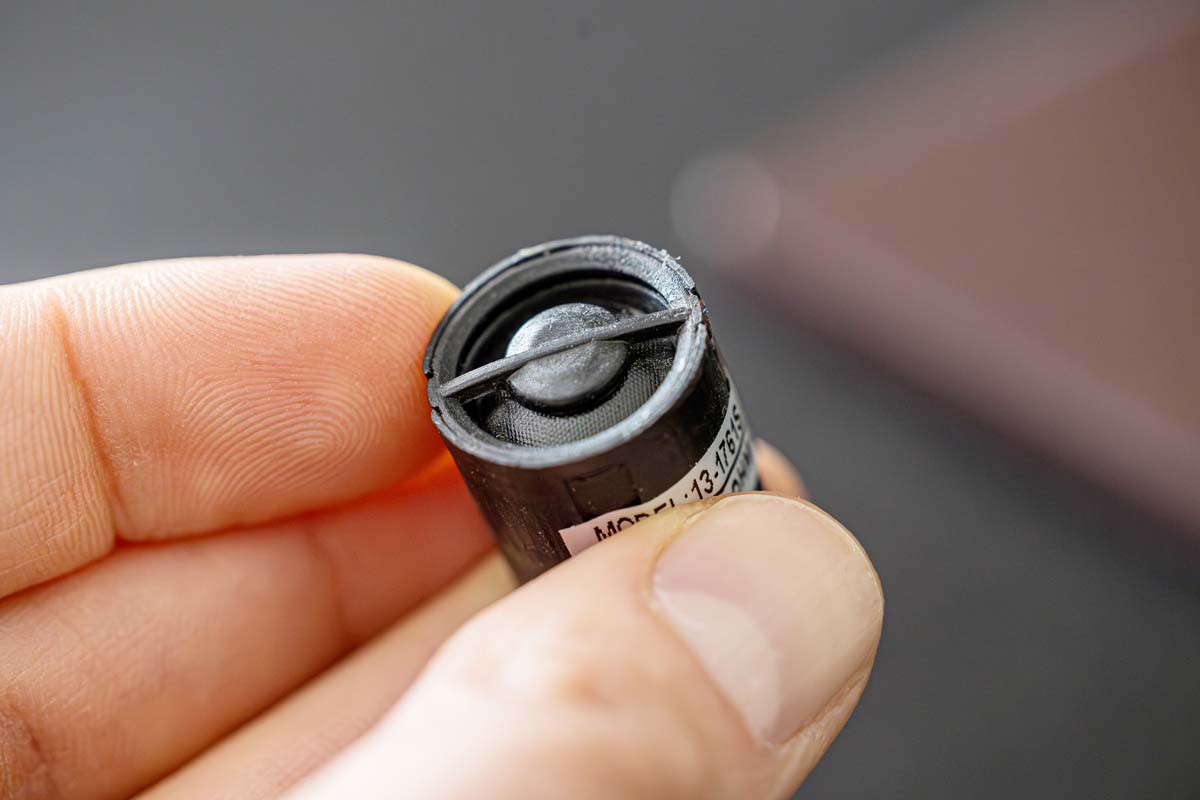
Over the last two decades, Gerkinsmeyer has once again focused primarily on the OEM market and continued experimenting with ways to achieve large, undistorted sound while requiring as little space as possible. And it was precisely in this process that he arrived at the ring-mode drive, which, incidentally, had already been providing us with music in the car on the way to and from the development office. If you’re now picturing oval panels with felt donuts in the door panels, you’d be wrong: we were somewhat astonished to see that the music apparently came directly from the – unperforated – velour and Alcantara inserts. By this point at the latest, we were itching to see the driver disassembled into its individual parts – a request Gerkinsmeyer was only too happy to accommodate.
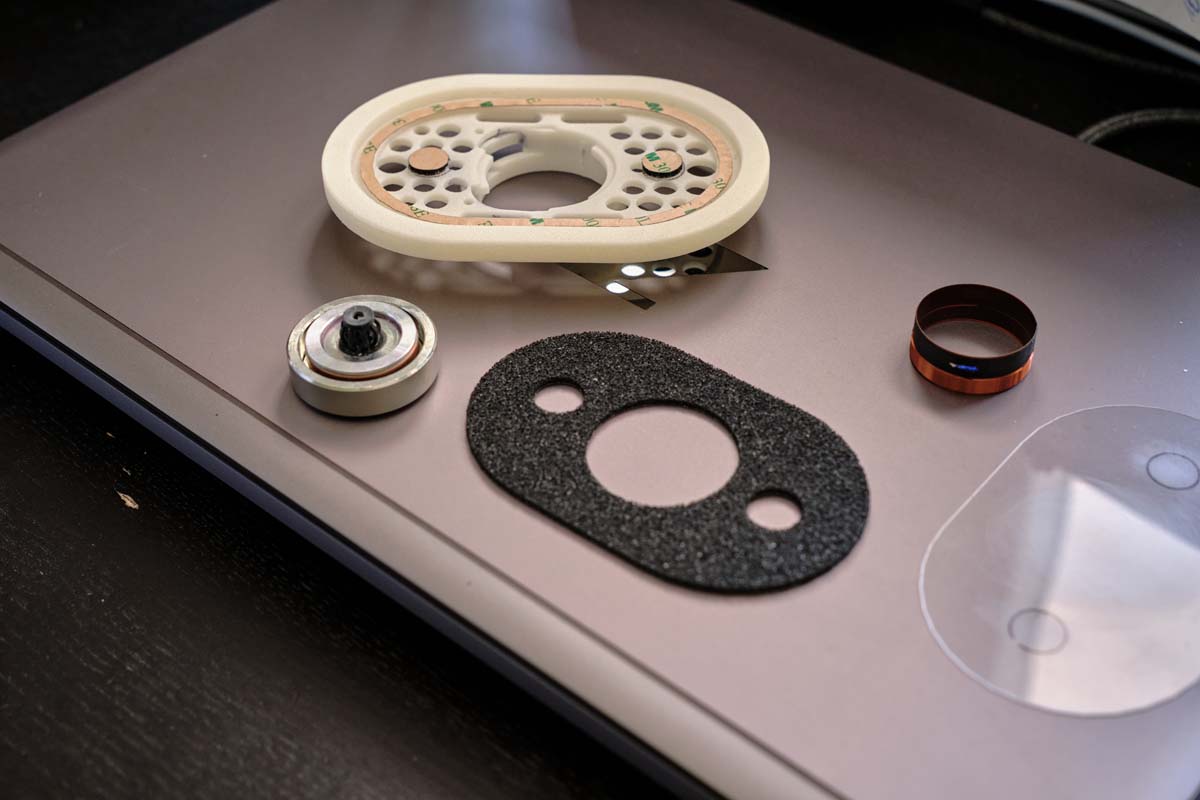
In principle, the ring-mode drive is a type of bending-wave transducer. The problem with this type of driver is that the wave propagating out from the center bounces back from the rim of the driver, and this reflection needs to be dealt with lest it should interact uncontrollably with the intended musical oscillation. The crucial idea here was the oval driver shape: When a circularly propagating wave encounters a straight edge, it simply breaks up and is thereby essentially neutralized. That sounds simple, but in reality it is anything but.
The shape was definitely the path to the goal, but the development work only really began at that point: Since this is a bending-wave driver, the diaphragm doesn’t move back and forth like a piston; instead, it is set into a wave motion within itself.
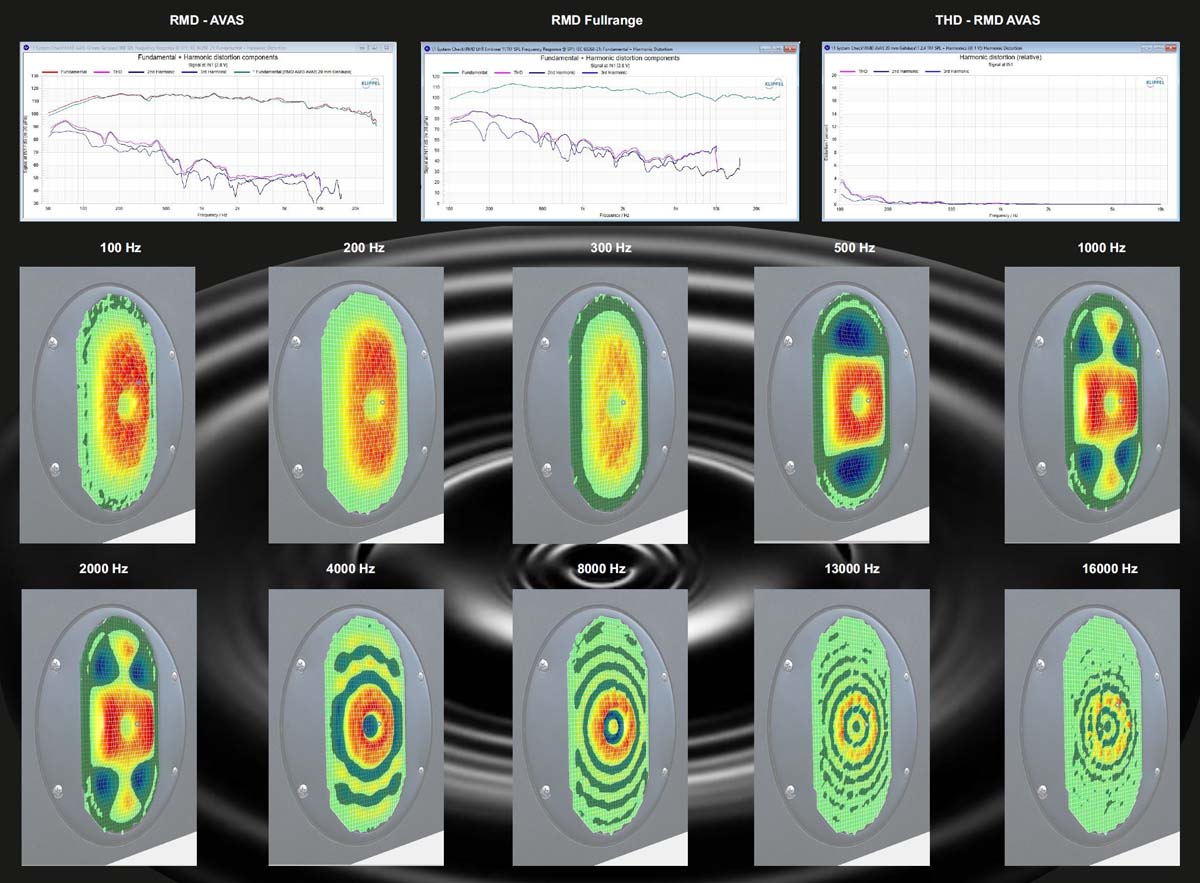
If this is to generate sound pressure, the positive wave halves must be larger than the negative ones – otherwise the diaphragm would simply cancel out its own acoustic energy. And if a linear frequency response is to be achieved, this “force ratio” between positive and negative waves must remain the same across all radiated frequencies. Getting all these gears to mesh properly was the real challenge. A central damper that mustn’t store any energy had to be developed. Even then, dips remained in the vibration pattern that caused level drops at certain frequencies – ironing out all these dips took half a year and around 30 prototypes, but was ultimately achieved through design tricks that we are not allowed to reveal here.
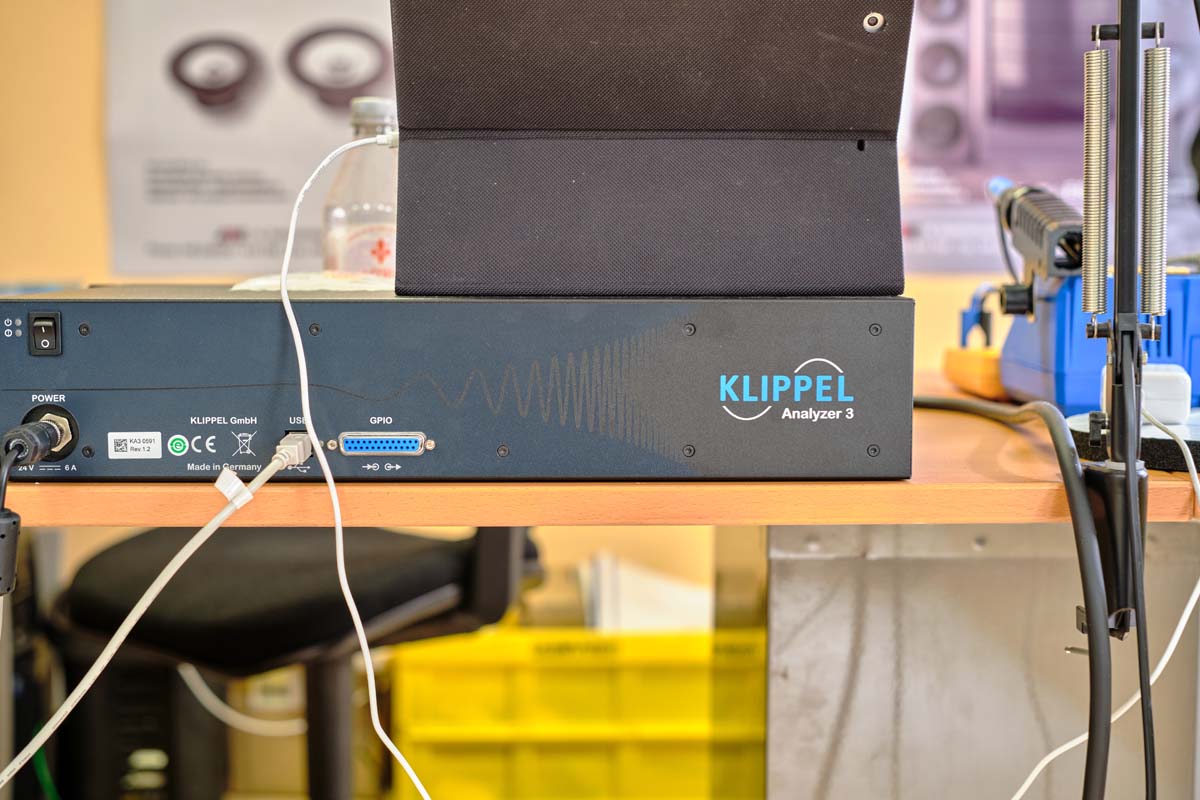
The measurements, at any rate, unequivocally prove that the developer’s bold claims are anything but wishful thinking: from around 500 Hertz, a ring-shaped wave appears whose basic shape remains virtually unchanged all the way to well above 16 kilohertz. This results not only in an impressively wide bandwidth; the dispersion pattern also remains exemplary broad and from the upper bass/midrange all the way into the treble.
The driver also exhibits a number of unexpected yet equally welcome properties. It’s easy to imagine that a dynamic driver would react rather poorly if you were to, say, cover it with leather. The ring-mode driver responds to this with a slight rise in the treble, without its dispersion pattern or other characteristics changing much. Gerkinsmeyer himself is trying to wrap his head around why it behaves like this; intuitively, covering a diaphragm with soft material should yield the exact opposite effect. For use in car Hi-Fi in the form of neutral, highly resolving Alcantara, however, this behavior is very convenient.
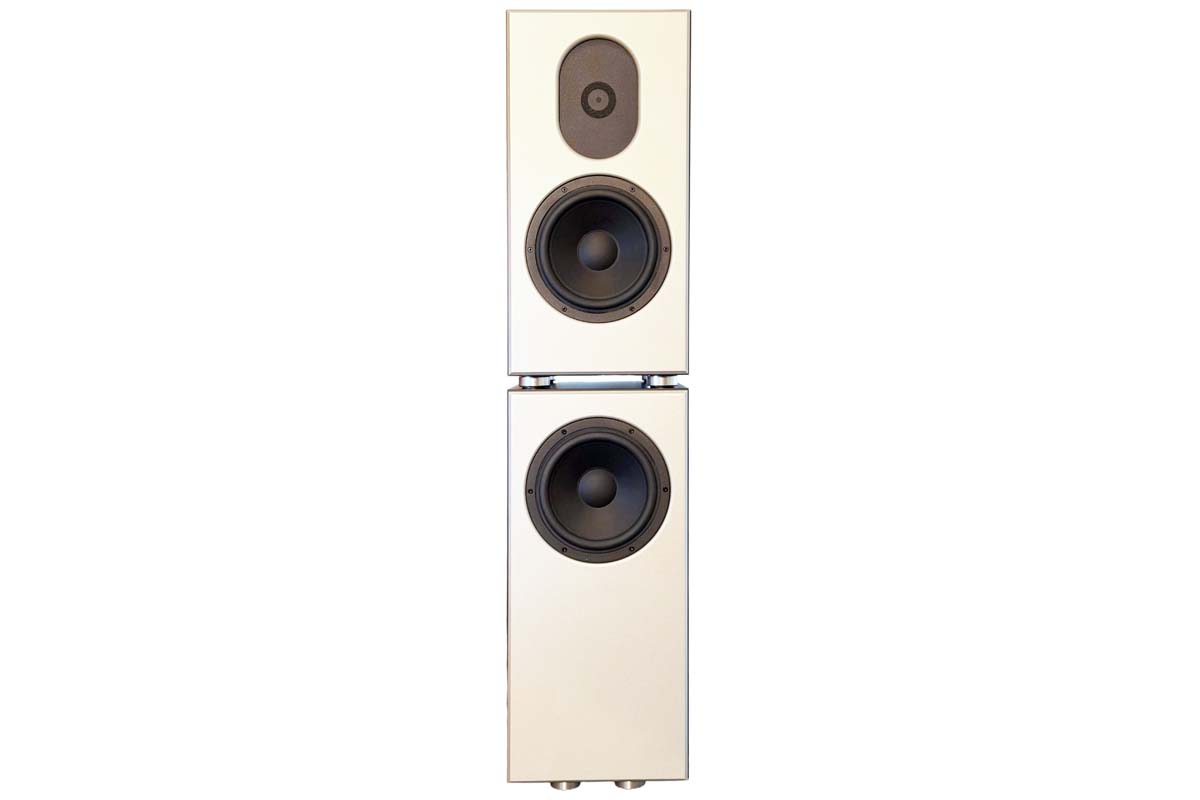
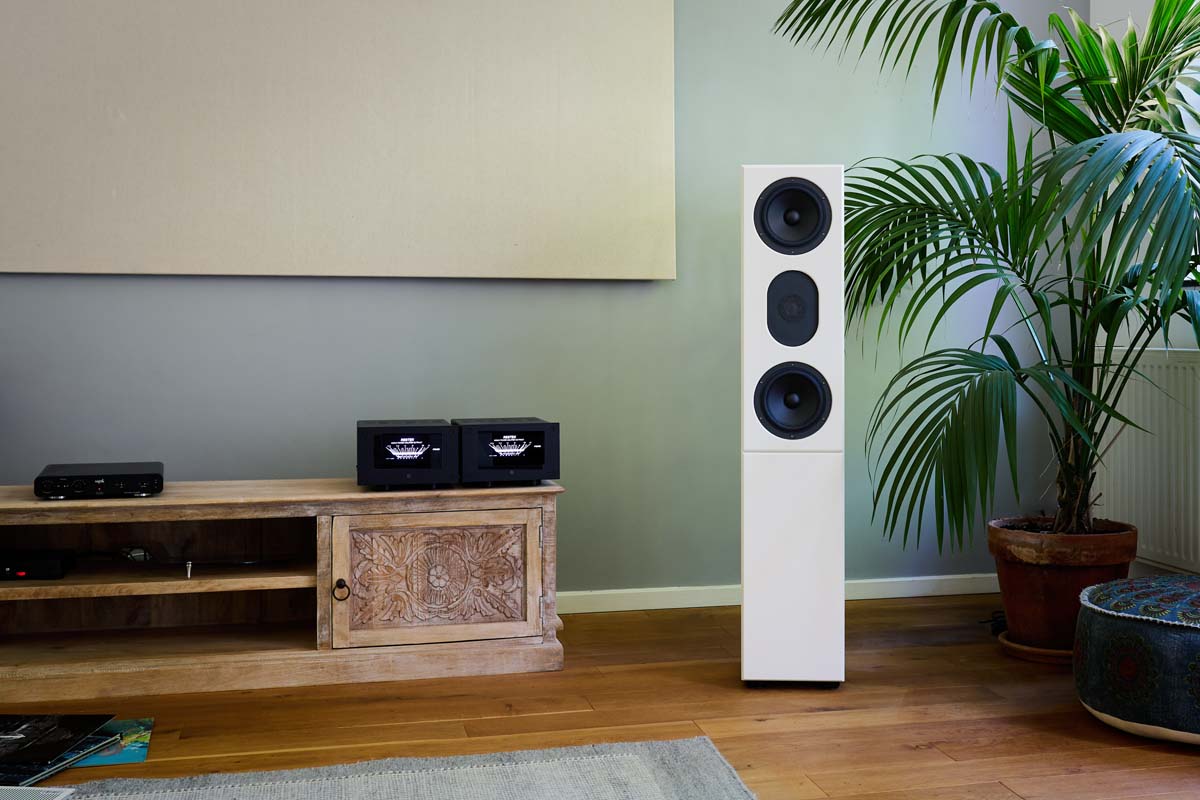
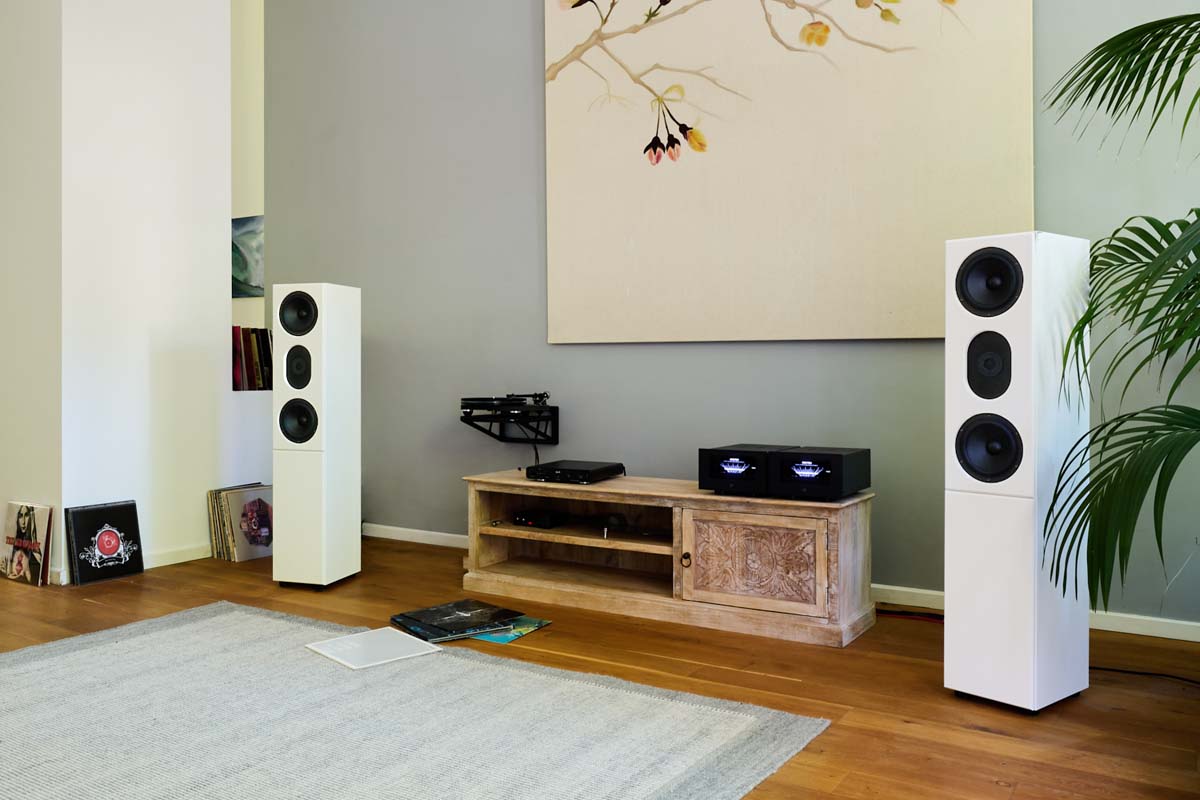
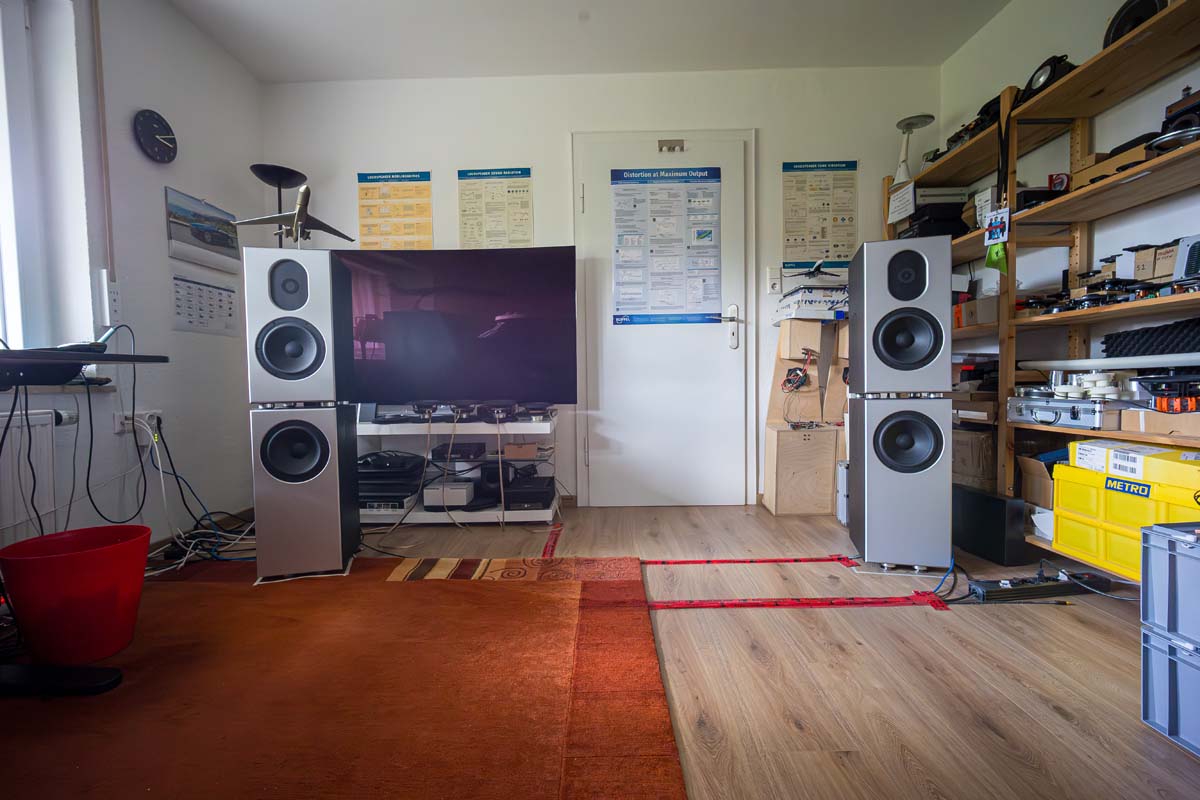
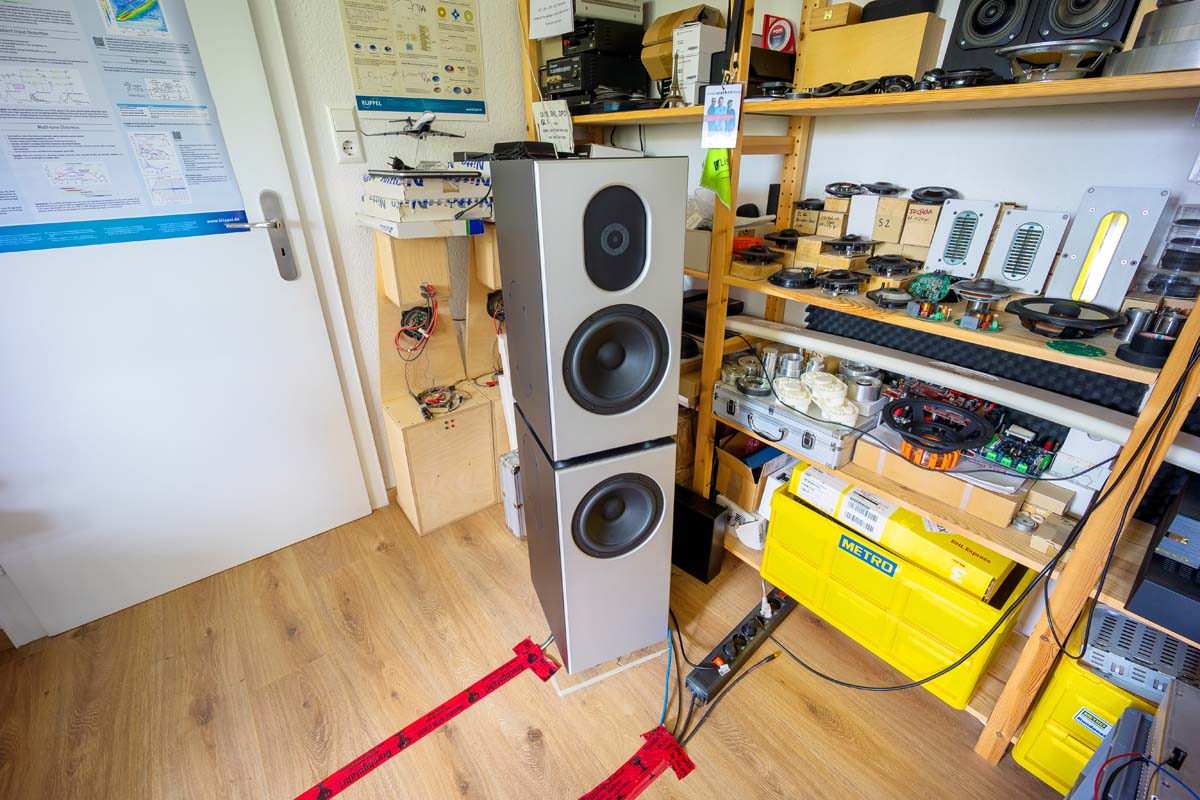



The fact that the driver combines so many desirable properties is also the reason Gerkinsmeyer decided to enter home audio once more. Speaker building has been his passion since his youth, and it never left him even during his earlier career as an electrical machinery engineer – OEM solutions are more lucrative, however, and a day has only 24 hours. Now, though, he means to find out what this wonder transducer can do in a properly designed Hi-Fi speaker, and that is how the current Imagine series came about. We, too, wanted to find out and were now given the opportunity to listen for an hour or so. The program ranged from audiophile singer-songwriter fare à la Annette Askvik to the notorious “Ratchets” by Hedegaard. As in the trade-show demonstrations, the Imagine Monitor, standing here on the matching bass modules, impressed us with remarkable openness and a soundstage that remained surprisingly consistent in its positioning regardless of listening position. The bass, particularly on the more aggressive tracks, was impressively fast and controlled despite all its weight.
The impression that stayed with us, however, was that despite all its directness and fine resolution, you can comfortably listen to the Imagine at high volume for a long time without it ever becoming fatiguing. Could all midrange/tweeters look like this in the future? We don’t know. In the automotive sector, however, we will probably see more of them in the years to come. And finally, Norman Gerkinsmeyer tells us that, as the icing on the cake of his return to Hi-Fi, he would very much like to bring a really good electrostatic system back to market.
ATE
Norman Gerkinsmeyer
Kasernstraße 41
89231 Neu-Ulm
Phone +49 731 3793475
ng@ateaudio.de