
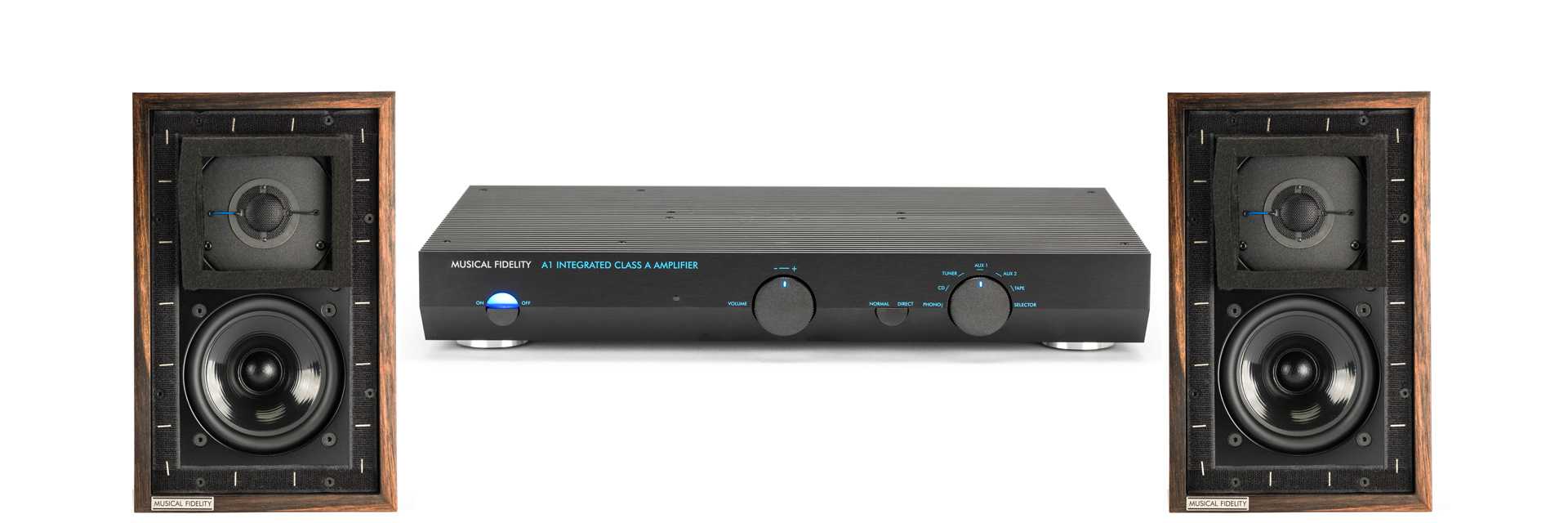
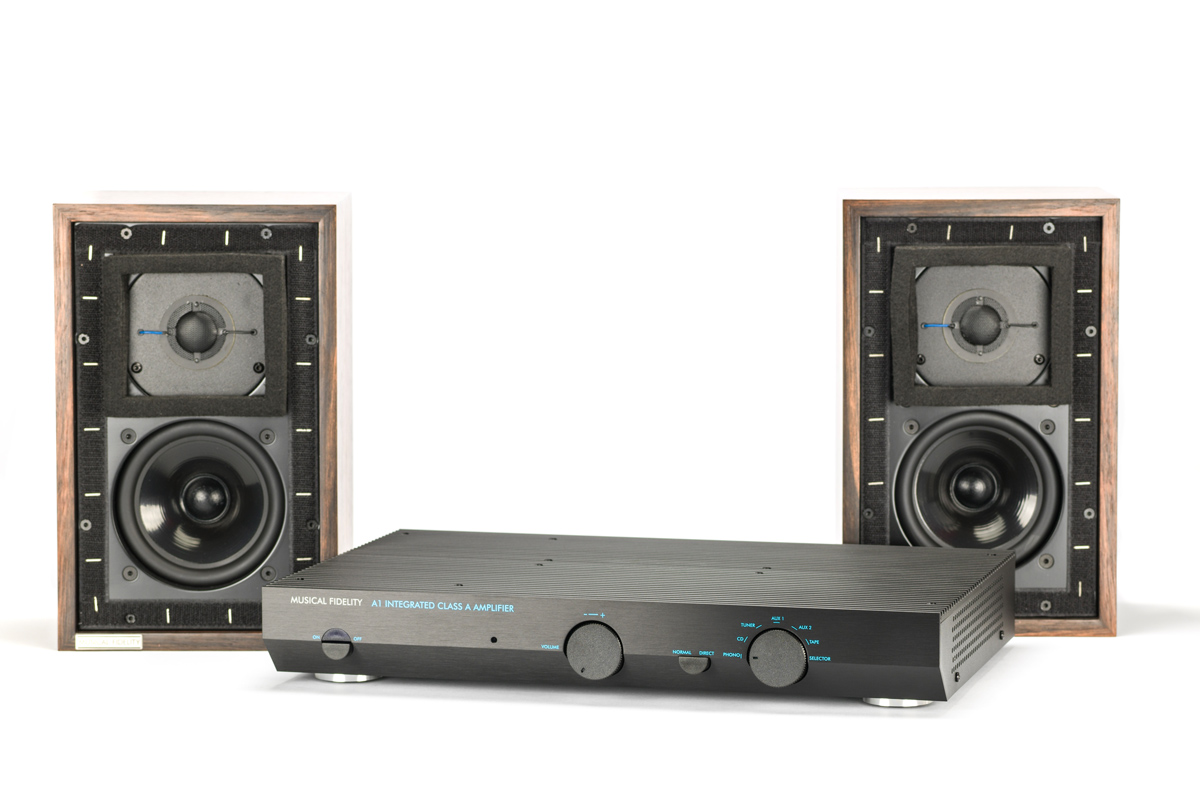
There is a certain logic to returning to one’s roots. More precisely, to iconic products such as the Musical Fidelity A1 integrated amplifier. Pair it with another classic of hi-fi history and the picture becomes complete – the sealed-box LS3/5A monitor loudspeaker, which has also been part of the British brand’s lineup for some time now. Is this all just retro and nostalgia, or does it also make for a suitable system for the present day?
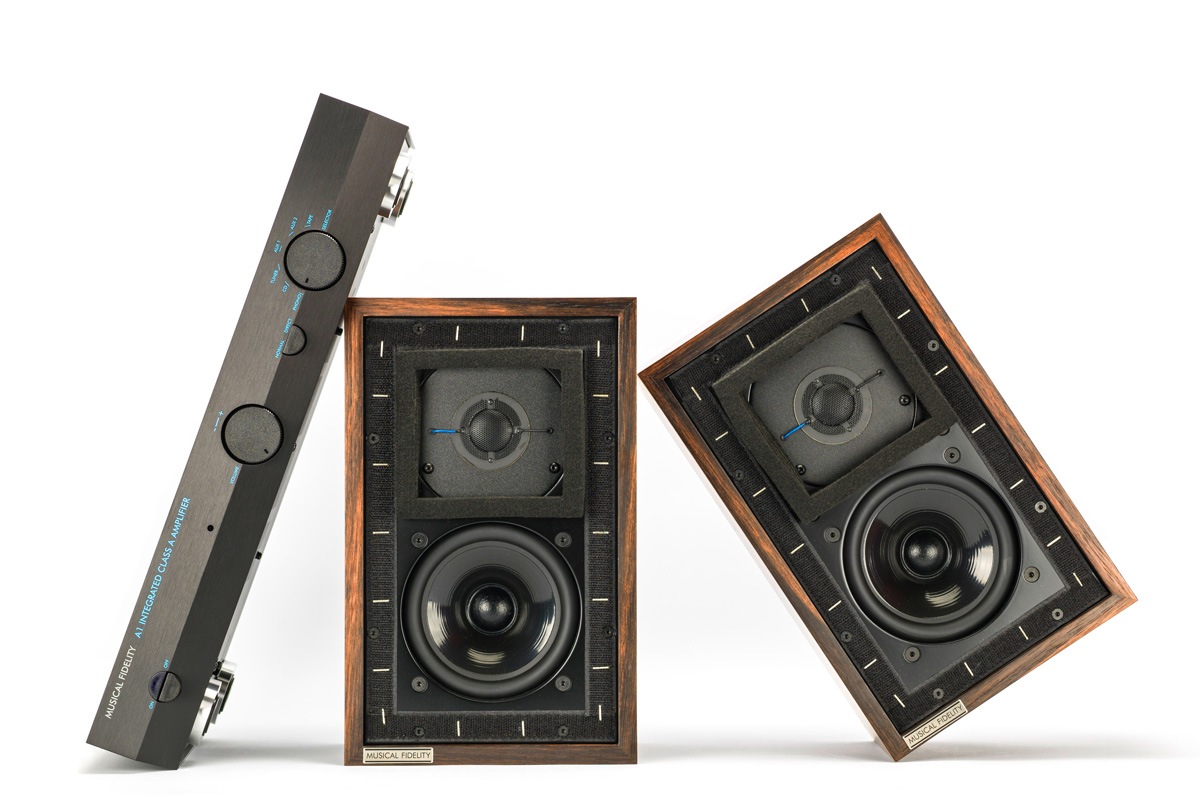
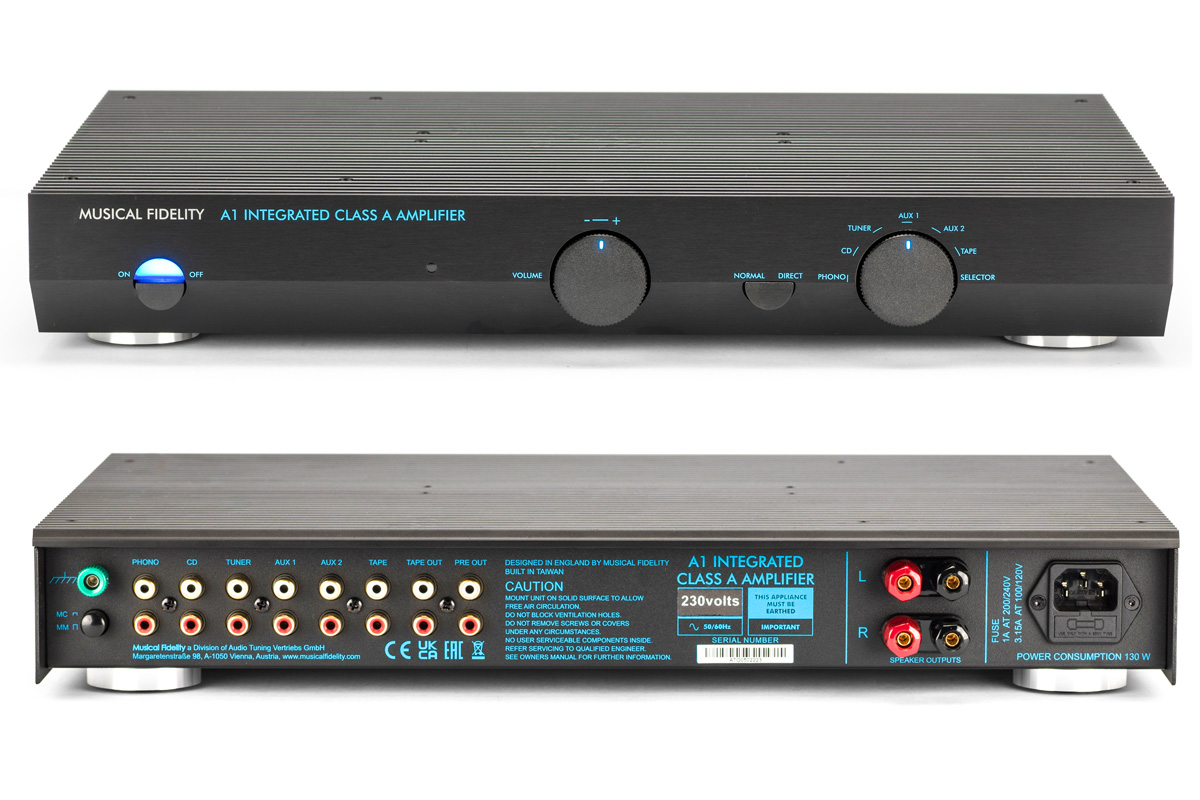
The chassis doing double duty as a heatsink, the front panel with its chamfered lower edge, and the controls recessed into it – the design could hardly have been clearer, and it stood out from many competitors on purely visual grounds. Technically, the Class A amplifier circuit in the Musical Fidelity A1 was something of an exception in this price class. At its introduction, the integrated amplifier cost £189, incidentally! The enclosure design had previously been used for a preamp/power-amp combination and a Class A/B integrated amplifier.
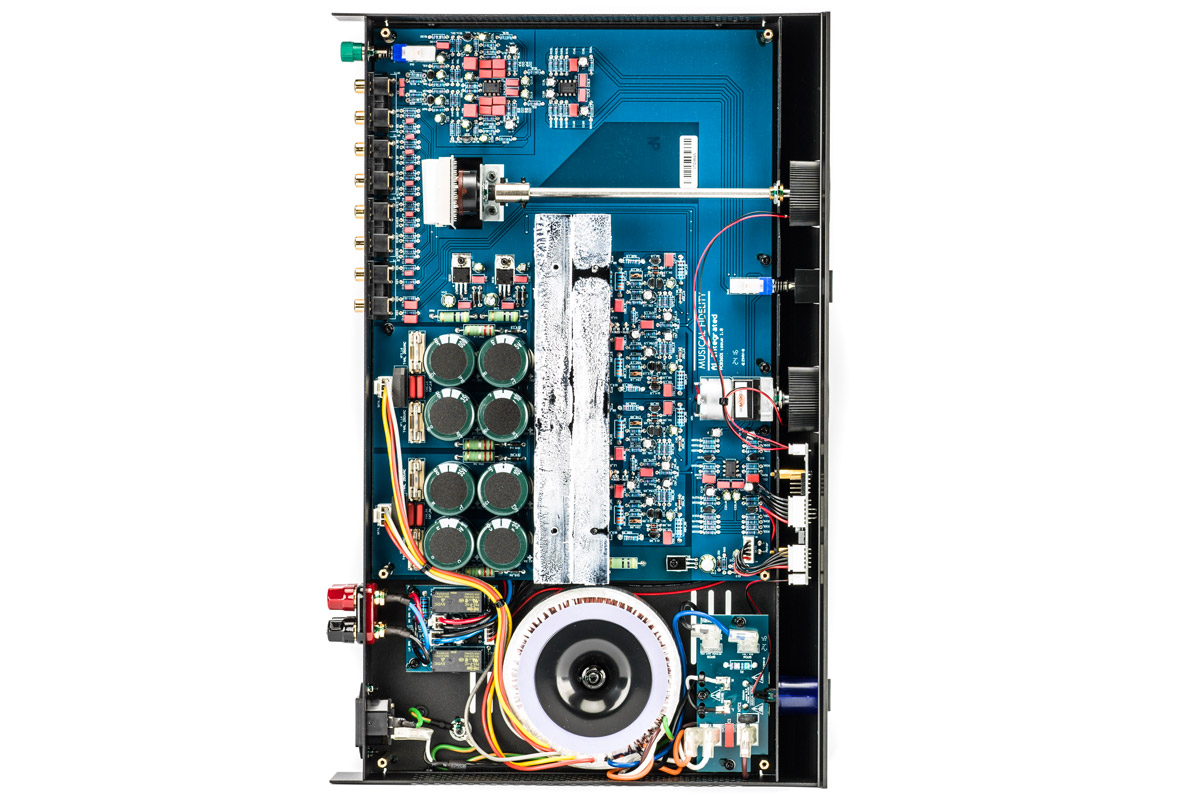
The circuit of the original A1 itself was designed by Tim de Paravicini – and that circuit has been retained as far as possible by Simon Quarry, who has been with Musical Fidelity for decades. Sonically, the integrated amplifier was convincing even back then, although the Class A circuit’s high power dissipation, combined with the smaller enclosure (compared with the reissue), meant that some units didn’t survive the considerable heat buildup. One reason, among others, was that Musical Fidelity used capacitors only rated to withstand 85°C. There are, however, still plenty of well-functioning examples of first-generation A1s around today. And this concludes the history lesson.
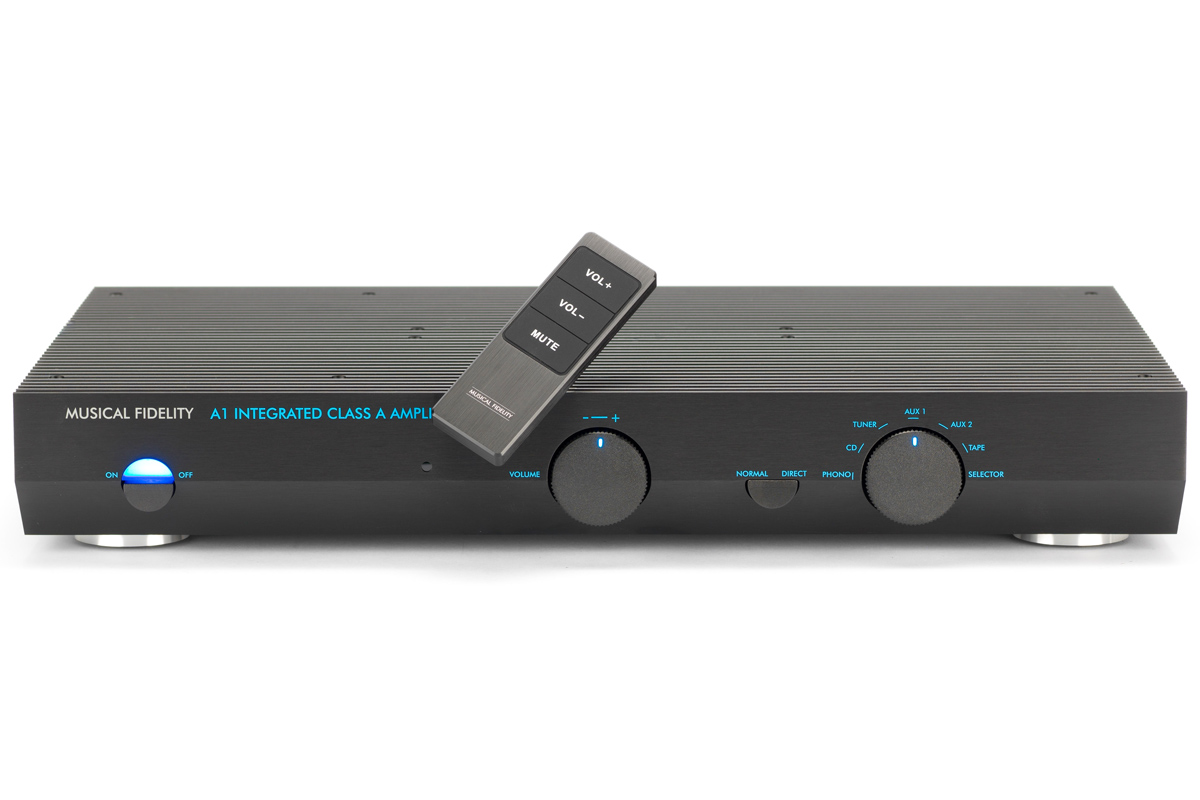
The latest incarnation of this integrated amplifier follows the classic design both visually and technically, but it is somewhat larger and capable of delivering a little more power when required. The current A1 delivers up to 25 watts into 8 ohms in pure Class A. Thanks to its dynamic circuitry, the Brit can switch briefly into Class B. The revised version is therefore capable of driving even more demanding loudspeakers. But the changes run deeper: the redesigned power supply provides an independent power feed for each channel.
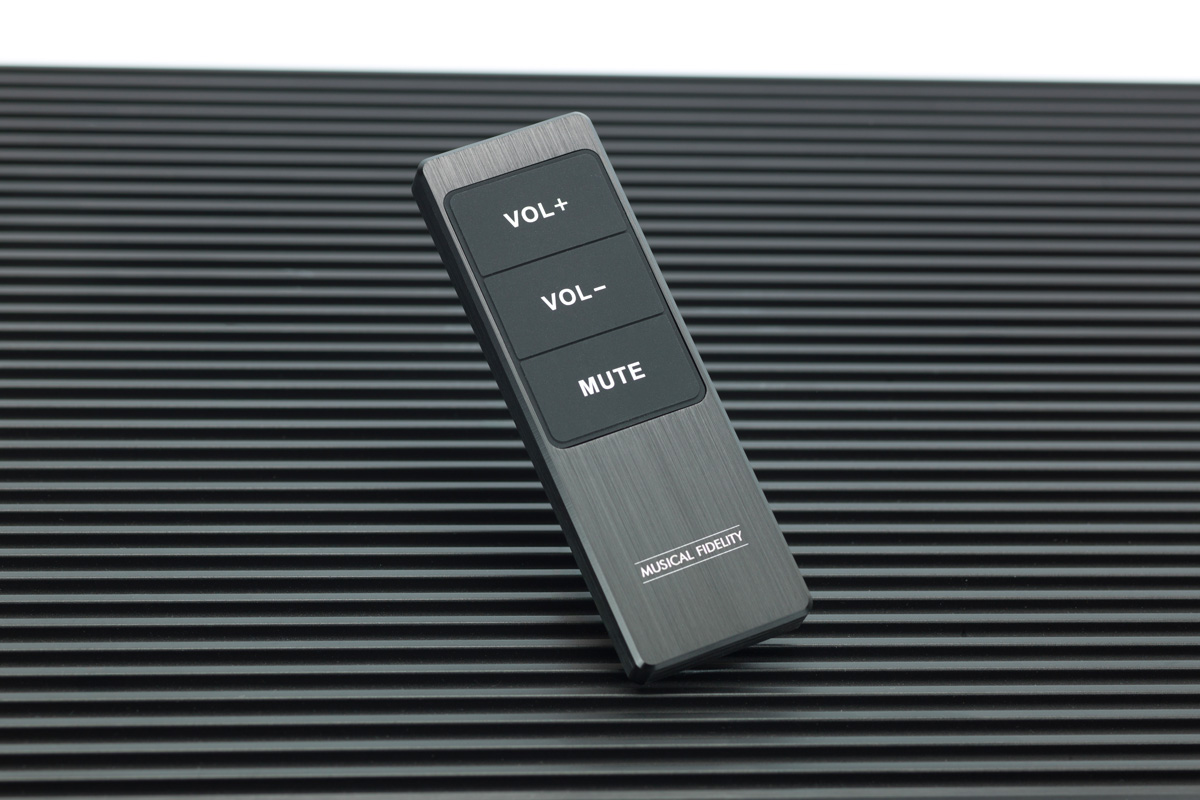
The heat dissipation, efficiency, and power-handling capability of the components used are all better than in the original model – but the A1’s heat output is still quite noticeable. I don’t leave my hand resting on the chassis for long; it gets pretty hot after just a few minutes. So, don’t put anything on top of the unit! In practice, I rarely need to touch the chassis, however, because a remote control is included for volume adjustment, and thankfully the controls themselves remain cool.
As was customary in the 1980s, the new A1 also comes as a “complete package,” including Tape Out and preamp outputs as well as a phono input for MM and MC cartridges. Not to forget the total of five line-level inputs. The “Direct” button between the volume control and input selector bypasses the preamp section, allowing the A1 to function as a variable power amplifier. With the button pressed (NORMAL), the preamp remains in the signal path, providing an additional 10 dB of gain; with the button released (DIRECT), the signal goes straight to the power amp. In fact, I preferred the Normal setting during my listening sessions. The sonic differences are small in my view, but audible. From a practical standpoint, this lets me shift the volume control’s range into what I find to be the optimal region; subjectively, the sound gains a little more openness than it has without the preamp section.
The new album Stories Of Life by Triosence is playing in Hi-Res via Qobuz, with the A1 driving the Musical Fidelity LS3/5A, positioned on stands at ear level and angled slightly toward the listening position. The music has bounce, the stereo image locks into place, and Bernhard Schüler’s piano has a clear, realistic attack. “Little Lost Wonder” recalls Michael Nyman and Wim Mertens in its melodic phrasing, while drummer Tobias Schulte’s rhythmic accents are cleanly separated from it, and bassist Omar Rodriguez Calvo’s truly outstanding playing is a joy even through these small, sealed-box loudspeakers. It should be clear that an LS3/5A has little to say below 80Hz; that doesn’t change when paired with the A1. But the combination’s fast, seamless response and genuinely effortless, dynamic presentation are major strengths. It sounds complete without making the listening chair vibrate.
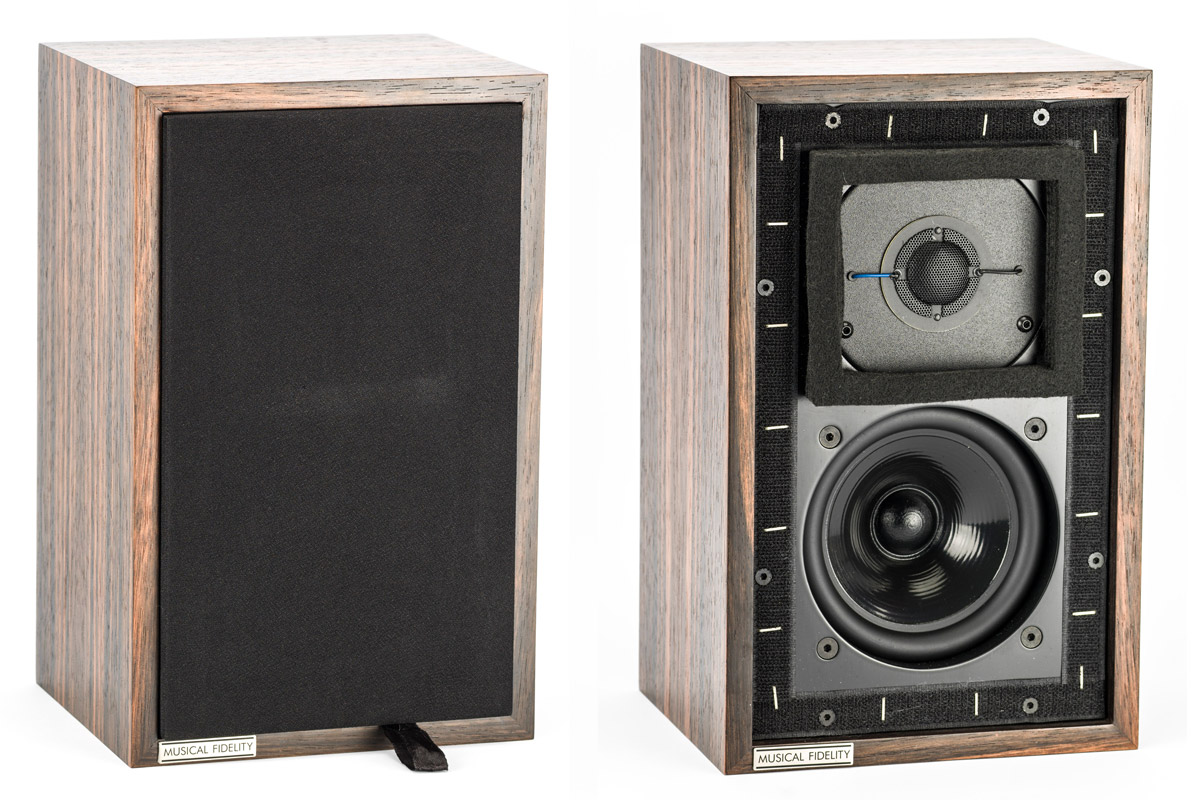
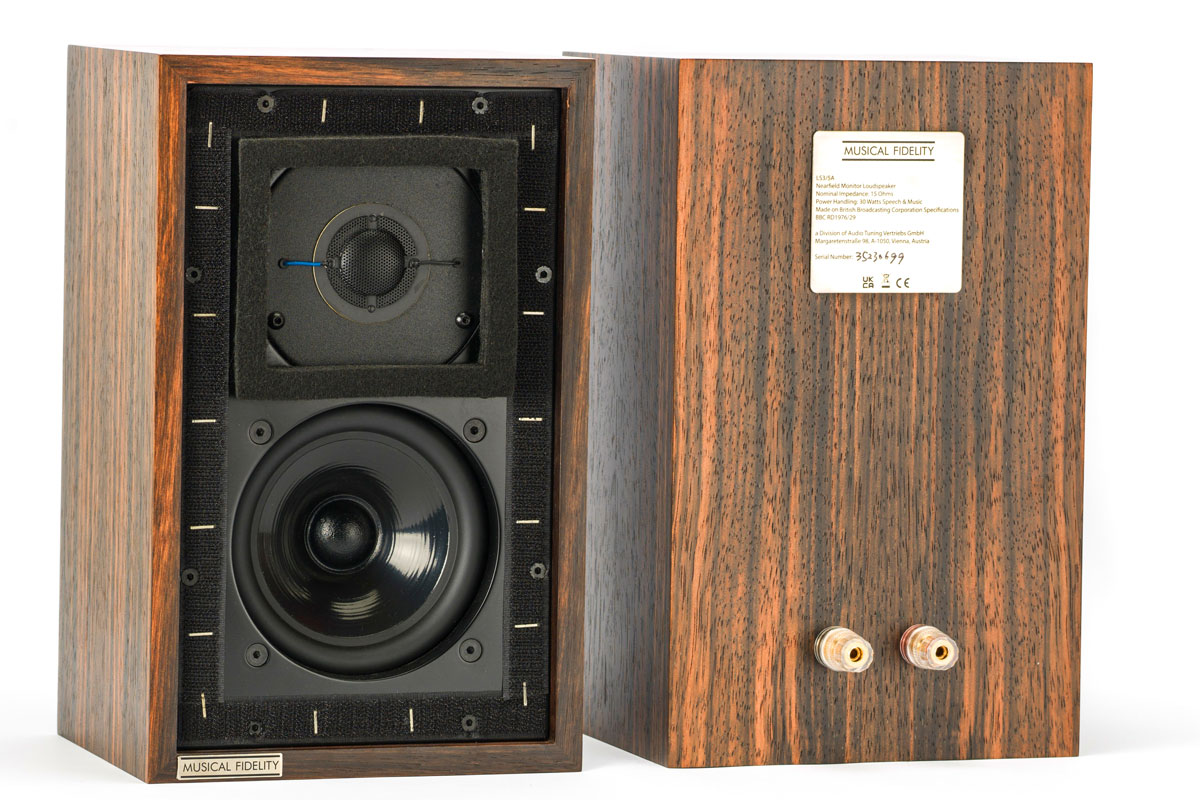
Since we’re talking about Musical Fidelity’s version of the classic BBC monitor, this is first and foremost a highly resolving nearfield monitor, but it also works well in small to medium-sized listening rooms with appropriate placement and, thanks to its musical involvement and gentle handling of detail, has remained a classic for around five decades. The 1976 BBC specification is followed precisely in the Musical Fidelity version. That accounts for a corresponding price for such a small loudspeaker, although in my view the classic status of the LS3/5A is generally reflected to some extent in the price of each version. The build quality of the Musical Fidelity version is superb: flawless genuine rosewood veneer, individually matched in pairs, and solid, seamlessly integrated speaker terminals, along with the classic front baffle – everything is first-rate. The 15-ohm impedance poses no challenge to an amplifier, while the relatively low 82.5dB sensitivity can be more of an argument against pairing it with some tube amplifiers. The A1 has no trouble driving it. The transparent and clear reproduction of this combination is a defining characteristic; the amplifier and loudspeaker work very well together, even though some of the specifications on paper initially seemed to suggest otherwise.
I connect the turntable and the excellent-sounding Clearaudio Jubilee MC to the Musical Fidelity A1’s input, which is fixed at a 1kΩ load. Sarah McLachlan’s album Better Broken is on the platter. I wasn’t expecting this kind of vocal presence, openness, and musical enjoyment from an integrated phono stage. Yes, because of the relatively high loading impedance, it sounds a little brighter (depending on the cartridge) than I am accustomed to with my considerably more expensive Luxman phono stage. At the same time, there is plenty of foundation here. The actual tones are conveyed into the listening room with differentiation and substance, giving more than just an impression of how they ought to sound. Free and open up top, detailed and informative through the midrange, and no slouch in the bass, this is a highly successful performance. The phono stage’s discrete design and a few optimizations to the original layout (current-to-voltage conversion) ensure that even high-quality cartridges find a good partner in the A1! To keep things in perspective: despite all its qualities, an external phono stage will naturally extract even more from the record, but what the Musical Fidelity A1 delivers here is thoroughly deserving of respect. The only thing I would have preferred to see changed is the somewhat awkwardly positioned ground terminal. Via MM, the sound is subjectively even more balanced, with slightly silkier highs, equally well-balanced vocals, and a solid bass foundation. If I’m being completely honest, I feel even more comfortable with this combination. And the price-to-performance ratio is right!
Under the umbrella of Austria’s Audio Tuning Vertriebs GmbH, the British brand Musical Fidelity has put together a well-matched package of two classic components that work coherently as a system and are made for long listening sessions. Physics can never be cheated by an LS3/5A, but goosebumps and emotion – even at low listening levels – are assured. And in addition, the classic design of the A1 and the loudspeakers evokes a warm sense of nostalgia in me.
Integrated amplifier Musical Fidelity A1
Concept: Class A integrated amplifier with analog line-level inputs and inputs for MM and MC operation | Features: Class A amplifier (2 x 25 W/8 Ω) with power reserves in Class B operation from approx. 25 W onward (dynamic Class A mode); defeatable preamp section; integrated phono stage, gain 40 dB (MM) and 60 dB (MC, 1kΩ loading); remote control (volume only) | Inputs: 5 x line-level RCA, 1 x phono RCA (switchable MM/MC) | Outputs: 1 pair of speaker outputs, 1 x Tape Out RCA, 1 x Pre Out RCA | Finish: Black | Dimensions (W/H/D): 44/7/28 cm | Weight: 10.5 kg | Warranty: 2 years | Price: approx. €1,600
Loudspeaker Musical Fidelity LS3/5A
Concept: Closed-box 2-way monitor loudspeaker to BBC specification 1976/29 | Sensitivity: 82.5 dB (1 W/1 m) | Frequency response: 80 Hz to 20 kHz (±3 dB) | Impedance: 15 Ω | Features: closed-box monitor loudspeaker with removable grille | Finish: Rosewood (genuine wood veneer), 12mm birch plywood enclosure | Dimensions (W/H/D): 19/31/17 cm | Weight: 4.5 kg | Warranty: 2 years | Pair price: approx. €2,500 (stands approx. €700/pair)
Reichmann AudioSysteme
Graneggstraße 4
78078 Niedereschach
Phone +49 7728 1064
info@reichmann-audiosysteme.de