
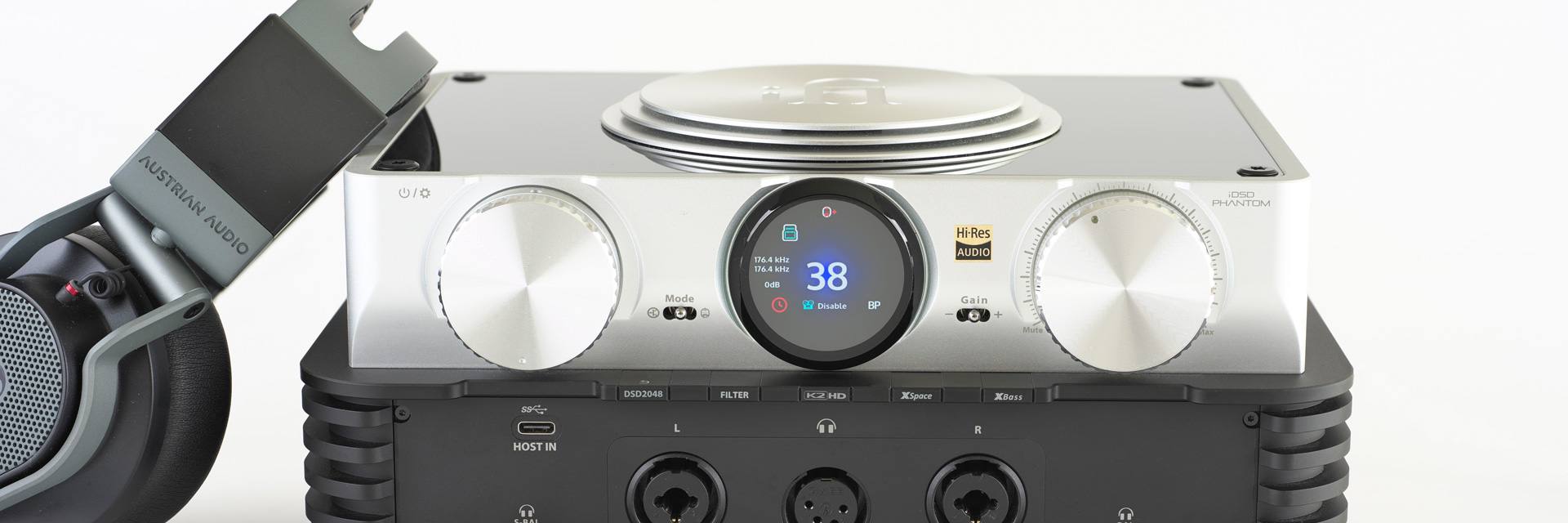
The iDSD Phantom is the new flagship of iFi’s product lineup. It offers a wealth of features, but its greatest strength is its remarkable sonic versatility.
Many hi-fi enthusiasts still think of iFi Audio as the affordable offshoot of British high-end manufacturer Abbingdon Music Research (AMR). In recent years, however, the company has also introduced products at considerably higher price points for more demanding listeners. One example is the flagship iCan Phantom headphone amplifier, priced at around €3,800, which my esteemed colleague Stefan Gawlick reviewed in detail in 2024. The similarly named iFi iDSD Phantom, our subject here, costs nearly another thousand euros. It leads the lineup not only in price but also in technical sophistication and functionality. As its creators envision it, this new model combines a network streamer, a high-resolution DAC, and a high-end headphone amplifier in a single component. And although it’s firmly rooted in the digital domain, it also seeks to evoke the golden age of analog sound. In addition to a solid-state analog output stage, it features a tube output stage, each with its own sonic signature. Add several exceptionally sophisticated digital features not previously found in a consumer product, and you have a component that promises to be genuinely intriguing.
DSD Remastering for Everyone
Let’s start with the DAC’s distinctive architecture. The iDSD Phantom employs four Burr-Brown DSD1793 chips, with the developers drawing on their expertise at AMR. Without getting too deep into the technical details, it is worth noting that this architecture uses 256 conversion elements per channel. DSD signals are fed directly to the DAC without digital filtering, while PCM streams pass through selectable filters with different characteristics. The listener is free to decide which sounds best.
Things get particularly ambitious in DSD mode. The DAC natively supports DSD512, but it can go considerably further. Under the banner of DSD2048, iFi has implemented a remastering technique used in Japanese recording studios. This allows virtually any audio file to be converted to DSD512, DSD1024, or, incredibly, DSD2048, with the resulting signal decoded natively. All of this is made possible by the new Chrysopoeia FPGA, which takes full advantage of the Burr-Brown chips’ ability to process DSD1024. When converting to DSD2048, the extraordinarily high sample rate is intended to effectively eliminate quantization noise by pushing it far beyond the audible range, according to the manufacturer. One further point is important: This remastering process is not simply oversampling. Before conversion, the Chrysopoeia FPGA applies proprietary jitter-reduction algorithms designed to ensure a stable, jitter-free signal at the DAC’s input.
The British apparently have a healthy appreciation for Japanese engineering, as the iDSD Phantom also incorporates JVCKENWOOD’s K2HD technology, developed by the Japanese electronics manufacturer in collaboration with recording engineers at Victor Studios. When transferring analog master tapes to CD, the engineers had noticed a peculiar loss of presence in the resulting digital files. The K2HD algorithm is designed to reconstruct harmonics and transients above 22kHz, extending beyond the format’s normal reproduction limit. Two operating modes are available: K2 preserves the audio file’s original resolution, while K2HD optionally upsamples the signal to a maximum of 24-bit/192kHz.
Solid-State Precision or Tube Warmth
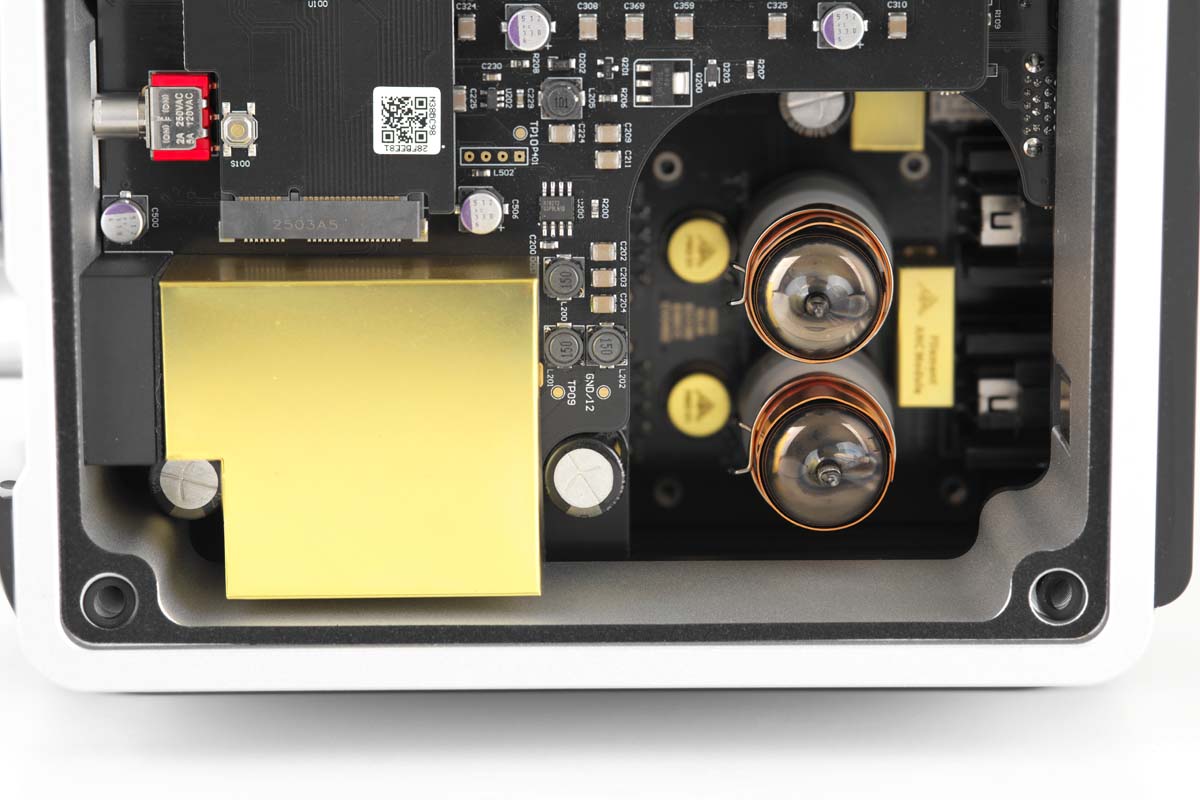
Having explored the digital side of the equation, let’s turn to the analog output stages. The iDSD Phantom offers three—you read that right, three—output topologies that can be switched in real time, built around two separate amplifier stages. Solid State employs discrete JFETs in a dual-mono configuration. Alongside it is a genuine tube circuit featuring two selected NOS GE5670 tubes, with two operating modes of its own. Tube is, in effect, the technically purist implementation: The tubes are operated under ideal conditions to make the most of their inherent characteristics. Tube+, by contrast, reduces negative feedback to emphasize the second harmonic, aka K2, by 6dB. In other words, a little audiophile-friendly distortion is very much on the menu.
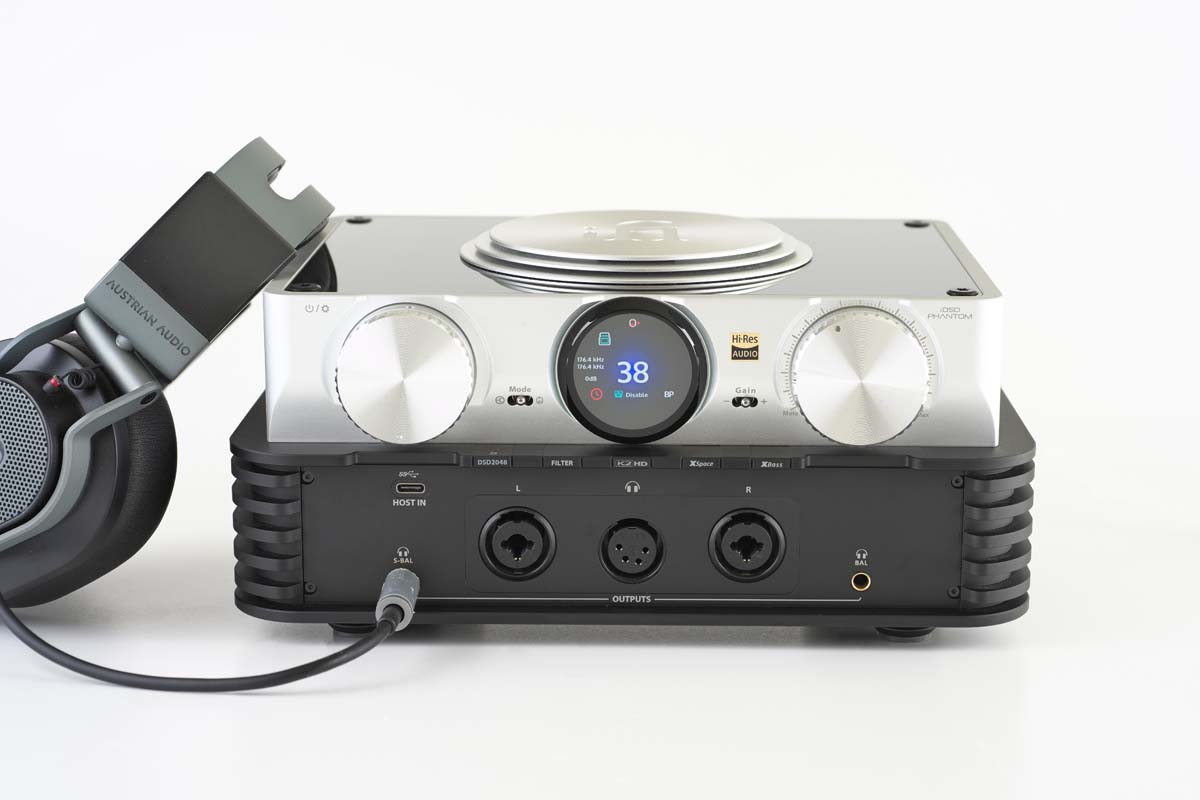
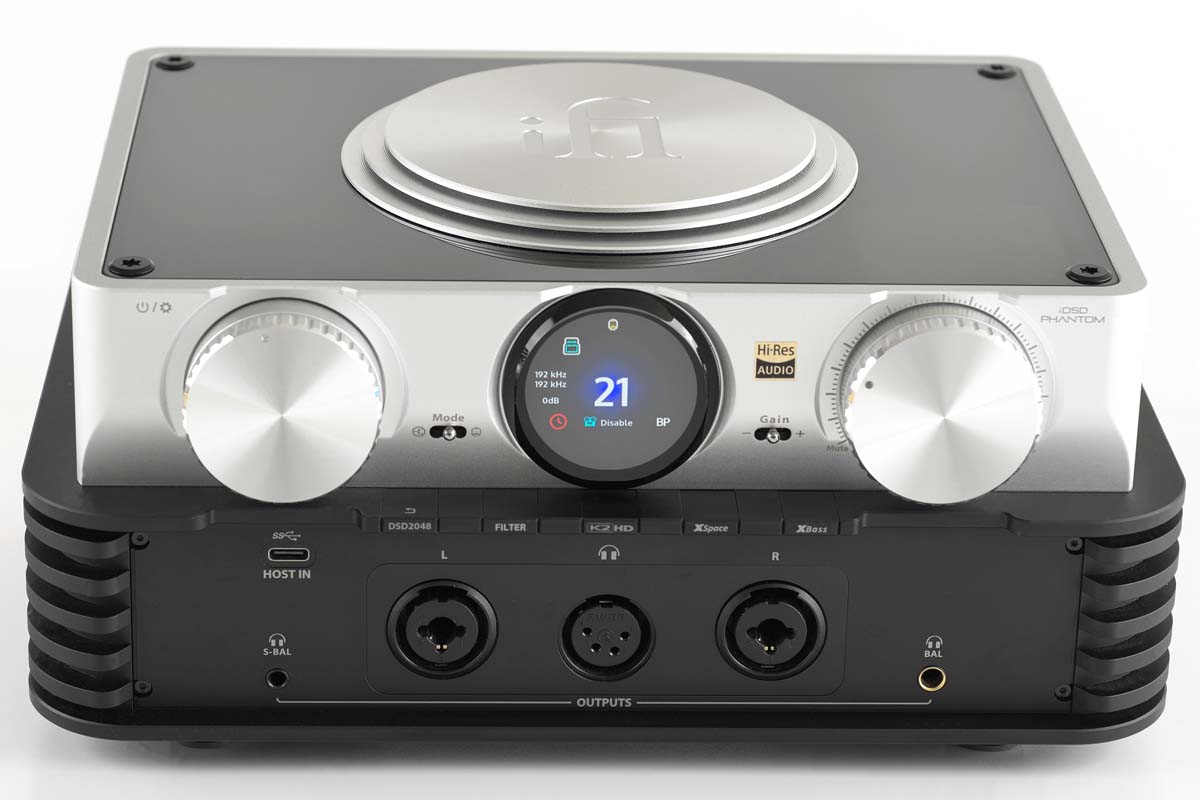
As mentioned earlier, the iDSD Phantom is also a headphone amplifier designed for demanding listeners. Appropriately, its front panel provides no fewer than five different headphone connections. Both balanced and unbalanced headphones can be accommodated, and the HPA has enough power to drive planar-magnetic designs as well. The miniature S-BAL jack is an iFi specialty, intended to let conventional unbalanced headphones benefit from the HPA’s fully balanced architecture. Given the difficulty of making a meaningful direct comparison, however, any resulting sonic advantage is hard to characterize.
In any case, tonal flexibility is the real star of the show with this component, which, like all iFi products, is manufactured in China. The XBass Pro and XSpace Pro functions operate entirely in the analog domain. XBass Pro offers three shelving filters that boost the bass starting at 10, 20, or 40Hz. Purists may recoil at the prospect of such tone-shaping, but listeners who want a little extra weight down low will find plenty to like. XSpace Pro is a crossfeed circuit designed to create a sense of depth through headphones more akin to listening to loudspeakers. And yes, it works rather well, although more sophisticated implementations are available.
A Formidable Streaming Engine
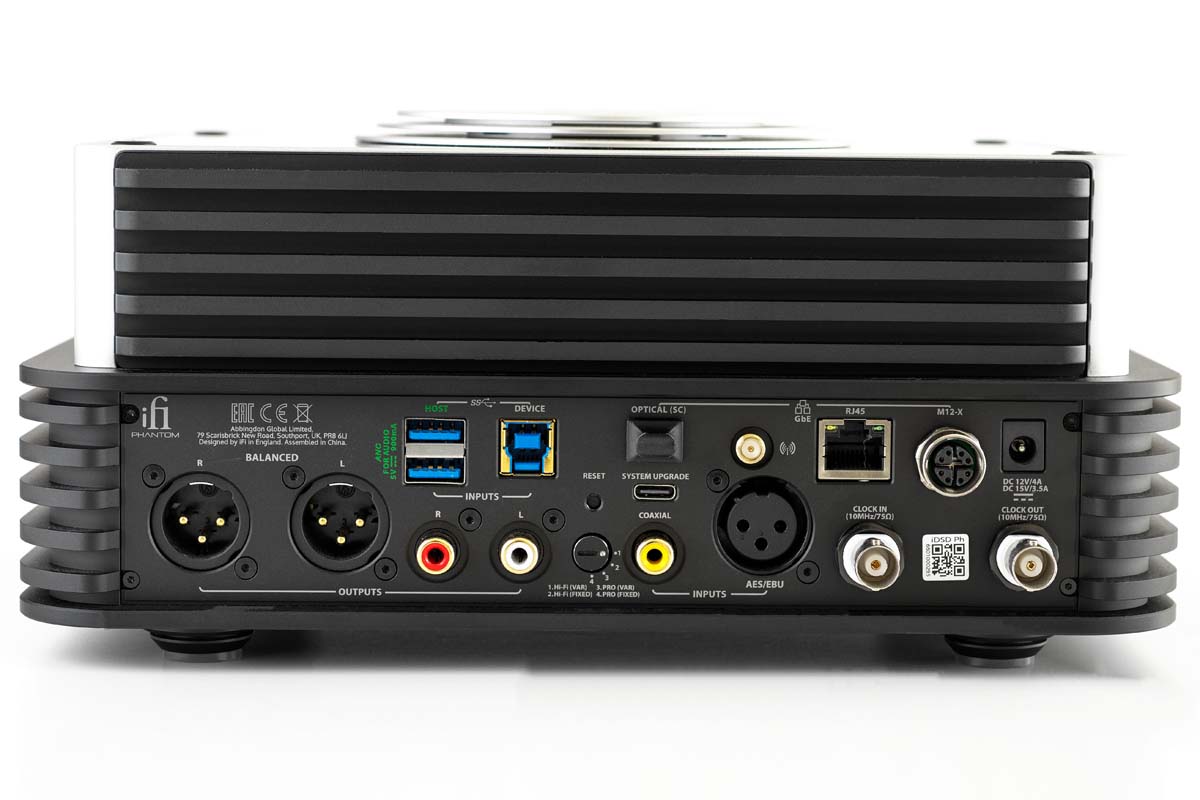
As if all of the above weren’t enough, the iDSD Phantom also features a completely redesigned streaming engine that supports the major services and technologies of the moment. It works with Qobuz, Tidal, and Spotify, as well as AirPlay 2, with native support for PCM up to 768kHz and DSD512. iFi’s excellent Nexis app provides access to NAS servers and external drives on the home network. To preserve signal integrity, the Ethernet, S/PDIF, and AES inputs are galvanically isolated. Exclusive Modes further help reduce potential interference by shutting down system processes that are not needed.
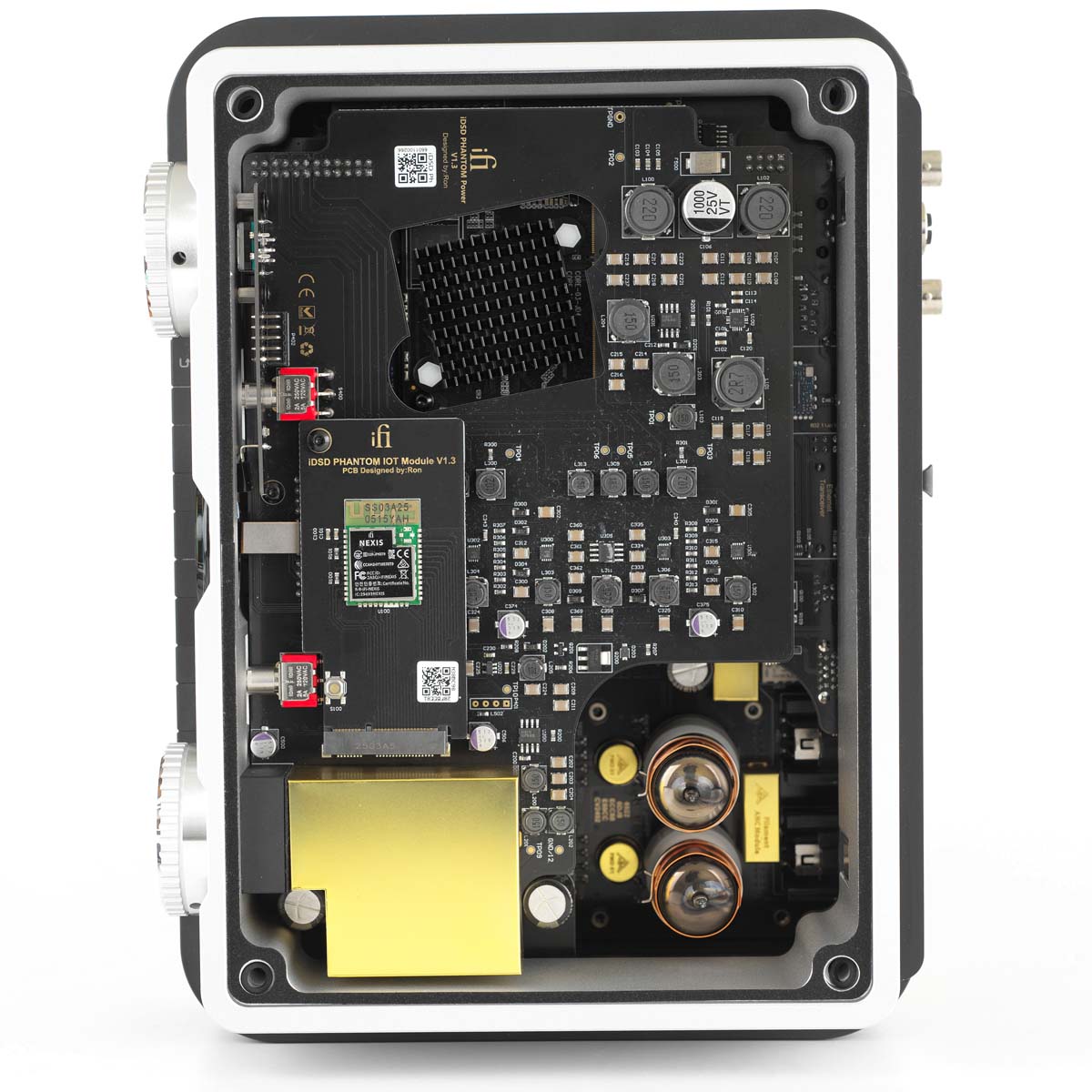
A final word on the iFi flagship’s construction: It is excellent. Particularly appealing is the smoked-glass top panel, which is easy to remove. It offers a glimpse of the meticulously laid-out internals and, more importantly, makes changing the tubes a remarkably simple task.
For the listening test, I chose a track that would allow me to explore the iDSD Phantom’s numerous sonic options: the magnificent instrumental piece “The Romantic Warrior,” from Return to Forever’s album Romantic Warrior, available only in 16-bit/44.1kHz resolution. I began by listening through my ultra-linear Austrian Audio Hi-X65 headphones, with the amplifier in Solid State mode and all other processing disabled. The HPA delivered a punchy, dynamic, direct sound with fine resolution. Compared with my Violectric V281, which receives the music from the iFi via XLR, the presentation seemed somewhat more constricted, with a slight loss of presence. Switching to Tube mode opened things up, producing an airy, spacious sound that, interestingly, remained much the same even through the Violectric. Tube+ made the presentation denser and warmer. To my ears, this mode is particularly flattering to vocals: Helene Bøkle’s voice on the wonderful “Dronning Fjellrose,” from the album Quiet Winter Night, took on an enticingly smoky quality. I listened to this track in its MQA edition and was pleased to find that the iDSD Phantom includes an MQA decoder.
But back to the romantic warrior. I stayed in Tube mode, this time activating DSD2048 remastering and K2HD as well. The resulting sound seemed, in its own distinctive way, even more open yet also fuller. The virtual space in which the band performs, for example, took on a greater sense of life. Stanley Clarke’s astonishingly virtuosic double bass now basked fully in the audiophile spotlight. At this point, the iDSD Phantom had pretty much won me over.
I fell completely under the spell of this formidable sonic powerhouse, however, when Al Di Meola launched into his solo, setting the strings of his Ovation ablaze. All traces of unpleasant digital character had vanished. The sound was unmistakably reminiscent of a master tape, and I extended the listening session with several more albums from the 1970s. Because I couldn’t get enough.
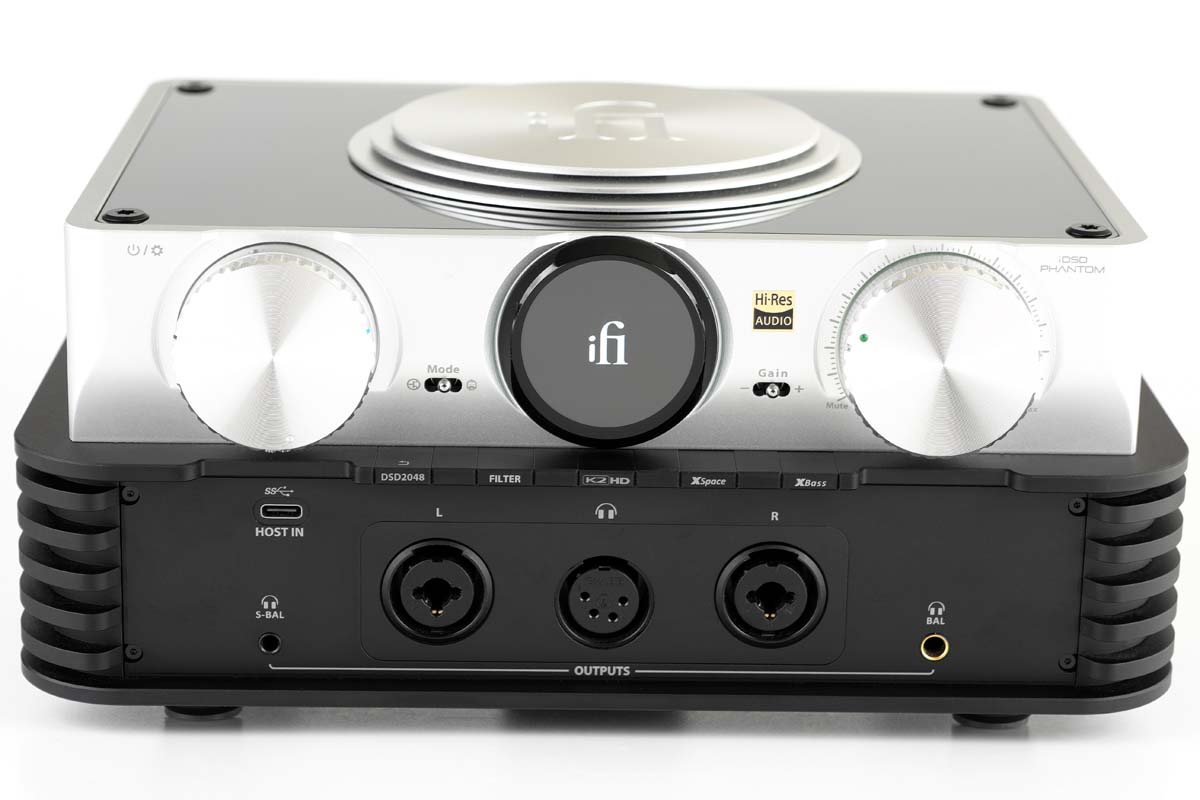
Network Player/DAC/Headphone Amplifier iFi iDSD Phantom
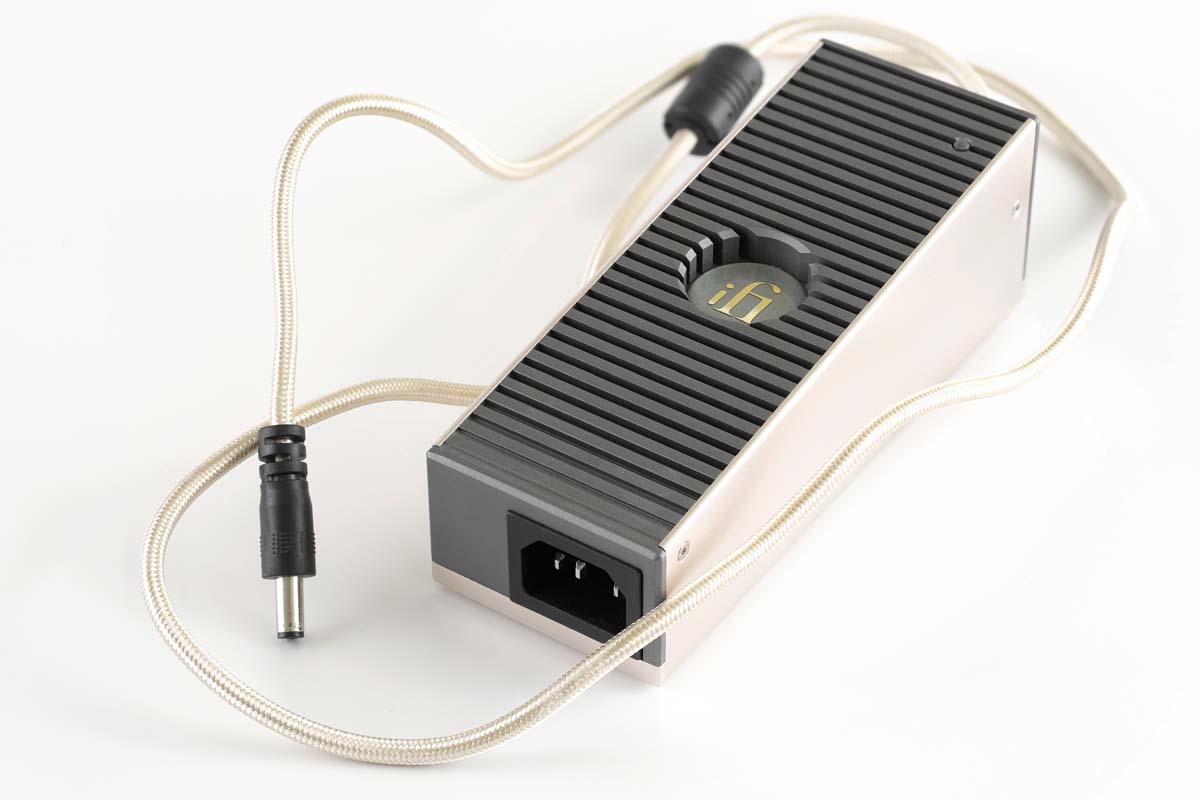
Concept: Network player with DAC, headphone amplifier, and multiple output stages | Inputs: 1 x AES/EBU, 1 x coaxial S/PDIF, 1 x RJ45, 1 x M12, 1 x optical SC, 1 x BNC (Sync In) | Outputs: 1 x balanced XLR, 1 x unbalanced RCA | Headphone outputs: 1 x 3.5mm stereo jack, 1 x 4.4mm Pentaconn, 1 x 6.3mm stereo jack (positive polarity), 1 x 6.3mm stereo jack (inverted polarity), 1 x balanced 4-pin XLR, 2 x balanced 3-pin XLR (left/right), 1 x USB-B (supports USB 3.2) for host computer | Networking: LAN, Wi-Fi, Bluetooth | Output stages: Selectable solid-state or tube (two operating modes) | Maximum resolution: 32-bit/768kHz (PCM), DSD512 (DSD2048 in remastering mode) | Formats: All common formats, including DSD256; MQA decoder | Streaming: AirPlay, Bluetooth, Roon, Spotify Connect, Tidal Connect, Qobuz Connect, DLNA/UPnP, USB storage media | Special features: Completely new design; quad-DAC architecture; direct, latency-free switching between output stages; DSD remastering; JVCKENWOOD K2/K2HD technology; filter-free DSD remastering; XBass Pro and XSpace Pro functions; galvanic isolation of Ethernet, AES, and S/PDIF inputs | Included accessories: 15V iPower Elite power supply, infrared remote control, Optibox, RCA cable, USB 3.0 Type-A-to-Type-B adapter cable, Wi-Fi antenna, SC-SC fiber-optic cable, quick-start guide | Finish: Silver/black aluminum | Dimensions (W/H/D): 19/26/12cm | Weight: 3.6kg | Warranty: 2 years | Price: Approximately €4,700
WOD Audio
Westendstraße 1a
61130 Nidderau
Germany
Phone: +49 6187 900077
info@wodaudio.de