
Ask jazz fans to name the most important jazz musician Germany has produced, and for decades the answer has been the same: Albert Mangelsdorff (1928–2005). He commanded the unqualified respect and affection of the jazz world.
Mangelsdorff was a tireless craftsman on his instrument, the trombone, practicing for hours in a Frankfurt jazz cellar or out in a cornfield. He was a man without enemies: unassuming, collegial, approachable – and possessed of that warm Hessian accent. He was honored as the world’s finest jazz trombonist and as Europe’s greatest jazz musician, awarded Germany’s Order of Merit and the Hessian Order of Merit. But to his fans, he was simply “Albert,” “our Albert.” “You could call him, say hello to him on the street, shake his hand, pat him on the shoulder” – that was how Wolfgang Sandner described Mangelsdorff’s accessibility.
Yet as an artist, he was anything but a populist. His music was always bold, forward-looking, challenging. At first, he revered the experimental, uncompromising cool jazz of the Tristano school. Then, in 1958 by his own account, he realized that jazz was about developing something of one’s own. Mangelsdorff became a German pioneer of modal playing, solo performance, duo playing, free jazz, and jazz-rock. His use of multiphonics on the trombone was unique and sensational. He recorded unaccompanied trombone solos and performed with musicians such as Peter Brötzmann and Elvin Jones. An avant-gardist through and through. A revolutionary.
In any discussion of his music, the focus is almost invariably on his trombone artistry: his astonishing command of the instrument, his virtuoso speed, his fluid intervals, his warm, dark tone, his ominous, hard-driving multiphonics. Mangelsdorff, the composer, on the other hand, doesn’t get anywhere near the attention he deserves. Yet his musical development unfolded through his compositions and themes as well. Pieces such as “Tension,” “Set ’Em Up,” and “Open Mind” (all from around 1963) precisely marked the transition from cool-jazz melody to the shorthand-like themes of free jazz. Out of this fascinating mixture emerged an aesthetic entirely his own.
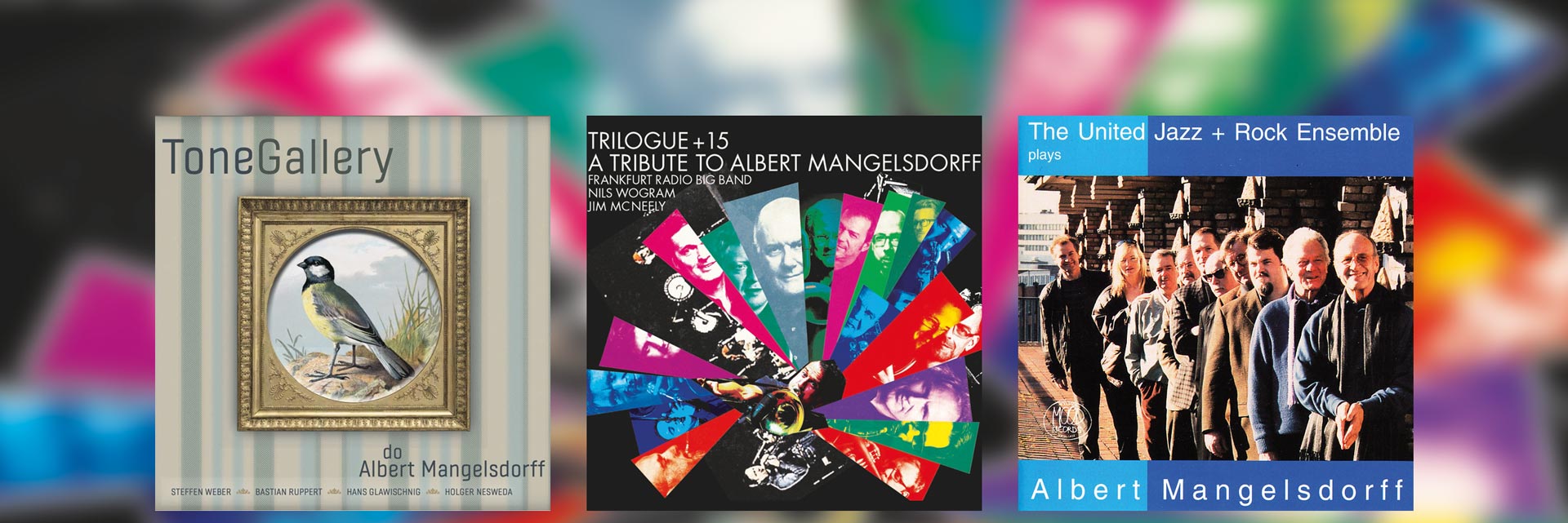
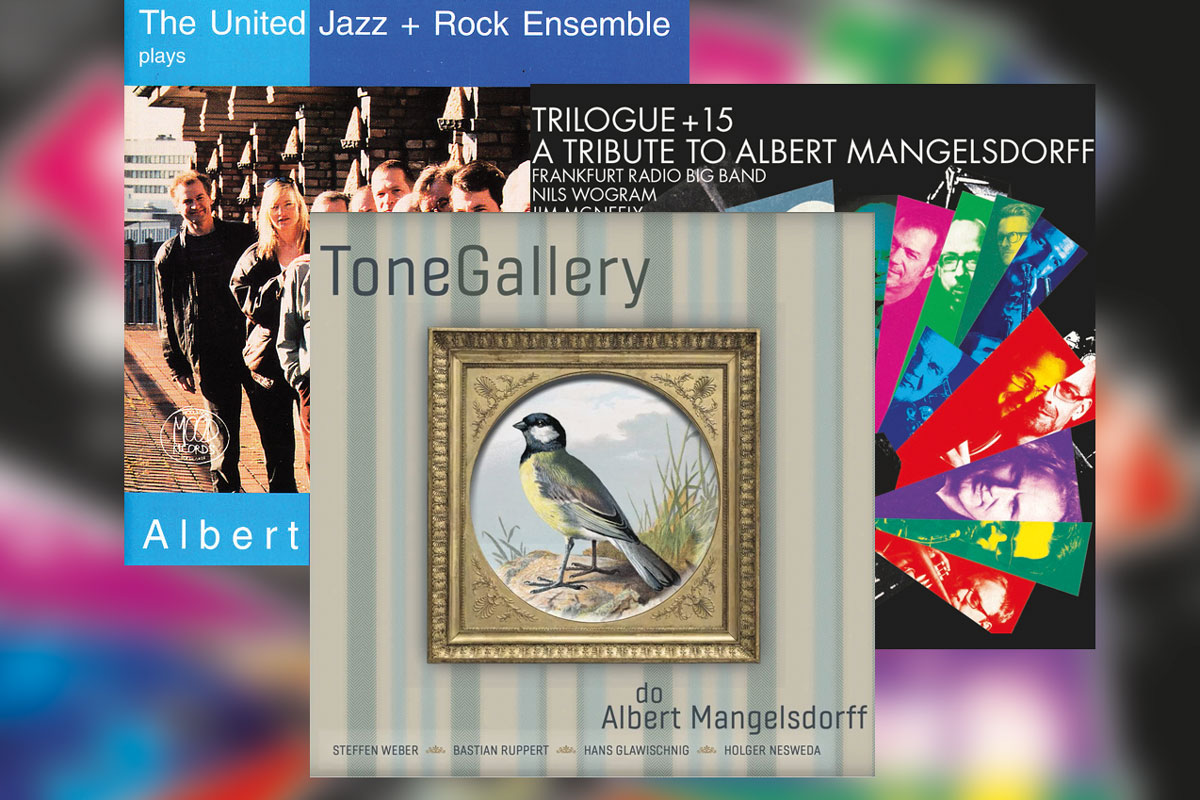
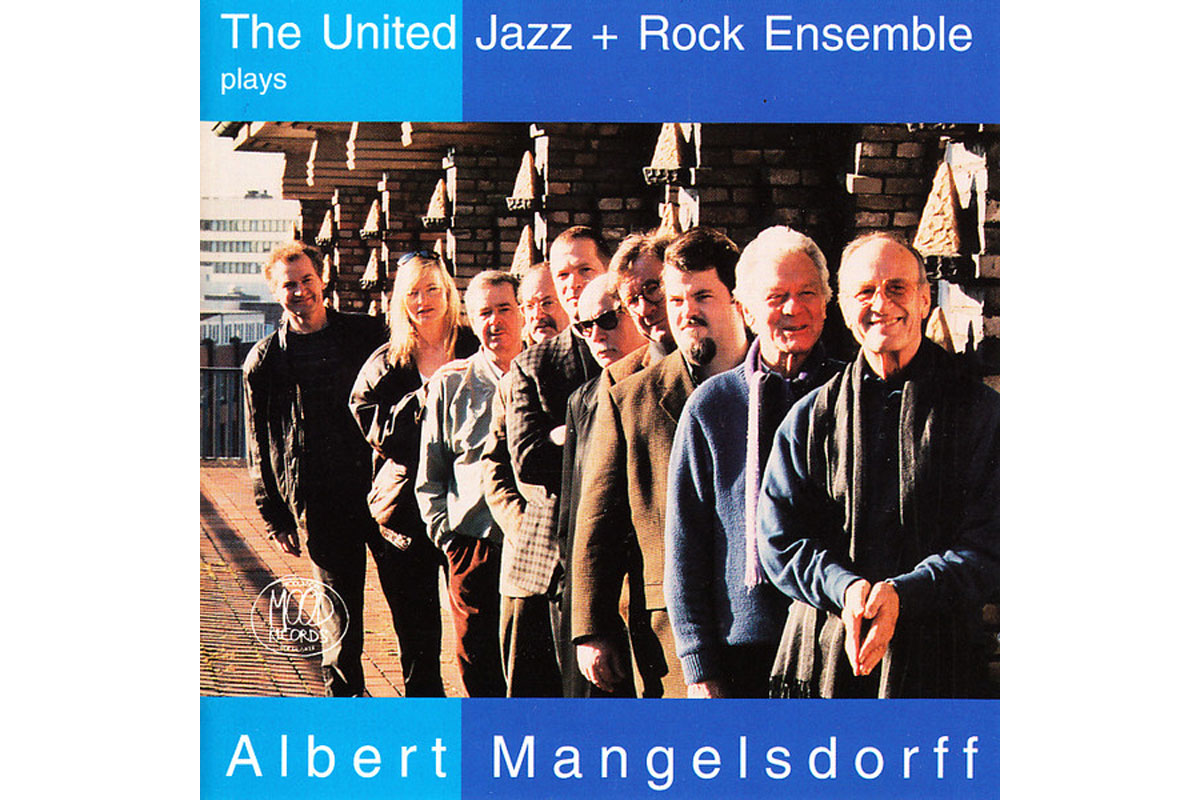
One ensemble with which Mangelsdorff recorded some of his finest pieces was the United Jazz & Rock Ensemble (UJRE). For his 70th birthday, the group released the compilation Plays Albert Mangelsdorff (Mood Records, 1998), featuring eight of his compositions drawn from six original UJRE albums.
The pieces vary widely in character, but the compositional pattern is unmistakable. A typical Mangelsdorff theme is an awkward, densely packed conglomeration of fragments – boppish or straight-ahead phrases punctuated by long pauses or chordal sonorities. Blues figures, riff-like passages, or sequences of unconventional intervals may also appear. One senses that these jagged, internally contradictory themes are the product of many hours of work – hours spent practicing and improvising on the instrument. They are condensations, surreal puzzles. Their titles include “Wart G’Schwind,” “Rip Off,” “Raving Raven,” and “Sparrhärmlingslied.”
A few years ago, the saxophonist Steffen Weber’s quartet ToneGallery lovingly rearranged eleven of Mangelsdorff’s pieces for Do Albert Mangelsdorff (Laika, 2022).
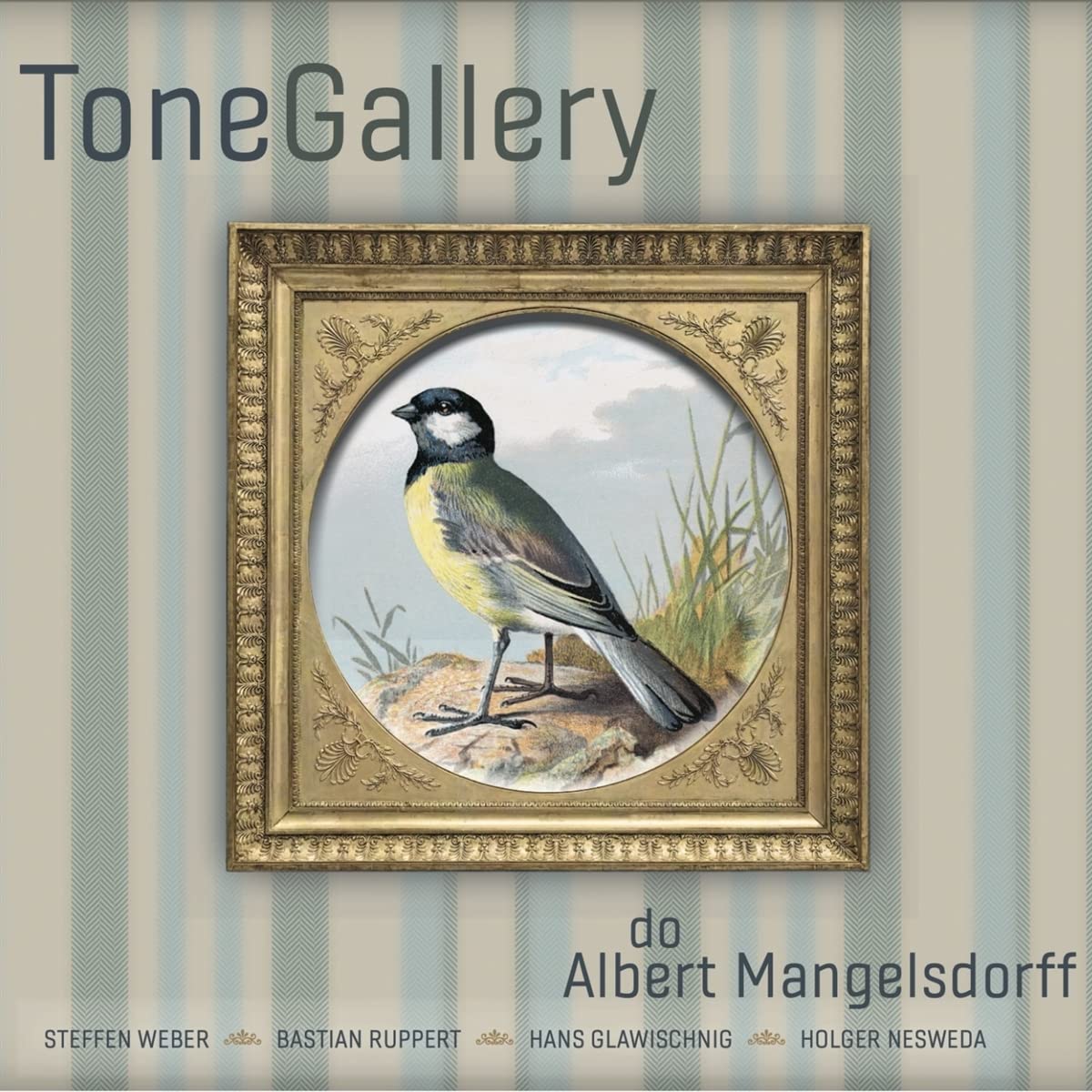
To place the compositional substance front and center, the band deliberately dispenses with the trombone: “This gives us a new perspective on the music.” The arrangements sometimes take the pieces apart, isolate individual sections, and develop them further – all within a cool chamber-jazz sound. Mangelsdorff’s compositions – including “Wart G’Schwind,” “Rip Off,” and “Ant Stepped On An Elephant’s Toe” – can withstand such dissection. Indeed, it is precisely through their dissolution that their density becomes apparent.
A particularly remarkable Mangelsdorff album was recorded live in Berlin in 1976: Trilogue. At the time, the trombonist was performing in a trio with two virtuoso fusion musicians, Jaco Pastorius and Alphonse Mouzon. Now, on its 50th anniversary, the entire album has received an ambitious reimagining: Trilogue + 15 (Nwog, 2026; recorded 2018).
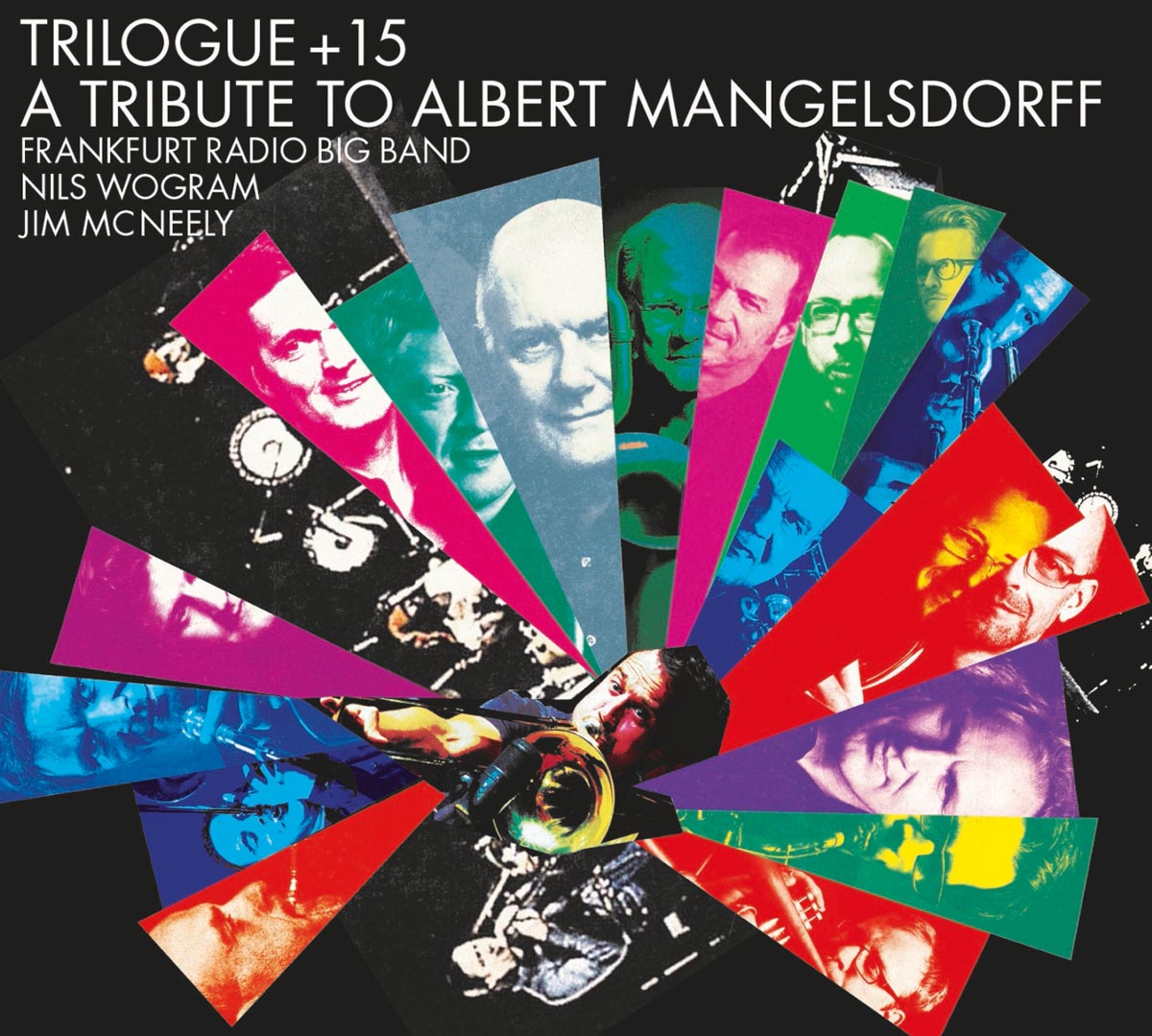
Arranger Jim McNeely has taken the five Mangelsdorff compositions from the original album and reworked them for the Hessischer Rundfunk Big Band – or, better yet, transformed, reshaped, and unfolded them. The inspiration lies within the compact, contradictory pieces themselves, including “Trilogue,” “Zores Mores,” and “Ant Stepped On An Elephant’s Toe.” At the center as soloist is the magnificent Nils Wogram on trombone. Here, he steps into Mangelsdorff’s role – and then steps back out of it. (As an encore, he performs one of Mangelsdorff’s solo pieces.)