
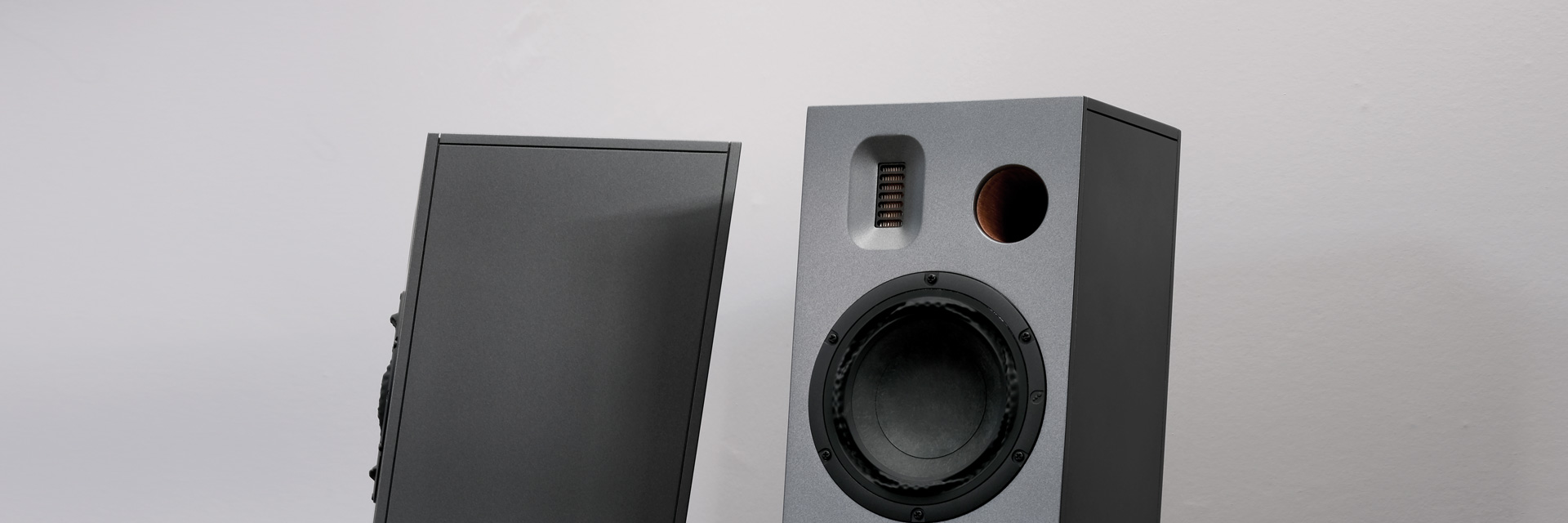
Spanish joie de vivre and consummate craftsmanship meet cutting-edge technology in an elegant package: The Andalusian loudspeaker maker Kroma Atelier succeeds in combining state-of-the-art components with elements of traditional guitar-making artistry.
Granada, the capital of Andalusia, has a turbulent medieval history and is a melting pot of diverse cultures. Alongside its architectural masterpieces, expressions of Spanish joie de vivre that come to mind include flamenco and tapas accompanied by the finest fino sherry. Closely associated with flamenco is the art of guitar making, which developed in Granada during the 19th century and went on to achieve worldwide renown. This brings me closer to the subject at hand: Until now, I had never considered the city a home for a high-end loudspeaker manufacturer, even though Kroma Atelier has been operating there for more than 20 years.
The stated goal of the company’s development work is to create loudspeakers capable of reproducing the experience of live music. The portfolio comprises three product lines, all of which are voiced with the assistance of an experienced master guitar maker. For this review, we requested the smallest model, the Mimi, a compact speaker from the Classic series, named after the female lead in Giacomo Puccini’s opera La Bohème. Thomas Schlipper, owner and designer of the Neuss-based Subbase Audio Manufaktur, is the exclusive German distributor of the Spanish loudspeakers. At this year’s Analog Forum in Moers, he demonstrated that uncompromising sound quality is achievable even with small-format components. The two-way Mimi delivered a remarkably impressive performance in every respect. A few weeks later, Thomas Schlipper brought the speakers and their stands to my home. Together, we installed the standmount monitors in my listening room. Thanks to his familiarity with the Mimi and my knowledge of the room’s acoustic characteristics, the process took only a few minutes. To give the review samples the best possible foundation, we placed them on Subbase equipment platforms and feet.
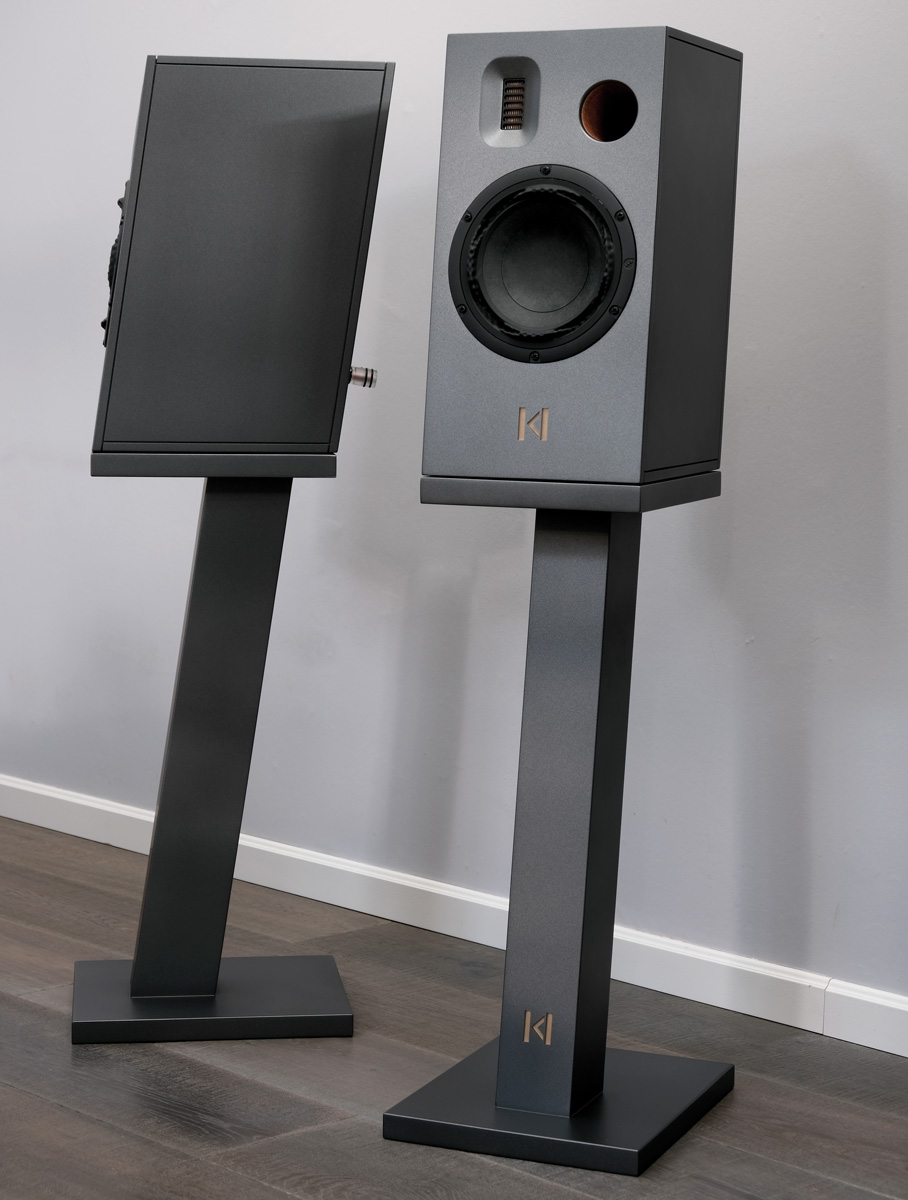
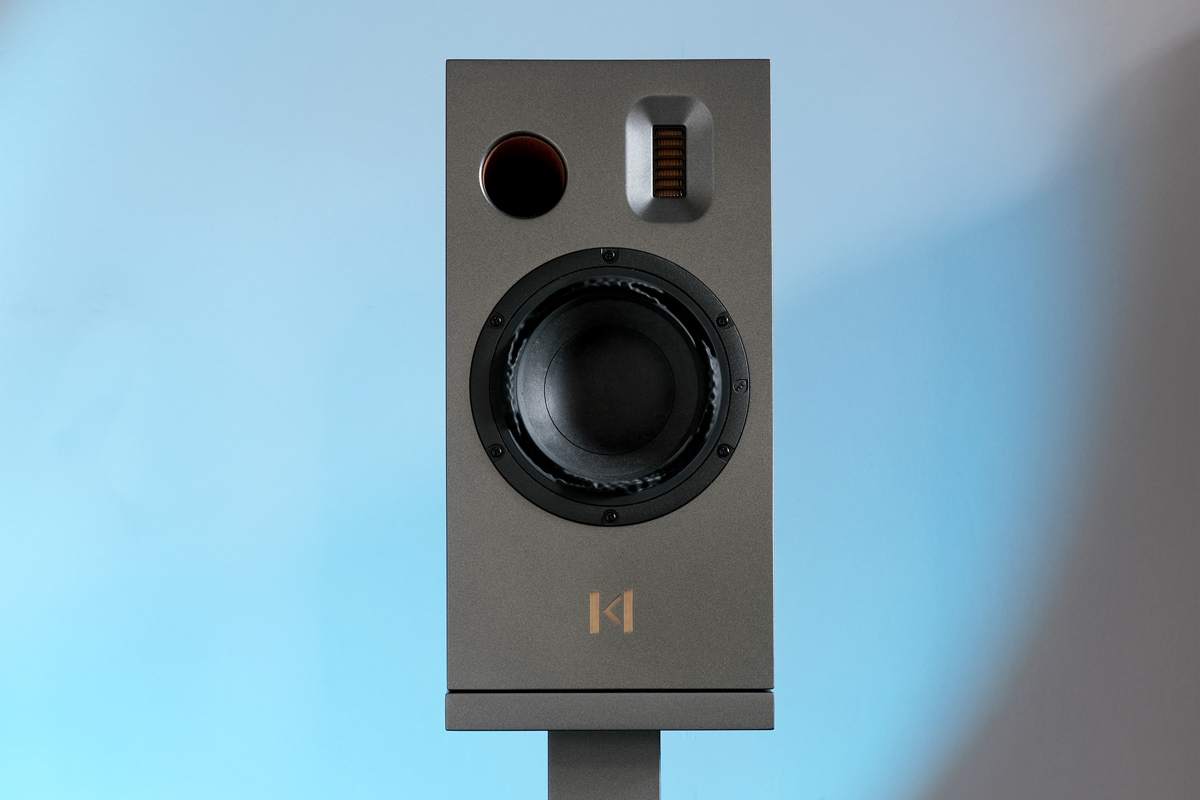
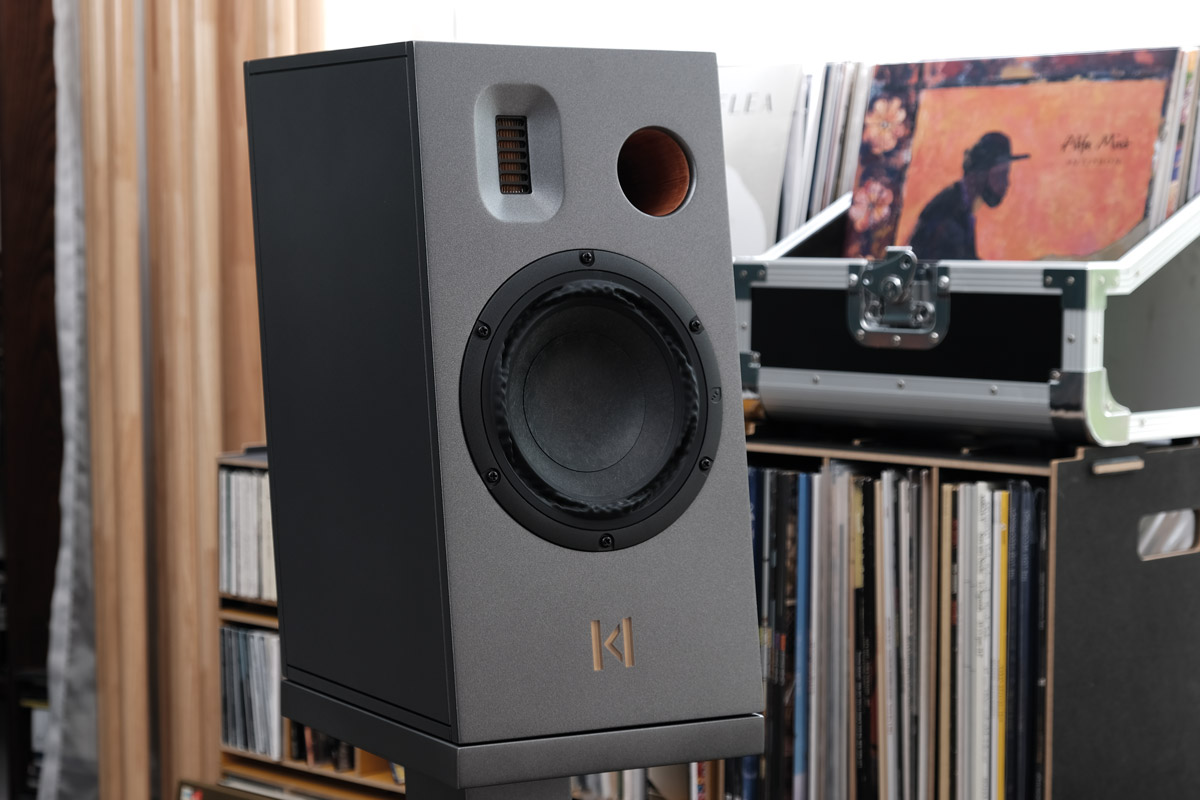
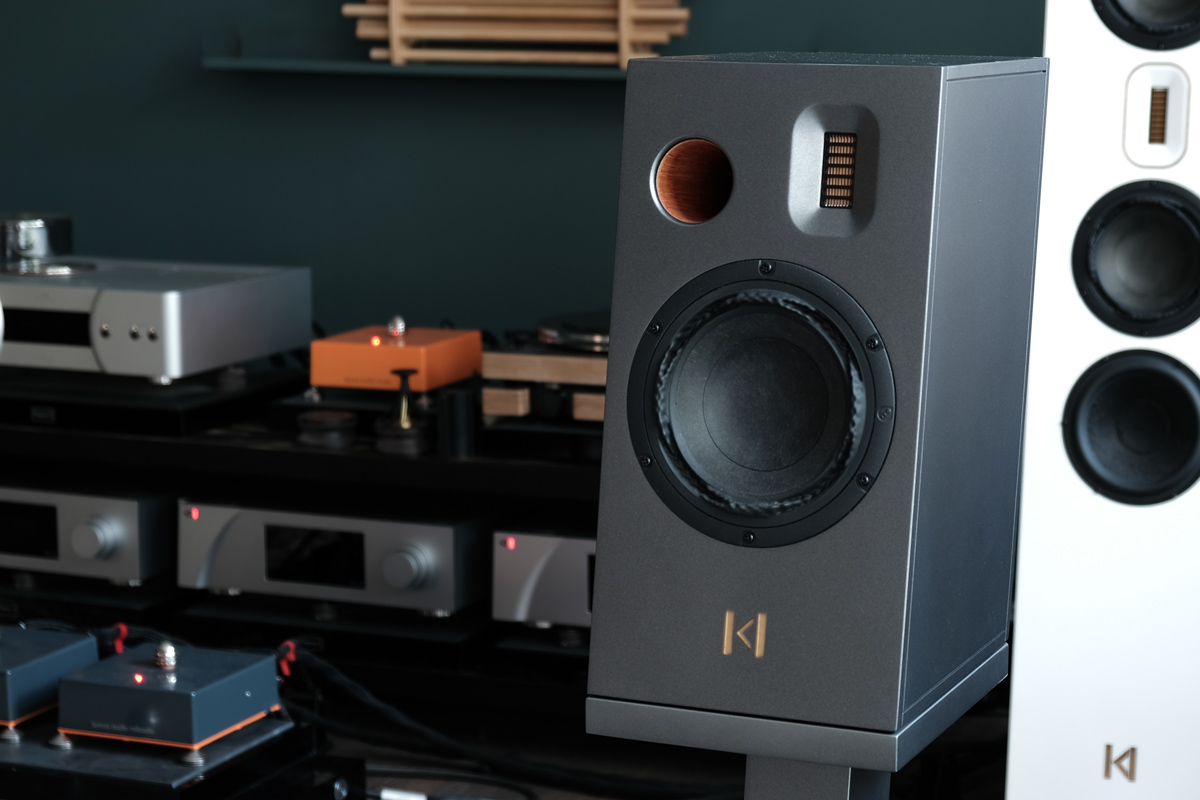
At first glance, the speaker follows a familiar, well-proven design principle: a rectangular two-way enclosure, a midbass driver augmented by a bass-reflex system, and a tweeter with a crossover frequency above the vocal range (at approximately 3 kHz). That’s where the similarities with most of its peers end. The most immediately noticeable feature is the approximately seven-degree backward inclination of the front and rear panels. This gives the side panels a trapezoidal shape. The stand follows the same angle, lending the entire assembly an elegant, streamlined appearance. The cabinet proportions are exceptionally well judged, and the positioning of the drivers and reflex port is equally successful from an aesthetic standpoint. Sophisticated details, such as the shadow gaps at the cabinet panel joints and the flawlessly executed routing of the front baffle, reinforce the overall impression. The Kroma logo, set against a matte-gold background, and the Mimi insignia on the rear panel are beautifully rendered. Combined with the silky, satin-like sheen of the special “Magnetic Silver” finish on our review sample and the bass-reflex port turned from solid acacia wood, the result is remarkably refined. Or to put more simply: The Mimi is drop-dead gorgeous! A wide range of color and surface combinations is available, so prospective buyers should have little trouble finding a version to suit their taste.
Kroma Atelier also takes an unconventional approach to material selection. The cabinet material, Krion, is a composite of acrylic resin (PMMA) and a natural mineral component (aluminum trihydrate), with a relatively high density of 1.75 kg/dm³. For comparison, MDF, the standard material in loudspeaker construction, weighs an average of just 0.5 kg/dm³. One established way of preventing sound energy from inside a loudspeaker from escaping through the cabinet walls and causing coloration is to employ mass – in other words, heavy panels. Thanks to the high density of the Krion panels, wall thickness could be reduced to just ten millimeters, resulting in greater internal volume without changing the cabinet’s external dimensions. The bass driver, in particular, benefits from this, rewarding the designer with a lower cutoff frequency and greater output. This is an especially important consideration when designing small stand-mount monitors.
Another advantage of Krion is its excellent resonance-damping behavior within the relevant frequency range. Its mechanical and chemical durability also makes the speaker exceptionally well suited to everyday use. Although the manufacturing process is demanding, it allows for extremely precise components with tight tolerances. The cabinet panels are bonded using a virtually identical material, creating a homogeneous structure. My impression is that Kroma Atelier has selected a material that comes remarkably close to ideal. The construction is complemented by solid-wood components, such as the bass-reflex tubes, each of which is individually tuned for the speaker by an experienced master guitar maker. Apart from the driver baskets and electrical components, no metal parts are used. Even the drivers are secured with plastic screws, tightened to precisely specified torque using a torque wrench. According to the manufacturer, metal components would introduce undesirable resonance behavior. The stands, which in my view are essential to the overall design, are also made of Krion.
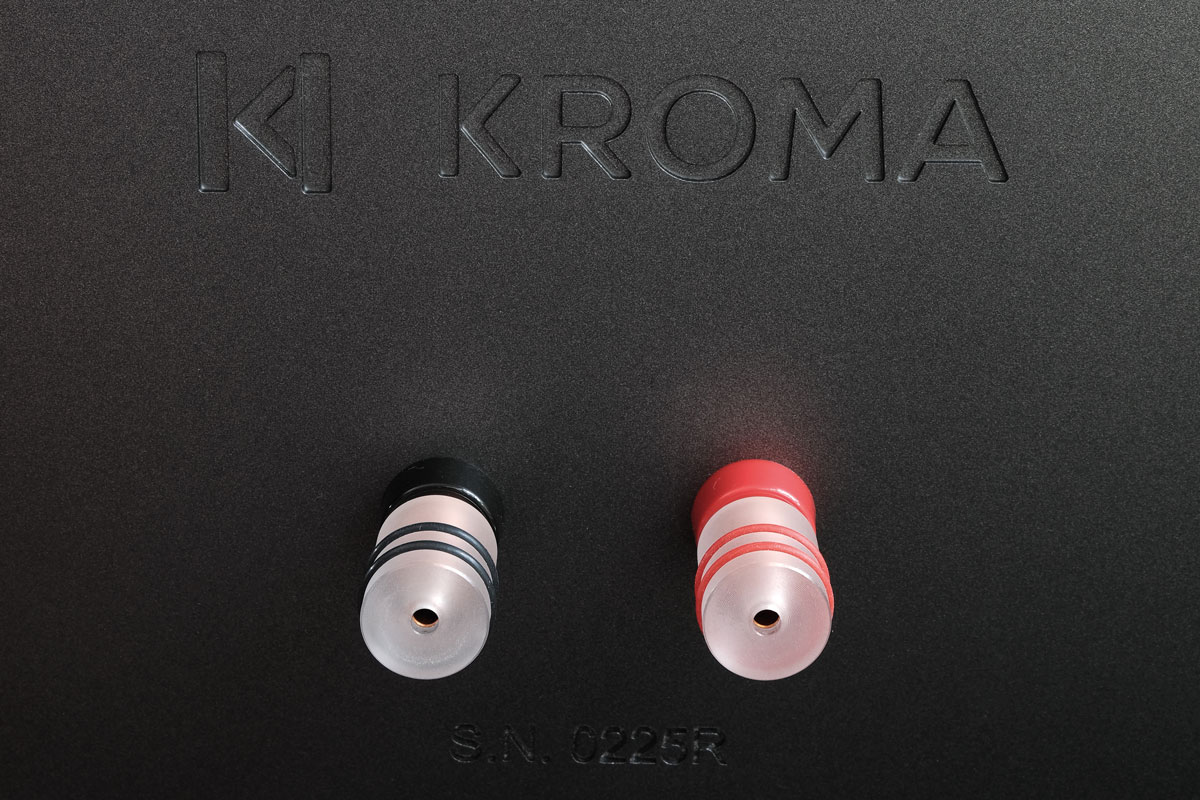
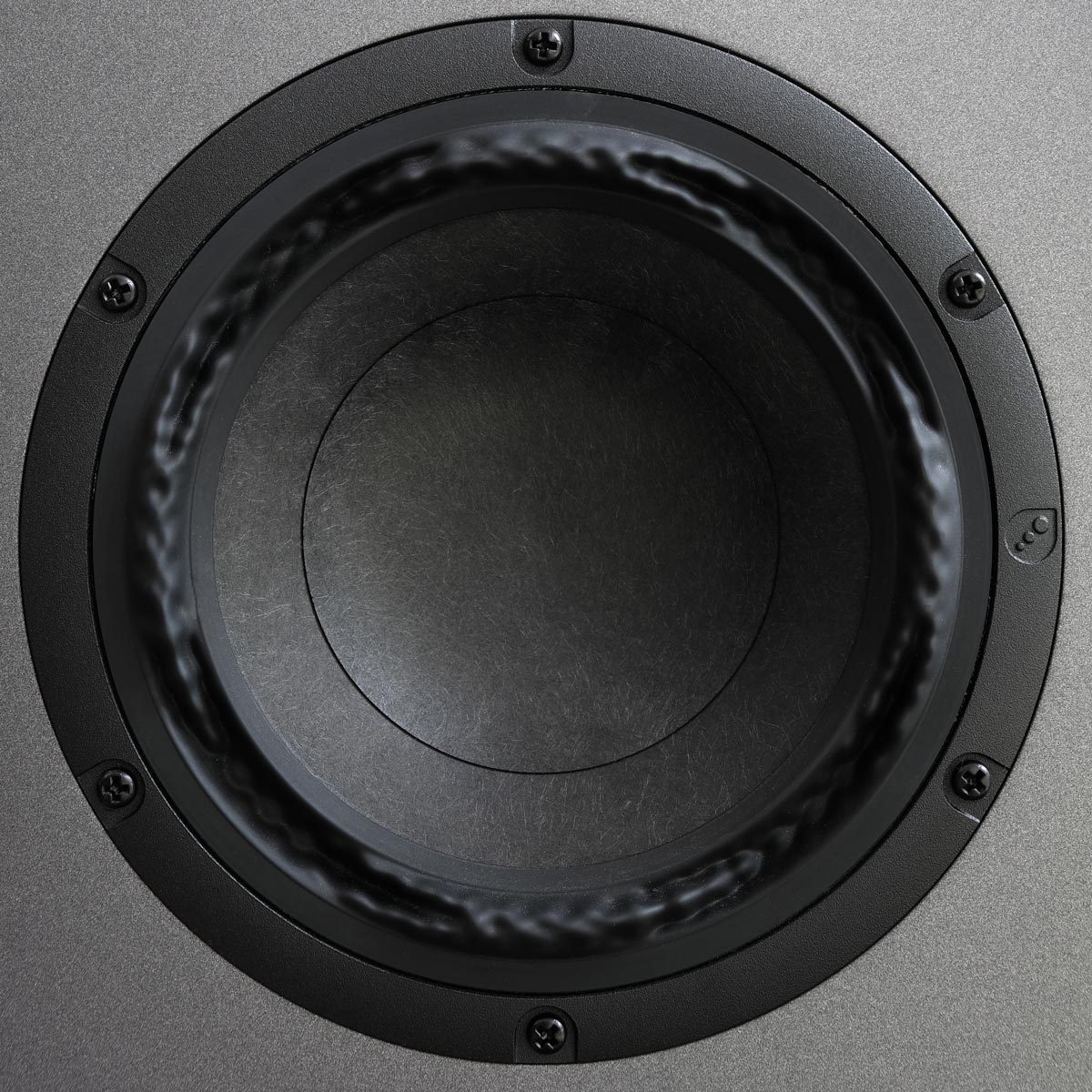
The drivers and crossover components are uncompromisingly top-tier. The exotic appearance of its surround immediately gives the midbass driver away as a member of the exceedingly prestigious Purifi family, which has apparently become a favorite among manufacturers at the very top of the market, and for good reason. The Mimi employs the 16.5-centimeter version, fitted with a paper-fiber composite cone. Above the crossover point of just under 3 kHz, an equally capable Mundorf AMT tweeter takes over. Its dispersion characteristics are optimized by a waveguide seamlessly integrated into the front baffle. Mundorf also supplies the single-wire input terminals and most of the crossover components, supplemented by other premium parts, Thomas Schlipper explains.
Of course, most of us are well aware that exquisite materials and the most expensive drivers and crossover components don’t automatically result in an outstanding loudspeaker. I would compare the situation to fine dining: Only in the hands of a skilled chef do premium ingredients truly come into their own. The same applies to loudspeaker design. Technical expertise is indispensable, but fine-tuning by ear is equally important. In this respect, Kroma Atelier’s collaboration with a master guitar maker makes perfect sense. And, as I can reveal in advance, it has led to an extraordinary result.
The review samples had already been well broken in, but I gave them another two days, making a few minor positioning adjustments of just a few centimeters before settling down to some serious listening. From the outset, two characteristics of these loudspeakers left me genuinely astonished. How could such tiny boxes produce bass with this much depth and authority? Although “authority” is perhaps a better description than simply saying the bass hit hard. The low frequencies were delivered with definition and speed, never sounding lean or anemic, but instead full-bodied and satisfyingly substantial without ever becoming excessive. The second sensational quality was the complete disappearance of the speakers as sound sources, combined with a level of three-dimensionality that set a new benchmark. To put it colloquially, I was absolutely flabbergasted. Every now and then, I had the impression that the focus on individual sonic events was not rendered with quite the ultimate degree of precision. This did not necessarily detract from the listening experience, however. Quite the opposite: It contributed to a cohesive, integrated presentation of the musical performance as a whole. The expectations raised by these promising first impressions were fully borne out during my more focused listening sessions.
Joaquín Rodrigo’s Concierto de Aranjuez struck me as an appropriate musical starting point. The recording I chose features Pepe Romero with the Academy of St Martin in the Fields under Sir Neville Marriner. It was recorded in 1992 at Watford Town Hall in London. Through the pair of Mimis, the solo guitar sounds perfectly balanced. The sounds of fingers moving across the fretboard and the instrument’s wooden body are clearly audible, yet never distract from the soloist’s virtuoso performance, which is organically integrated into the spaciously layered orchestral presentation. Every instrument is effortlessly and unmistakably located in space. Their individual tonal colors also sound natural and uncolored. I find myself completely immersed in the emotional power of this masterpiece, with the music filling my listening room. The orchestra sounds so open and so completely detached from the speakers that I never feel as though I am listening to a recording rather than a live performance.
This masterpiece has been interpreted and adapted by countless artists, and I have at least five different versions in my collection. Among the best known are Jim Hall’s Concierto and Miles Davis’s Sketches of Spain. Inspired in turn by this work, Wolfgang Haffner offers his own interpretation on Kind of Spain. I frequently use this ACT release for reviewing because of its excellent recording quality. And once again, I find myself sitting in front of my system in considerable disbelief. What reaches my ears borders on perfection. The exceptionally three-dimensional soundstage, the preservation of instrumental proportions, the differentiation of the finest dynamic gradations, and the sheer authenticity of the tonal colors are all remarkable. I am particularly impressed by the substantial bass performance. The double bass has exactly the right combination of woody, earthy texture and generous weight. The bass drum strikes an ideal balance between attack and impact. And all of this comes from a cabinet with a gross volume of barely 20 liters. The midrange and treble are every bit as impressive. Haffner’s brushwork on snare and cymbals is reproduced with exquisite delicacy, yet retains a convincing sense of body. The little speakers’ remarkable composure in the bass prompted me to put on Rhythm Collision by Ruts DC as a final test. What can I say? That’s exactly how it should groove and rock!
The Kroma Atelier team has succeeded in creating a compact monitor that delivers an almost perfect musical experience in every respect, even in small to medium-sized rooms. Even the often-heard call for subwoofer support when using small monitors falls on deaf ears here … The fact that the Mimi is also an exceptionally distinctive and attractive piece of design makes the package complete.
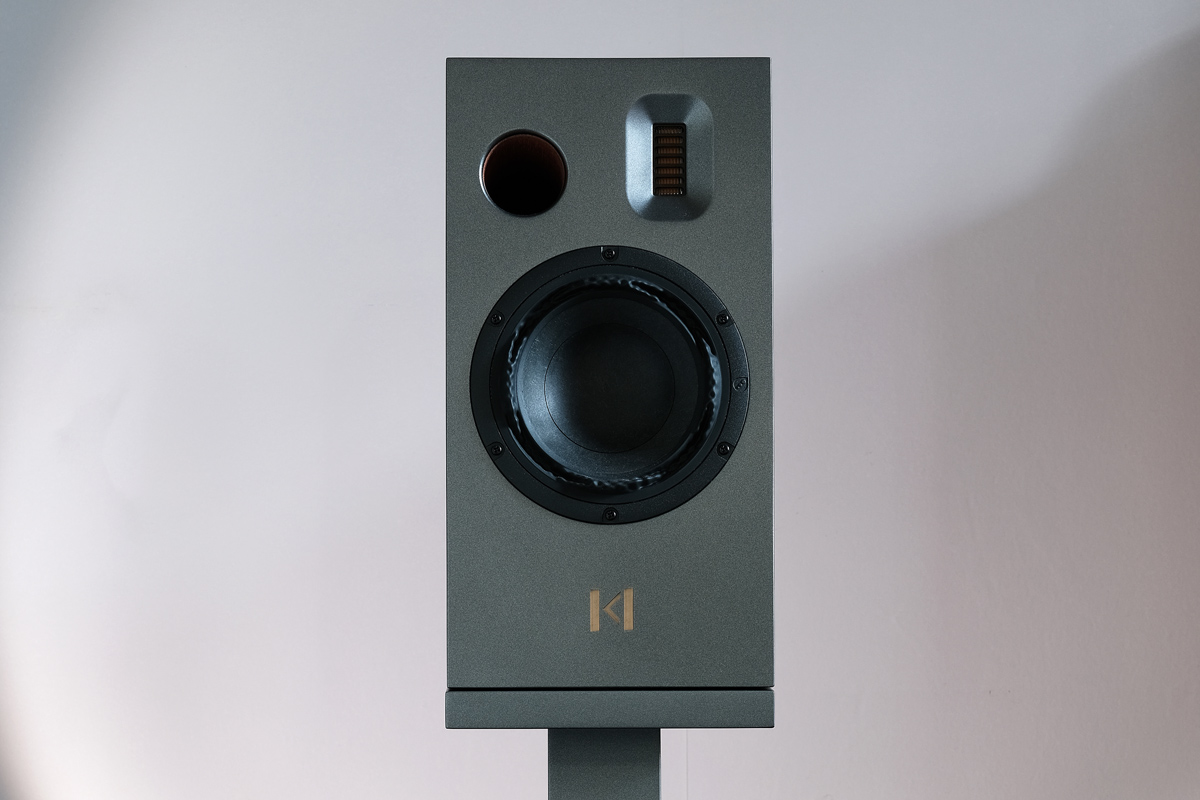
Loudspeaker Kroma Atelier Mimi
Design: Two-way compact loudspeaker in a bass-reflex enclosure | Drivers: Midbass: 1 x 16.5 cm paper-fiber composite cone (Purifi); treble: 1 x AMT, 75 x 55 mm (Mundorf) | Frequency response: 31 Hz to 25 kHz | Impedance: 4 Ω | Sensitivity: 88 dB | Recommended amplifier power: 30 to 300 W | Finishes: Krion cabinet in white, black, light gray, dark gray, light blue, dark blue, red, or mocha (standard versions); side-panel options in titanium, aluminum, champagne, black carbon, or walnut; special “Aston Martin” finishes in Supernova Red, Buckinghamshire Green, Seychelles Blue, Magnetic Silver, Magneto Bronze, and Black (at additional cost); Vacas Art Special Edition with side-panel artwork by Spanish artist Juan Pablo Vacas | Included accessories: Protective covers, spikes, shipping crate | Dimensions (W/H/D): 21/40/25 cm; with stand: 25/104/29 cm | Weight: 13.7 kg; stand: 11 kg | Warranty: 2 years (10 years after registration) | Price per pair: approximately €13,200 (special finishes on request); stands approximately €3,590
Subbase Audio Manufaktur
Gut Vellbrüggen 7
41469 Neuss
Phone +49 178 3410431
info@subbase-audio.de