
High-end legend Paul McGowan wants to prove himself one more time. He is putting his name behind PS Audio’s new top-of-the-line components. Let’s hear it for an exceptional DAC!
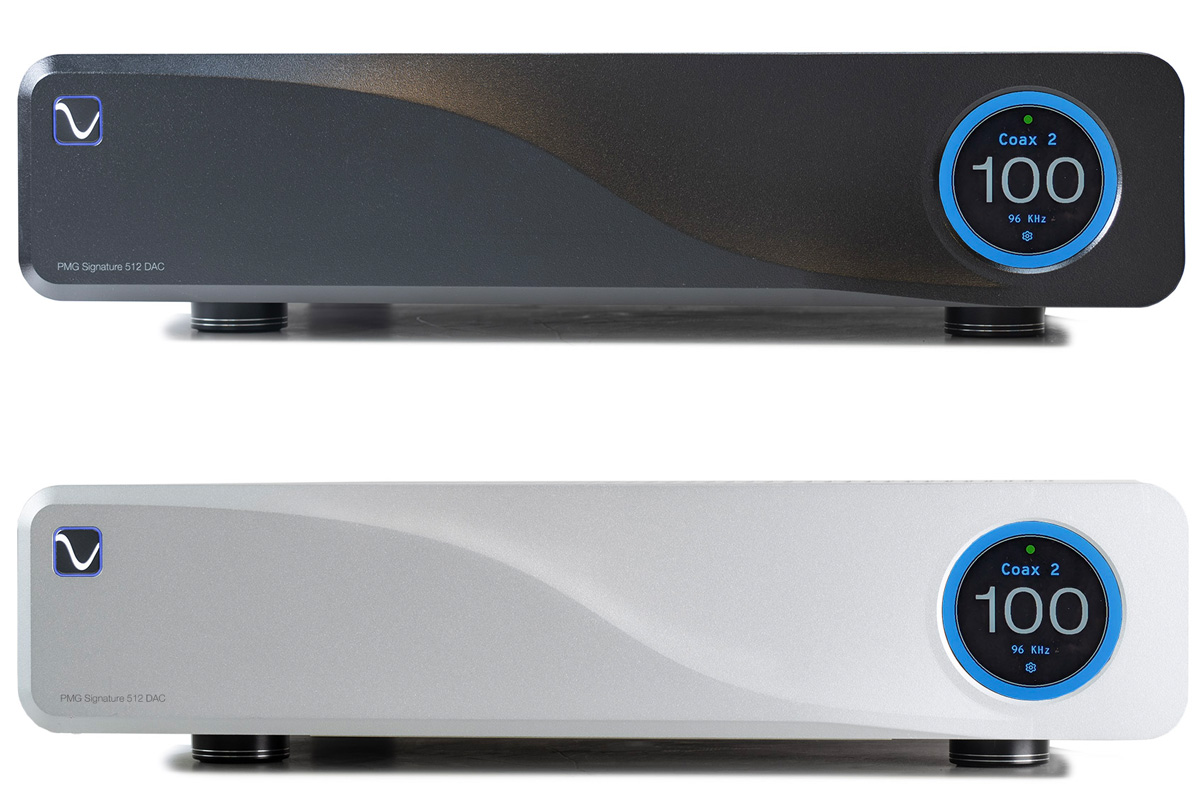
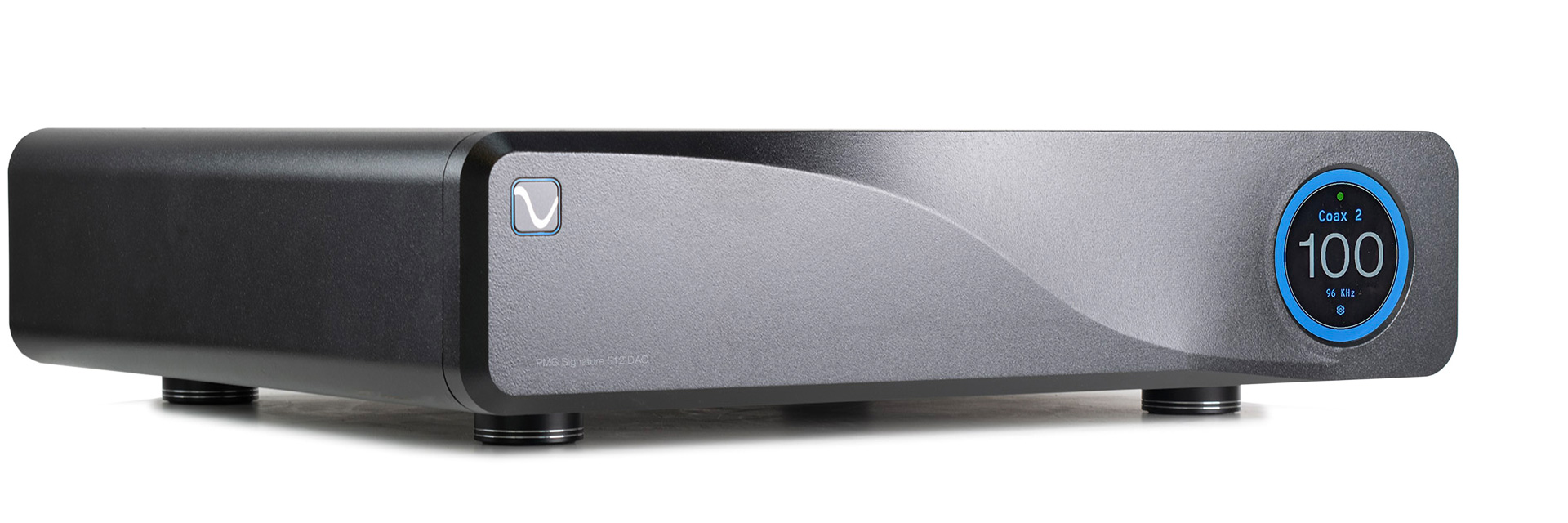
So many good things to report! PS Audio has introduced the PS Audio PMG Signature 512 DAC, a new D/A converter. Despite its flagship status, it doesn’t carry a five-figure price tag. In fact, it isn’t simply a converter at all, but a streaming DAC with analog volume control. And, to top it all off, it looks absolutely gorgeous.
What makes it special in the eyes of its creators is reflected in the name PS Audio PMG Signature 512 DAC. First, there are the three letters PMG. They are the initials of the man who founded PS Audio 53 years ago: Paul McGowan. He can look back on a body of work that would easily be enough for several people. He has more than earned the right to have the new top-of-the-line series bear his name. No, he explains, he did not develop any of the components himself. But he did specify and approve the voicing. That’s what makes the new reference class a personal statement.
The second indication that there is something remarkable here is the number in the DAC’s name: 512. The converter upsamples everything fed digitally into one of its numerous inputs to this multiple of the standard sampling frequency of the CD format. The multiplication results in 22.5792 megahertz. Exactly – that is no longer a PCM format. The DAC operates internally with a DSD data stream. So the upsampling is simultaneously a format conversion. What’s the point, you ask? To generate an analog signal from DSD, you need the simplest conceivable “converter” – namely, nothing more than an analog low-pass filter. This is a greatly simplified explanation, but fundamentally it’s precisely this elegance that inspires designers to escape the eternal “R2R vs. delta-sigma” duel between converter technologies and move into the DSD domain. Thus, beneath the PMG Signature 512’s double lid (inner shielding cage and aluminum outer shell), sophisticated software runs on fast processors.
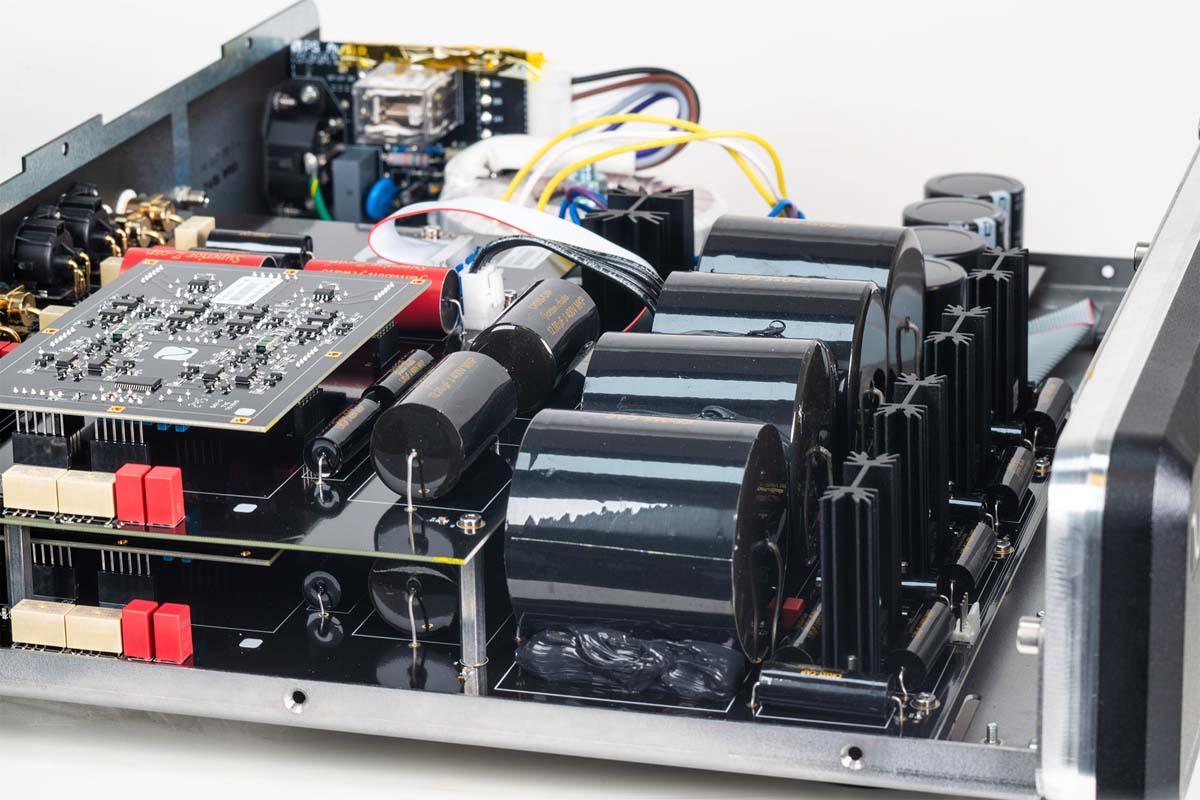
Specifically, the signal path looks like this: All inputs feed into a circuit that PS Audio has previously offered in a similar form as a separate device called the “Digital Lens” – a stage for sonically beneficial reclocking and jitter reduction. Immediately afterward comes upsampling and conversion to DSD512. PS Audio has a catchy name for this as well: “PureStream DSD 512 engine.” Next comes an FIR digital filter as an independent module with its own clock generator, which PS Audio calls the “SpectraWave Sequencer.” The megahertz data stream is now ready for the analog filter, which pushes all distortion far into the inaudible range and sends the music signal via the volume control into the analog output stage. In the PMG Signature 512, the level can be adjusted using a digitally controlled but purely analog resistor network, the kind of thing many a preamp would be proud of. The fully balanced analog output stage uses a so-called “diamond buffer” topology with high bandwidth and current-delivery capability. Particular attention is paid to galvanic isolation between the modules – including the integrated streaming unit – which is intended to benefit the purity of the useful signal. The absence of switching power supplies undoubtedly helps as well: The DAC is powered entirely by a single toroidal transformer that is unquestionably robust enough for a power amplifier.
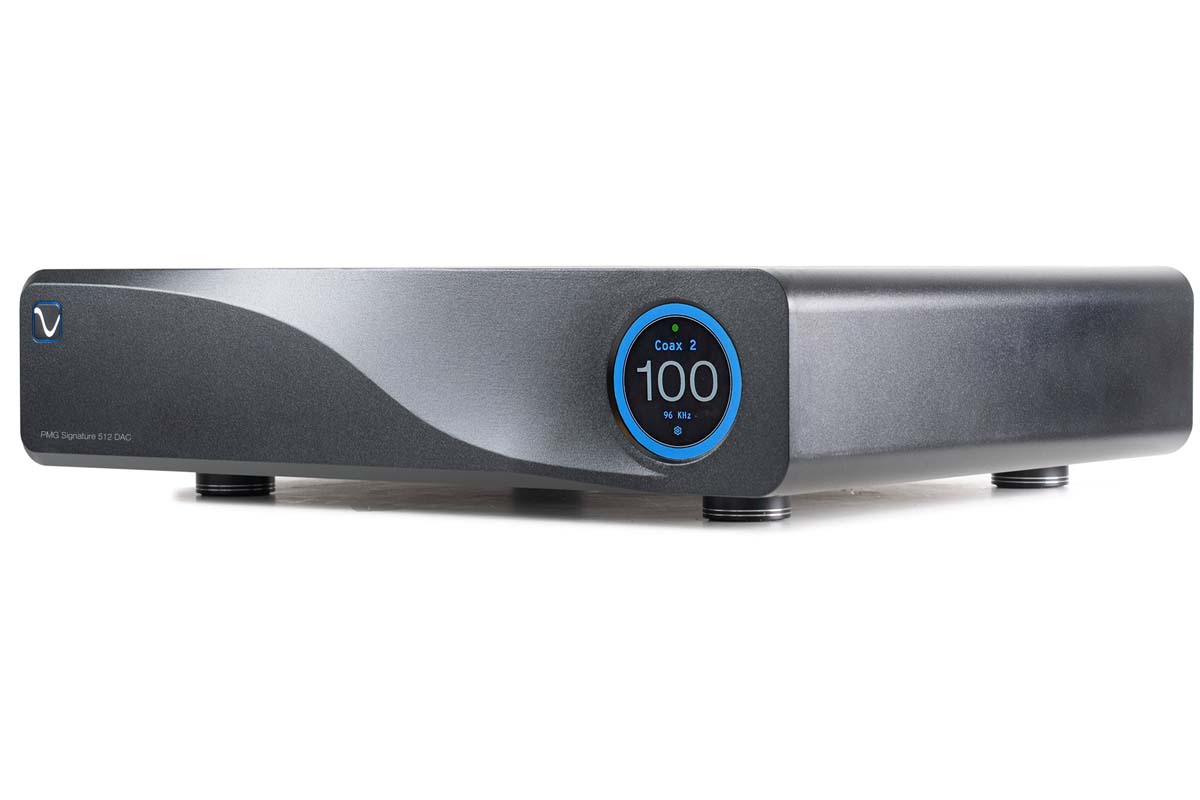
The PMG Signature 512 is a highly configurable digital control center and is operated in keeping with the times via a touch-sensitive display. Anyone who wants to get to know all the features should consult the many-page owner’s manual. Here are just two examples: Three digital filters are available, each optimized for phase accuracy, bandwidth, or time-domain behavior. Such options are not unusual, unlike another one: Ground Lift. Here, the connection between ground and shield can be individually disconnected for each input (except optical, naturally). The purpose, as with the galvanically isolated modules, is to prevent unwanted interference from getting in.
My impression is that the internal mantra during development of the PMG Signature 512 was: “Well, let’s see about that!” Sound quality that can take on the best converters from the competition? At a price at which others can’t even offer an entry-level model? With proprietary converter technology, a full-fledged streamer, every connection option including the currently most talked-about I2S, and a serious analog level control? With uncompromisingly high-end-compatible looks and feel? And sophisticated adjustment options? And, I simply have to repeat this because it runs so wonderfully counter to a sad trend: a four-figure price tag? For reference-level high-end from a renowned American manufacturer? Can’t be done? Well, let’s see about that!
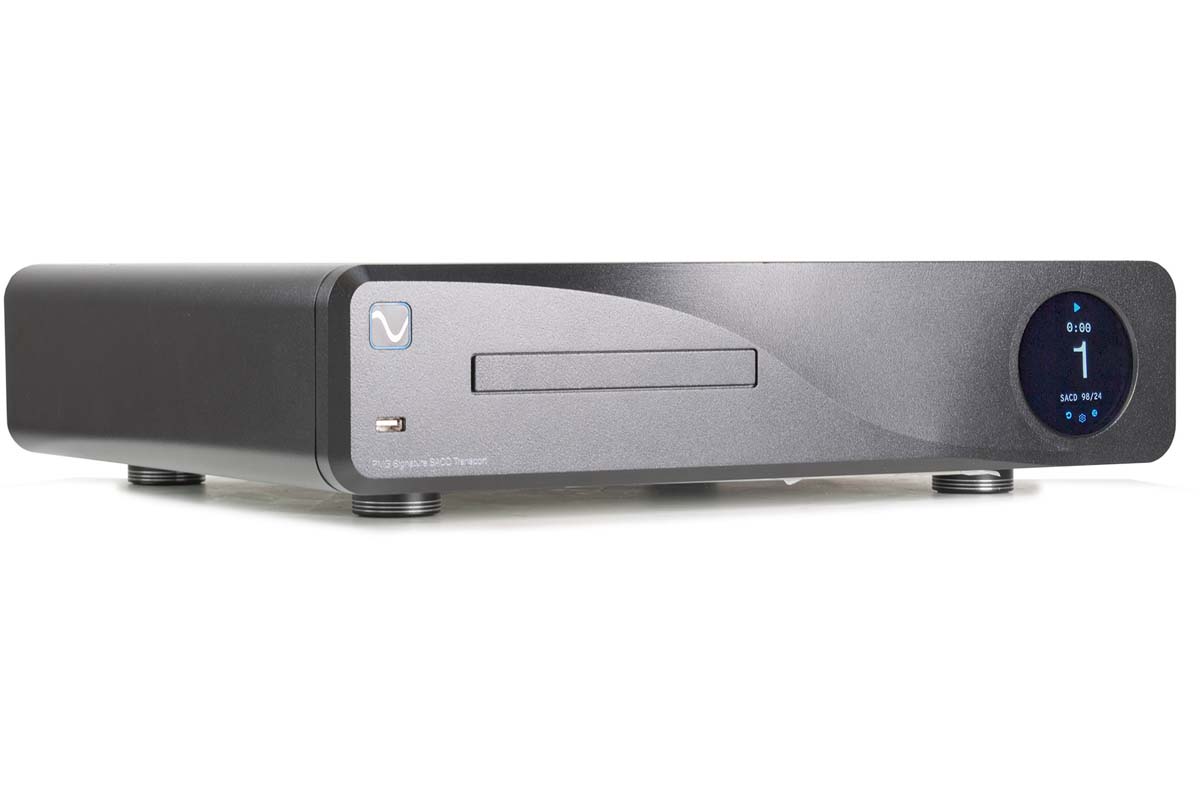
No beating around the bush: The PS Audio PMG Signature 512 wins me over immediately. After the first notes, fed by the admittedly exquisite Aqua La Diva CD transport, it is clear that I am entering a new sonic dimension. The American unit surpasses everything that has performed D/A conversion here in recent years in terms of purity and the ability to free individual sonic events from the speakers. In fact, with familiar voices and solo instruments, something I had never noticed before can be heard: a three-dimensional component that locates every sonic event within the recording space and gives it contour and presence. Voices breathe and pulse; harmonically rich bowed, plucked, and wind instruments seem to be bathed in clear sunlight. Harmonics in general, the finest vibrations, percussion, especially cymbals – it’s insane how quickly they start and stop, how real that sizzling and shimmering sounds. Then percussion, explosive rimshots – a feast! But also large ensembles, enveloped by spatial information against a crystal-clear background, to the point where you want to sketch the concert hall on graph paper purely by ear.
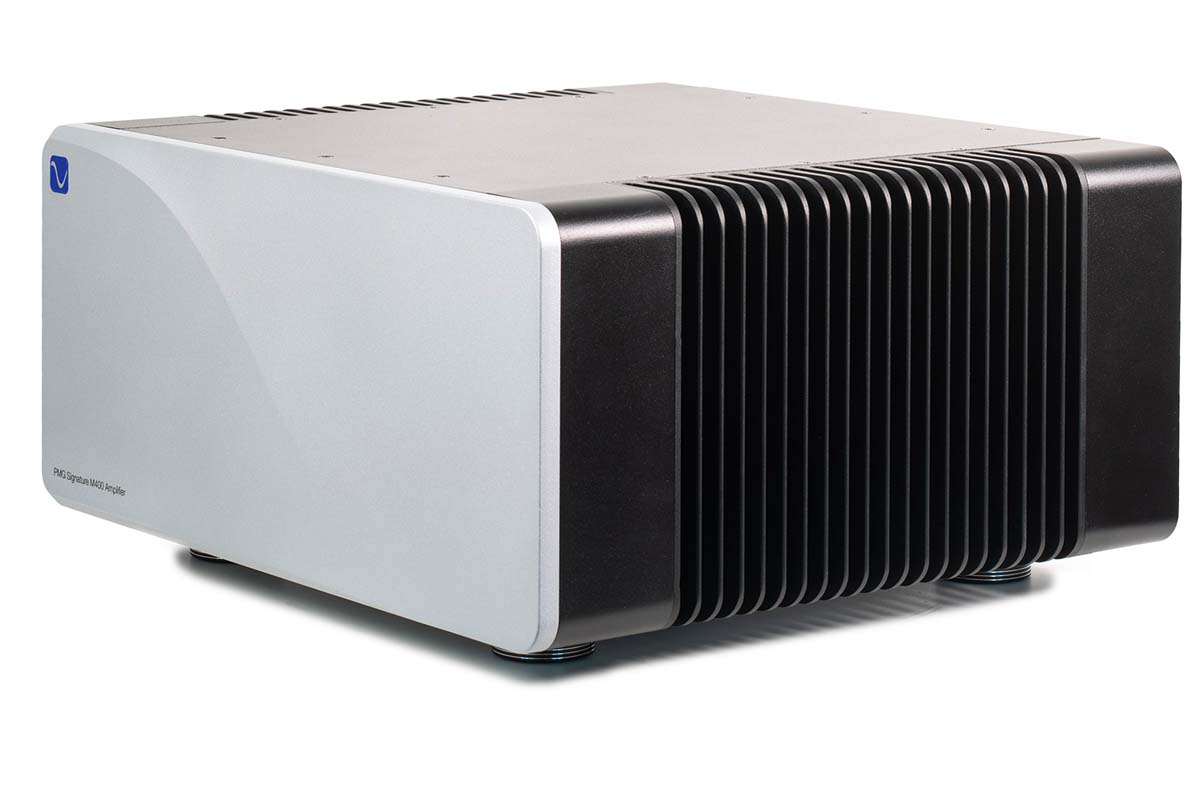
I am thrilled by the quality of the digital inputs. Despite a not-insignificant amount of effort, streaming in my system has never been able to hold its own against CD playback. No DAC has ever changed that hierarchy. Could it really be my Innuos Zenith Mk III server/streamer? The PS Audio teaches me: No, it was the input stages of the converters. Here and now, connected directly via USB and operated with the manufacturer’s own Sense app, the Innuos plays the Qobuz stream as though it had taken a dip in the fountain of youth. There is hardly any difference from CD playback anymore. From the Innuos, the sound is a little smoother and a touch warmer; from CD, by contrast, there is yet another increase in dynamics and resolution.
I test the built-in streamer on its own with Qobuz Connect. It works flawlessly and comes quite close sonically to CD playback. Then a round of Roon, with the Innuos as the Roon Core. The software’s somewhat warmer sound is unmistakable. I love Roon’s convenience and the quality of its music recommendations, which no other app matches. But Innuos Sense is simply faster – and sounds better. Qobuz Connect, even more so.
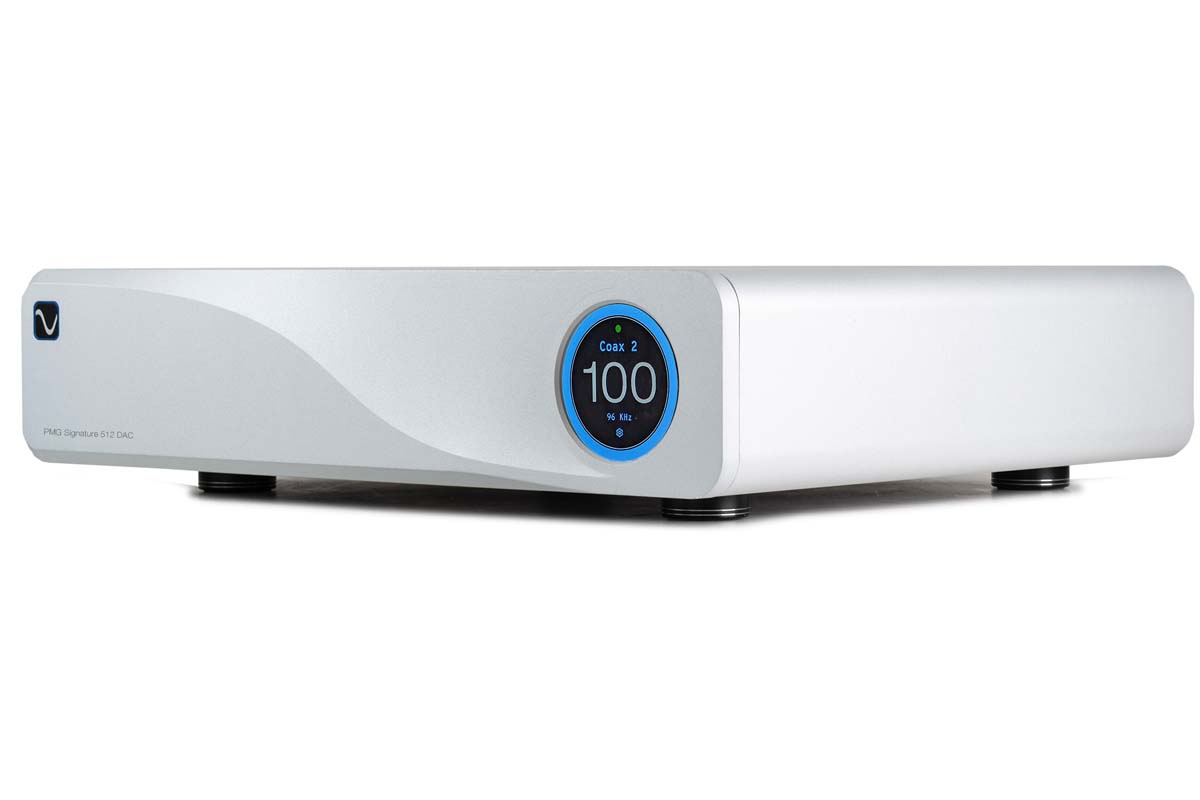
It is highly interesting that the PMG Signature 512 can be connected directly to power amplifiers or even active speakers, making it possible to create a minimalist digital system. But Paul McGowan’s opinion on the matter is equally interesting: With a (suitably high-quality) preamp, it would ultimately always sound better. The level control built into the DAC is by no means a budget solution. I connect my Rowland monoblocks, cautiously reduce the level, which had previously been fixed at 100, to 40, and select a recommendation from a music-loving friend on Qobuz: Torch Bearers, a jazz album by trumpeter Brian Lynch and his high-caliber band, expanded on two tracks by singer Samara Joy, recorded at the legendary Rudy van Gelder studio. A fantastic recording. Everything is there sonically. But when I insert my Silvercore linestage two tube preamp into the chain, the music gets a jolt: The gain in tension, dynamic power, and immediacy is clearly palpable. An unfair comparison – the preamp costs almost as much as the converter. Even so, the DAC performed superbly.
No requests, no criticism? A more substantial remote control, preferably one designed specifically for the DAC, would be great. If it could also be used to navigate the touch display, I would be very happy.
Because I might want to keep the PMG Signature 512 for a while yet. A very long while. A world-class DAC.
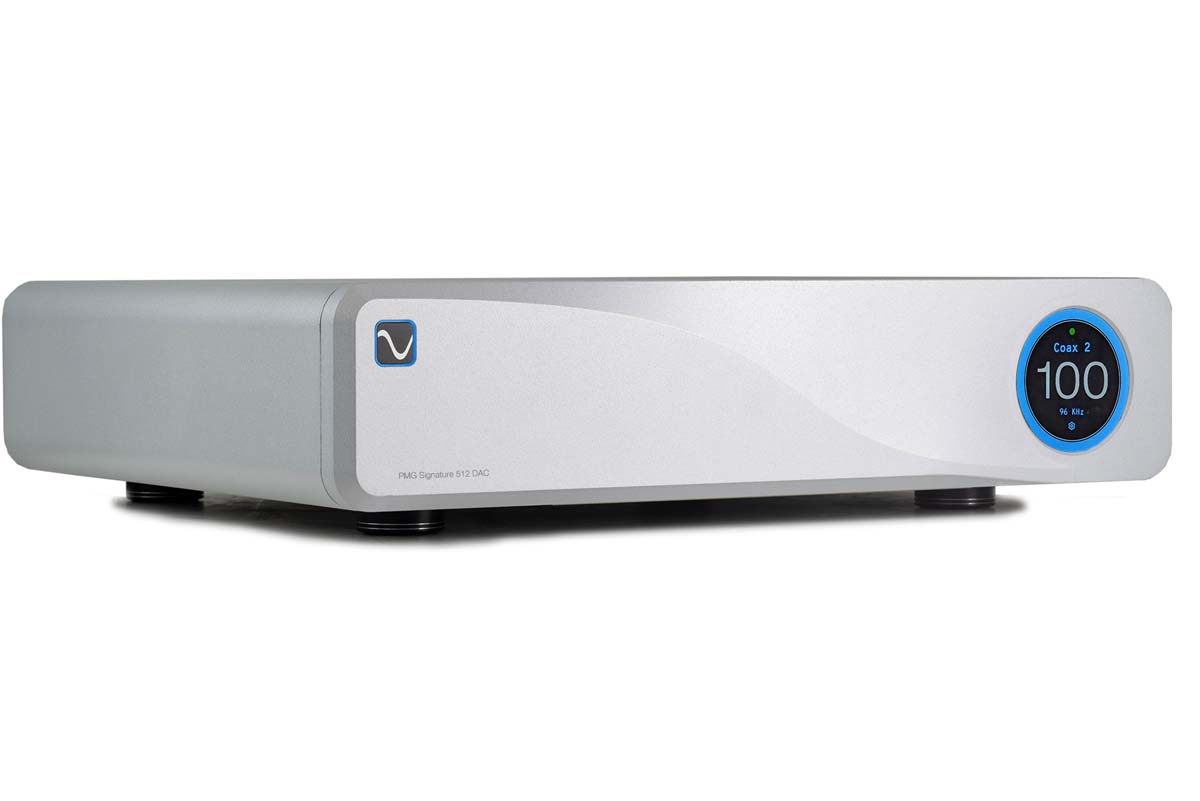
DAC/network player PS Audio PMG Signature 512 DAC
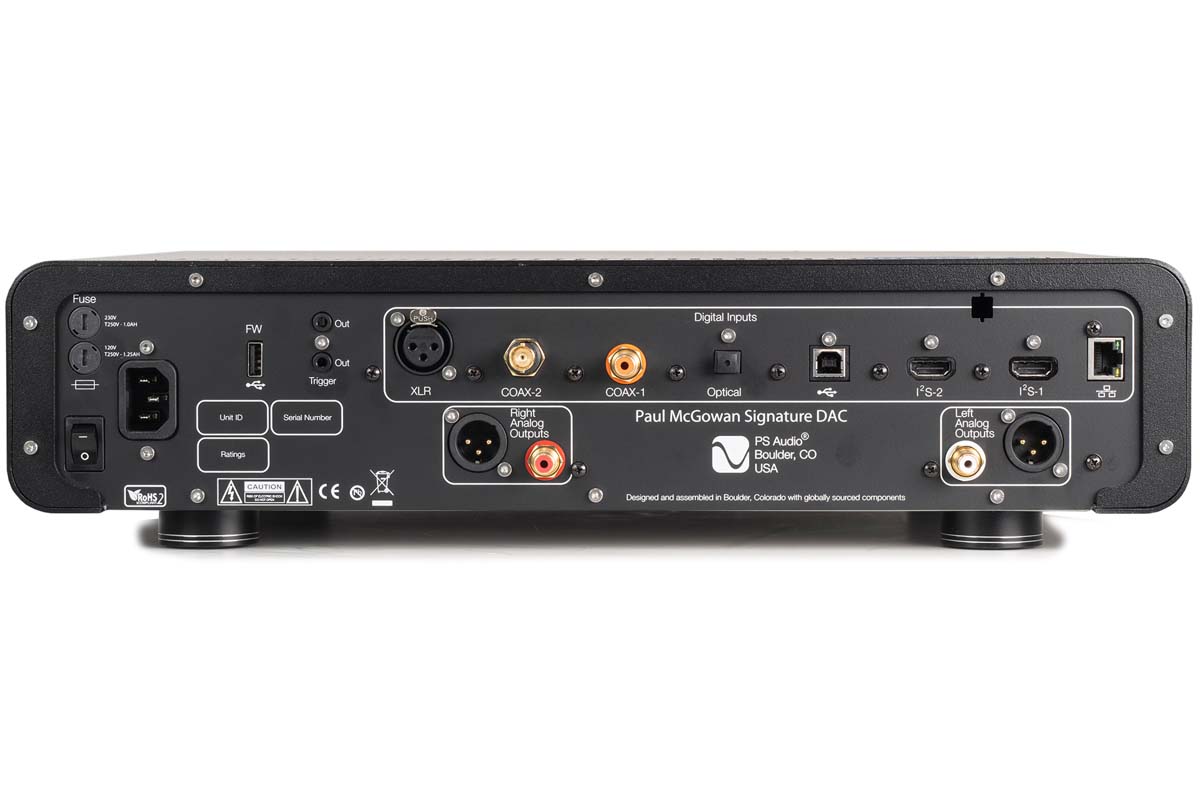
Concept: D/A converter with fixed upsampling to DSD512, integrated streamer, analog volume control | Inputs: 4 x S/PDIF (XLR, BNC, RCA, optical), 1 x USB B, 2 x I2S (HDMI), 1 x Ethernet, Wi-Fi | Outputs: 1 x unbalanced line out (RCA), 1 x balanced line out (XLR) | Streaming services: Roon, Tidal via Roon, Qobuz Connect, Spotify Premium, DLNA/UPnP, ShairPort (AirPlay) | Supported digital formats: PCM up to 768 kHz/32 bit, DSD up to DSD512 | Special features: USB A for firmware updates, trigger outputs, IR system remote control | Finish: Silver or Black | Dimensions (W/H/D): 45/11/38 cm | Weight: 13.6 kg | Warranty period: 2 years (3 years after registration) | Price: around €9,950
Hifi2die4
Austraße 9
73575 Leinzell
Phone +49 7175 909032
info@hifi2die4.de