
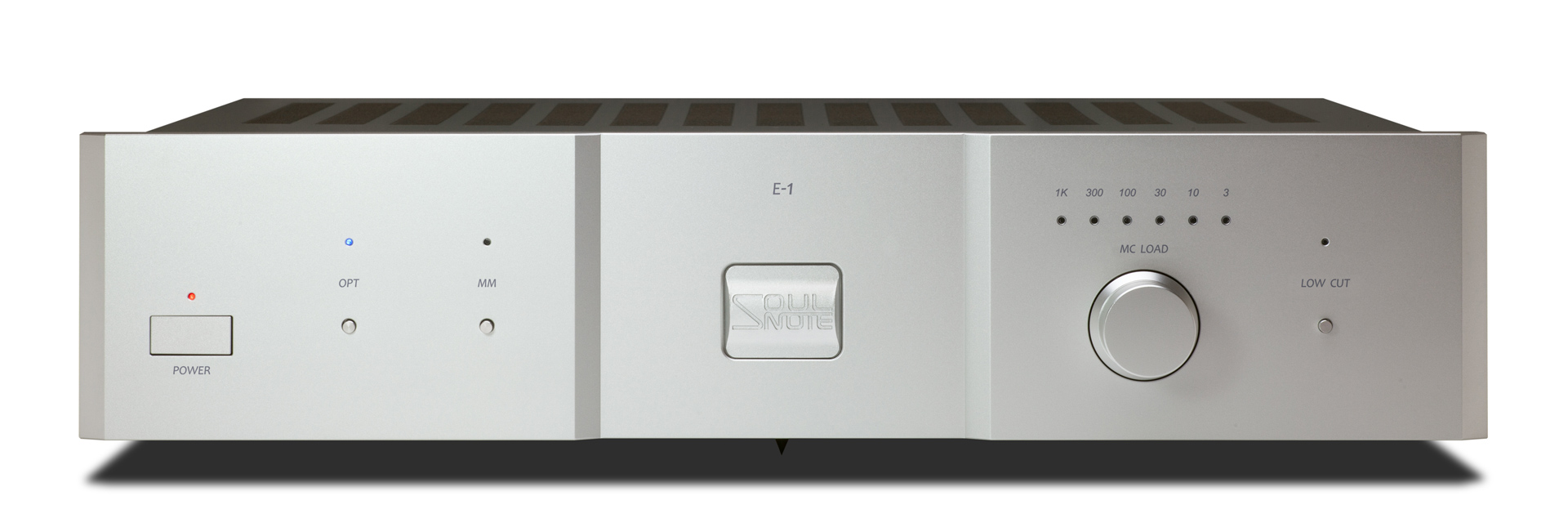
Cross your heart and hope to die – every HiFi enthusiast knows that ever-present urge for “more” or “better.” I’m no exception, and so the latest incarnation of the Soulnote E-1 phono preamplifier, Version 2, now sits in my rack. Dressed in a discreet, elegant black, it fits in beautifully, or so my first spontaneous impression tells me. What else is there to report about it? Read on…
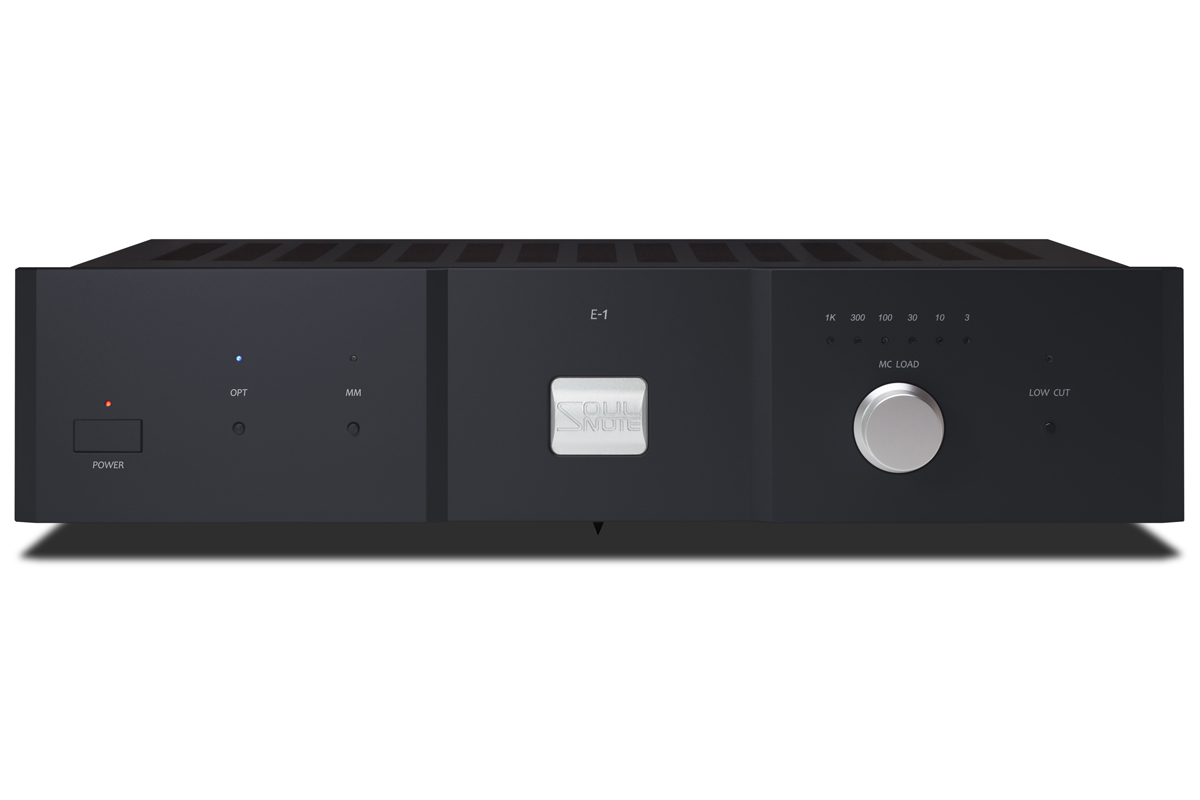
Kato-san, Soulnote’s tireless chief developer, took a very close look at the first-generation E-1 phono equalizer. The resulting revision has produced a phono preamp that, in the truest sense of the word, makes you sit up and listen. The predecessor was – and remains – a truly outstanding processor of delicate phono signals, but the successor is even more so. Is it all just marketing? Absolutely not – the revision is both profound and comprehensive. At first glance, it is immediately apparent that the unit now has a more clearly designed, smooth front panel (in silver or black) with essentially self-explanatory buttons (the predecessor is recognizable by its horizontally running, thick aluminum strips). Regarding the “Low Cut” button, suffice it to say that when activated, it acts as a rumble filter against unwanted low-frequency sounds caused by warped records and the like, without affecting the musical signal sonically.
A look at the rear connection panel reveals an additional input for optical (photoelectric) cartridges. The analog circuit for these cartridges incorporates the new Type-R circuit originally developed for the larger E-3 model. Such cartridges have so far been both unusual and rare, and have always required a special power supply and equalization unit – for owners of the Soulnote E-1 ver.2, this is now thankfully no longer necessary.
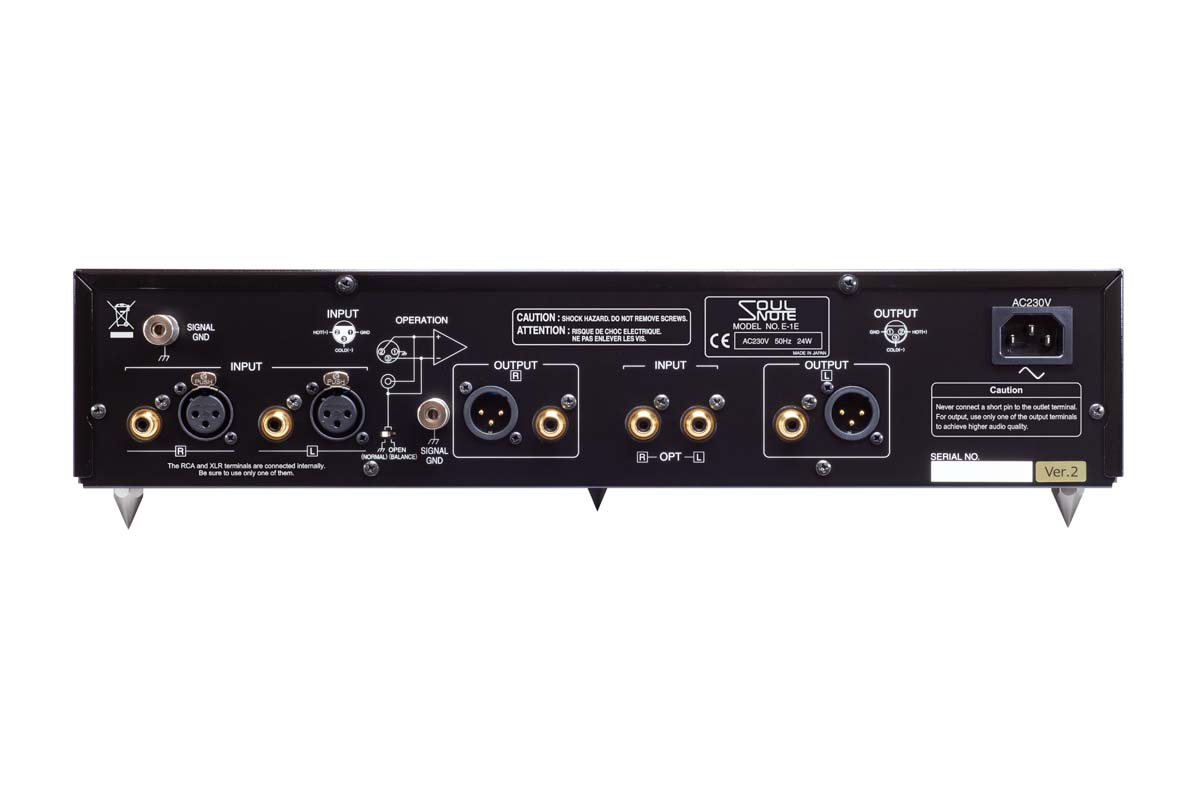
The balanced “In” and “Out” connections carried over from the predecessor make particular sense when using MC cartridges, since they are inherently designed as balanced devices. At this point, I should mention that the entire test was conducted using this connection method, from the cartridge through the E-1 ver.2 to the integrated amplifier. In addition, all unused RCA connections were sealed with appropriate caps, protecting them from interference of any kind – open connections can easily cause noise and/or signal loss.
The necessary MC settings are made via the front-mounted rotary knob, which has a wonderfully solid detent action (always in silver-colored aluminum). They are self-explanatory and make it absolutely straightforward to select the required setting, even while the unit is operating. Click, click – the best value for each cartridge is quickly apparent to your own ears. I have long regarded the values typically specified in cartridge manuals merely as recommendations. My ears tell me unequivocally which resistance values produce the desired sonic results. Thus, the exceptionally nuanced and above all remarkably neutral Clearaudio Da Vinci V2 sounds simply breathtaking through the Soulnote E-1 ver.2 when set to 100 ohms (Clearaudio specifies a range of 100 to 1,000 ohms); at 300 ohms or 1,000 ohms, for example, I find an “in-your-face” electric guitar a little too forward. It doesn’t sound bad then either, but over the long term, 100 ohms is simply more correct. The typical MM value of 47 kiloohms is universally known, so no further adjustment is needed. The sonic experience with the powerful MM Clearaudio Charisma V2 is thoroughly convincing in this mode; particularly striking is the cartridge’s richly colored and expansive soundstage.
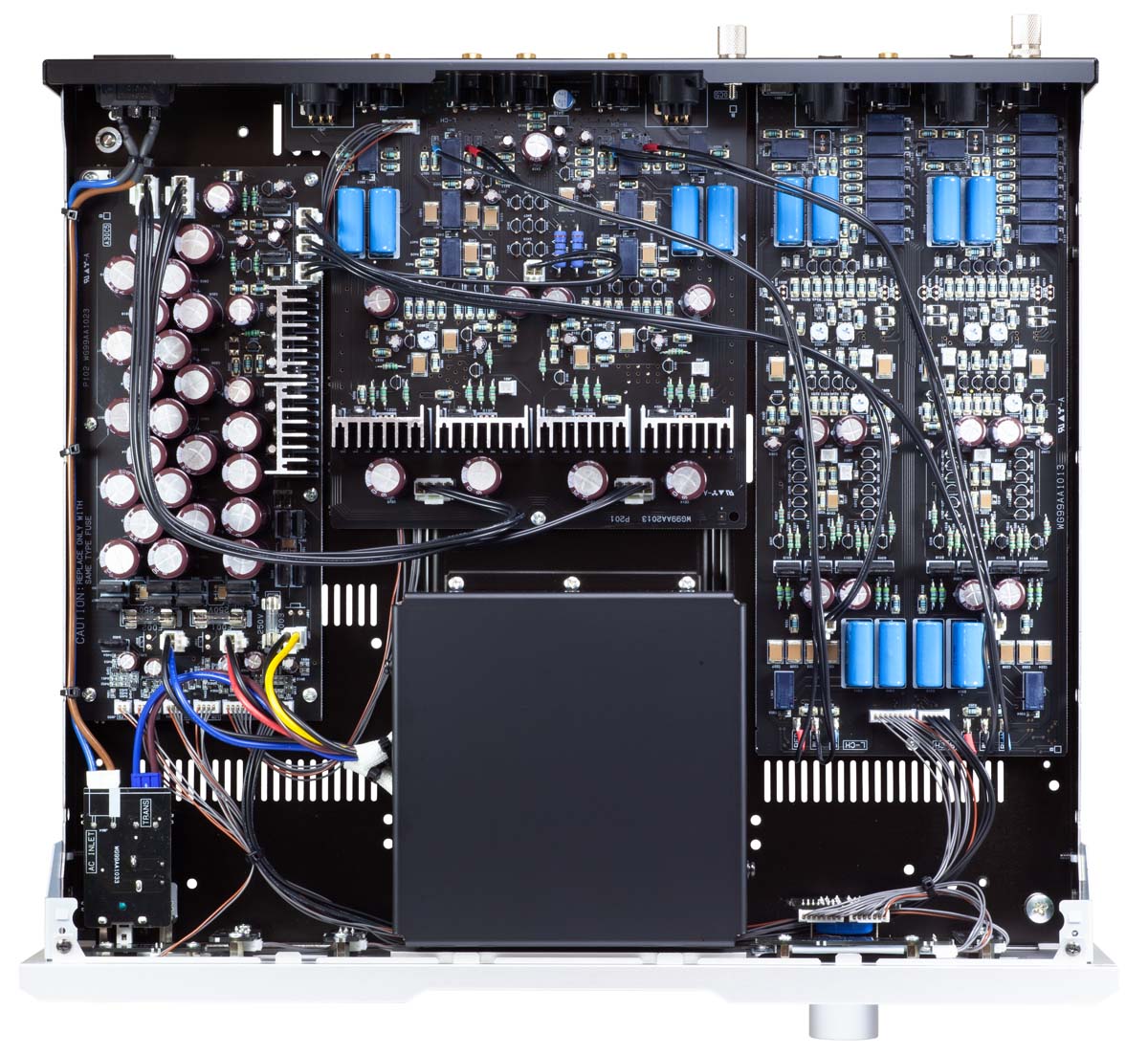
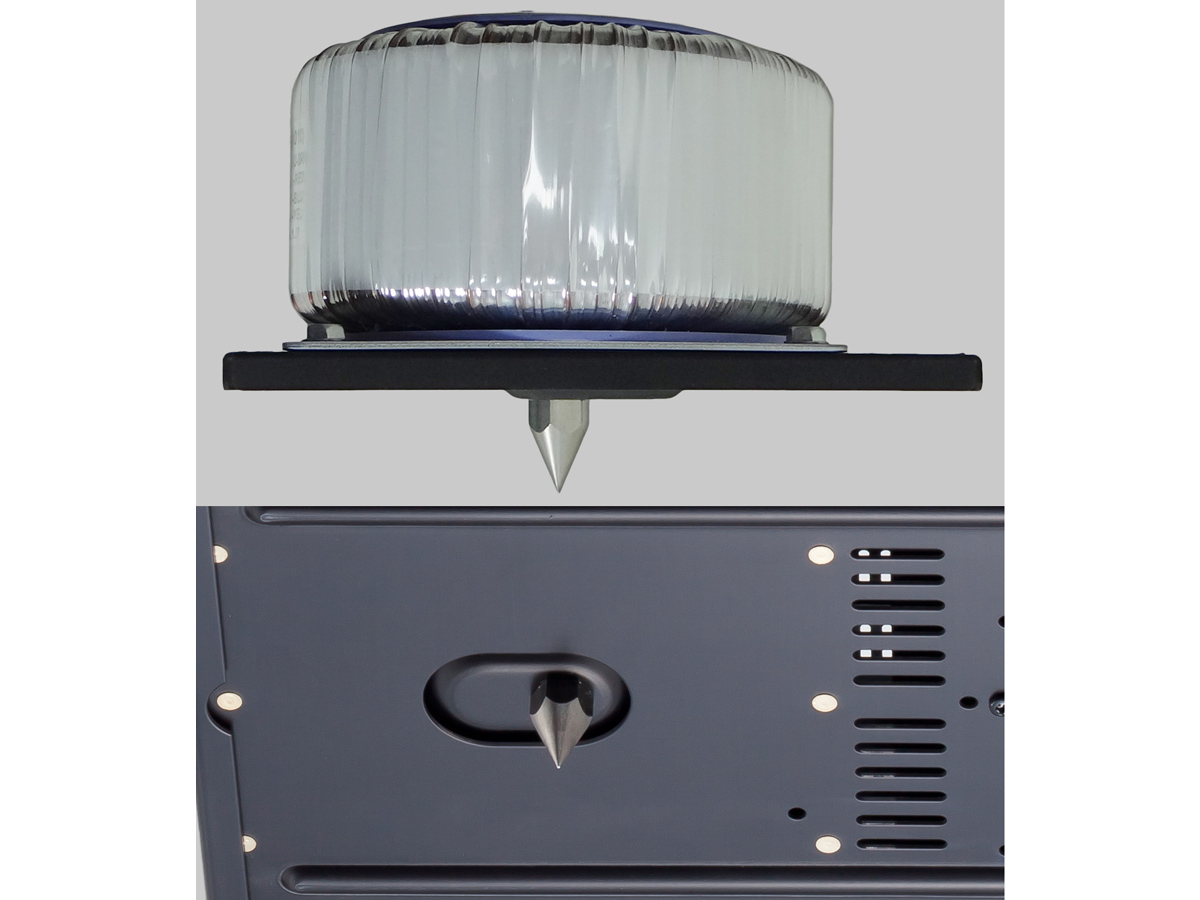
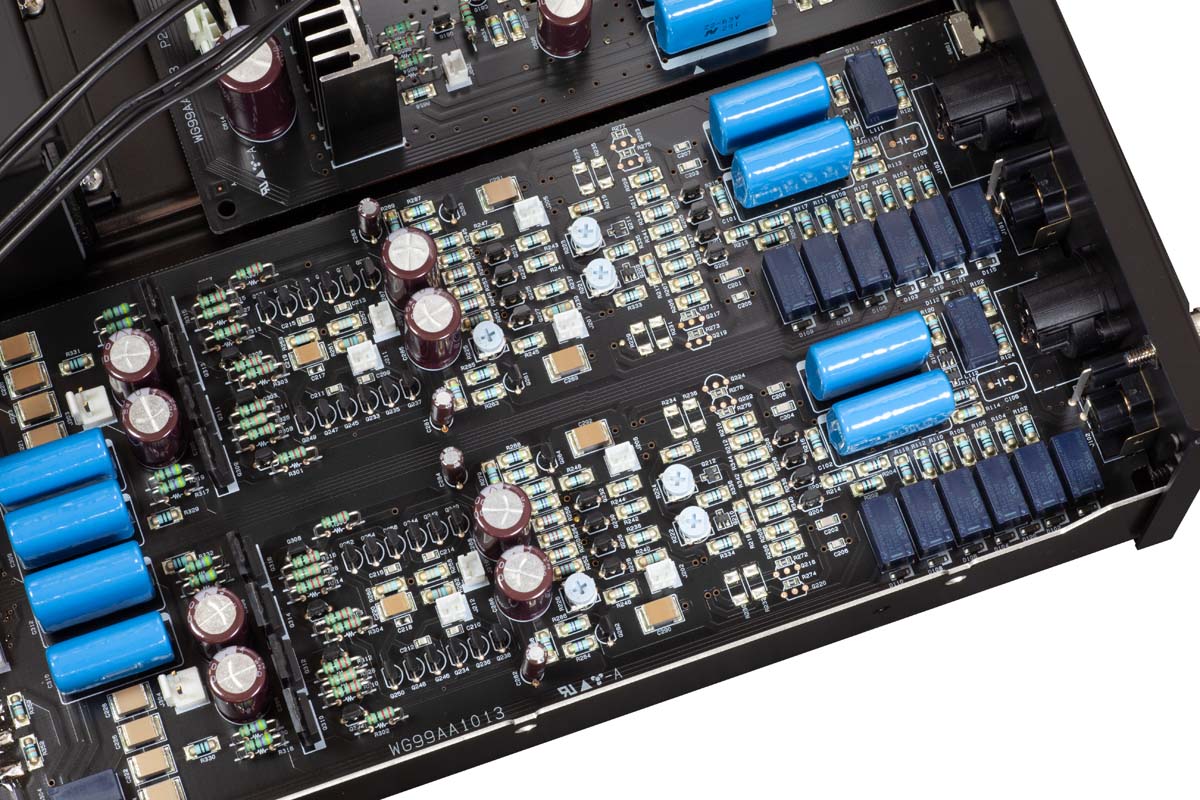
The output levels have increased in power compared with the previous version (now 3 V balanced and 1.5 V unbalanced). The new and simplified analog circuit has actually improved the sound reproduction quality of the MC/MM signals yet again. The circuit originally used in the E-1, which was based on LEDs, has been removed (so the previous “light show” is now gone) and replaced with a completely newly developed design. As a result, the signal-to-noise ratio has indeed improved noticeably. The now even more precise BIAS control has contributed exceptionally well to this. One quick word about build quality: “Outstanding” says absolutely everything – and I really mean everything! For anyone bothered by the seemingly somewhat loose “lid,” let me say that this is part of Soulnote’s sonic tuning. The same applies to the meticulous attention given to setup. While other manufacturers often use nothing more than ordinary rubber feet for their equipment, it is typical of Soulnote to always supply two different types of metal feet, which can be quickly exchanged using the included wrench: spikes on the one hand, and specially made isolators (installed as delivered) on the other, which in my opinion provide even higher sound quality. However, every user has to determine the appropriate choice for themselves, since the racks/bases used by listeners are, as we know, all different in their effects. I generally place my Soulnote equipment on the isolators. Their positions on the unit were determined empirically at the factory – so it is no coincidence that one isolator sits directly beneath the (now internally enclosed) 260-VA transformer. Its rating is particularly noteworthy for a phono preamplifier, because some manufacturers use a transformer this powerful in an integrated amplifier, but not in a phono stage. Regular readers will remember my fundamental belief: “The sound is hidden in the power!” And the fact that the power supply, like the entire circuit, is of course designed without negative feedback need only be mentioned here for the sake of completeness.
Measurements are one thing, but for Kato-san, the sonic result is always the decisive factor when developing and designing his Soulnote equipment. Which brings us, after all that technology, to the sonic characteristics of the Soulnote E-1 ver.2. Wait – before I forget to mention it, this Soulnote unit also deserves a noise-free power cable. For the test, the distributor supplied a 1.5-meter Zavfino Fina MK 2, and I am extremely impressed by the sonic result. It gets my enthusiastic approval in terms of build quality and its lack of interference with the sound reproduction. According to the manufacturer, it is ideally suited for DACs, phono stages, preamplifiers, and high-end all-in-one devices. On top of that, its retail price is a moderate €399.
Since all Soulnote units are shipped from the factory already fully broken in, the usual “burn-in” periods are unnecessary, so we can get straight to the sonic impressions. One of the albums that has always been most important to me is Quadrophenia by The Who. Plenty has already been written about the history of this rock opera, and John Entwistle’s wild bass solo in “The Real Me” was not the sole reason, but certainly one of the reasons why I learned to play this instrument a long time ago. Deeply immersed in my memories, I listen to the familiar tracks… What are we talking about here, anyway? Right – the Soulnote E-1 ver.2. It takes me along on this musical journey into my analog past as a matter of course; it presents the sonic merits of each vinyl record being played with extraordinary perfection. This Japanese phono equalizer demonstrates from the very first note what it is capable of – and it is simply very, very good. Particularly impressive is the highly authentic reproduction of natural sounds, such as the sound of the surf at the very beginning of the album. I become immersed in the sonic worlds being presented, only to be abruptly interrupted when the cartridge reaches the run-out groove.
Vocals/voices – always a test of any analog playback chain. This time, Será Una Noche by La Segunda is on the turntable: the finest Argentine tango. The air in my room practically vibrates, such is the intensity with which the singer’s voice and the instruments are presented in the large recording hall; you can perceive the venue itself with remarkable intensity, so delicately, almost holographically, this phono preamp presents the individual sounds. Fed in this way, it manages, like few other phono preamps before it in my room, to touch all the senses at once. I listen to the entire double LP with great pleasure, and it is clear to me that the next record must in no way be less spirited. Nevertheless, a change of genre is called for, toward classical music: Vivaldi’s The Four Seasons – this time in a modern interpretation by Max Richter (The New Four Seasons – Vivaldi Recomposed, 2022). Together with the musicians of the Chineke! Orchestra and the exceptionally brilliant violinist Elena Urioste, the composer immerses himself deeply – perhaps more deeply than anyone before him – in the fascinating musical world of this epochal work. The instrumental lineup is also interesting: on the one hand, the musicians play original string instruments from Vivaldi’s era; on the other, the “Stradivarius of synthesizers” – an early-1970s Moog – is also used quite naturally. The result is an exciting journey into a sonic universe that is actually quite familiar!
Do I need to list any more musical examples? No, I’ll spare both you and me. Instead, let’s come to the central question: What exactly is the Soulnote E-1 ver.2? Just another unquestionably excellent phono equalizer in this essentially unfathomably large market? Certainly not. Or does it boldly break into the phalanx of its brothers and sisters in the top league of phono preamps? Exactly – that is what it does, with absolute self-assurance. And this brings us full circle to the headline of this review: “Does It Really Need to Be More?” My personal answer is unequivocally: “No!” Even though, as they say, one should never say never, on the analog side I have finally arrived – from the cartridge through technically correct XLR cabling to the phono preamp and ultimately to the final amplification stage, a hybrid tube integrated amplifier. “Oh God, I need a drink …,” as the song “Love Reign O’er Me” from the aforementioned The Who double album puts it – I couldn’t agree more!
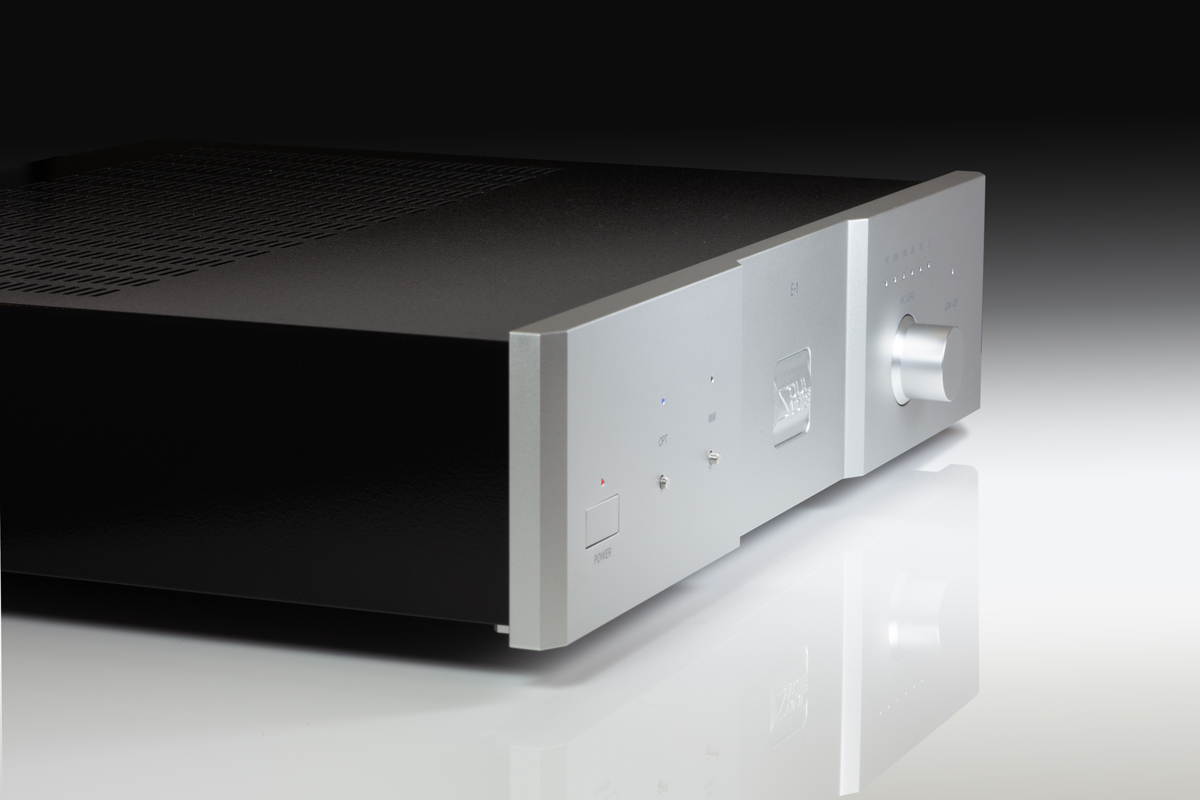
Phono equalizer Soulnote E-1 ver.2
Input sensitivity (MC/MM/opt.): 0.4 mV/5 mV/70 mV | Gain (MC/MM/opt.): 77 dB/55 dB/32 dB | Rated output voltage (bal./unbal.): 3 V/1.5 V | RIAA deviation: ±0.3 dB | MC load resistance: 3 Ω, 10 Ω, 30 Ω, 100 Ω, 300 Ω, 1 kΩ | MM load resistance: 47 kΩ | Power consumption (operating): 24 W | Finish: Silver or Black | Dimensions (W/H/D): 43/11/41 cm | Weight: 10 kg | Warranty: 2 years, extendable to 3 years | Price: around €4,500
IAD
Johann-Georg-Halske-Straße 11
41352 Korschenbroich
Phone +49 2161 61783-0
info@iad-gmbh.de