
Jean-Benoît “JB” Dunckel is one half of the French pop duo Air. Now, the co-creator of the legendary turn-of-the-millennium album Moon Safari has released an unusual new work: on Paranormal Music Chamber, string players from the Paris Opera perform the piano compositions from Dunckel’s solo album Paranormal Musicality, released last year. Speaking with FIDELITY, the pianist explains why he chose to work with violin and cello this time, even though he plays neither instrument himself. And why, naturally, a keyboard still found its way into the project.
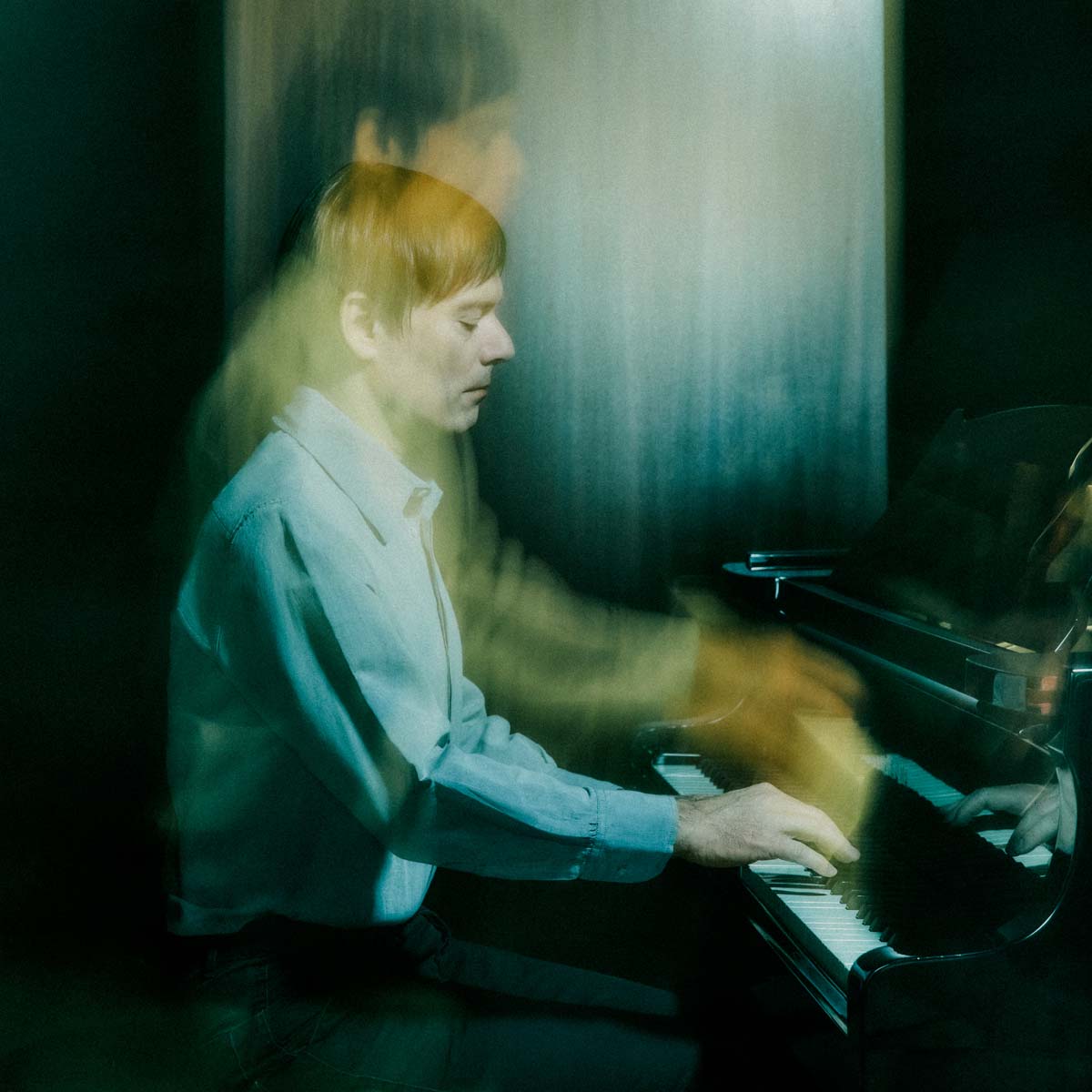
FIDELITY: Monsieur Dunckel, first we need to clear something up. A year ago, you released Paranormal Musicality, a solo album of piano compositions. Now, a selection of those pieces has been re-recorded for your new album, Paranormal Music Chamber, by a string quintet and a flutist from the Paris Opera. So what exactly was your role this time?
JB Dunckel: I wrote the music!
Of course – but that was last year, for your piano album. For this new release, you also brought in an arranger…
Okay, I understand the confusion. Paranormal Music Chamber was a completely new way of working for me. I collaborated with an arranger who restructured and adapted the musical material for the string ensemble. He wrote the scores, but I was involved in every step of the process. I also created effects – delay effects, for example, to make the sound more spacious. And percussion elements. You can hear a bass drum on some of the tracks. It’s very subtle, but essential to the overall sound.
There’s no piano on the album – even though you’re a pianist.
No piano, but there is a keyboard. And it has a very important role. For example, I recorded bass lines that support the cello in creating a really deep, rich bass sound.
I have to admit: I didn’t hear the keyboard…
You don’t hear it. You feel it. Subconsciously, but it does shape the sound.
Do you play a string instrument yourself? The violin, perhaps?
No, no. I just like imagining what it would be like to play the violin. I love the sound of strings. At first glance, of course, it seems strange for a pianist to make an album without piano. But I wanted to dive deeper into my music. I felt that a new version with strings could be more refined and more powerful.
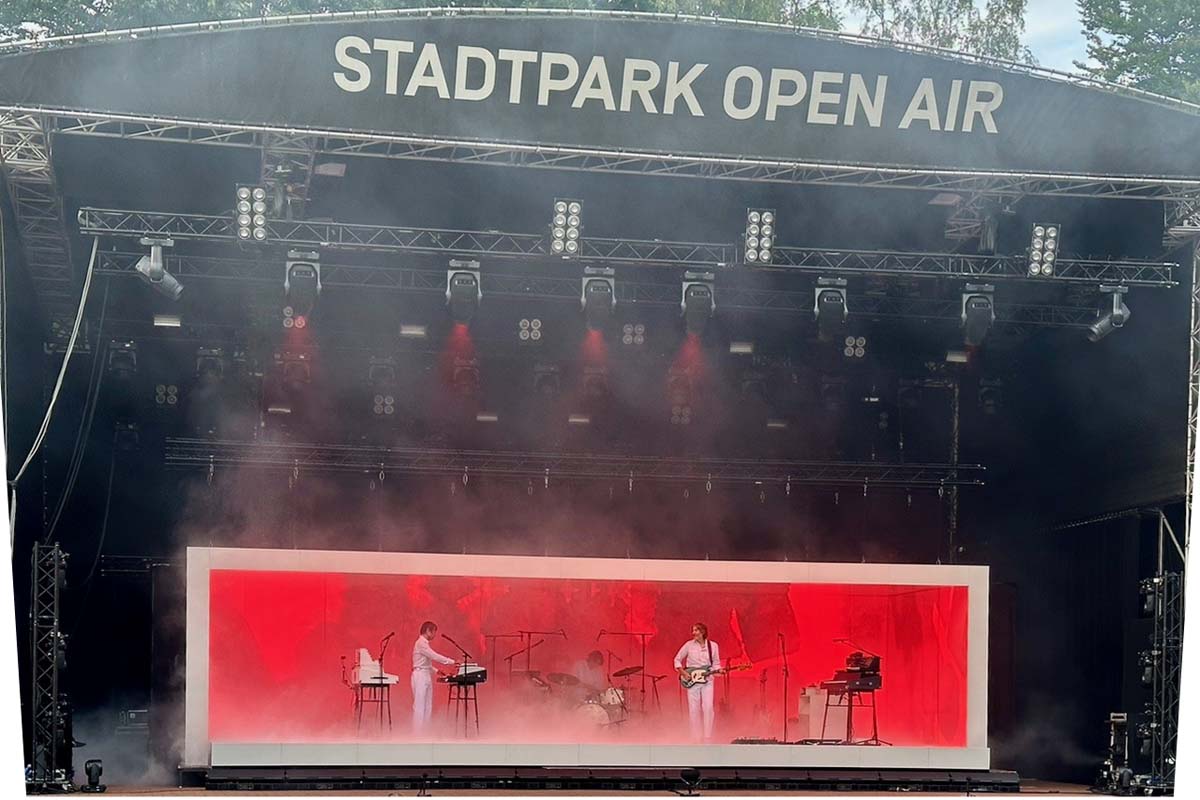
Last year you toured with Air, performing your legendary album Moon Safari live again after many years – in London’s Royal Albert Hall, at the Sydney Opera House. Were you working on your string album at the same time?
I think I had actually started it before the tour, alongside rehearsals for the concerts. During the tour, I also composed the soundtrack for a television series.
Did you need some emotional distance from all those classic Air songs?
Yes. Although I still genuinely like Moon Safari. It was wonderful to play those old songs live again. But you know, it’s also important to create something new.
Is it difficult to break away from the Air sound? Do you ever sit down at the piano to compose and suddenly think, Damn, this sounds like Air again?
No. We stopped making new music as Air more than ten years ago. That creative process is well in the past. But indeed – I do have to clear my mind. Of all sorts of things. When I was sitting at the piano composing the pieces for Paranormal Musicality, I would always begin each morning by playing Bach and Ravel for two hours, simply to free my mind. After that, I just let things happen. For me, composing is like dreaming. You can’t control it.
Your piano dreams have changed dramatically in this new interpretation. In “Dolphin,” for example, a light piano melody becomes something like a melodramatic film score. More generally, the strings give your pieces a darker, more mysterious atmosphere. Would you agree?
You’re not wrong. Perhaps the piano version feels airier because a piano offers so many high tones. Maybe the strings make everything sound more melancholy and, to some extent, darker. But that wasn’t a conscious decision – like, “Hey, let’s make it sound mysterious.” What I did pay close attention to was keeping the string arrangements as minimalist as possible.
Why was that important?
The piano is a percussion instrument, while the violin, viola, and cello are string instruments. The way the strings are made to vibrate is very different between the two. A violin, viola, or cello can sustain long notes, whereas the piano is all about the initial attack. That means strings can be more expressive. I tried to manage that expressive energy very carefully. Otherwise, it can end up sounding lifeless – or, on the other hand, very modern, almost like electronic music.
“Prélude Marin” is a good example of that, I think. A gentle composition becomes a stripped-down yet almost frantic piece.
Yes, the piano version is rhythmically calmer. I wanted the new version to sound like a train traveling through the mountains, driven by its rhythm. A journey – maybe even a race. We used arpeggiated chords, where the notes are staggered rather than hit simultaneously. Philip Glass also wrote many string pieces built around arpeggios. The biggest challenge was not to imitate him – which proved difficult, because to me, an arpeggio immediately sounds like Philip Glass.
“Shine” is also very expressive. And sad – perhaps because of the dominant low cello?
The song was already sad when I recorded it on piano. The soul of the track lies in its melody. A sad song doesn’t suddenly become cheerful just because you add a cello. Quite the opposite, really. The strings emphasize the character of the song, making it perhaps even darker or more melancholic.
Does that reflect your personality? In photographs, you hardly ever smile.
Maybe. Maybe I’m a sad musician making sad music for sad people. (laughs)
You’re laughing!
(Laughs again.) Why not? I think life is often sad and dramatic, especially these days. What we see in the news is so bleak – far bleaker than my music. Maybe laughter really is the only antidote.
A good philosophy. “Key Games,” however, is one of the few tracks that actually becomes more playful and cheerful with the strings.
Really? That’s where we disagree. I found the piano version a little too cheerful. I was actually very grateful that the reinterpretation with strings allowed me to place a melancholic filter over it.
Fair enough.
Of course, that’s subjective. A playful melody naturally sounds more cheerful. In a new arrangement, you can juggle the melody – it becomes a little game. One person hears it one way, someone else hears it differently.
Even the process of making the music was completely different. The first time, you were alone at the piano. This time, it was teamwork – with clear structures and a conductor leading the ensemble.
Exactly! The piano pieces are improvisations, so they’re wild and free. But they’re also a little awkward – perhaps even clumsy. Rearranging them gives you the opportunity to enhance the expressive power of those original improvisations.
You studied mathematics and physics. Did the recording sessions with the string players summon your inner scientist? Physicists have to work with great precision and discipline.
That’s a wonderful observation. When you play music, you need control – but at the same time, you have to be completely free. It’s all about finding the perfect balance. Bach was the greatest master of that. If there’s too much freedom, there’s no technique, no precision, no respect for the music. But if there’s too much control, there’s no expression, no emotion, no warmth, no humanity.
So Bach had the perfect balance?
Bach was one of the most complex composers of all time. I find it incredibly difficult to play Bach well because I have to perform four independent melodic lines with just two hands, each with its own expression. Bach’s music embodies my personal definition of music. Music is mathematics that you can hear. Every note has a reason for being exactly where it is, just like in a mathematical equation. At the same time, I find Bach deeply erotic.
Music is erotic mathematics? You’ll have to elaborate.
Take a prelude, for example. It begins in its original key, and it ends in that same key. But in between, there are countless harmonic changes – you know, like the things that happen in life. I find that truly erotic. Because eroticism is about the journey toward a destination you want to reach. On the way to sex, for instance, there are countless shades of anticipation and intimacy.
If Bach is your analogy for physical intimacy, then what is Ravel? Pornography?
(Laughs.) You said that now! No, I love Ravel. The man was a genius. I can hardly find the words to describe him.
Could you imagine making a solo album: Dunckel Plays Ravel?
No, I don’t think my talent is great enough to create an interesting interpretation of Ravel.
Well, Ravel wouldn’t hear it.
But I would. And the music critics would hear it too.
JB Dunckel – Paranormal Music Chamber
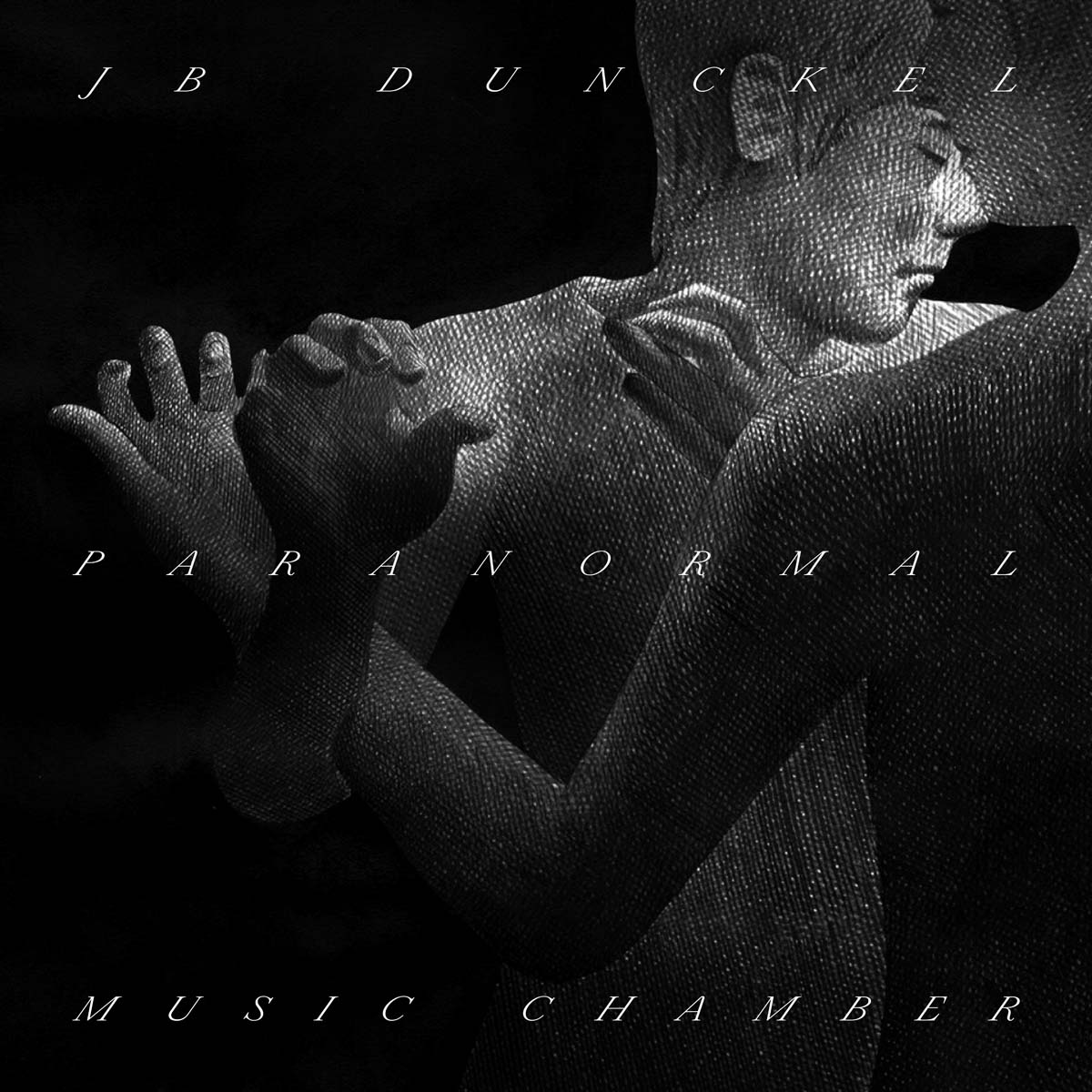
Jean-Benoît “JB” Dunckel, 56, is one of France’s best-known musicians. Alongside Nicolas Godin, he helped define a distinctive ambient-infused pop sound around the turn of the millennium as one half of the duo Air, blending keyboards, piano, and electronic elements. Most recently, Air returned to the stage to perform their legendary 1998 album Moon Safari live in opera houses around the world for the first time in years. As a solo artist, Dunckel has focused on composing film and television scores, most recently for the film The Good Teacher. In 2024, he released the solo album Paranormal Musicality, a collection of piano improvisations that have now been reimagined for his new album Paranormal Music Chamber, performed by string players and a flutist from the Paris Opera.
Find JB Dunckel – Paranormal Music Chamber on Warner Classics.