
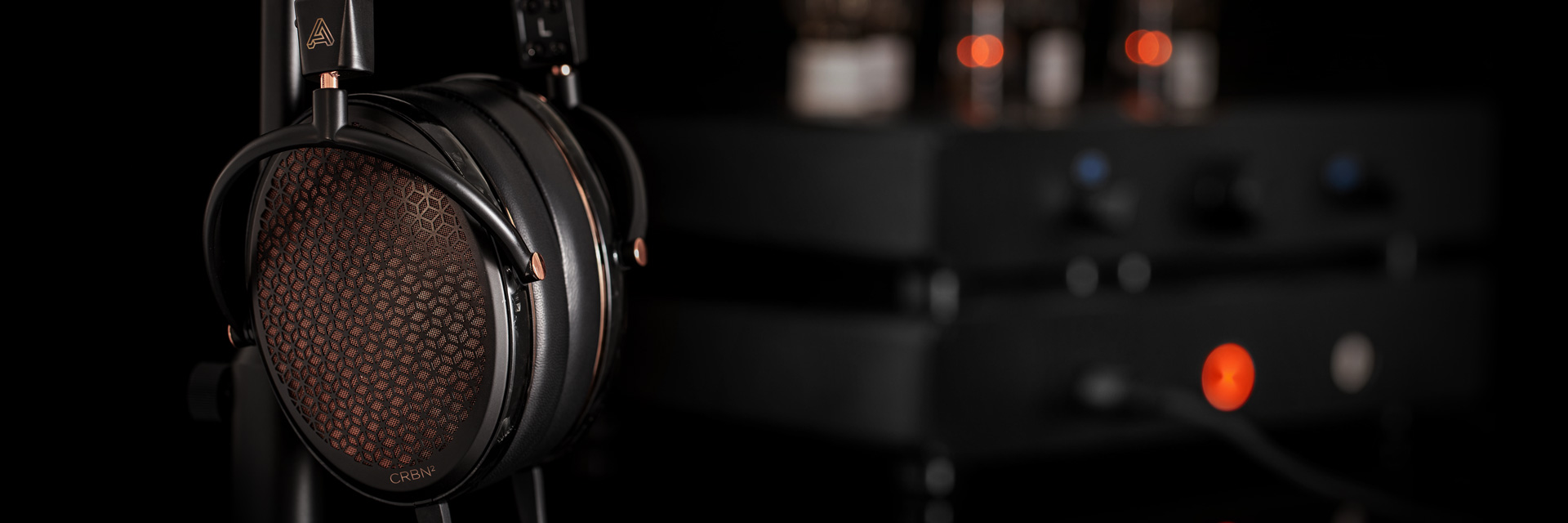
The electrostatic headphone Audeze CRBN2 (“CARBON”) has its origins in a medical technology application: During magnetic resonance imaging (MRI), the patient is scanned layer by layer inside a tunnel while being exposed to high sound pressure levels and magnetic currents, which requires headphones with good sound insulation and no metal components.
Conventional headphones contain metal parts and coils that cause electromagnetic interference and can impair the functioning of an MRI scanner. The starting point for the development of the CRBN was therefore research at the University of California in Los Angeles into iron-free diaphragms made from carbon nanotubes. The innovation lies primarily in the production of ultra-thin polyimide driver films into which carbon nanotubes are homogeneously embedded. The polyimide film is an extremely thin, flexible plastic commonly used in aerospace engineering because of its electrical insulation properties and mechanical stability. In other words, the films are neither subsequently coated nor layered with an adhesive sheet; instead, an extremely thin and homogeneous diaphragm is cast into shape, offering advantages in terms of vibration behavior. The developers at Audeze immediately recognized that this approach would also benefit sound quality, leading to the development of the electrostatic CRBN headphone in 2021 based on this medical application. Since autumn 2024, the second generation, the Audeze CRBN2, has been available. It is likewise based on the innovative carbon nanotube diaphragm technology, though optimized further in key areas.
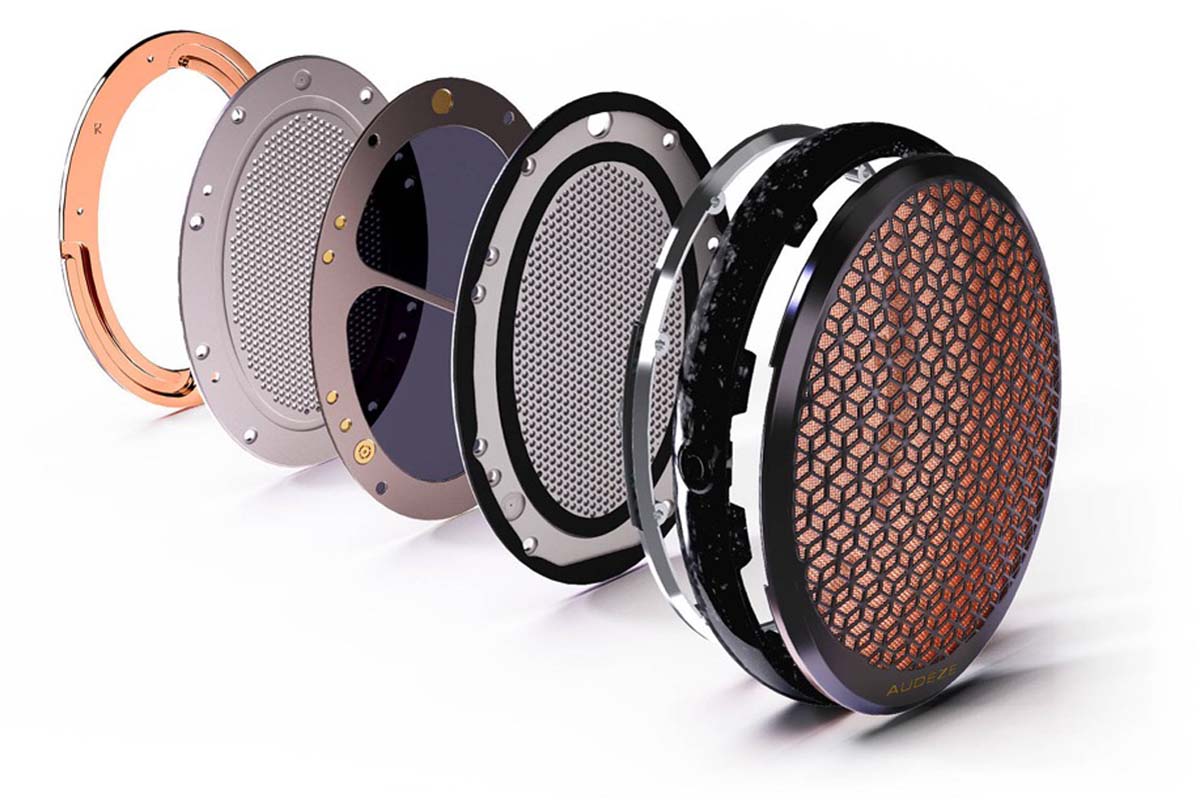
The CRBN2 operates according to the same electrostatic drive principle as, for example, Stax headphones, whose 580V DC Pro-Bias voltage also uniformly charges the carbon nanotube diaphragm. Two stator plates positioned to the left and right of the diaphragm receive the music signal as alternating voltage, causing the diaphragm to move within the changing electric field. The thinner and more homogeneous the diaphragm, the faster and more accurately it can convert the music signal into vibration frequencies, resulting in a more precise, clearer, and—musically speaking—less disturbed sound image. The stator plates are manufactured using a special circuit-board technology and consist of perforated PCB-based structures. These are coated with extremely thin metallized layers that possess no magnetic properties while ensuring the conductivity required for the music signal.
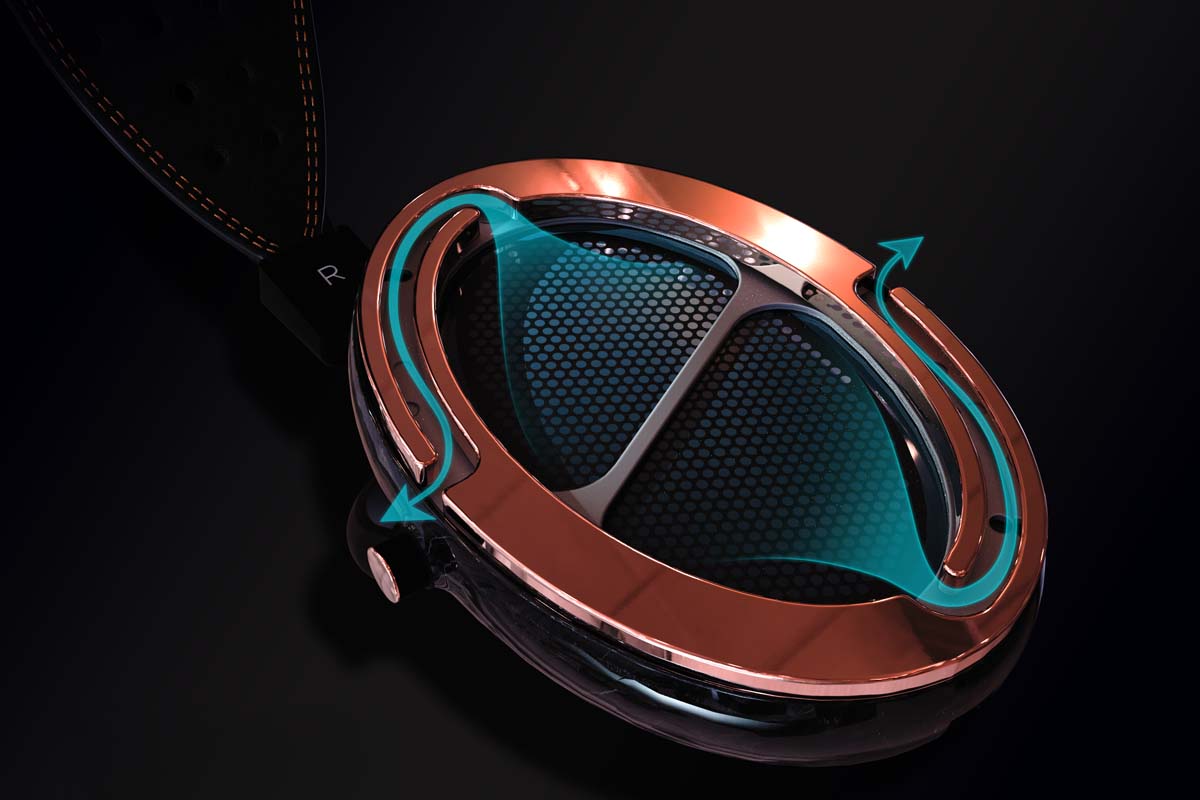
Another innovation of the CRBN2 is the so-called SLAM technology (Symmetric Linear Acoustic Modulator), designed to passively boost the bass range between 20 and 50 hertz by around six decibels. Electrostatic systems are often described as having weaker bass compared to dynamic drivers, and the new system is intended to correct this. Deep and precise bass reproduction requires good sealing of the diaphragm chamber, though this can lead to high pressure loads on the driver. Audeze addresses this with the SLAM pressure-equalization system. According to Audeze, it functions without additional mass; by modulating airflow through channels and openings in the stators and housing, it essentially emulates a bass-reflex system. The acoustic channels relieve the pressure chamber while simultaneously modulating the low-frequency range without falsifying the mids and highs. This is intended to provide more body and punch in the deep bass while also easing both diaphragm movement and pressure on the ears through even pressure equalization.
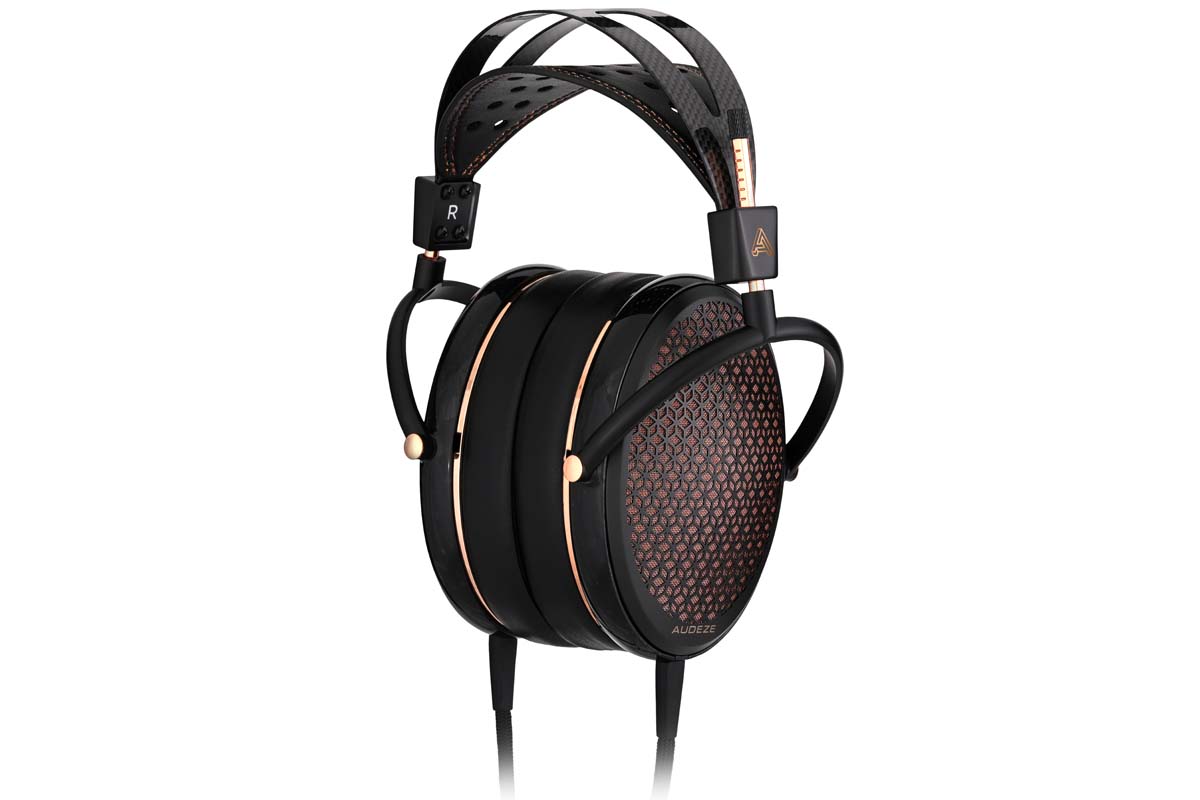
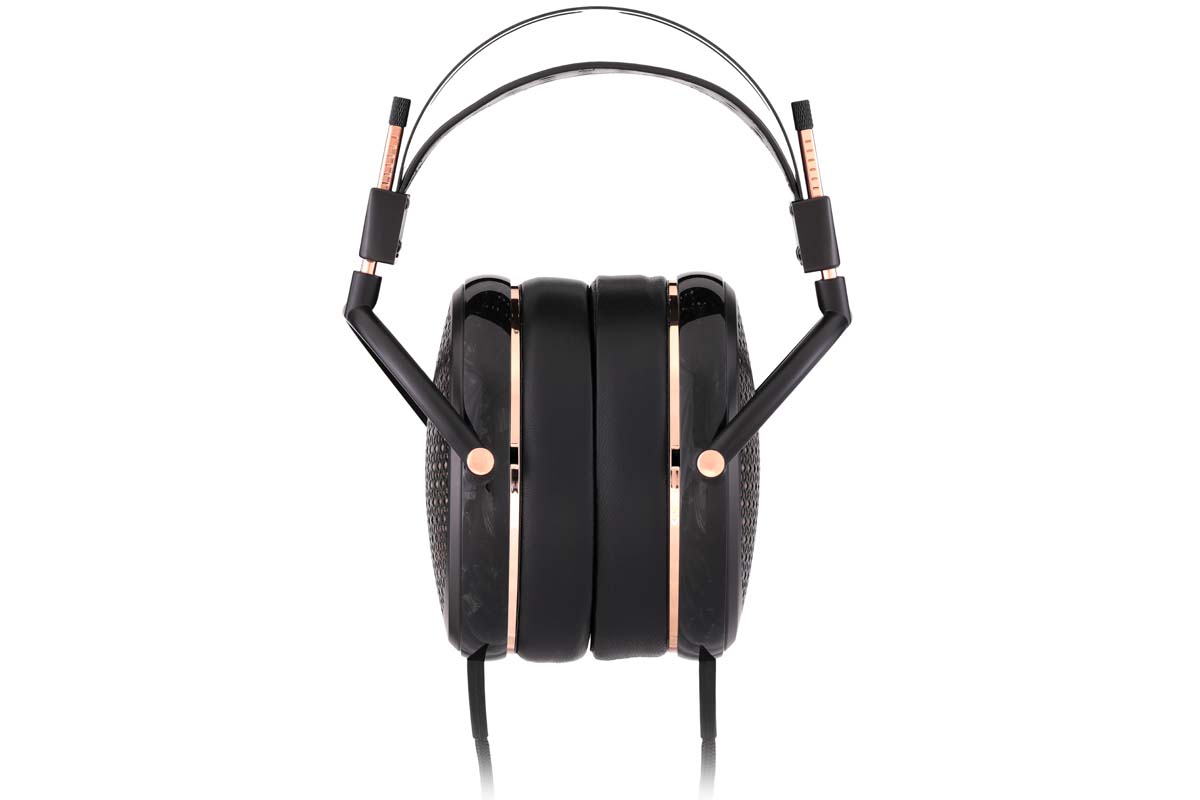
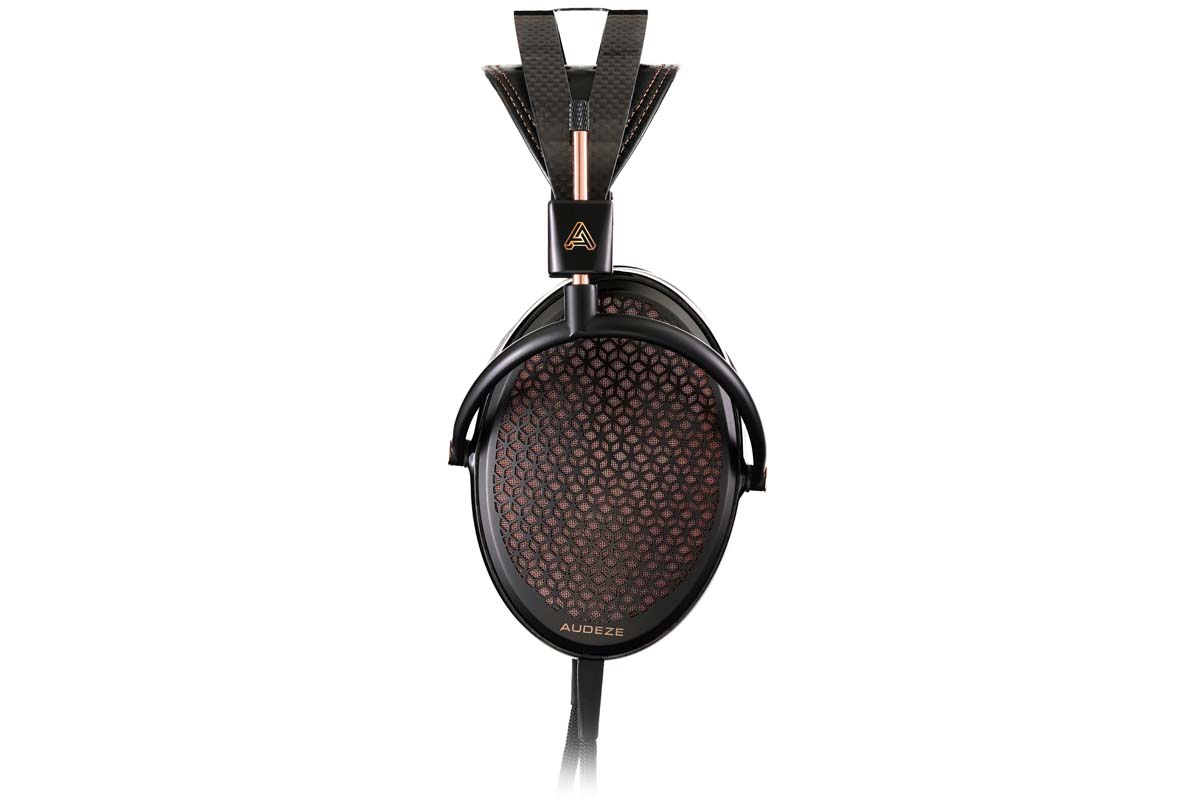
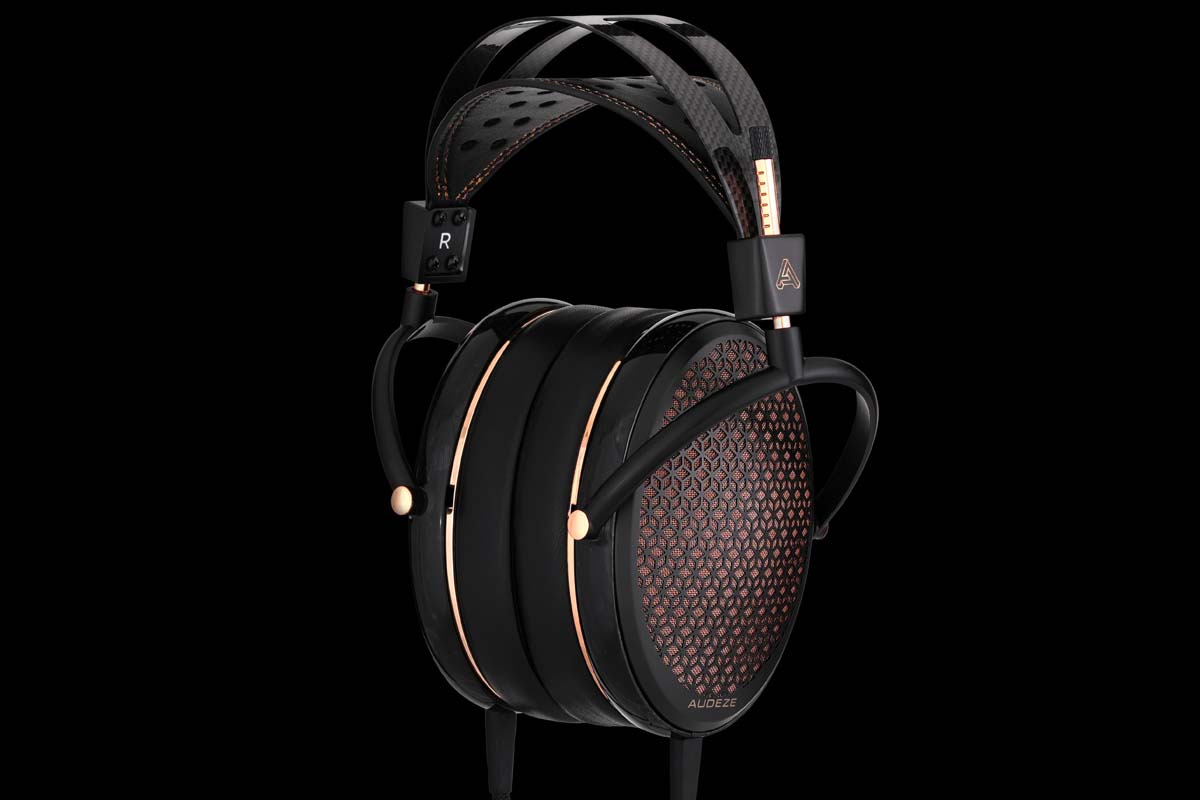
Compared with its predecessor, not only have the now copper-colored shimmering stainless-steel trim elements been introduced, but ergonomics have also been optimized—with deeper leather earcups and a carbon-fiber/magnesium combination for a stiffer headband structure. Weight has increased to 480 grams (for comparison: the predecessor weighed only 300 grams). On the connectivity side, the CRBN2 now uses an OCC single-crystal copper cable with an aluminum connector. In Germany, the CRBN2 currently costs around 7,420 euros, placing the Audeze firmly in the premium league of electrostatic headphones. Appropriately enough, it is delivered in a hard plastic carrying case. Accordingly, my expectations for a special listening experience were very high. On the one hand, it is understandable that transforming a groundbreaking innovation from research into a production-ready product requires substantial investment. On the other hand, especially at this price point, I would have appreciated an included user-friendly extension cable for the fixed 2.5-meter connection lead …
To fully unlock the sonic potential, WOD Audio kindly provided me temporarily with a highly capable partner in the form of the iFi iCAN Phantom. The Phantom can drive virtually all headphone systems, from high-impedance dynamic headphones to electrostatic systems. Furthermore, thanks to two separate input circuits, the Phantom can operate either in transistor or tube mode and can also serve as a preamplifier for connection to power amplifiers or active loudspeakers. Extensive internal adjustment options allow users to tailor bass reproduction (XBass) and crossfeed (XSpace) to personal preferences. A detailed report by my colleague Stefan Gawlick can be found here.
For evaluating the Audeze sound signature, however, these options were disabled, the Phantom was operated in classic solid-state mode, and the “Stax Pro Bias” configuration was selected. Using an external DAC from Audio Exklusiv, I fed the iFi Phantom various albums in FLAC Hi-Res format via Qobuz. As comparison systems, I also used my dynamic Denon AH-D9200 connected to an Eternal Arts Basic tube headphone amplifier, along with the venerable electrostatic Jecklin Float. The Denon and Eternal Arts form a highly harmonious pairing; the Denon’s high resolution and linearity across all frequencies, combined with the relaxed, smooth sound character of the tube amplifier, make this combination a “best match” for me. On the new album Better Broken, Sarah McLachlan returns after a nine-year hiatus with a fresh sound and deeply personal, emotionally told stories. The new production is transparent while still granting the powerful songs a certain warmth. Ideal for my dynamic setup, and a sense of inner calm and satisfaction quickly settles over the listener. Perhaps not the ideal moment to switch to the Audeze CRBN2 with the highest expectations?
At first impression, the switch is unspectacular—tonally, the basic direction remains the same: transparent, clear, and with a touch of warmth, meaning no harshness in the treble. I am not especially impressed—and that is exactly how it should be! Well, that’s the very least you should expect, I secretly think to myself. My experiences with headphones are divided: on the one hand, the abundance of detail and the immediacy at the ear are highly impressive. On the other hand, my senses tire more quickly, and a certain feeling of numbness sets in after extended listening. You tend to keep turning up the volume in order to compensate for listening fatigue. In addition, whenever I switch headphones, I first have to recalibrate and reacquaint myself with the sound: apparently my subconscious sonic memory must first adapt to changes. Only after a brief familiarization period do I notice the decisive differences, which become all the more obvious when switching back. The entire sound image with the CRBN2 is larger and even more clearly resolved than with the dynamic comparison system, even when using the iFi Phantom as the amplifier for both headphones. The CRBN2 also delivers more substantial bass and renders sibilants more pleasantly. Spontaneously, the comparison to a “big brother” comes to mind: the genes are similar, but the CRBN2 plays with greater maturity and refinement.
Particularly on the new album Our Roots Run Deep by Dominique Fils-Aimé, with its minimalist instrumentation, the voice emerges through the Audeze as an essential instrument with remarkable physicality and naturalness. The sparse arrangement of double bass, drums, percussion, and keyboards creates astonishing spaciousness and depth through the CRBN2. The Jecklin Float used for comparison is more linear in signature—the high frequencies are more emphasized, and the bass range is comparatively lean. Nevertheless, the Jecklin impresses with its very pleasant ear presentation, similar to a loudspeaker system. Unlike with a classic “earcup” headphone, there is no “inside-the-head localization” of the music, which is often perceived as unnatural and fatiguing. By comparison, the CRBN2 conveys a more intimate cohesion with the soundstage, despite not being a closed-back headphone. This impression is reinforced by the extremely comfortable leather earcups, which gently yet completely surround the ears. One feels comfortably cradled and disconnected from everyday life. Once sheltered in this way, the imaginary soundstage surrounding the listener appears astonishingly expansive, and you feel mentally able to wander around the instruments and between the musicians. The tonal colors are almost completely free of artifacts and can be differentiated with great clarity. The further development of the electrostatic principle using ultra-thin nanotube films, combined with low-frequency modulation and slightly rounded-off highs, has resulted in a voicing highly suitable for long listening sessions. Admittedly, I initially and mistakenly described the CRBN2’s sound signature as unspectacular, but before long you no longer want to be without it. From my perspective, the spectacular aspect of the Audeze CRBN2 is precisely this initially underestimated, unspectacular naturalness that makes both the music and the overall listening experience feel weightless.
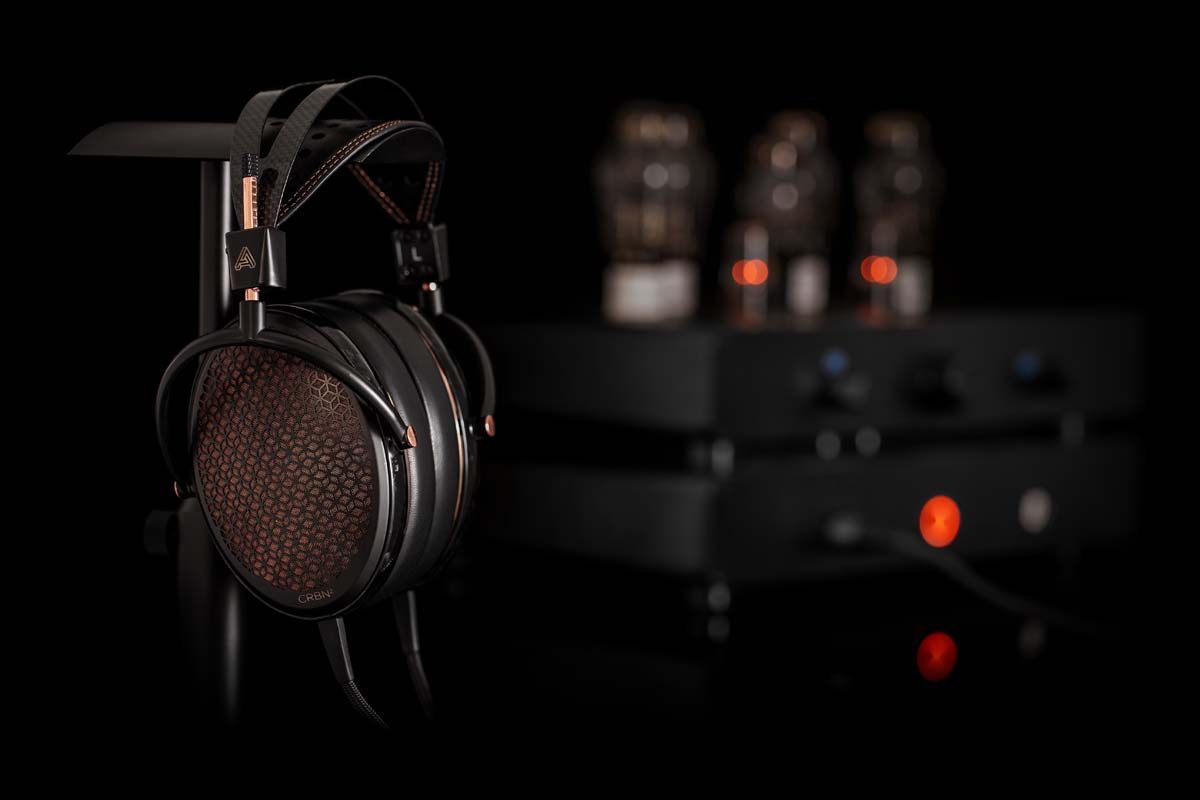
Headphones Audeze CRBN2
Concept: electrostatic over-ear headphones, open-back design | Diaphragm type: ultra-thin polyimide film with integrated carbon nanotubes | Special features: SLAM technology for earcup pressure relief and bass enhancement | Operating bias voltage: 580 VDC Stax Pro | Driver area: 120 x 90 mm | Electrostatic capacitance: 100 pF (including cable) | Frequency response: 10 Hz to 40 kHz | Maximum sound pressure level: > 120 dB | Distortion (THD@90 dB): < 0.1% | Sensitivity (@1 kHz/100V RMS): 100 dB | Finish: black | Materials: magnesium housing, stainless steel and polymer acetate; premium leather earpads; carbon and leather headband | Connection cable: OCC single-crystal copper, 5-pin Pro-Bias connector, length 2.5 m | Weight: 480 g | Warranty: 2 years | Price: approx. €7,420
Mega Audio
Feldborn 3
55444 Waldlaubersheim
Telephone +49 670 791452
info@megaaudio.de