
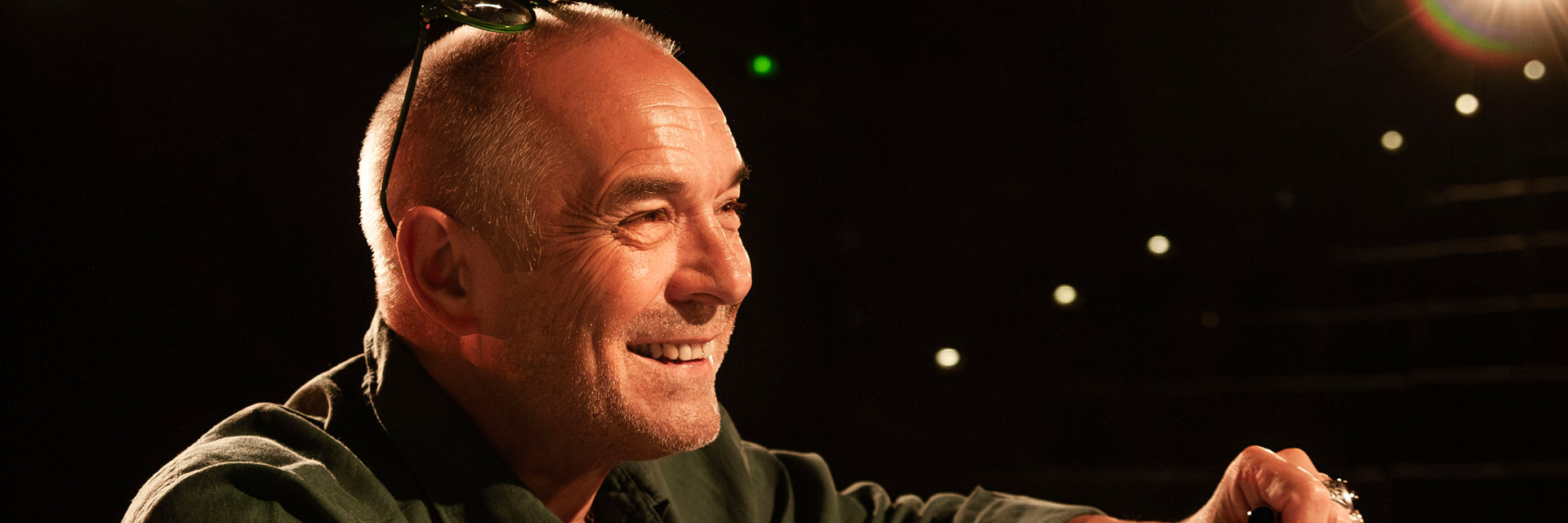
With Without Wind / Without Air, Roger Eno completes his trilogy on Deutsche Grammophon.
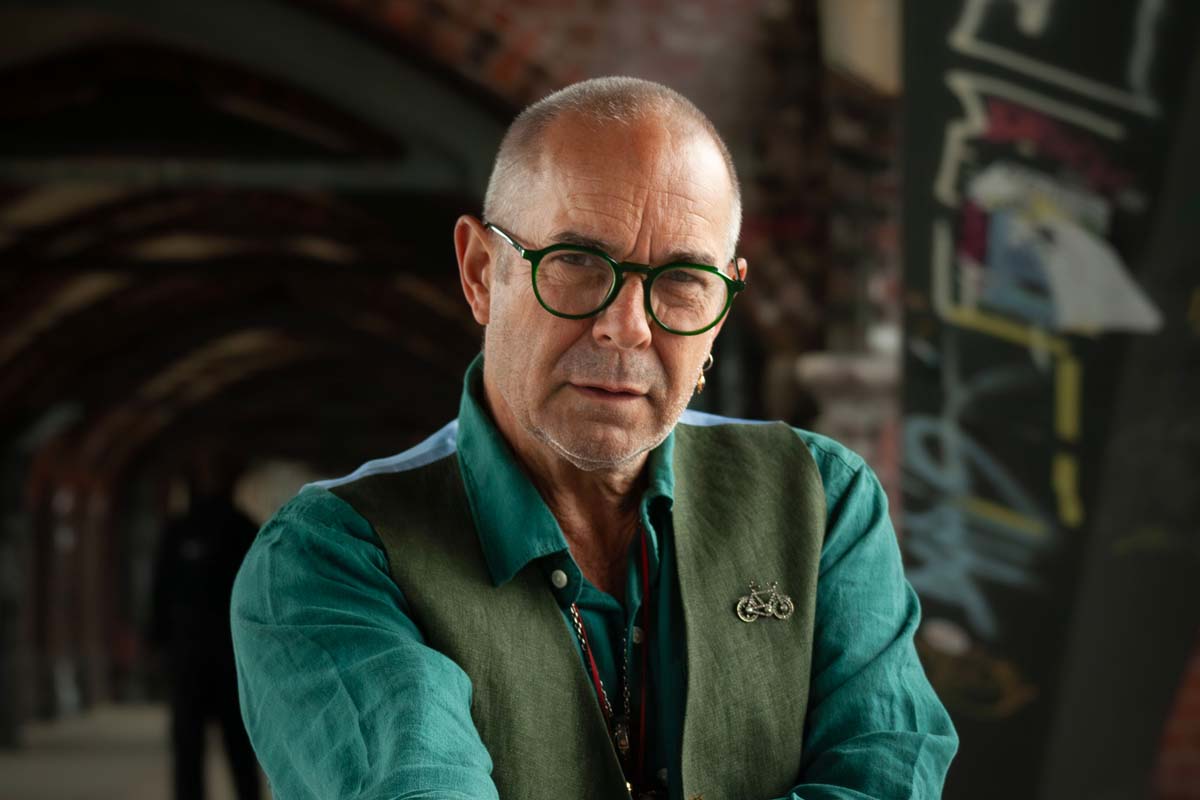
For a long time, Roger Eno was considered “the little brother” – a label that reveals more about our need to categorize than about his music. Anyone who listens closely quickly realizes that Roger Eno isn’t a Brian-soundalike at all. His voice is distinct, his compositions do not seek to impress – they simply seek to exist. And that is precisely where their strength lies.
Eno’s musical path begins in 1983, in the shadow of a milestone. While Brian Eno and Daniel Lanois were shaping the iconic soundtrack Apollo: Atmospheres & Soundtracks, Roger sat at the piano. It is his floating piano textures that give the album’s weightlessness its structure. What at the time appeared to be a background contribution now reveals itself, in hindsight, as the seed of a unique musical vocabulary – one that Roger Eno would steadily refine over the following decades.
His solo debut Voices (1985) and the later Between Tides (1988) present him as a lyrical minimalist with a gift for clear melodic arcs. The 1990s brought a series of finely wrought works such as Lost in Translation (1994), Swimming (1996), and The Flatlands (1998). Even if the discography might look like a sober list on paper, it paints the portrait of a composer steadily expanding his range without ever losing his inner voice.
Brothers, Not Mirror Images
Despite their differences, Roger’s relationship with Brian Eno has always remained musically close. Yet it wasn’t until 2020 that the two released a joint album: Mixing Colours. The record is a collection of delicate sound miniatures that emerged from a musical dialogue spanning years. Roger sends MIDI sketches; Brian responds with electronic coloration. The result is not “Brian plus Roger,” but a synoptic listening experience in which both brothers keep their roles – one provides the motifs, the other frames them.
Soon afterward, the EP Luminous appeared, along with an expanded version of the album. The brothers have also presented the music live, including a performance in Athens – a rare, late chapter in a musical relationship that never defined itself through rivalry but instead drew strength from both distance and closeness.
Ambient in Chamber Form
What makes Roger Eno’s work so distinctive is his approach to ambient music. He brings the genre from the studio into the concert hall, from concept into composition. His pieces are short, clear, often close in spirit to Satie – yet instead of urban coolness, you’ll find a grounded British sensibility: country lanes instead of terminals, morning mist over East Anglia instead of glass and neon.
For several years now, Eno has been releasing music on Deutsche Grammophon, where he has further developed his sound with string ensembles such as Scoring Berlin. Scene insiders speak of “ambient chamber” music or neoclassical tableaux – music that offers calm without simply soothing. Music that doesn’t push itself upon the ear but gently guides it. It’s hardly surprising: if Roger Eno excels at anything, it’s creating timing, atmosphere, and tension through reduction.
Anyone who listens backward through his catalog inevitably arrives again at Apollo – and realizes that the tone, the patience, and the trust in silence were there from the very beginning. In recent years Eno has found a home on the famous “yellow label,” Deutsche Grammophon – something of an ennoblement of his work.
With Without Wind / Without Air, Roger Eno delivers a finely woven contemporary album poised between melancholy and suggestion. The title – borrowed from a line by the Italian band The Doubling Riders – initially evokes late-summer calm, but in context it gradually unfolds an increasingly apocalyptic resonance: a world without wind, without air, threatened by climate change and species extinction.
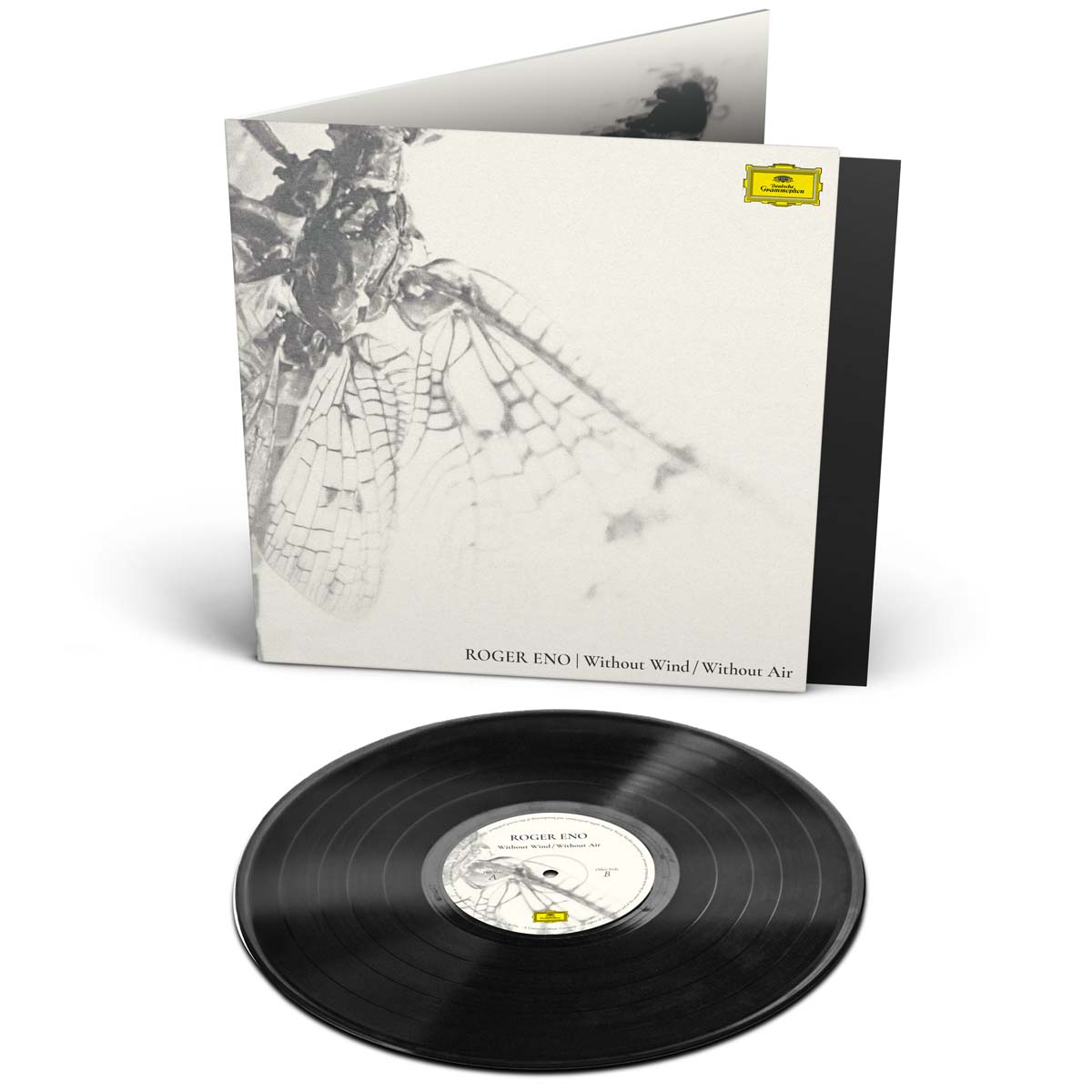
What could be more fitting for such a theme than a confrontation between electronics, acoustic sounds, and natural noise? Compositionally, the album ranges from delicate minimalism to dissonant drama. The title track hints at an approaching storm: Grace Davidson’s floating vocals, dark strings, electronic textures, and Alexander Glücksmann’s lamenting clarinet create a haunting sonic landscape.
This mood continues in The Final Year of Blossom – a meditation on transience inspired by the fear of a spring without cherry blossoms. Three solo piano pieces round out the album, which shifts between electro, ambient, and folk acoustics – each one simple in itself, yet deeply affecting.
Without Wind / Without Air is an atmospheric work that speaks quietly but tells a great deal – about beauty, loss, and the fragility of the world.
The Difference Lies in the Details
In direct comparison with Brian Eno, one thing becomes clear: Roger thinks less in systems than in motifs. Where Brian pursues theories, Roger stays with feeling. His pieces bear evocative titles such as “A Place We Once Walked” or “Arms Open Wide” – not statements, but states of being.
Sonically, he remains close to the instrument: closely mic’d piano, restrained room sound, sparse electronics. When technology appears, it functions as a sonic signature rather than a driving rhythmic force. Everything here is ambient – nothing club, and certainly nothing dancefloor.
This understatement is not a limitation – it is Eno’s signature. He trusts the tone.
Roger Eno has never defined himself through volume or comparison. Instead, he has carved out a niche within a niche: ambient as chamber music. Melodic, humane, and highly replayable. Those who wish to continue making comparisons will do so. But those who truly listen will hear something else: a composer who creates spaces from a handful of notes – and presence from silence.
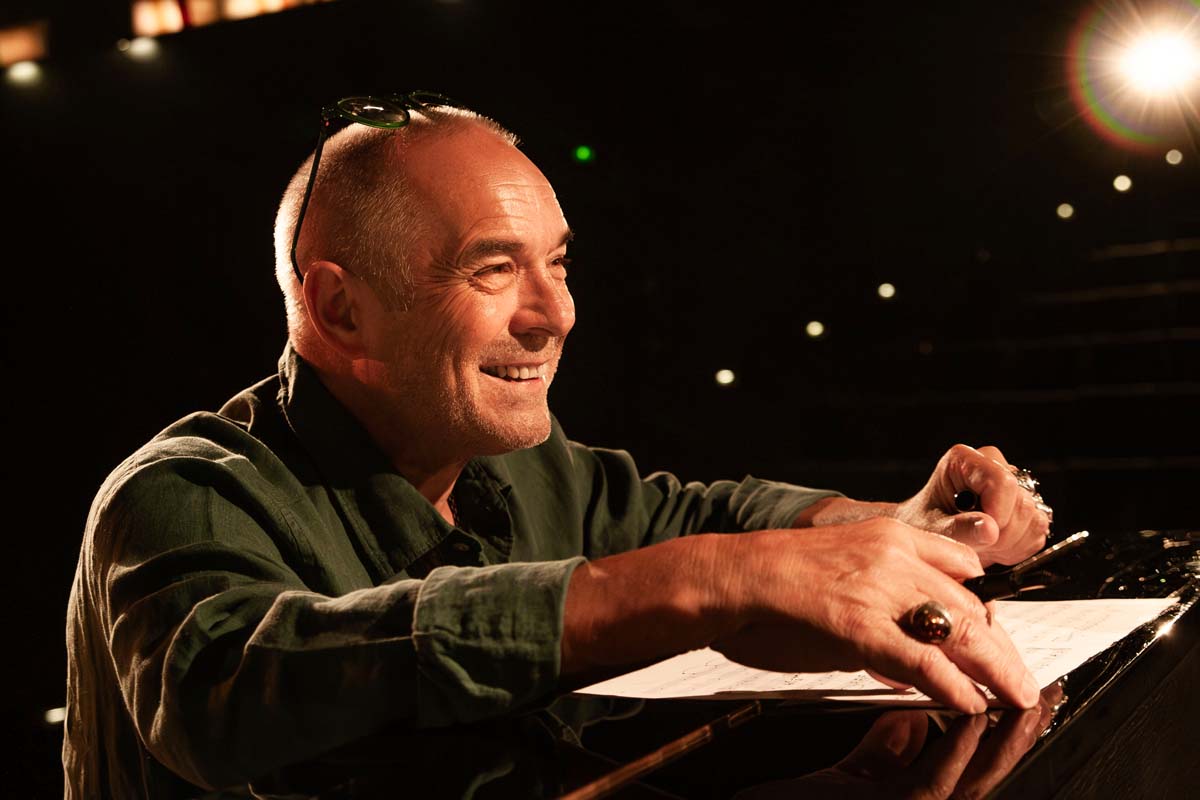
Roger Eno – Without Wind / Without Air
Label: Deutsche Grammophon
Format: LP, CD, DL