
Why The Last Resort still resonates 20 years later.
There are albums you simply listen to, and then there are albums that draw you in – almost irresistibly – because they create an entire world of their own. And sometimes – and the author of these lines must admit this – it happens only after years of delay. The Last Resort, released on Poker Flat in 2006, belongs firmly in the latter category. Here, Trentemøller constructs a deliberately dark sonic tableau, one that plays so knowingly with the cliché of Nordic gloom that it both confirms and subtly subverts it at the same time.
At a time when minimal techno dominated the clubs, a sound suddenly emerged that appealed to listeners moving between Depeche Mode, dark wave, ambient music, and a highly cinematic form of electronic production. Surprisingly, it also attracted audiophiles – listeners often equipped with high-end headphones or precision nearfield monitors – who seek out the subtle nuances of acoustic space. The reverse effect, however, was that Trentemøller effectively lost much of his appeal for the hardcore club crowd.
Looking at Trentemøller’s later career makes it even clearer how significant The Last Resort was as a turning point. After his early years in the Danish indie and post-punk scene, where he was primarily active as a guitarist and keyboardist, he increasingly turned toward electronic music in the early 2000s. He first released a series of EPs that gained attention among DJs for their blend of meticulously crafted minimalism, dub influences, and an understated pop sensibility.
The enduring impact of The Last Resort stems in large part from Trentemøller’s willingness to embrace slowness while maintaining a remarkable attention to texture. The tracks unfold like scenarios whose depth becomes most apparent when heard through high-quality analog equipment – equipment that doesn’t smooth over subtle imperfections, slight detunings, or the almost grainy crackle of vintage synthesizers. Instead, it reveals just how deliberately an old-school sonic character is cultivated in key moments throughout the album.
This commitment to sonic materiality is particularly evident in Trentemøller’s use of reduction. Minimalism is not an endpoint for him but a starting point for a gradual intensification that has less to do with the horizons of club music than with a relationship to space and time more commonly associated with experimental electronics or artists such as Klaus Schulze and Tangerine Dream. In “Nightwalker,” for example, the muted, deep kick drum becomes a heartbeat, making electronic music feel unexpectedly human.
Anyone who has heard the track on a carefully set up system – perhaps at audio exhibitions, where high-end manufacturers occasionally use selections from the album to demonstrate their systems’ ability to reproduce deep, dark bass spaces – will recognize the internal logic of this approach. The music lives through minute shifts in the sonic image, details that only become effective when the playback system is capable of reproducing fine dynamic gradations. At the same time, we shouldn’t forget that The Last Resort still retains a club-born credibility and roughness that are entirely absent from many of today’s polished electronic audiophile productions, such as “Liberty”.
While many productions from the 2000s now sound unmistakably tied to their era, The Last Resort remains remarkably resilient. Its refusal to embrace overproduced digital slickness gives the album a sense of timelessness. The album’s structure – hovering between club aesthetics and ambient sensibilities – reinforces that impression. “Miss You” could just as easily belong on the soundtrack of an independent film, while “Chameleon” provides a nervous surge of energy that marks the transition between introspective contemplation and dance-floor tension.
The album’s lack of patina is closely tied to this conscious embrace of analog sensibilities. Where other productions age because they are bound to the fashions of their time, The Last Resort ages like a musical instrument, gaining character as the years pass. You don’t return to it out of nostalgia, but because it creates an open space between solitude and a kind of warmth that is felt most intensely late at night, perhaps while immersed in its layered sonic architecture through a good pair of headphones.
Trentemøller’s subsequent evolution only underscores the importance of his debut. His later incorporation of indie, post-punk, and cinematic pop elements makes The Last Resort appear as a sonic foundation – a manifesto of a melancholic aesthetic that never entirely disappeared.
You could say that The Last Resort is an album for people who lie awake at night because they understand those in-between spaces where external stillness and inner movement converge. It speaks to listeners who recognize that clubs and melancholy are not opposites, and that music doesn’t always need to provide answers in order to be both comforting and quietly propulsive.
Twenty years later, the album still stands like a dark lighthouse in the history of electronic music. You return to it as one returns to a place that feels both unfamiliar and familiar at the same time – a place that is intentionally dark, yet open enough to offer a sense of refuge when the world outside has become too bright and the demands of everyday life threaten to numb every feeling.
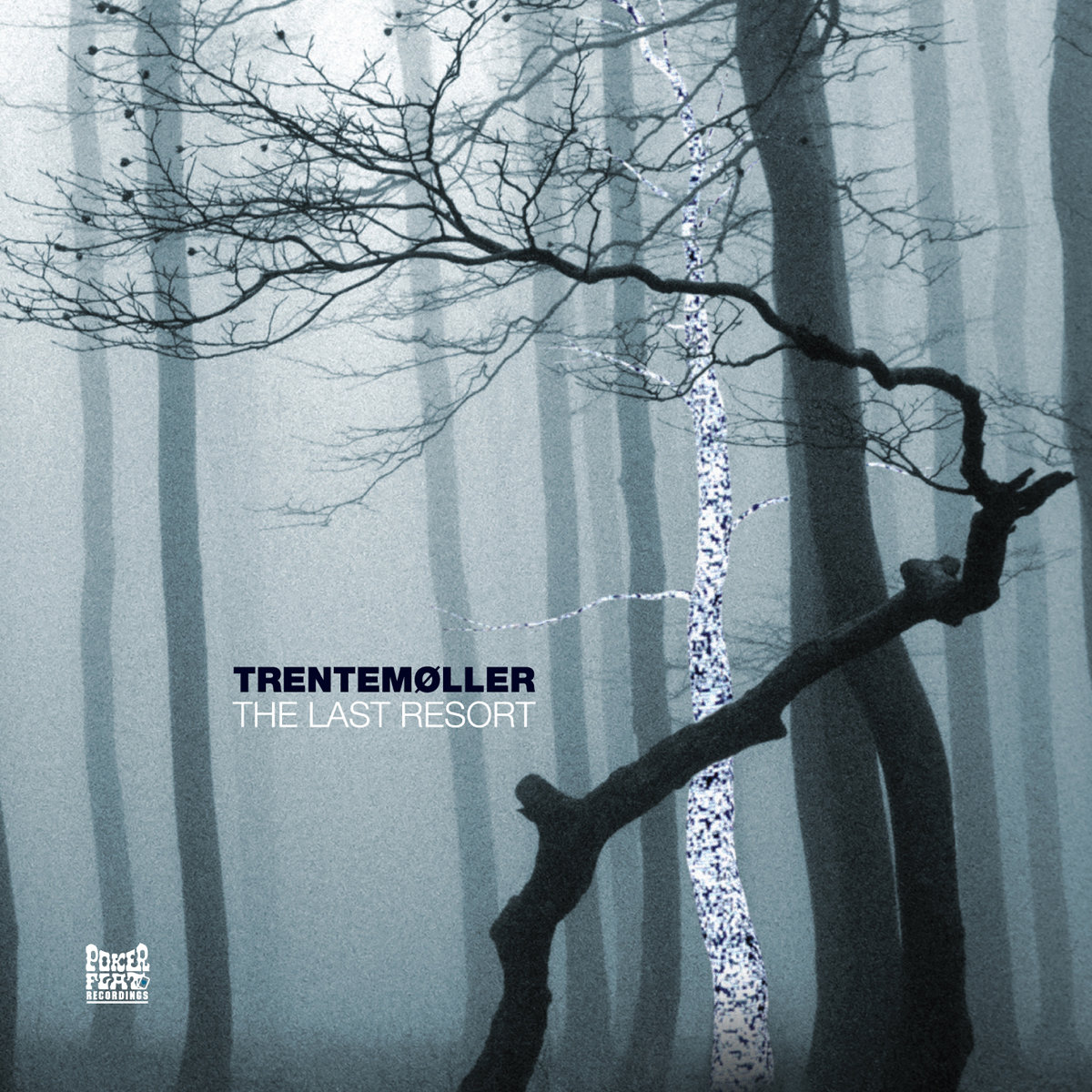
Trentemøller – The Last Resort
Label: Poker Flat Recordings (originally released in 2006)
Format: 3 LPs, Digital Download