
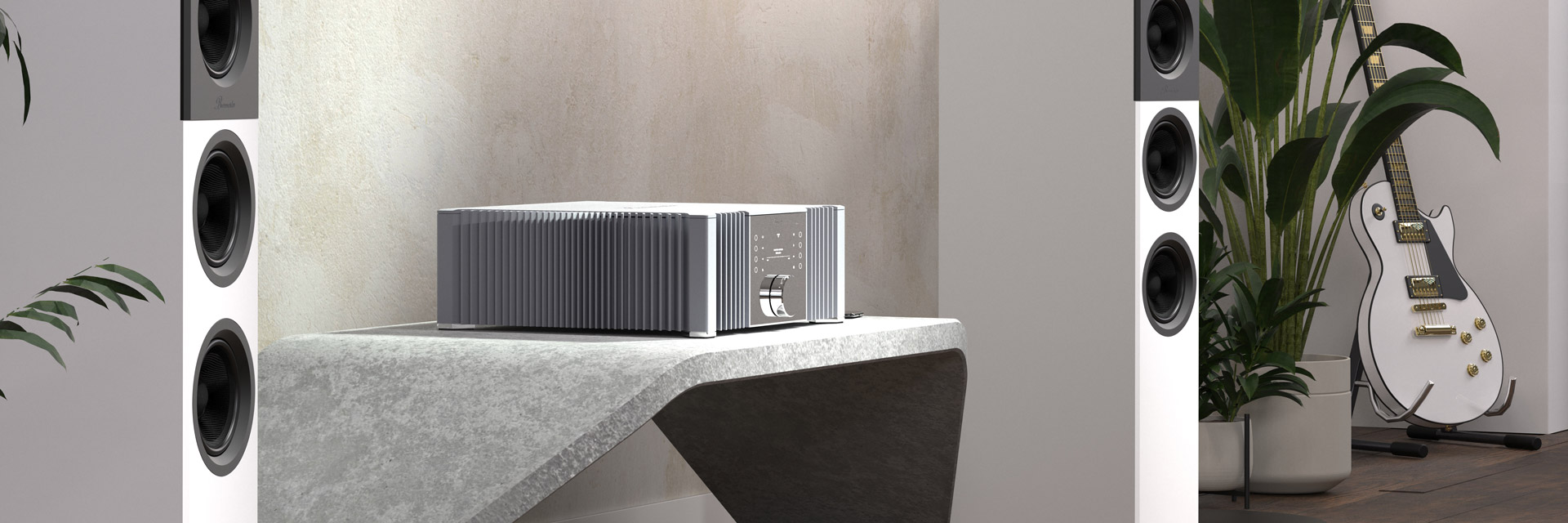
Stories about integrated amplifiers rarely get the pulse racing. This one is different. The Burmester 232 is different.
What is an integrated amplifier? A preamp and power amp in a single enclosure. What is a Burmester integrated amplifier? That answer requires a much longer explanation. The Berlin-based manufacturer is one of the most complete and capable full-line audio companies not only in Germany, but worldwide. And when a company has the resources, it can make full use of them. There are no gaps in the Burmester catalog. Every category of signal-producing and amplification component is represented, and every requirement is addressed. When the project of a contemporary integrated amplifier is launched, the catalog can later state: “The new Burmester 232 fulfills all requirements of a modern amplifier product.” Translated into plain English: they drew from the fullest possible toolbox.
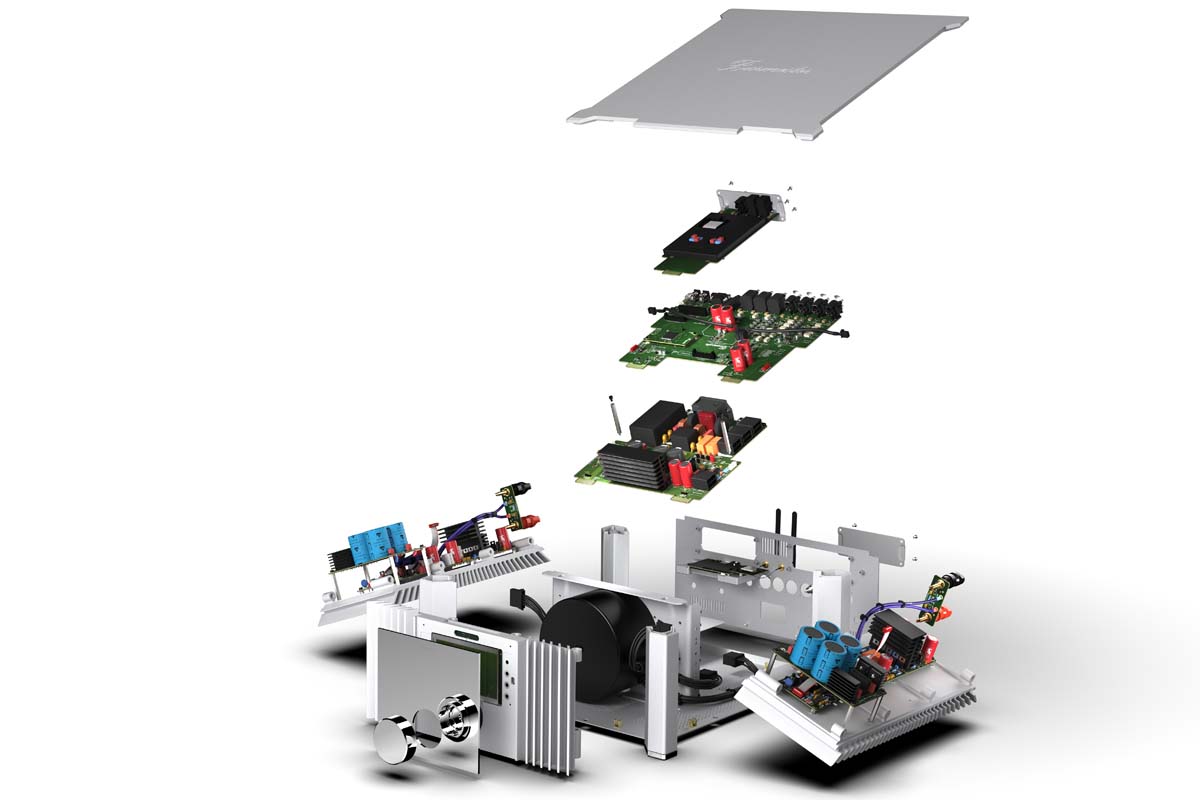
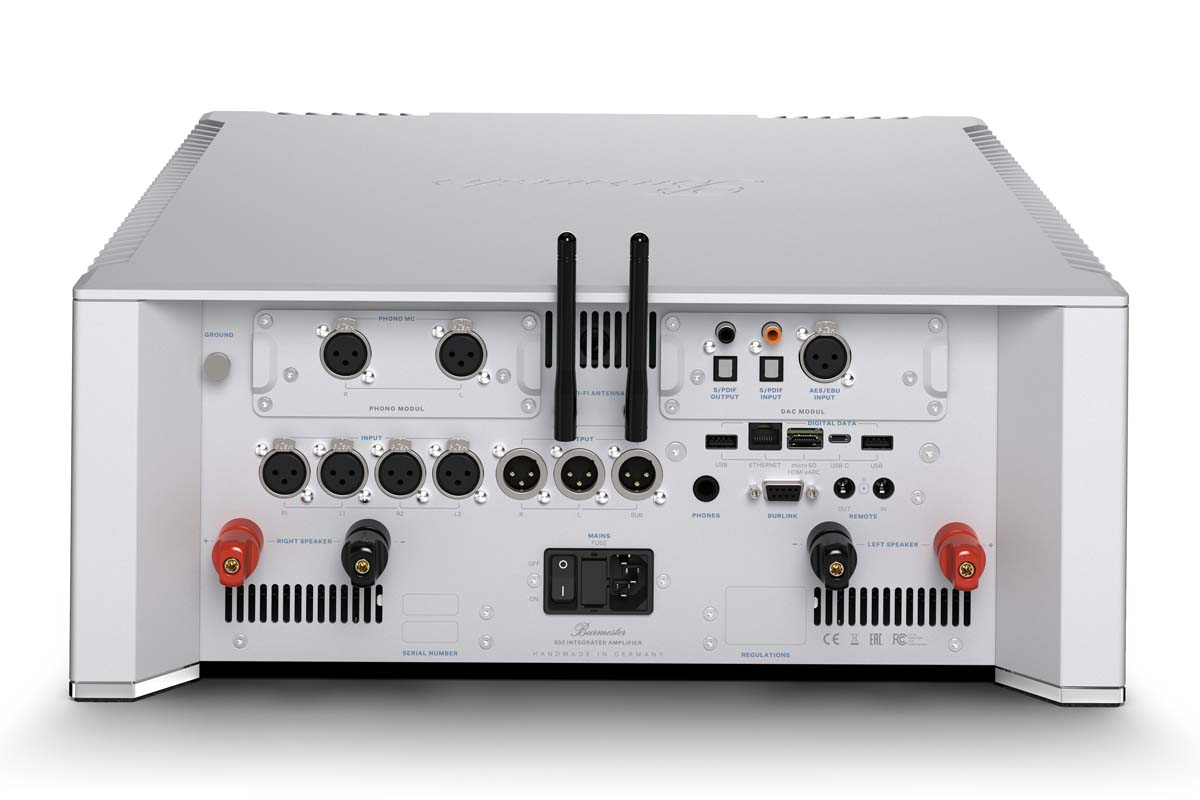
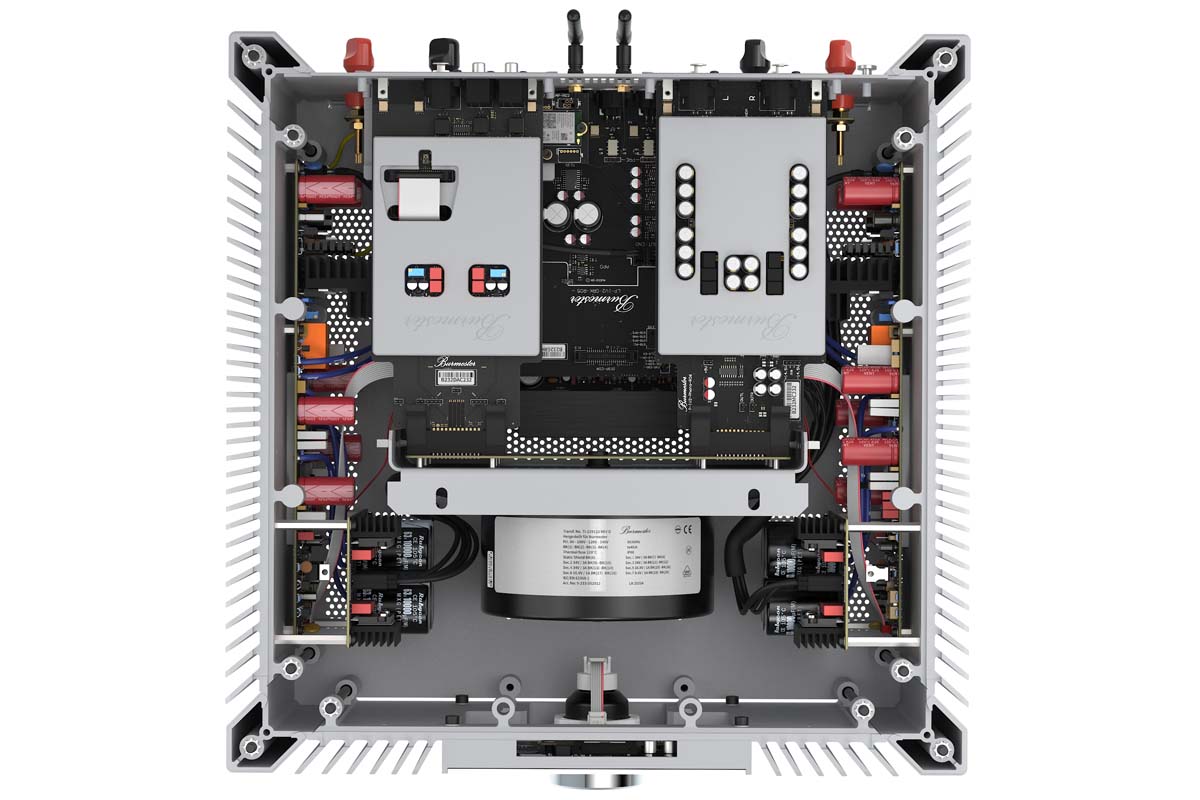
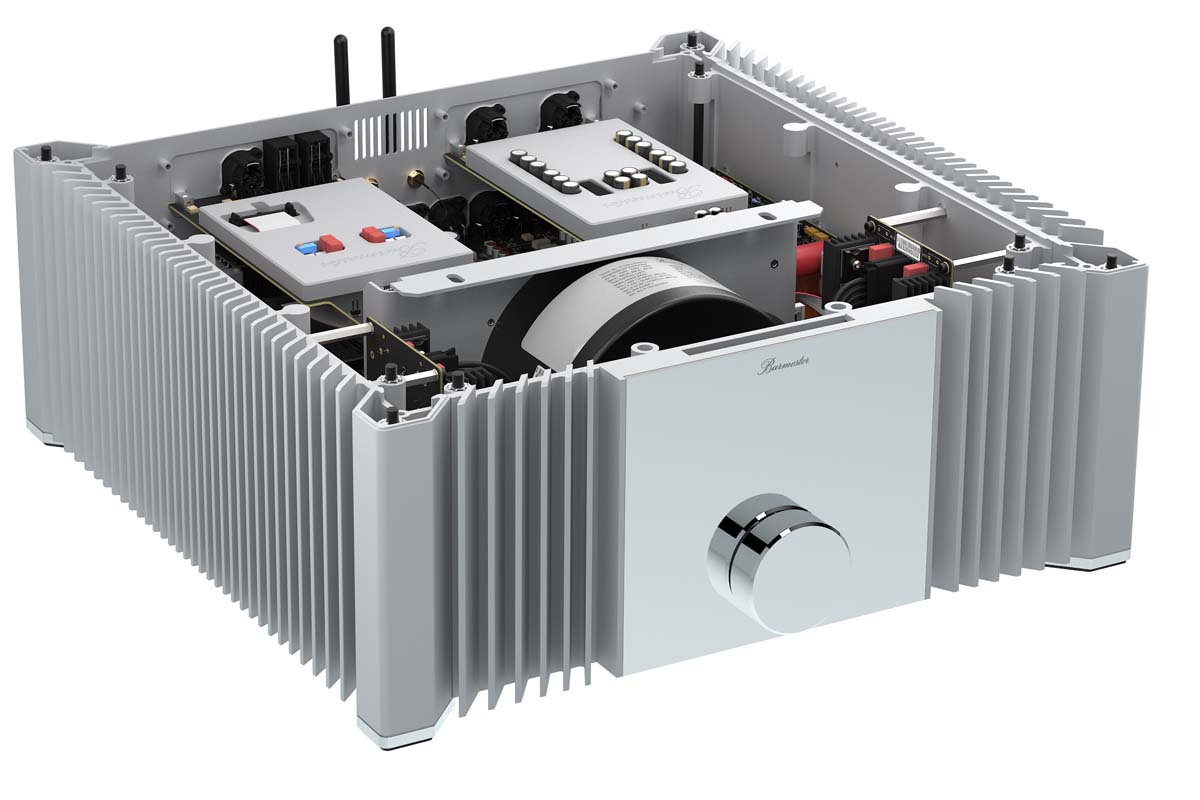
At first glance, the Burmester 232 looks very much like its siblings, the 032 and 082. In reality, it has been completely rethought. The new flagship features a modular design. In its basic form, it is an analog line-level integrated amplifier enhanced by an app-based control interface. An optional phono board expands—or, some might say, completes—the unit into a fully integrated analog amplifier that leaves virtually nothing to be desired. This is where the 032 and 082 fall out of the comparison: they offer neither expansion capability nor a phono stage. The 232, by contrast, has a second option available: a digital module with DAC and streamer, including every wired and wireless interface expected today, compatible with Roon and all common Connect standards. It is a complete worry-free solution managed through the aforementioned app. With it installed, the 232 becomes a true all-in-one powerhouse.
The amplifier section of the 232 was developed entirely in keeping with classic Burmester values. Naturally, it uses exclusively analog Class A/B circuitry with a substantial linear power supply. Negative feedback is employed to minimize distortion. The resulting signal purity is said to be record-breaking. Further probing reveals that Burmester will not place a component on a circuit board unless listening tests have confirmed its suitability. Want more details? Absolute silence. The company philosophy seems to be: trust us—we tried everything, measured everything, and listened to everything. DAC chips, RIAA equalization topologies, output-stage designs? Secondary matters, because only the final result counts. Fair enough. I appreciate a clear position. And honestly, they do have a point.
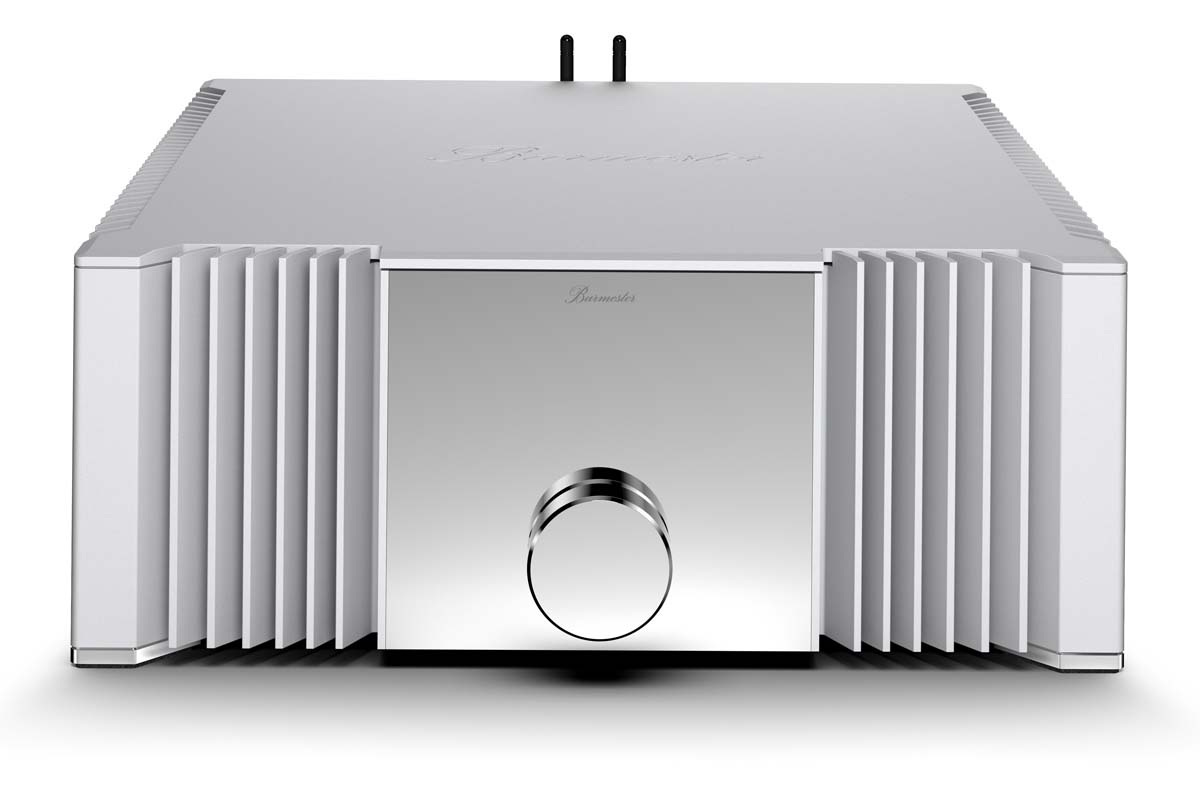
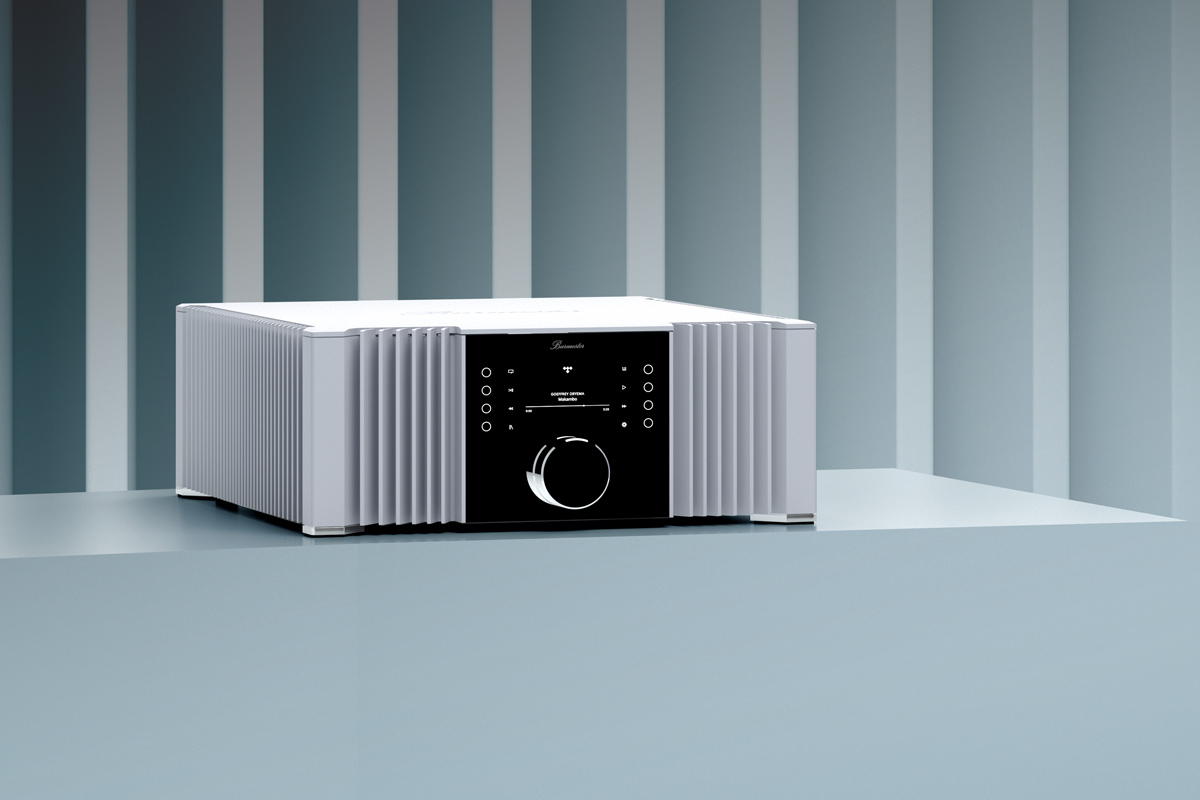
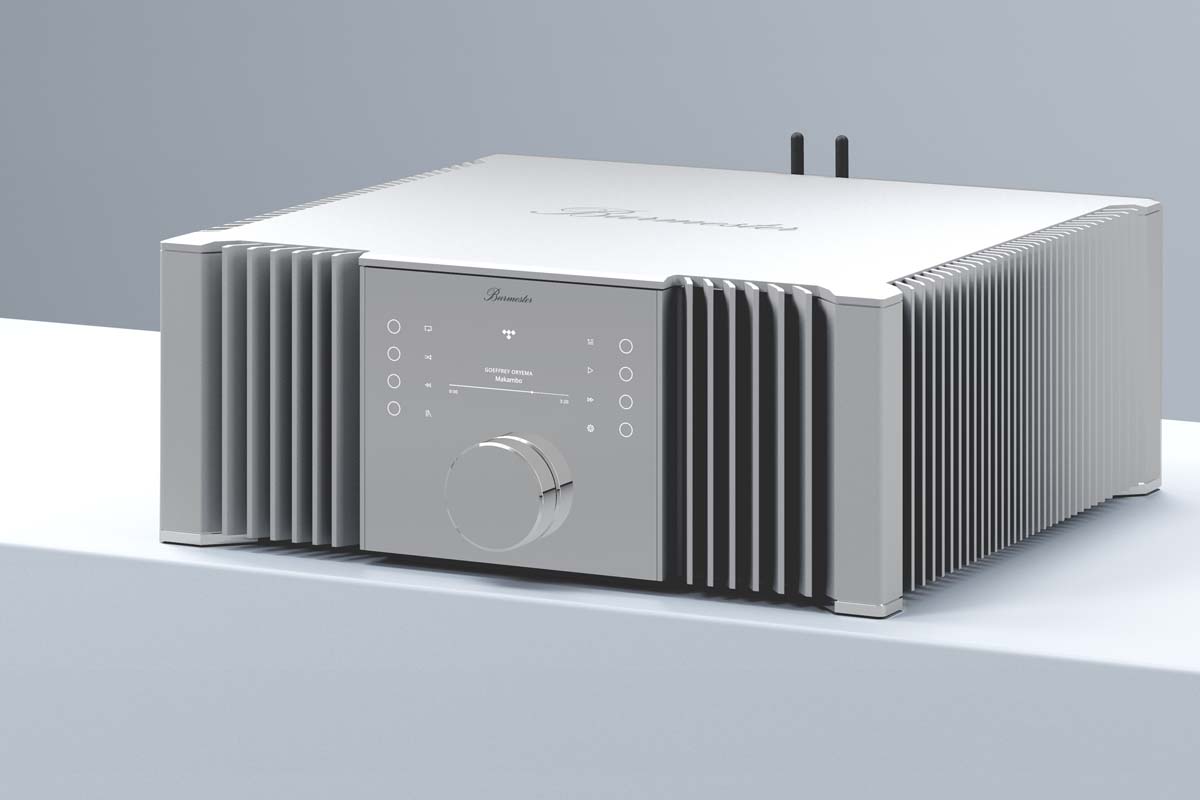
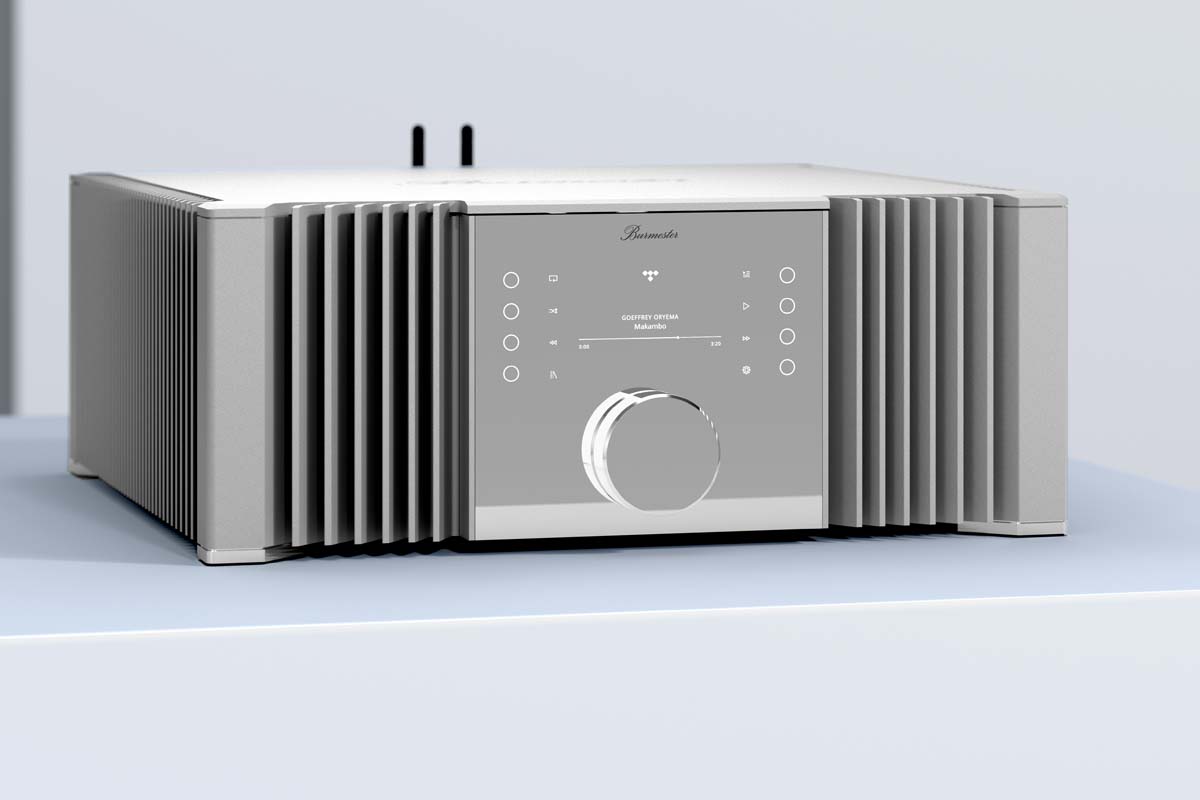
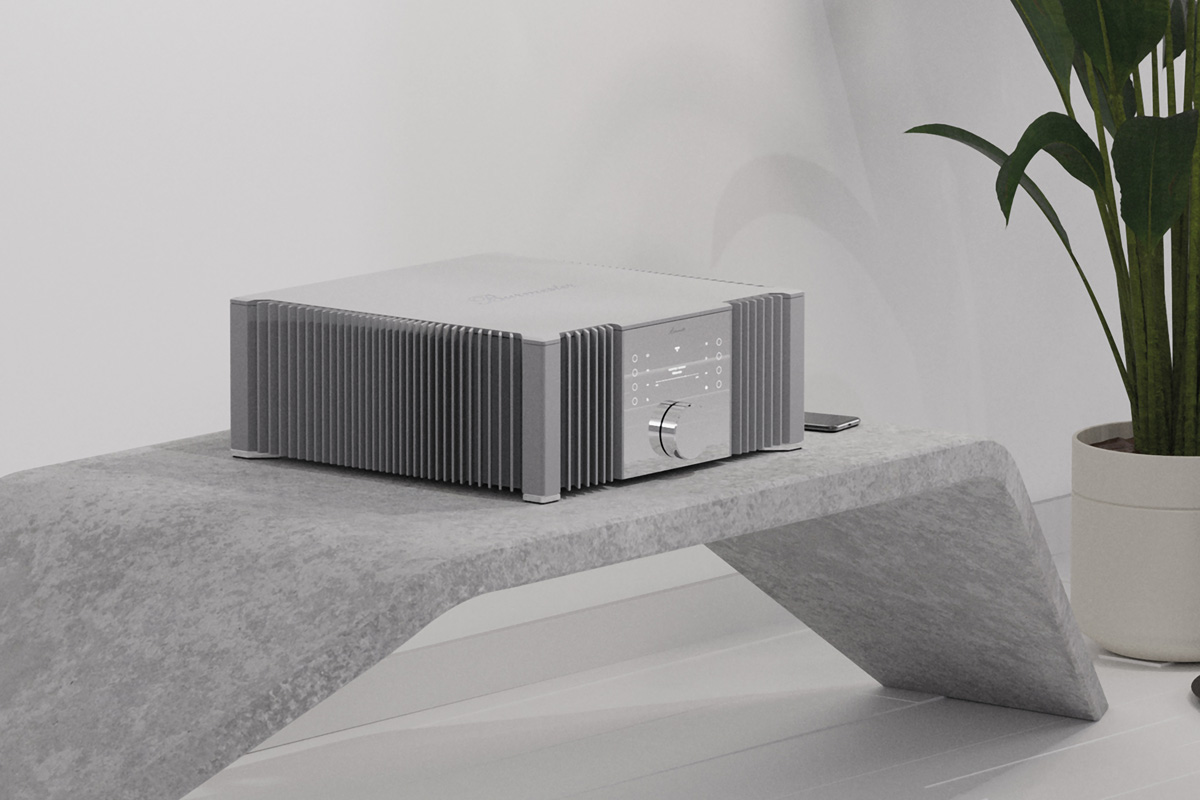
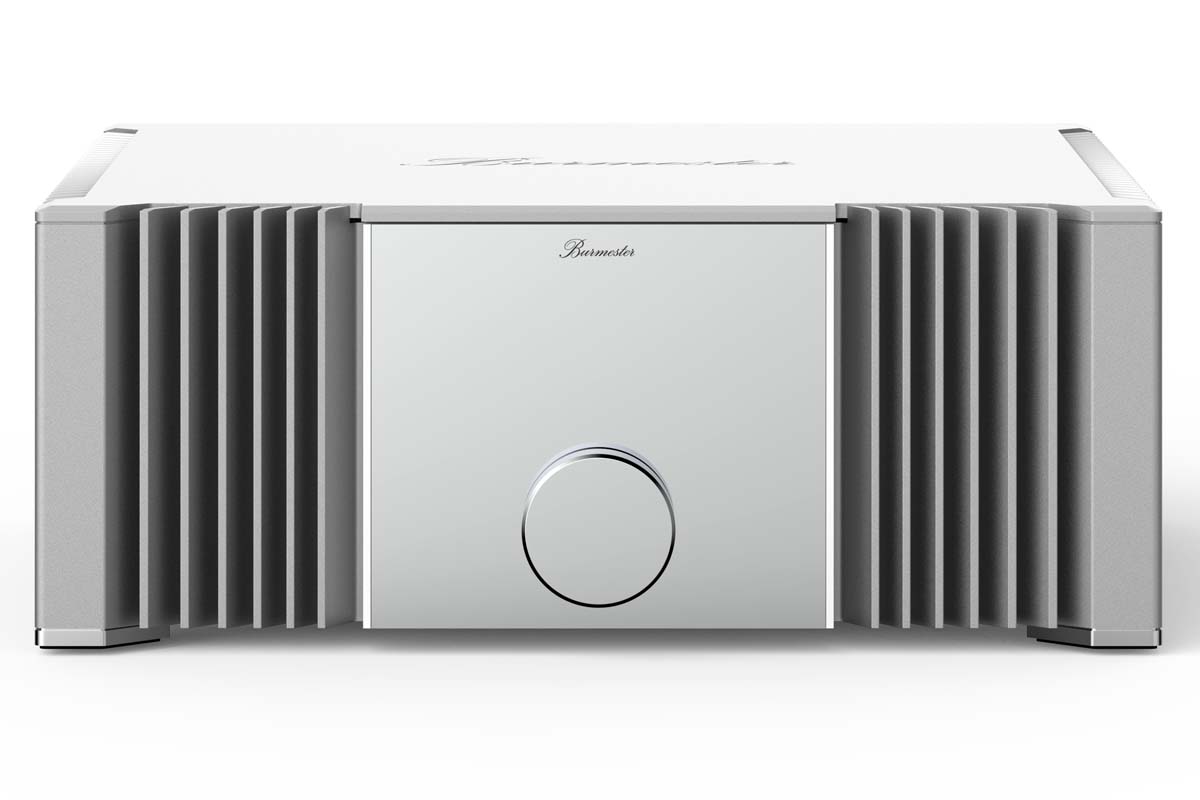
All this technology is housed in a chassis that is unmistakably Burmester—albeit with a twist. What appear to be push-buttons are actually touch-sensitive controls. What looks like a traditional rotary knob is “HaptiControl,” a rotary and push control with programmable electromechanical tactile feedback. What resembles Burmester’s iconic heatsink design is actually a cleverly modernized reinterpretation, with slender fins flowing along the sides of the chassis at varying angles, creating visual dynamism. Operation is straightforward either via the control knob and large, easy-to-read display, the supplied infrared remote, or the attractively named Burmester Conduct app.
During the review period, I had the opportunity to visit Burmester at the far eastern edge of Berlin’s Schöneberg district, almost in Kreuzberg. The newly renovated offices, development areas, and production facilities radiate such order and confidence that one might expect the filming of an industrial safety training video to begin at any moment. I saw meticulously arranged 232 circuit boards at the measurement stations, alongside shelves where every completed unit undergoes an extensive burn-in and testing procedure before being packed and shipped into the world—with what is presumably a microscopic probability of a manufacturing defect—to make someone very happy.
The Burmester 232 is a phenomenon. It is not a neutral conduit for music. Instead, it clearly reveals its irresistible desire to place the listener directly inside the performance and, when necessary, deliver transients with crystal-clear force and kick drums straight to the gut. At the same time, I often felt as though this super-integrated amplifier had placed me in a genuine monitoring environment. The precision with which it defines three-dimensional space, almost as if plotted on acoustic graph paper, combined with complete mastery over the finest sonic details, demonstrates genuine high-end artistry. I repeatedly found myself thinking of the finest integrated amplifier I had the pleasure of enjoying extensively the year before last: the Gryphon Diablo 333. Not that the Burmester can replicate the Danish giant’s almost magical, weightless musicality. But it possesses a remarkably similar openness and frees sound from the loudspeakers nearly as effectively.
Despite its unabashedly energetic and engaging character, the 232 remains an extremely sensitive revealer of source characteristics. Guided by the excellent Burmester app, I compared three streaming methods: Qobuz Connect, Roon-controlled Qobuz streaming, and my Innuos server operating through Roon. The app’s control experience never faltered during any switch or operation. Sonically, Qobuz Connect sounded more open and direct—one might almost say more “Burmester-like”—than the slightly smoother and warmer Roon implementations.
I have spent years lovingly refining and tweaking the streaming side of my system, but my CD player—a well-aged Norwegian monument called the Electrocompaniet EMC 1 UP—remains unimpressed. Connected via balanced cables to one of the Burmester 232’s line inputs, it puts the amplifier’s pure analog heart to the test. The Burmester unleashes its maximum 150 watts into 4 ohms instantly and without any sign of strain. I listen through numerous CDs and repeatedly enjoy the feeling of rediscovering familiar tracks. I like to listen loudly, and the Burmester excels at it. Long-building crescendos never turn stressful, even when I accidentally set the volume a little too high at first.
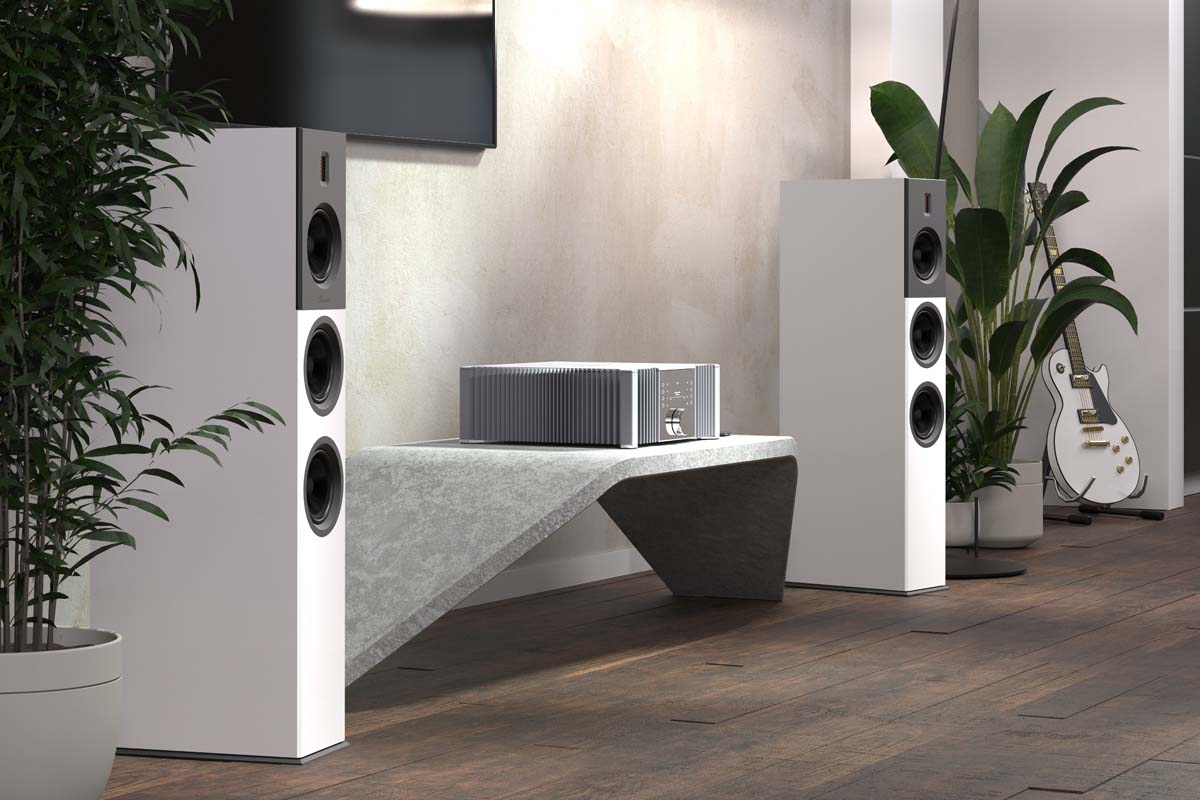
Partway through the review, I switched loudspeakers. My reliable Ayon speakers reveal more of their own character with the Burmester than they do with my Silvercore/Rowland combination. Through the Burmester 232 they sound notably open and clear, lightweight and transparent in the bass, and slightly more direct in the treble than I am accustomed to. I find the result neutral and thoroughly enjoy the system’s extraordinary resolution and speed. Then I dig out a vintage gem with enormous potential: my first “real” loudspeakers, once the best compact speakers in Dynaudio’s lineup, the original version of the still-continued Special One series. It becomes clear that Burmester and Dynaudio are a dream pairing. The Special Ones quickly return to form: seamlessly coherent, beautifully full-bodied, open and natural, with the kind of tonal color that lovers of classical music and acoustic jazz dream about.
At that moment, I could happily sell everything else and grow old with exactly this combination.
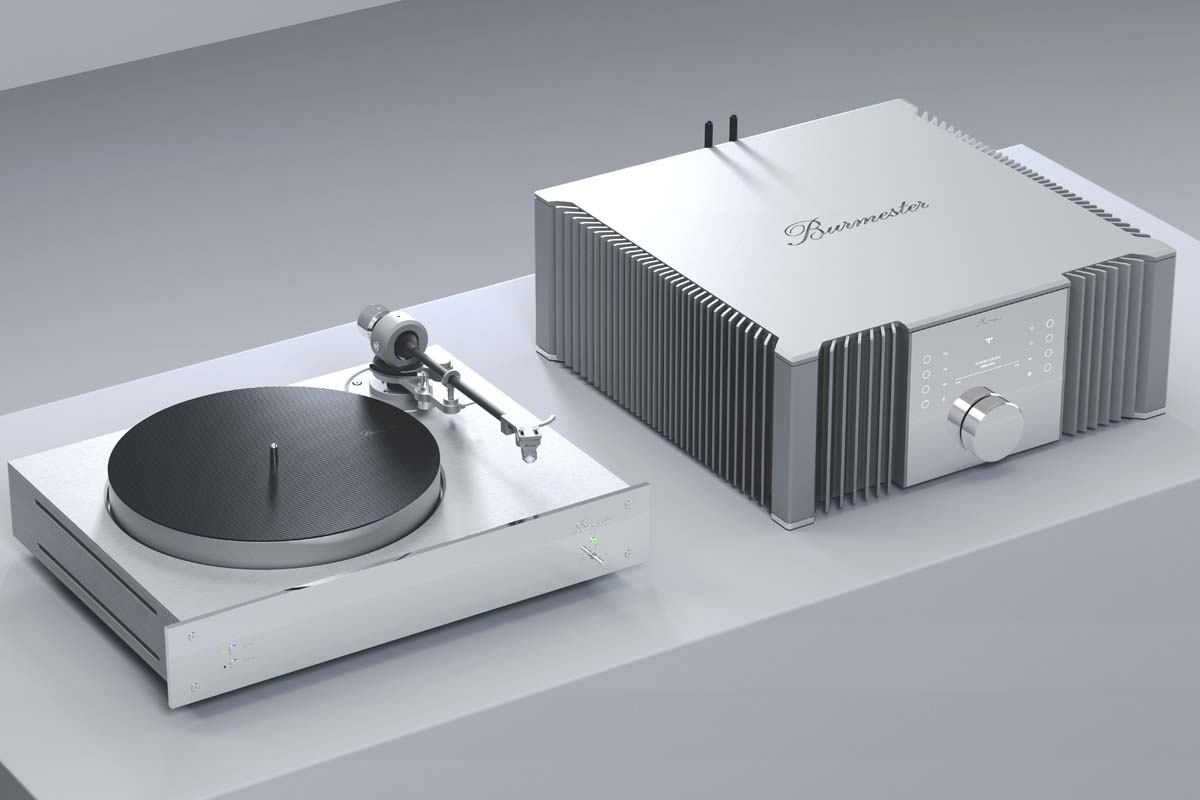
That leaves the phono section. Only moving-coil cartridges are supported. Using the app, I select the impedance that best matches my Lyra Kleos. The phono board, derived directly from Burmester’s own reference equalizers, quickly makes it clear that it has no trouble competing with my exotic setup consisting of a Consolidated Audio silver step-up transformer and a Hagerman MM stage fitted with selected NOS tubes. The result is free from noise, instantly dynamic, capable of producing a vast soundstage in every dimension, and full of inner tension. For my wife, I put on the latest album by Rachael & Vilray, West Of Broadway. She listens, captivated, through the entire side and enjoys the duo’s original compositions, which faithfully evoke the style of 1920s American swing. We agree: that was very, very good indeed.
Integrated Amplifier Burmester 232
Concept: modular streaming integrated amplifier with app control for analog and digital sources of all formats | Analog inputs: 2 x balanced (XLR), optional 1 x balanced MC phono (XLR) | Digital inputs: 2 x USB-A, 1 x USB-C, 1 x microSD, 1 x HDMI ARC, 1 x RCA, 1 x Toslink, 1 x XLR (AES/EBU) | Analog outputs: 2 x XLR pre-out (fixed/variable), 1 x mono subwoofer out, 1 x 1/4-inch headphone jack, 2 x speaker outputs | Digital outputs: 1 x RCA, 1 x Toslink | Additional interfaces: Wi‑Fi 6E, Bluetooth, RJ45, Remote In/Out, BurLink (RS232) | Streaming: AirPlay, Spotify Connect, Tidal Connect, Qobuz Connect, UPnP, Roon Ready, Internet radio | Output power (4 Ω): 150 W | Features: IR remote control, app operation, HaptiControl | Phono module features: variable MC impedance (33, 47, 91, 120, 390 Ω, 47 kΩ), variable gain, switchable subsonic filter | Finish: Silver/Chrome or Black | Dimensions (W/H/D): 45/18/48 cm | Weight: 29 kg | Warranty: 2 years, 3 years with registration | Price: from €17,900; phono option €3,000; DAC/streaming option €5,900
Burmester Audiosysteme
Wilhelm-Kabus-Straße 47
10829 Berlin
Telefon +49 30 7879680