
Minton’s Playhouse in Harlem is one of jazz’s truly magical places.
Since 1938, the club on West 118th Street in New York City has been a favorite gathering spot for musicians. Its owner, Henry Minton, had once been a professional saxophonist himself and had previously run the musicians’ hangout known as the Rhythm Club. In 1940, Teddy Hill took over as manager of Minton’s. He, too, was a musician, having just disbanded his big band. Feeling responsible for the players who had suddenly found themselves out of work, Hill hired several of them to perform at “his” club—most notably Kenny Clarke and Dizzy Gillespie. They were soon joined by Thelonious Monk, Charlie Christian, and Charlie Parker, forming the nucleus of the jazz revolution that came to be known as bebop. Beginning in 1941, Minton’s Playhouse became the place to be, because it was there that this wild new sound was taking shape. It was there—right there—that modern jazz was born. (After closing for many years, Minton’s reopened at its historic location in 2006 and again in 2013, operating as the Uptown Jazz Lounge.)
For Blue Note producer Alfred Lion, Minton’s was still a magical place in 1961. The previous year, Stanley Turrentine had made his Blue Note debut, and Lion now wanted to record the 26-year-old tenor saxophone newcomer in a live setting. As luck would have it, Turrentine was in the middle of a club engagement with the group Us Three. The name actually referred to the Horace Parlan Trio, with whom Turrentine had already recorded several Blue Note studio sessions. The four musicians happened to be appearing at Minton’s—the legendary club revered by every bebop fan. Teddy Hill was still the manager in 1961, and according to legend, Charlie Christian’s old guitar amplifier was still sitting in his office. Recording an album at Minton’s, in such a storied setting, carried no small measure of excitement. Never before had a performance there been recorded legally.
Alfred Lion always had a knack for nurturing young talent. Not only Stanley Turrentine but also Horace Parlan had been signed by Blue Note as a bandleader for only about a year. Lion decided to strengthen the live group by adding his newest discovery, guitarist Grant Green. Green had just completed his first Blue Note studio recordings, which had not yet been released. The performance was taped on a Thursday evening in February 1961 before a packed house. Four selections from the engagement appeared on the album Up at “Minton’s”: three standards (two taken at a fast tempo and one at a medium pace) plus a medium-tempo blues.
Even then, Turrentine’s greatest strength was widely considered to be his blues playing—especially medium-tempo blues in a minor key. He was never an avant-gardist, nor did he aspire to become one. Or, as Richard Cook memorably put it, he was “nobody’s torch-bearer for jazz progression.” Turrentine was, instead, an approachable crowd-pleaser. His roots lay in rhythm and blues, he felt perfectly at home in funky hard bop, and he would go on to become a star of soul jazz, jazz fusion, and jazz-inflected pop. In later years he was affectionately known as “the soulful Mr. T.” His huge tenor sound and earthy drive soon became legendary. “That’s how I want to hear a tenor sax,” Horace Parlan once remarked.
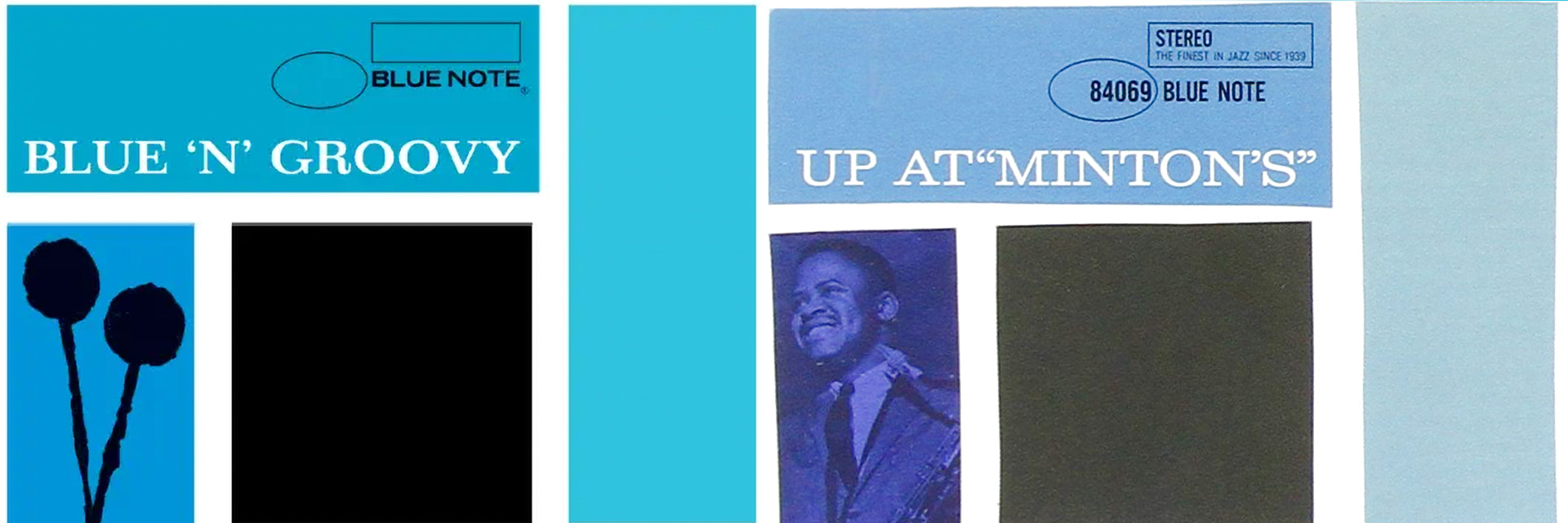
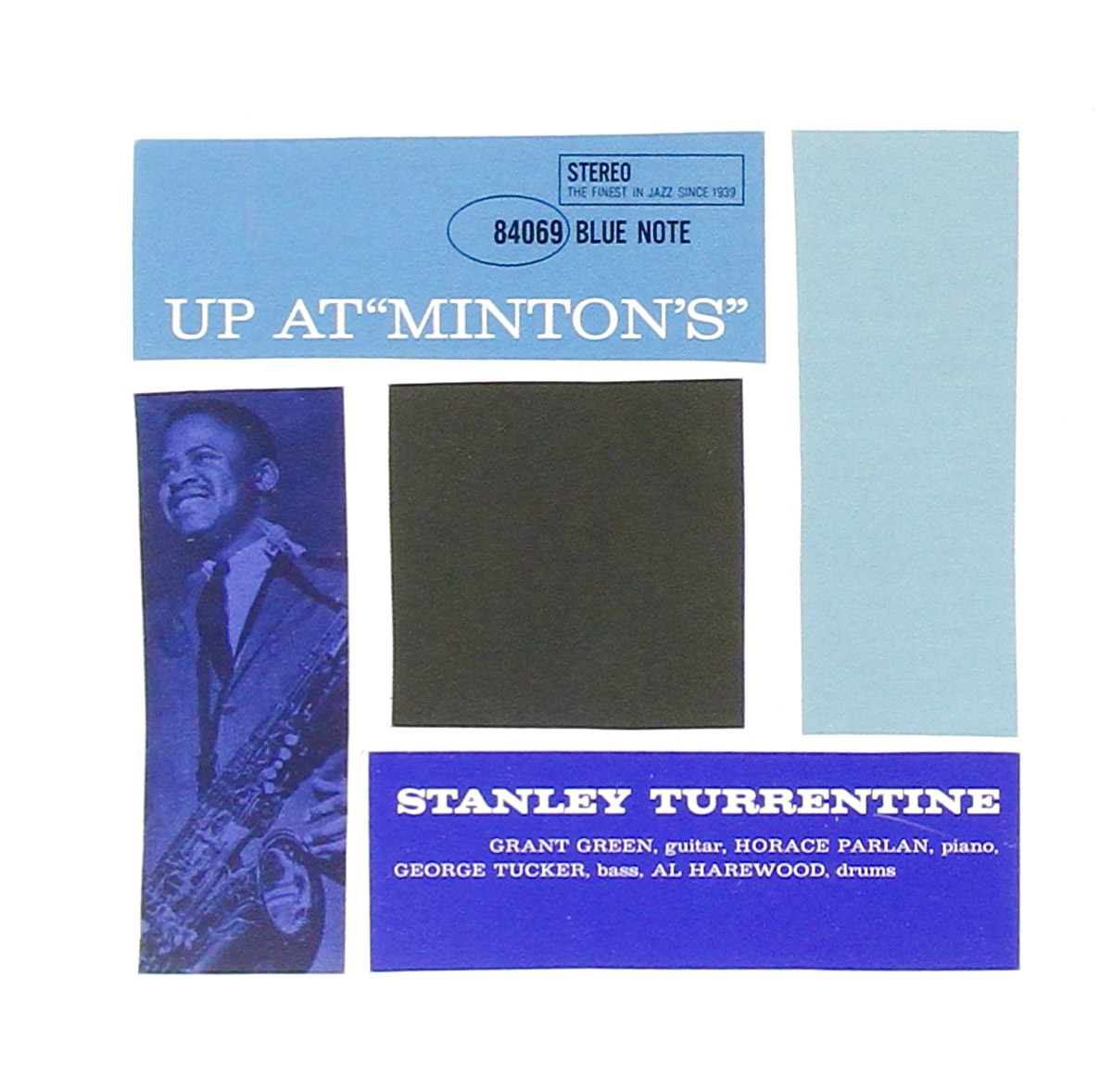
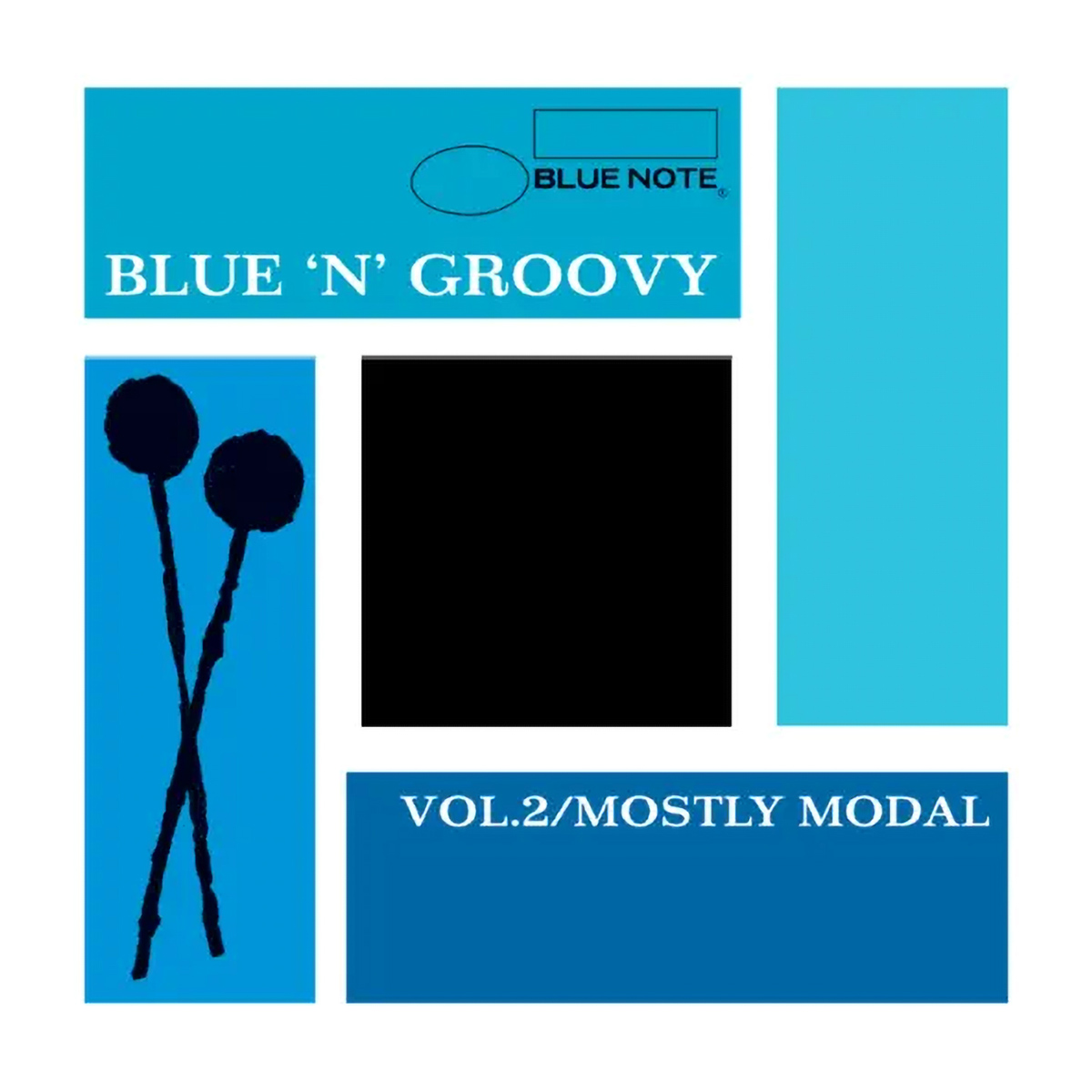
It comes as no surprise that the cover of Up at “Minton’s” is awash in shades of blue, given Turrentine’s reputation as a blues specialist. For the companion album, Volume 2—again featuring three standards and a blues—the designers simply shifted the color palette toward red and violet. Remarkably, the same basic cover design resurfaced a third time, 36 years later, for the compilation Blue ’n’ Groovy Vol. 2. That would likely have pleased the commercially minded Turrentine, since the compilation, according to its liner notes, presents “finger-snapping, dancefloor-friendly, soul-soaked jazz” from the vinyl era. Naturally, “Mr. T” himself is represented, with the track “And Satisfy.” The tune is, of course, a blues—and incidentally one of the few performances on the compilation that still swings in the classic sense.
The emphasis on Blue ’n’ Groovy Vol. 2, however, is less on swing than on the soul and Latin grooves that became increasingly prevalent during the late 1960s. Donald Byrd’s “Dixie Lee” (1966) exemplifies the classic soul-jazz beat that also propelled the Ramsey Lewis Trio into the American pop charts. Jackie McLean’s “Greasy” (1959), by contrast, relies on a boogie groove, while Duke Pearson’s “Wahoo” (1964) explores the mysterious feel of a 5/4 swing. The compilation features many of New York’s leading horn players of the 1960s, either as bandleaders or sidemen. Trumpeter Donald Byrd appears three times, while Lee Morgan, Blue Mitchell, Joe Henderson, Wayne Shorter, Jackie McLean, and James Spaulding each make two appearances.
One track stands apart: Art Pepper’s contribution is classic 1950s West Coast jazz and has nothing to do with Blue Note. Its inclusion on the 1997 compilation can be attributed to its Latin rhythm, as well as the fact that Blue Note was then part of a corporate family that also included several West Coast labels. The closing track is equally exceptional. McCoy Tyner’s “Message From the Nile” (1970), a twelve-minute performance featuring Alice Coltrane on harp and Wayne Shorter playing in an unmistakably John Coltrane-inspired mode, builds a bridge toward modal jazz, world jazz, and jazz fusion.
Stanley Turrentine – Up At Minton’s (Vol. 1)
Blue Note, 1961
Various Artists – Blue ’n’ Groovy Vol. 2
Capitol, 1997
Find Stanley Turrentine – Up at Minton’s on Discogs
Find Blue’n’Groovy Vol. 2 on Discogs