
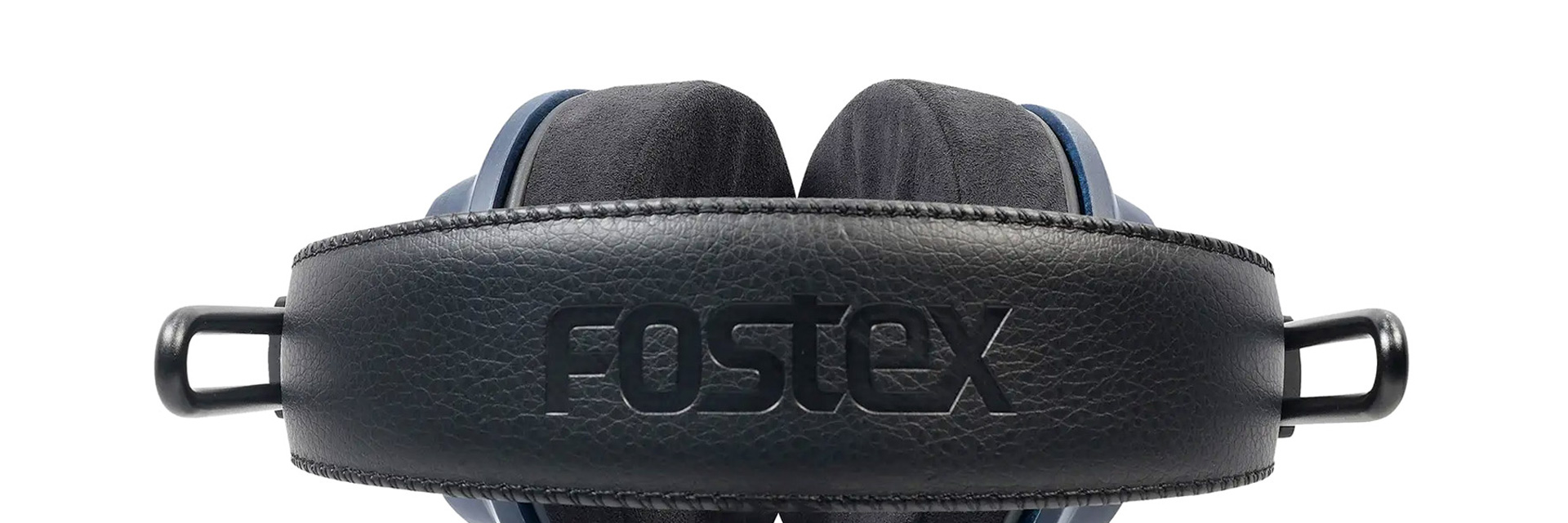
More than 50 years ago, Japanese professional audio manufacturer Fostex built its first pair of headphones, the T50.
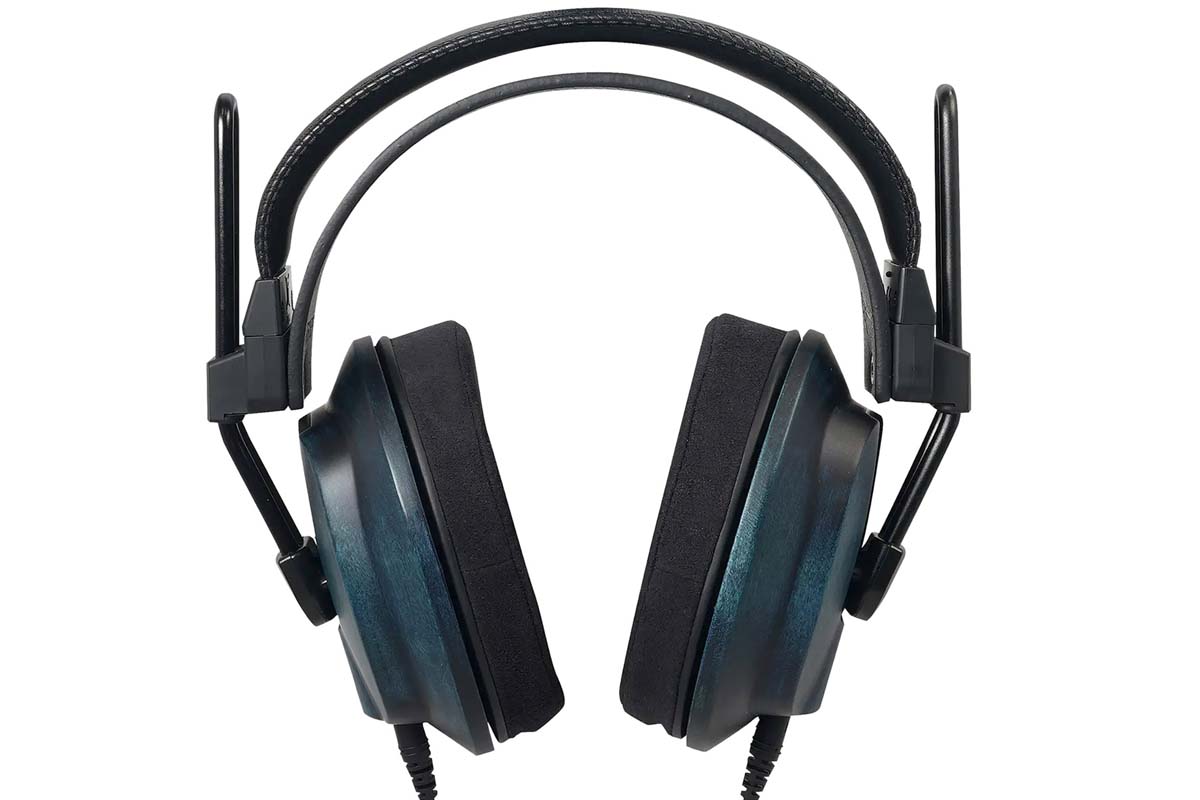
It featured the first generation of the company’s proprietary Regular Phase (RP) technology. Even back then, the design employed a planar magnetic driver, with conductive traces distributed across the entire diaphragm. The current Fostex T60RPmk2ai builds on more than five decades of refinement and adds several premium upgrades over the standard model.
The T60 family consists of three closely related headphone models. There are the closed-back and semi-open T60RPmk2 versions (manufactured in China), as well as the flagship model reviewed here, distinguished by the “ai” designation and manufactured in Japan.
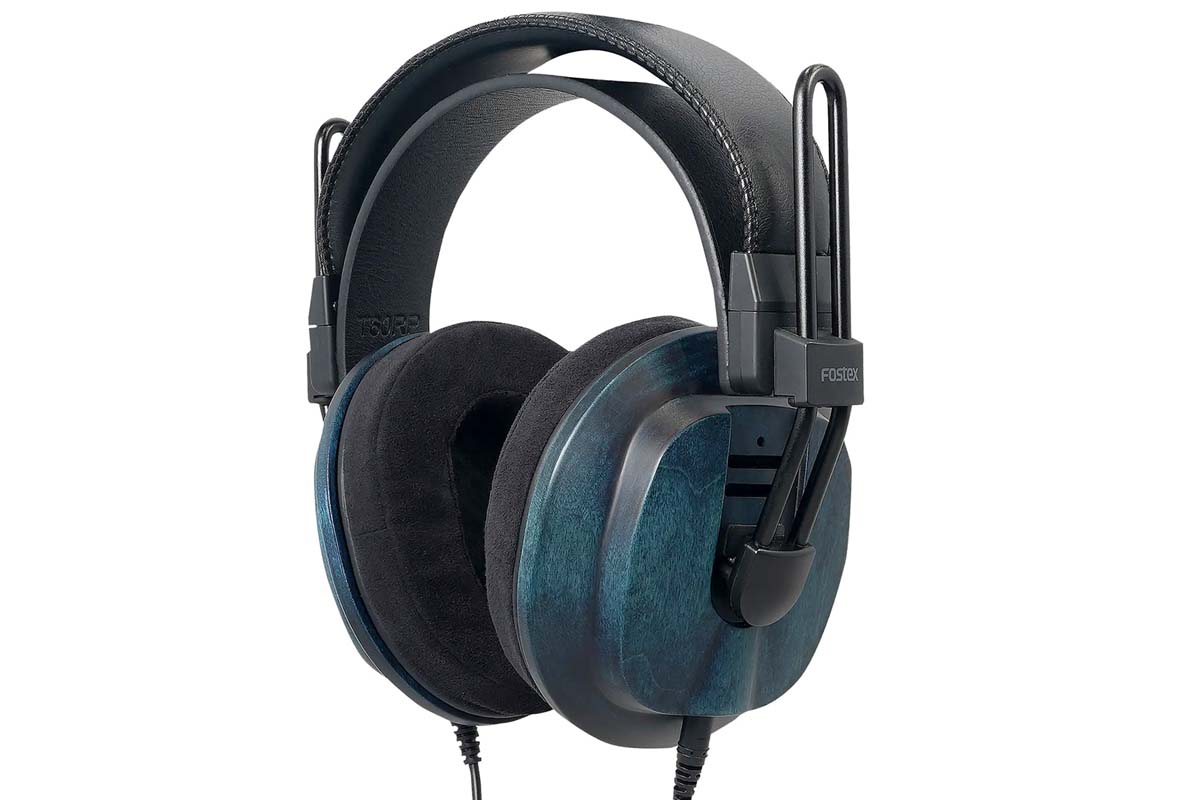
Compared with the standard versions, the ai model features upgraded internal wiring, higher-quality ear pads, and significantly enhanced solid-wood ear cups. Crafted from maple, the housings receive an additional level of hand finishing, including a traditional indigo dye treatment.
ai = Indigo
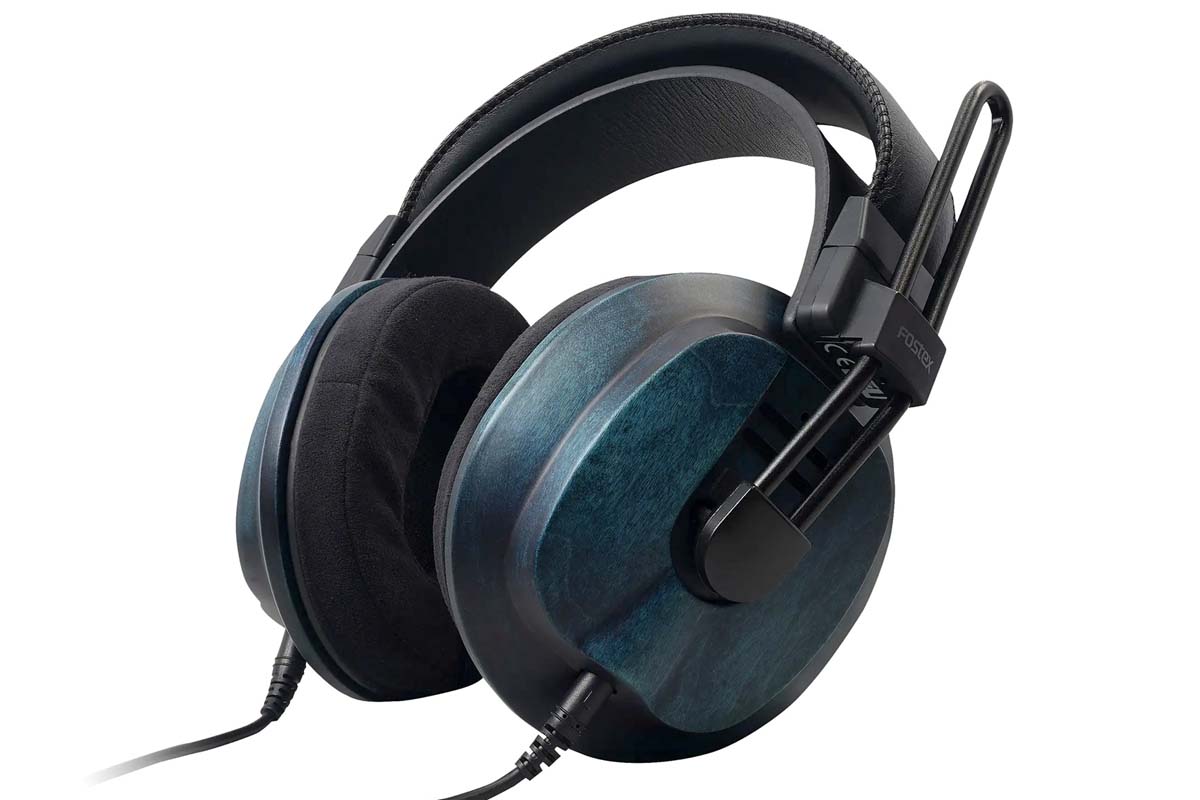
If you’re familiar with Japanese, the seemingly cryptic “ai” suffix is actually quite straightforward. The Japanese word ai simply means indigo.
The traditional art of indigo dyeing has been practiced for centuries in workshops throughout Japan’s Tokushima Prefecture. Sustainably cultivated indigo plants are processed into a natural dye, which is then applied by hand in two coats to the headphone’s hardwood ear cups.
This painstaking craftsmanship is one of the primary reasons the T60RPmk2ai commands a substantially higher price than the otherwise technically similar standard model, which uses the same planar magnetic drivers. Even so, it remains within a highly competitive segment of today’s premium headphone market.
From the very first note, the T60RPmk2ai demonstrates its ability to reproduce incoming signals with exceptional precision and virtually no audible distortion.
I evaluated the headphones both in the studio and with a conventional hi-fi system, using several different headphone amplifiers. They benefit from a source of reasonable quality and adequate power—roughly 150 milliwatts per channel is recommended.
Compared with the previous generation, impedance has been reduced to 28 ohms, making a low output-impedance amplifier the ideal partner.
In practical terms, this means the T60RPmk2ai isn’t intended for smartphone headphone jacks or tiny portable amplifiers. Its natural habitat is either the recording studio—or your favorite listening chair at home.
A Comfortable Companion
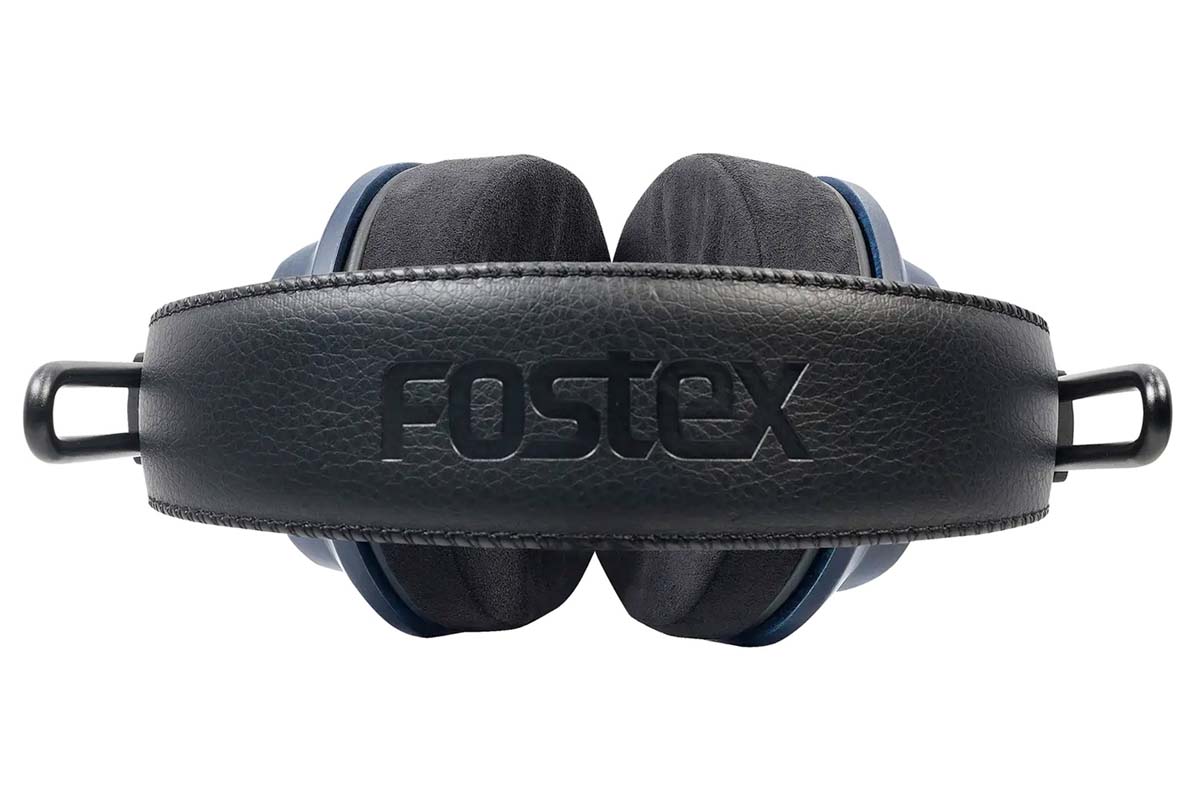
Weighing in at just under 400 grams, the headphones are surprisingly comfortable to wear. The ear pads apply a well-judged amount of clamping force, while the robust headband distributes the weight evenly across the head. After especially long listening sessions, however, my ears did become somewhat warmer than they do with fully open-back competitors.
Sonically, the Japanese headphones immediately impress with their speed, punch, and tonal balance.
As I write this, I’m listening to the newly released—and characteristically loud—album by British singer Melanie C. Driving bass lines, shimmering synthesizer textures with plenty of top-end sparkle, and Melanie Chisholm’s rich yet not excessively compressed vocals are all reproduced with excellent clarity and separation. Every part of the frequency spectrum is presented with equal authority, while the Fostex’s outstanding transient response extracts plenty of emotion and dance-floor energy from this polished commercial production. The bass, in particular, is clean and well controlled.
On the track “Attitude,” the production team briefly thins out the bass to increase the arrangement’s sense of dynamics. The T60RPmk2ai reveals this subtle change in full detail, without artificially emphasizing one passage over another. Every element occupies its proper place, combining into a cohesive musical whole. That’s not always a given with today’s productions.
What I particularly appreciate is that the Fostex doesn’t try to flatter the listener with a recessed presence region or a smile-shaped “loudness” tuning. While other headphones may create a slightly more romantic or enveloping presentation, the Fostex remains refreshingly honest. From my perspective, it earns an unequivocal recommendation as a genuine studio headphone.
The T60RPmk2ai Will Get Your Spirits Up
Whether I’m mixing the FIDELITY podcast or listening to a music production for pleasure, the Fostex works with precision, accuracy—and, perhaps surprisingly, a great deal of fun.
Here’s an example: if you’re in the mood for one of Trevor Horn’s famously punchy kick drums, the Fostex delivers it with lightning-fast attack and impressive weight. Grace Jones’ “Slave to the Rhythm” is an absolute delight through these headphones.
At the same time, it becomes strikingly apparent just how much louder today’s productions—such as Melanie C’s latest album—are mastered compared with recordings from earlier decades. The T60RPmk2ai immediately reveals the quality of the recording you’ve chosen. That’s exactly what I value in a headphone that also serves as a professional monitoring tool.
The excellent-sounding, albeit heavily mastered, new Tori Amos album In Times of Dragons is equally rewarding through the Japanese headphones. The deep rhythmic interplay between Matt Chamberlain and Jon Evans never competes with the atmospheric guitars of Mark Hawley or Tori’s warmly matured voice.
Instrument placement within the stereo image is rendered exactly as it was most likely intended in the studio. Compared with several other planar magnetic headphones I use for reference, some of those alternatives sound comparatively diffuse and less precisely focused.
Do You Know How Planar Magnetic Drivers Work?
In the fourth generation of its RP driver, Fostex has increased the number of neodymium magnets surrounding the diaphragm while redesigning the conductive trace pattern printed onto the polyamide diaphragm film.
More specifically, magnets are positioned on both sides of the diaphragm. Through the protective mesh in the center of each ear cup, you can actually see the magnet structure itself.
Unlike a conventional dynamic driver, where a voice coil drives the diaphragm from a relatively small area, a planar magnetic—or orthodynamic—driver energizes the entire diaphragm surface in phase. That also explains the RP designation, which stands for Regular Phase.
In addition to the standard models, the ai version features high-purity 7N OFC (oxygen-free copper) internal wiring. The supplied unbalanced cable connects to each ear cup via a standard, non-locking 3.5 mm plug. The cable measures 2 meters in length, while an optional balanced 4.4 mm cable is also available.
Semi-Open Design
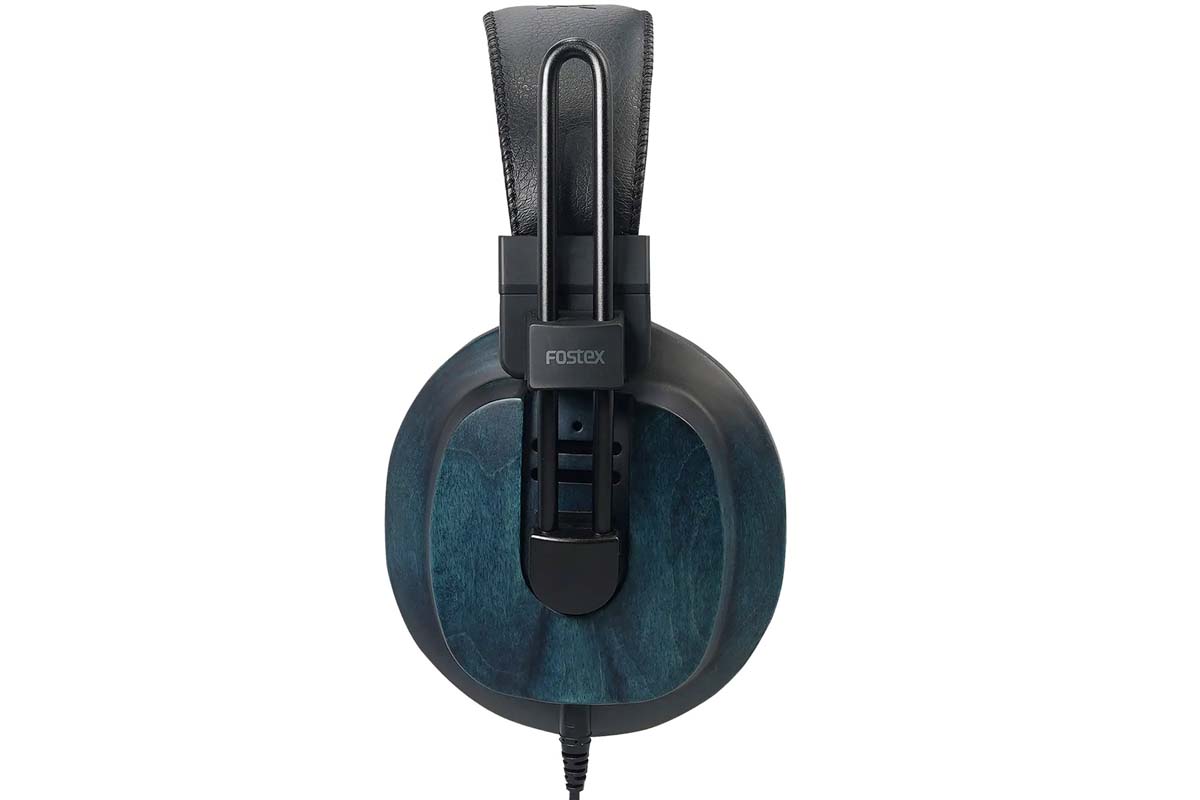
The solid maple ear cups feature two acoustic vents positioned above the headband attachment points. This semi-open design strikes an effective balance between isolation and openness. Compared with fully open-back headphones, the Fostex leaks considerably less sound into the surrounding environment while still delivering an airy, spacious presentation.
The premium Ultrasuede ear pads—standard only on the ai version—also play an important role in the headphone’s overall acoustic tuning. During my evaluation, I found them exceptionally comfortable, and they accommodated eyeglasses without causing any noticeable discomfort or compromising the seal.
Listening to Edward Elgar’s Cello Concerto in E Minor, Op. 85, performed by the young cellist Sheku Kanneh-Mason with the London Symphony Orchestra, the presentation is natural and organic. The recording unfolds within a convincingly realistic acoustic space, with the complex overtone structures of both the orchestra and the solo cello reproduced with remarkable finesse.
The solo instrument occupies a clearly defined position in front of the orchestral body, whose nuanced accompaniment weaves an elegant sonic tapestry around Kanneh-Mason’s expressive performance. Such an elaborate description of my listening impressions may seem almost exaggerated, but it is precisely the Fostex’s balanced presentation—particularly its exceptionally clean and authoritative bass reproduction—that makes these subtle distinctions so readily apparent.
Planar Magnetic Means Low Distortion
Much of this performance can be attributed to the inherent strengths of the planar magnetic principle. Because the driving force is distributed evenly across the entire diaphragm, distortion in the bass region is naturally lower than with many conventional dynamic driver designs. Transient response likewise benefits from this construction—a technology that Fostex has refined continuously for more than half a century.
It is this combination of fine detail retrieval, lightning-fast transient response, and even-handed reproduction across the entire frequency spectrum that makes the Fostex T60RPmk2ai a winner in two worlds: equally at home in the recording studio and on the living-room sofa.
Fostex T60RPmk2ai
Concept: Semi-open planar magnetic headphones with handcrafted solid-wood ear cups and premium internal wiring | Frequency Response: 10 Hz – 40 kHz | Impedance: 28 Ω | Maximum Input Power: 3,000 mW | Sensitivity: 96 dB/mW | Analog Connection: Detachable high-purity OFC copper cable (2 m); non-locking 3.5 mm connector at each ear cup; optional balanced cable available | Special Features: Hand-applied indigo finish on solid maple ear cups; fourth-generation Fostex RP (Regular Phase) planar magnetic driver | Finish: Indigo-dyed wood | Weight: 398 g (without cable) | Warranty Period: 2 years | Price: Around €1,300