
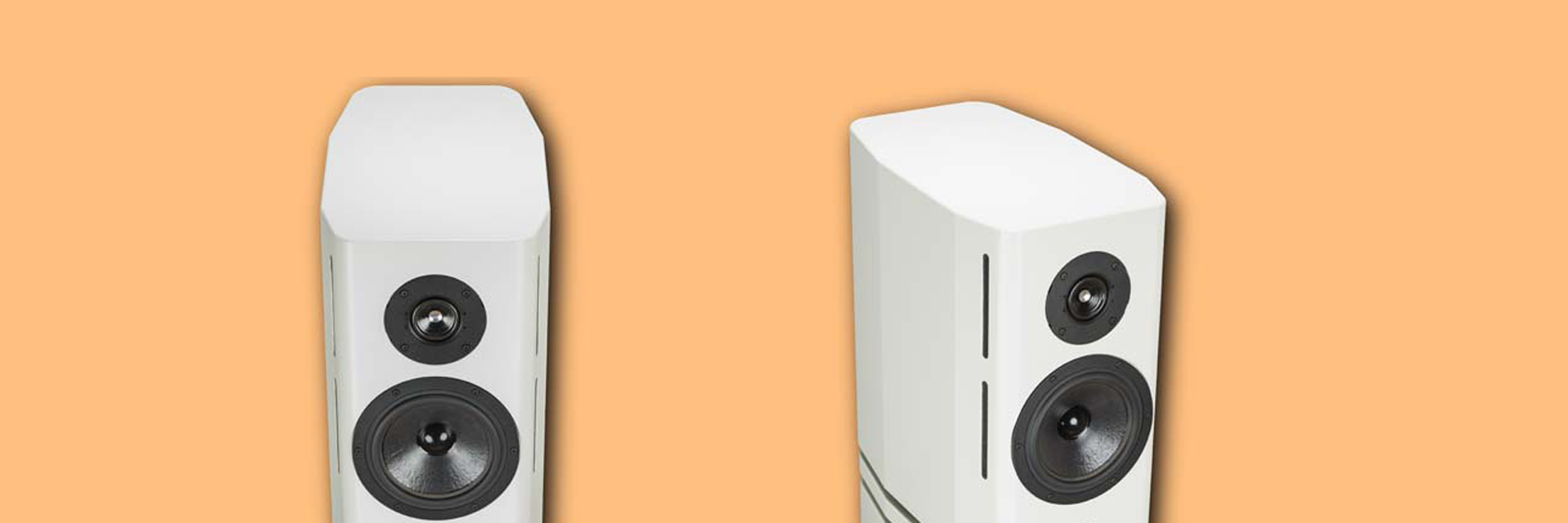
There are loudspeakers you barely notice out of the corner of your eye before immediately forgetting them. And then there are those that stay with you, even if you’ve only had a few minutes to hear them. That was my experience at the Süddeutsche HiFi-Tage (South German HiFi Days) last September. Amid all the new product launches, I came across two unassuming towers in the AP Elektroakustik room that radiated what could best be described as quiet confidence. No flashy styling, no attention-seeking design. Their sound, however, won me over instantly, and even before I left the show, I knew I wanted to follow up on that first impression – not in passing, but under real-world listening conditions.
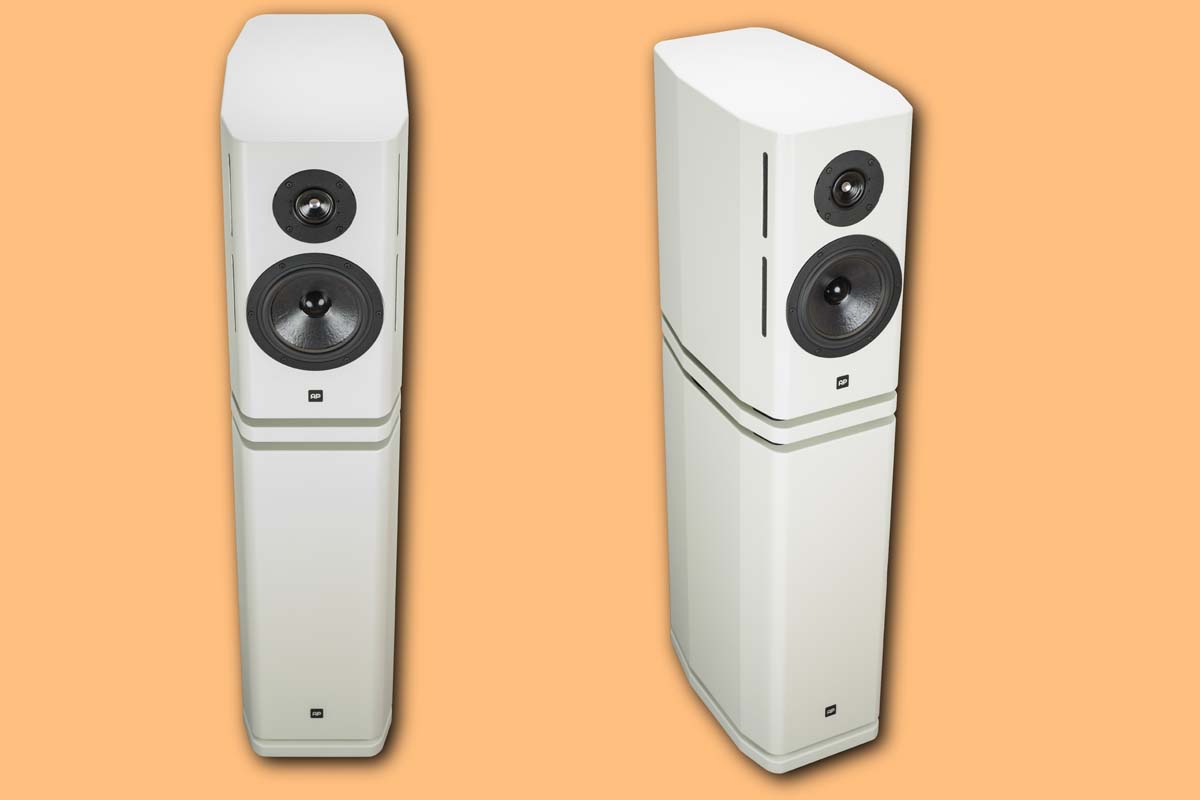
The company’s two founders delivered the AP Elektroakustik Monitor 30P and the accompanying 20A bass modules themselves and took the time to set them up and have an extended conversation. AP Elektroakustik is based in Bavaria, more precisely in Neu-Ulm, and that is also where most of the value creation takes place. This isn’t a marketing decision but a deliberate philosophy. Short supply chains, close collaboration with suppliers, and maximum control over materials and manufacturing all play a central role. The cabinets for the two-piece floorstanding speaker are built locally and finished nearby as well, with virtually any color available on request. The drivers are manufactured in-house, while even the crossover PCB and most of its populated components come from the region. Only the electronics for the active bass module are sourced from the Netherlands. Accordingly, the rear panel proudly bears the inscription: “Made in Bavaria, Germany.” The company wasn’t founded on a whim but grew out of a shared passion and a clear objective. In a loudspeaker market that has long been crowded, the founders deliberately chose to pursue their own path.
Semi-active loudspeakers are rare, and designs with sealed bass enclosures are rarer still. Add a paper-diaphragm tweeter to the equation, and you end up with a concept that offers a truly unique selling point. The reason for this rarity is simple: such a focused concept leaves very little room for compromise. A sealed system forgives nothing, a semi-active design demands clearly defined responsibilities, and different diaphragm materials make driver integration unnecessarily complicated. That’s exactly why the developers consistently rely on matching paper diaphragms for the treble, midrange, and bass drivers. The semi-active architecture serves a practical purpose. The midrange and treble sections are driven passively, allowing them to retain the sonic character of the amplifier in use. Those who favor tube amplifiers will hear their distinctive character, while those using a powerful solid-state design will benefit from its control and dynamics. The bass module operates independently and can be precisely adapted to both the room and speaker placement. Whether positioned well into the room, closer to the wall, or tucked into an acoustically challenging corner, the low frequencies remain controllable and tunable. This degree of bass adjustability is no longer unusual today, and for good reason: rather than assuming an ideal placement, the system allows the loudspeaker to be adapted to real living environments.
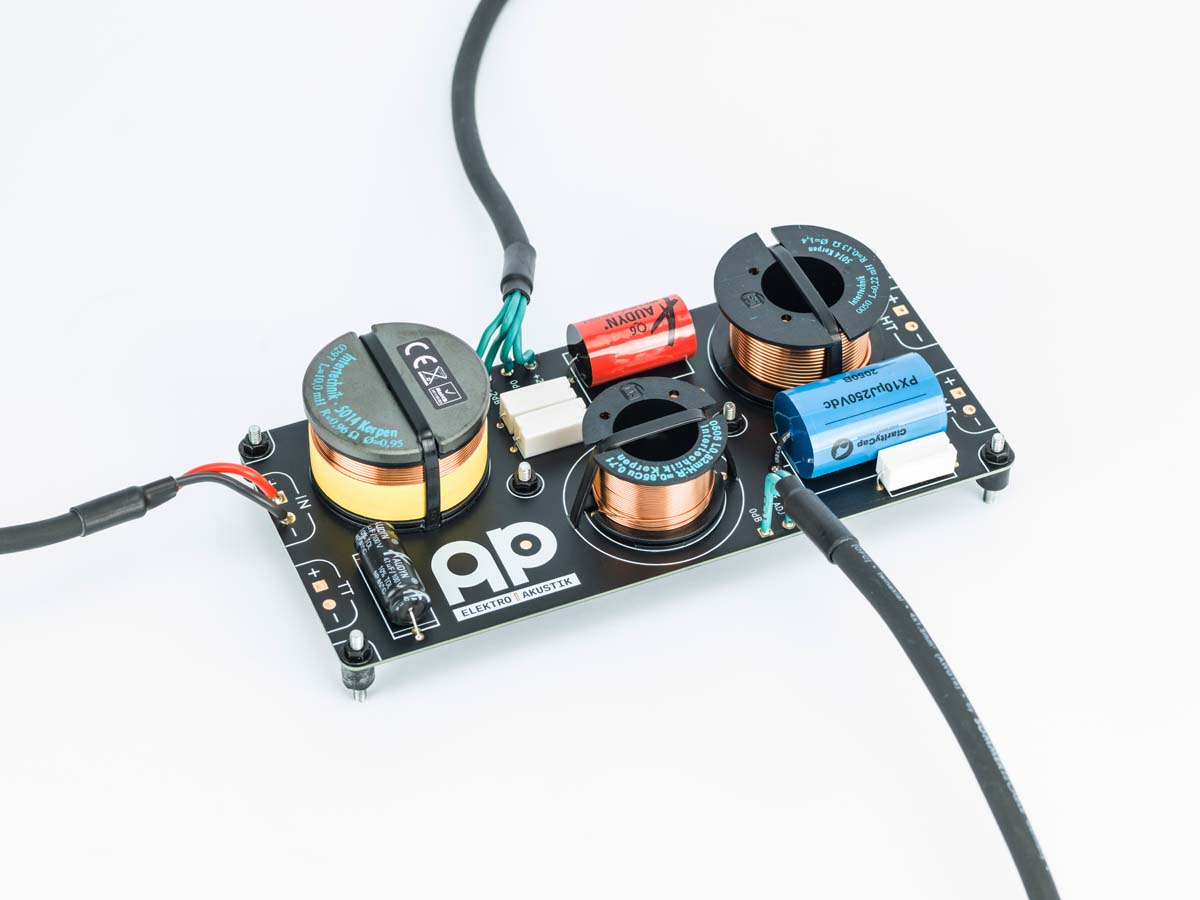
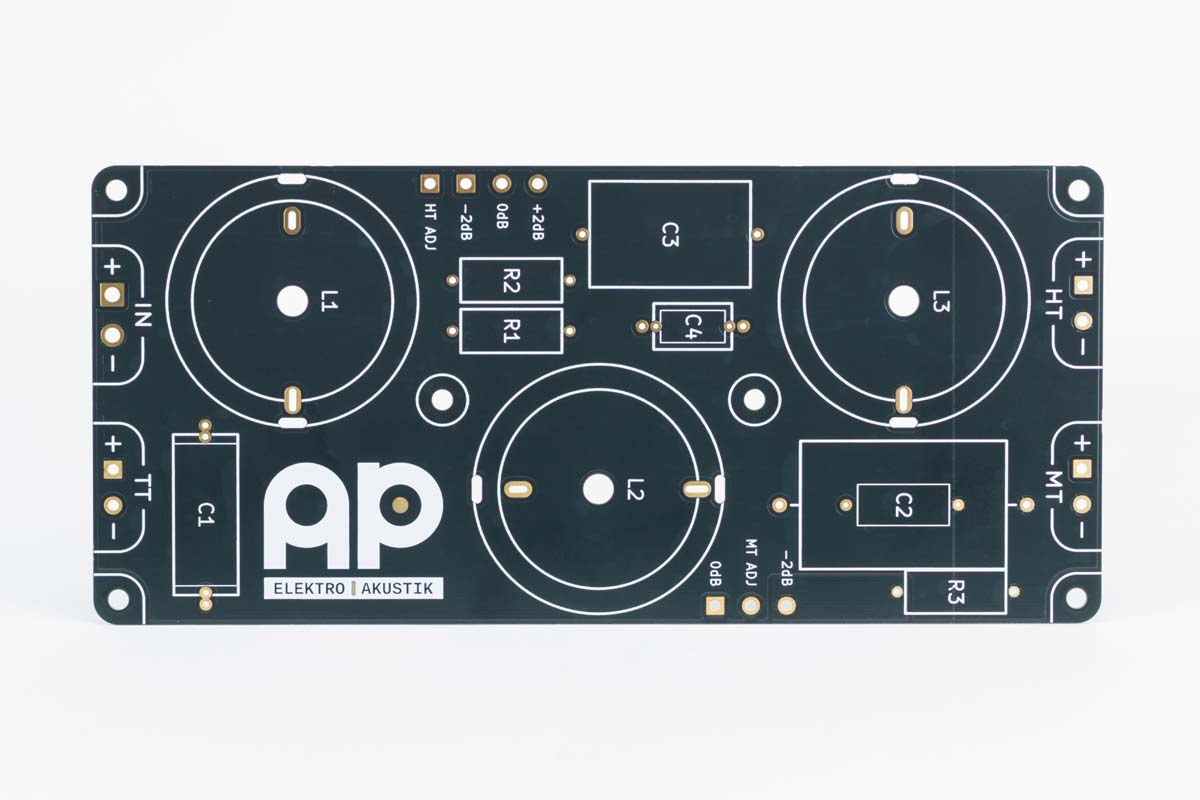
A closer look at the construction reveals just how consistently AP has engineered its system. Everything follows a clear functional logic, without decorative technology or unnecessary detours. The crossover is housed in its own chamber, carefully isolated from vibration; it alone accounted for a year and a half of the system’s total five-year development period. Every crossover component was selected solely by ear, and the filter network was intentionally kept as simple as possible. It intervenes only where absolutely necessary.
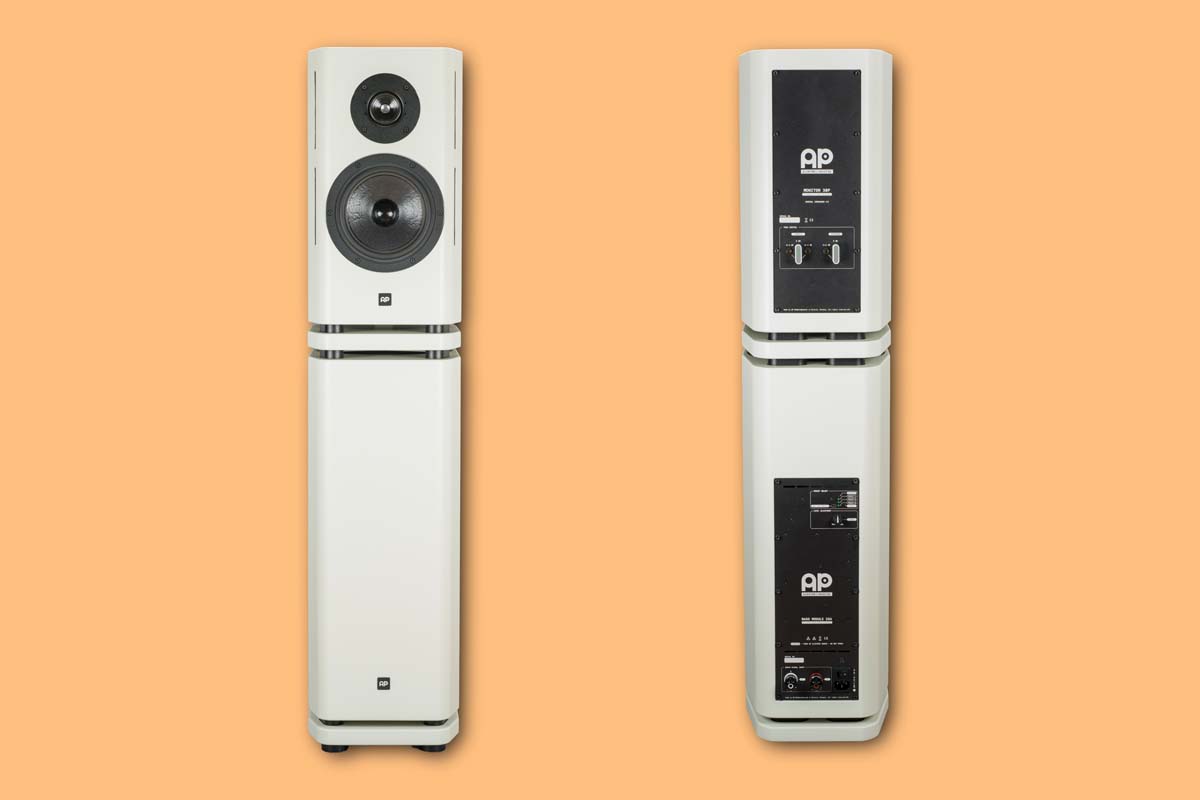
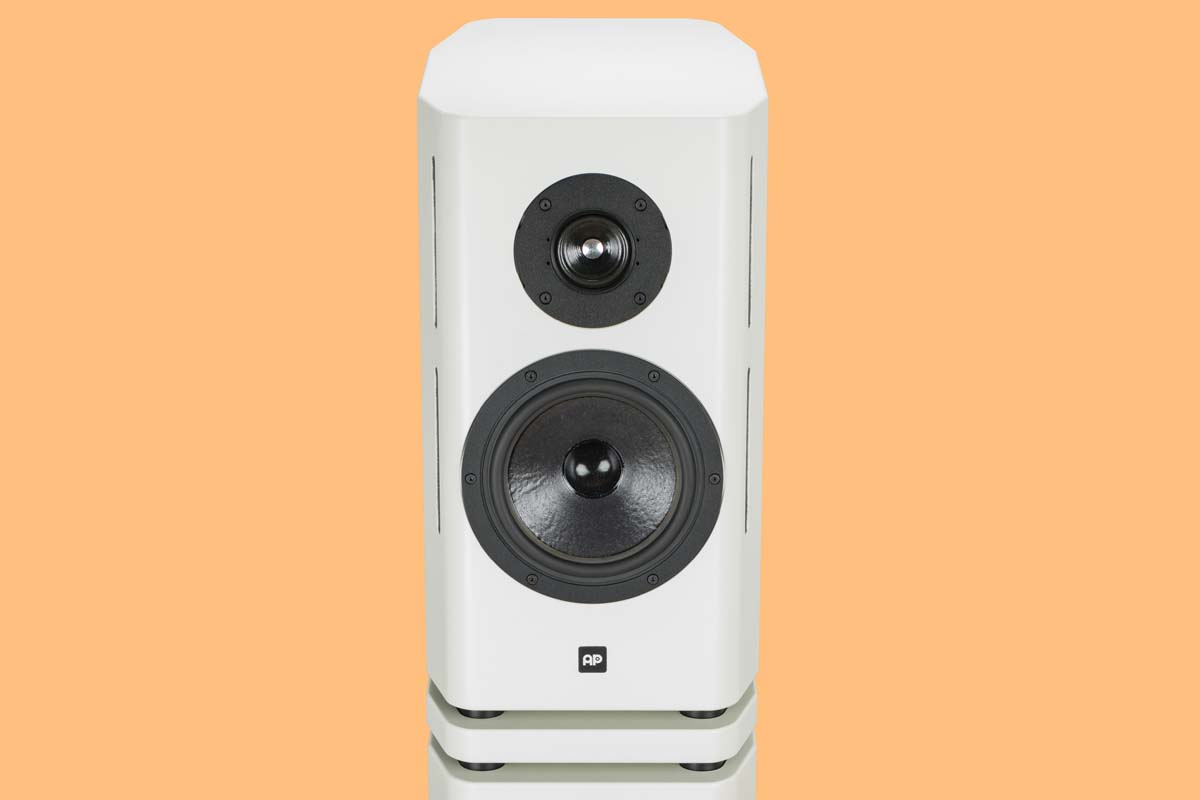
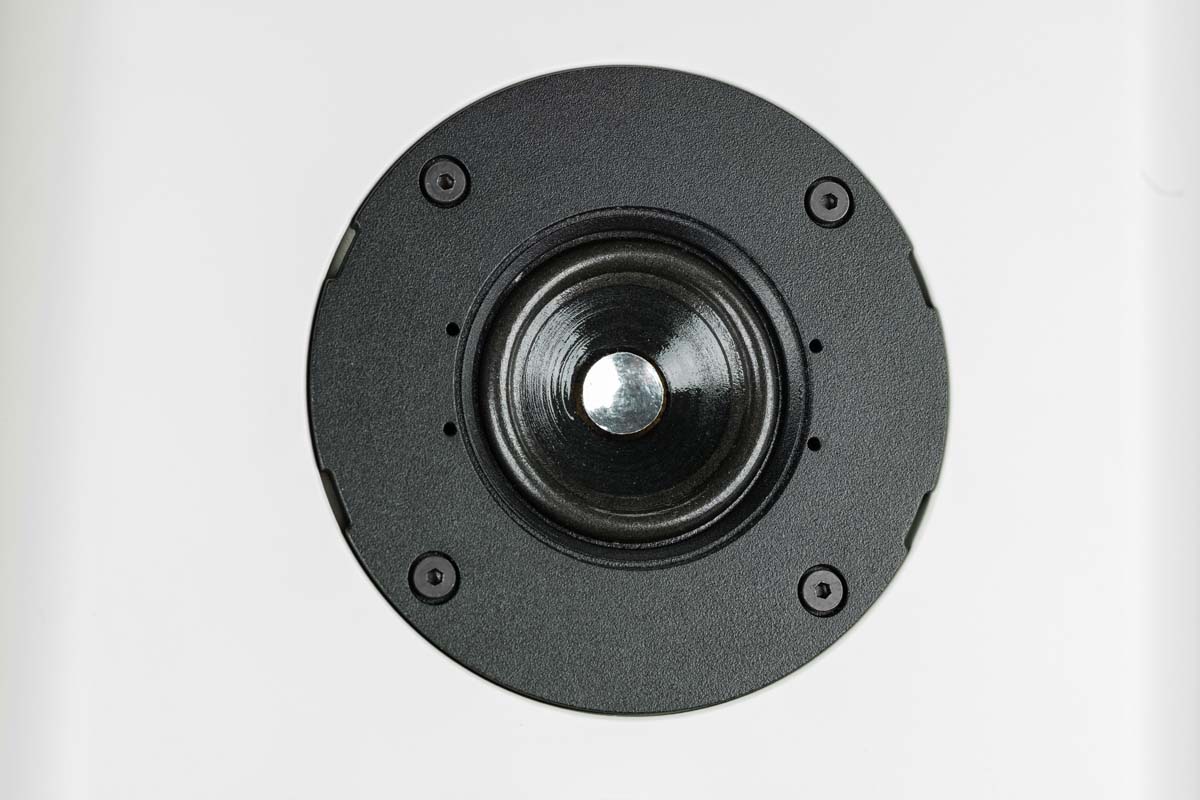
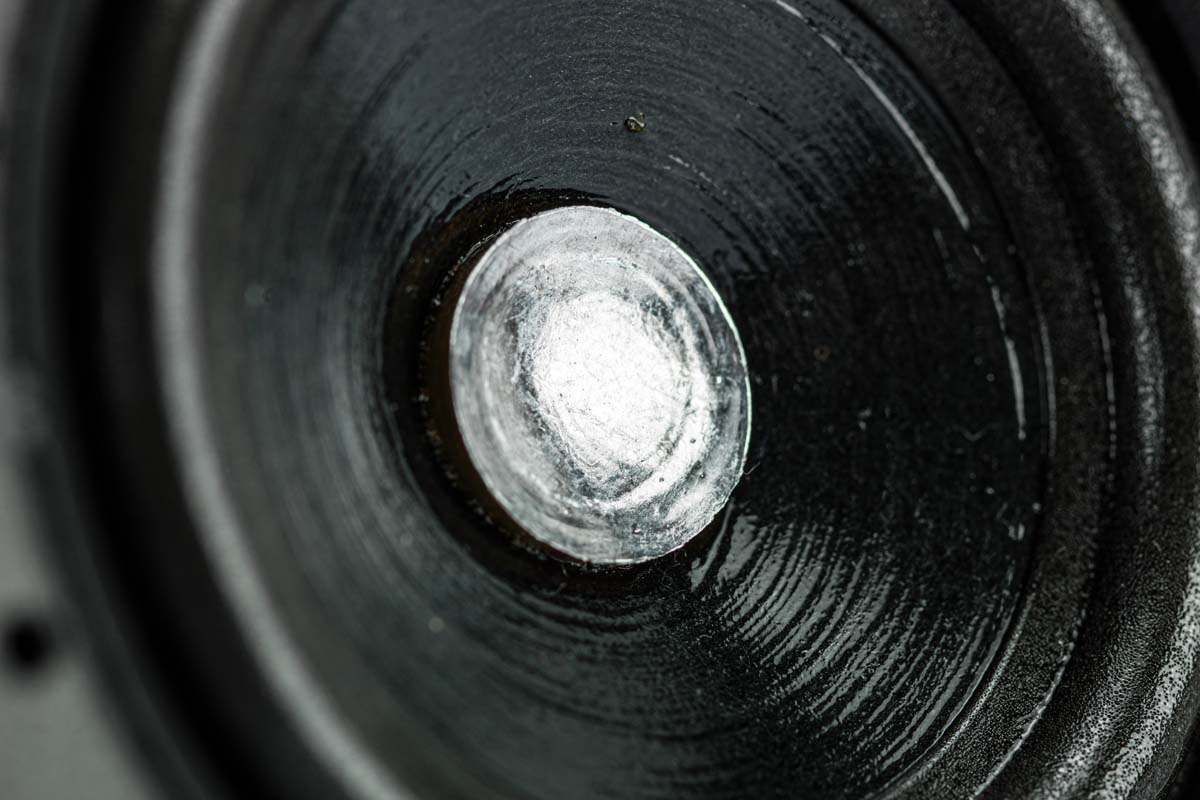
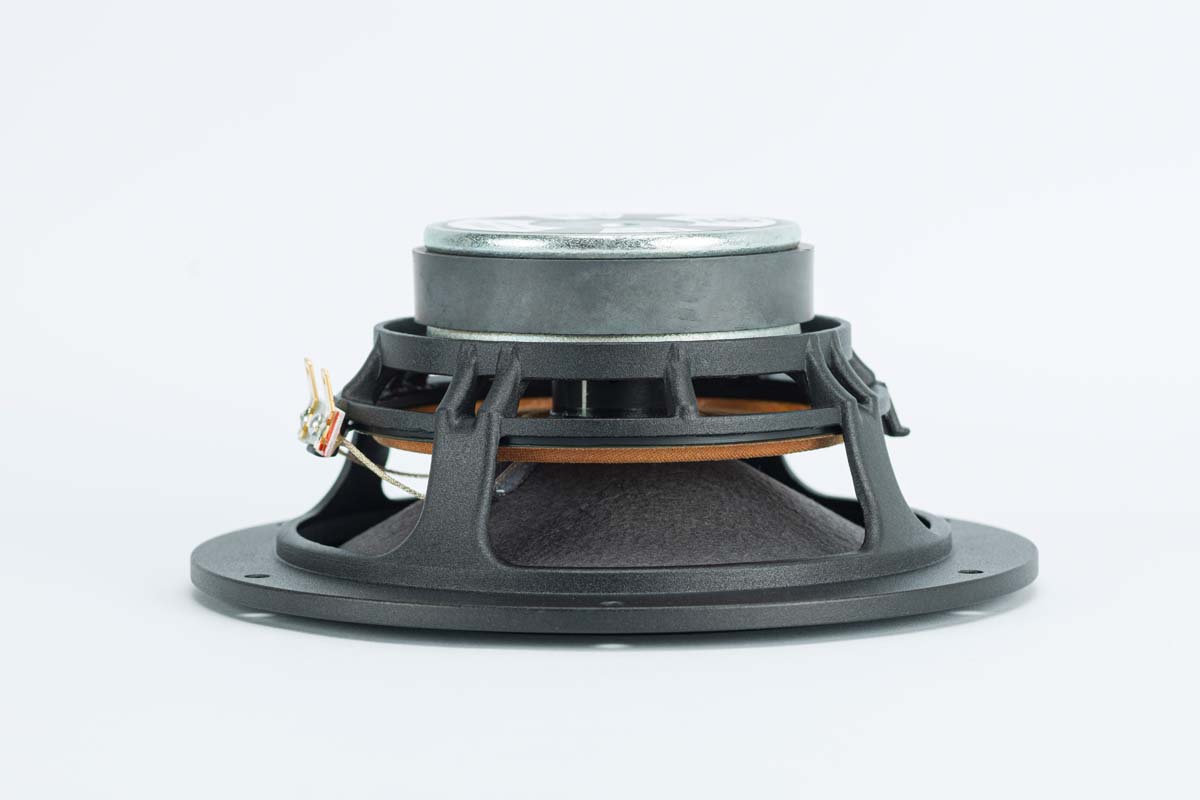
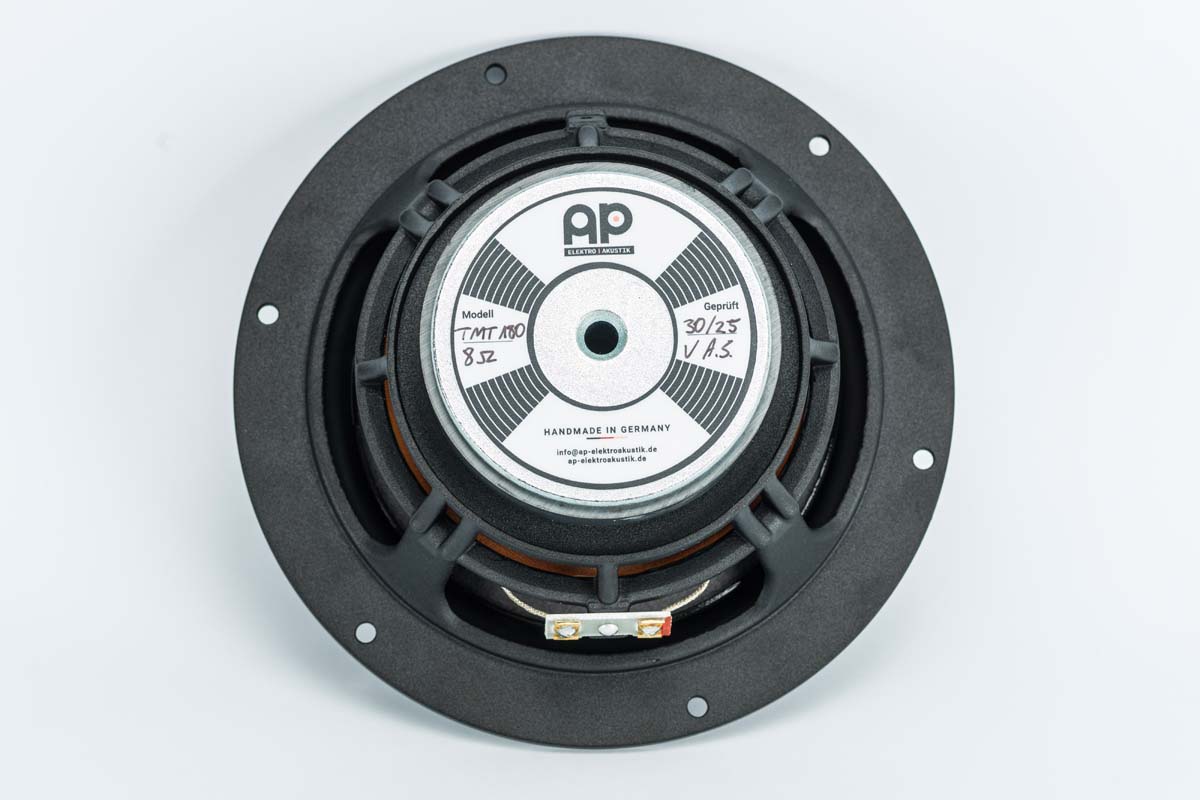
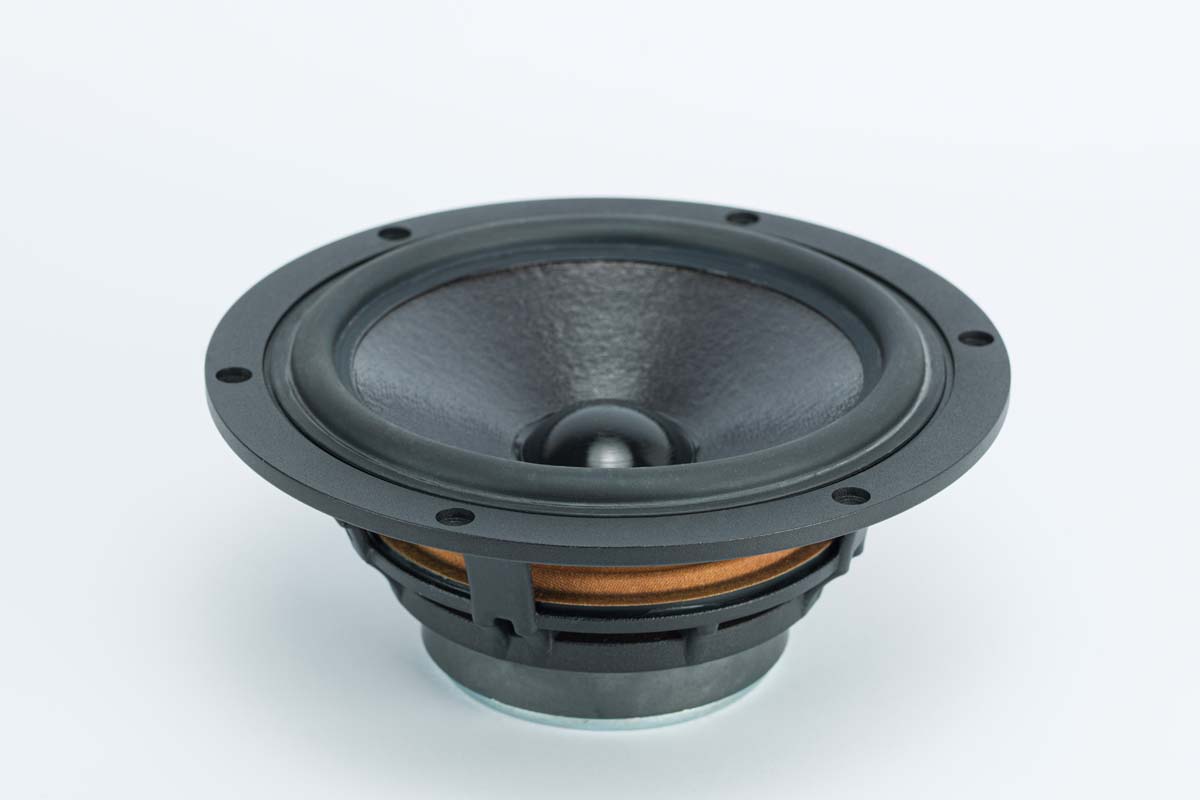
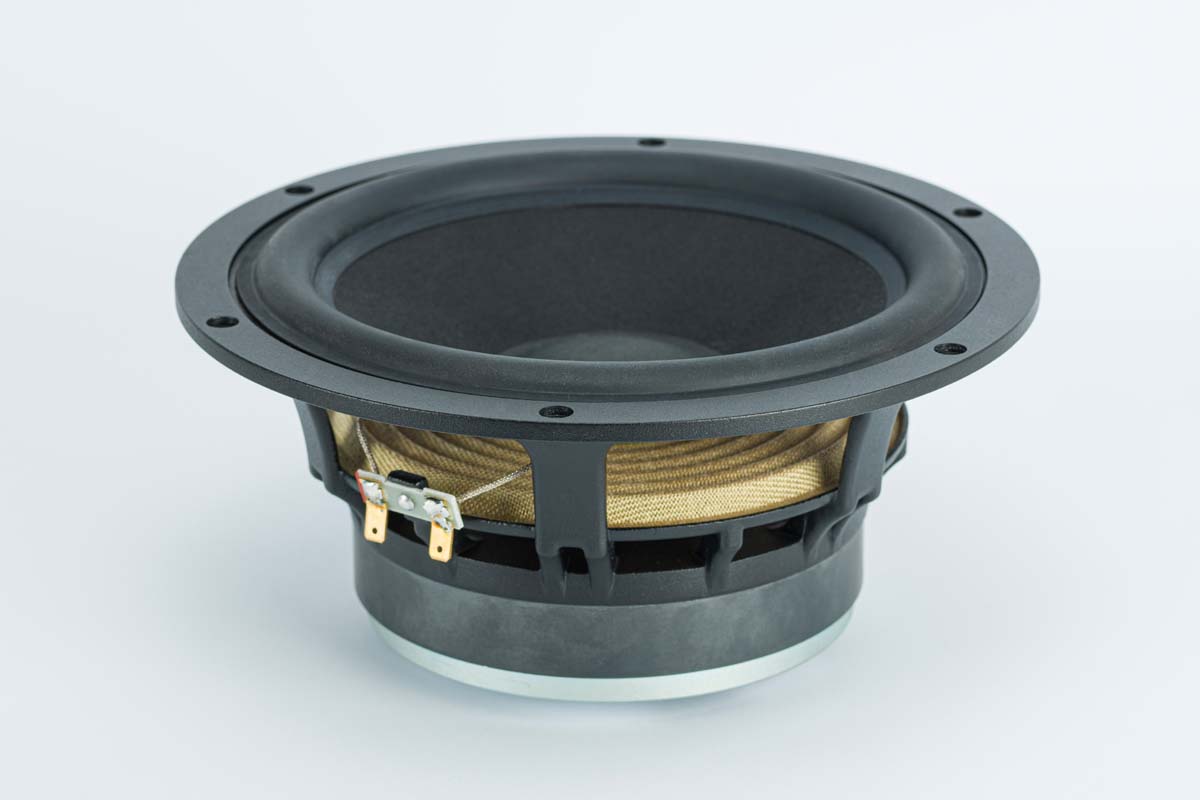
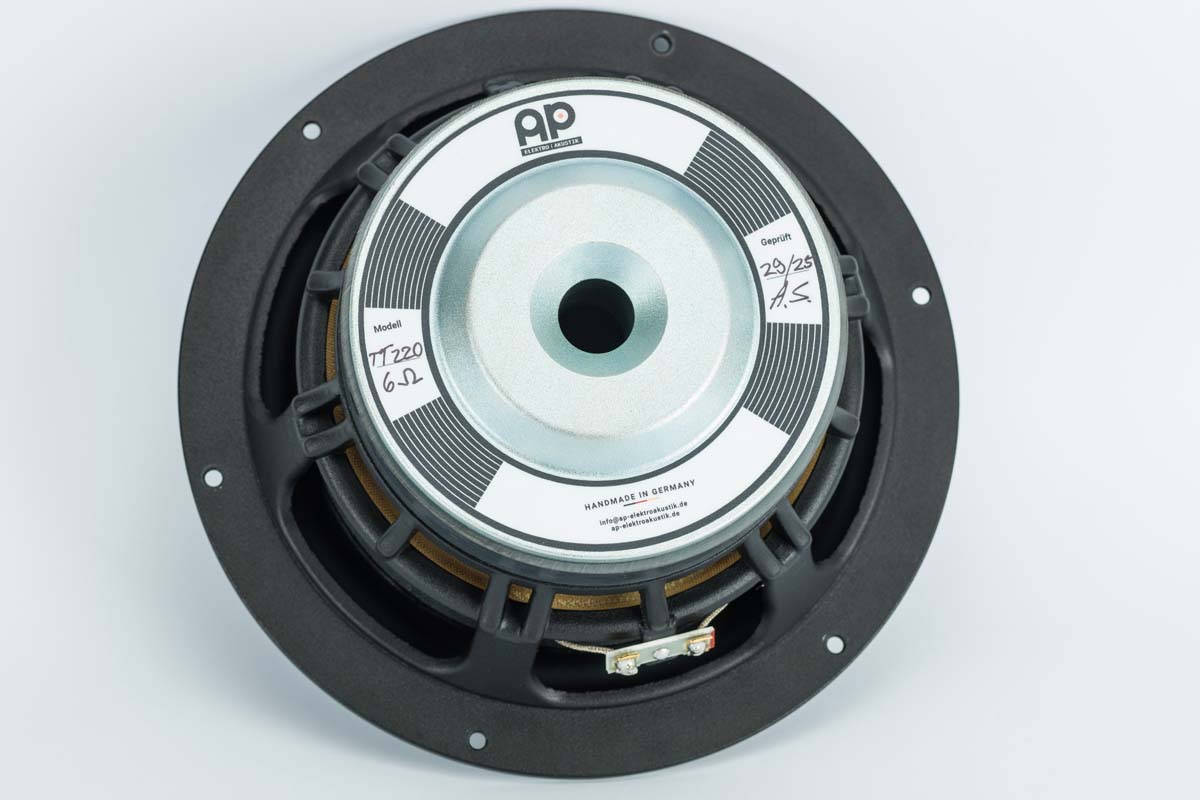
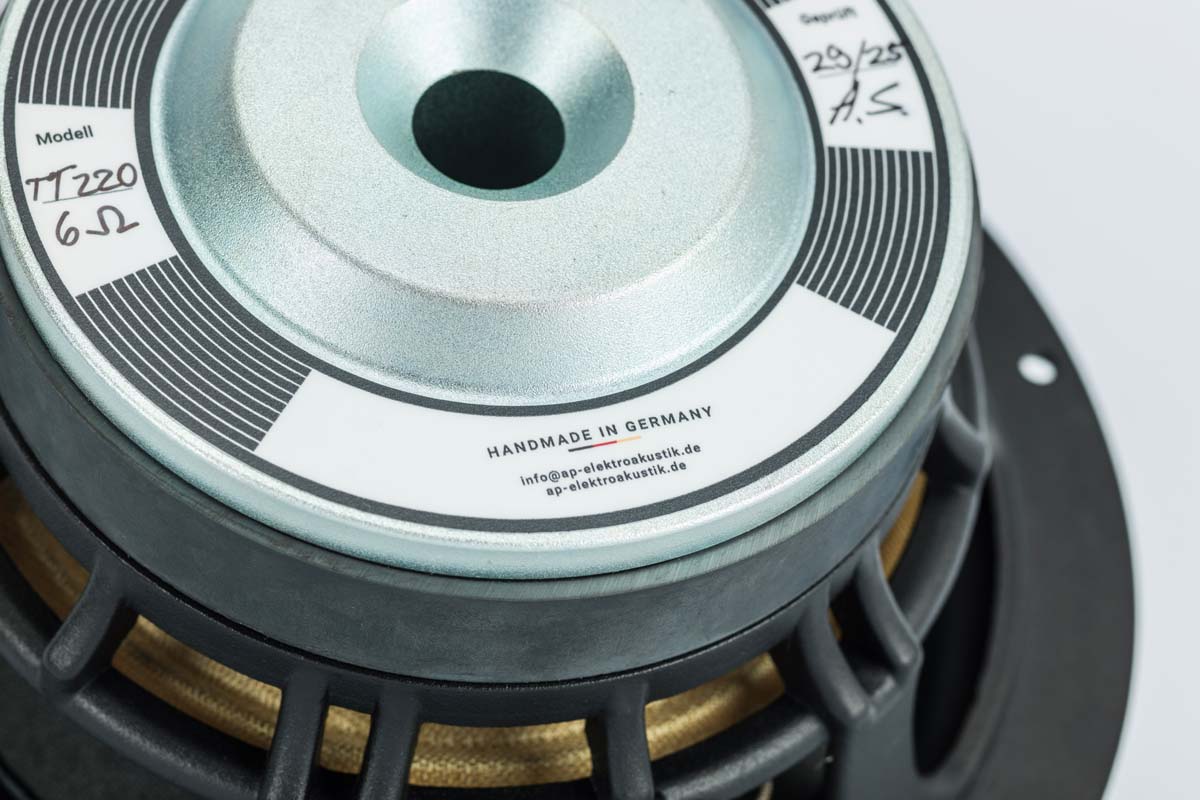
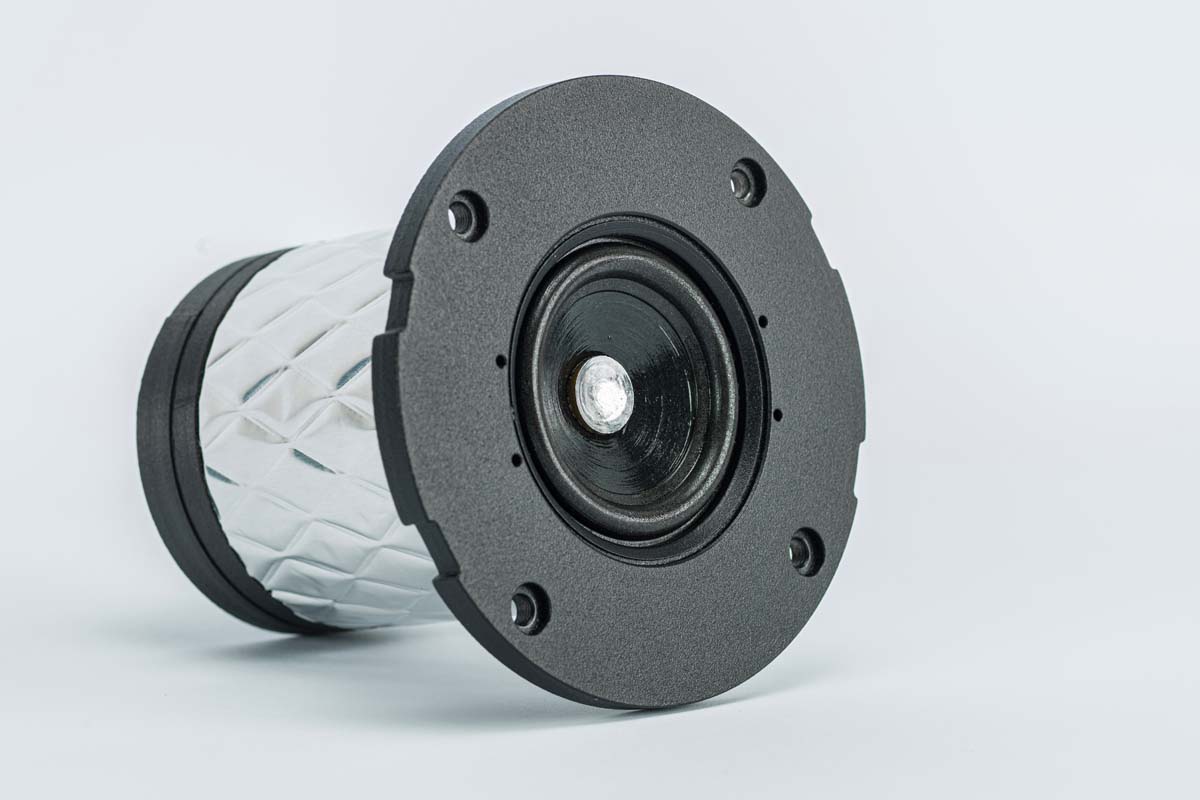
The Monitor 30P forms the passive heart of the system. All three drivers use paper diaphragms. Covering the range from 3.3 to 22 kilohertz is a comparatively large 55 mm tweeter with an inverted aluminum dust cap, whose radiating surface is hand-coated with a clearly visible sealing compound. A similarly treated 180 mm midrange driver handles frequencies down to 90 Hz, while a 220 mm woofer firing downward takes over the bass. The system’s lower cutoff frequency is 55 Hz. When the Monitor is used on its own (AP Elektroakustik also offers it in a virtually identical standalone version), it should therefore be placed close to the rear wall.
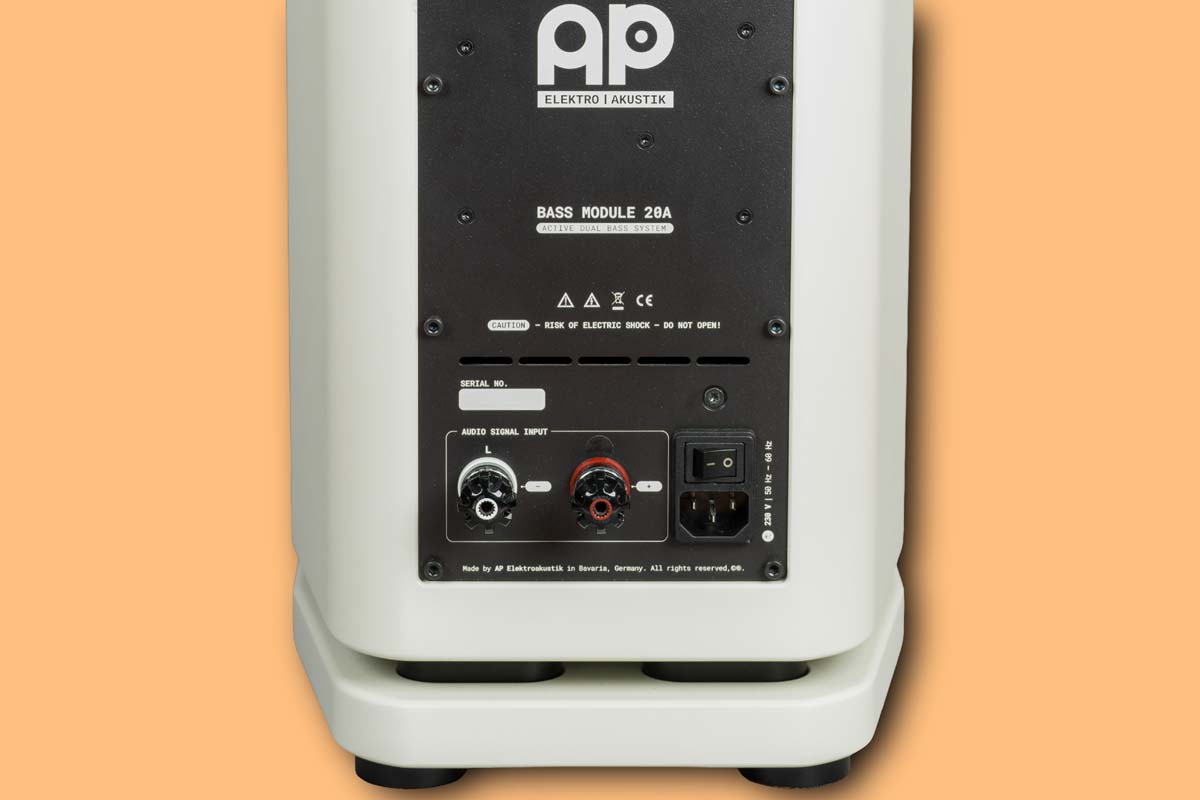
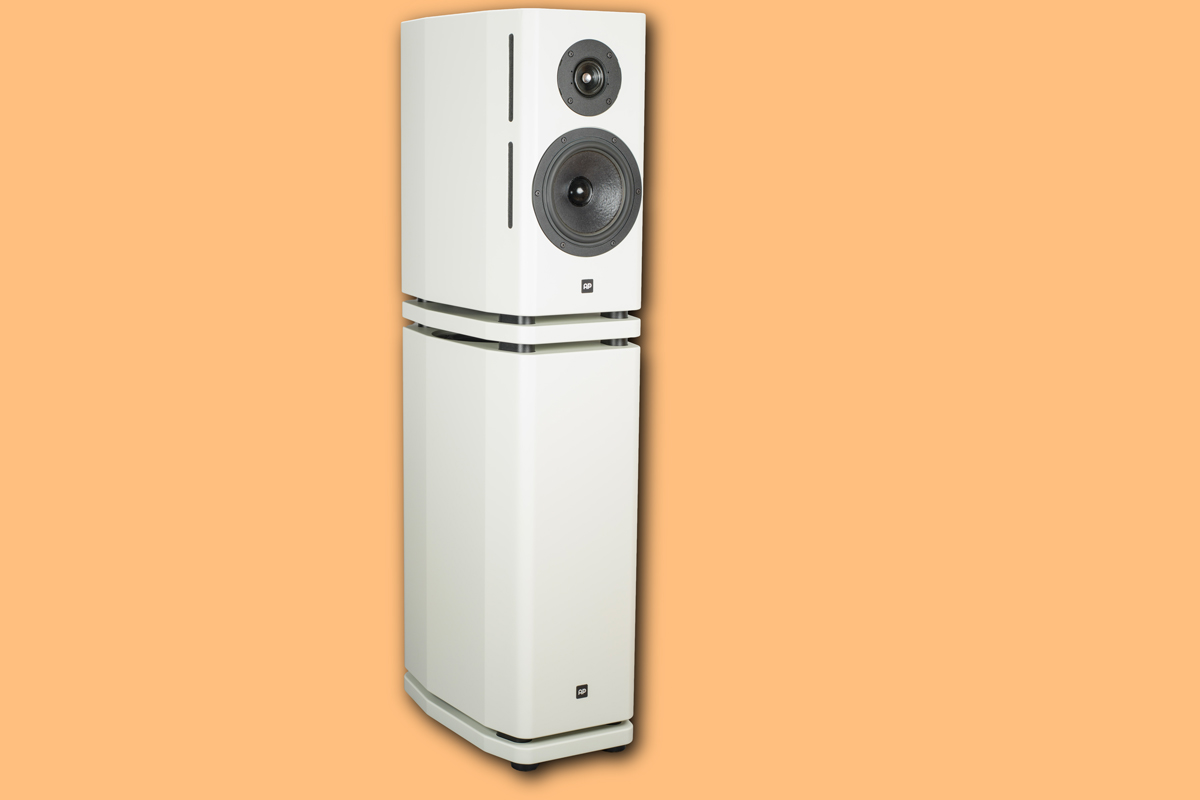
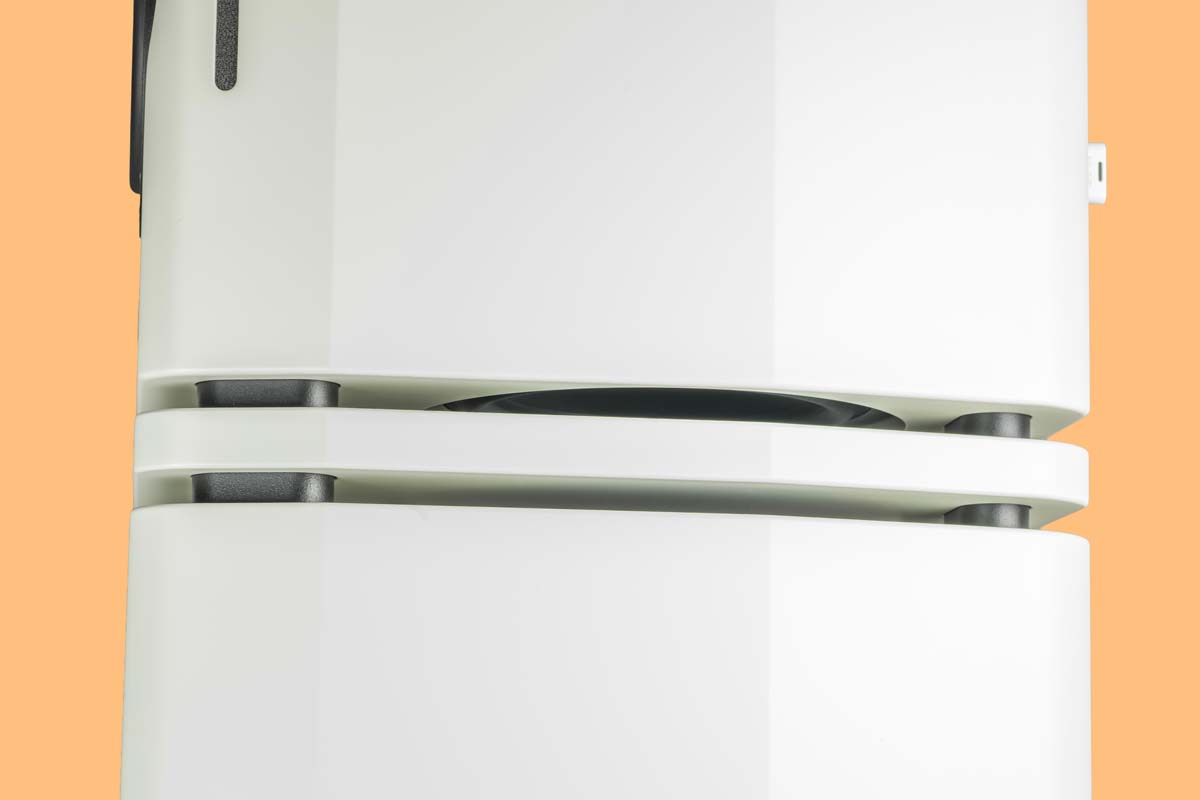
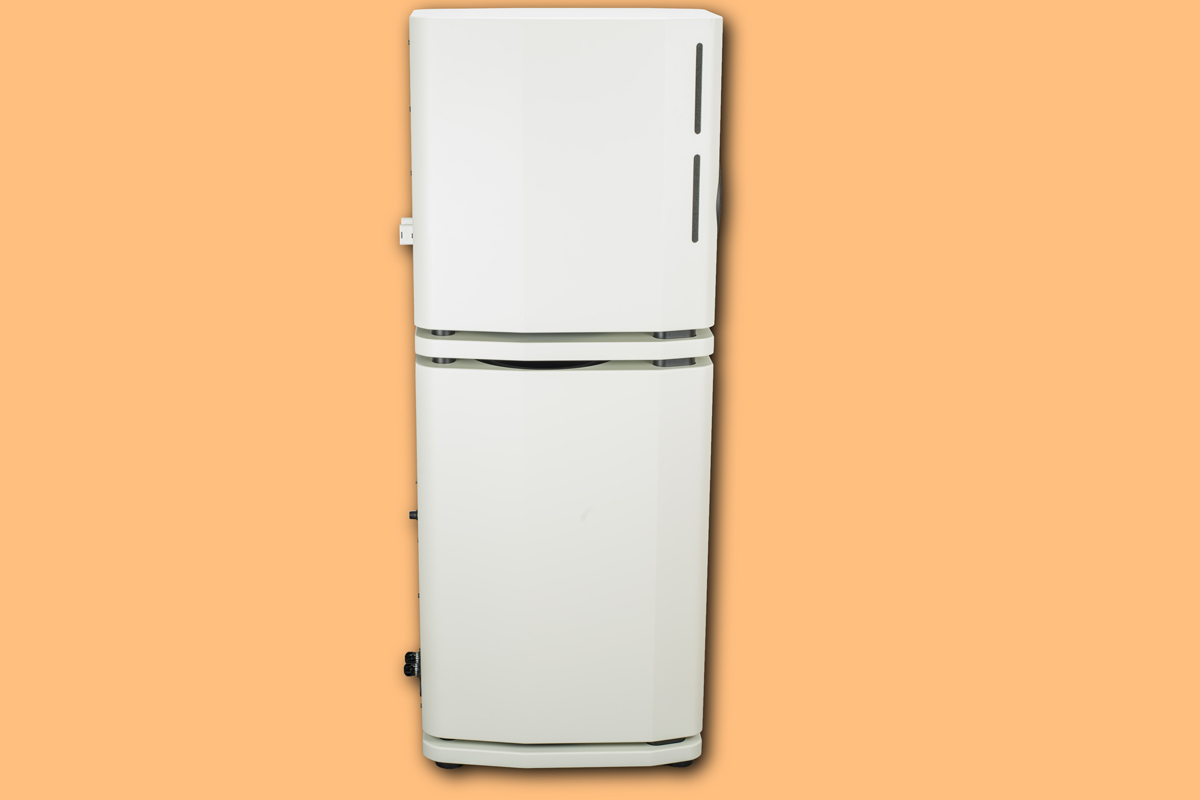
Beneath the 30P sits the 20A bass module, which has to fulfill a demanding dual role. On the one hand, it reproduces the deepest frequencies; on the other, it serves as a stable, vibration-free foundation for the Monitor 30P. AP addresses these competing requirements through a combination of clever design solutions. First, the passive monitor is separated from the woofer by a substantial MDF plinth. Its additional damping ensures that the upper speaker is effectively isolated from vibration. At the same time, the thick wooden plate separates the sound pressure generated by the Monitor’s downward-firing woofer from that of the active bass module’s upward-firing driver mounted in the top panel.
A second downward-firing driver mounted in the base of the 20A ensures excellent stability, with both 220 mm woofers operating in their own sealed chambers. This force-canceling arrangement reduces mechanical forces within the enclosure and delivers controlled, composed bass performance. Thanks to the combination of upward- and downward-firing drivers, the room is energized more evenly, bass remains difficult to localize, and the system is less sensitive to listening height or seating position. In typical living-room installations, this proves advantageous compared to a conventional front-firing woofer. In addition, a downward-firing bass driver gains several valuable decibels of acoustic reinforcement from the floor. One might wonder why every woofer isn’t designed according to the down-firing principle. The answer is simple: because of its indirect radiation, such an arrangement can sometimes sound a little “slow.” And this is exactly where another strength of the semi-active concept comes into play…
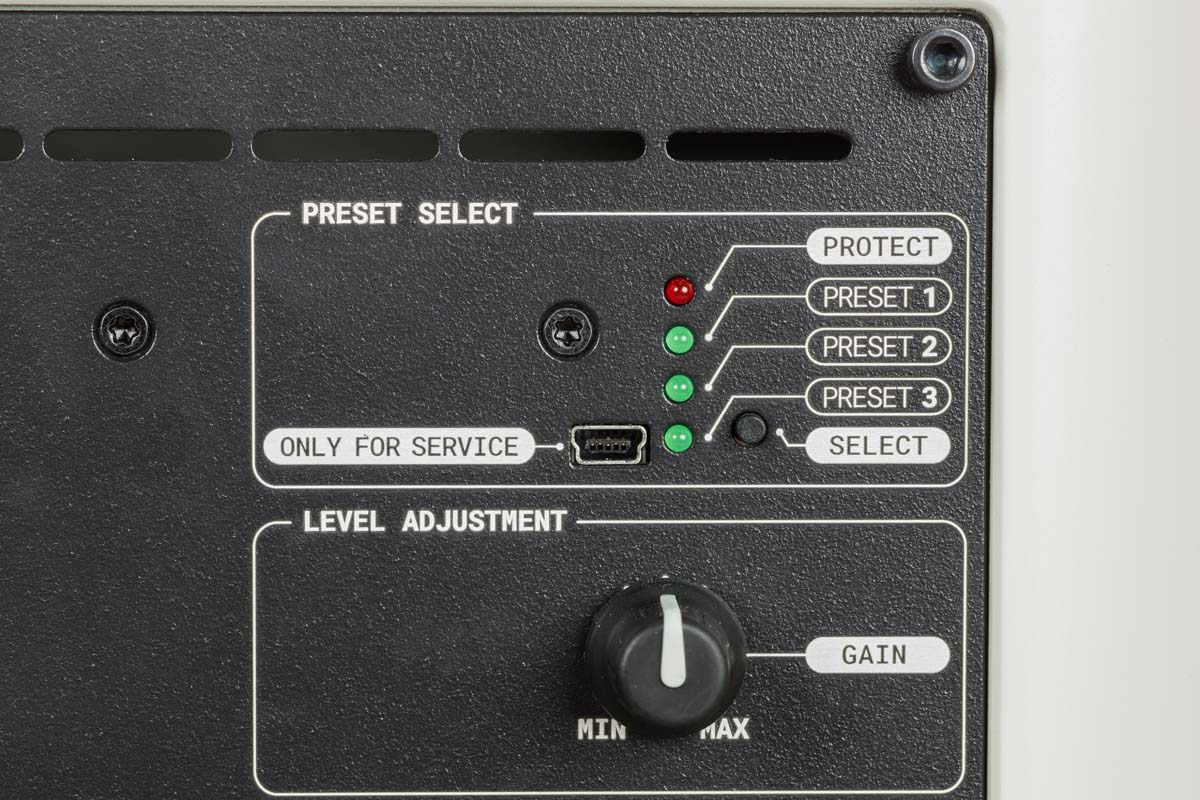
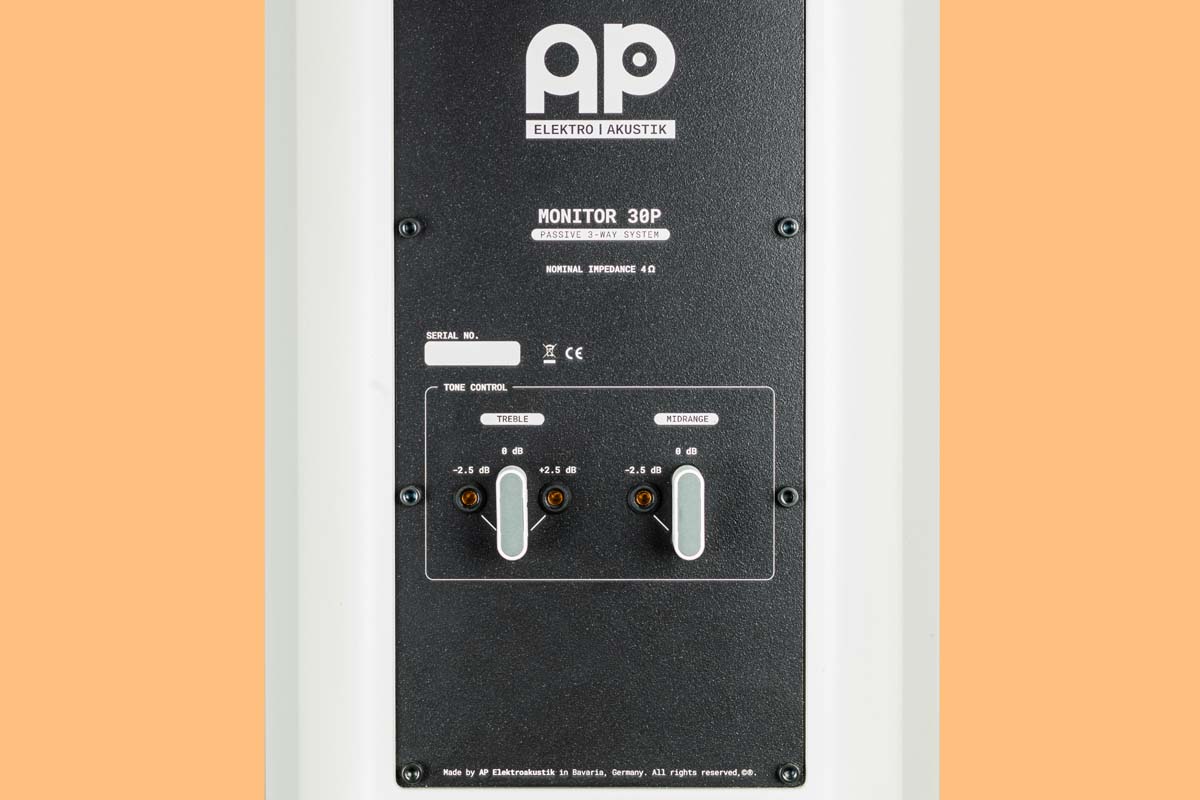
The integrated amplifier delivers 500 watts of continuous power and is likewise housed in its own isolated chamber. Inside, you’ll find neatly routed Sommer Cable wiring, while discreet M6 threaded inserts on the bottom allow the speaker to be fitted with spikes if desired. Fundamental tasks such as time alignment between the upward- and downward-firing woofers, as well as the seamless integration with the Monitor 30P, are handled automatically by the DSPs built into the amplifier. All remaining adjustments are designed to make speaker placement easier. They are made directly on the bass module. A pushbutton selects one of three predefined presets, complemented by a continuously variable bass level control via a rotary potentiometer. Preset one is the linear reference setting. Preset two engages a 25 Hz subsonic filter with a 12 dB-per-octave slope to protect the system from extremely low frequencies while calming the bass in acoustically problematic rooms. Preset three boosts the bass by 2 dB between 45 and 75 Hz and is intended for large or heavily damped rooms. These EQ settings should not be mistaken for a comprehensive room correction system. Instead, the presets are deliberately designed as practical, real-world recommendations that address the most common room situations without burdening the user with complex fine-tuning or computer-based programming. The passive Monitor also offers voicing adjustments. Convenient jumper plugs allow the treble to be raised or lowered by 2.5 dB, while the midrange can be reduced by 2.5 dB.
It didn’t take long for me to notice that the tweeter sounded different from the conventional dome tweeters I’m used to hearing. There’s a gentle delicacy to the treble, combined with excellent resolution and remarkable three-dimensionality. Its presentation is more reminiscent of an outstanding full-range driver, where details emerge effortlessly without ever sounding sharp or edgy. The midrange is equally exceptional. Voices don’t just sound realistic – they take on genuine personality. The moment a singer begins, it feels as though someone has suddenly stepped into the room, with presence, composure, and an almost tangible naturalness. Here, the loudspeakers sound so direct and uncolored that at no point do you feel anything has been sweetened or exaggerated. They simply present what’s there. Nothing more, nothing less. Vocals and instruments don’t float vaguely through the soundstage; instead, the 30P places them exactly where they belong. The bass doesn’t merely provide impact – it gives voices and instruments physical substance. Singers seem to acquire an actual chest cavity, while instruments suddenly reveal the dimensions of their bodies, their internal volume, and the air they contain.
After a few hours of listening, a clear impression began to take shape – and with every track it became more defined. On Falco’s “It’s All Over Now, Baby Blue,” the saxophone emerged with remarkable three-dimensional presence. The texture of the tone, the subtle movement of air, the finest gradations in dynamics – everything was effortlessly apparent. Falco’s voice stood clearly and confidently before me, while the accompanying instruments were layered cleanly behind it. Nothing called undue attention to itself; everything occupied its proper place, and the entire performance sounded more natural and more coherently organized in space than I was accustomed to hearing.
That impression continued with Roger Waters’ “Comfortably Numb” from the Lockdown Sessions. His voice sounded intimate and immediate, as though Roger Waters himself were in the room with me. The instruments were delicately distributed across the soundstage without ever masking one another. Then, when Amanda Belair entered toward the end of the track, the result was difficult to describe: a combination of power, openness, and – quite simply – goosebumps. The loudspeaker doesn’t make anything bigger or more dramatic than it should be. It simply allows the music to have its full emotional impact.
With these loudspeakers, you’re not getting a showpiece designed to impress at first listen, but rather a musical instrument of precision and character. The 30P and 20A never push themselves into the spotlight – they let the music speak for itself. The available adjustments and DSP presets are thoughtfully chosen and make setup refreshingly straightforward. From the placement-friendly concept and the consistent use of matching diaphragm materials to the uncompromising craftsmanship, every aspect of the design is intended to keep the technology in the background and the music front and center. And that remains true under every listening condition: whether playing quietly in the background or at substantially higher volumes, the speaker never loses its character. Its tonal balance remains stable, fine details stay intact, and even at elevated listening levels nothing sounds strained or nervous. Anyone who values flexibility, naturalness, and a thoroughly coherent overall concept will find exactly that here: clarity, composure, depth – and an impressively honest way of bringing music to life.
Loudspeaker AP Elektroakustik Monitor 30P and 20A Bass Module
Concept: Semi-active 3.5-way floorstanding loudspeaker, multi-chamber design, with crossover network and bass module amplifier each housed in their own vibration-isolated chambers | Passive driver complement: 55 mm paper-diaphragm tweeter (3.3–22 kHz) with additional metal dome, 180 mm paper-cone midrange driver (90 Hz–3.3 kHz) with hand-coated diaphragm, 220 mm down-firing woofer (55–90 Hz) in a sealed enclosure | Active driver complement: 2 × 220 mm woofers (35–80 Hz) in force-canceling down-firing/upward-firing configuration, each in its own sealed chamber | Adjustments: Treble via jumpers: +2.5/0/−2.5 dB; midrange: 0/−2.5 dB; continuously variable bass level via rotary control plus three DSP presets: Linear, 25 Hz subsonic filter, or +2 dB bass boost (45–75 Hz) | Connections: WBT binding posts, internal connection to Monitor, IEC power inlet | Nominal impedance: 4 ohms (minimum 4.2 ohms at 90 Hz) | Sensitivity (@1 W/1 m): 87 dB | Internal amplifier module: 500 W | Recommended amplifier power: From 30 W | Cabinet material: MDF | Finish: Multi-layer matte fine-texture lacquer in white; RAL colors available on request; custom colors at extra cost | Dimensions (W/H/D): 24 × 108 × 41 cm (9.4 × 42.5 × 16.1 in) | Weight: Approx. 45 kg (99 lbs) | Special features: Internal wiring by Sommer Cable, concealed internal connection between the 30P and 20A, M6 threaded inserts for spikes | Warranty: 2 years | Price per pair: Approx. €24,900
AP Elektroakustik
Lessingstraße 10a
89231 Neu-Ulm
Germany
Phone +49 170 2846586 or +49 176 20369747
info@ap-elektroakustik.de