The story of JBL really begins in 1927, with the founding of the Lansing Manufacturing Company.
James B. Lansing, who quickly established himself as an exceptionally gifted engineer and designer, set a new standard in home theater in the early 1930s with the Iconic two-way horn system. Even after Altec acquired his company in 1941, Lansing remained an influential force as a designer; to this day, Altec-Lansing remains a legendary name among audio cognoscenti.
Following growing tensions with management, Lansing eventually went his own way, founding his own company, JBL, in 1946. That same year saw the introduction of the D130 driver, which quickly became an industry standard. The driver found its way into hi-fi systems, guitar amplifiers, and professional sound-reinforcement systems alike, establishing JBL’s reputation for exceptional power handling and visceral, immediate dynamics. In the years that followed, the brand became increasingly prominent in the studio and cinema markets; compression drivers and horn systems from Northridge became fixtures in American recording studios and movie theaters.
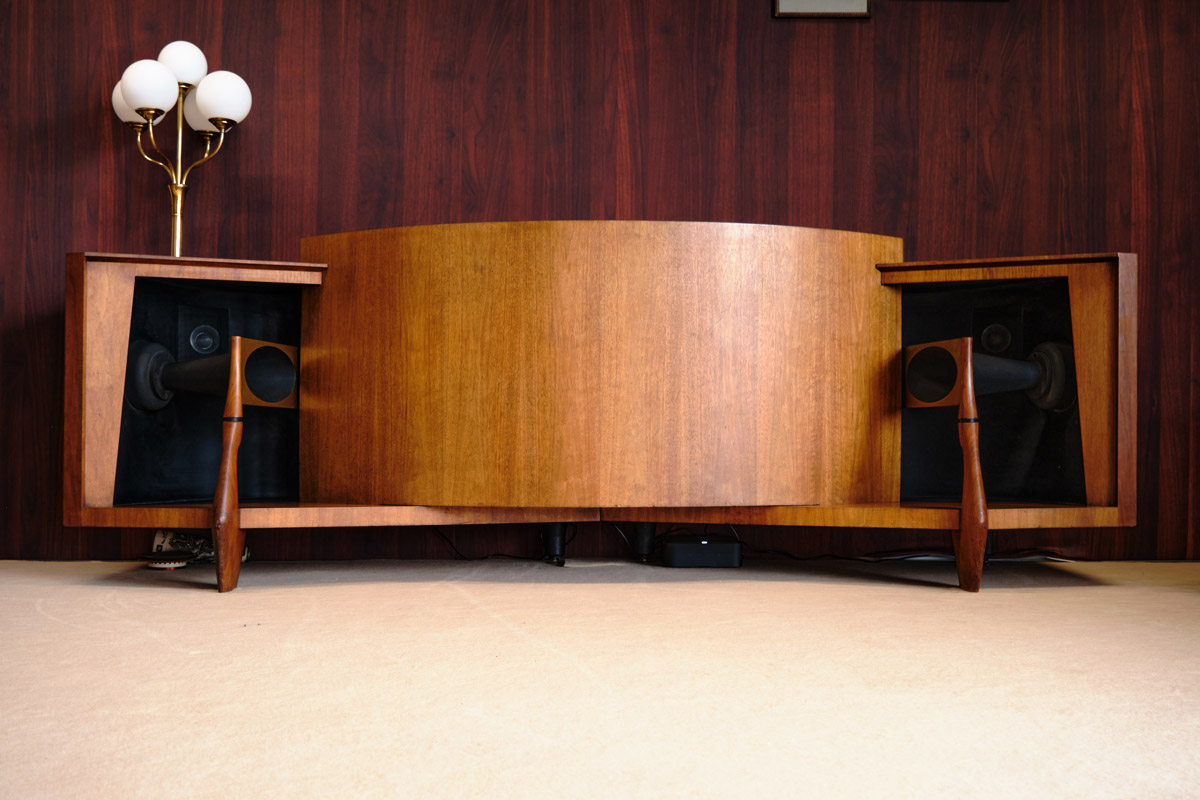
Then, in 1957, came the Paragon. Arguably the world’s first soundbar, it had nothing to do with sonic compromise: at 2.70 meters (nearly 9 feet) wide and weighing 300 kilograms (660 pounds), the Paragon is regarded today – like so many JBL designs – as one of the most iconic products in the history of hi-fi.
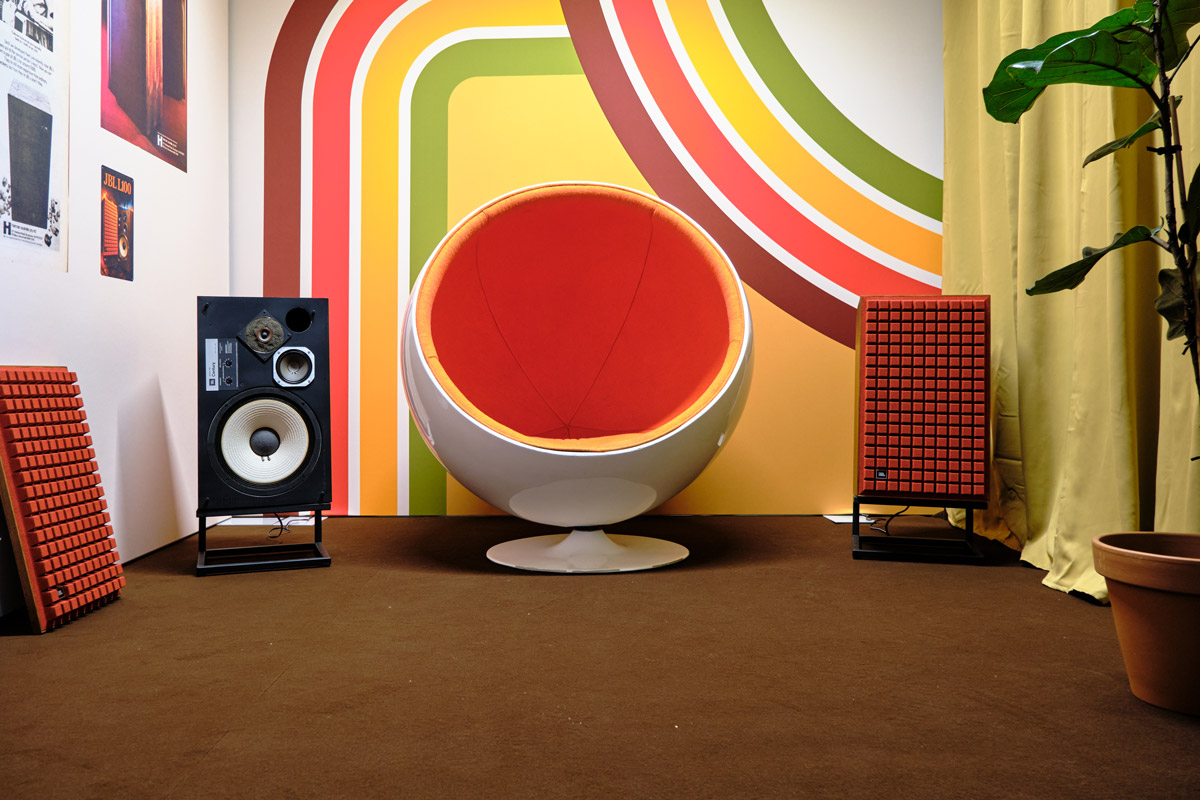
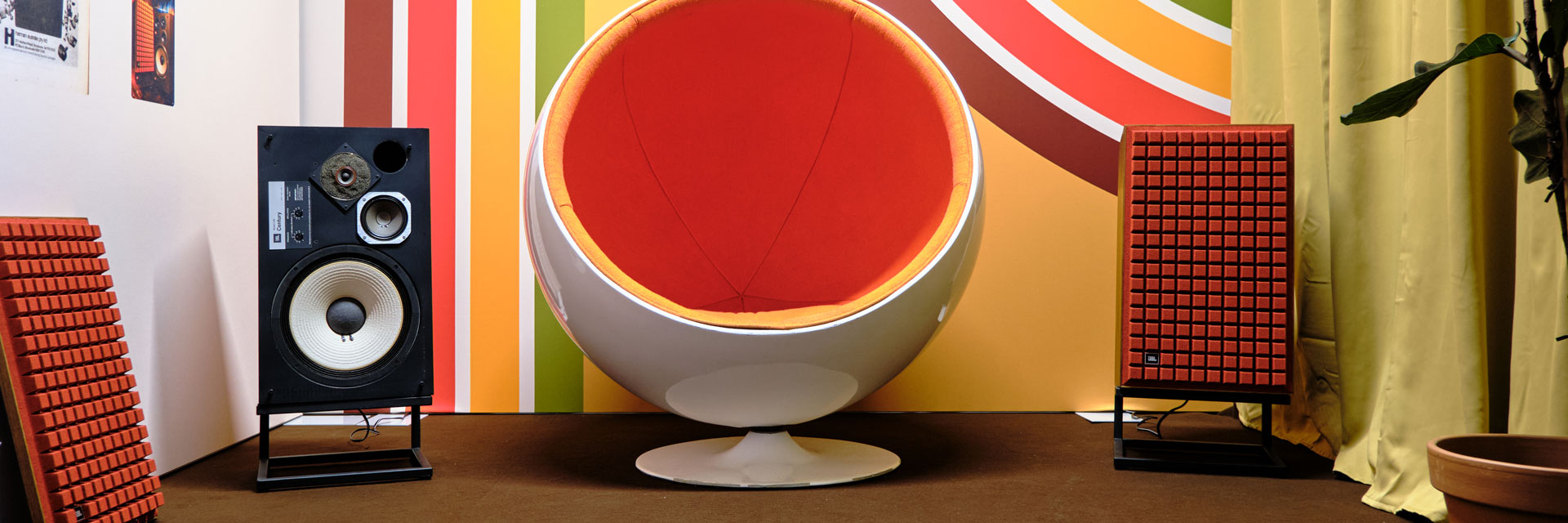
JBL entered a new era of global growth with its acquisition by Harman International in 1969. At the same time, the brand played a defining role in shaping the sound of the era’s major rock concerts and festivals. In the home-audio world, JBL set a new benchmark in the 1970s with the L100 Century. Few loudspeakers embody the golden age of the classic stereo boom more vividly than this model, with its unmistakable Quadrex foam grille. The 1980s brought further legendary designs, including the L250 and, later, the 250Ti, whose distinctive trapezoidal cabinets remain instantly recognizable to this day.
But JBL has never been content to rest on its laurels. While many traditional hi-fi brands lost relevance in the 21st century, JBL successfully reinvented itself as a global lifestyle and mobile-audio brand. The products of the Flip series in particular helped make Bluetooth speakers a mass-market phenomenon and went on to become some of the most successful products in the company’s history. Portable speakers, party boxes, and true-wireless headphones now shape the public perception of the brand, without JBL ever losing sight of its roots. Alongside its success in mobile audio, JBL continues to cultivate its hi-fi heritage – and the modern reissue of the L100, in particular, forms a highly visible bridge between past and present.
We extend our warmest congratulations to JBL on its 80th anniversary and wish the brand many more sonically memorable decades to come – from the recording studio to the living room and all the way to the beach party.