The story of Bowers & Wilkins begins well before the company itself was founded, in the years following World War II. John Bowers and Roy Wilkins, who had met while serving in the Royal Corps of Signals during the war, opened a radio shop in Worthing, England.
It wasn’t until 1966 that they turned their attention to loudspeaker design, spinning off Bowers & Wilkins Loudspeakers Ltd. and beginning sales of their first model, the P1, in 1967. Its drivers were sourced from EMI and Celestion. From the outset, the founders demonstrated a commitment to measurable performance: They invested in an oscillator and chart recorder so that every pair of loudspeakers sold could be accompanied by a measurement report. Just a few years later, in 1972, B&W moved into new premises equipped with anechoic chambers and measurement instrumentation from Brüel & Kjær.
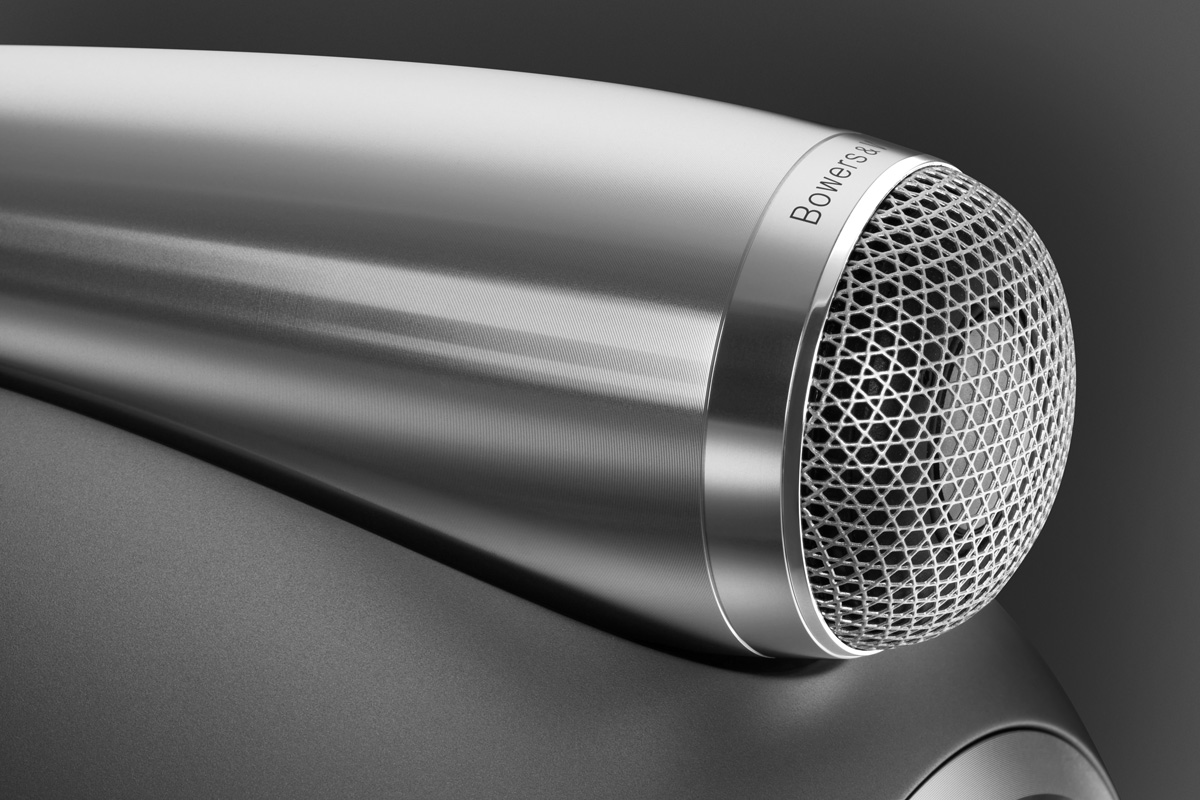
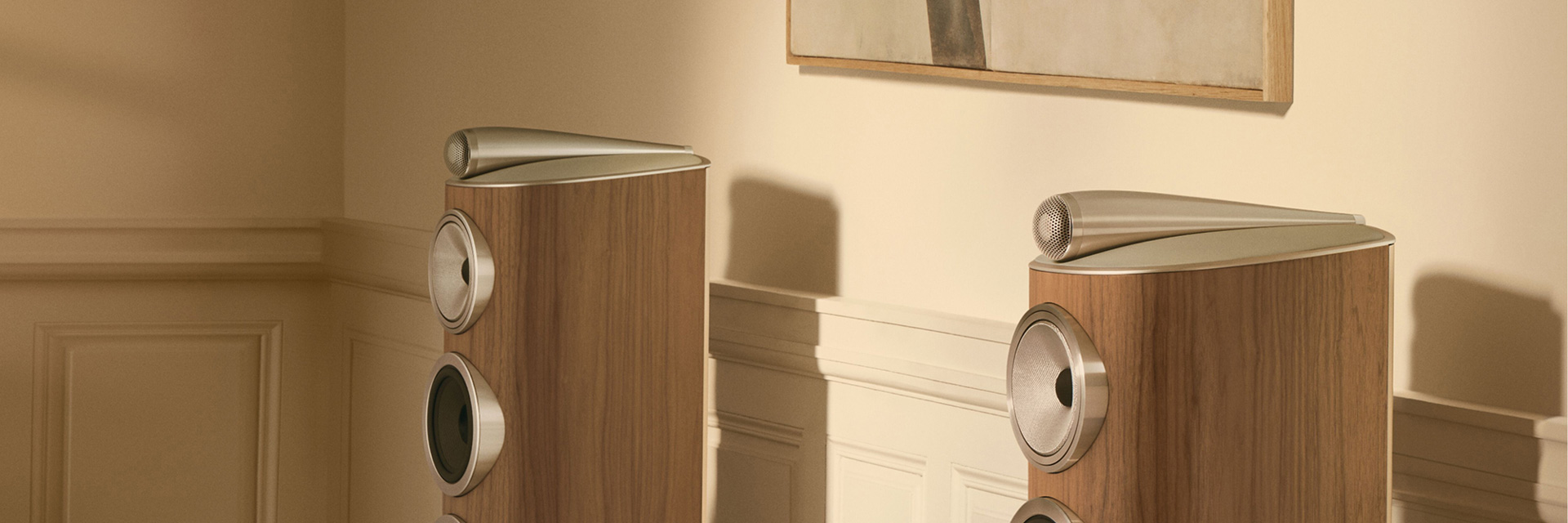
Technical milestones and industry accolades soon followed. In 1977, B&W introduced the DM7, its first loudspeaker to feature a tweeter mounted separately atop the cabinet – a design element that remains a defining characteristic of B&W loudspeakers to this day. Just two years later, the legendary Abbey Road Studios adopted the 801, a resounding endorsement that marked the beginning of a partnership that continues to this day.
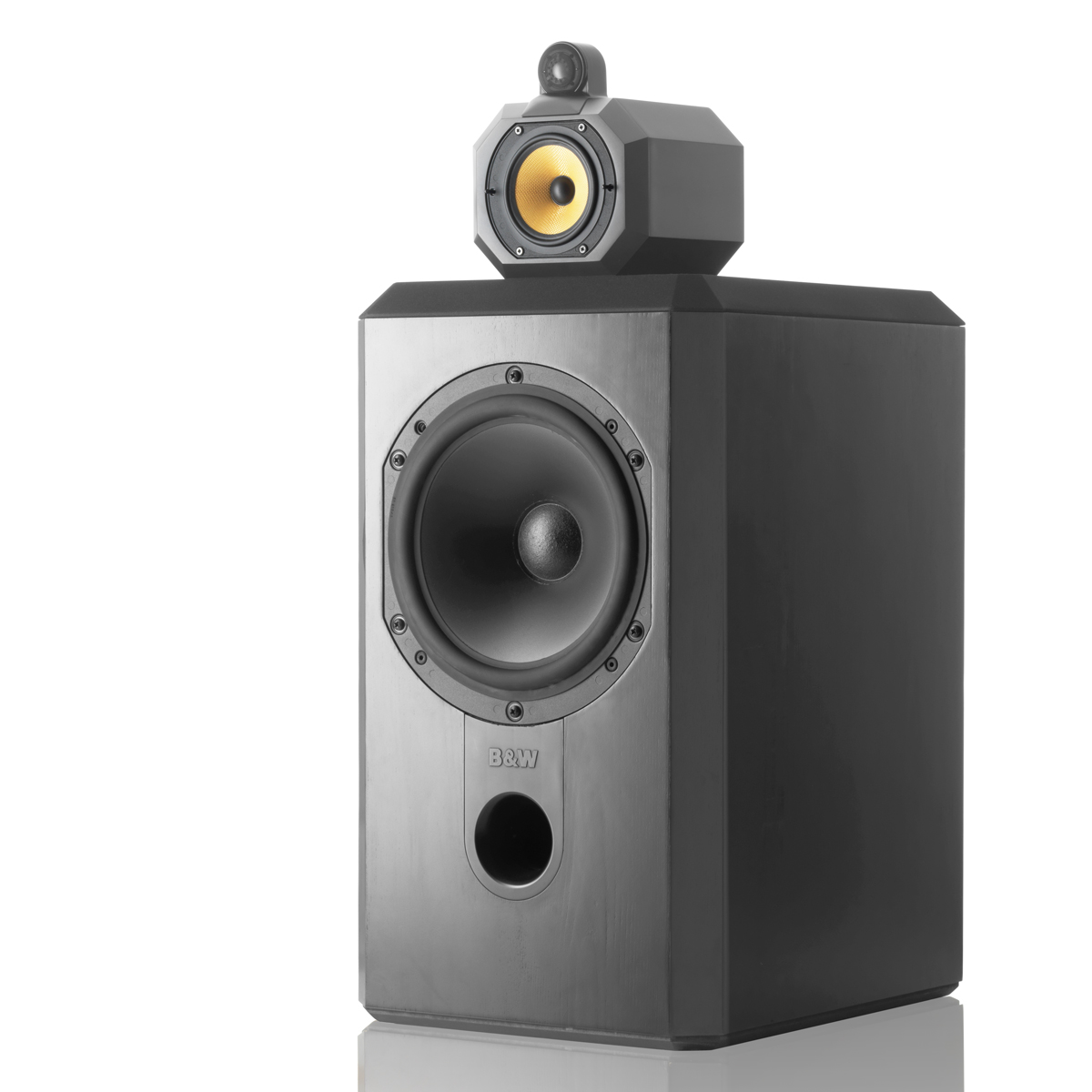
During the 1980s, Bowers & Wilkins experimented extensively with active crossover networks. To support this work, the company brought on Lawrence Dickie, who would also give the British manufacturer a rather different – and no less significant – innovation. Having observed other manufacturers using honeycomb structures to combat cabinet resonances, Dickie conceived a more ambitious approach to the concept. The result was the Matrix construction: a complex network of internal bracing extending throughout the entire loudspeaker cabinet. First introduced in the aptly named Matrix series, the technology has been employed in progressively refined form in the 800 Series since 1987.
Around the same time, the British engineers were exploring an entirely different approach to cabinet design. After five years of development, B&W unveiled the legendary Nautilus in 1993. It featured an outboard active crossover, but its most striking innovation was its distinctive, snail-shell-shaped bass enclosure, designed to absorb the rearward sound radiation from the woofer. More than 30 years later, this iconic loudspeaker remains the company’s flagship model.
While the 800 Series continues to benefit from successive technological advances – including diamond-dome tweeters and a biomimetic suspension that replaces the conventional spider in the midrange driver – Bowers & Wilkins has also expanded its presence in the consumer market over the past two decades. In the meantime, the company has passed through Sound United and most recently become part of the Harman group. Among its best-known consumer products is the Zeppelin, a smart speaker first introduced in 2007, alongside noise-canceling headphones and a wide range of other products.
We wish Bowers & Wilkins continued success in developing fresh ideas that, like so many of its innovations over the past six decades, will stand the test of time.