

Progressive rock entails tempo changes, classical and jazz reminiscences, extensive instrumental parts and surprising instruments. But all of this is hard to fit into a three-minute song – which is why epics exist.
It all began in 1969 with a millionaire from the Netherlands. This “Sam” Miesegaes was so impressed by the talent of English keyboard player Rick Davies that he was willing to finance a record production for him. Davies therefore decided to form a band, placed an ad, and held auditions for interested musicians. He chose a certain Roger Hodgson as guitarist – who was only 19 at the time. But when Richard Palmer auditioned, he got the guitar job, and Hodgson had to switch to bass. The band’s first trial concert took place in Munich – back then they were still called “Daddy.” It was Richard Palmer who eventually suggested the name “Supertramp.” Palmer also wrote all of the band’s lyrics. Later – now as Richard Palmer-James – he would become the lyricist for King Crimson.
Curiously enough, it was King Crimson’s debut album that had initially inspired the members of Supertramp. After all, anyone starting a rock band in 1970 wanted to play progressive rock. Supertramp’s first album was released in the summer of 1970 and fit the progressive trend perfectly. Naturally, the album also featured an epic, the twelve-minute “Try Again.”
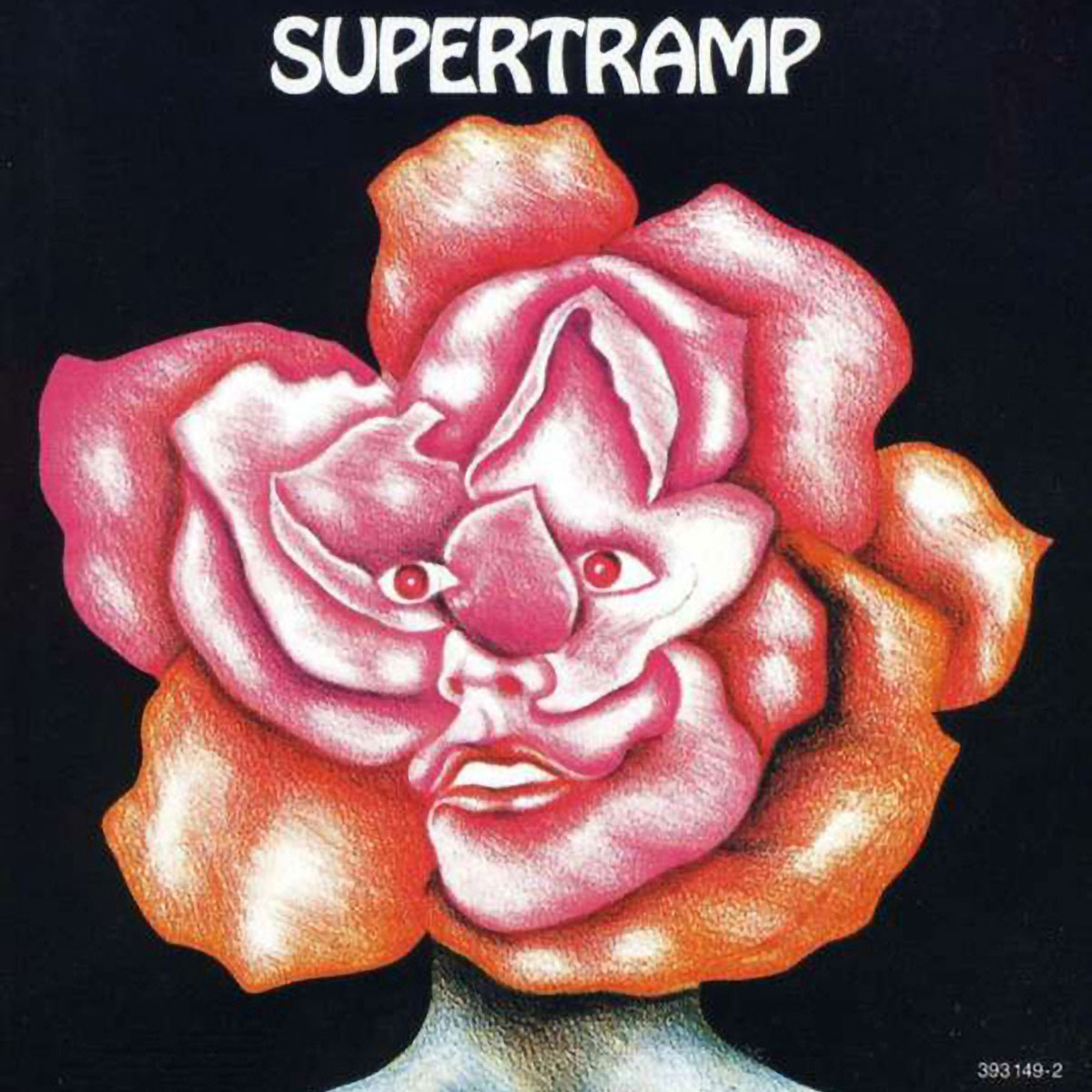
The piece begins very quietly with “psychedelic” sounds from which a theme gradually emerges, played by the flageolet (Hodgson) and the organ (Davies) – a theme that also becomes the melody for the vocal verses. Hodgson and Palmer sing the verses together, while Hodgson handles the chorus (“Try again, she replied to some story I told”) on his own. A brief full-band motif follows (this is where it gets loud), then a short interlude with gentle organ tones and a softly improvising guitar. After that comes a second verse, the chorus again, and the loud band motif.
At 3:00, we hear screams from the guitar, followed by alternating electric piano and organ. Gradually, Palmer, the guitarist, eases into his extended solo, beginning gently before growing louder and louder. It’s a distinctive guitar solo, largely pre-composed, somewhat bluesy and with an Oriental flavor, even including a quotation from Bach. At 6:20, the tempo explodes, and a second guitar begins riffing behind the soloist – this is the climax of the piece. Only at 7:10 does the band fall back into the original tempo, and the guitar solo comes to an end. The music quiets down again; we hear organ and drums, the flageolet returns with the opening theme, which is answered directly by Hodgson’s chorus vocal. Then comes the band motif, followed by an abrupt ending. – Or so you think: in progressive rock, there’s usually an epilogue. It begins at 8:30, once again very quietly and “psychedelically,” then the band builds momentum once more, we hear the sung chorus one final time, and a coda motif brings the piece to its conclusion. This time for real.
“Try Again” has everything a cult epic needed in 1970. A touch of psychedelia, a long solo with tremendous flow and a huge crescendo, a murky organ, dramatic quiet/loud contrasts, plenty of variety, and even an unusual instrument (a flageolet). “Try Again” was “the highlight of our live shows,” Palmer-James recalls. Yet despite excellent reviews and 70 concerts between June and December 1970, the album was a flop. Palmer-James quit at Christmas. He has often said that what he admired most was the perseverance of Davies and Hodgson. They made “Try Again” virtually their motto. It would take another five years before Supertramp achieved its breakthrough. Five years until songs like “Dreamer,” “School,” and “Bloody Well Right.”
Find the Supertramp album featuring Try Again on discogs.