
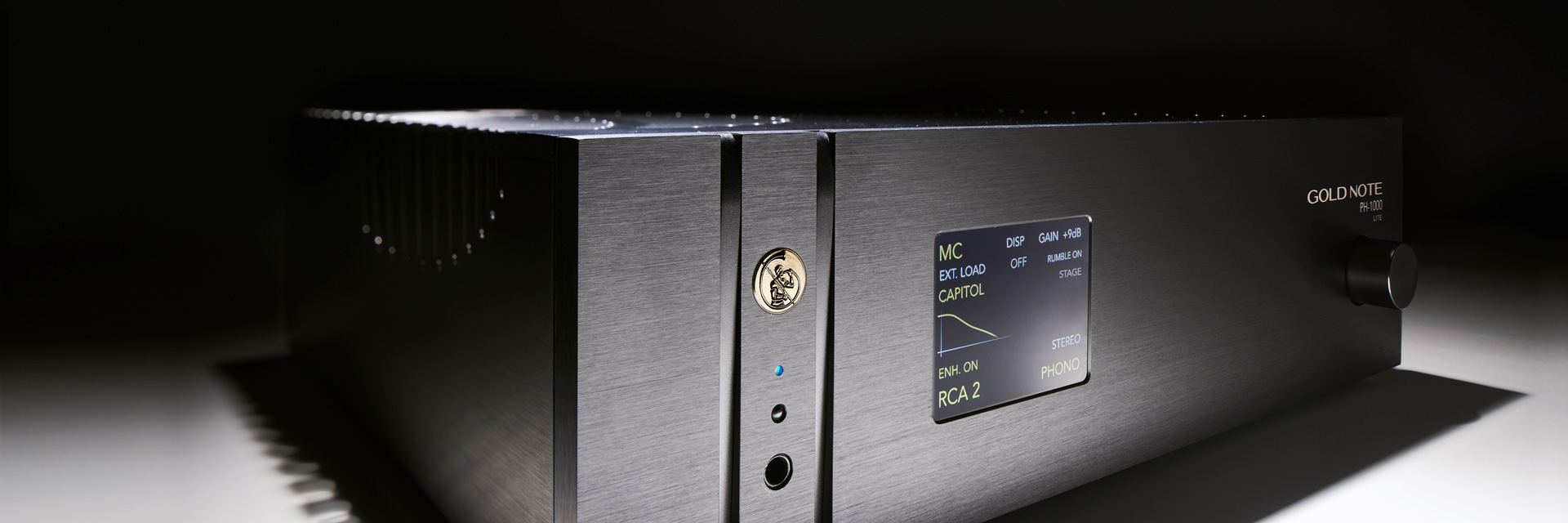
With the Gold Note PH-1000, what would normally be considered a contradictory combination of capabilities becomes reality. This “Swiss Army knife” of phono preamplifiers also delivers outstanding sonic performance across the board.
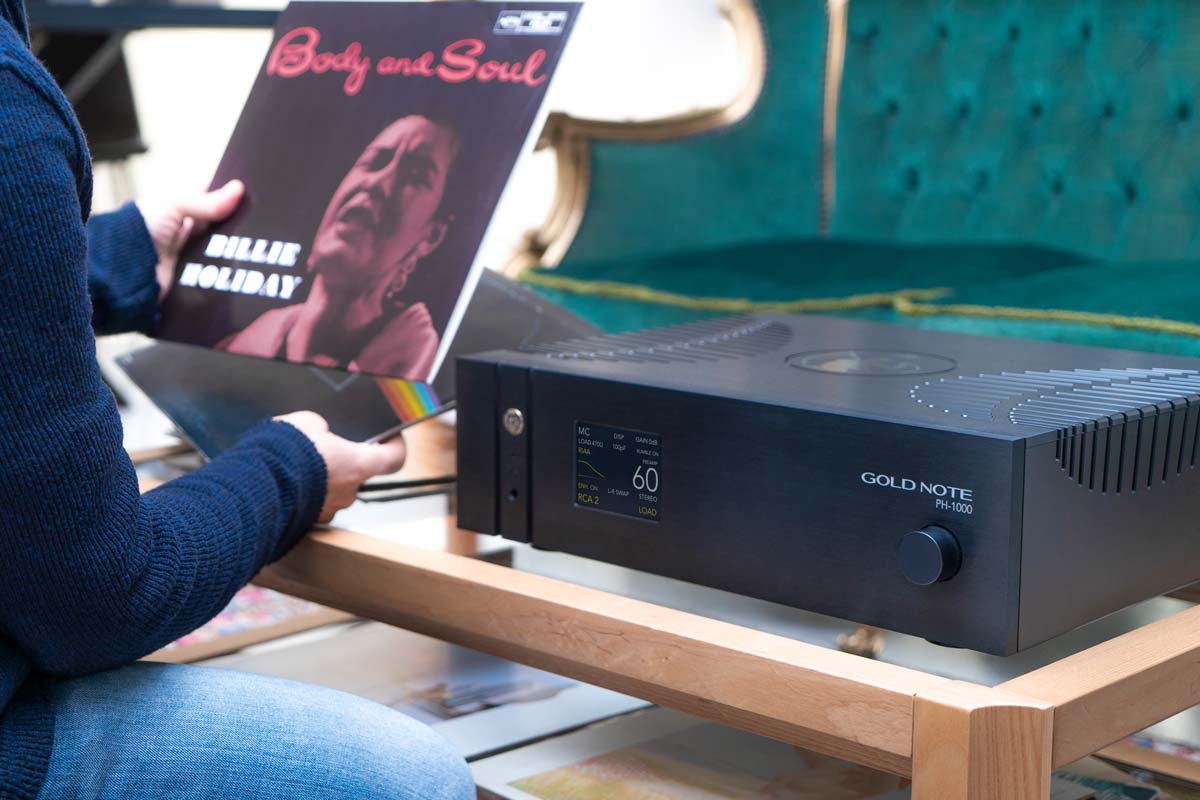
 Almost two years ago, I had the pleasure of reviewing the Gold Note Mediterraneo X. That wonderful turntable left a lasting impression on me, so I was delighted when Michael Stolz, ATR’s Gold Note specialist, entrusted me with the PH-1000 phono preamplifier for review. This flagship model from the Italian manufacturer offers a feature set that is, to the best of my knowledge, unique. Before taking a closer look at its capabilities, I’d like to quote excerpts from an email by Gold Note founder and CEO Maurizio Aterini, in which he explained the philosophy behind the PH-1000:
“We […] believe that sound quality is not a matter of opinion, but a responsibility. A responsibility to the artist, the recording engineer, the studio, and above all the listener. […] Our goal is not to create the best sound in the world, but to bring listeners closer to the truth contained in every recording, regardless of genre, era, or production complexity. […] There are no impossible records—only systems that are unable to reproduce them completely.”
That’s a philosophy I can certainly embrace. The consistency with which it has been implemented in the PH-1000 becomes apparent simply by looking at its extensive configuration options.
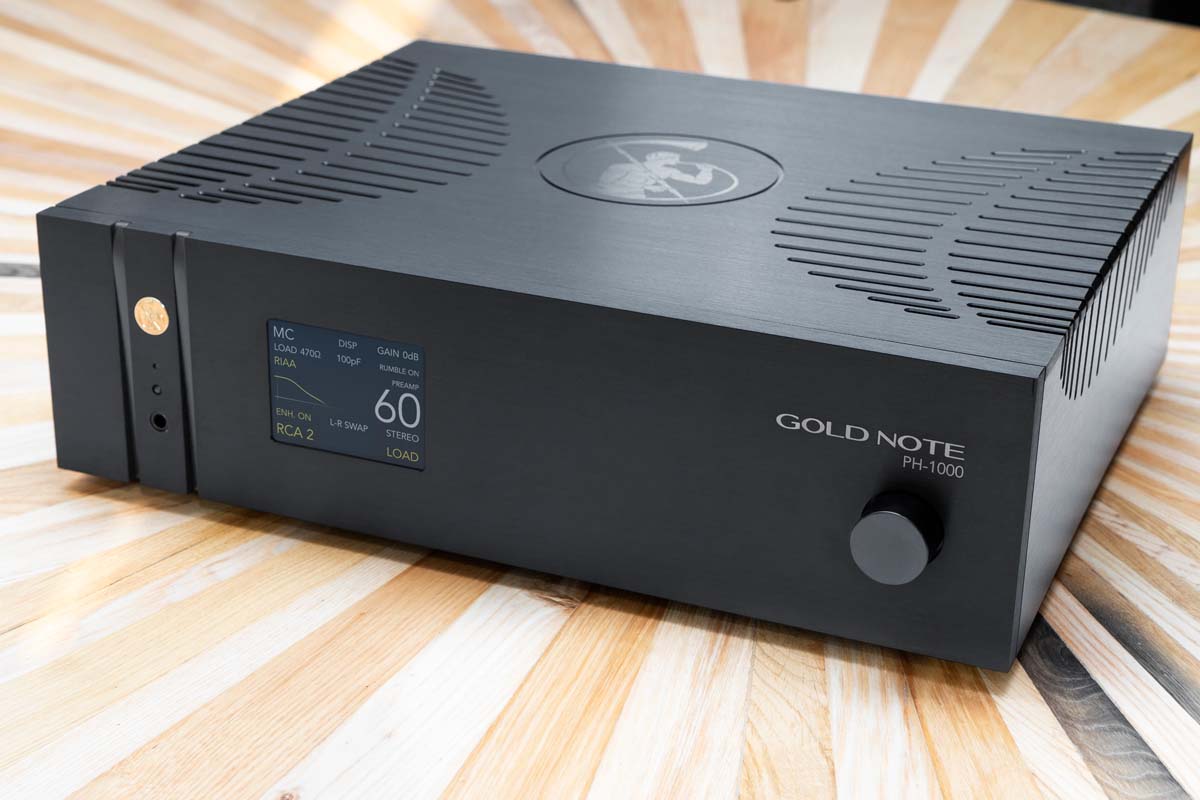
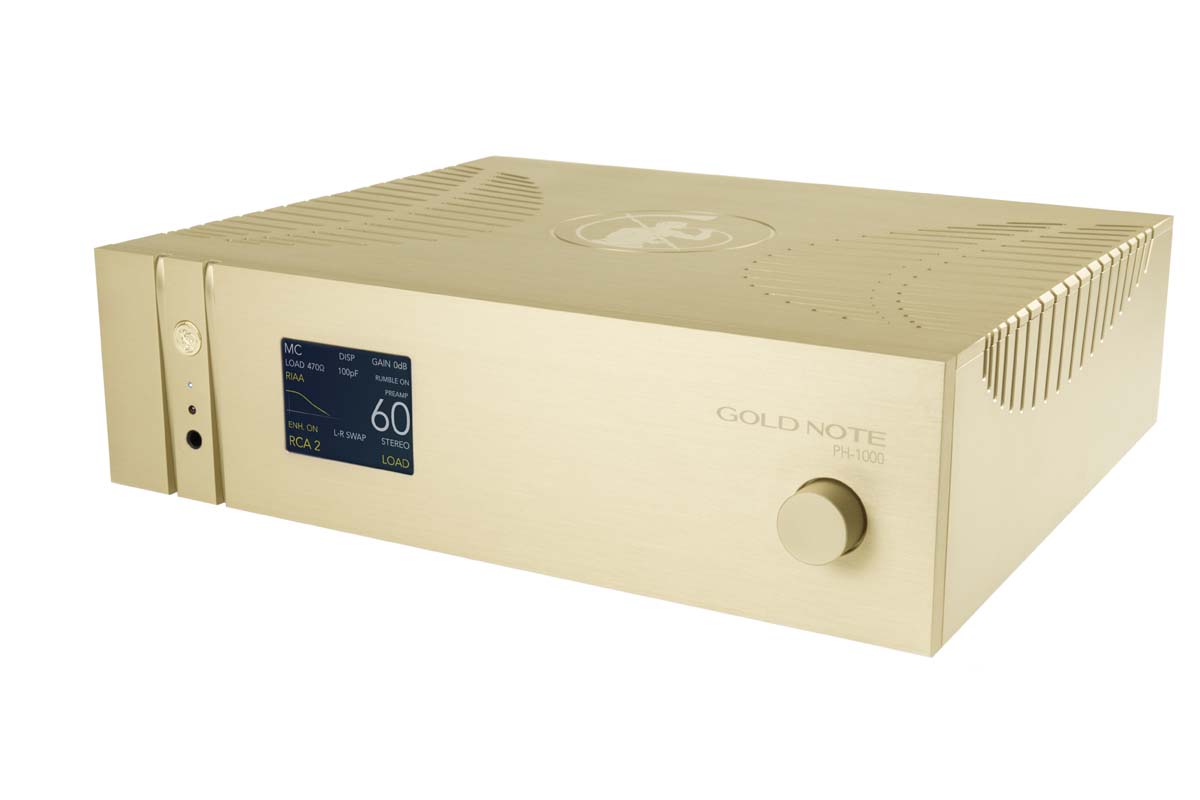
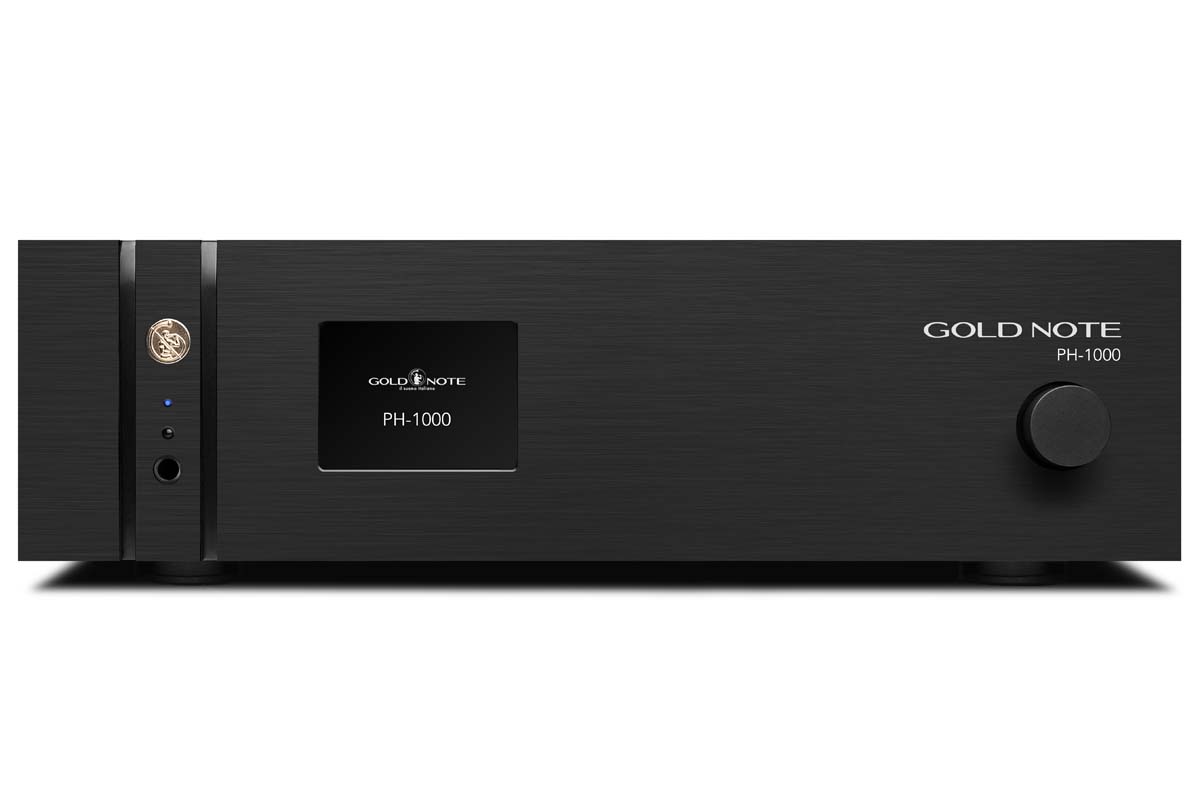
Before we dive into the technical details, let’s take a quick look at the exterior—after all, we listen with our eyes as well. The PH-1000 shares the classic 17-inch chassis dimensions with all other components in Gold Note’s 1000 Series, a sensible choice both aesthetically and from a manufacturing standpoint. The enclosure is made entirely of aluminum, featuring a 12 mm thick front panel, a 6 mm top cover, and 6 mm side panels. That’s what I call solid construction.
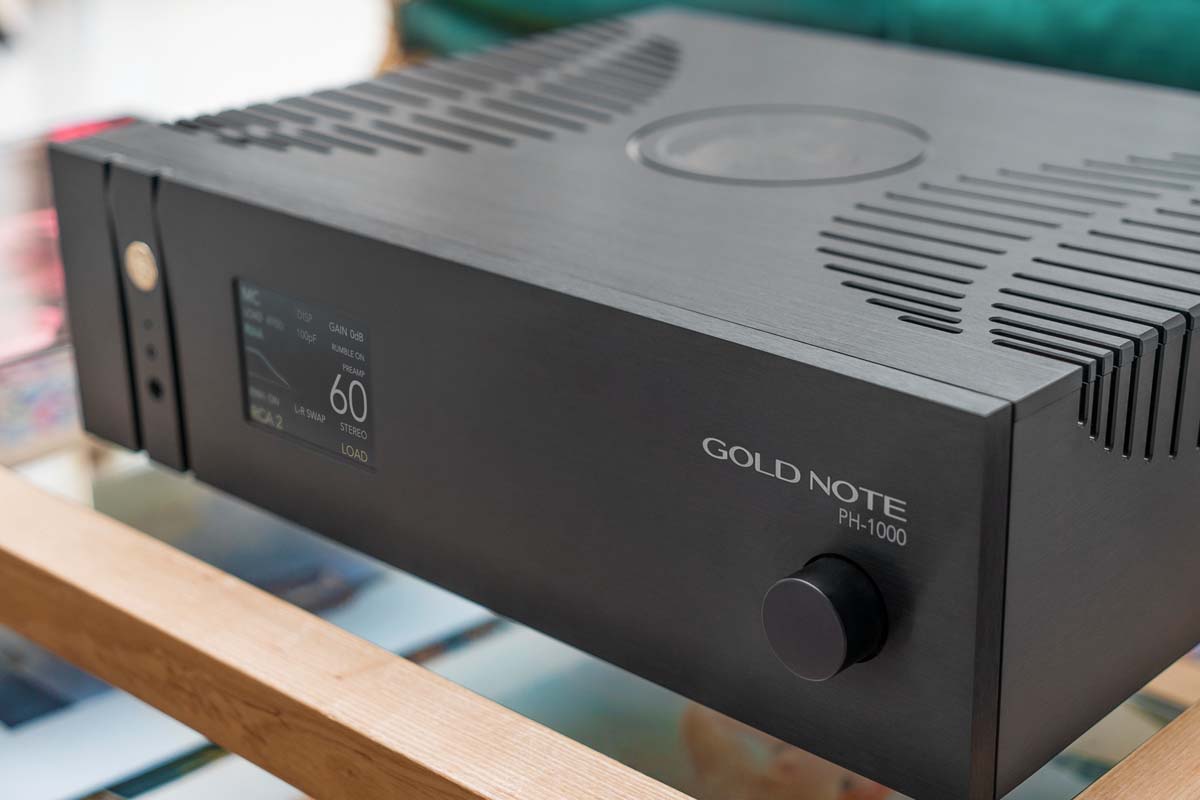
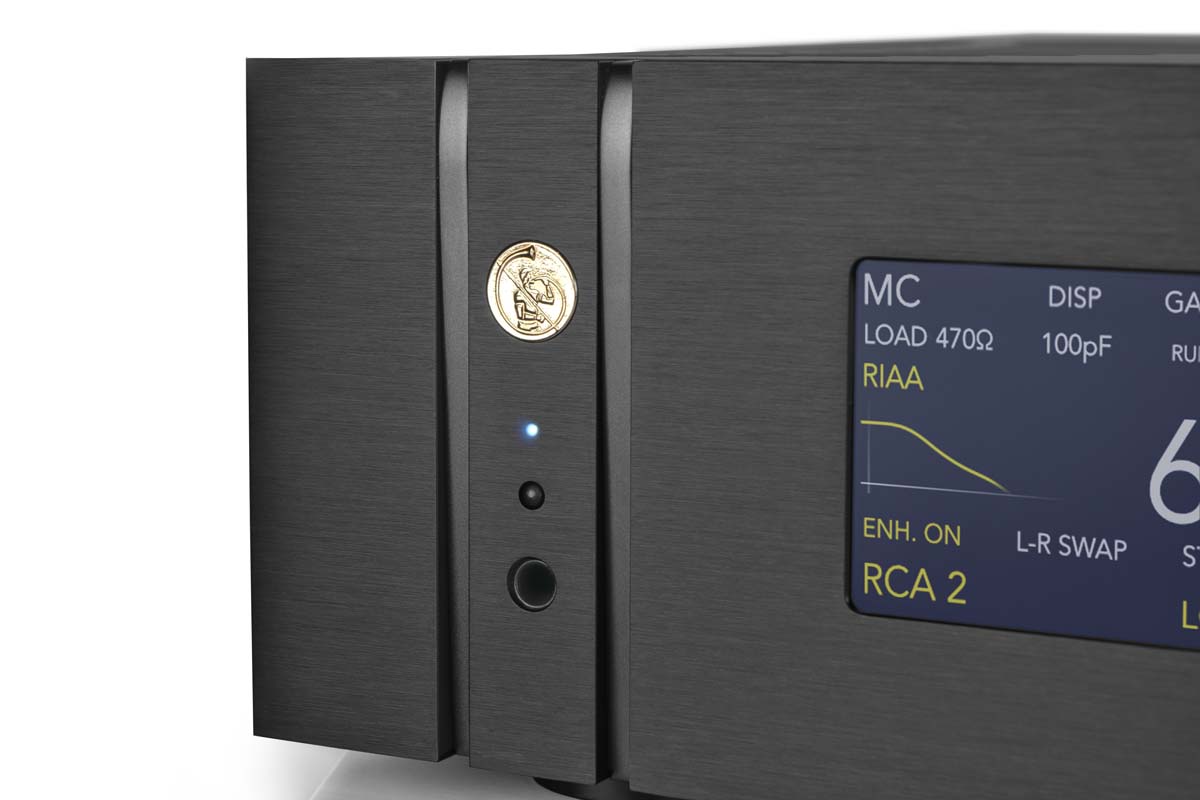
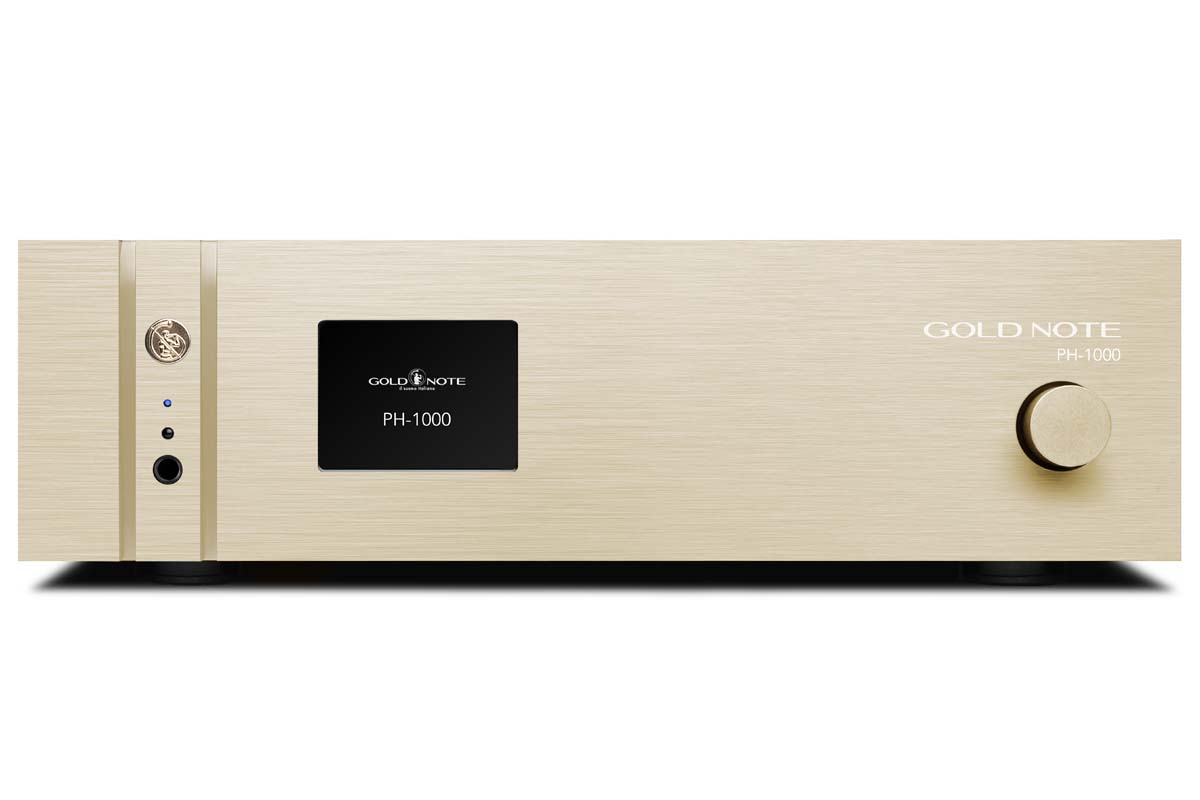
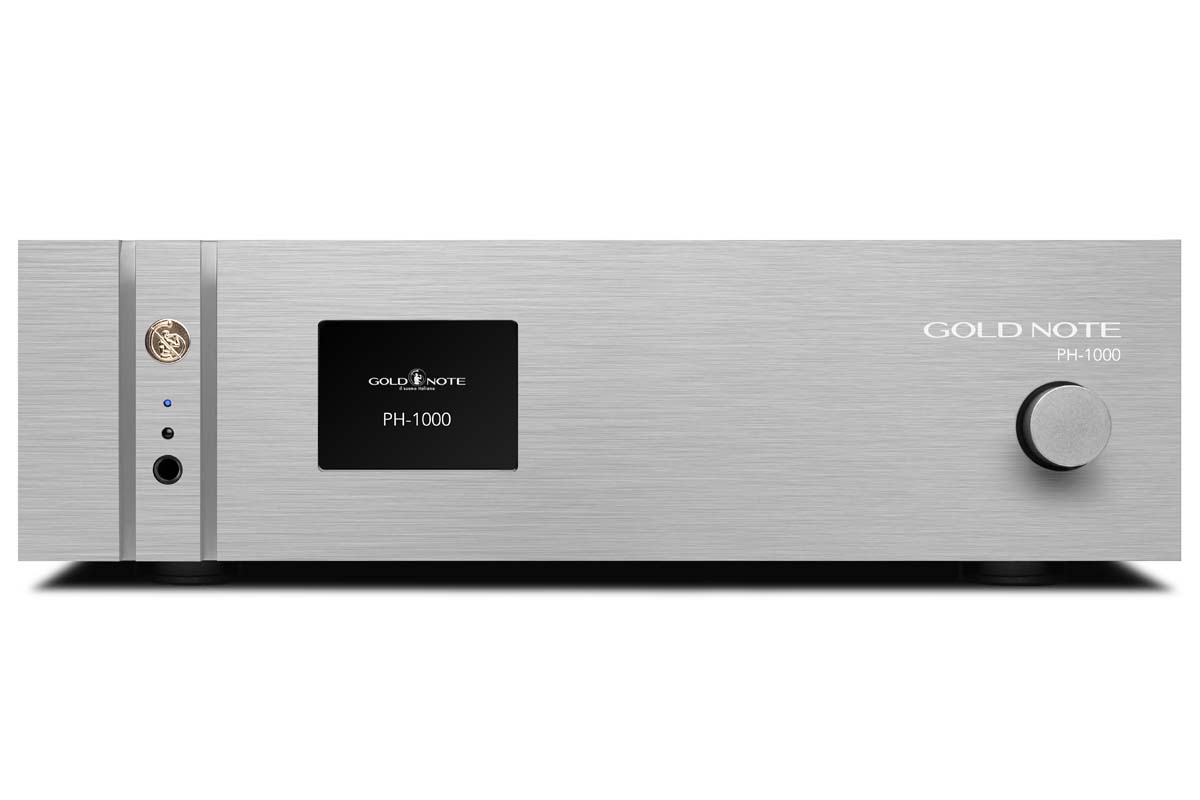
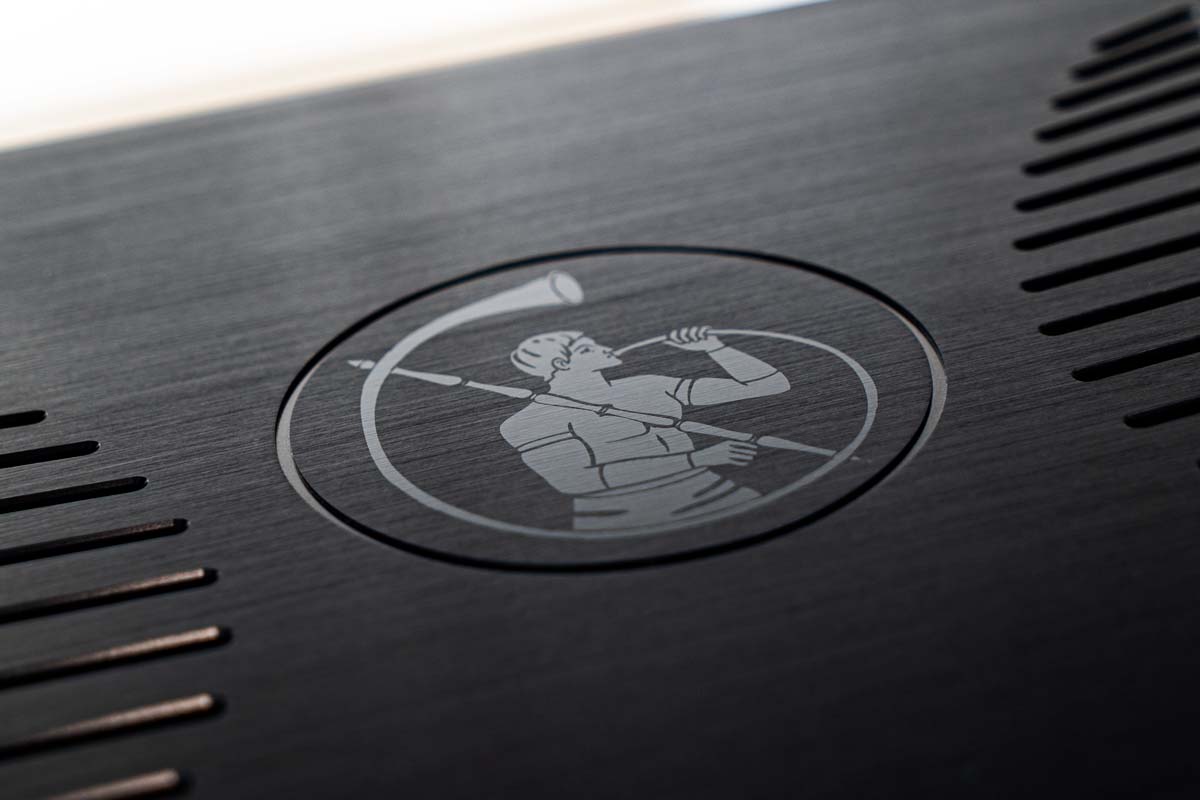
The massive rectangular chassis is given an elegant sense of lightness by gracefully curved ventilation slots and understated machining details—the Gold Note logo milled into the top panel and two vertical grooves on the front panel. The only eye-catching decorative element is the gold, button-shaped Gold Note emblem. Beneath it are the power status LED, an infrared receiver for the remote control, and a 1/4-inch headphone jack. To the right is a 73 x 55 mm display. The only front-panel control is a rotary/push knob positioned on the right side. This conveniently sized aluminum control provides access to every setting. Its well-defined push action and positive detents provide clear tactile feedback for every adjustment.
The rear panel benefits from the generous chassis dimensions as well. The numerous connectors are spaced comfortably apart, leaving plenty of room even for oversized plugs. Thankfully, the dreaded bank of tiny DIP switches—so often used (and one of my personal pet peeves) for configuring operating parameters—is nowhere to be found.
Up to three cartridges can be connected via two pairs of RCA inputs and one balanced XLR input. Each input can be configured independently in every parameter, although the balanced input is reserved for moving-coil cartridges. The single-ended inputs each have their own ground terminal, while additional sockets are provided for connecting external loading resistors. On the output side, both balanced XLR and single-ended RCA outputs are available. Connectors for the optional external power supply, the optional tube output stage, and RS and USB ports (for firmware updates) round out the feature set.
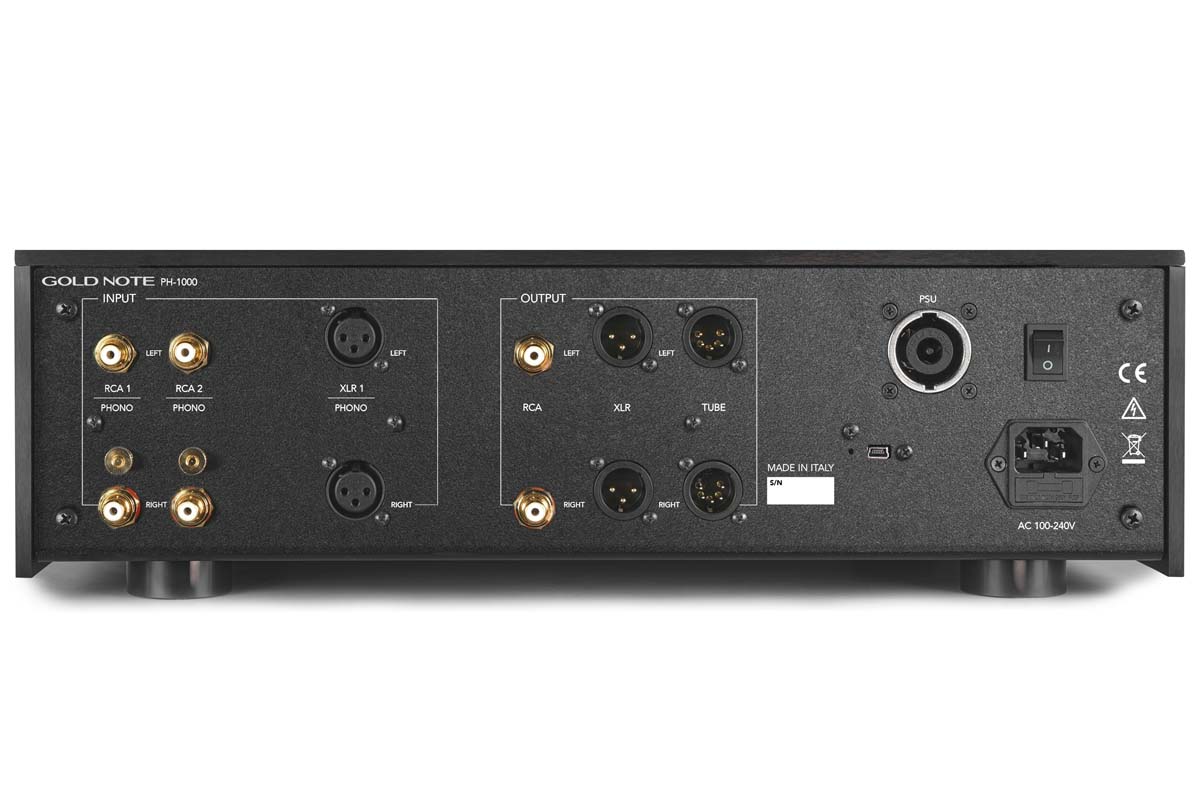
The gold-plated RCA inputs make a high-quality impression and are individually fastened to the rear panel, while the XLR connectors come from Neutrik’s proven product line. The power switch is positioned well above the IEC C14 power inlet, allowing it to remain easily accessible even when using power cords fitted with large connectors. That’s certainly not always the case.
Tommaso Perotto from Gold Note’s marketing team provided me with additional information, of which I can only summarize the highlights. He explained that the PH-1000 features a fully discrete, pure Class A dual-mono design. The two channels are physically separated to eliminate any possibility of crosstalk, and the power supply is independently shielded. Despite the extensive configuration options, signal paths have been kept deliberately short. Every component undergoes comprehensive quality control, with tolerances limited to one percent.
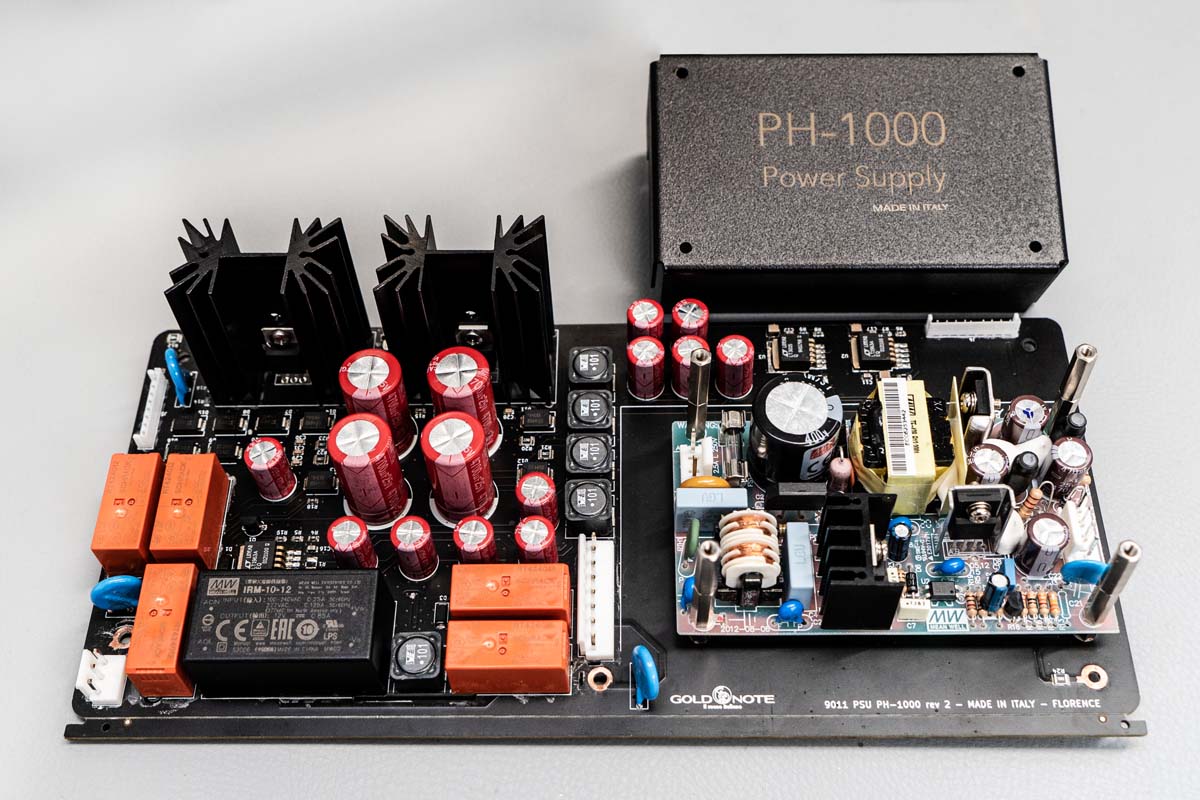
The manufacturer also emphasizes that the PH-1000 is a completely analog design, free from DSP processing or any computer-based signal manipulation. According to Gold Note, the objective is not merely to achieve impressive technical specifications—although those are indeed excellent—but to deliver audible benefits. The same philosophy extends to the integrated Class A headphone amplifier, which is intended as a fully capable component in its own right. Finally, it’s worth mentioning that the PH-1000 is designed and manufactured exclusively in Montespertoli, near Florence.
What exactly is the job of a phono preamplifier—more accurately, a “phono pre-pre-equalization amplifier”? First, it must amplify the cartridge’s tiny output signal sufficiently for processing by a line preamplifier or integrated amplifier. Second, it should allow configuration according to the cartridge’s electrical characteristics, such as impedance and capacitance. Third, it must apply the inverse equalization curve required to compensate for the equalization used during record cutting.
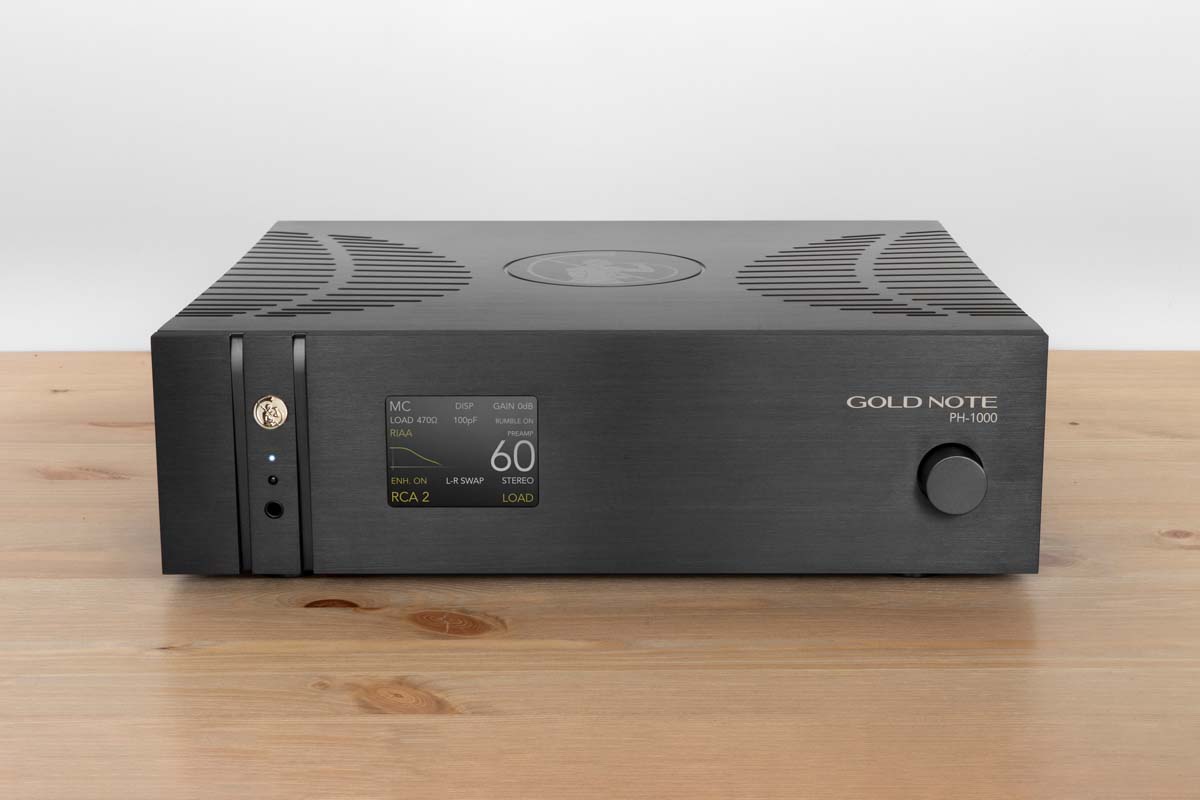
None of this is new, of course, but it’s worth mentioning here to help organize the PH-1000’s remarkably extensive feature set. All settings are clearly displayed on the screen and can be adjusted either with the rotary/push control or the supplied remote control. Default gain is set to 40 dB for moving-magnet cartridges and 65 dB for moving-coil cartridges. Once the cartridge type has been selected, gain can be adjusted in 1 dB increments from -9 dB to +9 dB. This provides a range of 31 to 49 dB for MM cartridges and 56 to 74 dB for MC cartridges. In addition to optimizing gain for specific cartridge requirements, this also allows cartridges with different output levels to be matched in volume. That’s helpful not only when comparing different cartridges, but also in everyday listening, where I appreciate having all sources play back at approximately the same volume.
The load impedance values can be finely adjusted in precise increments over a range from 10 ohms to 100 kiloohms. If that is not enough, individual load resistors can be connected to the dedicated sockets provided for this purpose (XLR + RCA). The load capacitance for MM and MI systems can be adjusted in seven steps up to 1000 picofarads.
The possibilities for setting the appropriate equalization curve are where things really get wild. Anyone worried that this could inevitably turn music enjoyment into a configuration and adjustment ordeal can relax, however – the RIAA standard established by the Recording Industry Association of America around 1962 was also adopted in Germany and enshrined in DIN standards 45536/7, and with only a few exceptions, all records manufactured thereafter were produced using the RIAA cutting characteristic. Translated: all vinyl enthusiasts who exclusively own records from “more recent” eras can sit back and relax and simply select the RIAA option on the display.
However, there is a faction among record lovers in particular that enjoys the still-mono recordings made in the late 1940s and early 1950s. For these listeners, the PH-1000 offers a virtually limitless playground. Including the standard RIAA curve, there are no fewer than 18 different curves to choose from; and that is not all – four additional curves can be freely configured and saved. An extensive list available on the Gold Note website explains when the various labels used which cutting characteristics. The corresponding parameters – bass turnover, bass shelf, and treble cut – are listed for each curve. By modifying these parameters, users can create their own equalization curves and save them in four available memory positions.
The Enhanced mode, which can additionally be activated for each selected curve, takes things even further: according to the manufacturer, it boosts the upper frequencies that were reduced during production on some pressings. Operation can be switched between stereo and mono, and the phase can be inverted. The channels (left/right) can be swapped, and a subsonic filter (10 Hz at −36 dB/oct.) can be activated (although it was not necessary during the test). These unprecedented configuration options could easily become confusing, but thanks to the clear, dimmable display and single-knob operation, all settings become child’s play. It is also advantageous that all settings can be made using the elegant remote control. From my listening position, I had direct control over the sonic changes because I adjusted the parameters “on the fly.” The sound was muted only briefly during the switching process. Direct comparisons between cartridges are also possible, especially thanks to the aforementioned level matching.
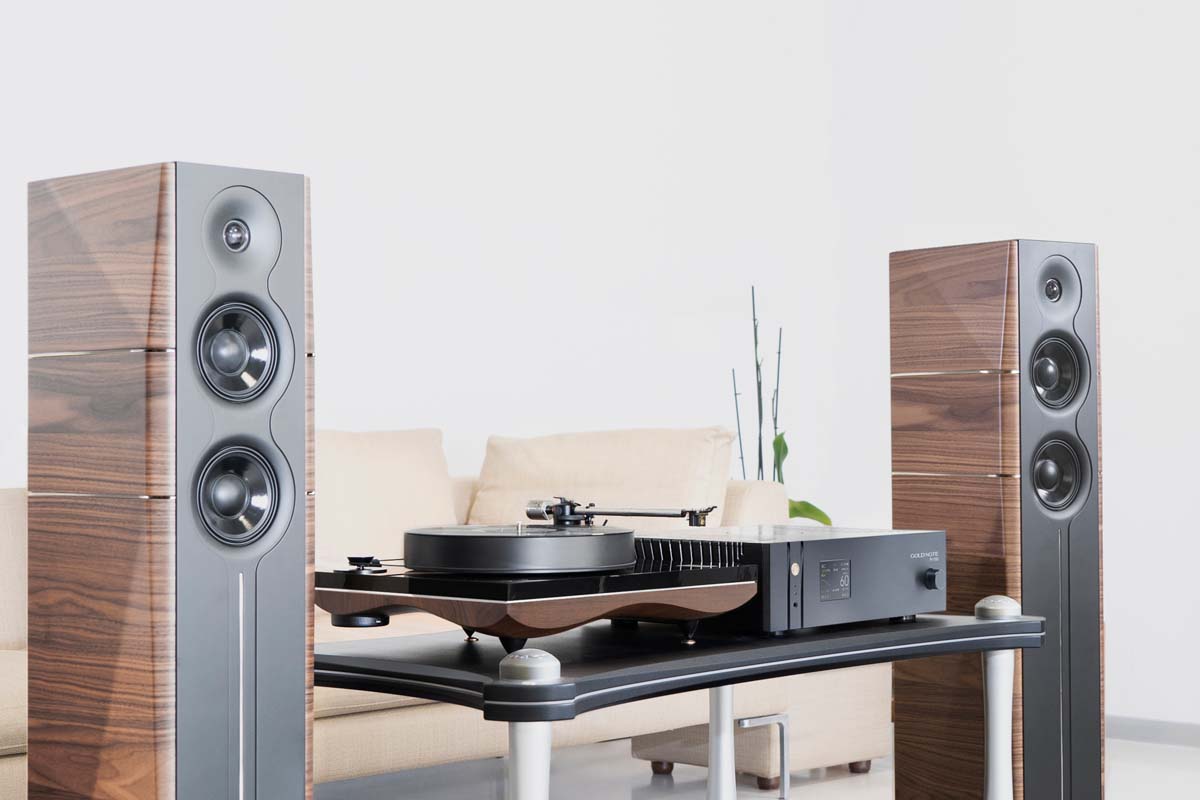
After so much technology, we finally come to the question of how the Gold Note phono preamplifier actually sounds. Without beating around the bush: the PH-1000 is the best phono stage that has ever been a part of my setup. After only a few hours of operation (the unit arrived fresh out of the box), any kind of analytical listening session became unnecessary. Everything was simply convincing: the limitless spatiality, the pinpoint localization of sonic events, the tonal balance. The various layers of a composition were presented with meticulous precision, and both micro- and macro-dynamics left nothing to be desired. All of this against an absolutely silent background.
On mediocre systems, the lively and complex jazz-rock of Weather Report’s Night Passage quickly becomes exhausting. The PH-1000 handles this dizzying swirl in a completely different way. Perfectly organized, even distinguishable in terms of height, the fireworks of percussion instruments spread throughout the listening room, while the various keyboard layers remain differentiated in timbre and spatial depth. Jaco Pastorius lets the bass lines race across the fretboard and makes his fretless bass sing in the most beautiful tonal colors.
A concert excerpt drew my attention to the latest album by Vincent Peirani. The accordionist and his ensemble Living Being IV have created a fascinating work with Time Reflections, combining jazz with pop influences and French flair. “Physical Attraction” gradually develops from a one-drop into a steppers reggae style, with the melancholic, dreamlike wandering melodies building toward a jazzy finale. The first-class recording (typically ACT) showcases all of the PH-1000’s capabilities. The music appears completely three-dimensional in space, the bass presses relentlessly deep and controlled through the floor and into my body. The gentle, warm tone of the soprano saxophone overlaps with the accordion while remaining clearly identifiable. The short but powerful snare rolls unexpectedly break through the cool groove, while individual sharp cymbal strikes explode freely in the room. The dynamics are impressive.
After exploring the sonic abilities of the phono stage, I went in search of old treasures to test the effect of precisely matched EQ curves. By chance, during the test period I was given a huge collection of records from the inventory of a former radio specialty store (1920 to around 1980). Hoping to find records from the pre-RIAA era, I searched through countless discs, and indeed found several examples from the late 1950s. A 1957 RCA recording seemed promising: Jascha Heifetz performing Tchaikovsky’s Violin Concerto.
I tried the various RCA curves, but they were not convincing. The RIAA curve sounded best. I then turned my attention to the EQ curve list on the Gold Note website. Using the code, I was able to determine clearly that the record was among the first RCA releases manufactured according to the RIAA standard. Well, bad luck. However, my attempts to make records that sounded unnaturally dull or overly bright more enjoyable by adjusting the parameters were successful. In this way, I was able to breathe new life into my rather “muffled”-sounding version of Bob Marley’s Positive Vibration from 1976.
I am not aware of any other phono preamplifier that offers such extensive configuration options. Despite the endless possibilities, operating the PH-1000 remains child’s play thanks to its well-thought-out, highly intuitive control concept. The suspicion that the focus on sound quality might have been pushed into the background is unfounded. On the contrary: this phono stage belongs to the best I have ever heard. It brings out all the qualities of the most diverse cartridges and lets them shine.
Gold Note also offers an external tube output stage, the TUBE-1012, a 12-tube Class A output stage, as well as the external PSU-1250 power supply as upgrades. I can hardly imagine what could still be improved in the performance of the PH-1000, but based on my experiences with Gold Note’s music machines, I am inclined to believe the following statement from the manufacturer: “External power supplies, modular expansions, and dedicated stages are never intended to optimize specifications, but rather to deliver structural, clearly audible improvements. Every step forward must be real, tangible, and perceptible with every kind of music, in every environment. We do not add character. We reveal it.” I can wholeheartedly agree with this final sentence with regard to the Gold Note PH-1000.
Phono preamplifier Gold Note PH-1000
Concept: Phono preamplifier with digital programming and 18 different equalization curves | Frequency response: 20 Hz to 20 kHz | Distortion: < 0.01% | Max. signal-to-noise ratio: 100 dB | Dynamic range: 110 dB | Infrasound filter: 10 Hz at 36 dB/oct. | Operating modes: Mono/Stereo, both optionally with invertible phase, channel swapping switchable | Accessories: Remote control | Options: Class A tube output stage (approx. €6400), external booster power supply (approx. €6000) | Versions: Black, silver, gold | Dimensions (W/H/D): 43/14/38 cm | Weight: 12 kg | Warranty period: 2 years | Price: around €10,900
ATR – Audio Trade
Villa Belvedere
Wallufer Straße 2
65343 Eltville am Rhein
Phone: +49 208 882660
info@audiotra.de