
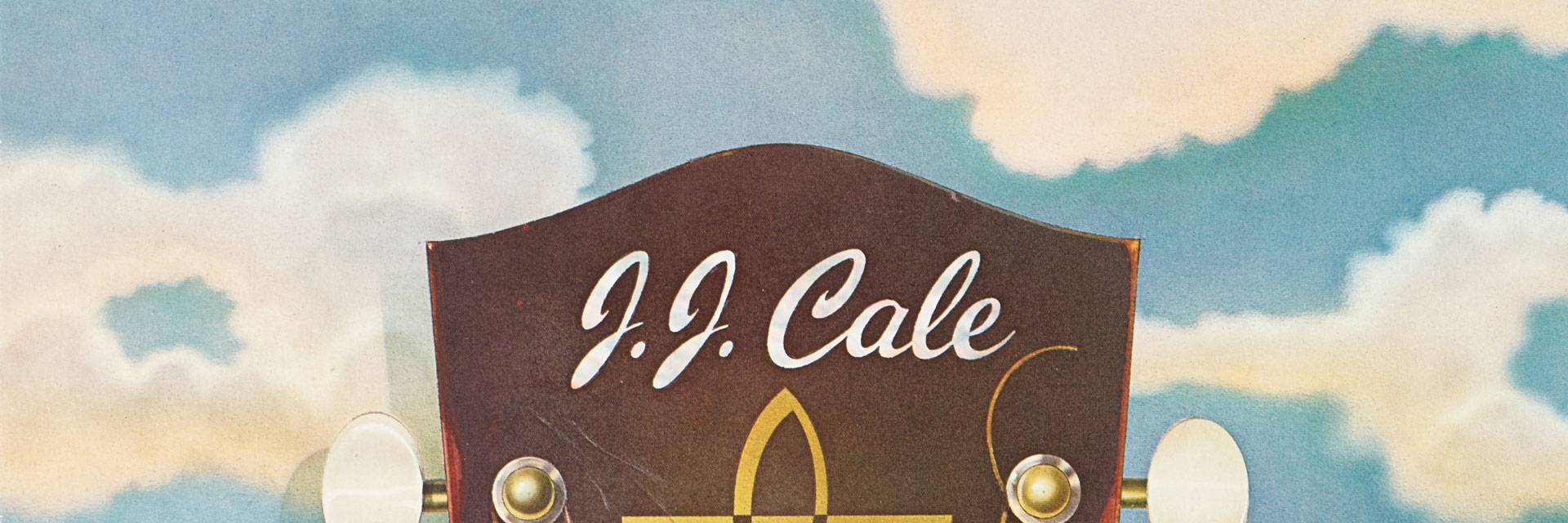
A solo career was never really part of the plan.
The man from Tulsa, Oklahoma, wanted to remain unknown, out of reach, without a permanent address, delivering a song now and then and nothing more. “I write songs,” he said. “That’s how I make my living. Other people record my songs. I don’t need this fame thing. I don’t even like touring. Just send me the songwriting royalties and let the younger guys become famous.” One of those younger guys was Eric Clapton, who had a huge hit in 1970 with J.J. Cale’s “After Midnight.” After that, everyone wanted to know: Who is this J.J. Cale? Eventually, he couldn’t resist any longer—people wanted to hear him, and record labels wanted to produce him. In 1971, he released his first album under his own name: Naturally.
Basically, J.J. Cale regarded his recordings as demo versions of his songs. With each album, he introduced twelve new ones—short and to the point, each just two or three minutes long, understated and unassuming. Yet he spared no effort when it came to the technical side of making records. In the studio he was as much an audio engineer as an artist, tinkering with this, refining that, bringing in one colleague or another, and taking all the time he needed. The results always sounded relaxed, cool, and effortless. J.J. Cale mastered the art of elegant understatement. Few people realized just what a great musician he was—”the best electric guitarist besides Jimi Hendrix,” Neil Young once said. And when it came to singing, J.J. Cale had his own tricks: “I’m not a good singer. I don’t have a special voice. I always mixed my voice so it came across very softly. As if I were whispering.”
His short, gentle love songs fall stylistically somewhere between blues, country, rockabilly, and jazz. They also contain improvisation, but always in a restrained and unobtrusive way. The lyrics sound just as casual and offhand. The declarations of love are often rather ordinary. Slightly more direct, at least, are the songs’ invitations to sex. “Let Me Do It To You,” for example, consists of nothing but that single line, repeated over and over. In the 1970s, it was an open secret: J.J. Cale’s hypnotic, whispered songs were the perfect soundtrack for getting high and making love.
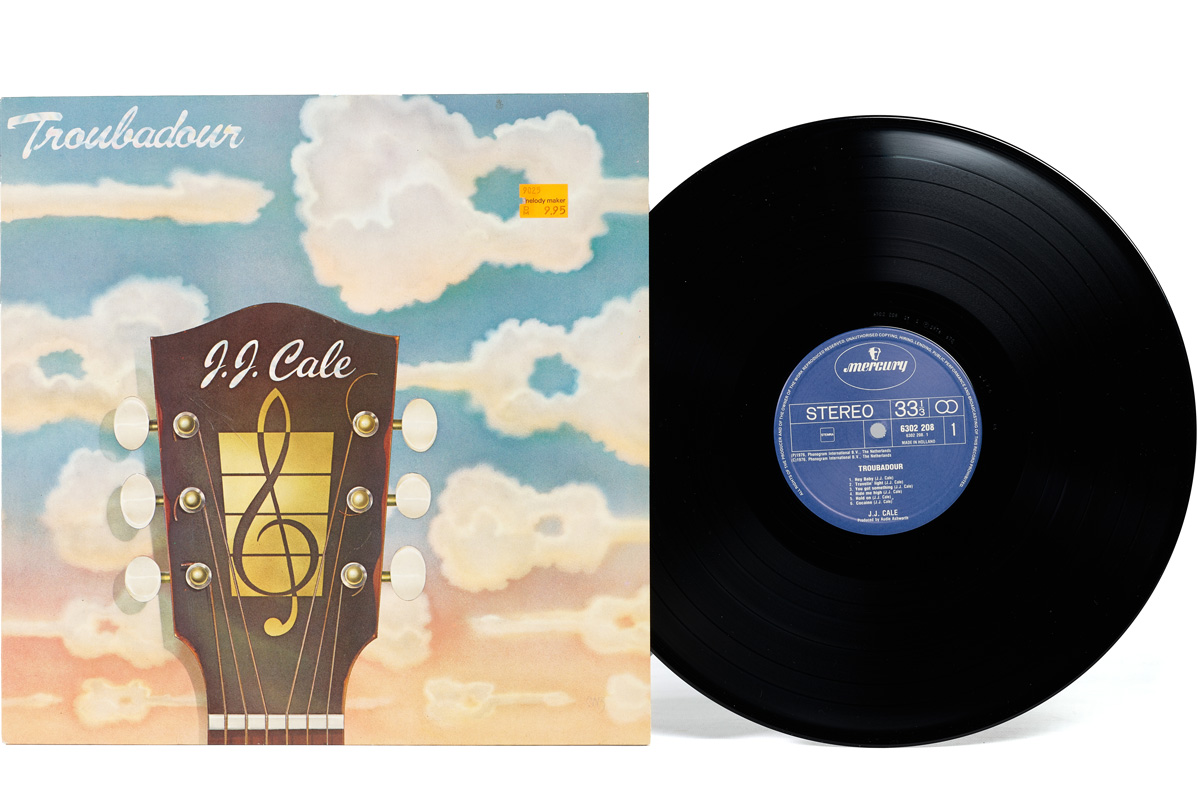
J.J. Cale – Troubadour
Recorded: 1976
Published: September 1976
Label: Shelter
Produced by: Audie Ashworth
Tracklisting
Side A
- Hey Baby 3:11
- Travelin’ Light 2:50
- You Got Something 4:00
- Ride Me High 3:34
- Hold On 1:58
- Cocaine 2:48
Side B
- I’m A Gypsy Man 2:42
- The Woman That Got Away 2:52
- Super Blue 2:40
- Let Me Do It To You 2:58
- Cherry 3:21
- You Got Me On So Bad 3:17
Musicians
J.J. Cale – vocals, guitar, various instruments
Doug Bartenfeld – guitar
Harold Bradley – guitar
Reggie Young – guitar
Buddy Emmons – steel guitar
Lloyd Green – steel guitar
Tommy Cogbill – bass
Joe Osborn – bass
Bill Pursell – keyboards
Kenny Buttrey – drums
Buddy Harman – drums
Kenny Malone – drums
J.I. Allison – percussion
Gary S. Paxton – vocals
and many more
Commentary and Trivia
- The perfectionist J.J. Cale brought around 30 different musicians into the studio for the recording. At least nine guitarists took part, along with five bassists, five drummers … The two pedal steel guitar players were among the very best in the business.
- As similar as the songs are to one another, each has its own distinct groove and sound. Sometimes the electric guitar takes center stage, sometimes the acoustic guitar, sometimes the pedal steel. The backing arrangements constantly introduce new colors as well: piano, electric piano, vibraphone, synthesizer, percussion, and a horn section.
- The first single released from the album was “Travelin’ Light,” featuring funky guitar, vibraphone, and a jazz-inflected bridge. “it moves and cooks and rolls and rocks and has just an absolutely earthy quality,” as one critic described. A touch of funk guitar can also be heard in “Ride Me High.”
- The B-side of the single featured the opening track, “Hey Baby,” a little blues number with an eight-bar bridge and horn riffs. The pedal steel guitar gets a 12-bar solo here.
- Eric Clapton is J.J. Cale’s biggest fan. He would also go on to cover two songs from Troubadour: “Cocaine” (1977) and, much later, “Travelin’ Light” (2001).
- J.J. Cale originally wanted to record “Cocaine” as a swinging jazz tune, but the producer talked him out of it. Instead, they came up with a rocking guitar riff that would become world-famous—but only after Clapton turned the song into a hit. Clapton, of course, was quick to insist that “Cocaine” was really an anti-drug song. Believe that if you like.
- The lead guitar on “Cocaine” was played by Reggie Young, already a Memphis legend at the time. He can also be heard on records by Elvis Presley, Neil Diamond, Willie Nelson, King Curtis, and Herbie Mann.
- The album’s only cover version is “I’m A Gypsy Man,” originally a purely acoustic country song by Sonny Curtis (1967). J.J. Cale’s version opens side two with a loud fuzz guitar.
- The album’s shortest track is called “Hold On”—a little jazz tune featuring swinging hi-hat, electric jazz guitar, and pedal steel.
- The bluesiest songs are “Super Blue” (with pedal steel and vibraphone) and “You Got Me On So Bad” (with acoustic guitar and piano). Both are accompanied by acoustic bass and brushed drums.
Find J.J. Cale – Troubadour on discogs.