
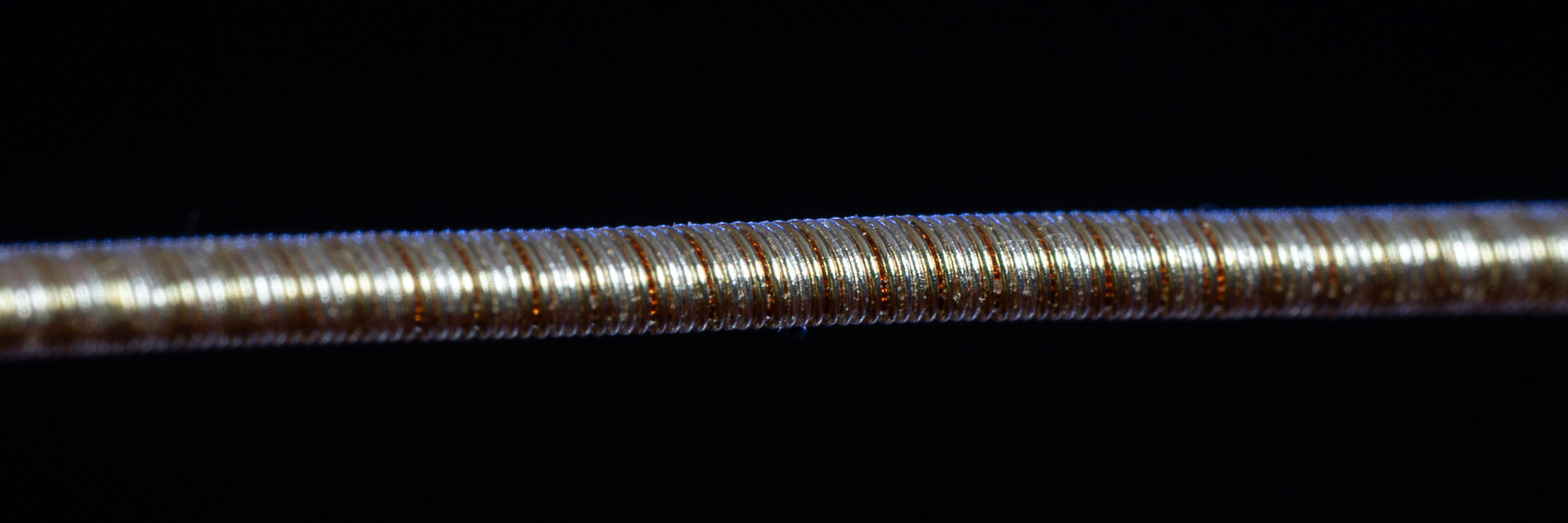
Will Tremblett designs his components from the inside out. Rather than polishing the visible end result to perfection, he begins with the signal at its source and provides it with the straightest possible path.
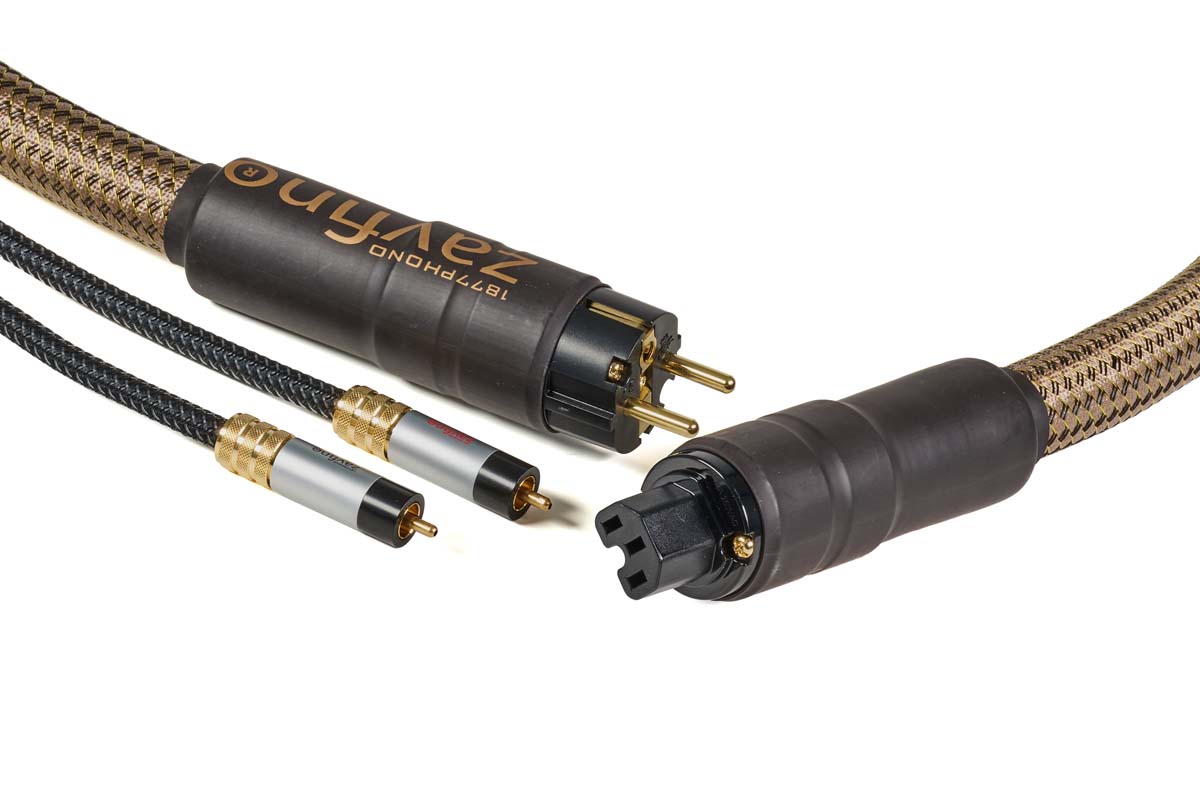
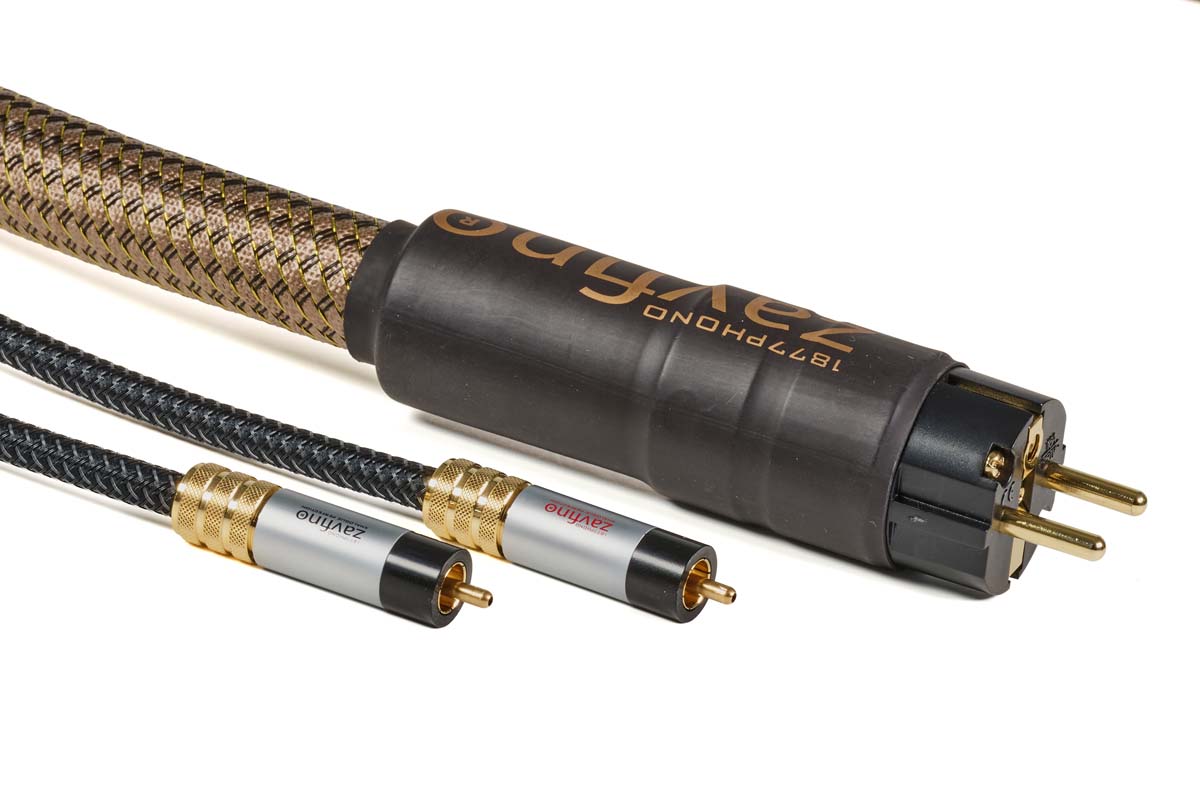
When three cables arrived at our listening room – a phono cable, an RCA interconnect, and a power cord – we were a bit surprised to learn that Zavfino manufactures not only turntables, but cables as well. We were even more surprised when we were told that this wasn’t quite the right way to put it. More accurately, 1877 Phono Zavfino builds not only cables, but turntables as well.
Expanding a cable lineup with vinyl playback systems is actually more logical than it might seem at first glance. After all, no signal in an audio chain is more delicate than the minute voltage fluctuations generated by a phono cartridge. If everything is already rumbling, wobbling, and vibrating right out of the gate, it doesn’t matter how flawless the downstream components may be – the end result will still be rumbling, wobbling, and vibrating. A second, and perhaps simpler, explanation is that, as we will soon see, Tremblett has an undeniable soft spot for mechanical apparatuses.
That passion, as well as his philosophy of starting at the source of the signal and working outward, is already evident in the ZV11x turntable, which you may remember from our review, and which also served as the test platform for this evaluation. The Canadian designer had plenty to tell us about its mechanical refinements – for example, why he concluded that POM is the ideal platter material (don’t be fooled by the metallic look – it is indeed made out of POM), and how the distinctive polyurethane cylinders with embedded stainless-steel pins damp vibrations traveling through the plinth. Since his primary expertise lies in electrical currents rather than mechanical vibrations, Tremblett was not above enlisting outside help at several crucial points. He turned to Helmut Thiele, whose contributions have, in our experience, never done a design anything but good.
Yet the subject he discussed most enthusiastically was the turntable mat. Aside from the stylus itself, no component sits closer to the record groove – and therefore closer to the origin of the signal. This is precisely where Tremblett wants every vibration and resonance controlled precisely according to his own specifications. To achieve this, he developed a composite mat made of leather and cork, featuring a carefully defined pattern of punched holes.
For Zavfino, however, all of this is merely the foundation rather than the end goal because it’s only at the point where the first electron hits the first copper molecule that the real journey begins. Tremblett follows a remarkably simple philosophy when designing cables: the ideal conductor is solid-core. Since manufacturing practical (or even insurable) Hi-Fi cables from solid-core conductors isn’t realistic, he searched for ways to come as close as possible to that ideal. In other words, he sought to weave individual strands together so densely that virtually no air remains within the conductor.
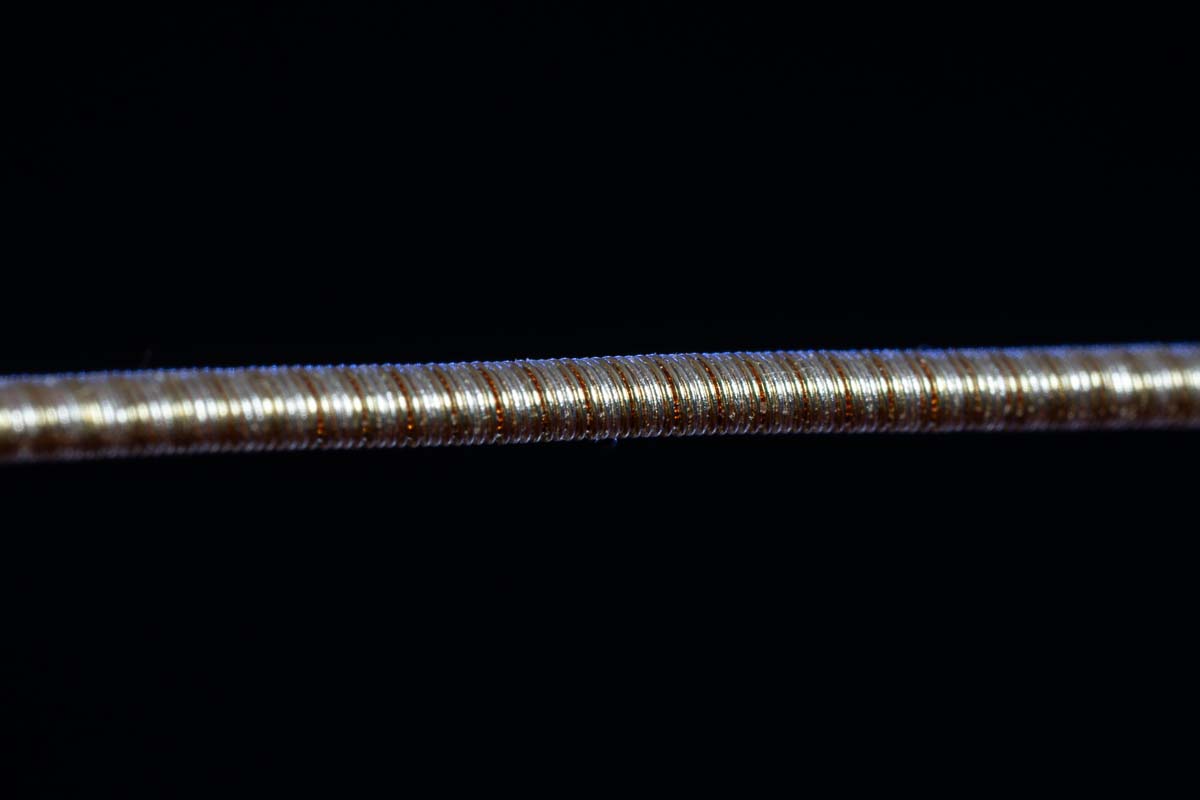
The solution came in the form of decades-old textile machinery originally designed for spinning yarn. Inside Zavfino’s factory, an entire fleet of antique machines is merrily clattering, whirring and stomping away. With a number of modifications, these vintage workhorses now twist individual wire strands into extraordinarily dense conductor bundles. The number of turns per centimeter is many times greater than in conventional cables, and much like the winding of a guitar string, the spirals run almost perpendicular to the cable’s length.
Depending on the cable series, Tremblett combines copper, silver, and gold in different sequences to tailor each cable’s electrical characteristics exactly to his specifications. Interestingly, the signal itself does not simply travel lengthwise through the conductor. Instead, the individual strands are laminated and electrically insulated from one another, a construction intended to control capacitance and inductance. At first glance, one might assume that such an extremely high winding density would dramatically increase inductance, rolling off the treble. However, because inductance also depends on the winding diameter – and that diameter is exceptionally small – the resulting low-pass effect remains comfortably outside the audible frequency range.

Naturally, all of this sound like it would demand an extraordinary degree of precision – and it does. One might reasonably wonder whether such old machinery is capable of delivering the required accuracy. Tremblett assures us that this is not an issue at all; the principal difference between these vintage machines and modern production equipment is simply speed.
Ironically, in Zavfino’s case, the slower gait of these old mammoths actually turns into an advantage. The extremely tight winding and lamination process requires rigorous quality control. Modern production lines operate so quickly that every inspection sample would consume dozens of meters of material. Given the cost of the materials and the relatively low production volumes Tremblett works with, that would make little economic sense – especially since the higher production speed offers virtually no practical benefit under these circumstances.
In the listening room, it took the Zavfino cables pretty much zero minutes to thoroughly impress us – there was absolutely no need to strain our ears or replay the same passage sixteen times to notice a difference.
“Tannis Root” by Phantom (Three) opens not with musical instruments, but with the crackling of a campfire, cawing ravens, and distant children’s voices. Switching back and forth between the Zavfino cables and several others from our reference collection immediately dispelled any concerns about bandwidth. Quite the contrary: both frequency extremes seemed to open up, while the overall presentation became richer and smoother. At the same time, the Canadian cables revealed a more extensive harmonic spectrum in both the vocals and the guitar. Soundstage reproduction also benefited considerably. It was only with the Silver Darts that the flight path of the ravens moving away from the listening position became truly obvious.
The richer tonal balance naturally raised the question of whether the additional weight in the lower registers might come at the expense of control. Youn Sun Nah’s “The Wonder” from her album Immersion quickly proved otherwise. The piano notes, erupting abruptly and decaying just as suddenly, burst into the room with striking physical presence before vanishing instantaneously into silence. Meanwhile, the Korean singer’s voice appeared not merely a little, but substantially more precisely focused at the center of the stage than it did with our comparison cables.
The continuous low-frequency rumble that enters later in the piece arrived with impressive authority while remaining completely transparent, leaving everything layered above it free to breathe naturally. Even the finger snaps that popping into the soundstage from various positions were rendered with a remarkably organic, almost tactile sense of body like I’ve rarely heard before.
For the final test, I wanted something denser and more demanding, so I put on Rimsky-Korsakov’s Scheherazade performed by the Kirov Orchestra under Valery Gergiev. The Silver Darts’ exceptional separation became apparent well before the orchestra reached its climaxes.
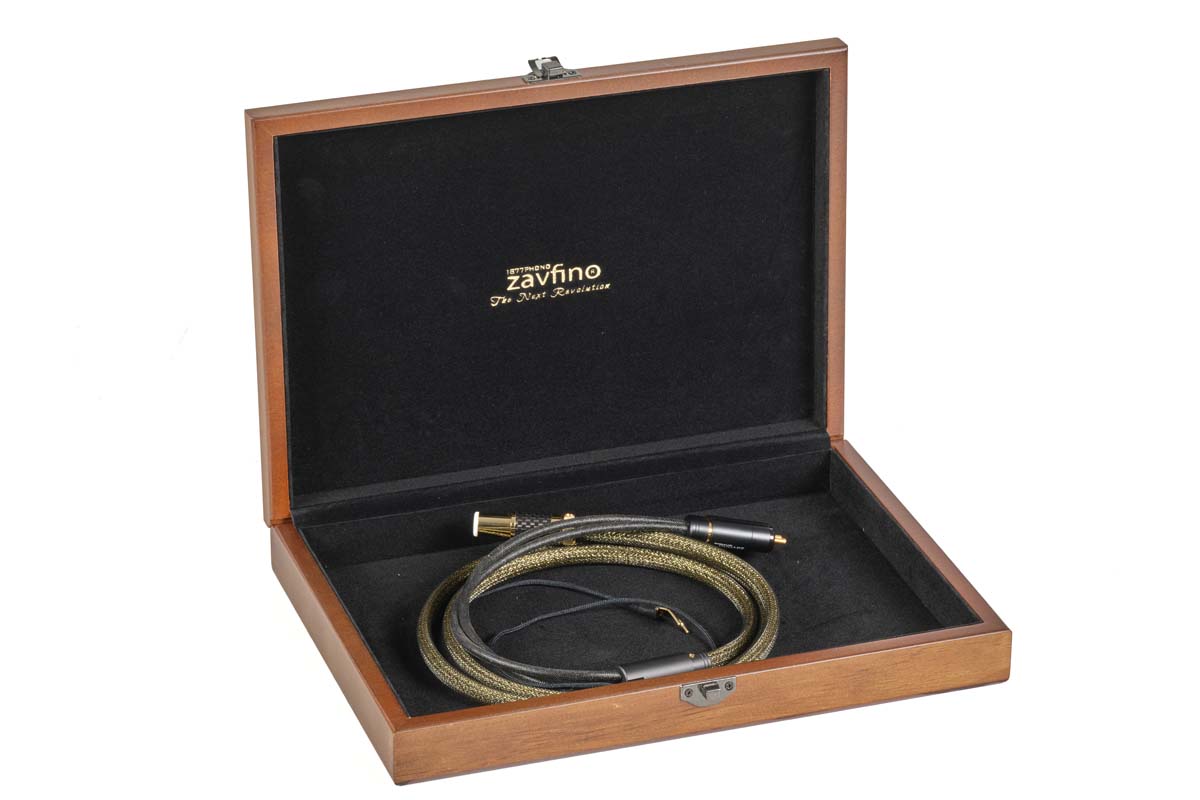
During the opening dialogue between violin and harp, I found myself genuinely impressed. While the two instruments occupy roughly the same position across the width of the stage, most systems fail to separate them sufficiently in depth, causing them to blend together to some extent. That certainly wasn’t the case here. The harp suddenly retreated far deeper into the soundstage, making the distance between it and the violin feel almost physically walkable from the listening chair. The soundstage remained perfectly well-organized throughout as the orchestra launched into the following passages, some of them highly dynamic and densely orchestrated. Every performer retained ample breathing room, allowing each musical line to complement the others without ever competing for the same space.
I have to admit that I’m generally not particularly fond of reviewing cables. Usually, what bothers me most is the uncertainty of whether I’m actually hearing any difference at all. Despite measurements that often appear virtually identical, repeated listening sessions usually do reveal consistent distinctions, allowing me not only to differentiate between cables but also to assign them distinct sonic personalities.
Rarely, however, has that distinction been as unmistakable as it was with the Silver Darts. The way these cables lock the soundstage into place, uncover fine detail, and at the same time add convincing substance and physicality to individual musical events is truly remarkable for what is, after all, just a piece of wire.
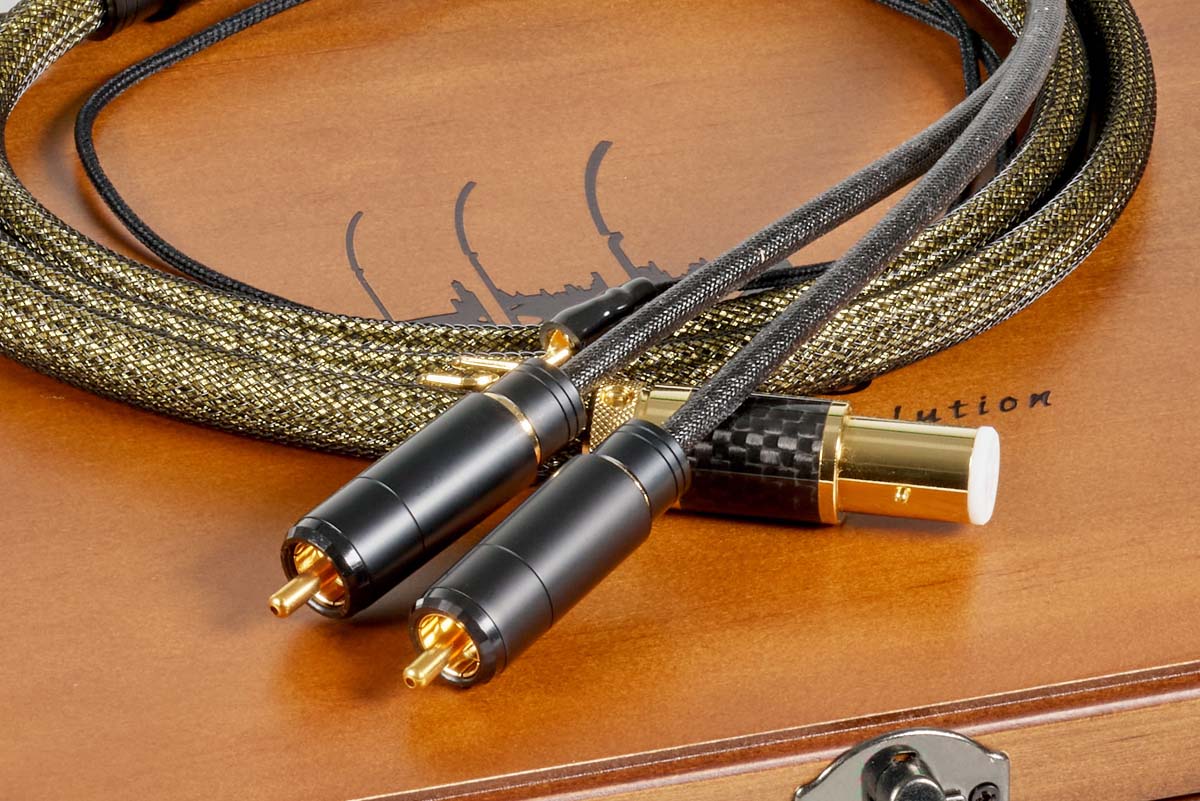
1877 Phono Zavfino Silver Dart
Mains Cable
Conductors: 3 × 10 AWG OCC copper with silver-plated H-Wound construction | Dielectric: graphene-doped | Construction: Cable-in-Cable with EVA damping | Shielding: multilayer, antistatic | Connectors: 24K gold-plated (Schuko & IEC) | Diameter: 24 mm | Lengths: 1.5–2.5 m | Warranty: 5 years | Price: around €1,200 (1.5 m; each additional 0.5 m: €400)
Interconnect
Conductors: OCC single-crystal copper with H-Wound twisting | Dielectric: PTFE, Teflon, Santoprene TPV, graphene | Construction: Cable-in-Cable design with multilayer jacket and secondary graphene layer | Shielding: Mylar and extruded graphene film | Outer jacket: black nylon with clear monofilament, PE | Connectors: OCC pins with Teflon insulation for RCA; audiophile 24K gold-plated XLR connectors | Length: 1.5 m (additional lengths available on request) | Warranty: 5 years | Price: approx. €2,300 (1.5 m; each additional 0.5 m: €735)
1877 Phono Zavfino Gold Rush Phono Cable
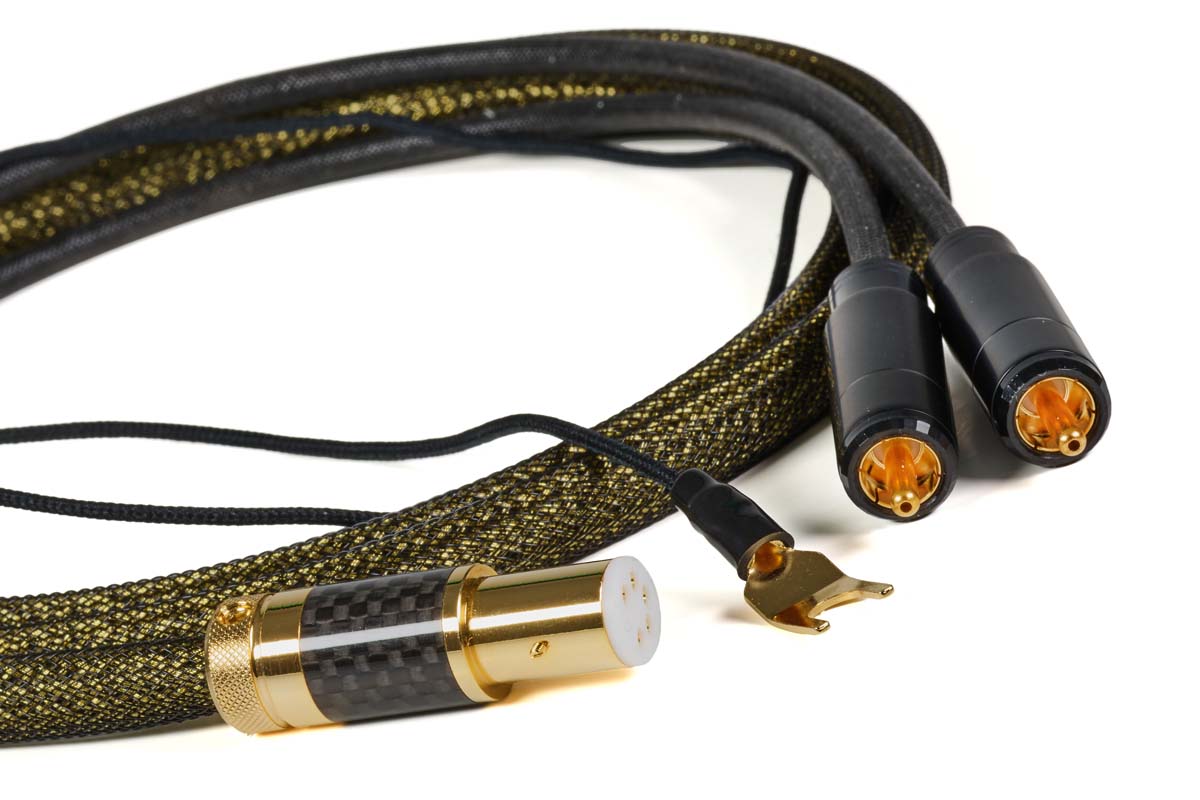
Conductors: 24K gold-plated PC-OCC single-crystal copper and silver in H-Wound construction | Dielectric: FEP/Teflon, PTFE, PVC jacket | Shielding: aluminum Mylar with silver-plated copper braid | Ground lead: 50 cm silver-plated OFC copper with 24K gold-plated ground clip | DIN connectors: 1877 Carbon Straight Limited Edition Gold or TAD-3R Limited Edition Gold (right-angle) | RCA connectors: 1877 ZXP-5 G Series | Length: 1.5 m | Warranty: 5 years | Price: approx. €1,400