
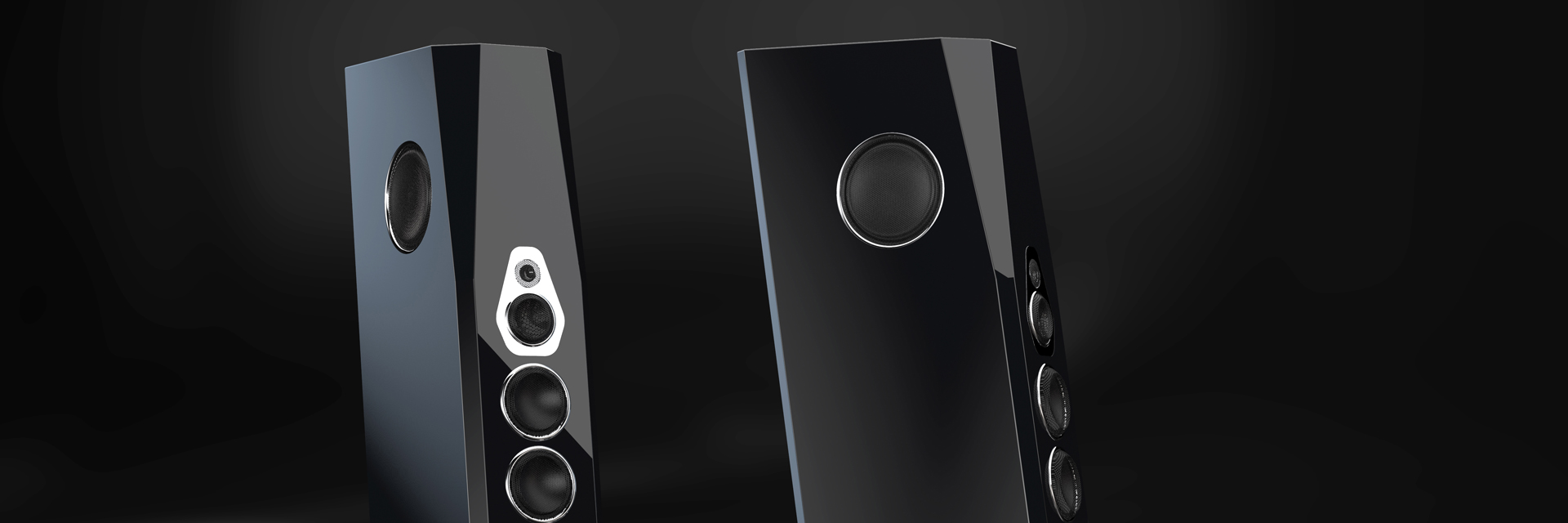
It has power galore, offers a tonal neutrality and musicality that are simply irresistible, and is, on top of that, a sublime beauty with uncompromising build quality: the AP1 from TIDAL Audio is a statement piece for active speaker technology and could easily claim the throne in this loudspeaker category. Sitting on that throne, however, is its majestic big sister, the Royale, disapprovingly peering down at the AP1 – after all, the new princess costs less than half as much while delivering comparable performance.
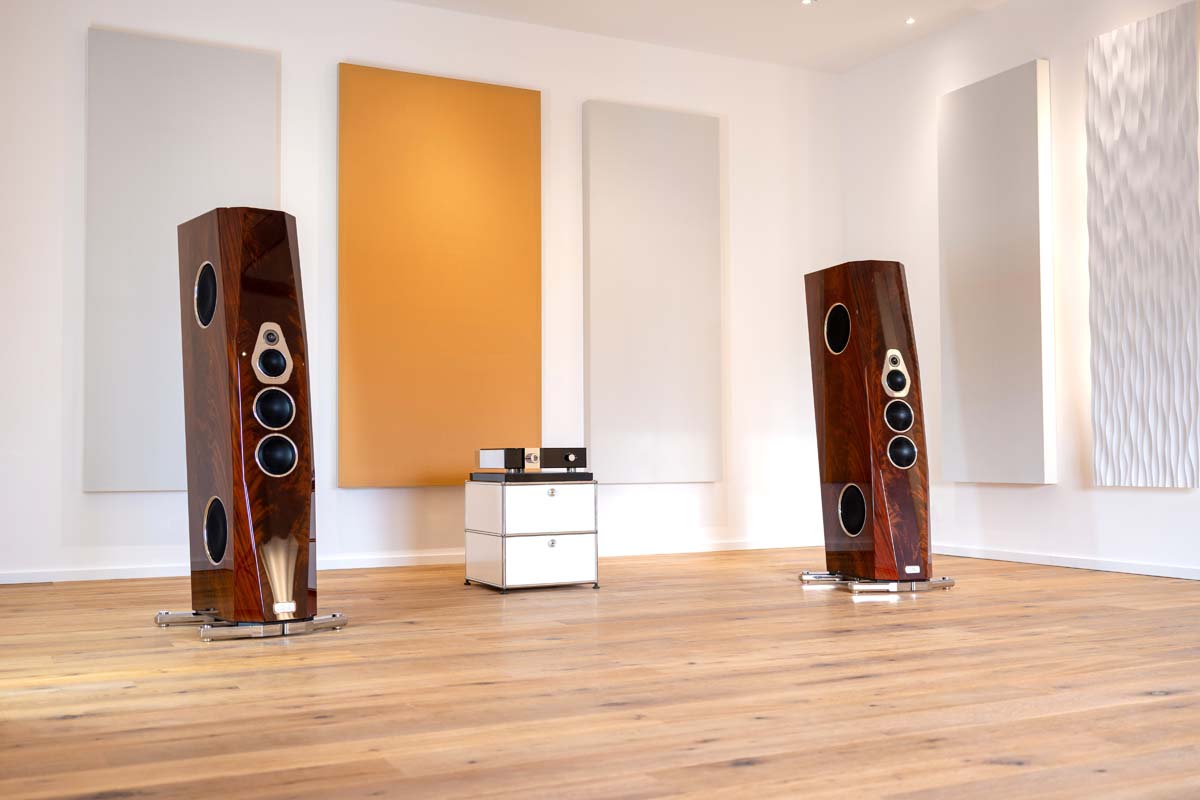
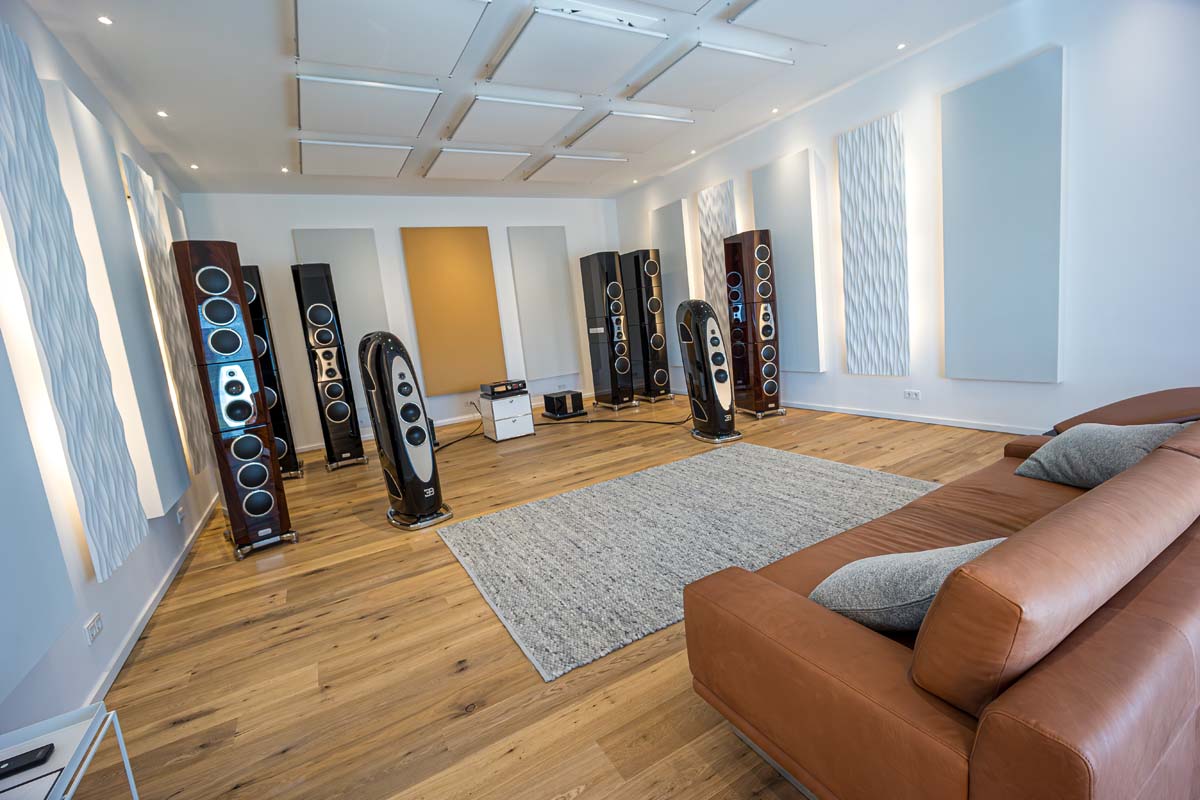
“We build emotions”, it says in small red lettering beneath the TIDAL Audio logo. Founder, owner, and designer Jörn Janczak has already proven to us more than once just how serious he is about this slogan. Musical journeys with his loudspeakers are always extreme experiences. Still, what I am hearing at this very moment catches me off guard: We’re sitting in the listening room at the company’s new headquarters in Erftstadt. In front of me stand the four-piece, more-than-two-meter-tall flagship La Assoluta and a pair of Sunray speakers – essentially La Assolutas without the separate woofer towers. Compared to them, the speaker currently knocking my socks off with its unfathomably deep soundstage and seemingly limitless power appears almost grotesquely delicate. Jörn Janczak is introducing me to the world of his masterpiece, the Royale, marketed under the TIDAL X BUGATTI label. It envelops me in sound with such detail, composure, and effortless naturalness that I am left speechless. I know the active speaker and have heard it several times before, but this is my first experience with it in the manufacturer’s own listening room. The large hall is certainly no studio; it has a lively character without excessive reverberation and represents a solid real-world living space. Yet it seems as though the Royale is performing on a stage built exclusively for it…
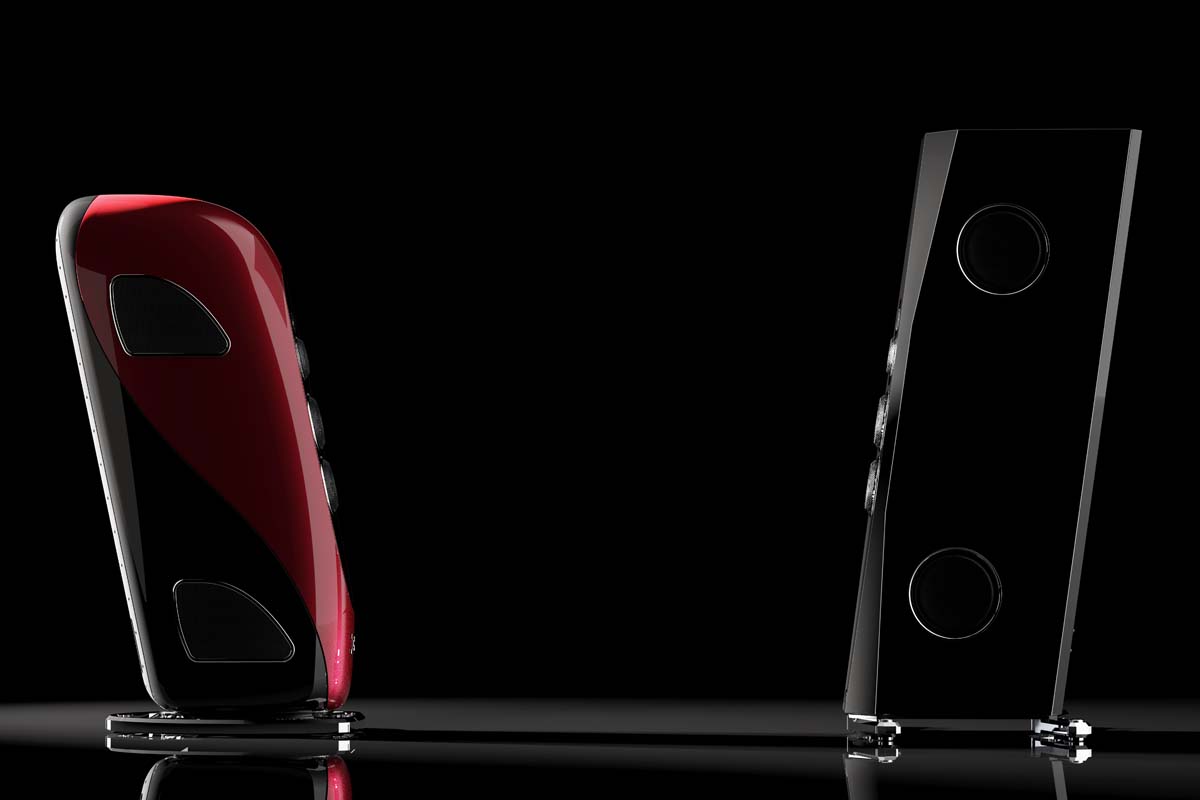
My visit, however, is actually about another protagonist: the active AP1, which would never have come into existence without its role model, the Royale. The collaboration with Bugatti was intended to push boundaries and resulted in an active monitor of superlative proportions. The Royale’s unfathomable sense of authority stems primarily from its literally monolithic construction. Jörn Janczak designed a flowing form into which amplifiers and drivers integrate organically. This is made possible by a complex (and extremely expensive) molded casting made from either one piece (Monocoque) or two pieces (Duotone), into which an internal matrix of the company’s proprietary TIRALIT material is embedded – a mixture of HDF and polymer ceramic that braces the cabinet into a massive structure. The approximately 220 kilograms of a Royale behave as though they weighed two tons. The loudspeaker is a perfect match for Bugatti’s uncompromising standards. To this day, the Royale occupies a class of its own. However, a sound sculpture priced at around half a million euros per pair cannot – and does not intend to – serve the broader market. Its design is simply too exotic. These considerations prompted Jörn Janczak to return to the drawing board and create a derivative of the Royale – one based on traditional loudspeaker architecture, significantly less expensive, yet sonically not too far removed from the Royale.
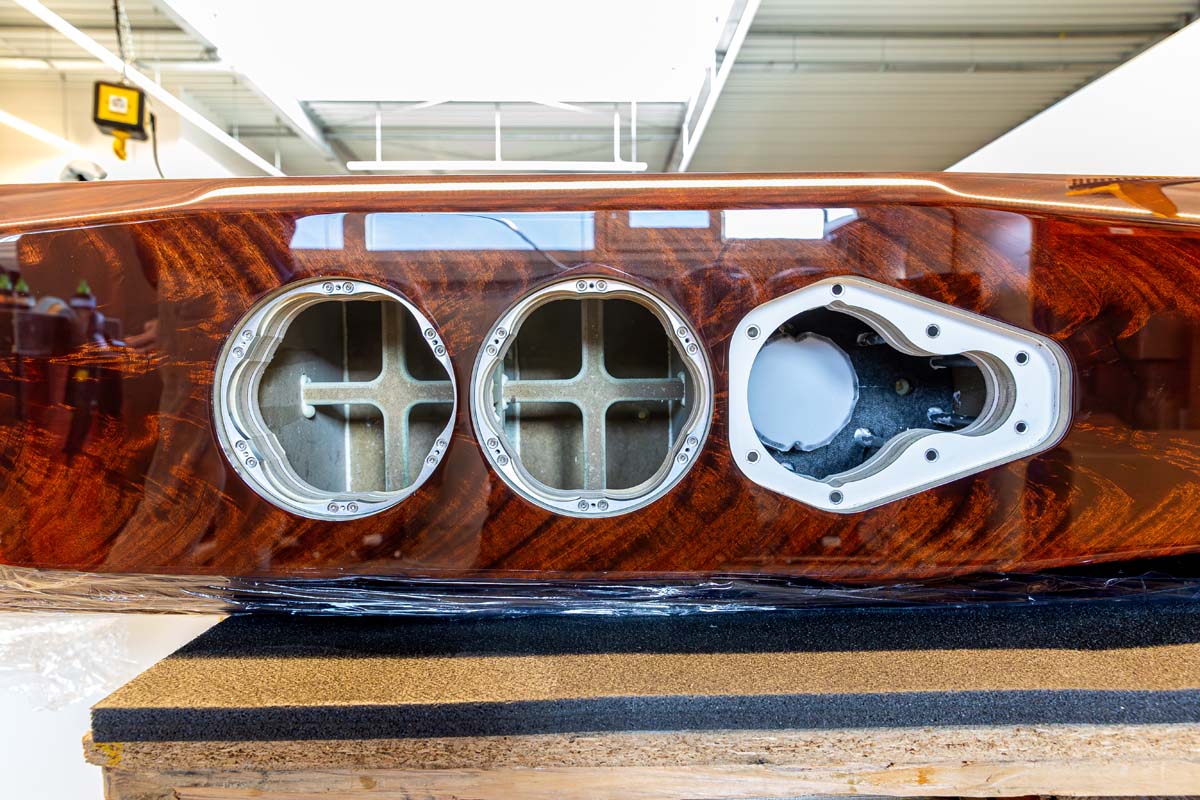
The fact that he succeeded in this threefold challenge became evident through the AP1’s conspicuous absence during my visit to Erftstadt. The first production run had already sold out, and a second was only just ramping up. A few doors away, I watched TIDAL Audio employees working on seven AP1s in various stages of production, granting me valuable insights into the construction of this enormous loudspeaker. Unlike the Royale, the AP1 relies entirely on TIRALIT. And this material is no joke: the four thick internal cabinet braces alone weigh 40 kilograms, as Janczak explains. That leaves 160 kilograms for the rest of the speaker, above all its exoskeleton. As tradition dictates, it is covered in such a thick layer of sound-deadening polyester lacquer that the massive metal plate bearing the company logo is completely embedded within it. Applied in multiple stages, the lacquer weighs a substantial 25 kilograms before sanding. Despite still being extremely elaborate, the AP1’s cabinet can be manufactured far more cost-effectively than the Bugatti speaker’s enclosure. The conventional cabinet design does require one acceptable compromise: to approach the Royale in bandwidth, stamina, and composure, the AP1 must be significantly larger than its inspiration – which, especially in its stunning veneer finishes, suits it very well.
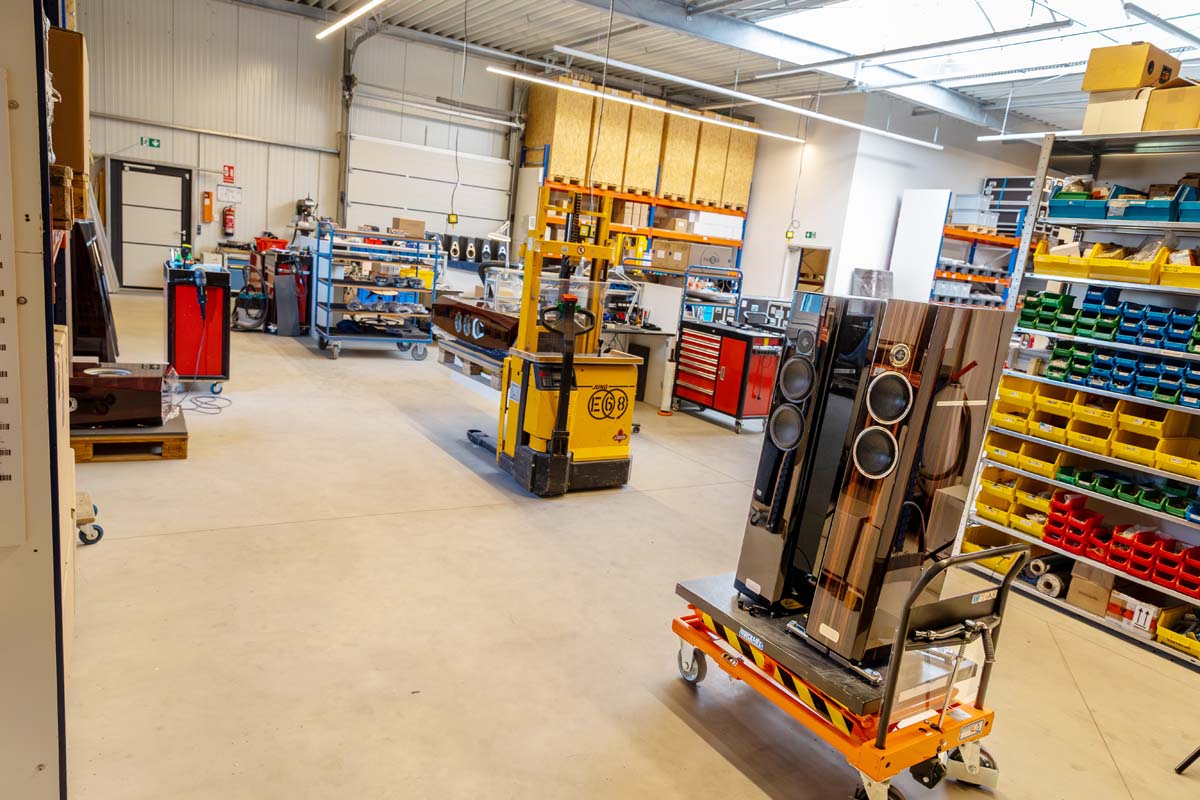
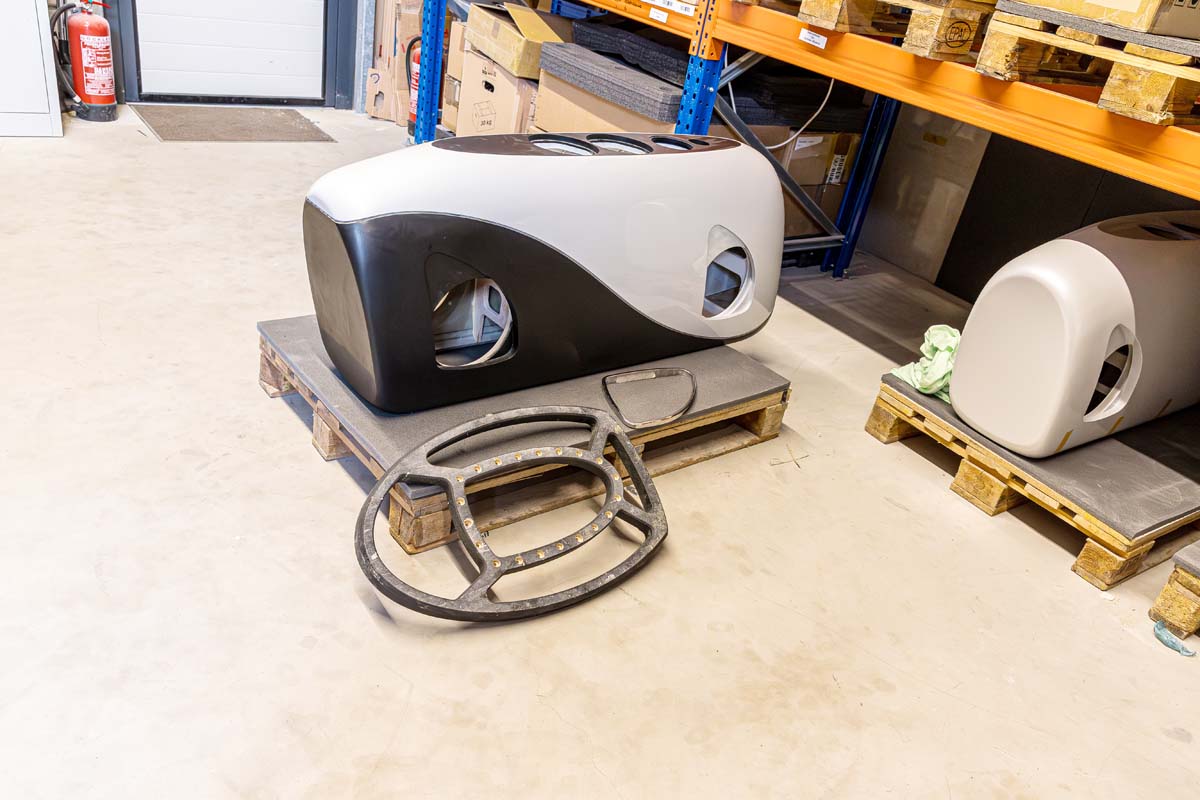
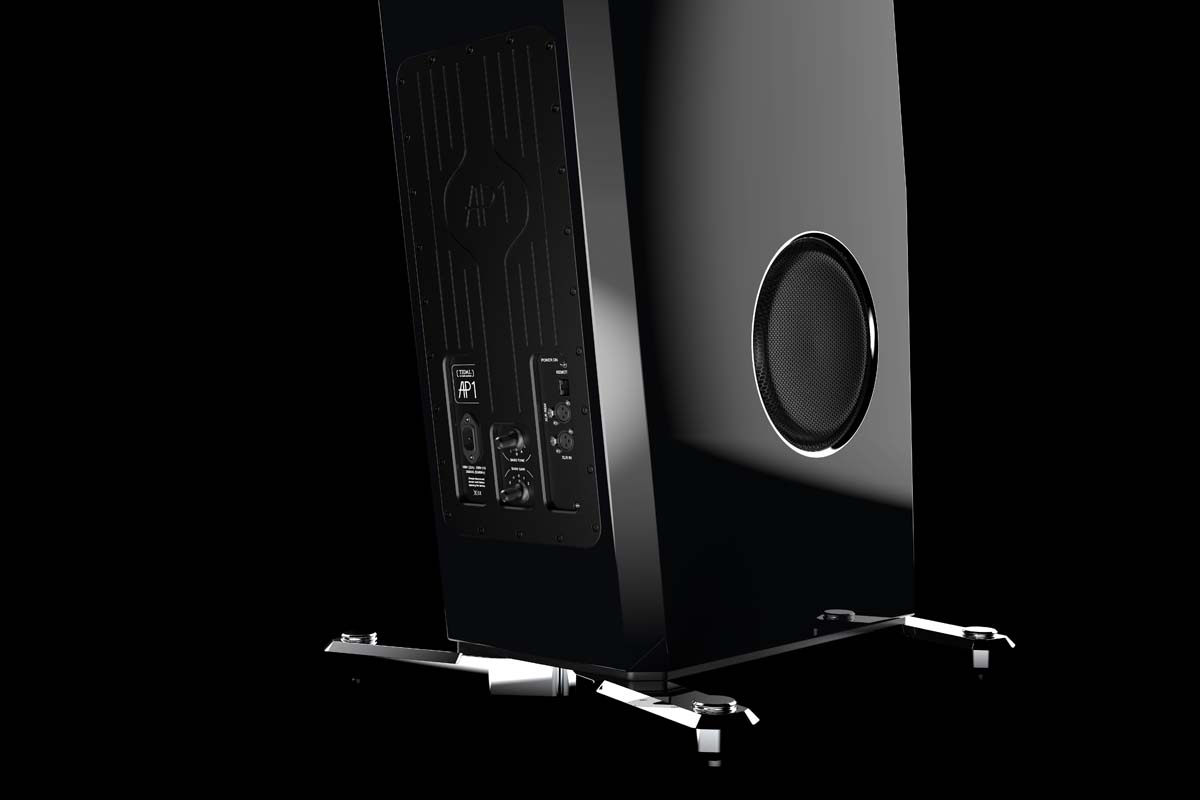
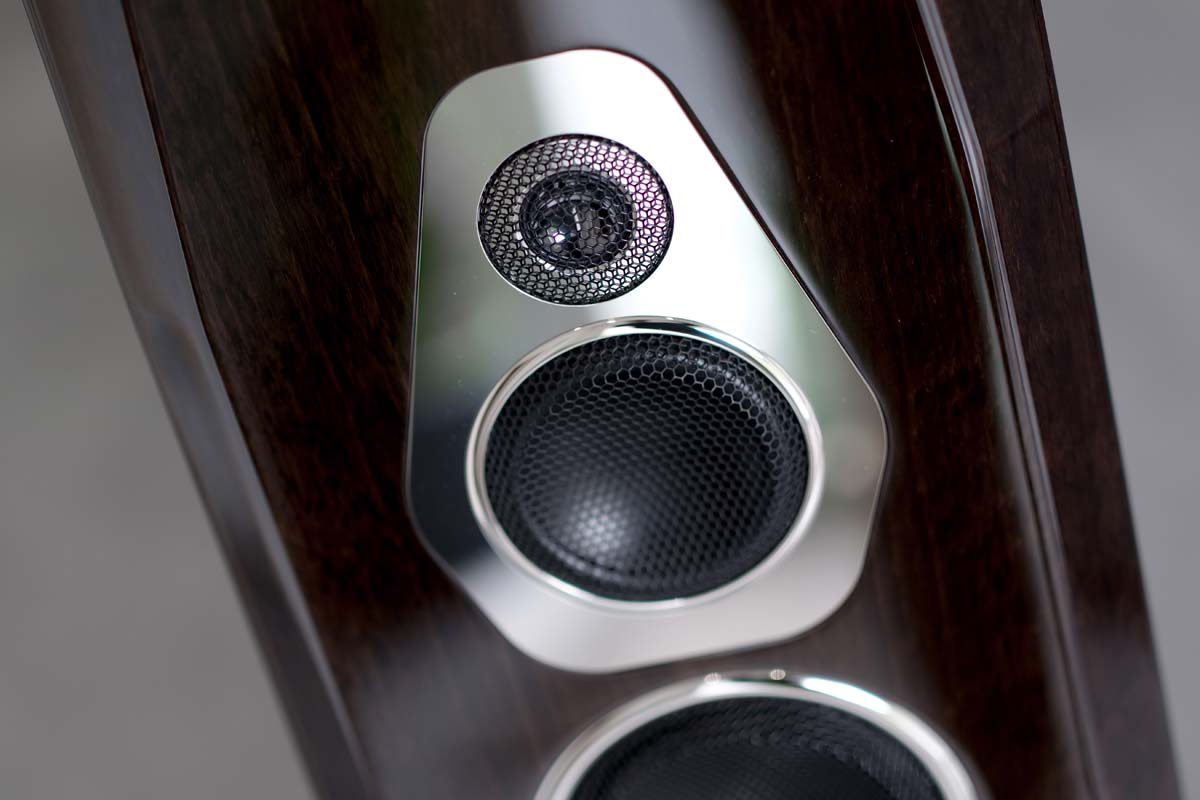
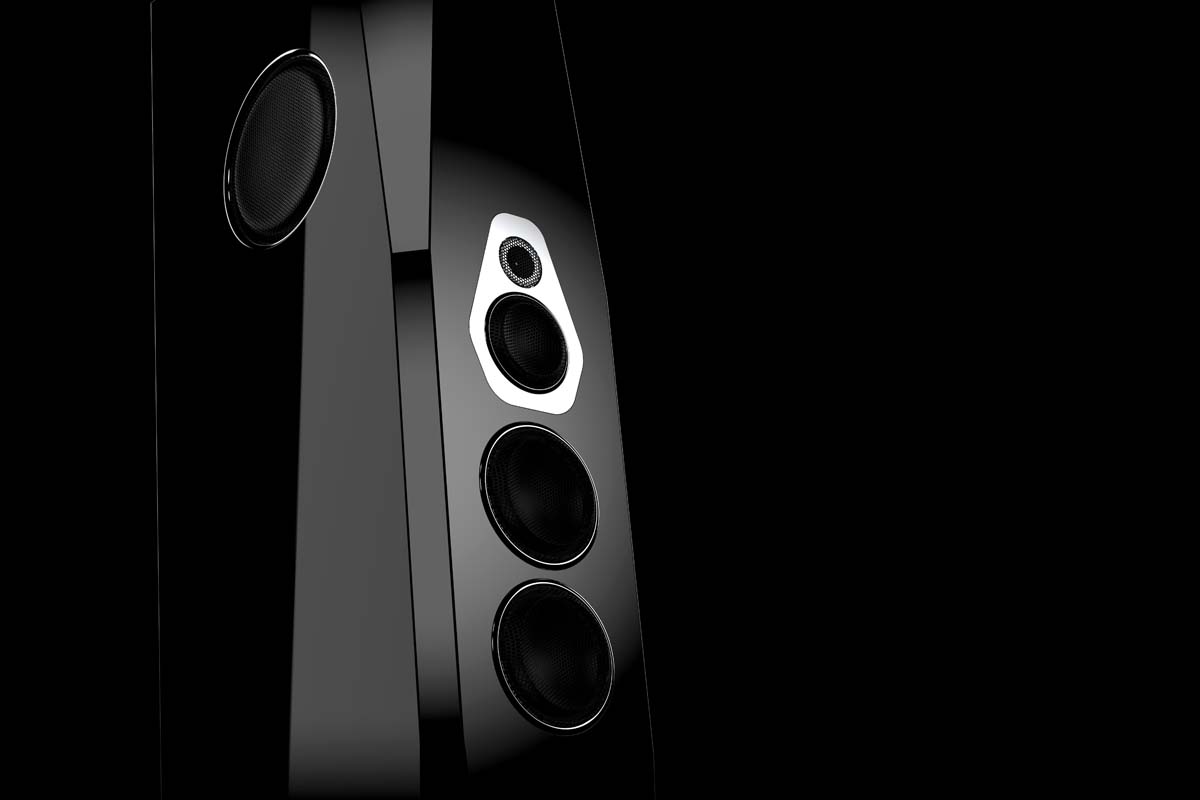
Although a lacquer-sealed TIRALIT cabinet is nearly indestructible and even resistant to tropical humidity, the drivers aren’t simply screwed directly into it. On an already veneered AP1, I noticed metal rings that serve as the actual mounting structures. These absorb a considerable amount of material. The 30 mm diamond tweeter shares a polished stainless-steel frame with an 80 mm midrange driver, both mounted in a decoupled sub-enclosure. Directly below sit two 170 mm woofers with aluminum/ceramic sandwich diaphragms, responsible for the upper bass range and borrowed directly from the Royale. Mounted on the cabinet sides are four 26 cm woofers, each fitted with protective grilles specially developed by TIDAL Audio for low-frequency operation. The other front-mounted drivers were also designed according to Janczak’s specifications but are manufactured and supplied by Accuton.
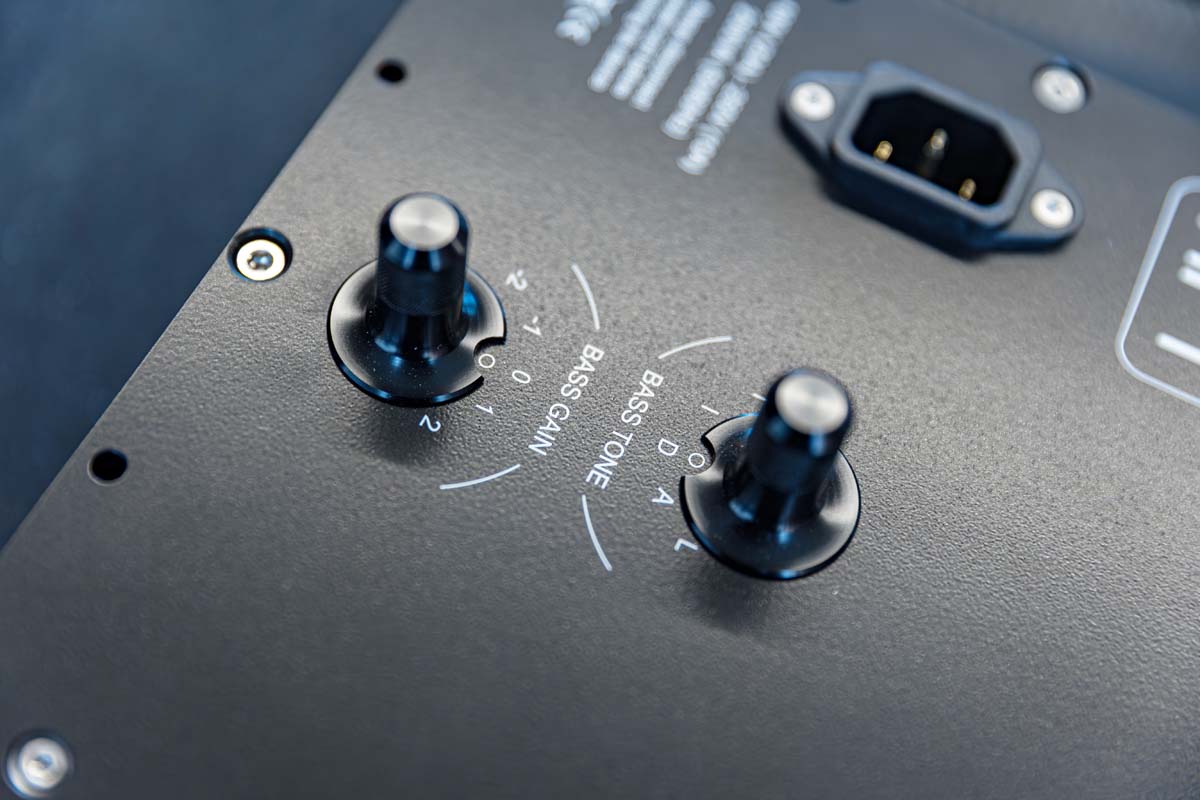
The integrated TIDAL hybrid amplifiers are based on the same principles as the Royale’s amplification system, as I learned – though, as with many details of his loudspeakers, Janczak is not inclined to reveal too much. At their core are high-end Class D power amplifiers that have been heavily modified and refined for use in the AP1. According to Janczak, he identified and eliminated several critical weaknesses; the rest was painstaking detail work. Standing before an open amplifier frame, he explained that even the power supply with its pragmatic onboard connectors had given him headaches. Two runs of symmetrically routed pure-silver wiring replace the usual ribbon cables, illustrating the extensive level of customization involved. The amplifier modules mounted in the rear of the cabinet deliver less power than those in the Royale (4.5 kW), yet at 3,500 watts each, the AP1 can still push any household electrical system to its limits and easily earns the label “overengineered.”
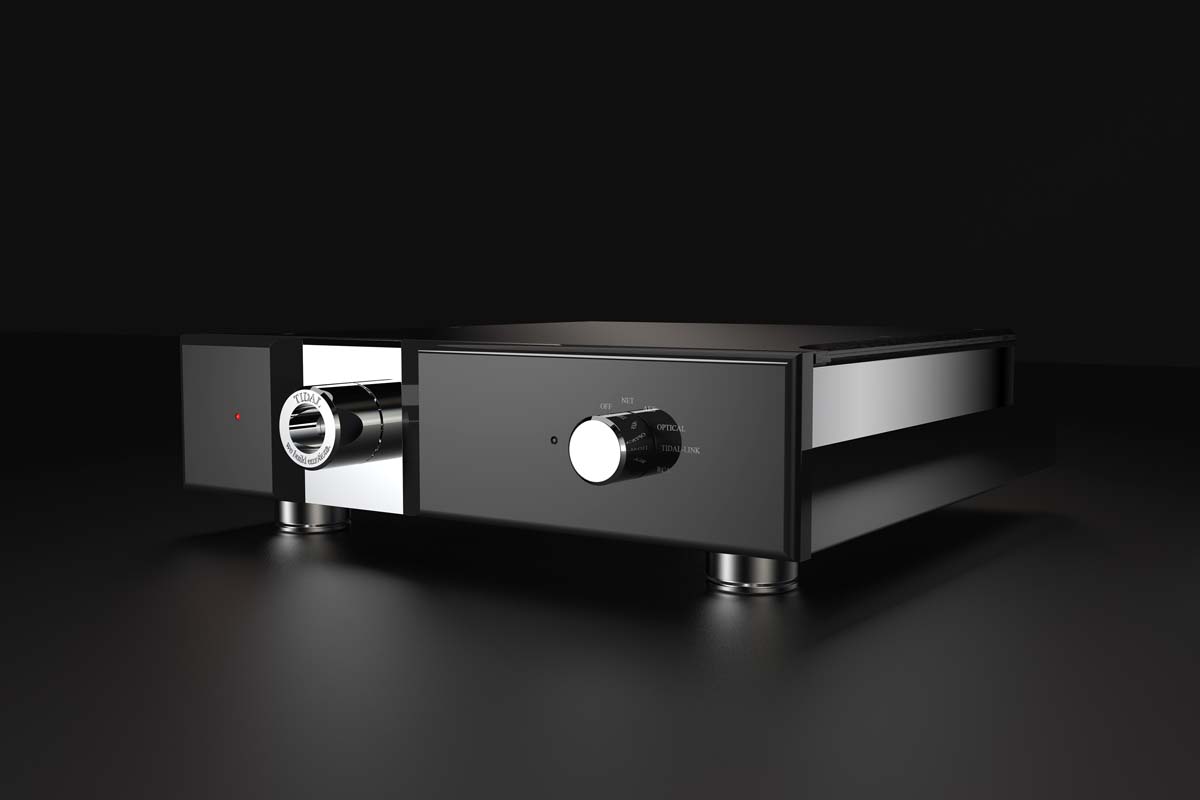
The absence of the active heavyweights in the Erftstadt listening room was unfortunate but hardly a deal-breaker. Several weeks before my visit to the Rhineland, Jörn Janczak had delivered a black piano-finish review sample to our editorial offices. Surprisingly, removing the combined 440 kilograms of material from their shipping crates and positioning them in the listening room turned out to be a walk in the park. This was due not only to ingenious packaging but also to the AP1’s feet with their Teflon coated undersides. Give the speaker a firm push to get it moving and it glides across the floor with remarkable ease. In a separate package we found the Contros Media Center. The AP1 can operate without it, but the streaming DAC preamplifier (see sidebar) makes living with these active monitors significantly more enjoyable. Best of all, despite Contros being a fully modern DAC and network player equipped with all contemporary streaming services and complete smart-device control, it also features a huge, tactile volume knob alongside a matrix display that shows exactly what’s going on when you press Play.
After maneuvering the AP1s into roughly the right place and connecting all necessary cables, Jörn Janczak hurried off to another appointment. “You’ll figure it out,” was more or less his only comment regarding the first sounds floating through our listening room. Several weeks later, I understand what he wanted to demonstrate: like the Royale, the AP1 is entirely DSP-free. Its powerful amplifiers and ultra-rigid construction form an inseparable unit capable of launching even the deepest bass notes into the room without stress or vibration. I experienced this vividly with “Turquoise Hexagon Sun” by Boards of Canada, a minimalist track composed almost entirely of low mids and bass frequencies. On less capable speakers, it is practically unlistenable – not because it sounds terrible, but because weaker speakers cannot properly separate the deep, dark, resonance-heavy electric piano from the sluggish drum loop. The AP1 has absolutely no difficulty with this task, reproducing the Scottish brothers’ music with extraordinary ease and momentum. Breathtaking – once again. The family resemblance to the Royale is not merely present; it is unmistakable.
Naturally, after a couple of days of break-in, we began moving the speakers around the room. Increasing the distance between them noticeably opened up the soundstage, making it more expansive and atmospheric. Moving them closer together sharpened focus as expected, tightening the interplay between bass and drums in George Harrison’s “My Sweet Lord,” while the doubled acoustic guitars appeared to extend beyond the room itself. Positioned much closer to the wall – less than 40 centimeters away – the AP1 emphasized its abyssal bass capabilities without upsetting tonal balance. This impressed me particularly with Carl Finlow’s “Convergence.” The cool ambient track features a pulsing bass drum that lives more in the upper bass than in the deepest registers. The album Introspective is also mixed and compressed so aggressively that it occasionally borders on distortion. What normally only works in a car stereo sounded excellent through the AP1 as well. Of course, it doesn’t magically erase flaws in the recording, but the bass reinforcement from wall proximity softens the effect slightly, making the songs sound wonderfully rich and velvety. All other placement experiments – toeing in, letting them play straight into the room, nearfield listening, and so on – produced exactly the expected results without revealing any clear “better” or “worse” choice. Like the Royale, the AP1 is built like a rock. Even without luxury ingredients such as the 127 mm diamond midrange driver (which alone costs more than some midsize automobiles), it possesses an incorruptibly neutral character, superb clarity, and remarkable detail. You may shift subtle nuances through positioning, but you never disrupt its coherent sonic identity. In other words, the loudspeaker adapts to the listening room and works with its environment rather than demanding that the room accommodate it. Lifestyle perfection. The promised “we build emotions” is delivered by the AP1’s unshakably precise timing, which sends rhythm straight to the cortex and occasionally provokes involuntary statements from listeners such as, “Just one more track…” But don’t worry – that’s exactly what the designer intended!
Active Loudspeaker TIDAL Audio AP1
Concept: 4-way active loudspeaker in a sealed enclosure | Drivers: 1 × 30 mm diamond tweeter, 1 × 80 mm ceramic midrange, 2 × 170 mm aluminum/ceramic bass drivers, 4 × 260 mm aluminum long-throw woofers; all drivers by Accuton | Amplifiers: One TIDAL hybrid amplifier module per speaker with 3.5 kW output, no capacitors in the signal path | Connections: 1 × XLR (analog), 1 × XLR pass-through, LAN input for TIDAL Remote (power on/off) | Special Features: Multi-chamber TIRALIT enclosure, protection circuit (not in signal path), 5-step frequency/level tuning, 5-step bass frequency tuning | Finishes: TIDAL piano black lacquer or various veneers with clear lacquer coating, polished stainless-steel metal parts; additional finishes available on request | Dimensions (W/H/D): 59 × 163 × 64 cm (including feet) | Weight: 205 kg | Warranty: 5 years | Price per pair: around €189,000
TIDAL Audio
Albert-Einstein-Ring 11
50374 Erftstadt
Phone +49 2235 9299737
contact@tidal-audio.de