
When I first ventured out into the world, leaving my father’s castle behind, I encountered a world in which people seemed to believe that some kind of strange god resided inside their equipment. They showed me colorful cables as thick as a man’s forearms and took it as a personal insult when I told them what the components in their expensive gear actually cost.
(Mattias Stridbeck)
It seems the mastermind behind Harmony Design has a mind of his own. Hailing from Sweden, Mattias Stridbeck is following in his father’s footsteps, pursuing his calling to enrich the world with high-performing yet affordable hi-fi. That has been the philosophy behind Harmony Design since the mid-1990s: a fairly relaxed approach to the reproduction of music. The company’s components have earned a reputation for exceptional naturalness, with a touch of velvety warmth. Warm and welcoming rather than bone-dry and hyperanalytical – feel-good hi-fi for relaxed listening. Just how patiently the men from Kungsbacka approach new products is evident in the fact that a full year passed between the announcement and shipment of the Pre 903 – Mattias Stridbeck was not yet completely satisfied with its performance. And the boss’s standards are the benchmark.
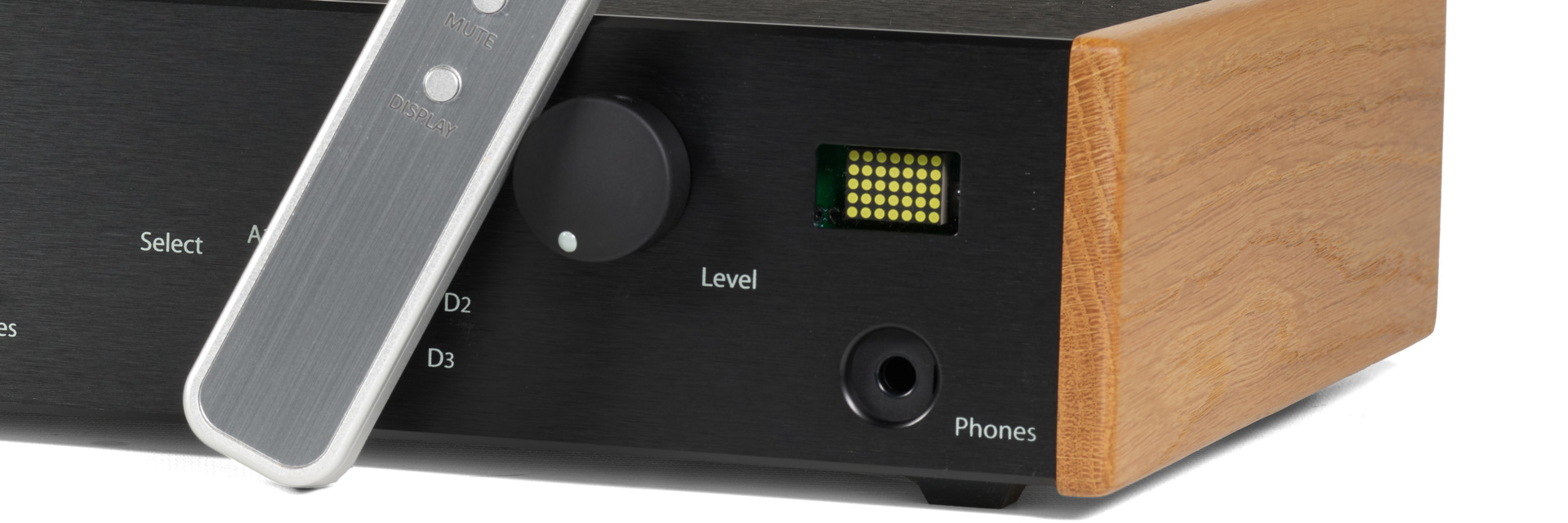
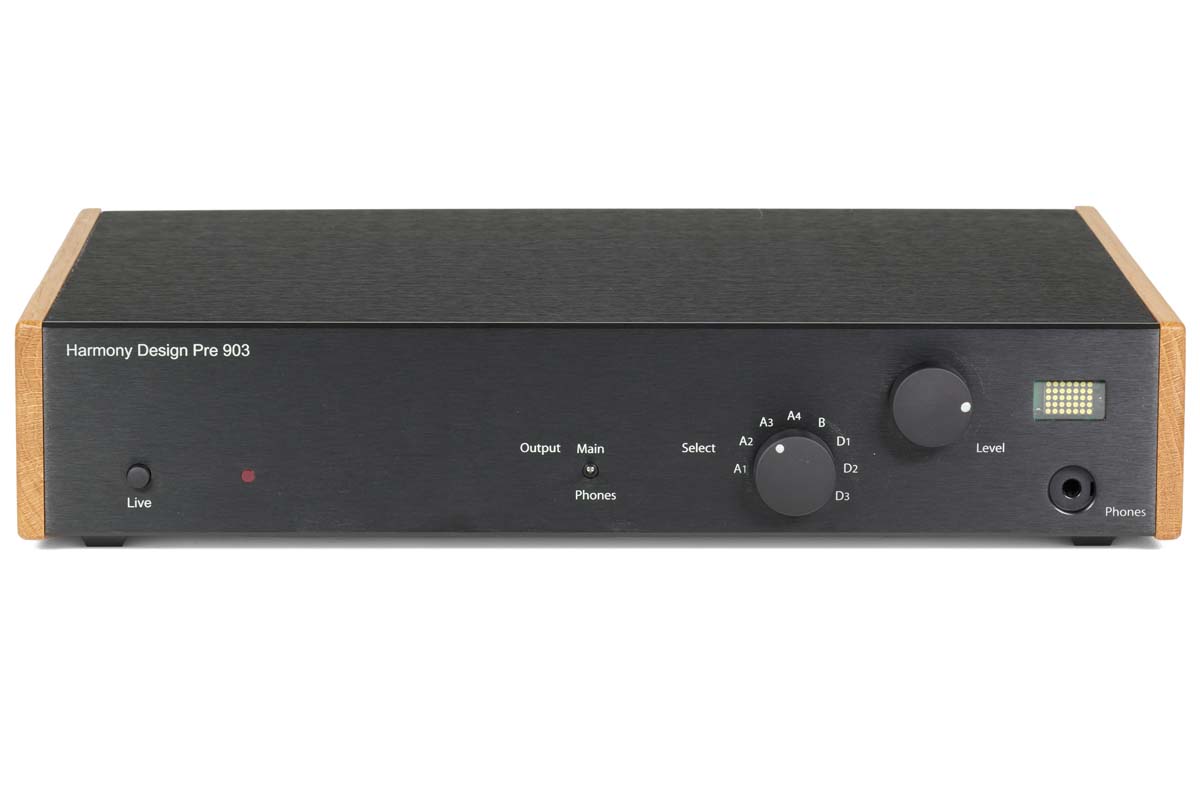
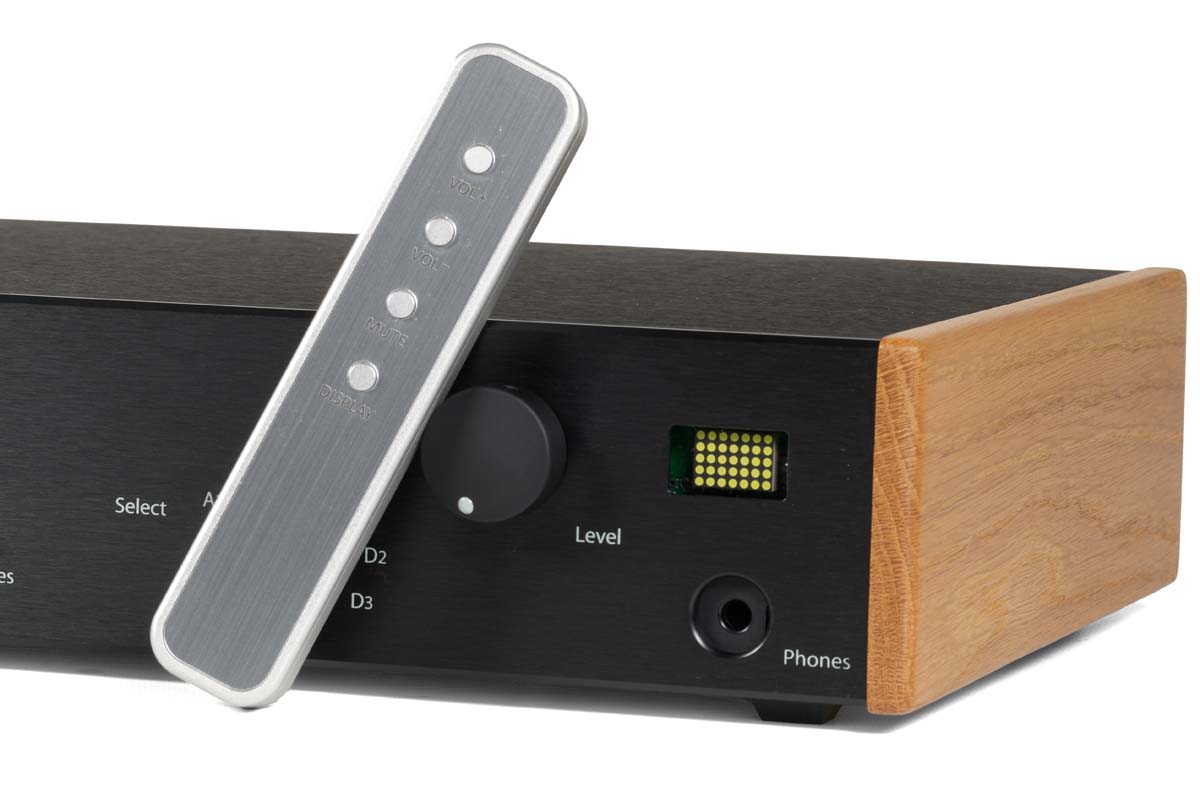
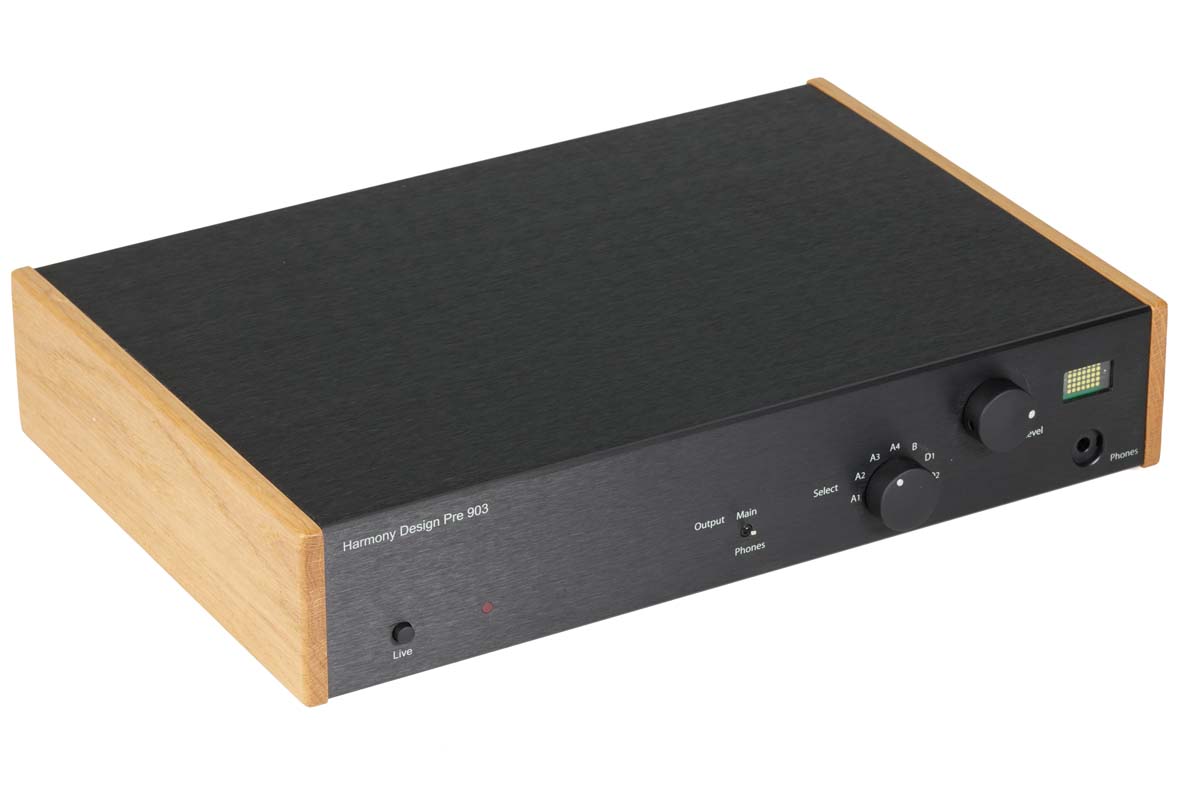
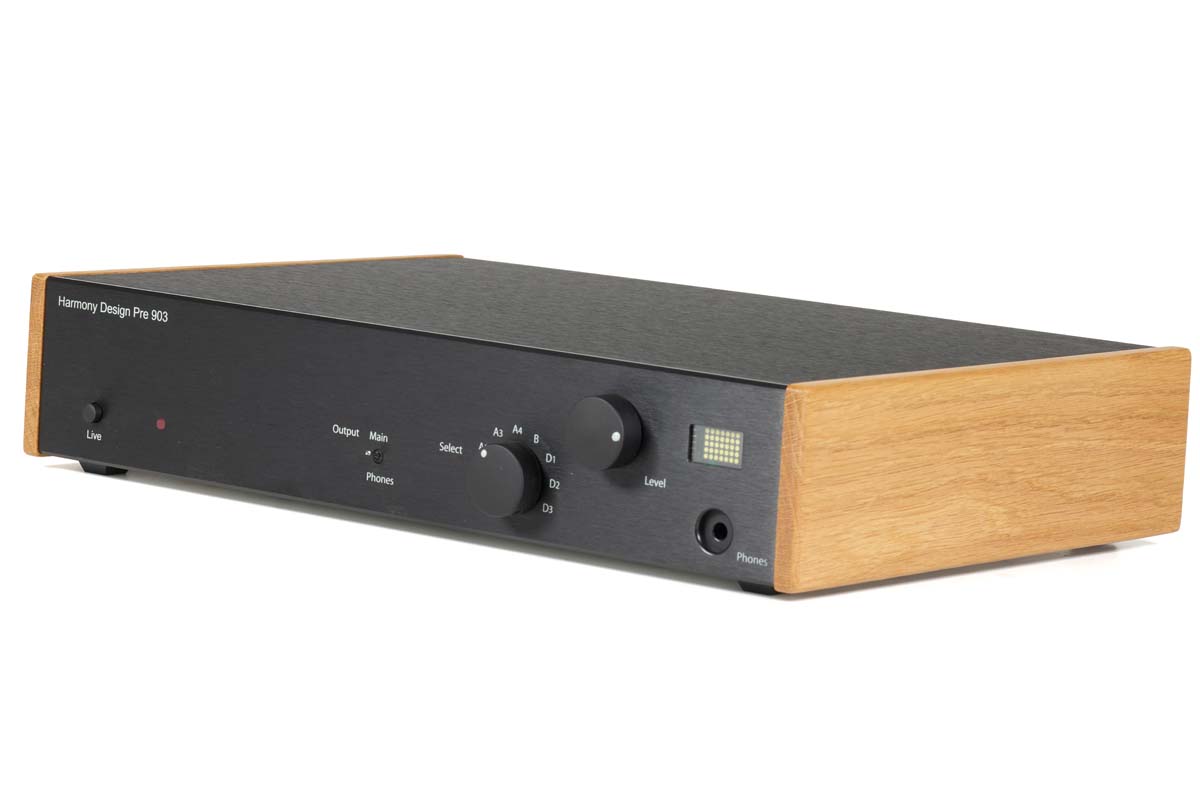
The Pre 903 is something of a Swiss Army knife in the Swedish company’s lineup. Housed in a slim chassis whose design owes more to Dieter Rams than to the products of a certain Berlin-based Dieter, it combines a D/A converter, balanced preamplifier, phono stage, and full-fledged headphone amplifier. In other words, it’s fully loaded. Buyers can choose from various configuration options, with prices ranging from €4,500 to, in the case of our review sample, a bit more than €7,000. Sounds like a lot of money. But add up a stack of separate components of equivalent capability, and the whole thing starts to look almost inexpensive.
In a charmingly laissez-faire fashion, the volume and input-selection controls sit on different horizontal planes – an aesthetic hint at the complex interior, where the relay-based volume-control network occupies a space of its own. Form follows function. A look inside reveals the extent of this symbiosis: a solid-aluminum chassis divided into rigorously shielded sections. Every circuit assembly, from the power supply to the discrete, red-anodized resistor network, resides in its own chamber. This uncompromising segmentation results in an electrical quietness you can hear immediately: There is no noise, only music against an absolutely black background. Stridbeck is an unwavering advocate of balanced circuitry. On the company’s website, he explains his views with refreshing wit and a generous dose of humor. That doesn’t mean you need to go out and buy new digital sources, however. With XLR-to-RCA adapters, coaxial sources can also be connected, without any serious compromises.
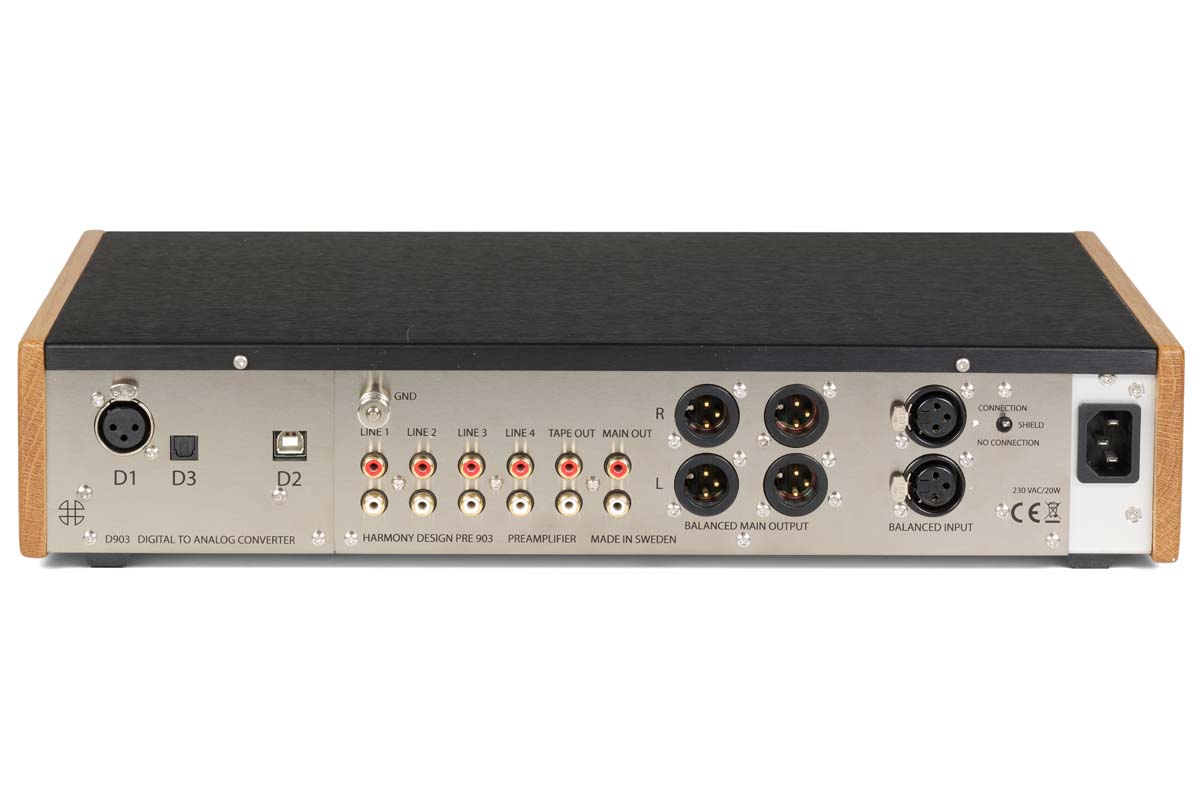
At the heart of the DAC is a board from digital specialist Amanero, which handles signals up to 24-bit/192kHz via XLR or Toslink. Feed it data through the USB input from a computer, and rates up to 32-bit/384kHz as well as DSD512 are supported. So much for the digital credentials. The phono section promised for our review apparently still fell short of Stridbeck’s aforementioned standards by the time the unit was shipped, but that’s what the four RCA inputs are for, allowing an external phono preamp to be connected. Outputs are provided either via two pairs of XLRs or a single pair of RCAs. Reel-to-reel enthusiasts will appreciate the separate fixed-level tape output, again on XLR, to round things out. As mentioned earlier: there’s an awful lot packed into this slim chassis.
What else is there? Rumor has it that the DAC can be assigned different filter characteristics. Interesting at first glance, but in everyday use this turns out to be less than straightforward, thanks to a handful of tiny screws and the need to observe their specified tightening torque. Why anyone would think it a good idea to put the DIP switches for filter selection inside the chassis remains a mystery even after the third aquavit. Once again, the answer may lie in Stridbeck’s perfectionism: I went through the trouble of comparing all three filters and came away with the realization that you can safely leave the lid in place. The differences are homeopathic, and as delivered, the Pre 903 sounds the most harmonious. So let’s listen to some music.
With the desert rockers Tinariwen (fed through the USB input), the Pre 903 demonstrates its dynamic authority. The flow of the music is disarmingly natural. The preamp creates an atmosphere that practically makes you feel the dusty wind of the Sahara. Dynamics arrive with immediacy and dryness. This is where the integrated DAC shows its strengths: Depending on the selected filter, its character can be gently nudged – from direct, impeccably faithful transients to a smoother, more spacious presentation. But as already suggested, we’ll leave the lid on, enjoy the unit as it stands, and turn our attention to the proverbial … AURORA’s box. Switching to a recording by the Norwegian vocal elf reveals the surgical precision of the circuit design. With her crystal-clear voice, the Pre 903 resolves detail to the point of laying bare every breath. Particularly impressive is its handling of transients and sibilants: S sounds are razor-sharp and precisely focused, yet never become edgy.
The clarity is phenomenal – the preamp seems merely to accompany the signal without imposing a sonic signature of its own, allowing an almost ethereal experience, light as wisps of fog.
Rarely has a component grown on me as much over the course of a review as the 903. And we’ve had plenty of time together. By now, the Harmony Design has been playing here for nearly four months. That has made both Uwe Klose of German distributor Applied Acoustics and our publishing house increasingly restless. But there is strength in patience. My neighbors have recently enjoyed a new kind of peace and quiet from me and my emissions as well. Since a stylish can – also known by the less poetic term “headphones” – arrived alongside the Pre 903, an unusual tranquility has descended on the house. The author of these lines has acquired a new favorite hobby: deep-diving into the carpeting. When necessary, simply tuck your head under the headphones and gently turn the dial. Depending on volume, mood, and music, you can sink gloriously into the wall-to-wall carpet without any risk of being disturbed by complaining neighbors or that irritating smartphone.
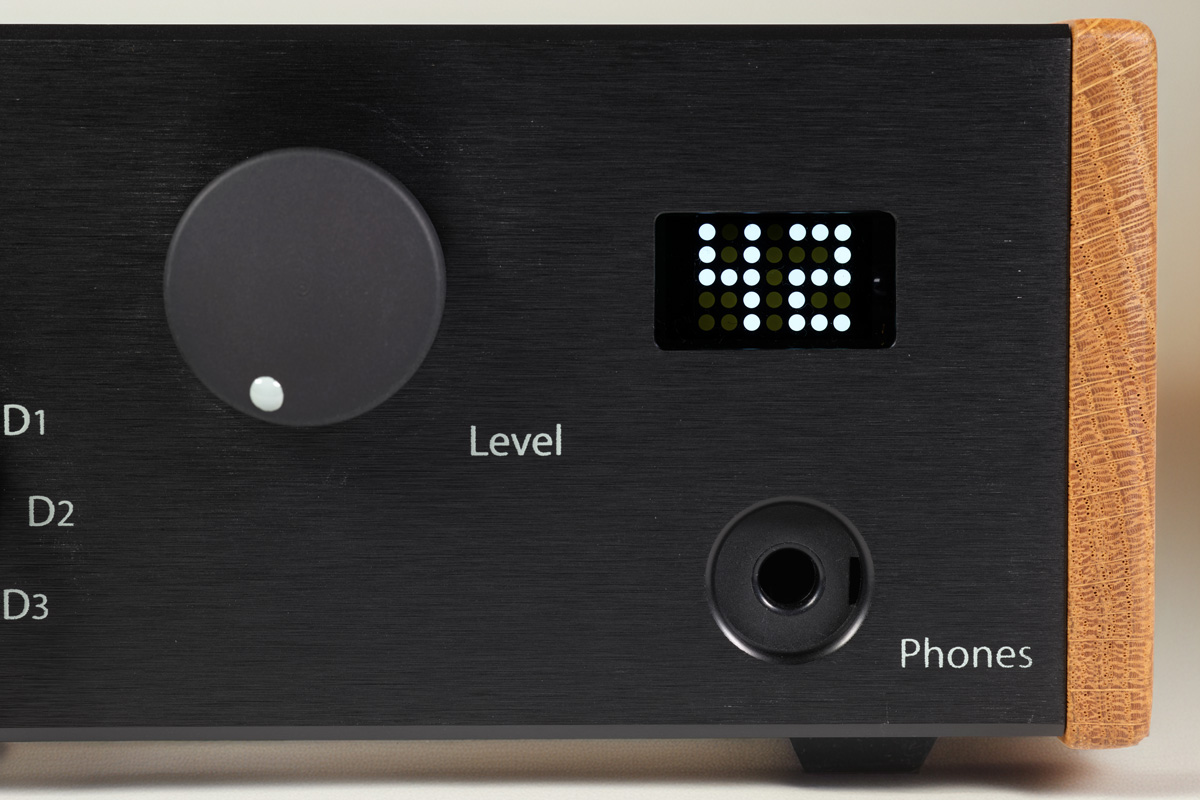
Preamplifier/DAC Harmony Design Pre 903
Concept: Solid state preamplifier with DAC and headphone amplifier | Analog inputs: 4 x line (RCA), 1 x line (XLR) | Digital inputs: 1 x XLR (RCA via adapter), 1 x Toslink, 1 x USB | Outputs: 1 x Main Out (RCA), 1 x Tape Out (RCA), 4 x XLR | Dimensions (W/H/D): 430/85/300mm | Weight: 6kg | Warranty: 2 years | Price: from €4,500 (phono approx. €500; prices for DAC and remote control not yet finalized), configuration as tested approx. €7,000
Applied Acoustics
Brandensteinweg 6
13595 Berlin
Phone +49 30 4614874
kontakt@applied-acoustics.de