
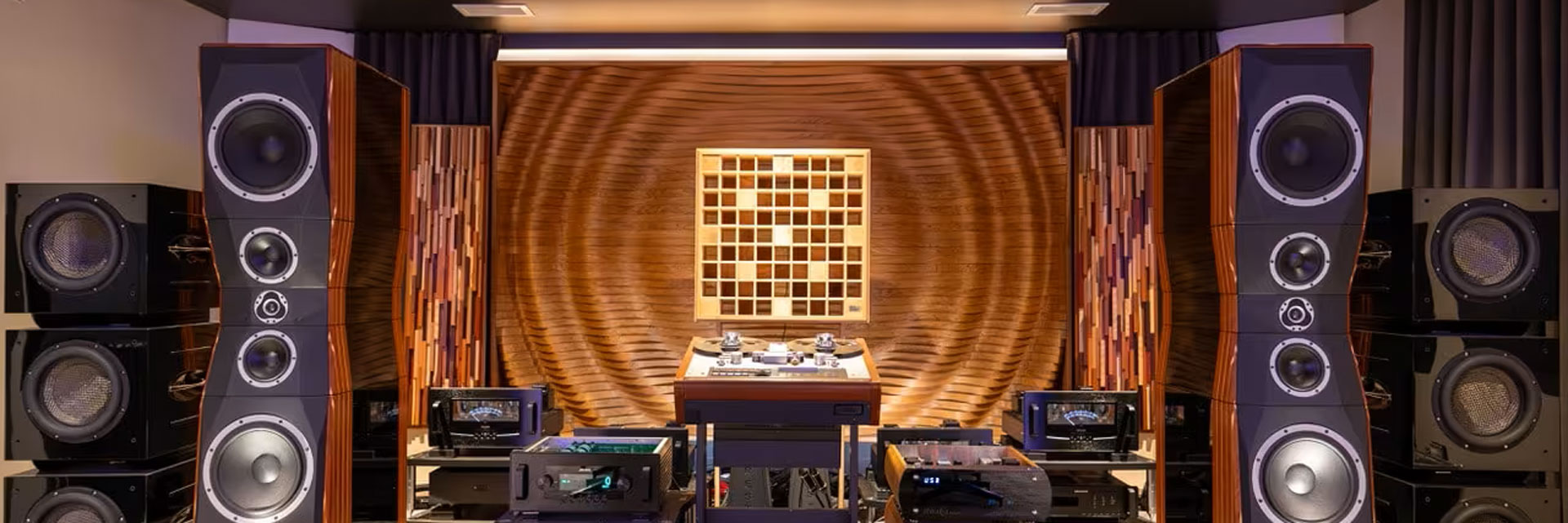
Live vicariously through writer Gilles Laferrière’s new series as he attempts to transform a swimming pool area with cathedral-like acoustics into the ultimate listening room.
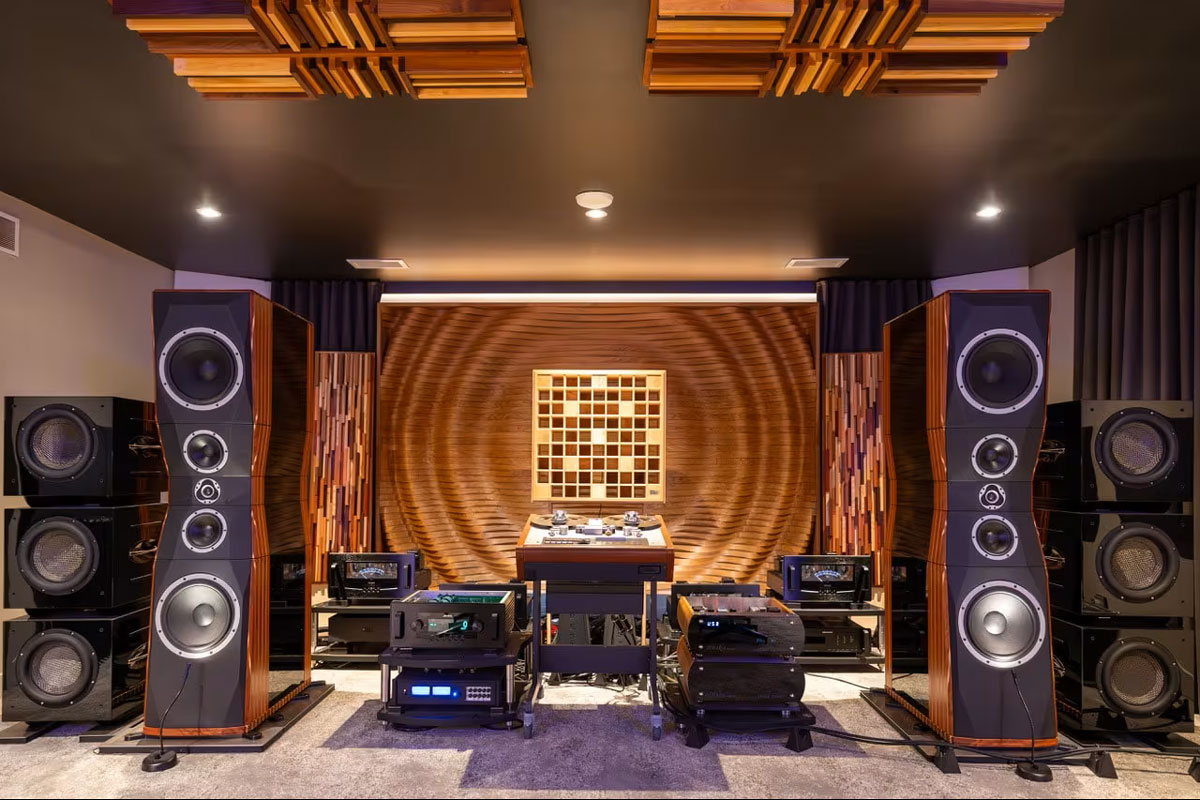
FIDELITY cooperation with PMA Magazine: How Far Can One’s Passion Go? – From Swimming Pool to New Listening Room, Part One was originally published in PMA Magazine on March 15, 2026.
Read this article also on PMA Magazine
In September 2025, I had to bid a heartbreaking farewell to my partner with whom I had lived in perfect harmony since 2020. Five years of fidelity. Or should I say… of high fidelity.
I am, of course, referring to the listening room I had designed and built for my audio system in my former residence. From the moment I purchased the property in 2020, I undertook major structural work to give the room ideal proportions for optimizing frequency response and minimizing standing waves. The dimensions were carefully studied. The structure’s rigidity was reinforced. The insulation was rethought. The objective was not merely to create a beautiful room, but to establish a sound acoustic foundation capable of evolving alongside the system.
That room quickly became a true laboratory.
Five Years of Refining Every Link
Over five years, I upgraded every link in the chain:
McIntosh → Audio Research & Aries Cerat
Auralic → Pink Faun
Legacy Audio → Peak Consult
Transrotor → Kronos
AudioQuest → Shunyata Research
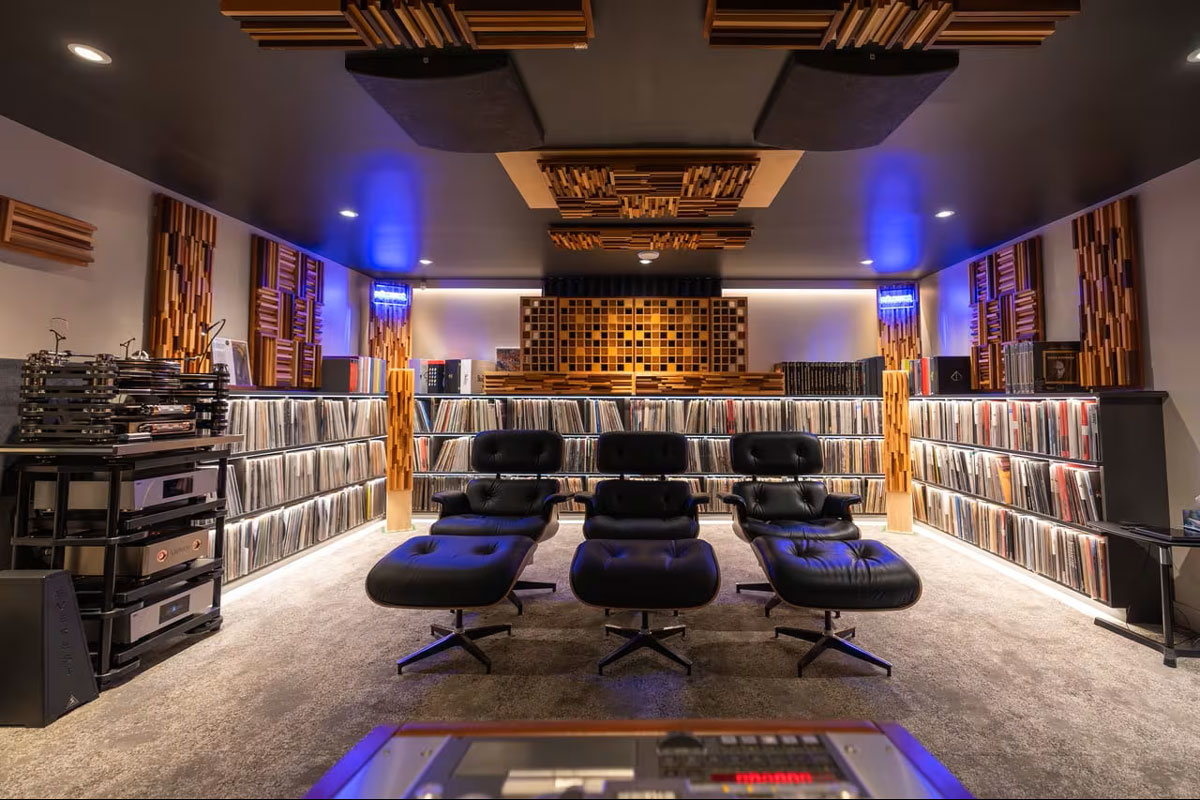
A Studer A812 reel-to-reel tape machine was added, paired with a dedicated Doshi preamplifier designed specifically for this analogue source. Every change was made to achieve a specific goal: greater tonal accuracy, more naturalness, stronger harmonic coherence, deeper silence between notes.
Alongside changes in electronics, the room itself evolved. Diffusers, diffractors, broadband absorptive panels, bass traps. Hours of reading, experimentation, trial and error, and repositioning. And the speakers — how many times did I move them? Anyone who has maneuvered 850-pound loudspeakers to find their ideal positioning will understand that such an exercise requires a certain determination.
At one point, I realized that if I wanted to take my system’s performance to the next level, I needed an external perspective. I called upon Norman Varney of AV RoomService. His visit marked a turning point. Within a few days, he optimized coherence, refined phase alignment, adjusted spectral balance, improved articulation, and stabilized the soundstage with remarkable precision. What I had believed to be the summit proved to be another surpassable plateau.
Then, in 2024 and 2025, driven to go even further, I undertook, with my friend and electronics expert Étienne Jarry, a modification of the Audio Research Ref 6SE preamplifier. Strategic capacitor replacements and upgraded passive components elevated its performance. The same work was applied to my four Audio Research 160M mono power amplifiers — modified to allow KT170 tubes in place of the KT150s, enhanced power supply sections, adjusted feedback loop for perfect synergy with the Peak Consult Dragon Legend loudspeakers.
“The improvements were immediate: increased transparency, freer dynamics, more textured bass, silkier highs, a broader and more organic soundstage. The system had crossed a new threshold.”
– on the Audio Research Modifications
In my mind, I had exhausted every avenue for improvement. All that remained was to sit down… and listen. Until a new idea — triggered by a revelation — began to take shape.
The Revelation
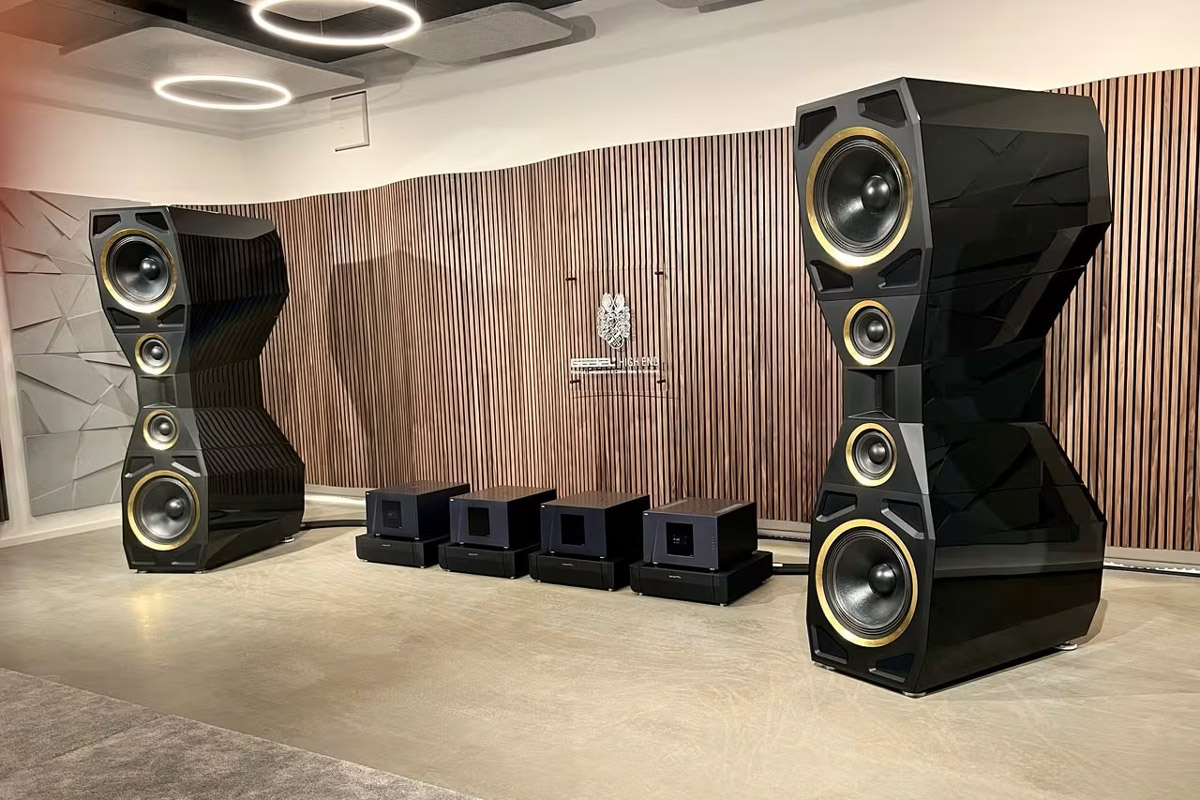
At High End Munich 2023, I had the opportunity to visit the facilities of German high-end loudspeaker manufacturer Göbel. Beyond the factory floor: two listening rooms. One of them, measuring approximately 24’ × 37’ × 12’, housed a majestic pair of Divin Majestic loudspeakers, driven by the L10 & M10 electronics from CH Precision, a Wadax DAC and digital server, and a complete Kronos analogue front end.
It was a revelation. It wasn’t just the incredible sound quality — though that’s expected from a system at this level. It was about scale. Effortlessness. Authority. The system’s ability to breathe within the large area. The soundstage no longer seemed confined between the speakers; it occupied the room with architectural precision.
At that moment, I knew that one day I would own an oversized listening room.
The Impossible Expansion
My first instinct was to plan an expansion of my residence to create a room of at least 24’ × 40’ × 12’, along with a larger office and garage. More than a year of plans, compromises, adjustments, and back-and-forth with the municipal planning department followed. Every step forward seemed to generate a new constraint. At some point, one must recognize the obvious.
I abandoned the expansion project. And decided instead to search for a house capable of accommodating my vision.
The Unexpected Discovery
In March 2025, after several months of searching, I discovered — almost by accident — an extraordinary property. Ironically, it appeared after I’d viewed on video a rather disappointing residence suggested by my broker on TikTok. The next video autoplayed. Ultra-modern house. Spectacular fenestration. Generous spaces. Abundant natural light. It was love at first sight.
I noted the address and searched for it on Centris. Nothing. My broker checked: the property had been withdrawn from the market four months earlier after two years without a buyer. I nevertheless asked that the owners be contacted. The reply came the next day: yes, they were still open to selling.
The Improbable Room
The room that immediately captured my attention? The one with the inground swimming pool – Specifications: 25 feet wide, 50 feet long, 12 feet ceiling height.
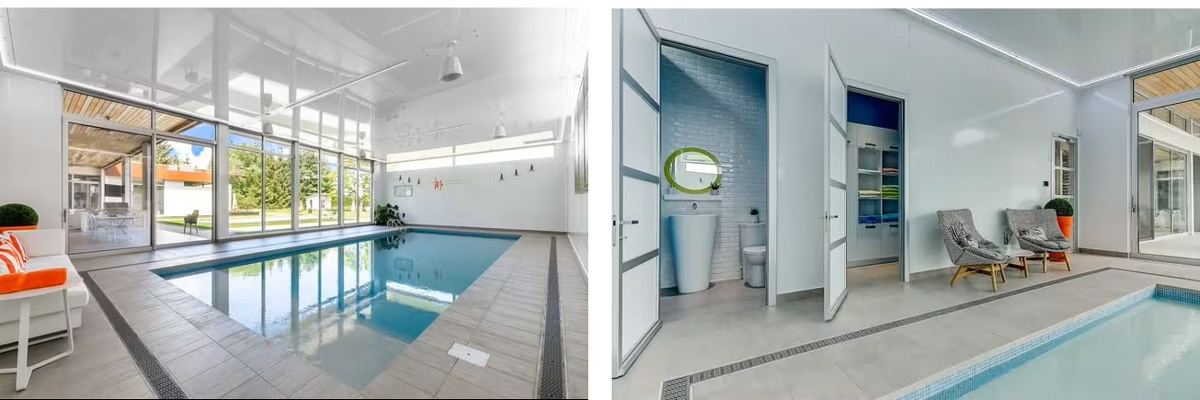
Fully windowed on one side. Walls finished in anti-mold plastic. A stretch ceiling. Acoustically? The equivalent of a cathedral. When I announced my intention to transform this pool into a listening room, the reactions were predictable: “Are you sure?” “You’re really going to remove the pool?” “Are you crazy?”
Perhaps. But behind the cathedral-like acoustics, I see space. Height. Potential. A blank canvas to be entirely reimagined: filling and constructing a rigid structure above the basin, controlling axial modes, implementing calculated diffusion and absorption from the design phase, dedicated electrical supply, silent ventilation, vibration control. This will not be a simple renovation. It will be a complete acoustic reconstruction.
To be continued…
Special thanks to PMA Magazine