
It was the headline in Melody Maker: “Peter Gabriel leaves Genesis.” The author of the article, the renowned Chris Welch, declared the band effectively dead.
After all, Genesis without their frontman, main lyricist, and charismatic singer? It seemed unthinkable. In the press (as Phil Collins put it), Peter Gabriel was seen as the “glorious architect” of Genesis, the band essentially regarded as “his” project. That Gabriel dominated public perception so strongly (especially once he began wearing stage costumes) was one of the reasons for the tensions that eventually led to the split. The final trigger was The Lamb Lies Down on Broadway project. Gabriel had led it uncompromisingly, but also delayed it, so that the album was released too close to the tour.
Gabriel’s departure was met very differently by the remaining four members of Genesis than by the music world. Now more than ever—we’ll show them! That was their attitude. After all, Tony Banks and Mike Rutherford had always written most of the band’s music. Phil Collins even suggested that Genesis could continue as an instrumental quartet if necessary: “Then you’d finally hear the music properly!” Immediately after The Lamb Lies Down tour, Banks and Rutherford began writing new material: “The songs are coming to us like in the old days, and it’s good stuff.” The only thing missing was a replacement singer. An ad was placed: “Singer wanted for a band in the style of Genesis.” Around 400 applicants reportedly responded. Collins, the drummer and longtime second vocalist, rehearsed with the best candidates. When none proved convincing, he simply recorded the songs himself—just as a test.
And then it “clicked”: the band suddenly realized that Phil Collins was the ideal Genesis singer—he even sounded a bit like Gabriel. “It was great that we didn’t have to bring in an extra person” (Tony Banks). Still, the record company, the press, and the band’s circle remained skeptical at first. A drummer as frontman? How was that supposed to work? As Phil Collins put it: “Expectations for the band’s future viability were very, very low.” All the more enthusiastic, then, was the reaction when the first album by the “new” Genesis was released. A Trick Of The Tail brought the band their breakthrough in the U.S. and became the rocket fuel for Phil Collins’s rise in popularity.
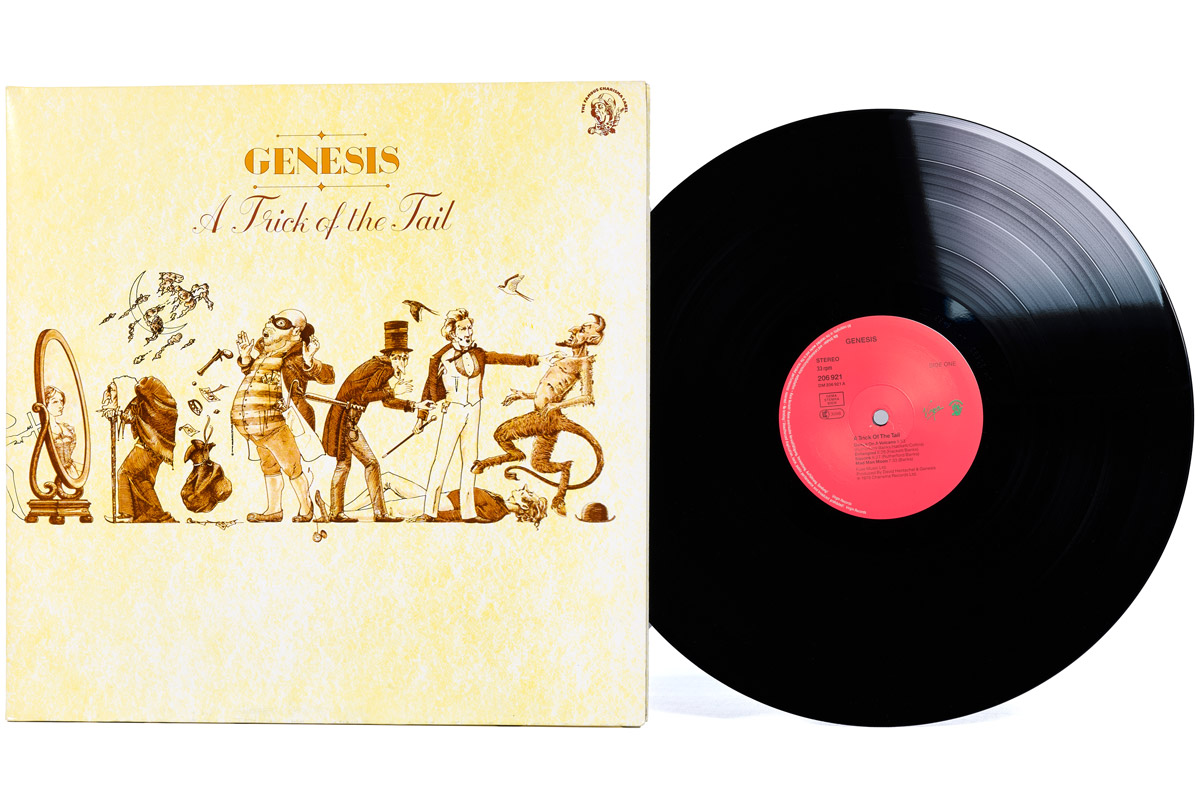
Genesis – A Trick of the Tail
Recording: Fall 1975
Release: February 1976
Label: Charisma
Production: David Hentschel & Genesis
Tracks
Side A
- Dance On A Volcano – 5:56
- Entangled – 6:27
- Squonk – 6:30
- Mad Man Moon – 7:34
Side B
- Robbery, Assault And Battery – 6:17
- Ripples… – 8:07
- A Trick Of The Tail – 4:35
- Los Endos – 5:48
Musicians
Phil Collins – vocals and drums
Steve Hackett – guitars
Tony Banks – keyboards, among others
Mike Rutherford – bass, 12-string guitar, among others
Commentary and Trivia
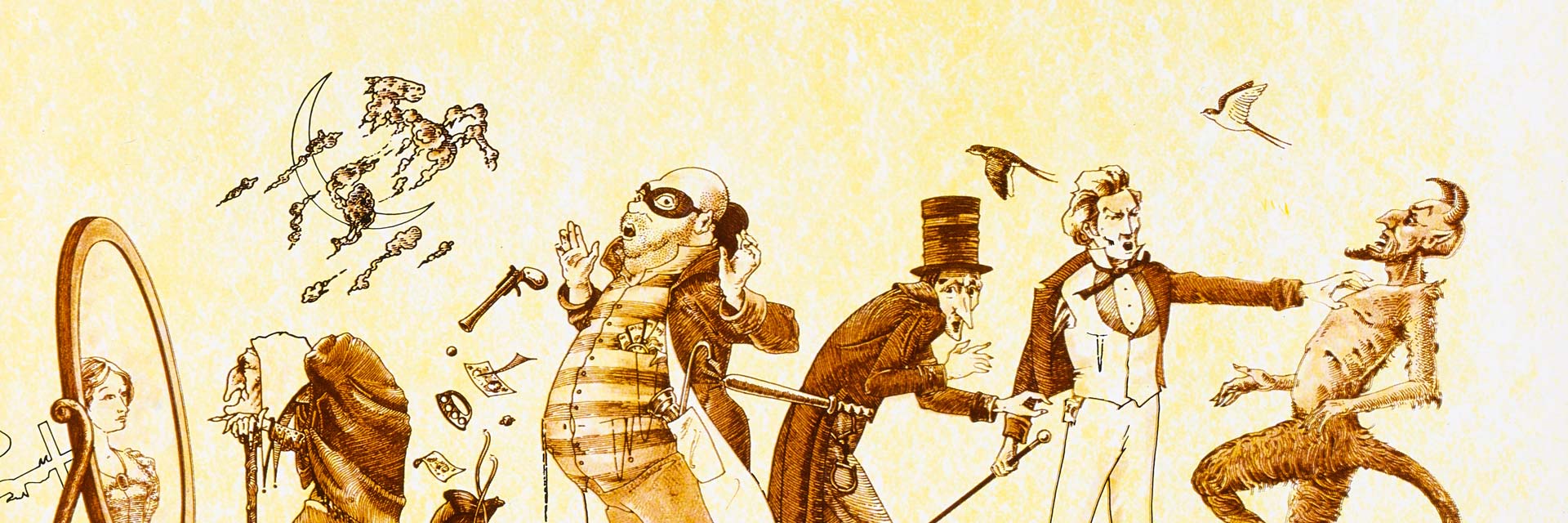
- The music, lyrics, and cover art suggest an enchanted world full of elves and nature spirits, with a touch of Alice in Wonderland and Mary Poppins…
- The new lead singer Phil Collins, who had acting experience as a child, brings “character” into the songs—even a bit of a Cockney accent in “Robbery, Assault And Battery.”
- “Dance On A Volcano,” the opener, is a collective work by the band, its intro serving as a kind of fanfare for the “new era.” In the hectic drum part (in 7/8 time!), you can hear the influence of the jazz-rock group Brand X, with whom Collins was working on the side at the time.
- Highlights of the album include three enchanting ballads: “Entangled” (Banks & Hackett), “Mad Man Moon” (Banks), and “Ripples…” (Banks & Rutherford). The synthesizer solo in “Entangled” is considered especially inspired.
- The somewhat heavier track “Squonk” tells the story of a mythical creature said to live in Pennsylvania. Its sound is inspired by Led Zeppelin’s “Kashmir.”
- With Phil Collins as the new singer, the band now needed a “tour drummer” for live performances. Collins chose fellow musician Bill Bruford (Yes, King Crimson). During longer instrumental passages in concerts, however, he would sometimes return to the drum kit himself.
- “Robbery, Assault And Battery” and “A Trick Of The Tail” are the album’s pop-oriented “story songs,” somewhat in the tradition of Peter Gabriel’s music-hall humor. The music video for the title track became well known: the band stands around a piano while a “mini-Collins” hops across the instruments.
- In concert, Phil Collins did not try to compete with Peter Gabriel’s theatricality. He usually just wore a workman’s coverall and kept his hands in his pockets. Between songs, he displayed a friendly, down-to-earth humor (“Uncle Phil”). “In his own way, he was just as original as Peter” (Richard Macphail).
- The closing track “Los Endos” is again a collective effort. The instrumental combines various rhythms and themes, including reprises from earlier tracks as well as a hint of Santana. “Los Endos” remained in the band’s live set for 30 years.
- In the fade-out of “Los Endos,” there is a small farewell tribute to Peter Gabriel. Collins sings the phrase “There’s an angel standing in the sun” from “Supper’s Ready.”
Find Genesis – A Trick of the Tail on discogs.com