
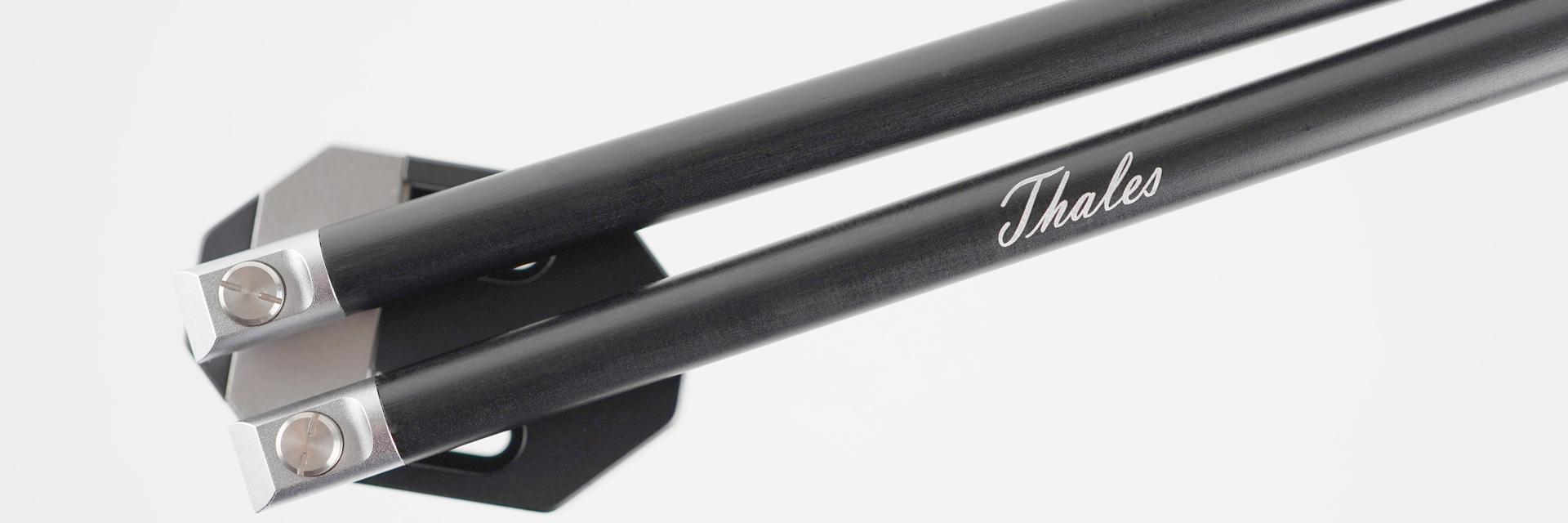
“If a triangle is constructed using the two endpoints of the diameter of a semicircle and any other point on that semicircle, the result is always a right triangle.”
(Thales of Miletus, c. 624–544 BC)
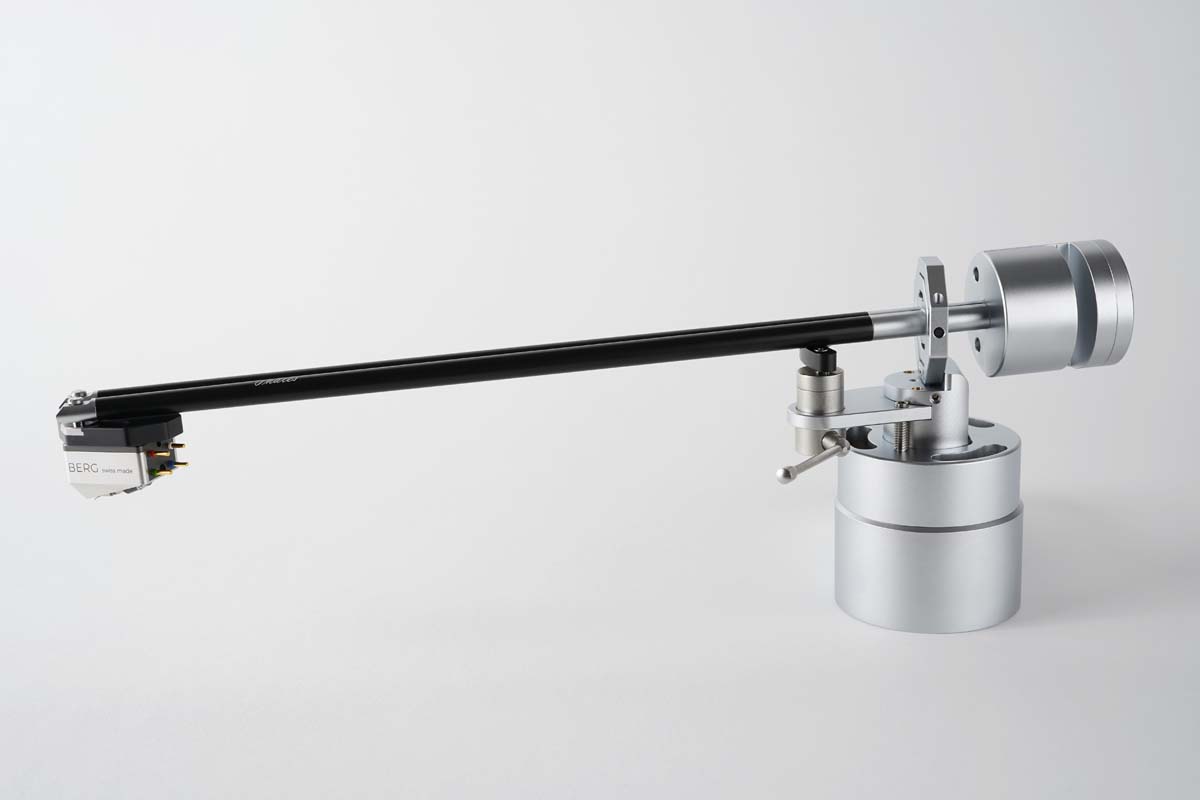
These days, it is rather uncommon for a hi-fi product to claim a truly unique selling point. Micha Huber’s tonearms are one of those rare exceptions. Since 2008, he has been designing pivoted tonearms whose offset angle changes continuously while a record is being played, ensuring that the cartridge always remains perpendicular to the LP’s radius. As a result, the groove is traced tangentially at all times.
The original Thales and the Thales AV achieved this through an elaborate and highly complex support arm. However, many users found it too demanding to set up and adjust, and it did not take long before calls arose for a simplified implementation of this ingenious concept. The result was the Thales Simplicity, introduced in 2010. Although it was not quite as perfectly tangential as its larger sibling, only the most obsessive perfectionists could complain about its almost unimaginable maximum tracking error of just 0.008 degrees.
Today, in addition to two turntables and two cartridge series, Micha Huber offers three tonearms, all based on the principles of the original Simplicity but differing in their details. The Thales Easy is the most affordable model and, visually, resembles a conventional pivoted tonearm more closely than the others. Naturally, its simplified mechanism increases the maximum tracking error to “as much as” 0.4 degrees, which is still just one-fifth to one-sixth that of a typical 9-inch pivoted tonearm.
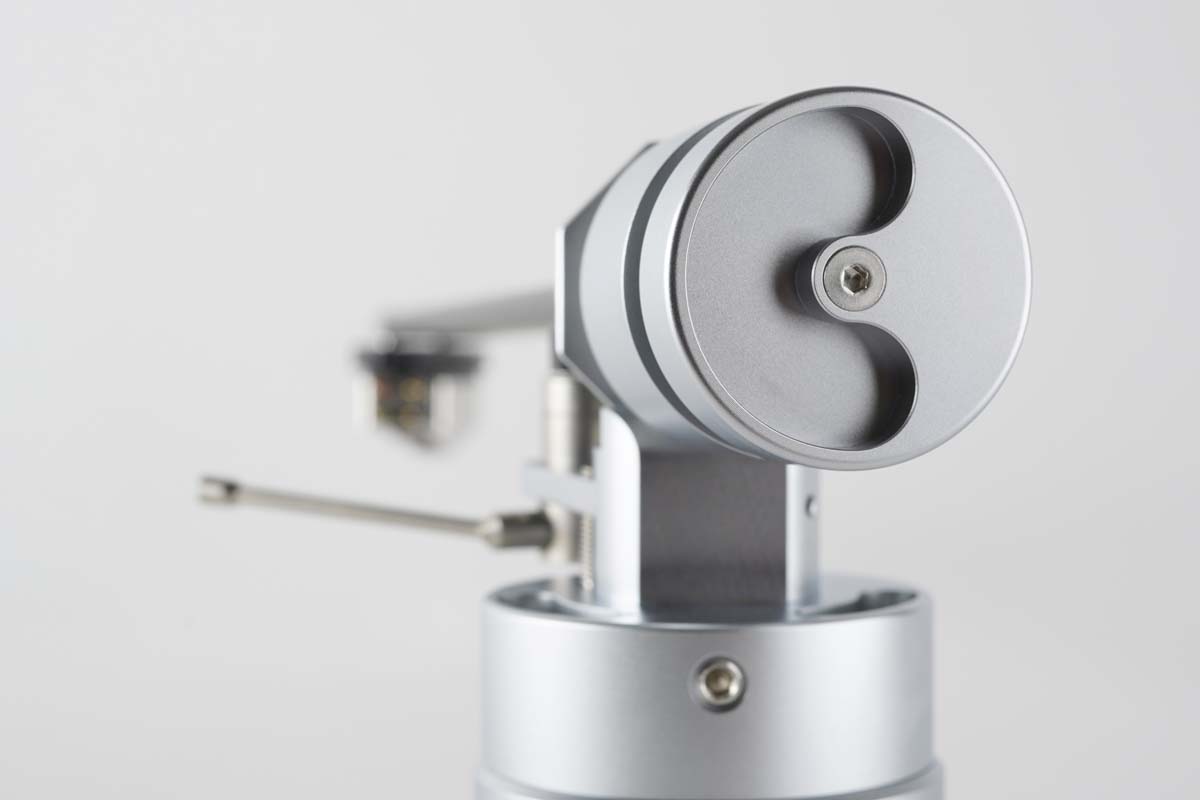
At the opposite end of the range is the Thales Statement, the flagship model built in Turbenthal, Switzerland (Canton of Zurich). Compared with the Simplicity, it offers even more convenient setup, superior craftsmanship, and an even more luxurious finish. That last point may seem hard to believe when you take a close look at the current Simplicity II, because it is refined down to the smallest detail and flawlessly manufactured. We’re really talking about the difference between “A” and “S”-tier.
Let’s get back to the Simplicity. Around 2015, it underwent another redesign and from that point on proudly carried the Roman numeral II as part of its name. The most significant changes involved the bearings, which now employ the company’s proprietary TTF (Thales Tension Free) technology. This combines the advantages of the previously used sapphire point bearings with those of ball bearings, resulting in smoother operation and greater durability. A slight change in geometry further reduced the maximum tracking error to just 0.006 degrees. For the first time, buyers could also choose between a mini-DIN connector in the tonearm tube and a continuous internal wiring option.
Micha Huber expressly points out that the continuous internal wiring is intended exclusively for use with moving-coil cartridges. Using it with moving-magnet (MM) cartridges may result in hum issues.
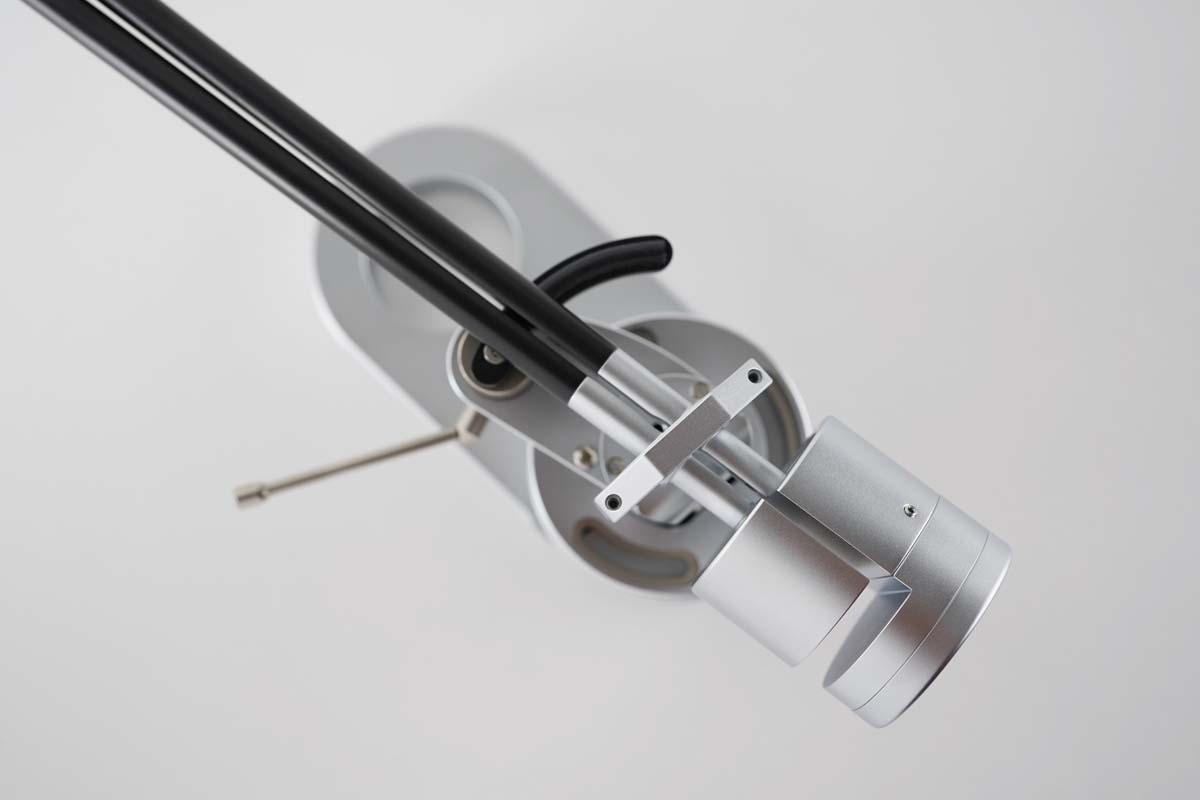
Mechanically, however, nothing fundamental has changed in the Simplicity. It still follows the company’s proprietary “Thales Tetragon Geometry.” This means that the horizontal pivot point of the entire tonearm is located at the center of a circular path along which the cartridge’s stylus travels. The right triangle described by Thales some 2,500 years ago is formed by the stylus tip, the center of the record, and an imaginary point behind the tonearm that is the same distance from the arm as the center of the record.
As an LP is played, the cartridge’s offset angle gradually becomes shallower and is continuously adjusted so that the stylus remains as close as possible to a right angle relative to the LP’s radius. As a result, the groove is traced almost perfectly tangentially.
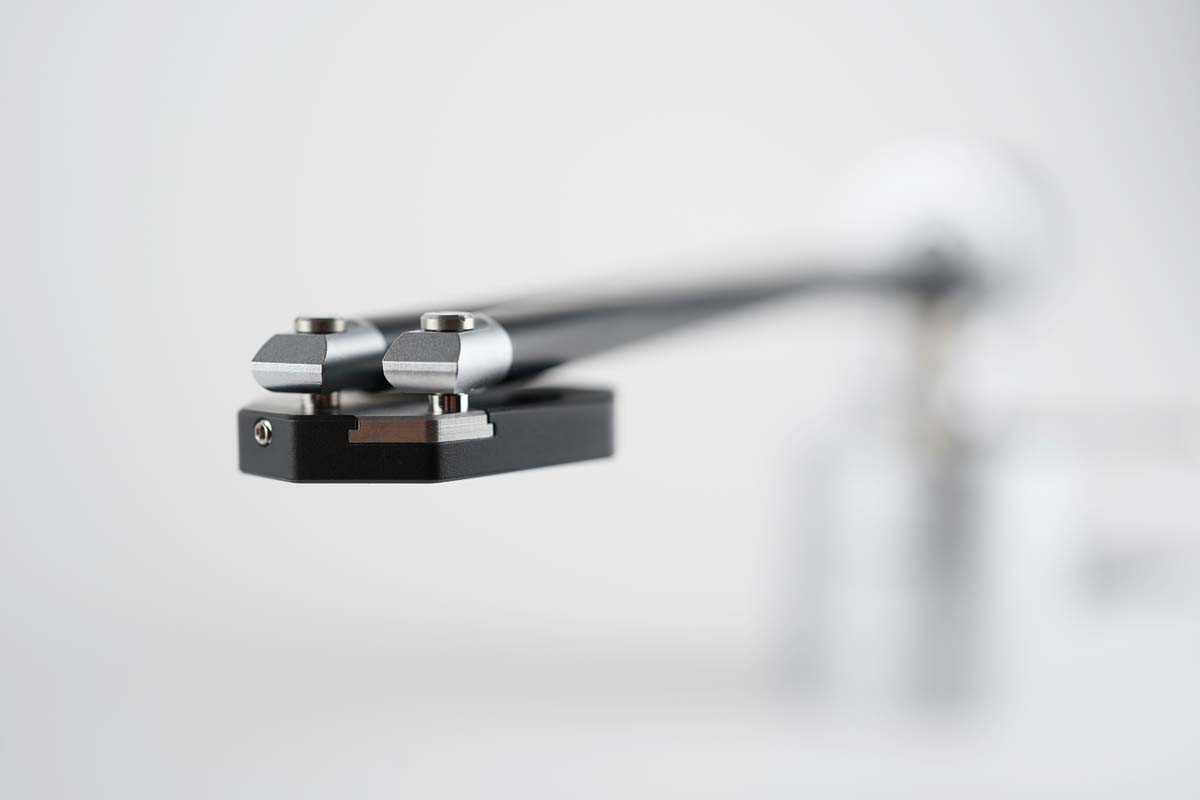
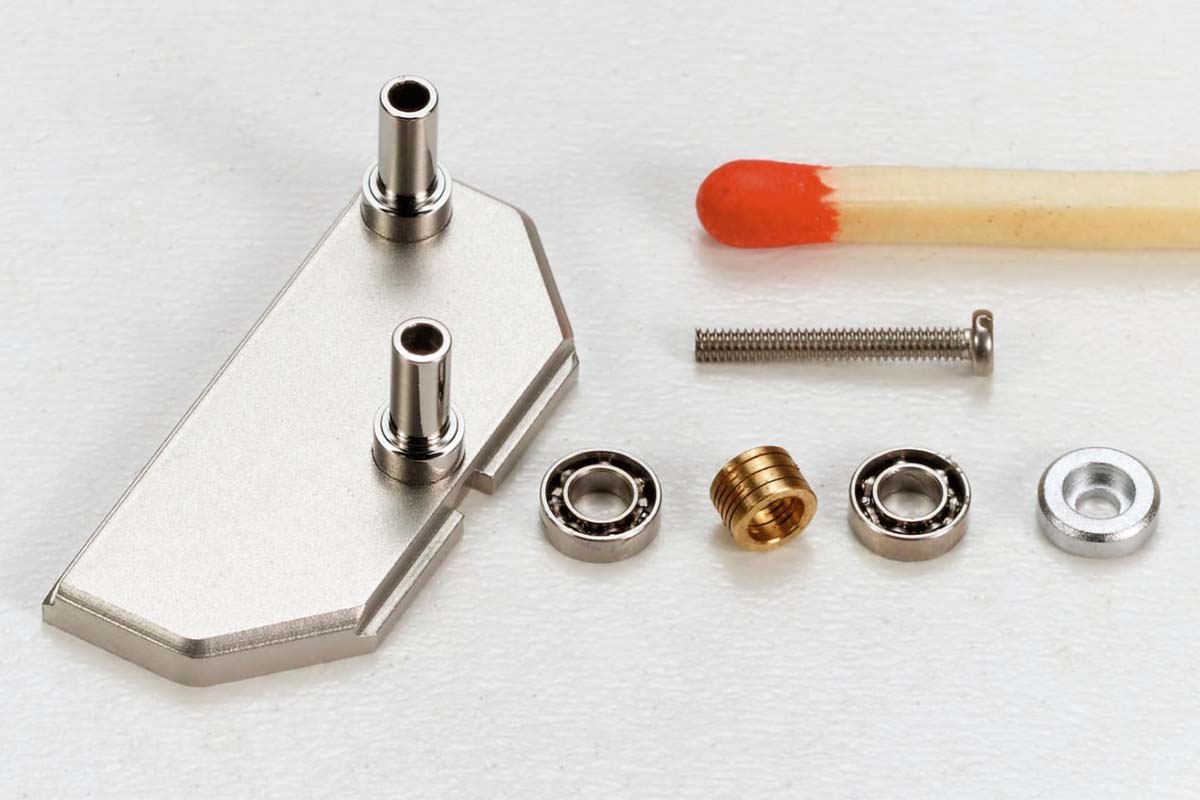
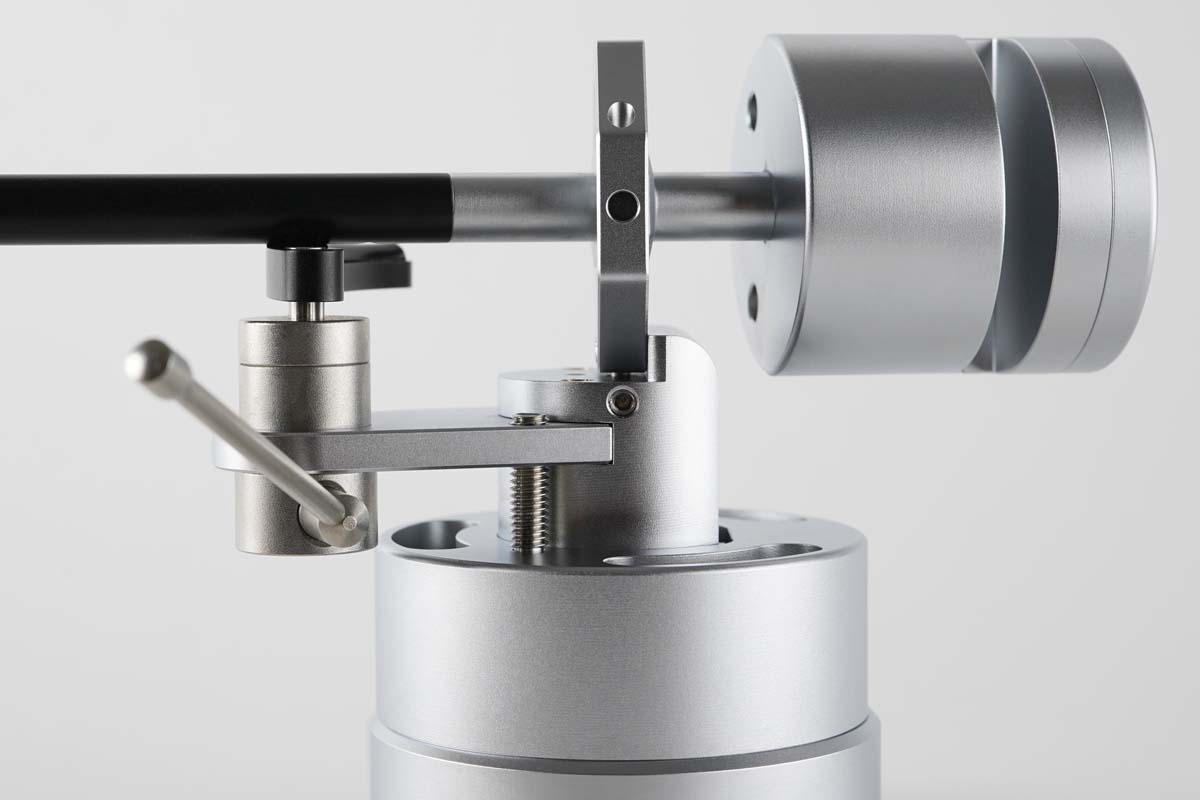
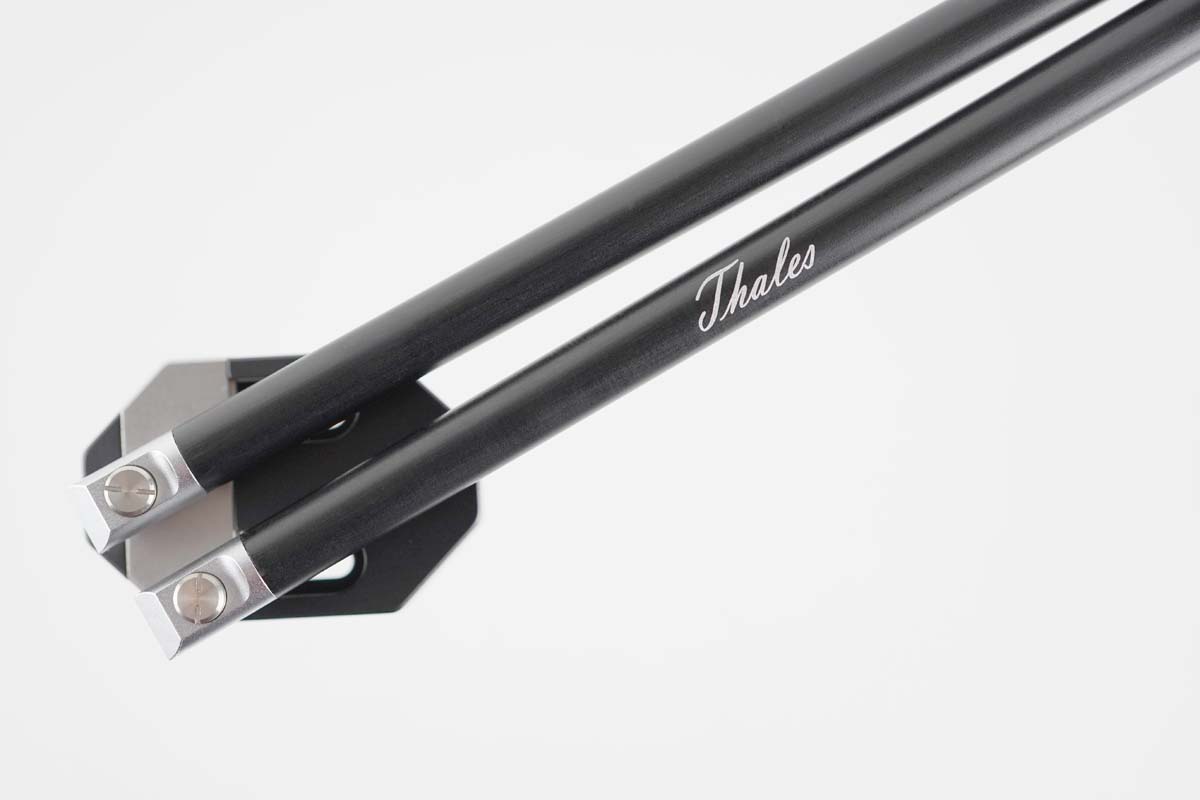
This adjustment of the offset angle is achieved through the use of two tonearm tubes that are intentionally not quite parallel. Each tube has its own horizontal bearing, allowing them to move relative to one another. At the front ends of the tubes, each is connected to another ball bearing through a component known as the “headpiece.” These bearings allow the angle of this headpiece to change. During cartridge setup, the headshell is attached to this component.
If the technical sophistication of this tonearm is already making your head spin, you would be well advised not to look too closely at the tiny bearings used throughout the mechanism. They are roughly the size of a match head.
Of course, manufacturing perfection is of little value if the owner cannot reproduce that precision during installation and setup. Fortunately, Micha Huber leaves nothing to chance. Quite the opposite. The richly illustrated German-language owner’s manual, the alignment templates, and the supplied tools are exemplary.
Particularly noteworthy is the tool called the “Sight,” which is used to align the cartridge in the headshell. It allows the cartridge to be adjusted comfortably at a desk rather than while leaning over the turntable. The level of precision it makes possible is remarkable. In fact, I am inclined to believe that I have never aligned a cartridge as accurately as I did using this tool.
The same applies to the template used to set the correct mounting distance and angle of the tonearm. All you need to do is order a tonearm base compatible with the Thales Simplicity II from your turntable manufacturer, and installation can begin. Fortunately, Dr. Christian Feickert already had such a base in stock for the Woodpecker turntable provided for this review, and it arrived at my home within forty-eight hours. My sincere thanks for this outstanding level of service.
Since the owner’s manual leaves virtually no questions unanswered, I will limit myself to highlighting a few of the Thales’ special features and simply emphasize that this precision-engineered masterpiece deserves to be approached with patience and care.
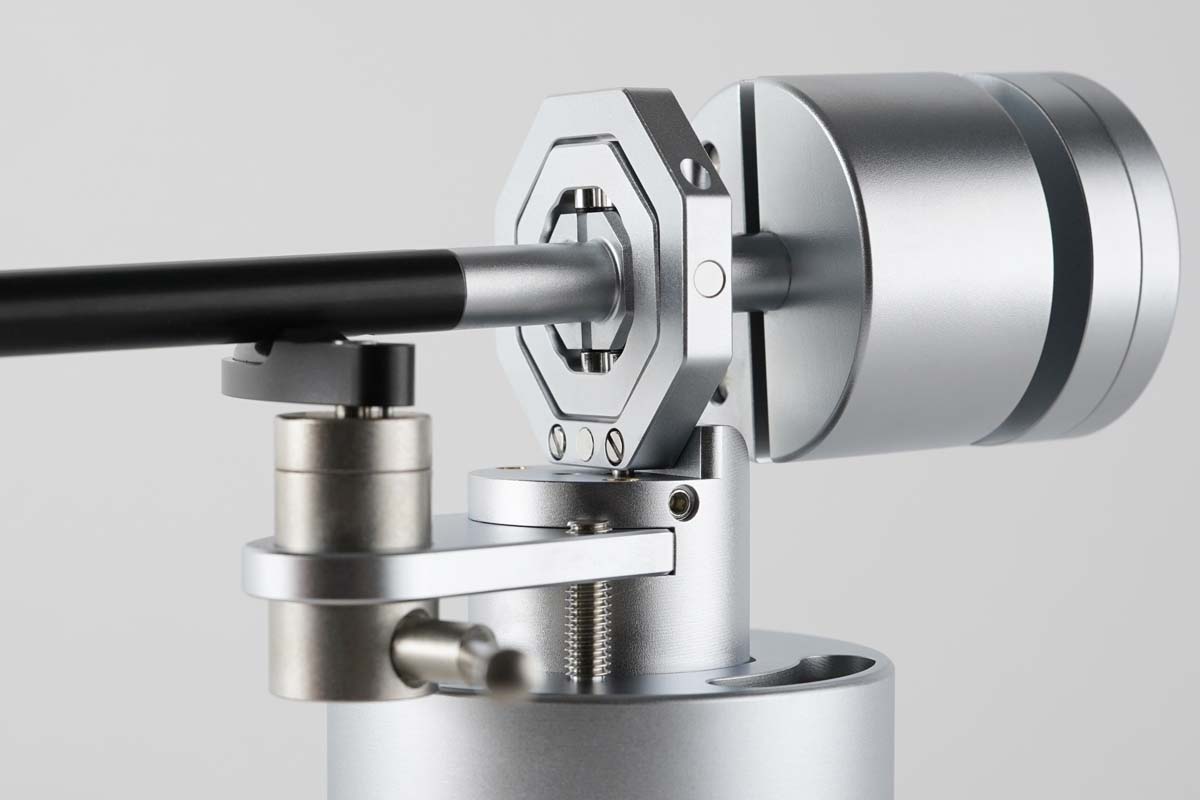
Because the Simplicity uses two tonearm tubes, each has its own counterweight. Into the counterweight on the left-hand side (when viewed from the front), so-called balancing weights are inserted by means of two guide rods. These weights are available in three different masses, allowing cartridges weighing anywhere between 7 and 23 grams to be balanced and the required tracking force to be set.
These adjustment weights include an additional component called the “eccentric,” which can be used to fine-tune the lateral balance when necessary.
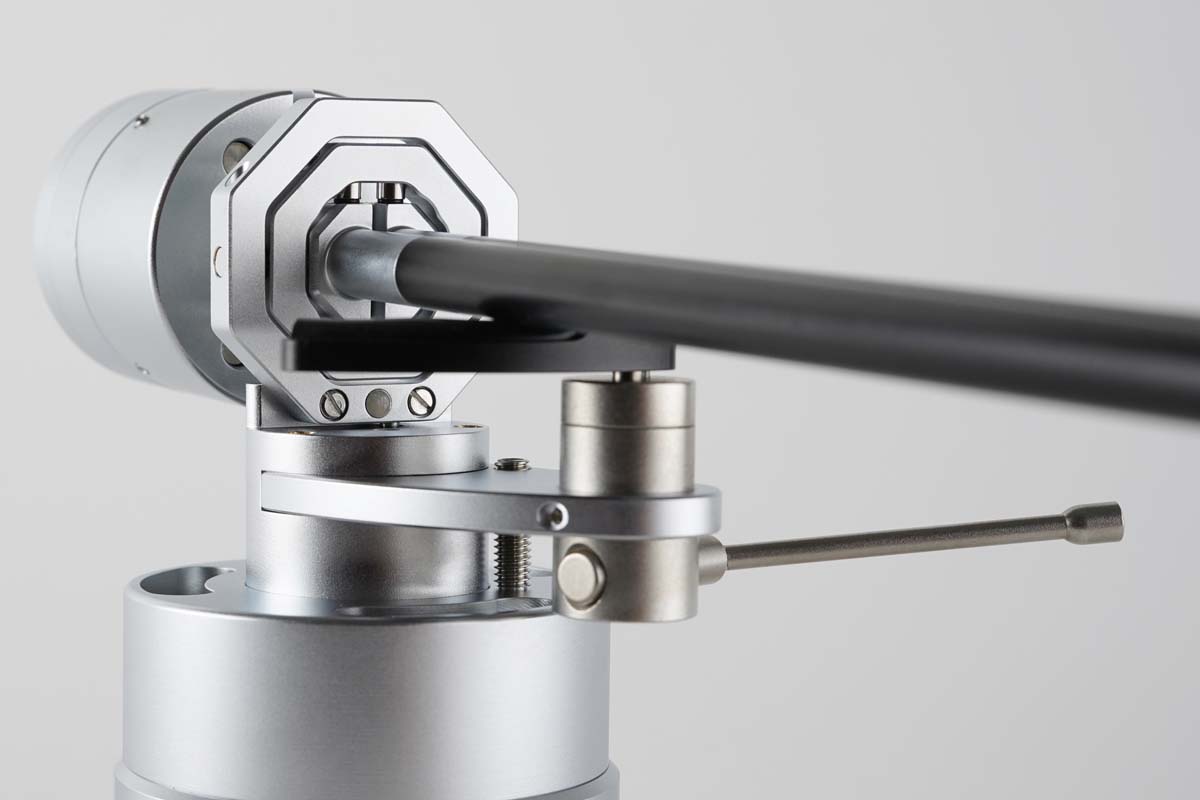
Anti-skating force, on the other hand, is not adjustable. Micha Huber rightly points out that skating force depends primarily on the cartridge’s offset angle and is significantly lower in the Simplicity than in comparable pivoted tonearms. Furthermore, the offset angle changes continuously throughout the playback process. To compensate, the design employs two magnets built into the counterweights of the two tonearm tubes. Just like the tonearm tubes themselves, these magnets shift relative to one another as the record plays. Depending on the offset angle, they repel each other in a precisely defined manner, providing more than sufficient compensation for the comparatively weak skating force.
It is therefore hardly surprising that the Ortofon Jubilee I used (roughly comparable to an Ortofon Cadenza Black) achieved the best possible tracking performance without any audible distortion at the manufacturer’s recommended tracking force.
As fascinating as the engineering and mechanical precision may be, the ultimate question is always whether the product delivers sonically. The Thales Simplicity II does so across the board.
Its soundstage, sense of life, resolution, and tonal neutrality are simply of the very highest caliber. At times, it even surpasses the already lofty expectations created by its premium price tag. The proof lies in the many records I effectively rediscovered during the time the Thales Simplicity II was in my system.
Here, however, I will limit myself to examples from the ever-reliable Manger demonstration records – music that, to my ears, sounds as if it comes from another world and that I invariably use as a dependable reference when evaluating analog components.
On Ludwig van Beethoven’s Piano Sonata No. 8, performed by Bruno Leonardo Gelber, the piano – including every subtle incidental sound, some of which undoubtedly originate from the pianist himself – is reproduced with a naturalness and dynamic realism that I have experienced from the Ortofon Jubilee only when mounted in truly exceptional tonearms.
Even more impressive is the reproduction of Hermann Prey’s performance of Beethoven’s song Ich liebe dich (“I Love You”). Particularly striking is the precise spatial separation between the piano accompaniment and the voice – a quality I have otherwise encountered only with the very finest tangential-tracking tonearms.
Those designs, however, can sometimes struggle to reproduce bass transients with complete naturalness. Conversely, elegant tonearms with a moderate effective mass (18 g), such as the Thales Simplicity II, are often suspected of lacking true authority in the bass.
“Jazz Variants” by The O-Zone Percussion Group proves exactly the opposite. The speed, impact, and weight of the percussion instruments are reproduced perfectly, without sounding exaggerated or overly rich. In fact, the Simplicity II consistently avoids any unnecessary showmanship. Effects that may seem spectacular at first often become fatiguing over time, and this tonearm wisely refuses to indulge in them.
The Thales Simplicity II is therefore not merely a masterpiece of precision engineering. It also impresses with its understated sonic accuracy, placing greater emphasis on tonal fidelity and spatial precision than on attention-grabbing effects. So much for anyone who claims that the knowledge of the ancient Greeks has no practical value today…
Tonearm Thales Simplicity II
Concept: Pivoted tonearm | Special features: Variable offset angle, interchangeable proprietary headshell | Mounting distance: 23 cm | Effective length: 22.9 cm (9″) | Offset angle: 8° to 19° | Maximum tracking error: 0.006° | Compatible cartridge weight: 7 g to 23 g | Effective mass: 18 g (high) | Tonearm tube finish: Black, Gray, or Bronze | Connection: 5-pin mini-DIN connector, flying leads, optional continuous internal wiring | Warranty: 3 years | Price: From €9,000
HiFiction
Tösstalstrasse 14
8488 Turbenthal
Switzerland
Telephone +41 44 5338899
info@hifiction.ch