
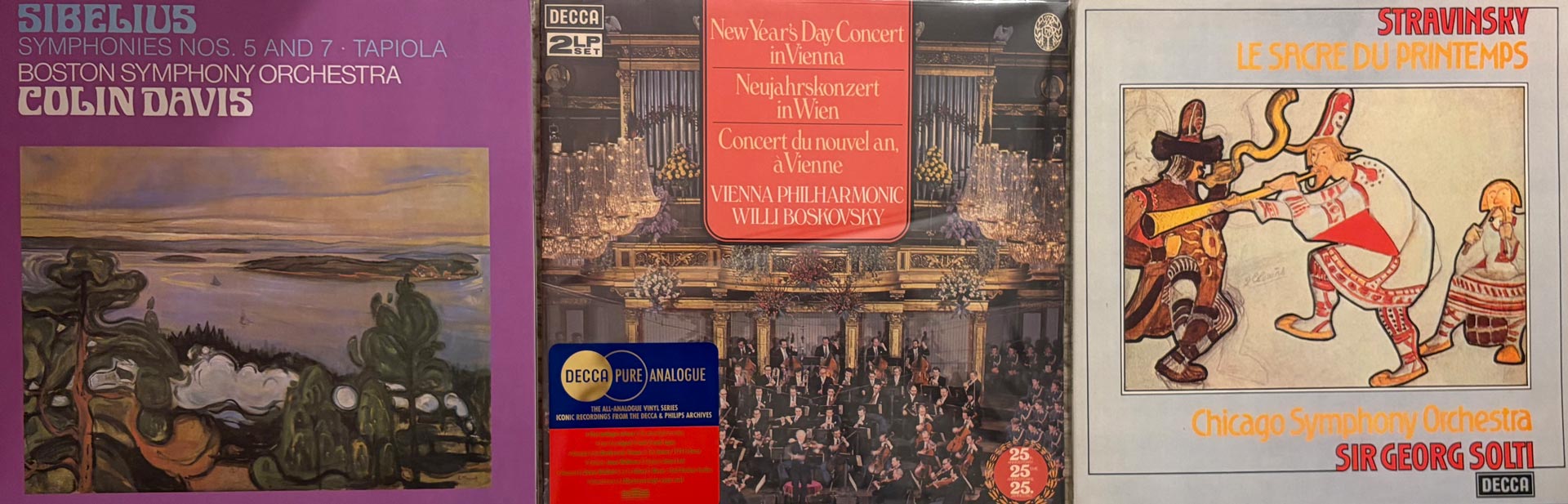
With the Decca Pure series, Universal Music is expanding its collaboration with the Emil Berliner Studios to include sonic gems from its analog back catalog.
Anyone who has followed high-quality classical vinyl reissues in recent years will inevitably have come across Deutsche Grammophon’s The Original Source series. Universal Music is now opening up its entire archive, searching the Decca and Philips catalogs as well for recording-technology specialties such as quadraphonic recordings and other technical treats. The two series complement each other more than they compete. DG draws exclusively on rare quadraphonic tapes, while Decca Pure combs through the entire Universal catalog in search of sonic treasures. What the two series do have in common, however, is the work being done at the Emil Berliner Studios, where the primary goal is to free up as much dynamic headroom as possible. For the latest releases, this also means making use of the tricks of the trade when it comes to side length and playback speed. Rather than cramming an entire work onto two LP sides, the music is spread across three sides, even if that means leaving the fourth side blank. The purpose, of course, is to reduce distortion, allow for more relaxed cutting levels, and give complex passages room to breathe. The result isn’t a “new” sound, but more of what was already there in the tape.
Let’s first take a listen to the initial releases in the new Decca Pure series. The 1979 Vienna New Year’s Concert by the Vienna Philharmonic marks a historic milestone – something known to only a few high-end insiders. On the one hand, it was the farewell appearance of Willi Boskovsky, whose style had shaped these concerts for decades; on the other, it represents a technical anomaly.
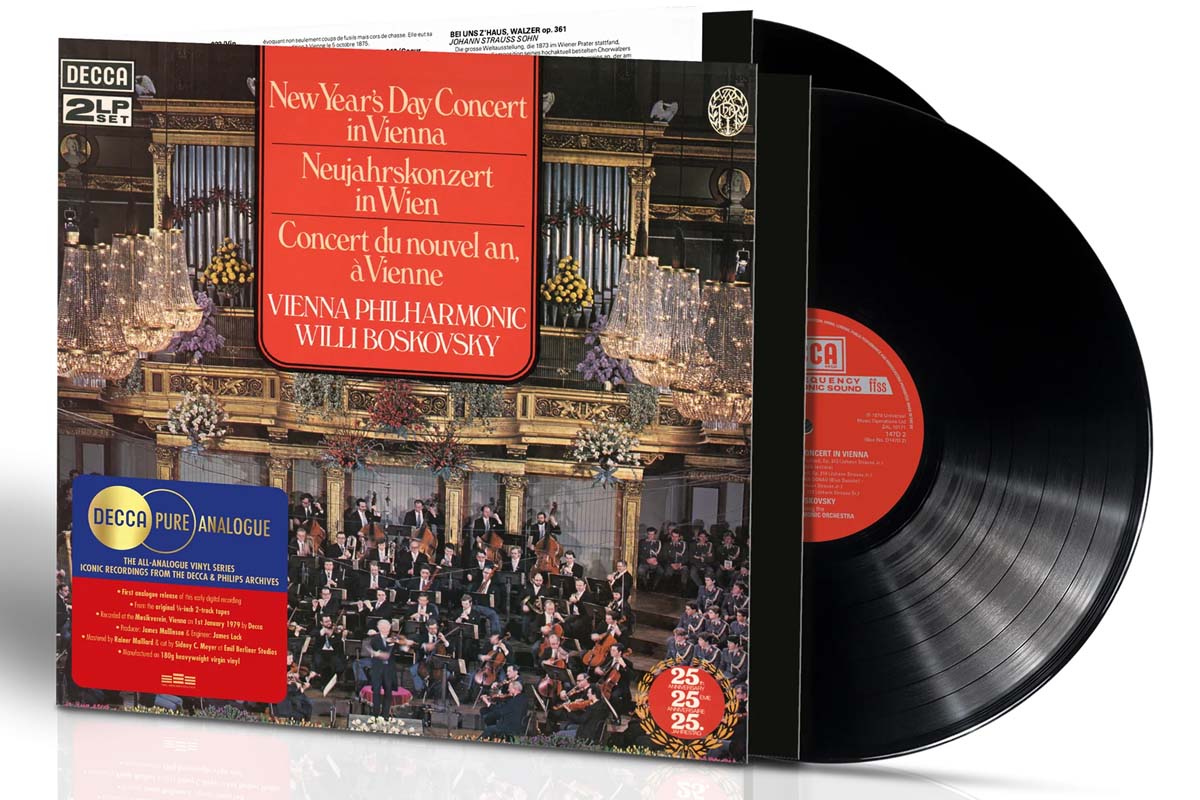
For a long time, it was regarded as one of Decca’s early digital recordings, but the rediscovery of analog safety copies revealed it to be a rare case of a recording existing in both digital and analog form. The performance sounds relaxed, elegant, never strained, and certainly not provincial – a criticism that was occasionally leveled at Boskovsky. This reissue emphasizes precisely those qualities, while the analog version even contains traces of a certain Viennese charm. And when the percussion sections of the various polkas really let loose on timpani and bass drum, the woofer has its work cut out. A genuinely high-end recording that conveys so much sheer fun and good humor isn’t something that graces your turntable every day.
Stravinsky’s The Rite of Spring under Sir Georg Solti works on an entirely different level, but according to the same principle. This is not about relaxation and Viennese charm, but about controlling energy.
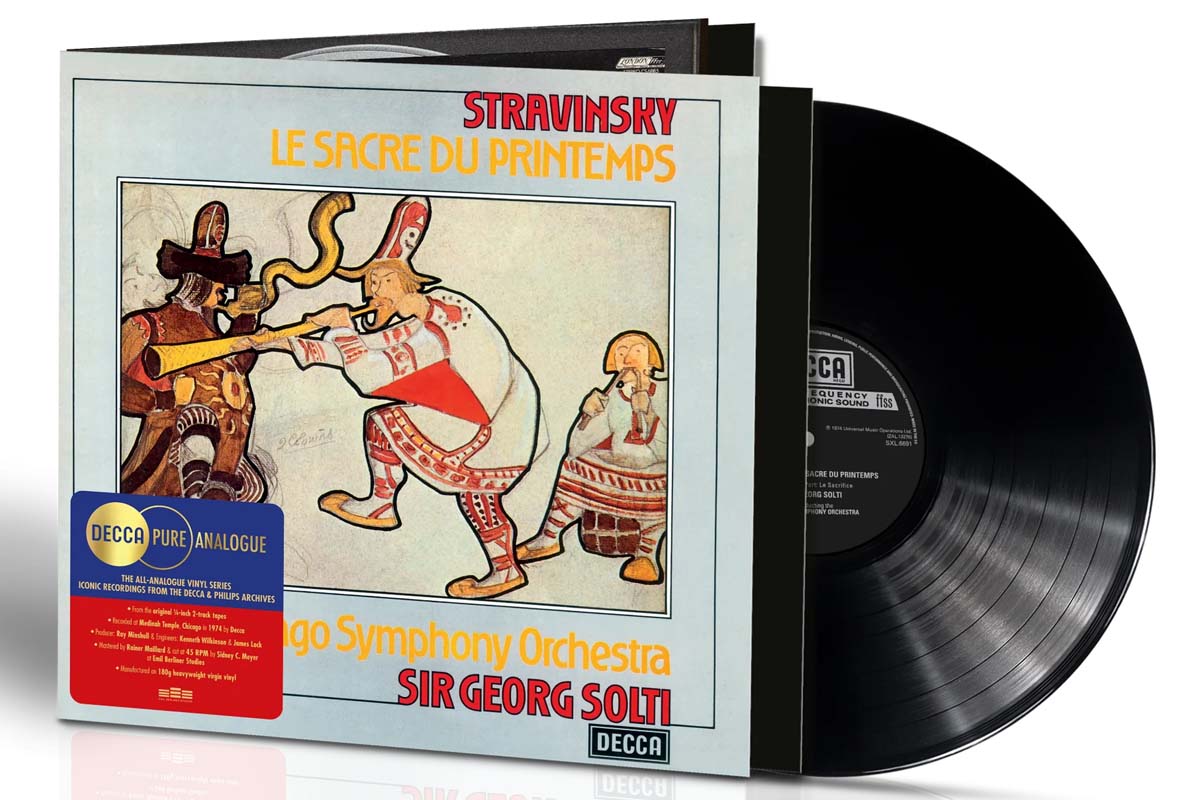
The 45-rpm cut helps distribute the enormous dynamic range of this recording more effectively. Rhythmic precision and orchestral power sound less compressed, while the music remains immediate and exceptionally well structured. For fun, try playing the record at 33 rpm and listen almost in slow motion to the intricate woodwind passages at the beginning – you’ll be instantly fascinated. You don’t often get this close to Stravinsky.
Something similar applies to Sibelius under Sir Colin Davis with the Boston Symphony Orchestra. The decision to spread the Fifth and Seventh Symphonies, together with Tapiola, across a double LP is an unequivocal functional improvement.
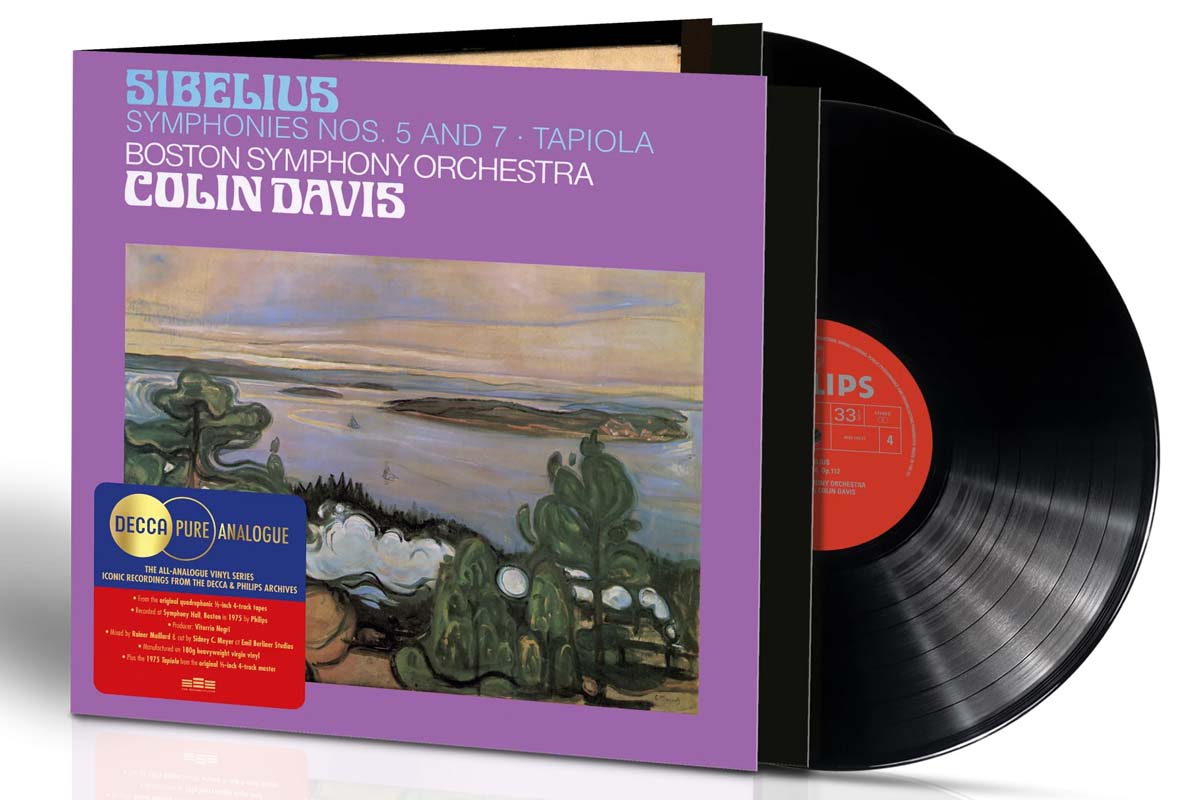
Long tension arcs gain stability, transitions feel more organic, particularly in the quieter passages. But the magnificent dynamic buildups in the Fifth Symphony also gain greater impact and definition. There is no need to remind Sibelius enthusiasts that Davis’s interpretations of Sibelius have remained benchmarks to this day.
Let’s also take a quick look at a few new releases from the DG The Original Source series. Petrushka is one of the three great ballets from Stravinsky’s so-called Russian period and reveals his strongly neo-folkloristic side: fairground scenes, performers, puppets, and a garish, deliberately urban sound world that demonstrated at an early stage that popular motifs and sophisticated orchestral writing are not mutually exclusive. With Claudio Abbado conducting the London Symphony Orchestra, this recording is among the most sonically and interpretively interesting titles in the series. The technical background is particularly intriguing. The recording was made simultaneously in two-channel digital and on eight-track analog tape. For this edition, the analog eight-track master was used for the first time, meaning that Petrushka is now genuinely available in an all-analog version. The 45-rpm cut pays audible dividends: color, rhythmic precision, and transparency all benefit significantly, without smoothing out the character of the recording.
Beethoven’s “Eroica” with Carlo Maria Giulini and the Los Angeles Philharmonic demonstrates just how much even monumental interpretations can benefit from additional space. Spreading the music across three LP sides takes nothing away from its weight; quite the opposite. The foundation sounds more stable, dynamic climaxes develop more naturally, and none of the sheer power is lost. This is unquestionably a highly individual interpretation by Giulini – extremely weighty and slow – and its particular qualities really only become apparent in this recording.
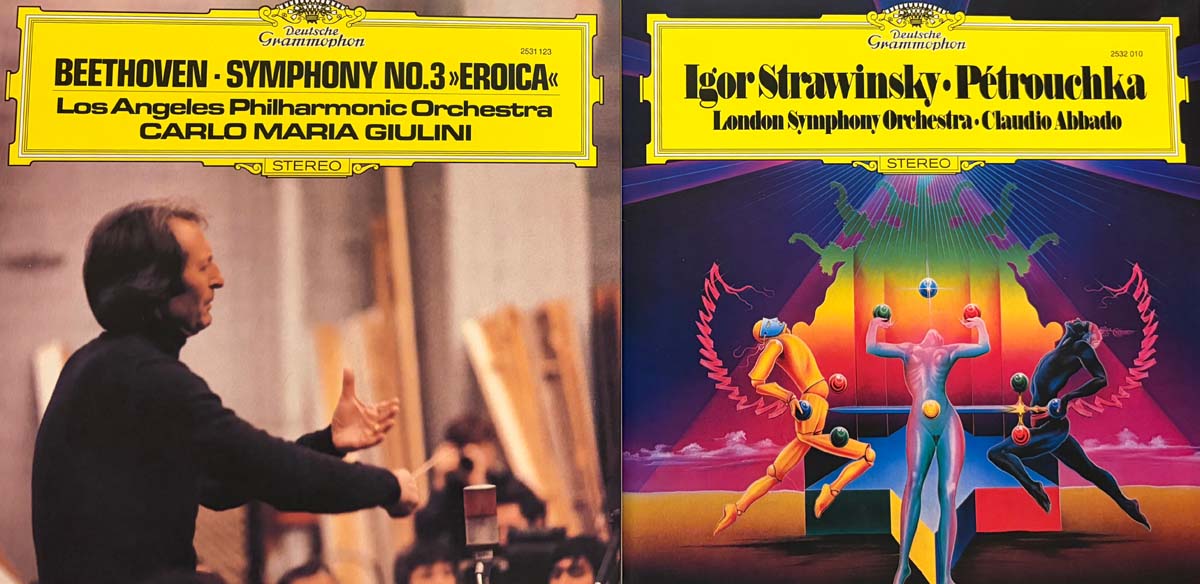
Taken together, it becomes clear that Decca Pure Analogue and The Original Source are less about serving two different camps than about offering two perspectives on the same goal. Both series demonstrate just how much sonic potential remains in familiar recordings when they are given more space, more breathing room, and greater dynamic headroom on vinyl than the original editions may have allowed.
Archival Gems From DG And Decca – Select Releases
Igor Stravinsky – The Rite of Spring
Chicago Symphony Orchestra, Sir Georg Solti
Label: Decca Pure Analogue
Format: LP (45 rpm)
Jean Sibelius – Symphonies Nos. 5 & 7, Tapiola
Boston Symphony Orchestra, Sir Colin Davis
Label: Decca Pure Analogue
Format: Double LP
Strauss, von Suppé et al. – Vienna New Year’s Concert 1979
Vienna Philharmonic, Willi Boskovsky
Label: Decca Pure Analogue
Format: Double LP
Igor Stravinsky – Petrushka
London Symphony Orchestra, Claudio Abbado
Label: DG The Original Source
Format: LP (45 rpm)
Ludwig van Beethoven – Symphony No. 3 “Eroica”
Los Angeles Philharmonic, Carlo Maria Giulini
Label: DG The Original Source
Format: Double LP (three sides used)
Find the Decca Pure Analogue recordings here…
…and the DG The Original Source Vinyl here.