
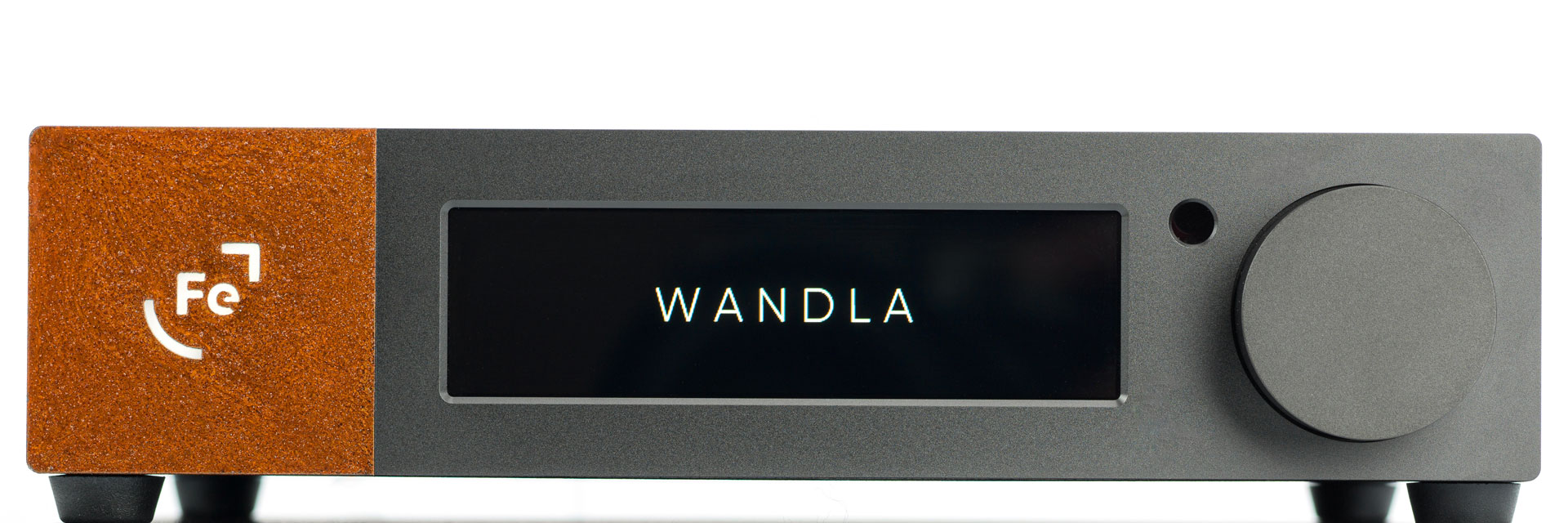
Ferrum – sounds like iron, and that’s exactly what the name means. The young brand from Poland traces back to the established developer HEM, which has been active in the audio world for decades. The fact that they know what they’re doing is already evident in their well-thought-out product lineup: after the flexible Hypsos power supply and the OOR analog headphone amplifier, the Wandla is now the digital flagship – though I would actually describe it more as a preamp. In addition to adjustable volume, it also features an analog RCA input, which is rather unusual for a pure DAC.
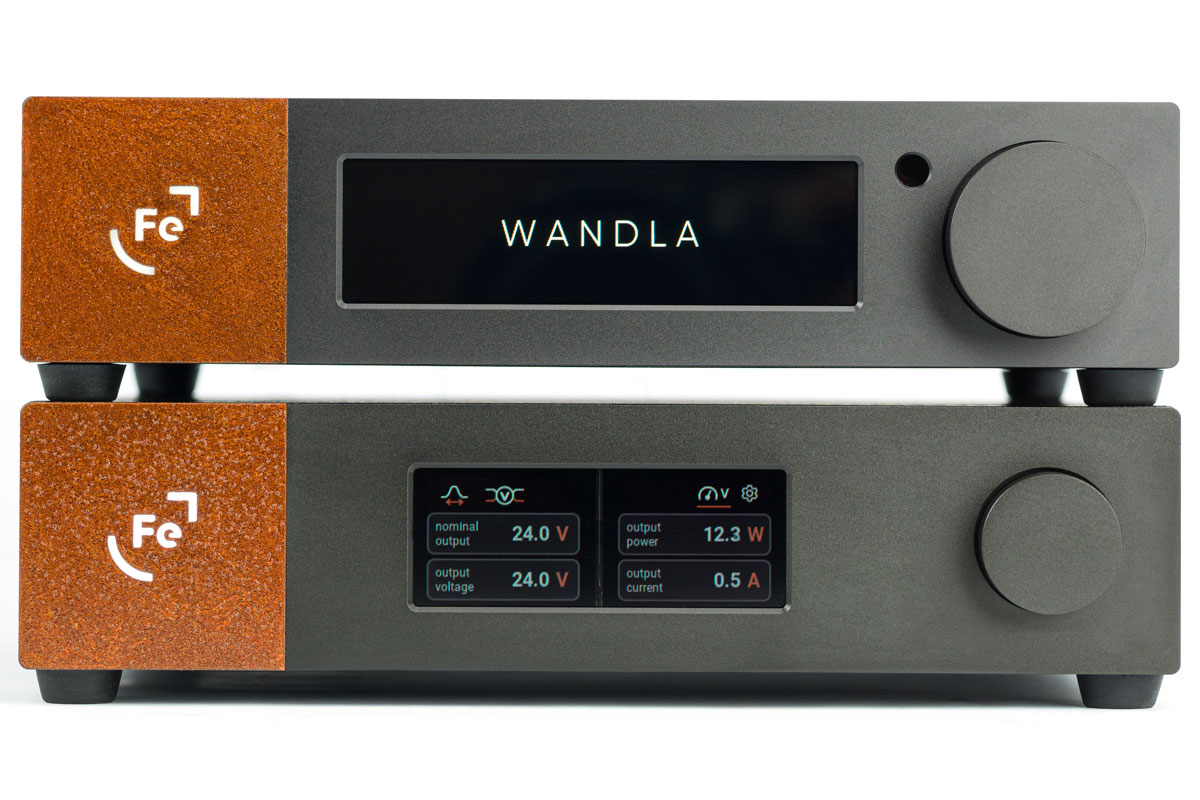
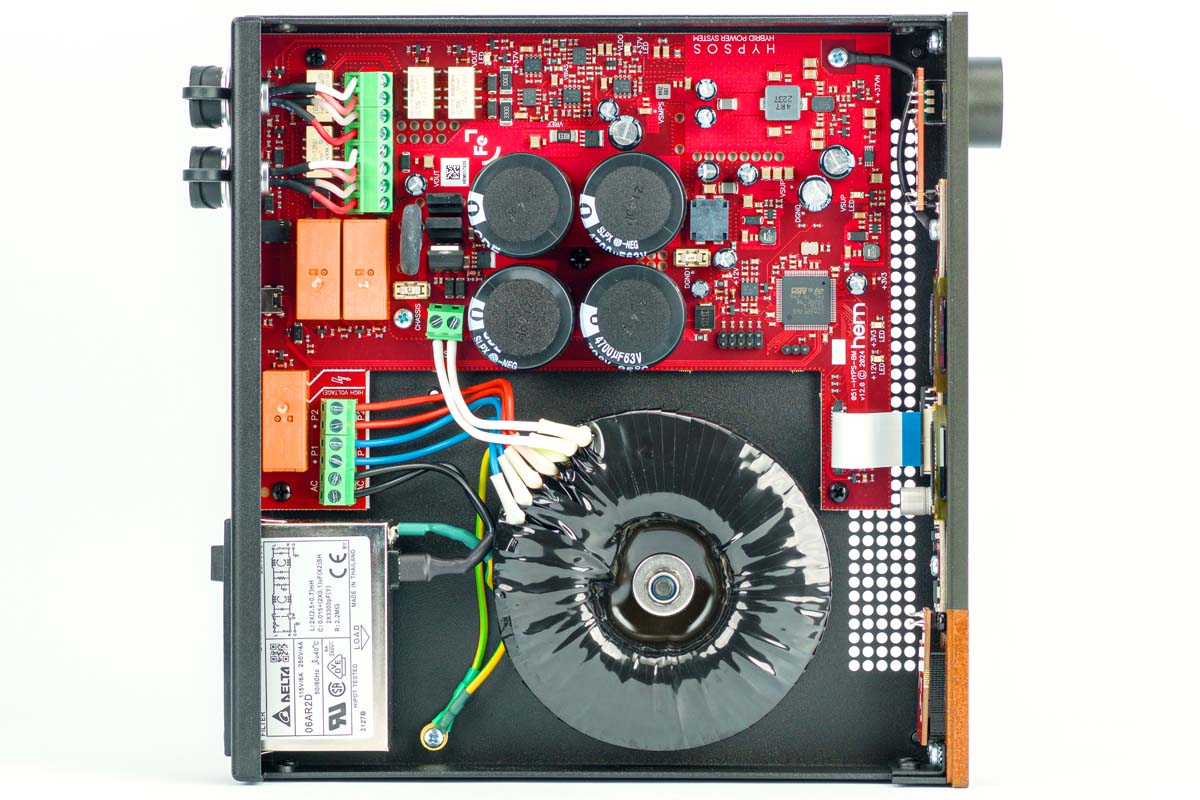
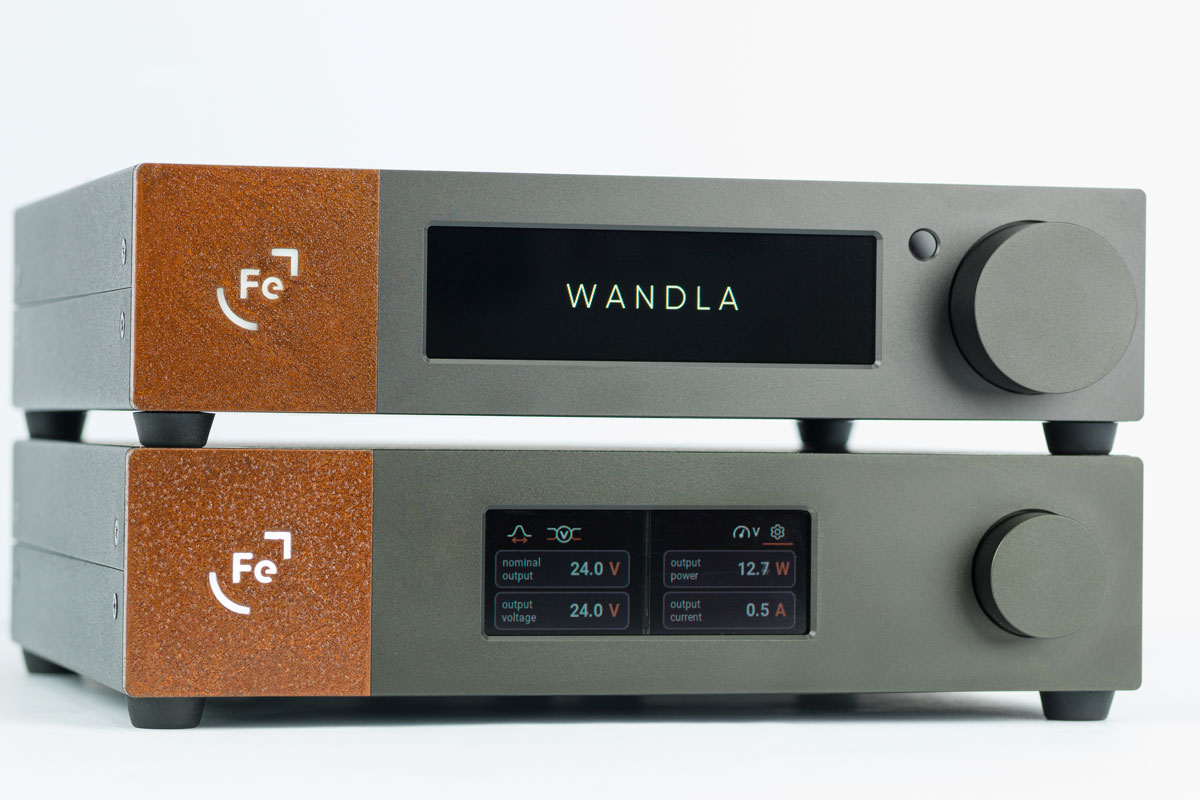
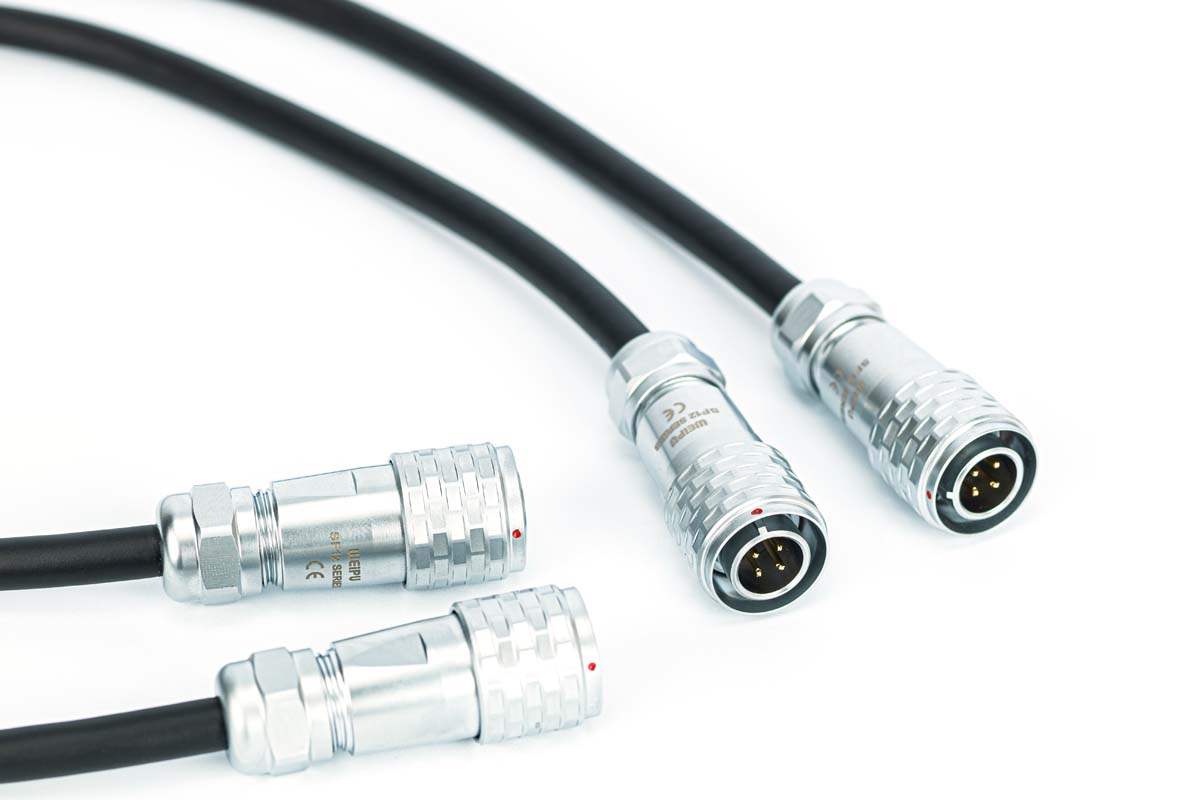
For testing, Hifi2die4 sent us not only the Ferrum Wandla, but also the Hypsos power supply. What’s particularly interesting is that Ferrum became known precisely for this power supply, the Hypsos. It was the brand’s first product and immediately caused a stir with its hybrid concept – a combination of linear and switching power supply. What’s especially practical is that the output voltage can be freely adjusted between 5 and 30 volts, and the Sweet Spot function even allows fine-tuning in small increments, which supposedly brings additional sonic refinement. The four-pin connection also ensures that the voltage remains especially stable directly at the device input. It all sounds very well thought out and explains why Ferrum quickly gained recognition in the scene with this power supply.
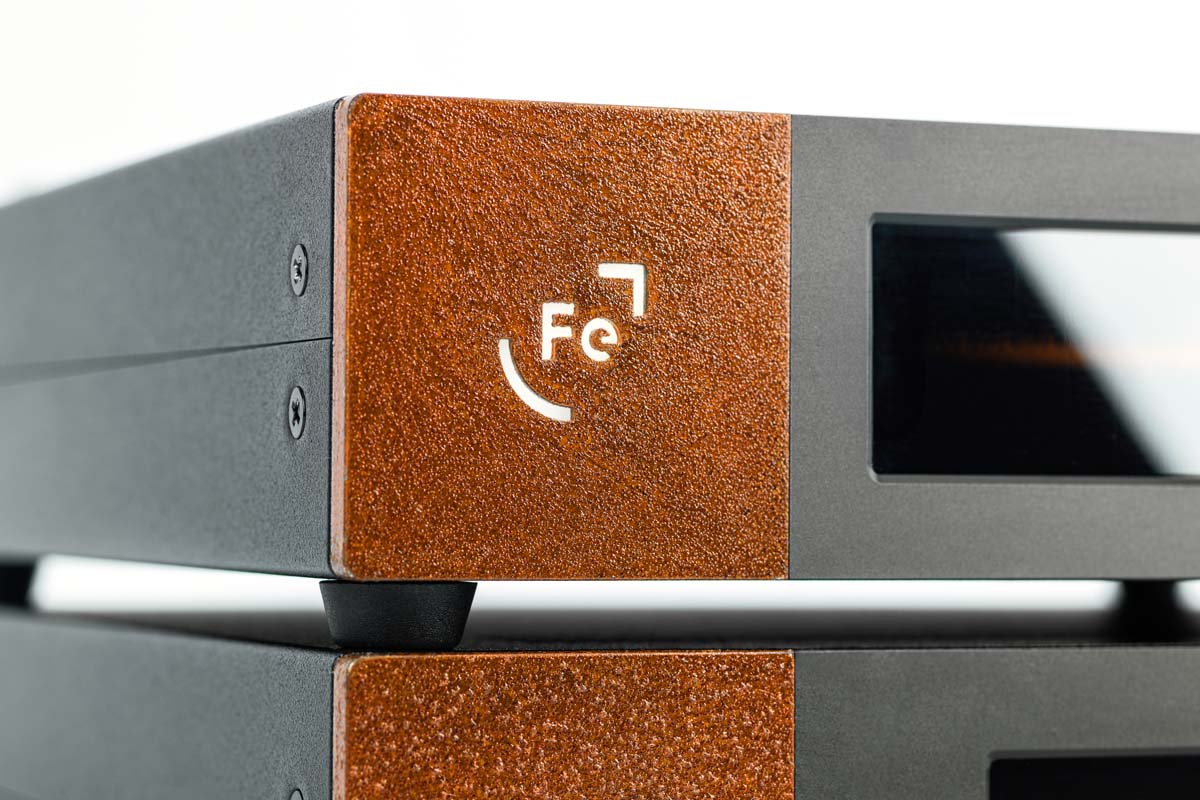
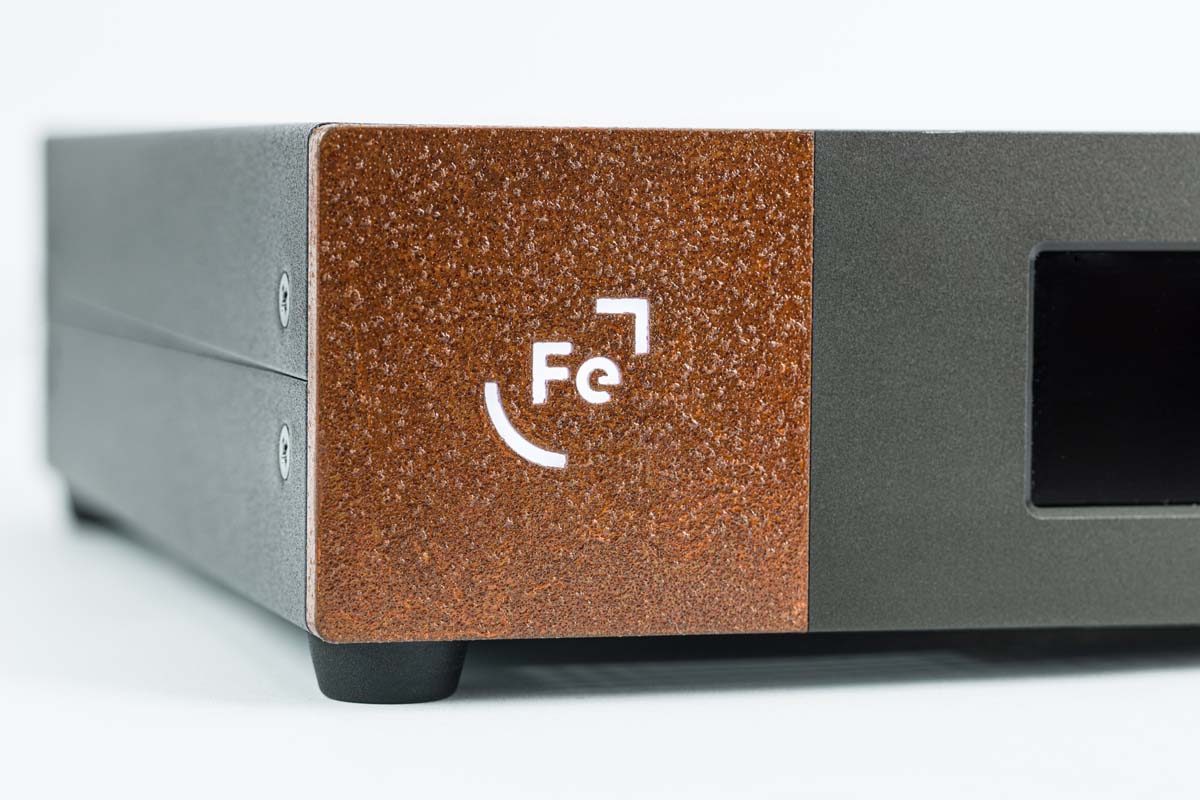
Like the Hypsos, the Wandla is a real eye-catcher: its compact dimensions and the “rusted” corner with the embedded, illuminated company logo give it character and strong visual identity. The rust-brown color also appears in the menu, where it serves as a consistent design element. The whole presentation feels cohesive, and you immediately notice the attention to detail.
The same applies to the operating concept. Volume is adjusted via a rotary encoder, with the current level displayed small but clearly readable on the screen. If you use the included remote control, the level is shown in extra-large numbers. Overall, the menu is clean and clearly structured. Details are controlled via the touchscreen, which responds quickly and reliably. There are various – but not too many – settings: level, filters, upsampling, and even the brightness of the illuminated logo and display can be individually adjusted. Build quality is solid and entirely appropriate for the price range. The chassis feels sturdy, the tactile experience is good – only the remote control falls slightly short. Compared to the device’s thoughtful design, it feels a bit plain and could be more premium. Functionally, however, it does the job, and in the end, that’s what matters most.
The compact form factor, with a width of just under 22 centimeters, seems to be trending at the moment. More and more manufacturers are moving away from the classic 43-centimeter enclosures – whether that will last remains to be seen. In any case, the format is practical, and despite its small size, the Wandla feels like a very complete device.
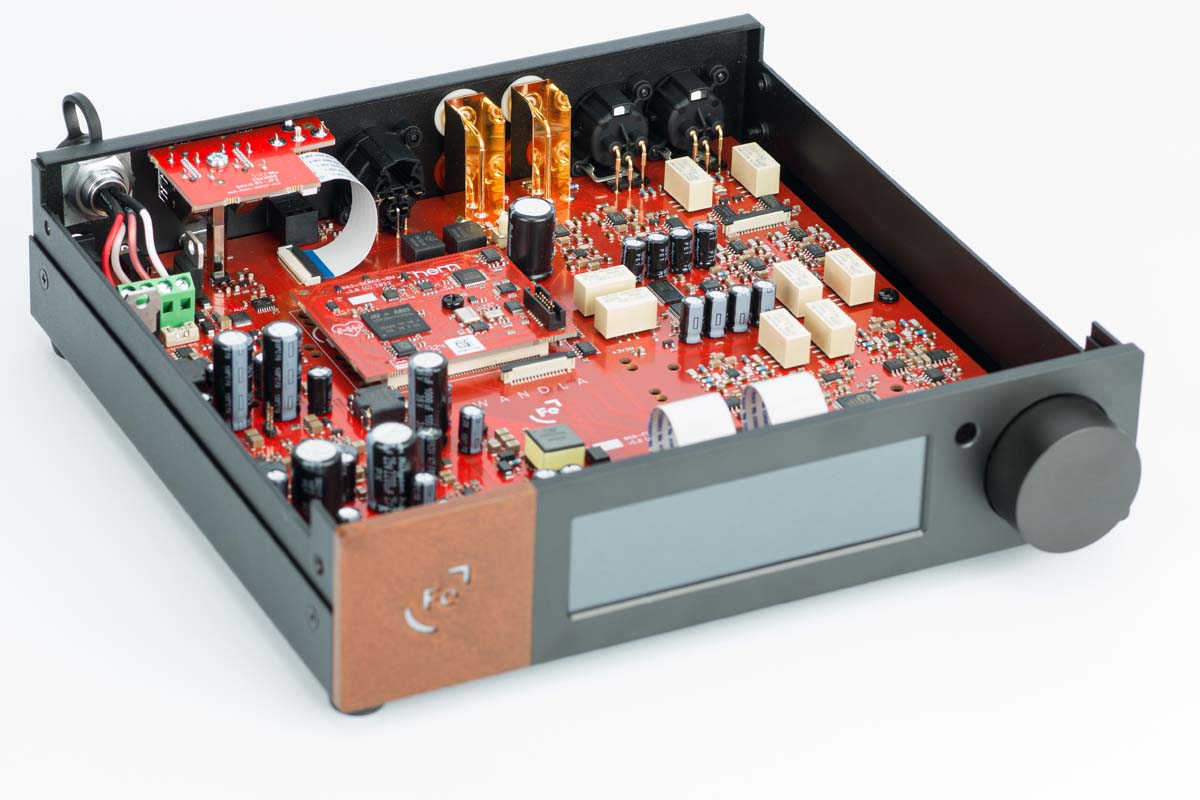
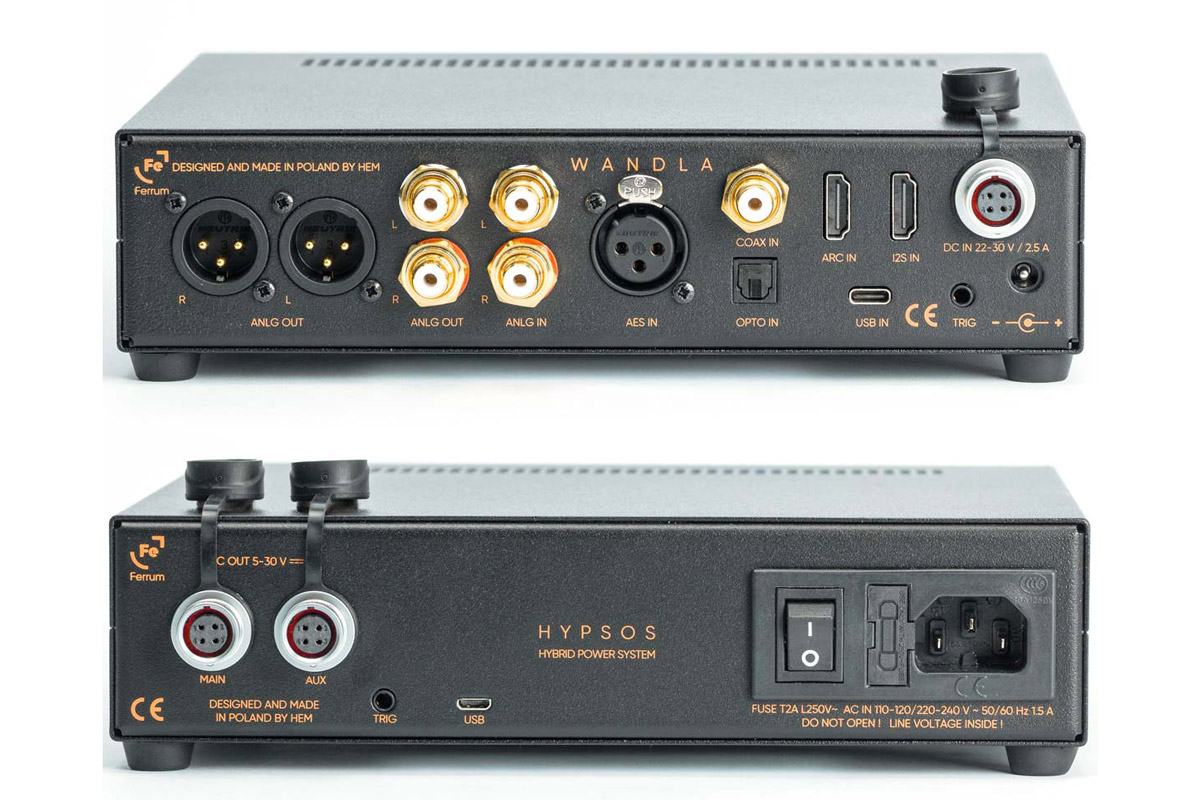
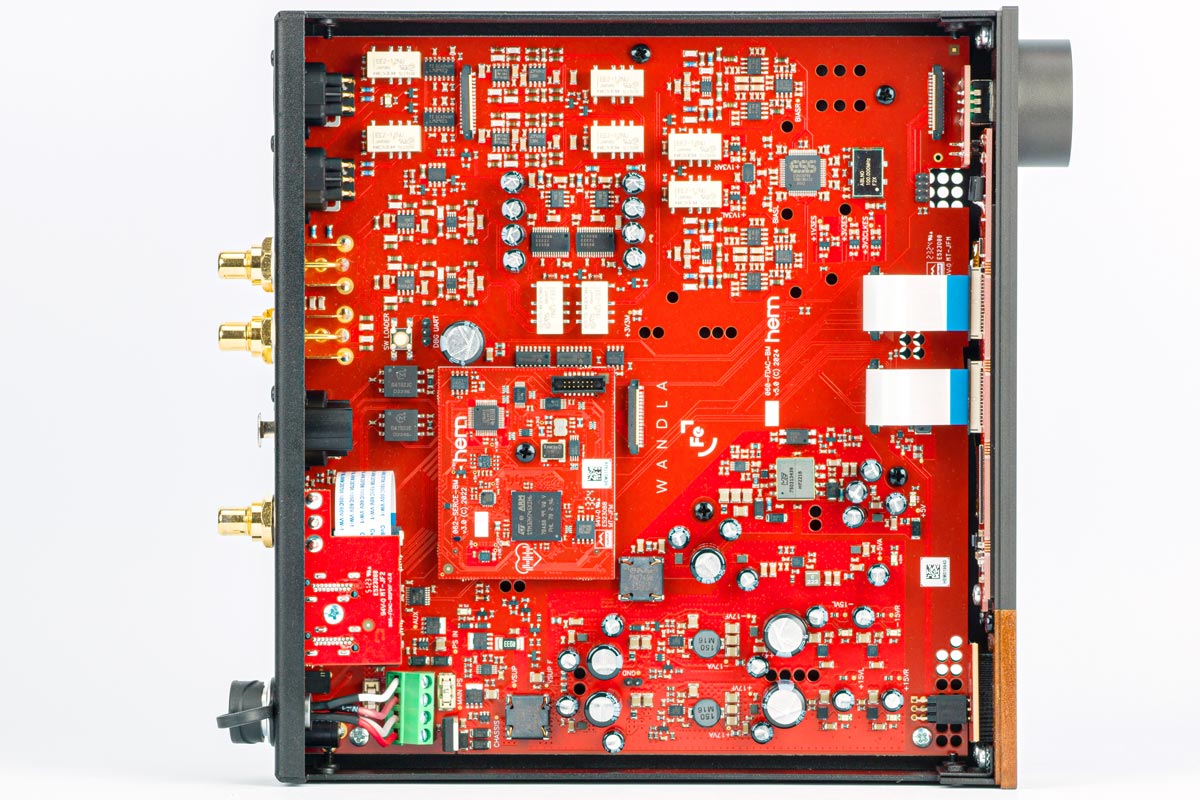
This is especially true of its connectivity. It really leaves nothing to be desired: alongside USB, coaxial, and optical inputs, there are also AES/EBU, I2S, and two HDMI ports – one of which supports ARC, which is particularly useful for connecting a TV. Since I also like to hook up my PlayStation 5 for movies or the occasional game, this versatility suits me well. Analog signals enter via RCA and can exit either through XLR or RCA. In my setup, that works perfectly, as I can drive my Krell K300i as a pure power amp via the balanced outputs while simultaneously feeding my subwoofer through the RCA jacks. That’s very convenient in practice – exactly how I imagine modern connectivity should be designed.
Technically, the Wandla uses a high-quality Sabre chip from ESS, supports PCM up to 768 kHz, DSD512, and MQA decoding on all digital inputs. Here too, it’s clear: this isn’t just another digital front end, but a carefully designed component for demanding setups – flexible, intelligently conceived, and with a strong focus on sound quality.
The very first notes from the Wandla made me want more. I started with the stock switching power supply – and even with that, the device performed wonderfully balanced. Resolution was high without ever becoming cold or sterile. The fine detail in the midrange stood out immediately in a positive way. The sound was silky and calm, yet never dull or washed out. Voices were clearly placed in space, instruments retained their definition, and all of this in a way that can easily be described as suitable for long listening sessions. You can tell that the Wandla doesn’t aim to impress – it aims to convince. And it succeeds very well even in its basic configuration.
But curiosity soon got the better of me, so the included power adapter went back into the box, and the Hypsos moved into the rack – and everything that was already good became noticeably better. First impression: more control. The bass felt tighter, more precise, less bloated. Instead of sounding overly voluminous, it suddenly hit exactly where it should. The treble became even silkier, calmer, less edgy – especially in complex passages, a real relief. Voices and instruments moved deeper into the soundstage, and the entire presentation gained stability. Imaging improved significantly, especially in live recordings. So much so that after just a few bars, you don’t want to go back. Once you’ve heard the difference, it’s hard to live without the Hypsos.
Also worth mentioning is the selection of digital filters and upsampling modes that Ferrum has integrated. I particularly liked the “HQ Apod.” mode, which I used most of the time. It delivers an especially clean and calm presentation without losing detail. Voices sound more natural, and the overall sound becomes more rounded while remaining focused. Several filters are available, including the well-known minimum- and linear-phase filters from ESS, as well as multiple variants from Signalyst running on the internal SERCE board. The Wandla can upsample to 352.8 kHz or 384 kHz if desired – technically interesting, but also clearly audible. Which mode sounds best ultimately comes down to personal taste. The only way to find out is to try them – no need to fear endless A/B comparisons: I found my preferred setting fairly quickly.
This became especially clear with Peter Gabriel live. “Red Rain” opened with a dark, atmospheric texture; Gabriel’s voice stood physically present in the room, clearly outlined, with a slightly rough edge that the Wandla rendered with great sensitivity. The raw charm of the live performance remained intact, yet the reproduction never sounded unrefined. In “Mercy Street,” what stood out was how much depth the Wandla with Hypsos could portray. The interplay of voice, percussion, and electronic textures had a depth and structure that would do justice even to much more expensive equipment.
Equally impressive: “The Boxer” by The King’s Singers. A cappella recordings are a real stress test because they forgive nothing – especially not imprecision in imaging. But the Ferrum delivered an almost textbook performance. The voices were cleanly separated and perfectly layered, and the space between them became tangible. Even the smallest details of articulation, like the singers’ breathing or subtle shifts in timbre, were reproduced precisely without sounding analytical. Not a technical sound, but a natural, flowing presentation that gives the piece depth and emotion.
In “La tierra del olvido” by Playing for Change, the spatial width stood out. The track thrives on the interplay of voices and instruments from around the world – the stage was wide but not exaggerated, rather realistically proportioned. The percussion felt physically present, the accordion floated lightly above the voices, while the choir spread out convincingly in the background. Again, everything felt relaxed yet controlled – nothing pushed itself forward, nothing fell out of place.
Finally, Stevie Nicks with “Edge of Seventeen.” A track driven by its rhythm but also featuring a slightly sharp edge in the vocals. The Ferrum Wandla, powered by the Hypsos, balanced exactly that: punch and energy on one side, clarity and control on the other. The guitars sounded fresh but not harsh, the bass pushed forward with authority without becoming bloated, and Nicks’ voice came through with just the right amount of grain – present, expressive, never exaggerated.
In conclusion: the Wandla is already an exceptionally good D/A converter and a true preamp with the stock power supply – but with the Hypsos, it becomes a device that is hard to beat in its class. The combination sounds more controlled, deeper, more convincing, and simply more mature. Anyone serious about listening to music should plan on including the Hypsos from the start. It’s not a gimmick, but a consistent upgrade – both sonically and in perceived value.
DAC Ferrum Wandla
Concept: D/A converter and preamp with one analog input | Digital inputs: USB-C, I²S, HDMI ARC, AES/EBU, coaxial, optical | Analog input: RCA, max. 9.5 V RMS, 47 kΩ input impedance | Analog outputs: XLR (10 V RMS), RCA (5 V RMS) | Preamp: fully balanced design, analog volume control, with optional bypass | Frequency response (±0.1 dB): 10 Hz to 200 kHz | Dynamic range: 127 dB | DAC chip: ESS Sabre ES9038PRO | Supported formats: PCM up to 32-bit/768 kHz, DSD512, MQA decoding | Filters & upsampling: 7 digital filters (4 × HQ Signalyst filters – e.g. HQ Apod., HQ Gauss – , 3 × ESS internal filters); internal upsampling to 352.8/384 kHz possible | Operation: touchscreen, remote control, menu with filter selection, level control, logo brightness | Power supply: 22–30 V DC, max. 15 W, prepared for Ferrum Power Link (FPL) with Hypsos | Finish: corten steel look with “rust” inlay and illuminated Ferrum logo | Dimensions (W/H/D): 22/5/21 cm | Weight: 1.8 kg | Warranty: 2 years | Price: approx. €2,795
Power Supply Ferrum Hypsos
Concept: hybrid of linear and switching power supply – high efficiency, low interference | Voltage range: freely adjustable from 5 to 30 V DC in 0.1 V steps | Maximum output: up to 6 A continuous (depending on voltage), up to 9 A peak | Cabling: 4-pin Ferrum Power Link (FPL) for power and voltage feedback | Features: Sweet Spot tuning (fine adjustment of voltage for optimal sound), overvoltage and overcurrent protection, internal fuse, voltage switching, device-specific presets, trigger input, firmware updates via Mini-USB | Dimensions (W/H/D): 22/5/21 cm | Weight: 3 kg | Warranty: 2 years | Price: approx. €995
Hifi2die4
Austraße 9
73575 Leinzell
Phone +49 7175 909032
hifi2die4@gmx.de