
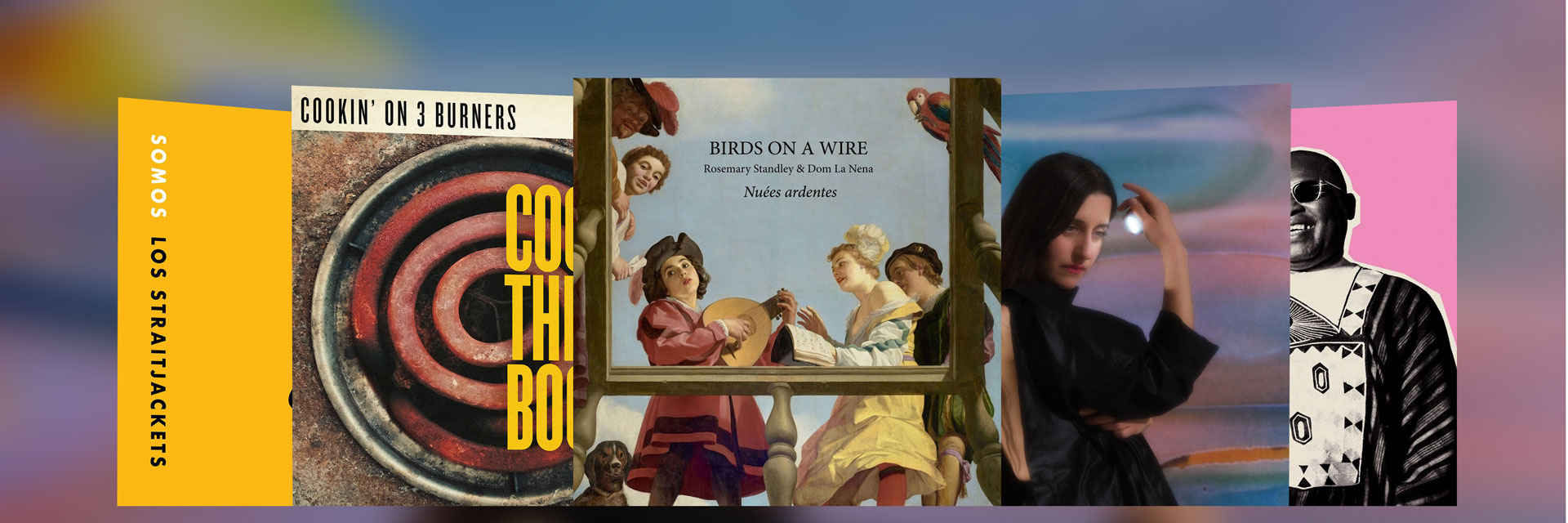
The Professor retreats into his inner emigration in these crazy times and listens to good music by Eefje de Visser, Los Straitjackets, Amadou & Mariam, Cookin’ On 3 Burners, and Birds On A Wire.
De duisternis wordt doorbroken door fel stroboscooplicht. Golven van synthesizergeluiden razen door de menigte, breken achteraan bij de bar en rollen terug naar het podium. Dominante drumbeats laten alles trillen wat niet vastgeschroefd is, en gelukkig is dat niet het geval met het hart van de professor. Daarboven klinkt een heldere stem, begeleid door twee, drie, vier andere vrouwenstemmen. Door het flitslicht zijn de muzikanten vaag te zien, drie van hen staan achter een reeks keyboards, een van hen zal straks de bas pakken. Het is het openingsnummer van een onverwacht indrukwekkend concert, „Lange Vinnen“, in het Duits: „Lange Flossen“. Professor P. wiegt als een mobiele lavalamp, terwijl gedachten, gevoelens en genotshormonen over elkaar heen tuimelen als legoblokjes aan boord van een reddingsboot bij windkracht 10. En vraag niet, beste vrienden, hoe de professor op dit vreemde beeld is gekomen …*
So, dear readers, we’ll stop our simultaneous translation into Dutch at this point. I merely wanted to convey to you, completely unfiltered, what the Professor felt last night: a big “Huh?”, combined with an even bigger “Yeah!” And this happened at a concert that took place in the still-young year, only a few weeks in, one that weather conditions had forced us to reach by fighting our way between artfully frozen snowdrifts – but which already ranks among those events I’ll one day tell my great-grandchildren about while rocking back and forth in my rocking chair. Phew, that was a long sentence, courtesy of the endorphines still tumbling around in my bloodstream – and as we all know, endorphines know no full stop. Tomorrow morning I may possibly arrive at a more sober appreciation, but what can I say? Right now is not tomorrow morning. Professor P. had left his classic soul comfort zone, as he so often does, and ventured into rather unfamiliar territory in the realm of international music. International in terms of language comprehension as well – but the first paragraph, steeped in the deepest canal-orange, should have painted a pretty clear picture for you already. Eefje de Visser performed, and if you don’t know her, please have a little patience until we get to discussing her album Vlijmscherp. As you can already tell from the title: this is sung in Dutch. On the album, and accordingly at the concert as well. And to anyone who thinks it’s going to sound like Rudi Carrell reloaded, I would say: Niet zo snel, mijn kleine vriend. Dutch, as sung by Eefje de Visser, sounds almost like the French of a singer who has choked on a poffertje covered in powdered sugar: somewhat guttural, very charming, and utterly incomprehensible.
*Translation service: The darkness is chopped up by glaring strobe lights. Waves of synthesizer sounds rush through the crowd, break against the bar in the back, and roll back toward the stage. Dominant drumbeats make everything vibrate that isn’t bolted down – and fortunately, the Professor’s heart isn’t. Above it all floats a bright voice, accompanied by two, three, four other female voices. Through the lightning storm, the musicians can be seen only in silhouette; three of them stand behind banks of keyboards, and one will soon pick up the bass. It is the opening song of an unexpectedly impressive concert, “Lange Vinnen,” which is Dutch for “Long Fins.” The Professor sways like a mobile lava lamp while thoughts, feelings, and pleasure hormones tumble over one another like Lego bricks aboard a sea-rescue vessel in a Force 10 gale. And don’t ask me, dear friends, how the Professor came up with this strange image…
Eefje de Visser – Vlijmscherp
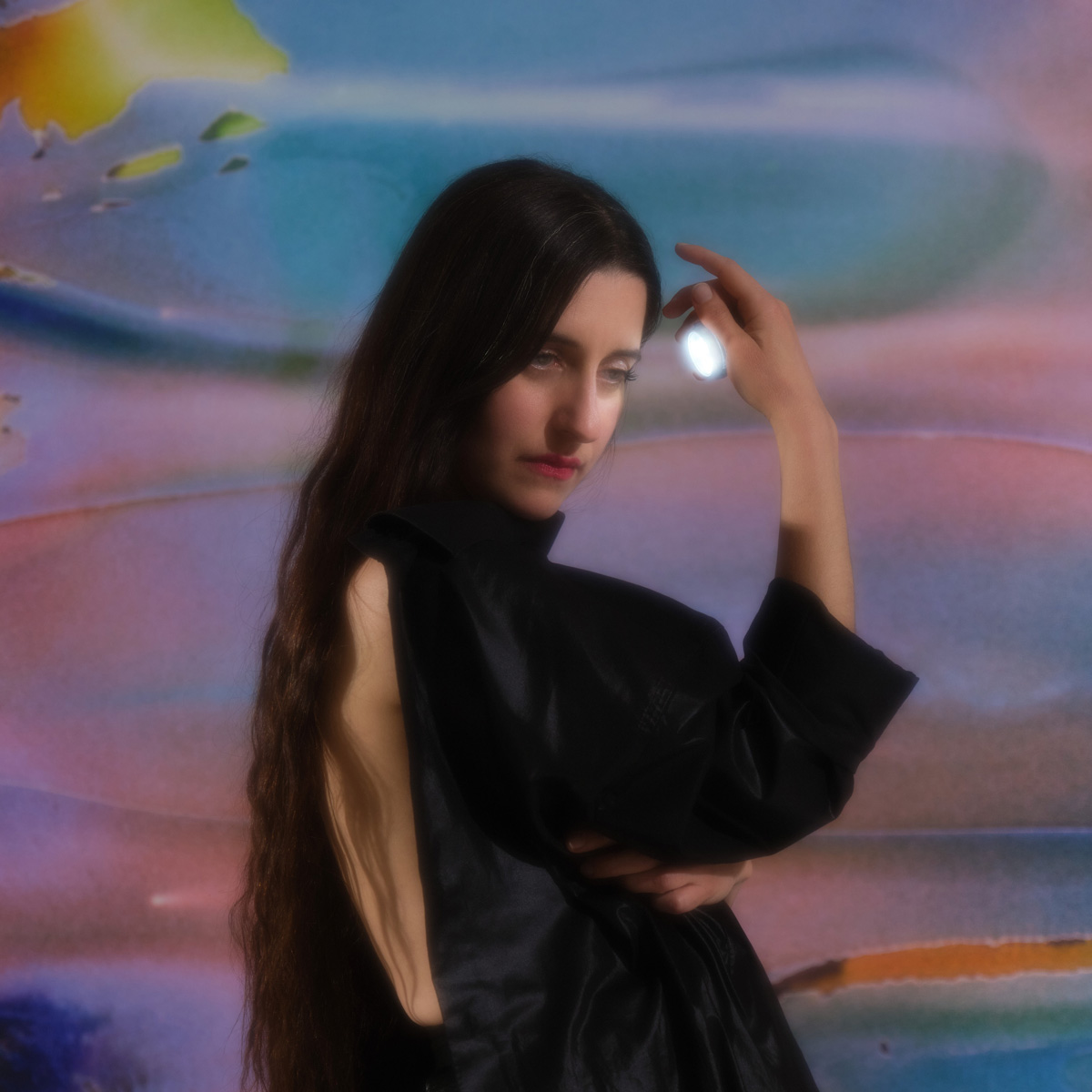
It was back in those days, three-quarters of an eternity ago, when we were all sitting chained to our homes, stoves, kitchens, hand mixers, cell phones, high-end amplifiers, HD televisions, and home computer screens. The worldwide coronary arrest had tied the Professor to his laptop, too, where he spent that evening watching a concert broadcast. One of those bizarre events without an audience. Bizarre because it was simultaneously hopeful (live music!) and dystopian (live music?). Anyway, there we sat, pushing depressive thoughts against the back wall of our mental attics and experiencing, almost cheerfully, a musician from the western Lowlands who performed in an empty club – complete with dancers, synthesizer grandeur, and avant-garde beat arrangements – and reached directly into the emotional center of the Professor’s heart, plagued as it was by existential anxieties. The Professor’s youngest daughter was sitting on his lap, and Eefje de Visser actually went on to make it onto the Professor’s playlist as well as into the music program of the children’s room.
Fast-forward to the present, friends. I can only warmly recommend always keeping an eye on Ms. de Visser’s tour dates. And if the label “Alternative Pop” doesn’t speak to you, here’s a little piece of advice: Het kan me geen reet schelen!* For me, Eefje de Visser is the discovery of the year, even though her current record was already released last fall and is, in fact, the sixth work by the 40-year-old, subtly avant-garde creative. It’s never too late to push a good musician into the spotlight of our Rhythm & Soul Revue, even if she sings to us in Dutch. And soul it is, even if not according to the classic Stax definition, that unfolds on Vlijmscherp. Electronic sound waves coaxed from some data-processing machine, along with fat drums, and on top of it a soprano, sometimes shy, sometimes extroverted, flanked by background singers to add fullness – in its brilliant whole, it all combines to form a neo-neo-Netherlands soul to which the Professor, at least, has succumbed for the time being.
*Another translation service: I don’t give a shit!
Label: Sony
Format: CD, LP, DL 24/44
Los Straitjackets – Somos
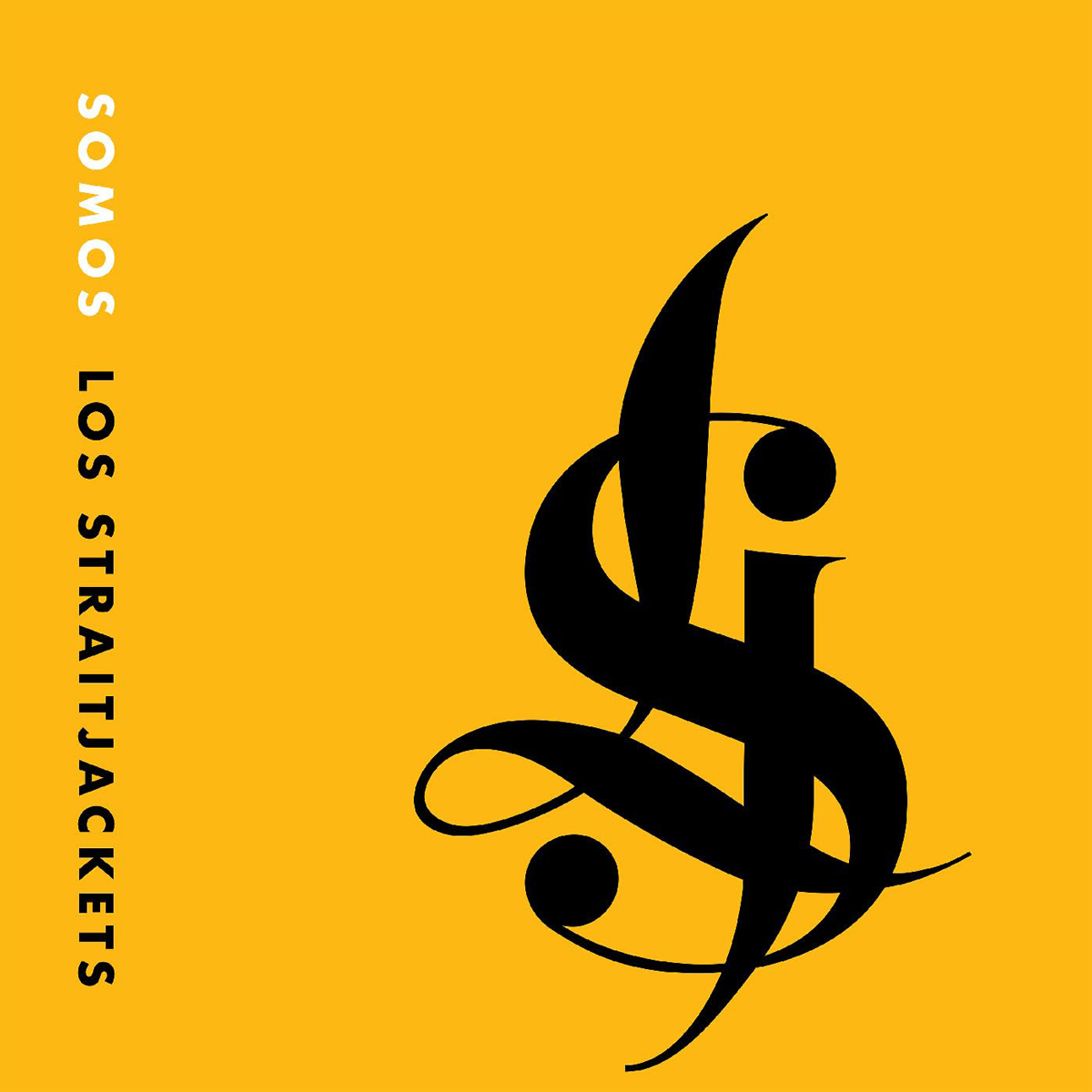
Time, time – where has it gone? The Professor sits in his rocking chair, shivering with cold, a crocheted grandma blanket over his knees, and warming his clammy hands around a glass of warm honey milk. His heart though – it’s glowing, no, burning, with memories of an evening exactly 4,016 days ago, or a good 573 weeks; I could show you the marks I’ve carved for every day into the side wall of my Schneider Power Pack. That was when the four dudes in black suits and brightly glittering Mexican wrestling masks were last on this side of the pond, giving their drumsticks and guitars a good whirl in the last juke joint this side of the Arctic Circle and causing the crowd, including Prof. P., to dream of those ol’ days when surf music unfolded on the West Coast as the free-flying summer-sun version of rock ’n’ roll, which had only just emerged from boogie, gospel, and blues.
To this day I dream of precisely that performance from around eleven years ago, of which, incidentally, there are some shaky video snippets to admire at the well-known video-snippet recycling facility. An experience for the ages. Back then, the cheerful quartet from Nashville, grooving along at surf speed, accompanied country singer Deke Dickerson, with whom they had just released a fun and, above all, really good record: Deke Dickerson Sings The Great Instrumental Hits, on which instrumental classics such as “Apache” and “Miserlou” were performed with vocals.
Now, Los Straitjackets have released Somos, their first solo album of original instrumental pieces in 13 years – and friends, it is so good that I’m almost running out of words here and would rather reach for a surf guitar if I had one and could play even a single chord. It’s a warm retro-surf album with postmodern alternative-rock freshness and surprisingly funky guitar, recorded under the California sun in Los Angeles. Listen to these: “High Wire Act” (surf swing with an almost jazzy rhythm guitar and nervously pumping drums accompanying the lead guitar of the now 72-year-old Eddie Angel, who races up and down the scales in 1.5 seconds with precision, in classic surf rock fashion) and “Spinout” (high-speed rock ’n’ roll, including the voice of Tom Kenny, the voice actor for SpongeBob SquarePants).
Label: Pacifica Music/Yep Roc Records
Format: CD, LP, DL 24/96
Amadou & Mariam – L’amour à la folie

A lone guitar. A Western instrument, certainly, but played with the characteristic attack of African musicians. Fast yet gentle notes that sing of the vastness of the savannas and the shimmering heat of the Sahel. I know this from Ali Farka Touré, the great bluesman from Mali, whom I once happened to see at a free outdoor concert in Central Park while traveling to the New World. Or from the “African Rolling Stones,” the Tuareg band Tinariwen, also from Mali, whose Afro-soul recently had the opera house on the northern Mississippi boiling over. Now a drum joins the guitar, then a bass, and finally a fully equipped drum kit. Then comes the French-language singing voice of Amadou Bagayoko. A melodically swinging blues emerges from freely dancing grooves. The whole thing picks up speed, with funk riffs mixing into increasingly rapid Afro-beats. The Professor jumps up, performs a little quickstep on the floor – no one saw it, except the three-legged tomcat, who is now sitting beneath the sofa, looking confused.
When a first song has that kind of effect on the Professor’s need to move, the corresponding album quickly finds its way onto these pages. I have to admit that although the artist duo Amadou & Mariam was vaguely familiar to me by name, to my shame I had never really listened to them properly before. And now it is almost too late: Amadou Bagayoko, one half of the highly successful duo from Mali, passed away after recording L’amour à la folie. Mariam Doumbia, his artistic partner and wife for nearly 50 years, nevertheless released the final album last fall as a tribute to their long journey together.
Perhaps some of you in the FIDELITY universe still remember the song “Zeit, dass sich was dreht,” which Herbert Grönemeyer recorded together with Amadou & Mariam for the 2006 FIFA World Cup, or their early albums produced by Blur singer Damon Albarn or French artist Manu Chao. But I don’t want to concern myself with that now, because the current album – the 15th and final album by the blind duo, who met as teenagers at a school for the blind in Mali – is fantastic. Melancholic Afro-blues alternates with energetic dance-floor numbers. Listen to the opening song “Bienvenue à la maison,” which is both. Or the electronically pumping “La vie est belle” – if that doesn’t send you into rhythmic convulsions, you should quickly check for the nearest defibrillator.
Label: Because Music
Format: CD, LP, DL 24/44
Cookin’ On 3 Burners – Cookin’ The Books

Bon Jovi of all things! A sentence that should always be followed by an exclamation point as an expression of profound bewilderment, but one you’d really rather not write at all. But sometimes you have to, so let’s do it again, this time fully spelled out: Bon Jovi of all things is what the musicians of the Melbourne-based instrumental funk trio Cookin’ On 3 Burners have chosen for a cover version! “Livin’ On A Prayer,” the Big Mac meal rendered in musical notes. Many people enjoy the taste, even though it really isn’t good; it makes pimples erupt on all of the Professor’s sensory organs, and its pseudo-anthemic grandeur gums up every tube amplifier. Even in this instrumental version, which unfortunately, despite its funky, funky orientation, fails to distance itself decisively from the plastic pop-rock grandeur of the original.
Beyond that, however, I would very much like to recommend Cookin’ On 3 Burners’ seventh album, Cookin’ The Books. Even though some ballad-like contributions, such as “I’m Coming Home To You” with guest singer Stella Angelico, sound rather excessively agreeable, most of the tracks are razor-sharp deep funk, played in a beautiful organ-guitar-drums formation. So I say, although there is still a little Dutch rattling around in my head: Hup, Melbourne, hup!
These two songs are exemplary: The instrumental “No Bread For You” initially brings to mind Dusty Springfield’s “Son of a Preacher Man,” and then Booker T. & The M.G.’s – soul with Stax funk. Even Steve Cropper, Donald “Duck” Dunn, and Booker T. themselves probably couldn’t have delivered this tension-filled, slowed-down minimalist organ funk much better. Then there’s “Away From My Heart”: basically a conventional blues ballad that blossoms into something greater thanks to the soulful spirit of guest singer Wilson Blackley and the intuitive understanding of the trio, which has been grooving together for decades.
PS: If the name of the Melbourne combo sounds familiar: in 2016, Cookin’ On 3 Burners had a number-one hit in Germany with their already seven-year-old song “This Girl” – although it was in a remix by French DJ Kungs.
Label: Soul Messin’
Format: CD, LP, DL 24/44
Birds On A Wire – Nuées ardentes
And now, for a change, I would like to take up the cudgels for something –cudgels by the thousands, in fact, enough to equip two or three crusades or even two or three hundred renaissance fairs. So while the flatbed truck loaded with all the cudgels is backing into the driveway outside, I’ll get on with things here. Where were we? Cover version!
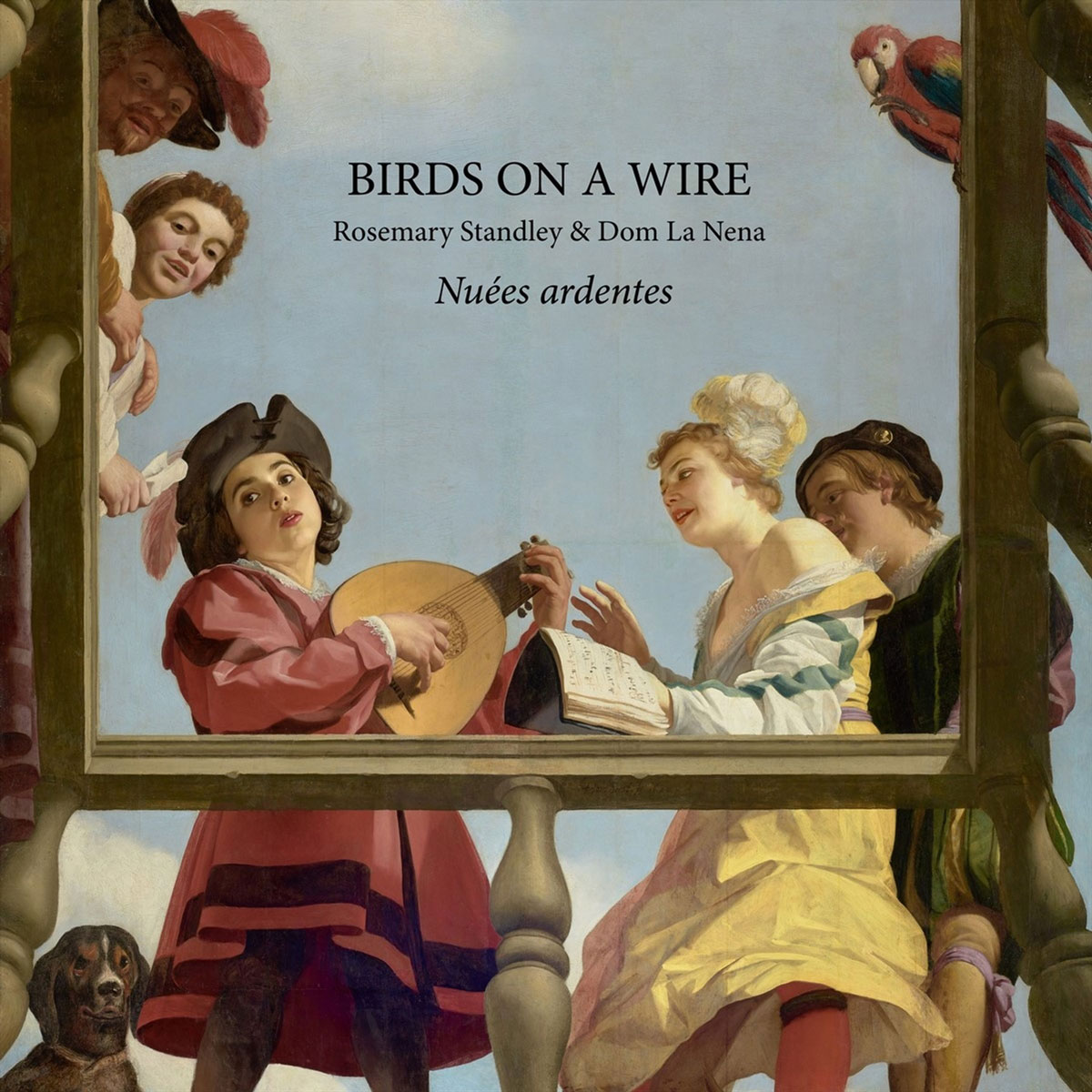
On an unusual record, the Professor found a truly beautiful interpretation of Bronski Beat’s song “Smalltown Boy.” Two female voices plus cello and a few discreet electronic plinks and plonks turn one of the most distinctive songs of the Old German Wave on its head, knead it thoroughly, and then iron it fresh. The album is called Nuées ardentes. Since French has the same status with the Professor as Dutch does, I quickly had to fire up the translation machine. Apparently it means something like burning volcanic clouds, whatever.
In any case, the French-American singer Rosemary Standley and the French-Brazilian cellist and singer Dom La Nena sing their way so elegantly and somehow heat-inducingly into the Professor’s happiness center on Nuées ardentes that I would gladly listen to the whole album a second and perhaps even a third time… Oh, apparently, I already did, as one of my multiple personalities is calling out to me as I’m writing this. Well then.
An album of cover versions that uses minimalist means and a stripped-down mix of folk, pop, chanson, and baroque influences to dress up songs by Leonard Cohen, The Cure, and The Doors, as well as by lesser-known artists – such as the 17th-century Italian composer Stefano Landi or the now almost forgotten French singer Barbara – in new arrangements. It is beautiful, subtly off-kilter, and reasonably strange.
Label: Sabia/Pias Recordings
Format: CD, LP, DL 24/44